Most people start looking for a TotalAV VPN alternative when the second-year invoice arrives. Internet Security, the cheapest TotalAV plan with the VPN, renews at $129 a year. The VPN inside it gives you few protocol choices, no split tunneling and no kill switch on the phone apps. Some readers only want a better VPN, while others want to replace the whole antivirus suite. We cover both routes.
The quick answer: NordVPN is our top pick for most people, Proton VPN has the strongest free plan, and Surfshark One is the closest like-for-like swap for TotalAV's antivirus + VPN pairing. We ranked every option by its HTS review score, weighing speed, audits, streaming, device limits and year-two pricing.
Best TotalAV VPN alternatives at a glance
TotalAV VPN sits in the first row as the baseline, so you can see what each alternative adds and what it costs after the first-year discount.
| Product | Buy | Best for | Starting / renewal price | Servers / countries | Devices | Antivirus included? | Free plan / trial | Money-back window |
|---|---|---|---|---|---|---|---|---|
 |
Existing TotalAV users | About $39 first year (promo varies) / $129/yr | Not published (about 35 countries) | 6 (8 on Total Security) | Yes | No VPN trial; free antivirus tier | 30 days on annual plans | |
 |
Check price → | Best overall | About $3.39-$3.49/mo on 2 years (promo varies); $14.99 monthly | 118-137 countries, 211 locations (counts vary) | 10 | Download scanner on Complete and Prime | No | 30 days |
 |
Check price | Free plan and privacy | Free; $2.99/mo on 2 years / about $83.88/yr | 20,000+ servers, 140+ countries | 10 (1 on free) | No | Free plan, no data cap | 30 days |
 |
Check price | Streaming and app polish | About $2.99/mo on 2 years (promo varies) / $99.95/yr | 113 countries | 10 Basic, 14 Pro | No | No | 30 days |
 |
Check price | Like-for-like antivirus + VPN | $2.49/mo VPN, $2.79/mo One (2 years) / $79/yr Starter | 4,500+ servers, 100 countries | Unlimited | Yes (Surfshark One) | No | 30 days |
 |
Check price | Customization and torrenting | About $1.89/mo on 3 years (promo varies) / $47.88/yr on the 1-year plan | About 104 countries plus all 50 US states | Unlimited | No | No | 30 days |
 |
Check price | Full suite with cloud backup | $49.99-$119.99 first year (promo varies) / $124.99/yr | Not consistently published | 5 | Yes | No free plan | 60 days |
 |
Check price | Top antivirus protection scores | $79.99 first year / about $129.99/yr | 3,000+ servers, 100+ countries | 5 (25 on Family) | Yes | 30-day trial | 30 days |
How we chose these TotalAV VPN alternatives
Every pick follows its HTS review score, the same scoring we use across our VPN coverage. For the two suites, we used the score of the bundled VPN, because we have not scored either full suite. That is why Norton 360 Deluxe ranks above Bitdefender Premium Security, even though Bitdefender's antivirus scored higher.
We checked each VPN against the problems that push people away from TotalAV: speed on near and distant servers, streaming, leaks and kill-switch behavior. We also compared no-logs audits, jurisdiction, device limits and the year-two price. For the suites, we added independent antivirus results from AV-Comparatives and AV-TEST. Anything scoring below TotalAV's own 6.5/10 was left out, which is why Malwarebytes appears only as a bundle mention.
1. NordVPN: Best overall
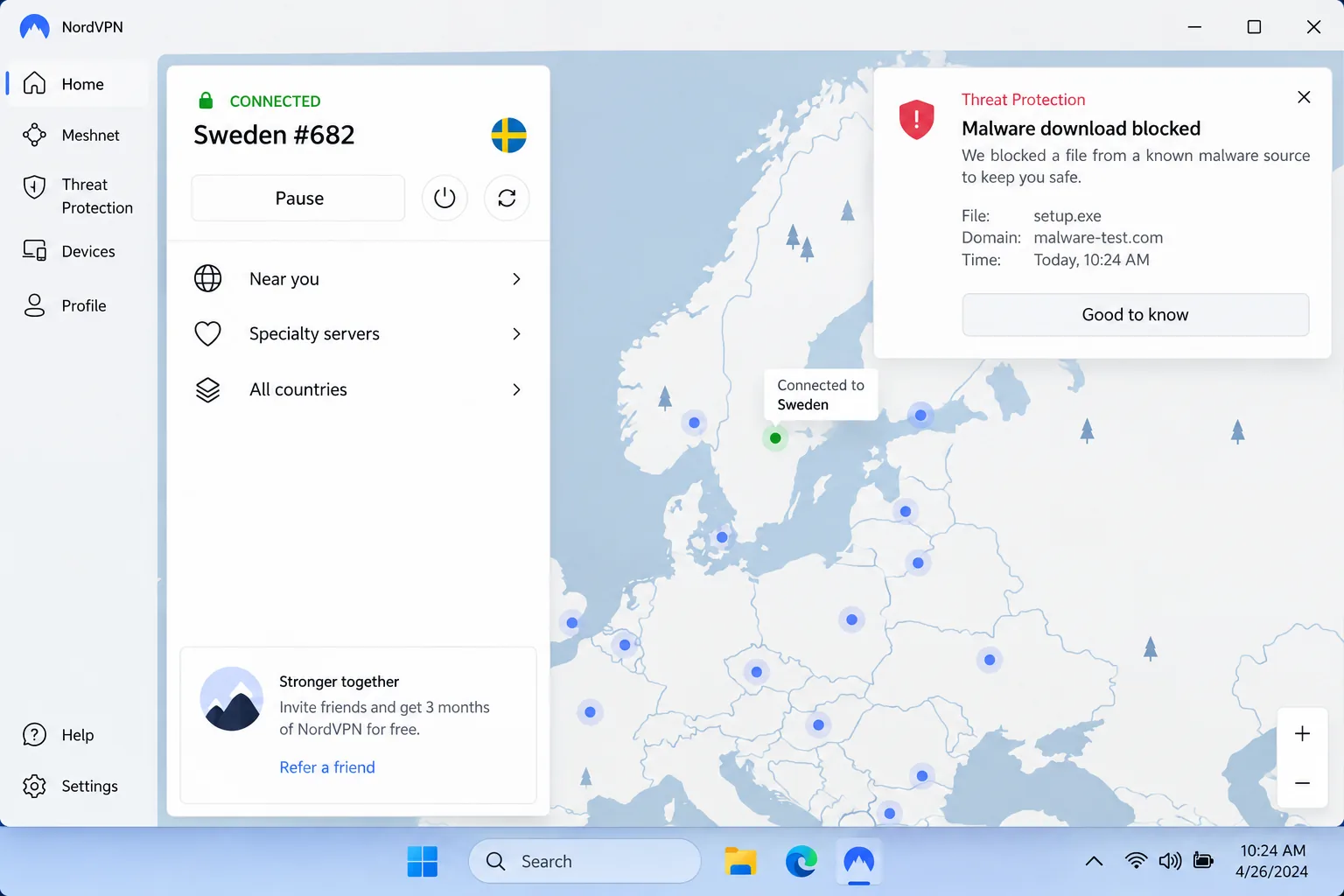
NordVPN suits most people leaving TotalAV, because it fixes the VPN's weak spots without dropping malware protection entirely. Its malware layer, formerly Threat Protection Pro and now sold as Next-Gen Antivirus, scans files as you download them. It also blocks malicious sites, ads and trackers with the VPN switched off. During 2026, NordVPN reshuffled which plans include it, and the full version currently sits on the Complete and Prime plans for Windows and macOS. It does not scan files already on your device, so it is an extra layer, not a full antivirus.
Speed is where the gap with TotalAV shows most. On nearby servers we lost only about 4% of our download speed and 7% of our upload speed, and 4K streams played without buffering. Netflix, Hulu, BBC iPlayer and Prime Video all unblocked reliably. Each time we downloaded a test malware file, the scanner blocked it while using about 1% CPU.
Deloitte has completed six no-logs assurance engagements for NordVPN, the latest in late 2025. The company is based in Panama, outside the Five Eyes alliance that includes TotalAV's home country. Basic costs $14.99 on a monthly term, or about $3.39 to $3.49 a month on two years, depending on the promotion.
Pros
- 10 devices, RAM-only servers and apps for Linux and routers
- Split tunneling on Windows and Android, which TotalAV lacks
- The tracker blocker stopped roughly 128 tracking attempts a day in our normal use
Cons
- Double VPN cuts speed by around 80% and only uses preset server pairs
- The download scanner can flag legitimate portable apps
- The server map needs zooming, so the list view is the quicker way to pick a location
2. Proton VPN: Best free plan and privacy
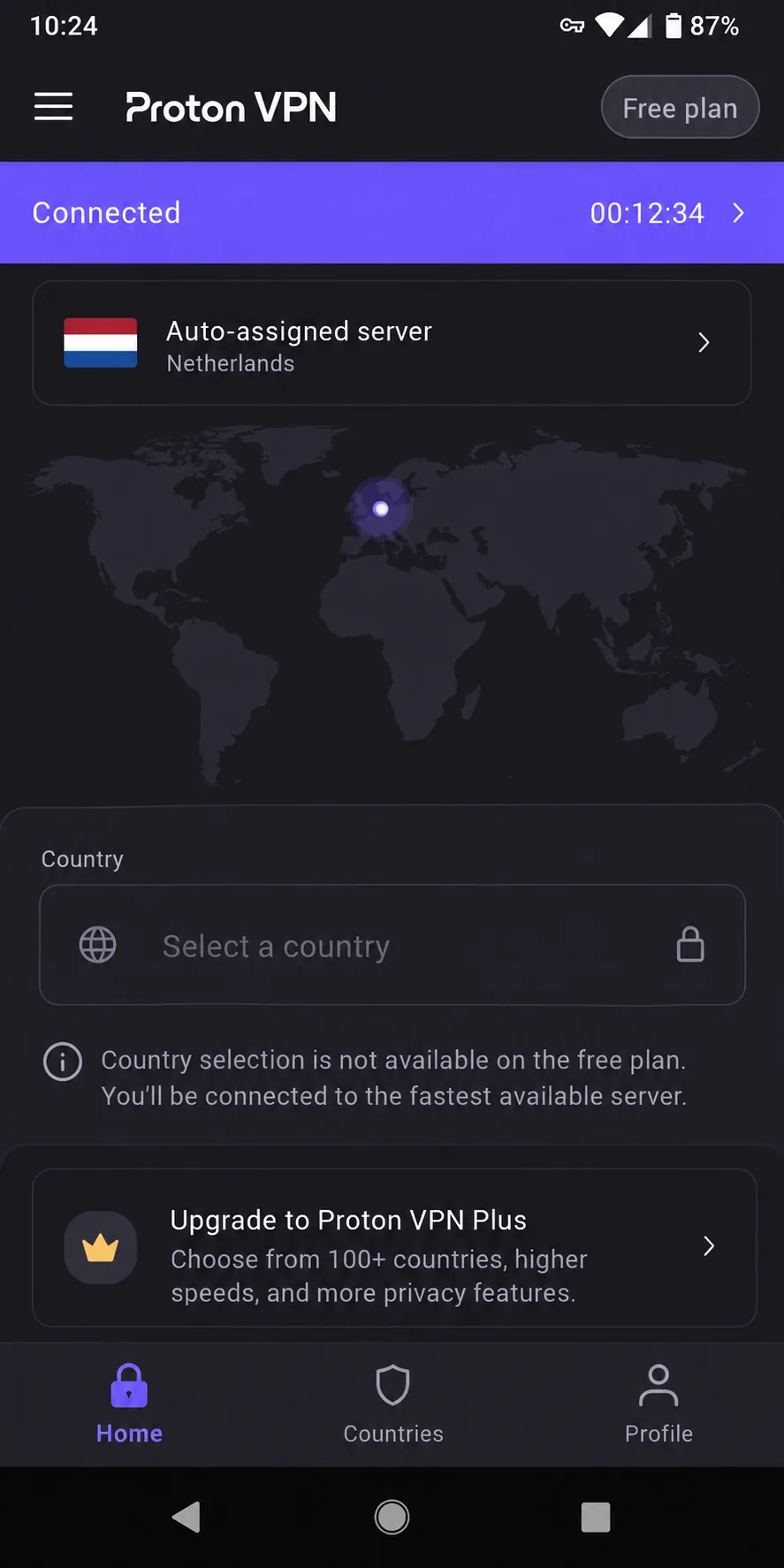
Proton VPN ties NordVPN on our score and wins for anyone who wants to try before paying. The free plan covers 1 device with servers in 10 countries, no data limit and no ads. TotalAV's VPN has no free trial at all. On the free tier, Proton assigns a server for you rather than letting you pick a country, and speeds are moderate.
The paid VPN Plus plan kept 90% or more of our baseline download speed on nearby servers, and around three-quarters of it on distant servers. The US Netflix library loaded without any server hopping. DNS, IPv6 and WebRTC leak checks stayed clean across dozens of countries.
Proton AG is based in Switzerland, and Proton's fifth annual Securitum no-logs audit was published in 2026. VPN Plus costs $9.99 monthly or $2.99 a month on two years ($71.76 for the first 24 months). Renewals run about $83.88 a year, a figure that varies because Proton's rates shift with regional pricing and currency.
Pros
- Secure Core multi-hop, the NetShield blocker, the Stealth protocol and port forwarding on VPN Plus
- Open-source apps, including Linux and TV boxes
- Router support on every plan
Cons
- Upload speeds trail NordVPN's
- Live chat runs roughly 9am to midnight CET, and email replies can take two days or more
- No file-scanning antivirus, so you still need TotalAV or Microsoft Defender
3. ExpressVPN: Best for streaming and polish
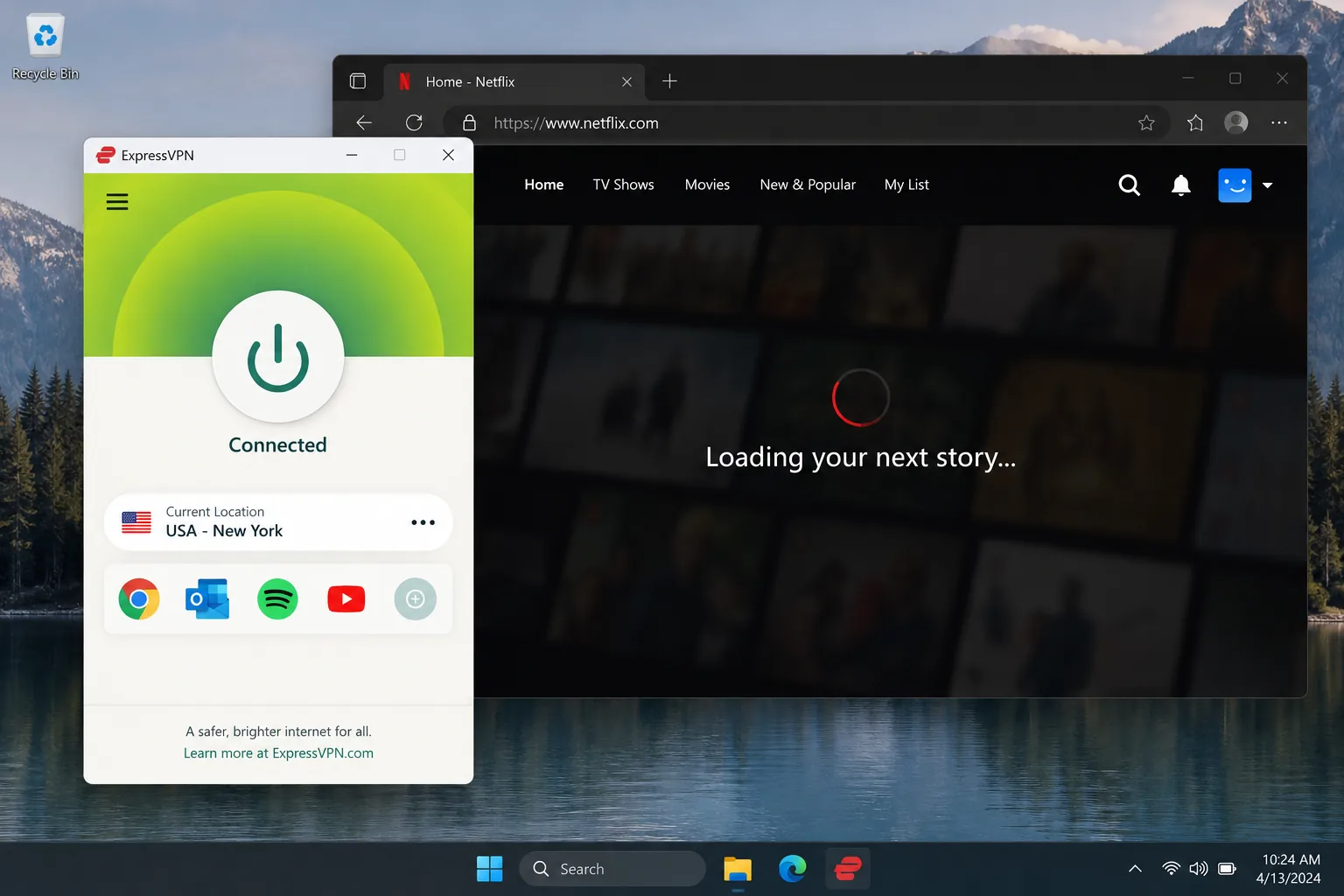
Where Proton leans on privacy, ExpressVPN leans on polish, which makes it the best fit for streaming. Its apps were the most refined of the group. Netflix libraries in several countries, ESPN+ and Hulu all streamed without issues. That is a clear step up from TotalAV's hit-and-miss Disney+ and Prime Video results.
Speed was the trade-off. Our downloads fell by roughly 37% to 39% on nearby servers, more than with NordVPN or Proton VPN. The Network Lock kill switch fired correctly when a server timed out, and again when we switched networks.
ExpressVPN is based in the British Virgin Islands and owned by Kape Technologies, which also owns PIA. KPMG completed an ISAE 3000 assurance of its privacy policy as of February 28, 2025. Basic costs $12.99 monthly or about $2.99 a month on two years, a rate that moves with promotions. It then renews at $99.95 a year, with Advanced at $119.95 and Pro at $199.95.
Pros
- Post-quantum Lightway protocol and RAM-only servers
- Split tunneling plus apps for routers, consoles and browsers
- Servers in 113 countries
Cons
- Basic renews at $99.95 a year, more than Surfshark Starter's $79 or Proton VPN's roughly $83.88
- Larger device allowances need pricier tiers, from 10 on Basic to 14 on Pro
4. Surfshark: Closest like-for-like replacement
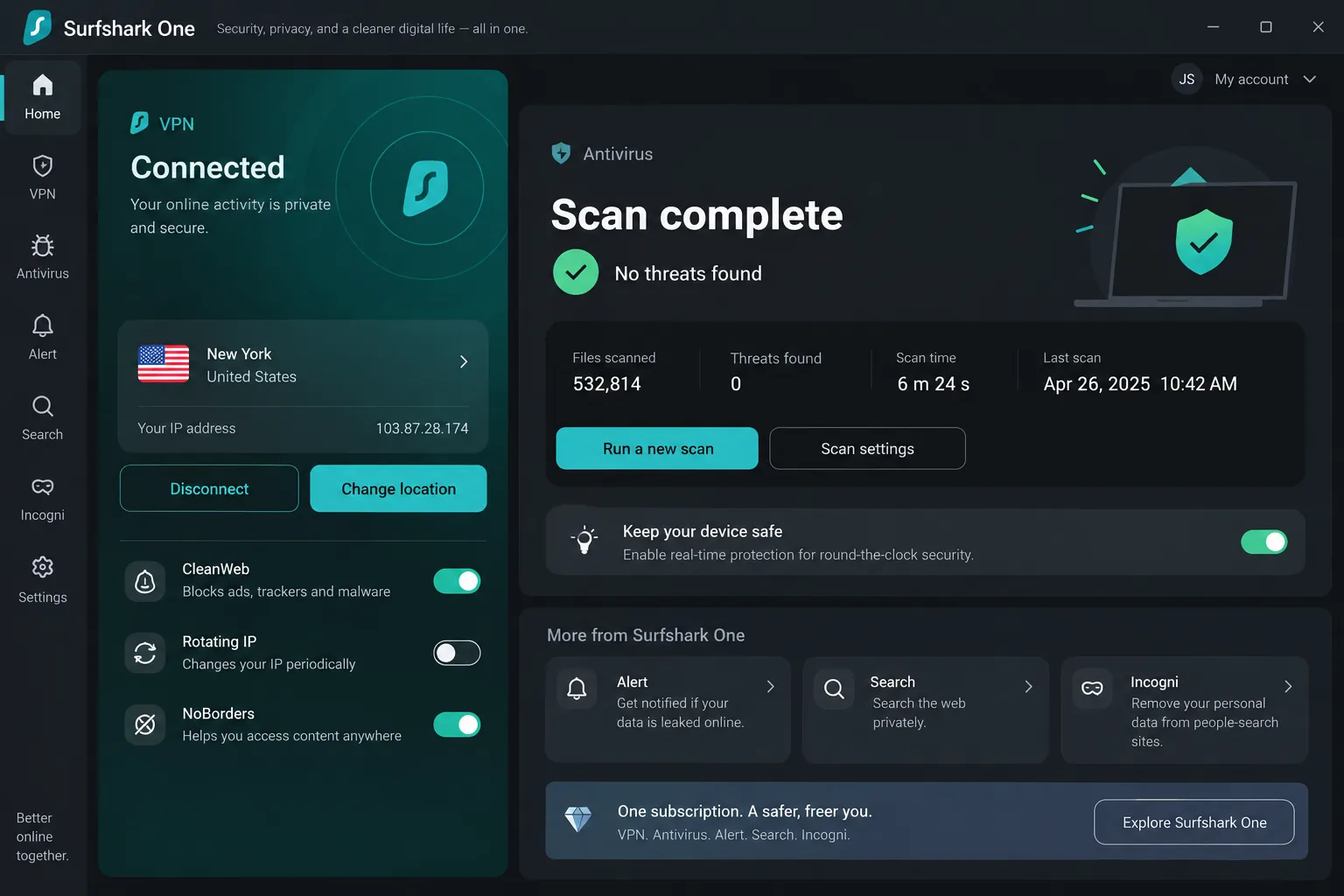
Unlike the three VPN-only picks above, Surfshark can replace both halves of TotalAV, because Surfshark One pairs a VPN with real antivirus in one subscription. It changes the least about your routine while improving the VPN side. We rate the antivirus half 7.6/10 in our Surfshark Antivirus review, and the VPN scores 8.6/10.
The antivirus caught the EICAR test file immediately, and the suite worked out of the box. On macOS, our downloads slowed by only about 10% even on a transatlantic server. The Windows app showed bigger slowdowns and occasional ping spikes. Netflix unblocked in more than 15 regional libraries, and Max, Disney+, Hulu and BBC iPlayer worked too.
Surfshark allows unlimited simultaneous connections on every plan, antivirus included, against TotalAV's 6 devices. The antivirus scored 16.5 out of 18 in AV-TEST's June 2026 Windows 11 round. Surfshark B.V. is based in the Netherlands.
The VPN-only Starter plan costs $2.49 a month on two years and renews at $79 a year. Surfshark One costs $2.79 a month on two years ($75.33 for the first 27 months). Its renewal falls between about $79 and $99 a year, because the rate changed during 2026 and differs by region.
Pros
- Kill switch held with no IPv4, IPv6, DNS or WebRTC leaks
- Deloitte verified the no-logs policy in 2023 and 2025
- 4,500+ servers in 100 countries
Cons
- MultiHop slows connections significantly
- The monthly plan is among the priciest in the category, so the value only shows on the 2-year plan
- No antivirus app for iPhone, iPad or Linux
5. Private Internet Access (PIA): Best for customization and torrenting
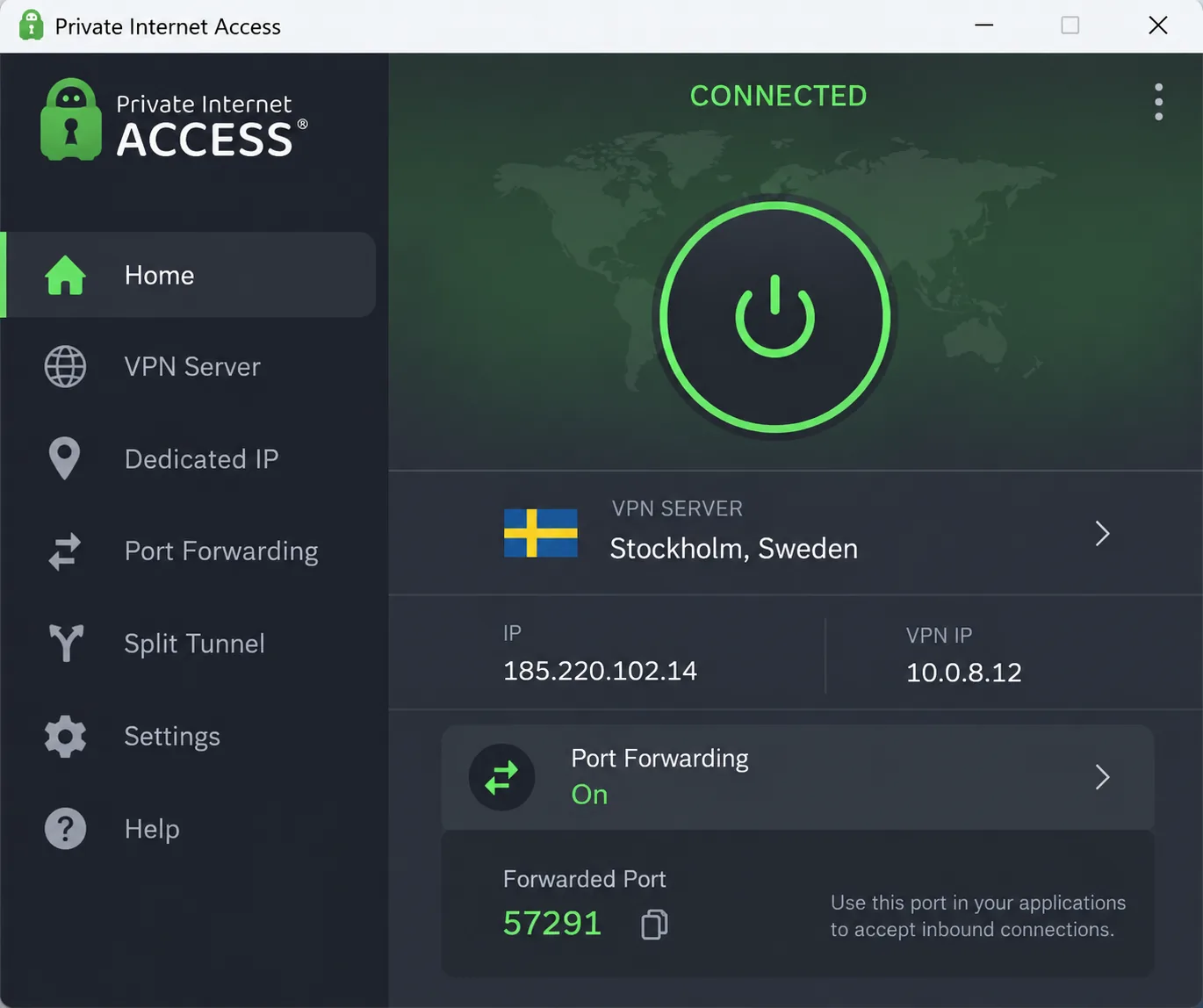
Where Surfshark bundles everything into one app, Private Internet Access hands you the controls, and our torrenting results show why that matters. Torrenting with port forwarding cost very little speed, although the forwarded port changed every time we reconnected. TotalAV, by contrast, has no P2P-labelled servers and no port forwarding at all.
The desktop app's long settings list can overwhelm beginners at first, but the app becomes easy to use once tuned. Speed loss was small, at about 4% on local servers and 18% internationally. Streaming is the weak spot. US and UK Netflix no longer unblocked, and Disney+ and Hulu detected the VPN.
Deloitte completed its third no-logs assurance for PIA on December 19, 2025. The service is US-based and has belonged to Kape Technologies since 2019. The 1-year plan costs $3.99 a month, billed as $47.88. It renews at $47.88, the cheapest second year on this list. Monthly billing is $11.95. Long-term deals run around $1.89 a month, but PIA rotates the deal length by date and region.
Pros
- Unlimited devices and servers in every US state
- Open-source apps, a full Linux GUI and the MACE ad and malware blocker
- Customizable encryption and split tunneling
Cons
- Port forwarding works only on non-US servers
- Auto-renewal is on by default, and refunds need a manual support request
6. Norton 360 Deluxe: Best full-suite replacement
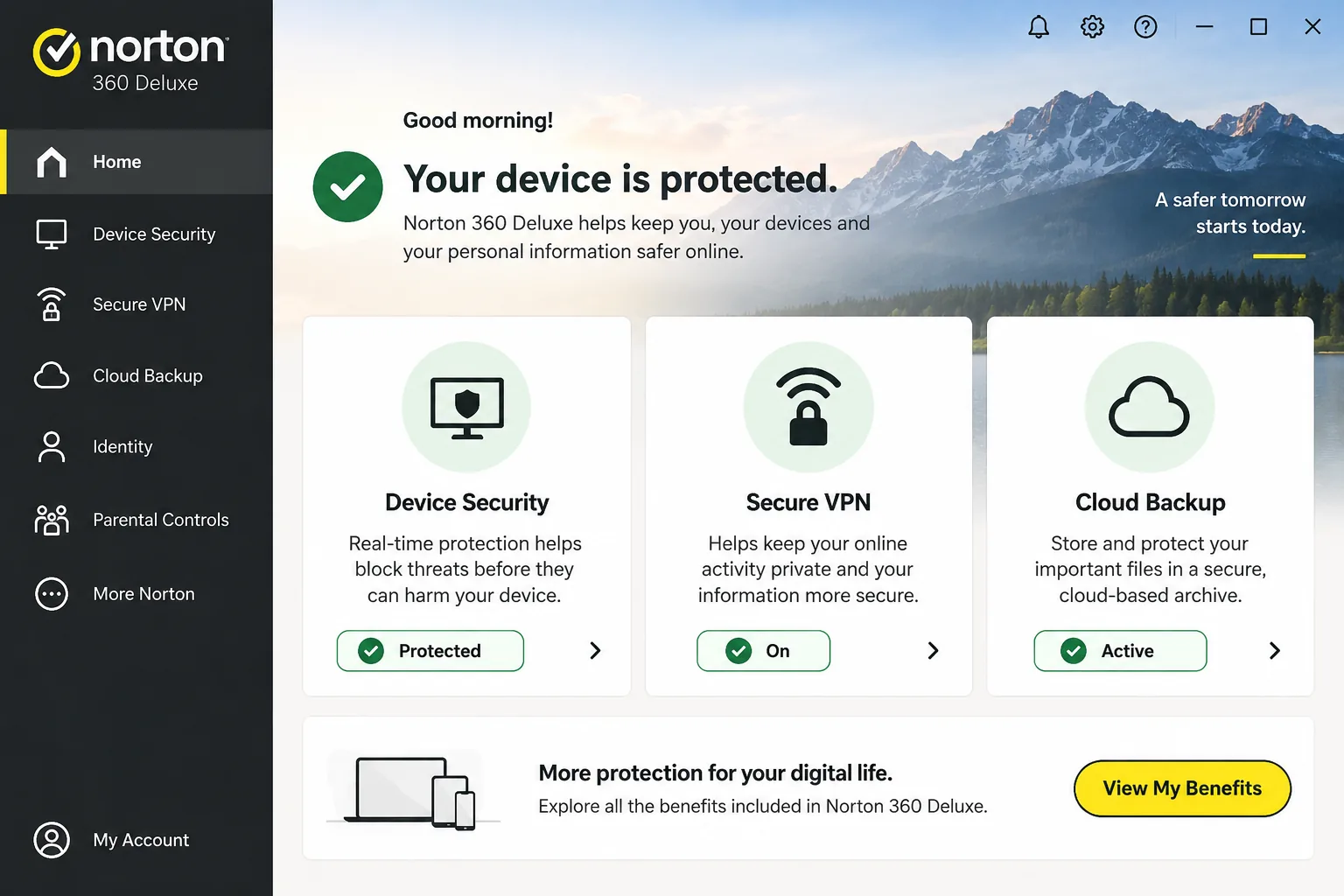
The last two picks swap a VPN-first approach for full security suites. Norton 360 Deluxe is the one to choose if you want to replace TotalAV's whole package with something bigger. In our own checks, it caught every malware sample we used, and it scored 100% on Android too.
Around that antivirus core, the plan adds 50 GB of cloud backup, a password manager, dark web monitoring, parental controls and an unlimited-data VPN.
The VPN is weaker, which is why we score it 7.5/10. Downloads held up on nearby servers, with about a 10% loss, but uploads could collapse and long routes slowed sharply. Netflix access changed from one session to the next. The kill switch and split tunneling are most complete on Windows and Android, with fewer controls on Mac and iOS. VerSprite assessed Norton VPN's no-log policy in August 2024 and July 2025. If the VPN disappoints you, annual plans get a full refund within 60 days. The guarantee paid out when we asked, though refunds require uninstalling the software. The plan renews at $124.99 a year, and the first-year price swings between about $49.99 and $119.99 with promotions and the store you buy through.
Pros
- Every scan type can run on a schedule
- SafeCam and AI scam protection come in the same plan
- Renewal charges also get the 60-day refund window
Cons
- The VPN has no Linux or router support and runs as a separate app from the antivirus
- Cancelling renewal shows retention offers first, and the change can take up to a day to appear
- Only 5 devices, one fewer than TotalAV
7. Bitdefender Premium Security: Best antivirus protection
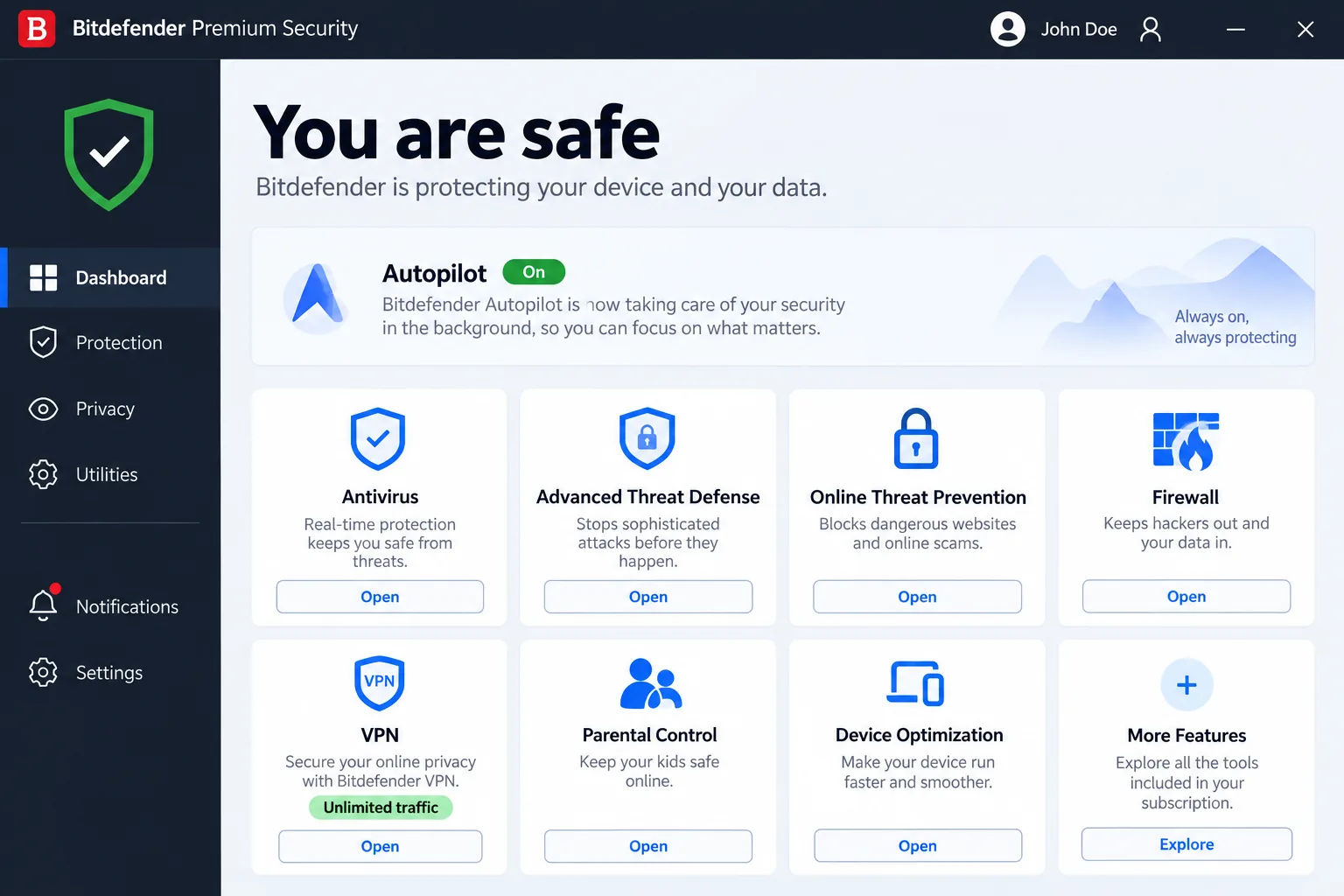
Bitdefender Premium Security edges past Norton on antivirus results, with 99.5% protection in the same AV-Comparatives round. It is the suite to choose when malware detection matters more than VPN features. It detected every test virus we used and ran light on system resources during scans. Autopilot mode needed very little setup, and the Android app proved stronger than the more limited iOS app.
One detail matters if you are leaving TotalAV on principle. Bitdefender VPN runs on Hotspot Shield's Hydra network, and Hotspot Shield sits in the same Point Wild group that now owns TotalAV.
The VPN is also where Bitdefender falls short, hence our 7.2/10 VPN score. It feels thin next to standalone VPNs, with no Linux app, no browser extensions and fewer advanced toggles. Its kill switch can fail to cut traffic when the tunnel drops. Premium Security does lift the 200 MB daily VPN cap that cheaper tiers impose, an allowance that runs out after roughly 10 minutes of video. Here you get unlimited traffic across 3,000+ servers in 100+ countries.
The Individual plan costs $79.99 for the first year on 5 devices, and Family costs $99.99 for 25 devices, though first-year prices change with promotions. Bitdefender doesn't print a renewal rate on the plan page, but Individual renews at about $129.99 a year. You can run a 30-day trial before paying, and refunds are available within 30 days of the first purchase or of an automatic renewal.
Is there a free alternative to TotalAV VPN?
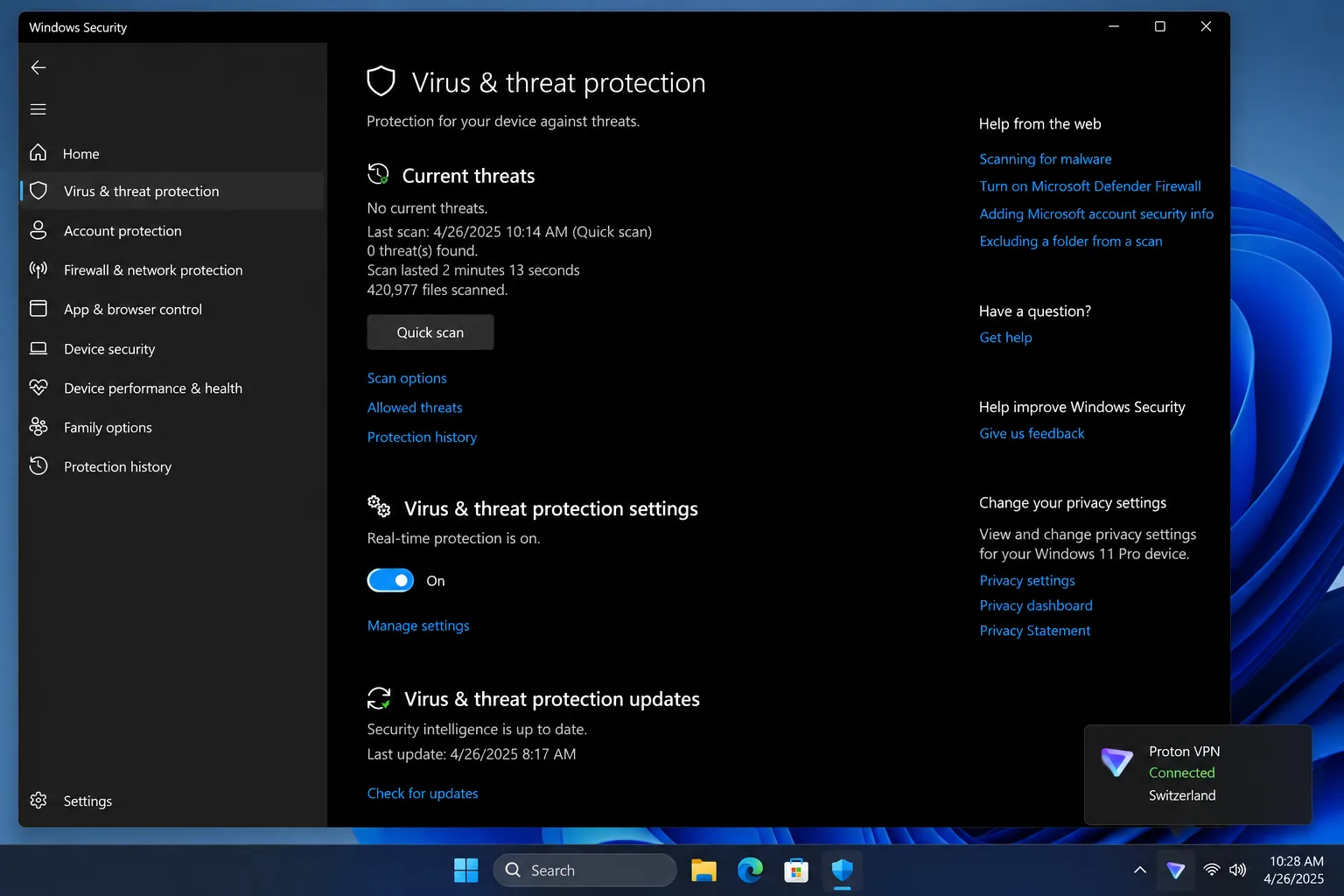
Yes, and the best free setup uses two tools. Proton VPN's free plan provides the VPN side with no data cap. On a Windows PC, Microsoft Defender is built into the system at no extra cost, so a free replacement for the whole TotalAV package is already within reach.
Defender holds up well. It scored 99.0% protection in the 2026 AV-Comparatives round, matching TotalAV, and it was the only product with zero false alarms. In our download checks, Defender quarantined a malicious file that TotalAV let through, although TotalAV still blocked it when the file was opened.
Defender no longer includes a VPN, because Microsoft retired the privacy protection VPN in Microsoft Defender on February 28, 2025. Avira's free Phantom VPN is capped at 500 MB a month, with 36 countries and almost no settings. It suits occasional public Wi-Fi use, not daily streaming.
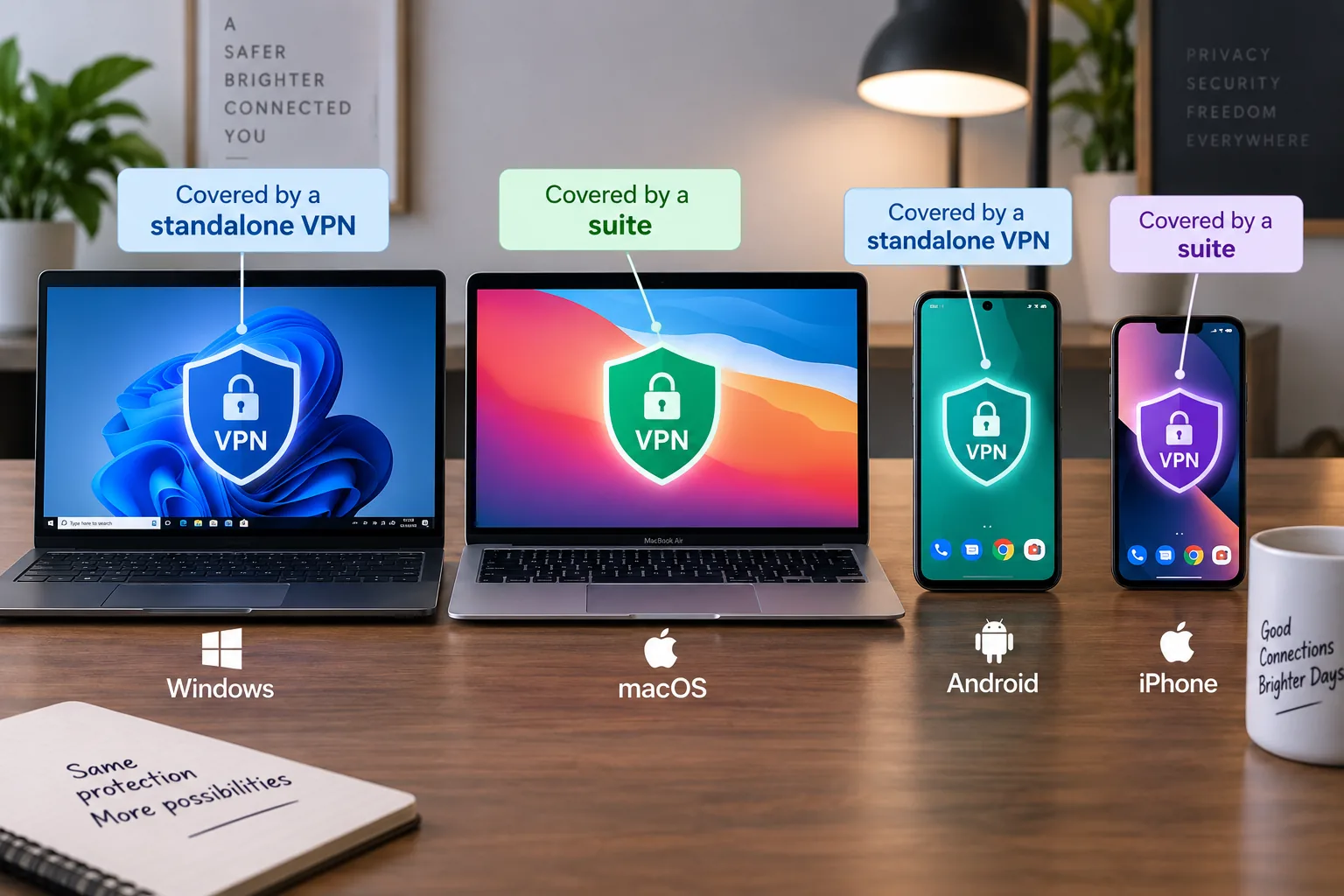
Replace just the VPN, or the whole TotalAV suite?
The right move depends on which half of TotalAV is letting you down. TotalAV's antivirus uses the Avira engine and earned an Advanced+ award in AV-Comparatives' 2026 testing. People rarely leave over its detection of viruses and other online threats. The VPN, which we score 6.5/10, is the weaker half.
When a standalone VPN is enough (keep TotalAV or switch to Microsoft Defender)
A standalone VPN makes sense when you are happy with your malware protection and only want better speed, streaming or privacy. You can keep TotalAV's antivirus and add NordVPN, Proton VPN, ExpressVPN or PIA. On Windows, you can also drop TotalAV and let Microsoft Defender cover the antivirus side.
A standalone VPN is probably enough if:
- You mostly protect Windows PCs, where Defender is already installed
- You want split tunneling, Linux apps or router support
- Streaming or torrenting is your main reason for using a VPN
- You want a VPN with a published independent no-logs audit
When an antivirus + VPN bundle makes more sense
A bundle makes more sense when you protect multiple kinds of devices and want one app and one bill for the household. Surfshark One, Norton 360 Deluxe and Bitdefender Premium Security are our ranked bundle picks, but other suites are available.
Avast is the best-known budget option. Avast One Free covers antivirus and scam blocking. The US bundle that includes a VPN is now Avast Ultimate, which combines Premium Security, SecureLine VPN and Cleanup. Avast renames plans and runs different promotions on different pages, but expect Ultimate near $49.08 for the first year and about $109.99 at renewal. Avast and AVG both scored 99.3% in the same AV-Comparatives round as Norton, and ESET scored 98.5% with only 2 false positives.
Malwarebytes pairs Premium with its Privacy VPN, which uses WireGuard on AzireVPN's RAM-only servers and passed an X41 D-Sec audit in 2026. It is simple to set up and offers the best value as part of the bundle. Still, we score Malwarebytes Privacy VPN 6.4/10, just below TotalAV, and its antivirus logged 39 false positives in AV-Comparatives' testing. Avira Prime adds unlimited VPN traffic on 5 devices for about $59.99 in year one, though its prices vary by region.
A bundle is the better fit if:
- You protect Android phones and Macs as well as Windows PCs
- You want cloud backup, a password manager or parental controls too
- You prefer a single renewal date and a single app
Whichever route you choose, don't pay twice for a VPN. If your new suite includes one, cancel TotalAV before it renews.
Why look for a TotalAV VPN alternative?
Ownership and privacy are the quieter reasons people switch. TotalAV's operator is Total Security Limited, number 10161957 in its Companies House record. That registration places it in the UK and inside Five Eyes. Total Security merged with Pango Group in December 2024, and the combined company now trades as Point Wild. We found no VPN-specific privacy policy, no no-logs claim and no independent audit. TotalAV's general privacy policy says it may collect IP addresses and device identifiers.
Renewal pricing: compare year two, not the checkout price
Year-two cost is the most common complaint about TotalAV. The TotalAV pricing page says renewals bill at the regular rate: $129 a year for Internet Security on 6 devices and $149 for Total Security on 8. The entry TotalAV Plus plan renews at $99 and includes no VPN. If you bought Internet Security on a $39 first-year deal, year two costs roughly 3.3 times more, depending on the promotion.
Line up every option by its year-two price. PIA's 1-year plan renews at $47.88, Surfshark Starter at $79, ExpressVPN Basic at $99.95 and Norton 360 Deluxe at $124.99.
Limited VPN controls, servers and streaming results
TotalAV's VPN covers the basics with AES-256 encryption and DNS and IP leak protection, but the controls stop there. Windows and macOS get OpenVPN and IKEv2, Android gets OpenVPN and WireGuard, and iOS gets IKEv2 only. There is no split tunneling, no multihop, and no Linux app, browser extension or router support. On desktop, the kill switch's "manual" setting actually means off, a label that is easy to misread.
Performance was uneven in our checks. On Windows over OpenVPN, downloads slowed by only about 5%, but uploads dropped by about 64%. The Android app on WireGuard lost about 60% of its download speed. A UK-to-Australia route cut speed by about 75%, with ping past 110 ms. TotalAV publishes no server count, and its location list changes over time.
Netflix unblocked reliably. Disney+ and Prime Video loaded on some attempts and failed on others, and Hulu and BBC iPlayer stayed blocked on every server we tried.
Is TotalAV VPN still worth using?
Keeping TotalAV can still be the rational choice. The app is easy and intuitive, with one big connect button, and installation took under five minutes on desktop. If you already pay for Internet Security, mainly want Netflix and public Wi-Fi protection, and caught a good first-year price, the VPN does that job. TotalAV's own pricing pages call it "Total VPN", so if that name appears on an invoice, it means the same bundled service.
Support beats its reputation. The 24/7 live chat is hard to find, because the chat link loops back to the main support page. Once we reached it, though, a human took over quickly. Trustpilot rates TotalAV 4.5 out of 5 across 139,974 reviews, a company-wide score driven mostly by the antivirus.
The case against staying is that the VPN gets little feature development and little documentation. That is why it sits at 6.5/10 in our TotalAV VPN review, below every pick on this list.
How to switch from TotalAV without a protection gap
Set up your replacement first and remove TotalAV last, so your devices are never unprotected. This order works well:
- Buy the replacement VPN or suite, and note when its money-back window ends.
- Install it on every device and confirm it connects and scans properly.
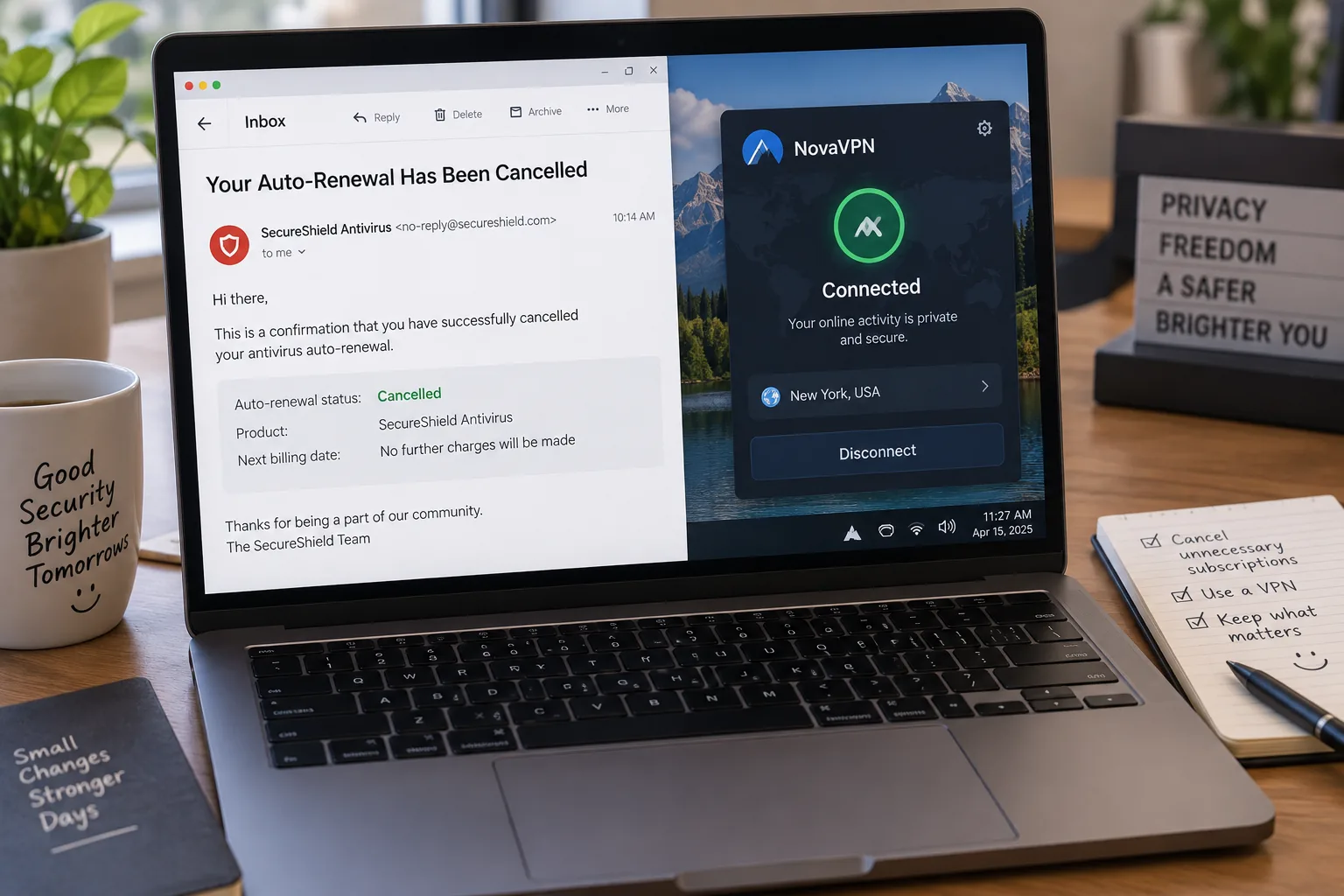
- Turn off TotalAV's auto-renewal well before your renewal date.
- If you are inside TotalAV's refund window, fully terminate the subscription, then request the refund.
- Uninstall TotalAV only after the new software is running.
Cancel billing separately from uninstalling
Removing the app and stopping payments are two different actions. TotalAV's terms state that "Cancelling your subscription (i.e., turning off auto-renewal) will not end your access or automatically trigger a refund." TotalAV doesn't say what uninstalling does to billing. Because the charge is tied to your subscription rather than the installed app, don't treat uninstalling as cancelling.
Turn off auto-renewal in your TotalAV account before you uninstall, and keep the confirmation email. Unexpected charges and hard-to-find cancel links are the most common theme in TotalAV's recent one-star Trustpilot reviews.