Avast SecureLine VPN is the paid VPN from antivirus maker Avast, now part of Gen Digital, and its one-click apps are clean and easy to use. Where it falls short is everything around those apps: a small server network, uneven streaming, no Linux app, and no published no-logs audit.
Many users also want distance from the company itself. The US Federal Trade Commission alleged that Avast sold users' browsing data through a subsidiary called Jumpshot, which Avast shut down in January 2020. We cover that history further down.
Our top pick is NordVPN, which suits most people leaving SecureLine. If you want a free replacement, Proton VPN's free plan is the one we would install first. The picks come first below, and if you would rather see how we judged them before reading on, our methodology sits in "How we picked these alternatives" after the free options.
Avast SecureLine VPN alternatives at a glance
SecureLine sits first as the baseline, followed by our eight picks in rank order. Prices are introductory long-plan rates that mostly renew higher.
| Product | Buy | Starting price | Server countries | Devices | No-logs audit | Free tier / trial | Streaming | Works in China |
|---|---|---|---|---|---|---|---|---|
 |
About $55-60 first yearrenews at $99.99 | About 34-37 (varies) | 10 | None published | 60-day desktop trial (card), 7-day mobile | Inconsistent | No | |
 |
Check price → | About $3.49/mo2 years | 118+ (varies) | 10 | Deloitte, 6th check | No free plan | Reliable | Unverified |
 |
Check price | About $2.99/mo2 years | 140+ | 10 (1 on Free) | Securitum, 2025 | Free plan | Reliable on paid plans | Unreliable |
 |
Check price | About $2.79/mo2 years | 105-113 | 10 (Basic) | KPMG, 2025 | No free plan | Reliable | Often, with manual setup |
 |
Check price | $2.49/mo2 years | 100 | Unlimited | Deloitte, 2025 | 7-day mobile trial | Reliable | Sometimes |
 |
Check price | EUR 5/moflat | About 50 | 5 | Multiple independent audits | None | Hit or miss | Partial |
 |
Check price | About $2.19/mo26 months | 100 | 7 | Deloitte, Q4 2025 | Short trials vary | Strong | No |
 |
Check price | About $2.03/mo3 years | 91 + all 50 US states | Unlimited | Deloitte, Dec 2025 | None | Weak | Unreliable |
 |
Check price | $2.19/mo2 years | 75-112 (varies) | Unlimited | Schellman, 2025 | 7-day mobile trial | Mostly works | No |
1. NordVPN - best Avast SecureLine alternative overall
NordVPN is the service we would hand to anyone who wants SecureLine's simplicity without its gaps, and it scores 9.0/10 in our NordVPN review. It keeps the same 10-device allowance and adds what Avast leaves out, including Threat Protection Pro, Double VPN, and obfuscated servers that run on NordWhisper, its in-house protocol launched in 2025.
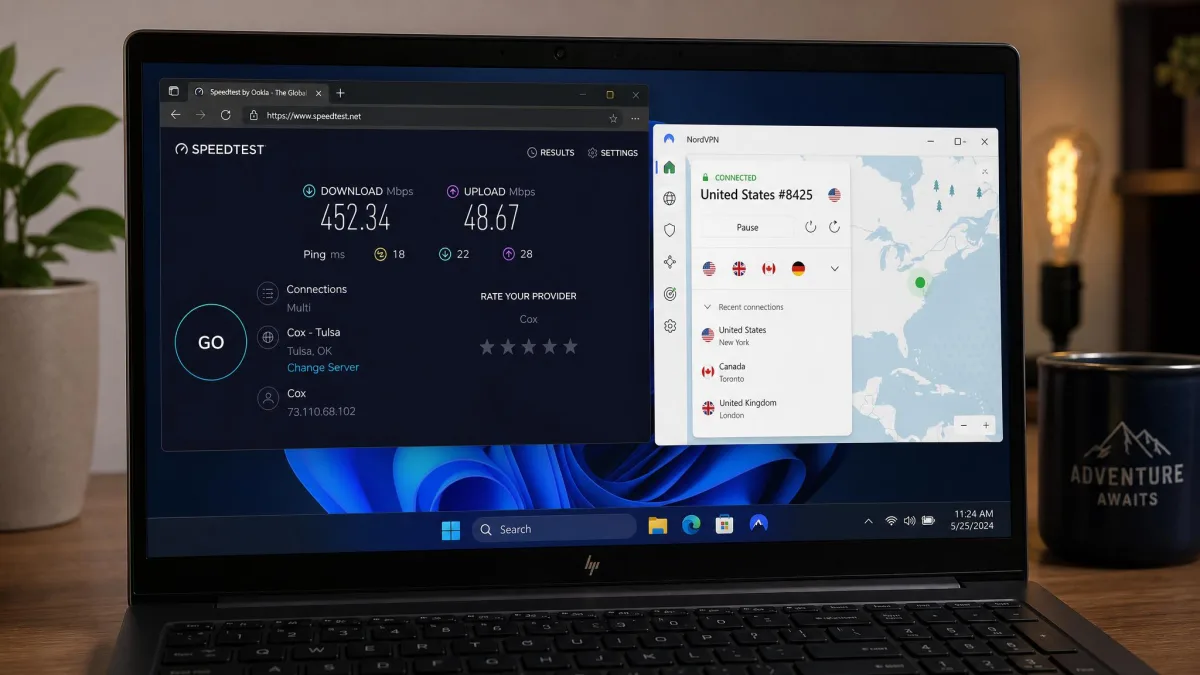
The gap shows up first in speed. On nearby servers we lost only single-digit percentages of download and upload speed, and 4K streams played without buffering. Netflix, Hulu, BBC iPlayer, Prime Video, Disney+ and HBO Max all unblocked reliably, and when the tunnel failed, the kill switch cut traffic straight away.
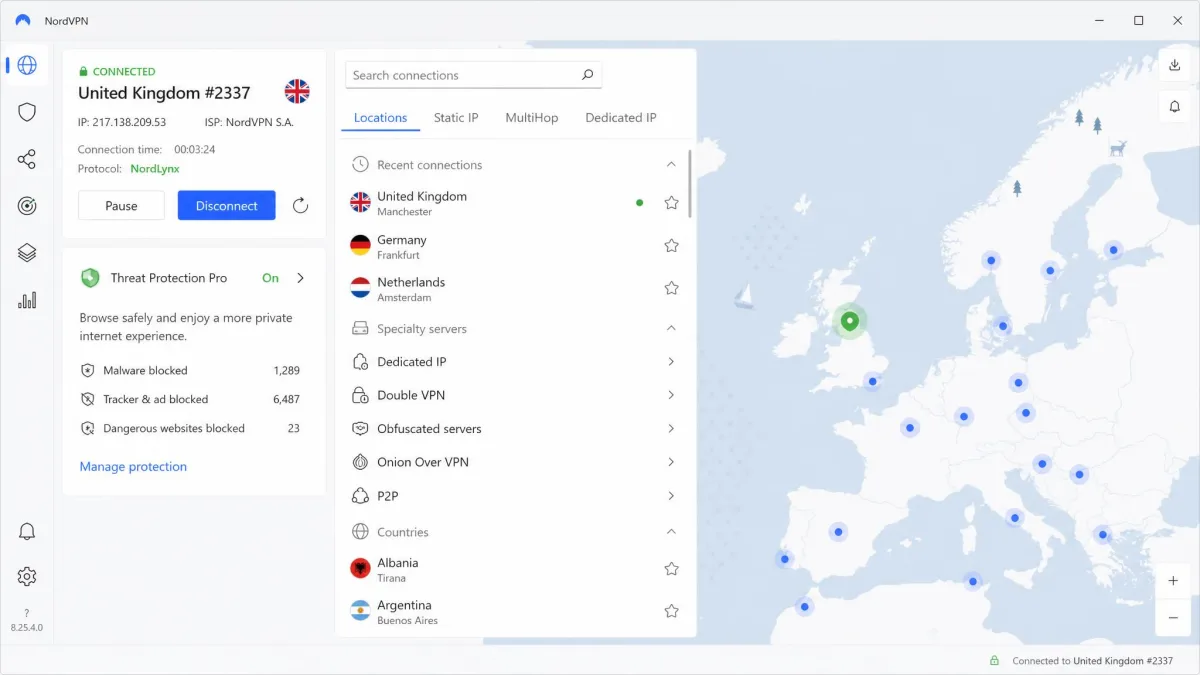
NordVPN is based in Panama, and Deloitte has checked its no-logs policy six times. Basic costs about $3.49 a month on the 2-year plan, a promotional rate that renews higher, or $14.99 monthly, with a 30-day money-back guarantee.
Pros
- RAM-only servers and Meshnet
- Post-quantum encryption
- Apps for Linux, Apple TV and Fire TV
Cons
- Renewal charges land about two weeks before the term ends
- Double VPN cuts speed by around 80 percent
2. Proton VPN - best free alternative
Proton VPN ties NordVPN at 9.0/10 in our Proton VPN review, and it is the only pick here that also offers a genuinely usable free plan. VPN Plus, the paid tier, covers 10 devices across 20,000+ servers in 140+ countries.
Installation took about two minutes, and the apps explain each setting in plain language. Paid Proton VPN cut our download speed by under 10 percent on nearby servers, and the big streaming services unblocked without server hopping. We saw no DNS, IPv6 or WebRTC leaks across dozens of server countries.
Proton is based in Switzerland, and Securitum's 2025 no-logs audit of Proton VPN found it fully complies with its policy. VPN Plus costs $9.99 monthly or about $2.99 a month on the 2-year plan, a rate that moves with Proton's seasonal sales.
Pros
- Open-source apps
- NetShield ad and tracker blocker
- Secure Core multi-hop routing
Cons
- Refunds are prorated, so only unused time comes back
- Live chat is not 24/7
3. ExpressVPN - best for streaming and restrictive countries
ExpressVPN earns 8.8/10 in our ExpressVPN review, and it is the pick for travelers who need a VPN to keep working on tough networks. It applies obfuscation automatically on every server on supported platforms, which is the main feature SecureLine lacks for restrictive networks.
Connections stayed rock solid through long daily use, and the Network Lock kill switch rarely tripped. Download speed dropped by roughly 37 to 39 percent, while ping rose only 5 to 6 ms, so browsing and calls felt no slower than usual. Netflix, Hulu and ESPN+ loaded without issues. In China it connected on roughly 85 percent of attempts, but only with Lightway set manually, and results change with each Great Firewall update.
KPMG's 2025 assurance report on ExpressVPN's privacy policy found no browsing history or connection logs stored. ExpressVPN is based in the British Virgin Islands and owned by Kape Technologies. Basic costs $12.99 monthly or about $2.79 a month on the 2-year plan.
Pros
- RAM-only TrustedServer network
- Lightway protocol rebuilt in Rust
- Apps for routers, consoles and Linux
Cons
- Bigger speed drop than NordVPN or Proton VPN
- Email support can take about two days
4. Surfshark - best budget alternative with unlimited devices
Surfshark scores 8.6/10 in our Surfshark review, and it is the budget pick for homes with more gadgets than SecureLine's 10 slots allow. Starter is $2.49 a month on the 2-year plan and renews at $79 a year, still below SecureLine's $99.99 renewal, with 4,500+ servers in 100 countries.
Download speed dropped about 17 percent on Windows and 31 percent on macOS, with steady latency. Netflix worked across regions without VPN detection. The native apps made setup on Android TV, Apple TV and Fire TV painless, and the kill switch cut internet access instantly when the VPN dropped.
Surfshark is based in the Netherlands, and its 2025 no-logs assurance report from Deloitte is its second. A 30-day money-back guarantee applies.
Pros
- CleanWeb ad and tracker blocker
- Bypasser split tunneling
- RAM-only servers
Cons
- macOS speeds drop more than Windows speeds
- China works only about 60 percent of the time, via OpenVPN TCP
5. Mullvad VPN - best for anonymity
Mullvad charges a flat EUR 5 a month whether you pay for one month or a year, and it accepts cash and Monero, with a 10% discount for crypto. That payment model is the heart of its appeal, and it scores 8.5/10 in our Mullvad VPN review. Sign-up took seconds, because a random 16-digit account number is the only login, so there is no email address to tie back to you.
Based in Sweden, Mullvad has passed more than ten independent audits, and a 2023 police raid found no user data to seize. It covers 5 devices, and refunds run for 14 days.
In daily use, local speed loss was only around 6 percent, though distant servers slowed downloads noticeably. Streaming was hit or miss, with some servers reaching Netflix and others detected. Support is email-only, and replies came in hours rather than minutes.
Pros
- Four obfuscation methods for blocked networks
- Built-in multihop
- Open-source apps
Cons
- Only 5 devices
- Unreliable streaming and no free trial
6. CyberGhost - easiest switch for beginners
CyberGhost is the gentlest move for anyone who liked SecureLine's simplicity, and it scores 8.4/10 in our CyberGhost review. Setup was quick, and servers are labeled by the streaming service they suit.
That labeling paid off in our streaming checks. Netflix US, BBC iPlayer, Disney+ and Prime Video unblocked on the first try through the streaming servers, though DAZN failed in every region. Nearby servers lost roughly 5 to 19 percent of speed, while long-distance servers dropped by about 44 to 59 percent. With servers in 100 countries, a Romanian base under Kape, and its third Deloitte no-logs assurance completed in Q4 2025, it costs about $2.19 a month on the 26-month plan, a rate that shifts with rotating promotions.
Pros
- 45-day money-back guarantee, the longest here
- 24/7 live chat
- NoSpy servers
Cons
- 7 devices is tighter than most rivals
- Dated Windows app and no access in China
7. Private Internet Access - best for customization
Private Internet Access, or PIA, exposes the settings SecureLine hides, and it scores 8.4/10 in our Private Internet Access review. You can choose AES-128 or AES-256, split tunnel by app or IP, and forward ports on non-US servers. The long settings list felt overwhelming at first, but became easy once we had tuned it. PIA covers unlimited devices across 91 countries plus all 50 US states, and it is based in the United States under Kape, where Deloitte completed its third no-logs audit in December 2025.
Speed loss was small, about 4 percent locally and 18 percent internationally, which makes it a good fit for people who care more about control than streaming. Streaming is the weak spot: US and UK Netflix no longer unblock, and Disney+ and Hulu detect the VPN. The 3-year plan works out to about $2.03 a month, though PIA rotates its deal length.
Pros
- Open-source apps
- Smart DNS for devices that cannot run a VPN
- Crypto payment through BitPay
Cons
- Poor streaming performance
- Refunds need a manual support request
8. IPVanish - best for large households
Anyone leaving Avast over privacy should know IPVanish's history first. In 2016, IPVanish handed connection logs to US authorities despite a no-logs claim. Ownership and policy have since changed, and Schellman finalized a new no-logs audit in 2025. With that context, it scores 8.0/10 in our IPVanish review.
It earns the household label over Surfshark or PIA through the mix of unlimited connections, P2P on every server, and a stable Fire TV app, so one plan covers the family's torrent box and living-room TV as well as its phones. Nearby-server speeds held up well, but protocol choice made a big difference to our results. Netflix, Disney+, Hulu, HBO Max and BBC iPlayer unblocked, though iPlayer quality was inconsistent. The Fire TV app was easy to navigate, but its kill switch does not extend to streaming devices.
Essential costs $2.19 a month on the 2-year plan and renews at $89.99 a year.
Pros
- SOCKS5 proxy included
- Threat Protection ad and malware blocker
- Scramble obfuscation on OpenVPN
Cons
- 2016 logging incident under previous ownership
- Refunds can take persistent follow-up
Free Avast SecureLine VPN alternatives
SecureLine has no free plan, only a trial that turns into a paid subscription. These three services offer a permanent free tier instead.
Proton VPN Free
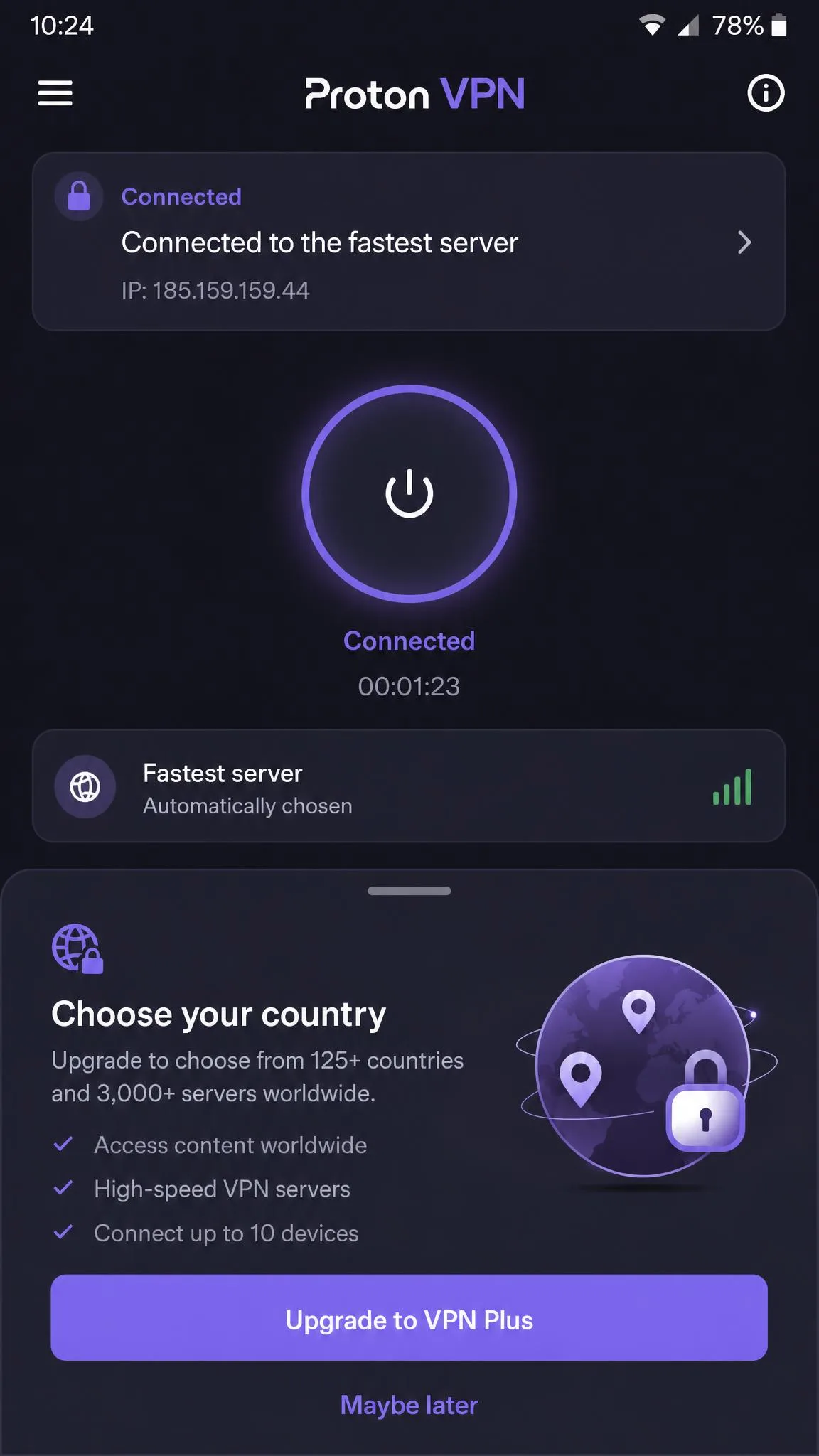
This is the free tier of pick #2, and it asks for no card. We saw no throttling on it. You get one device, and the app picks the server for you from a limited set of countries. Streaming and P2P are off, but the kill switch and Stealth protocol stay on.
Windscribe Free
Windscribe gives you 2GB a month, rising to 10GB once you confirm an email address. Unlike Proton, it lets you choose from about 10 free countries (a list it rotates) on unlimited devices. Free servers ran at roughly Pro speeds, but congestion caused sudden drops of up to 90 percent. A Greek court accepted in 2025 that Windscribe held no user logs. It scores 8.5/10 in our Windscribe review.
Hide.me Free
Hide.me needs neither a card nor an email and has no data cap. It is slow, at roughly 1 Mbps, which covers light browsing but not streaming, and you get one device. Securitum audited its no-logs policy in 2024. It scores 8.2/10 in our hide.me review.
How we picked these alternatives
We put each VPN through the core checks we ran on SecureLine: speed loss on nearby and distant servers, and whether the major streaming services unblock. We then weighed price and renewal cost, logging record and ownership, published audits, device limits, and whether a free tier exists.
A VPN had to beat SecureLine on at least one measure without falling behind on privacy. Every score quoted here matches our full review.
Why switch from Avast SecureLine VPN?
Privacy history comes first. The FTC alleged that Avast collected browsing data from 2014 to 2020 through its antivirus software and browser extensions, then sold it to more than 100 third parties through Jumpshot. Avast shut Jumpshot down in January 2020. In February 2024, the FTC's 2024 order against Avast required a $16.5 million payment and banned selling or licensing browsing data for advertising. The FTC finalized it on June 27, 2024.
The case concerned Avast's antivirus products rather than SecureLine itself. Still, a VPN asks you to trust its maker with all your traffic, and SecureLine has no independent audit to offset that history.
Billing is the second reason. The low first-year price jumps to $99.99 a year at renewal, and there is no true monthly desktop plan. Avast's customer reviews most often complain about automatic renewals and unexpected charges.
Features are the third. Speeds are average, and international servers lose around a fifth of download speed. Netflix works on some servers and fails on others, and there is no Linux app, router support, obfuscation or multi-hop, which rules it out for advanced setups. Our Avast SecureLine VPN review scores it 6.5/10.
AVG Secure VPN is not a real alternative, because AVG is another Gen Digital brand under the same parent company as Avast.
What to look for in an Avast SecureLine replacement
Start with proof, not promises. Every numbered pick has had its no-logs policy checked by an outside firm.
A published no-logs audit is the cheapest proof a VPN can offer, and SecureLine has never had one.
Ownership matters too. ExpressVPN, CyberGhost and Private Internet Access all belong to Kape Technologies, so switching between them keeps the same company behind your VPN.
Check the renewal price, not just the headline rate. If you travel to restrictive countries, look for obfuscation, which SecureLine lacks. Astrill is a China specialist, at a premium price with no money-back guarantee. Hotspot Shield, TunnelBear, PureVPN and CactusVPN are other names people compare, though none made our top eight.
Sign up for your replacement while SecureLine is still active, then test it inside its money-back window before Avast renews.
How to cancel Avast SecureLine and switch VPNs
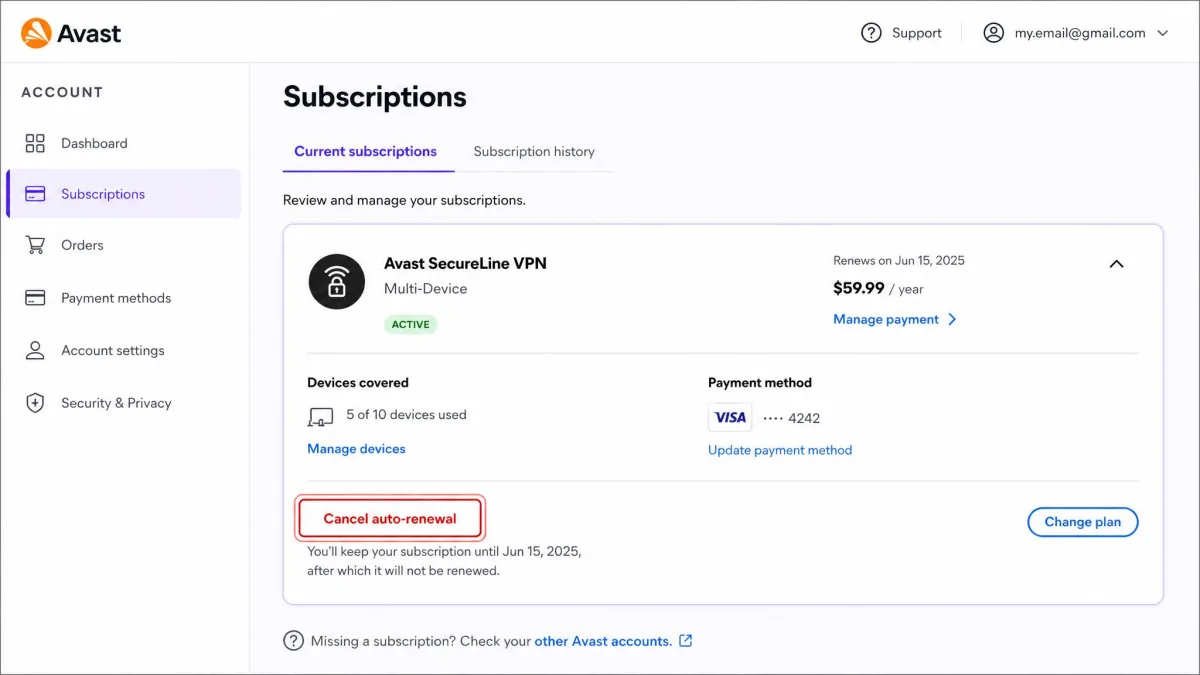
Auto-renewal is on by default for paid Avast products, so cancelling is a separate step from uninstalling.
- Sign in to your Avast Account on the web, then open Subscriptions.
- Select your SecureLine VPN subscription and choose Cancel auto-renewal.
- Contact Avast Customer Support if you want a refund.
- Uninstall SecureLine, then install your new VPN and run a leak test.
Annual plans carry a 30-day money-back guarantee, but getting the refund can mean working through several exceptions and extra verification steps, and email support takes around two business days to answer.
Turning off auto-renewal does not refund a charge that has already gone through. Request the refund separately.
Avast SecureLine VPN alternatives FAQ
Is there a free alternative to Avast SecureLine VPN that streams?
Does Avast SecureLine VPN offer a free trial?
Is Avast SecureLine VPN safe, and does it log data?
Who owns Avast SecureLine VPN?
Can I get a refund when cancelling Avast SecureLine?
Is AVG Secure VPN the same as Avast SecureLine?
Final verdict: which Avast SecureLine alternative should you choose?
If you want to pay nothing, install Proton VPN Free. For a large household, Surfshark or IPVanish removes the device limit, and Mullvad offers the most anonymous sign-up. For everyone else leaving SecureLine, NordVPN is the one to switch to.