
6 Best Driver Updater Software for Windows in 2026 (Free & Paid)

Outdated or missing drivers cause a surprising number of everyday Windows headaches. When a graphics, audio, or network driver falls behind, you can see crashes, freezes, stuttering games, no sound, or hardware that Windows refuses to recognize. Hunting down the right driver by hand on each manufacturer's site is slow and time-consuming. So we tested and compared the leading driver updater software for Windows 11 and 10 to find the tools that keep your drivers up to date without the manual searching. Below are our six top picks, free and paid, with features, pros, cons, and pricing.
The 6 Best Driver Updater Tools for Windows
1. IObit Driver Booster — Best Overall
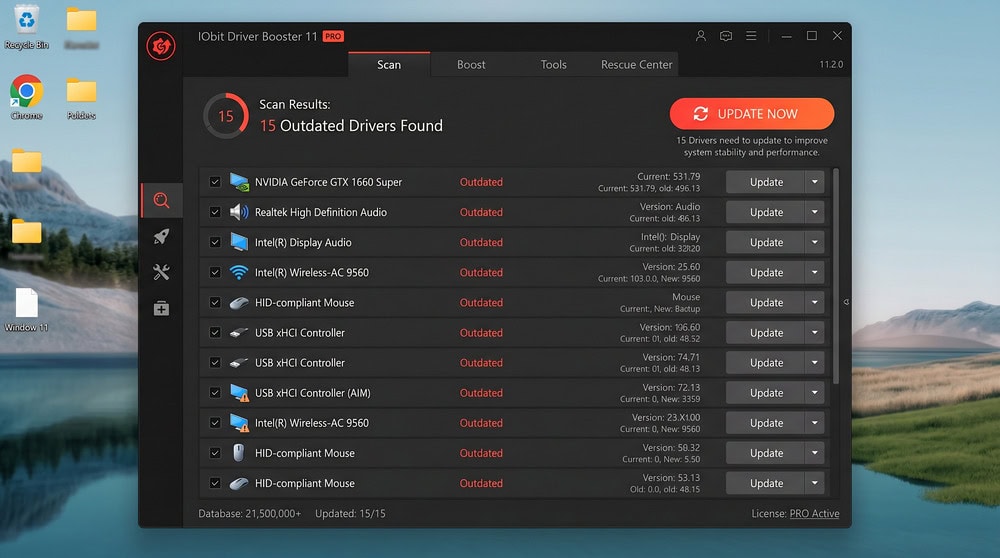
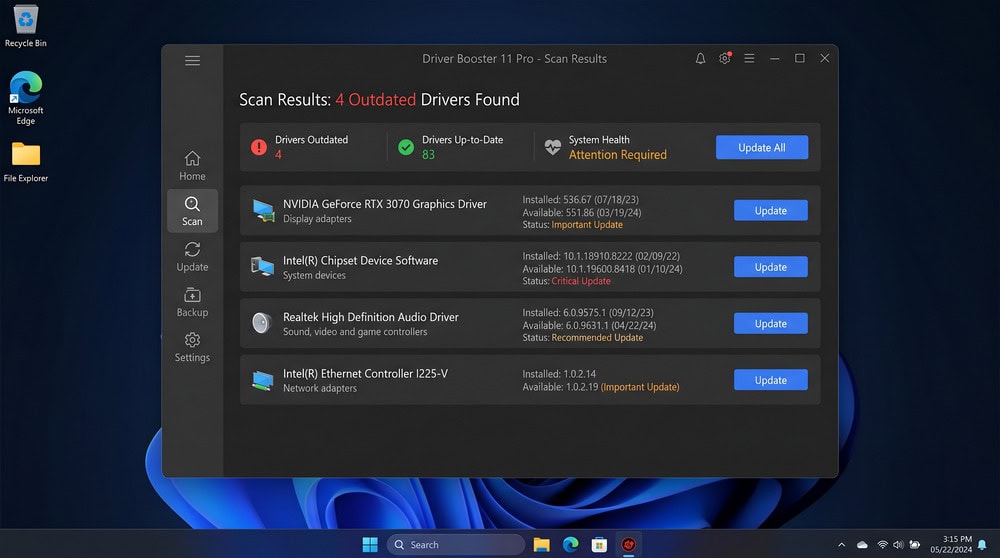
IObit Driver Booster was the most complete tool we tested, with one-click scanning that just works. The free version draws on more than 12,000,000 drivers from over 1,200 brands, while Pro advertises 18 million verified drivers, automatic updates, and backup and restore.
- One-click scan with automatic updates in Pro
- 12,000,000+ drivers free, 18 million+ in Pro
- Driver backup, restore, and offline scan mode (Pro)
- Game boost and crash/BSOD prevention
- Supports Windows 11 and 10, down to XP
The free tier is genuinely usable on its own, and Pro adds a 60-day money-back guarantee. Pro runs around $22.95/year for three PCs on sale, though IObit rotates that promotion.
Pros
- Large free database covers most common hardware
- One-click updates suit any skill level
- Generous 60-day refund window on Pro
- Built-in backup and offline scan mode
Cons
- Auto-update and backup are Pro-only
- Setup pushes other IObit products
- Promotional pricing hides the real cost
2. Driver Easy — Best for Ease of Use
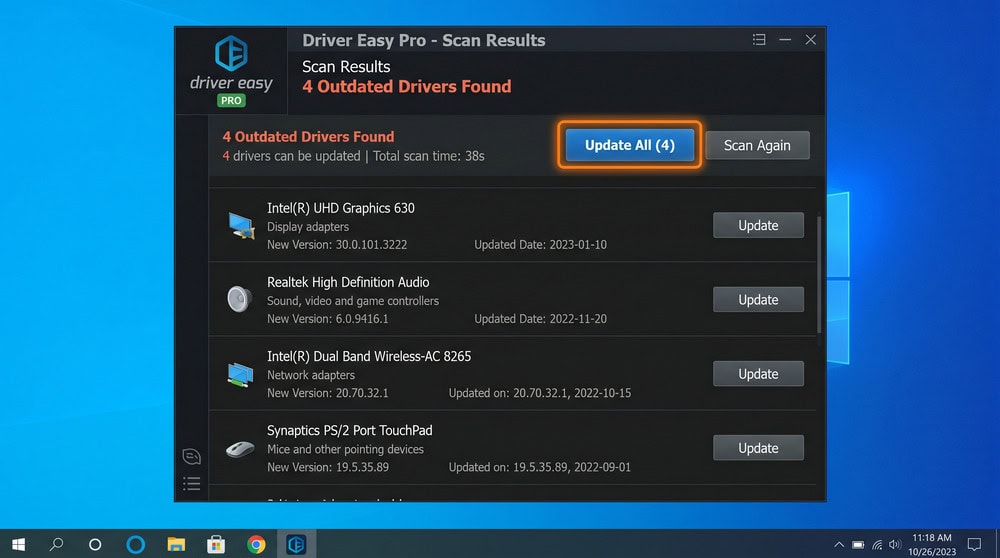
Driver Easy is the tool we would hand to a less technical relative. Its scan-then-update flow is about as simple as it gets, with a one-click update-all in Pro that handles every flagged driver at once. Behind that simplicity sits a database of more than 30,000,000 drivers.
- 30,000,000+ driver database
- One-click update-all in Pro
- Driver backup and restore built in
- Faster downloads in Pro (500KB/s–20MB/s range)
- Supports Windows 11, 10, 8.1, and 7
The free version updates drivers one at a time; Pro adds full-speed downloads and bulk updates. Pro costs $29.95/year for three PCs per the official table, with a 30-day money-back guarantee.
Pros
- Beginner-friendly, uncluttered interface
- Large database with solid coverage
- One-click bulk updates save time and effort
- Clear 30-day refund policy
Cons
- Free downloads are throttled and slower
- Bulk update locked behind Pro
- Frequent upgrade prompts in the free tier
3. Avast Driver Updater — Best for Gamers
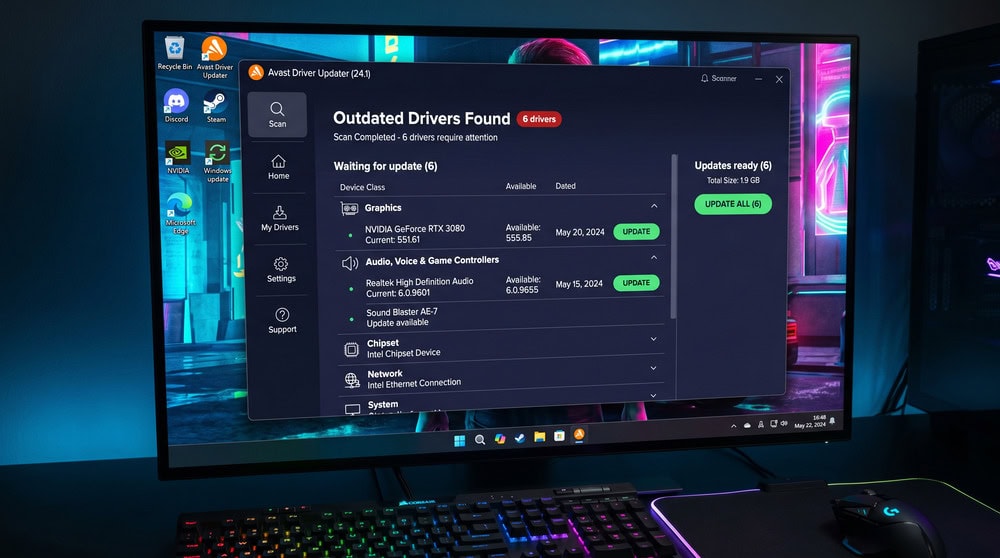
Gamers feel outdated drivers first, as stutters, frame drops, and audio glitches. Avast Driver Updater scans against a database of 70 million drivers and installs them one at a time to avoid the conflicts that can destabilize a gaming rig.
- Automatic scans against a 70 million driver database
- Installs drivers one at a time to reduce conflicts
- Creates a backup before updating
- Sources drivers from official manufacturers
There is no free version, but a 30-day trial (no credit card) lets you test it, plus a 30-day refund. Pricing runs about $43.99/year for one PC, and Avast runs promotions, so check the current price.
Pros
- Very large, frequently updated database
- One-at-a-time installs protect stability
- Automatic backup before every update
- Trusted brand with a 30-day trial
Cons
- No free version for ongoing use
- Pricier than most at list price
- Focused on Windows only
4. AVG Driver Updater — Best for Large Driver Database
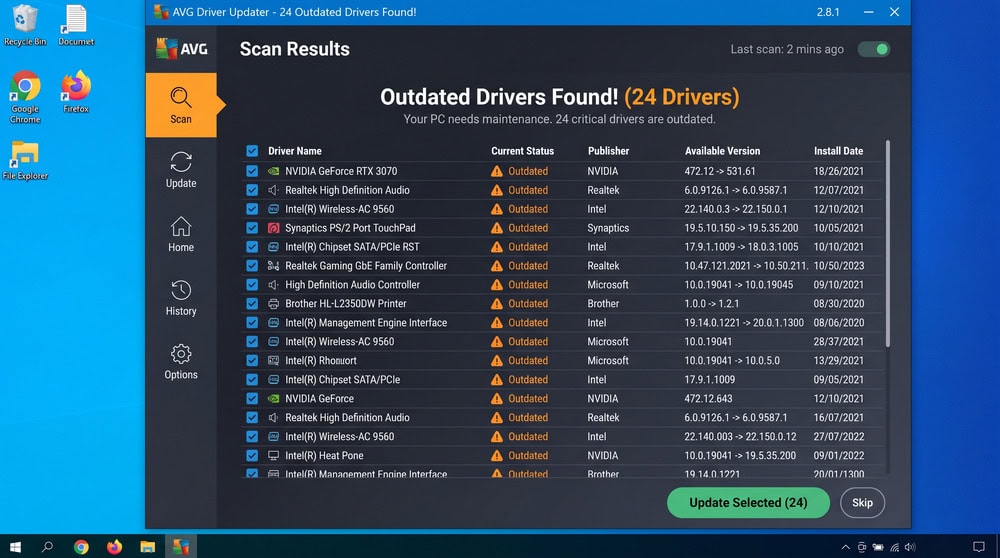
AVG Driver Updater leans on one of the biggest catalogs we saw, more than 50 million drivers, which improves the odds of matching older or less common hardware. Like its Avast sibling, it installs one driver at a time to stay stable.
- 50 million+ driver database
- Automatic and real-time driver scans
- Backs up drivers before installation
- Hardware compatibility checks
- Supports Windows 11, 10, 8.1, and 7 (32- and 64-bit)
AVG is paid only, with a 15-day full-access trial (no credit card) and a 30-day money-back guarantee. List price lands around $40 to $44 per year for one PC depending on the reseller, so confirm it at checkout.
Pros
- Huge database covers older devices
- Real-time scanning catches aging drivers
- Backups and compatibility checks add safety
- Well-known security brand
Cons
- No permanent free version
- Pricing varies widely across resellers
- Heavier than lighter alternatives
5. Driver Talent — Best for Offline / Manual Updates
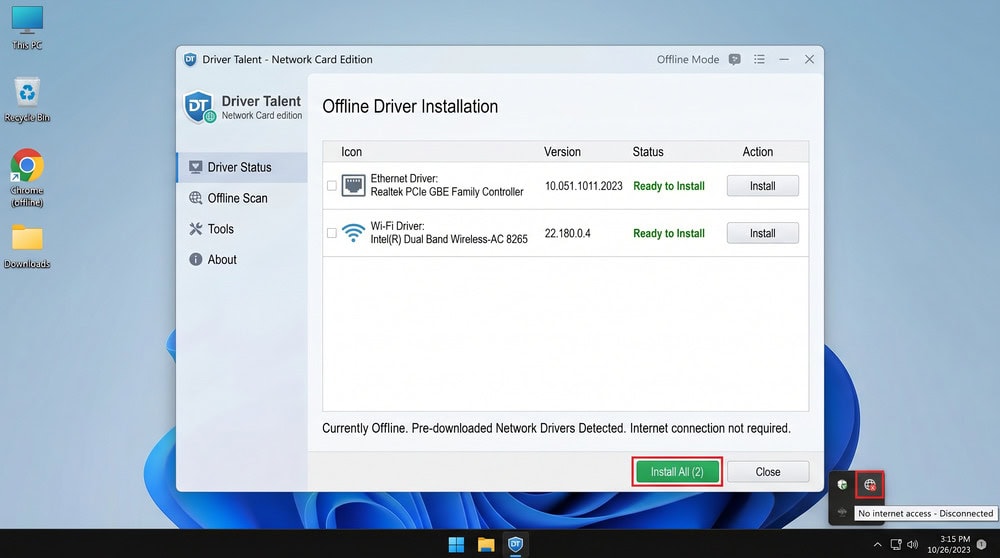
Driver Talent earns its spot on one standout feature: a Network Card edition that pre-downloads drivers so you can install network and other drivers on a PC with no internet, the classic fresh-install problem. Its main app handles scan, download, install, backup, restore, and uninstall in one place.
- Network Card edition for offline driver installs
- Driver backup, restore, and uninstall tools
- Supports Windows 11 down to XP, plus Server
A free version sits alongside Pro, priced around $19.95/year for one PC on promotion with a lifetime license also available, all backed by a 30-day money-back guarantee. We found no official database count, so we judged it on offline strength.
Pros
- Excellent offline, no-internet install option
- All-in-one backup, restore, and uninstall
- Broad Windows and Server support
- Affordable Pro and lifetime pricing
Cons
- No published database size
- Interface looks dated next to rivals
- Best features need the Pro upgrade
6. Snappy Driver Installer — Best Free Option
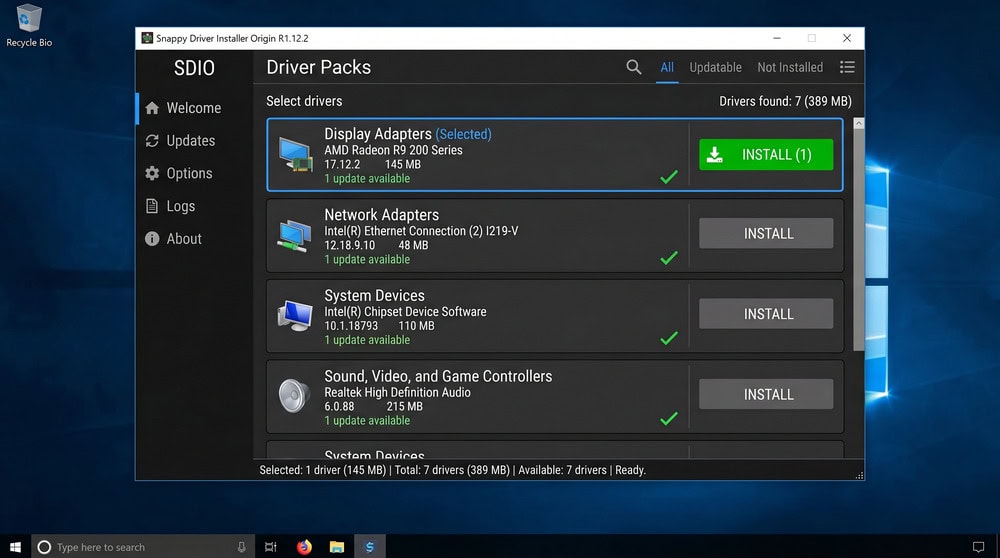
If you want a capable driver updater with no paywall, Snappy Driver Installer is the pick. It is free and open source under the GNU GPL, with no premium tier and no bundled offers in the actively maintained SDI Origin fork, a clean choice for anyone wary of upsell-heavy commercial tools.
- Completely free and open source, donation-funded
- Portable: runs from a USB drive with no installation
- Full offline driver installation via driverpacks
- Supports every Windows version from XP through 11
The trade-off is convenience. There is no automatic scheduling, so you download driverpacks and pick what to install yourself. For technicians and tinkerers, that control is a feature.
Pros
- Truly free with no ads or bundled software
- Works fully offline from a USB stick
- Excellent for fresh installs and repair jobs
- Open source and community-maintained
Cons
- Less beginner-friendly than paid tools
- No automatic scheduled scans
- Large driverpacks need time and disk space
Best Driver Updater Software for Windows: Comparison Table
| Tool | Free vs Paid (price) | Driver database | One-click / auto update | Backup & restore | Windows 10/11 | Best for |
|---|---|---|---|---|---|---|
| IObit Driver Booster | Free + Pro (~$22.95/yr, 3 PCs, promo) | 12M+ free / 18M+ Pro | Yes (auto in Pro) | Yes (Pro) | Yes (down to XP) | Best overall |
| Snappy Driver Installer | Free & open source | Community driverpacks | One-click / bulk, no schedule | Via driverpacks | Yes (XP–11) | Best free option |
| Avast Driver Updater | Paid, ~$43.99/yr (30-day trial) | 70 million | Yes (automatic) | Yes | Yes (7 SP1+) | Best for gamers |
| Driver Easy | Free + Pro ($29.95/yr, 3 PCs) | 30M+ | One-click in Pro | Yes | Yes (7+) | Best for ease of use |
| AVG Driver Updater | Paid, ~$40–$44/yr (15-day trial) | 50 million+ | Yes (automatic) | Yes | Yes (7+) | Best for large database |
| Driver Talent | Free + Pro (~$19.95/yr, promo) | Not published | Yes (one-click) | Yes | Yes (XP–11 + Server) | Best for offline updates |
What Is a Driver Updater (and Do You Really Need One)?
A driver is the software that lets Windows talk to a hardware component, such as your graphics card, printer, Wi-Fi adapter, or webcam. When a driver is outdated, corrupt, or missing, that hardware can misbehave or stop working. A driver updater scans your PC, compares each driver against a database of current versions, and downloads the right updates, usually in just a few clicks.
Do you really need one? If you are happy checking each manufacturer's site and installing drivers yourself, you can keep things running smoothly without extra software. For most people, though, a good driver updater saves time and effort across a desktop full of mixed-brand parts. It is most useful after a fresh Windows install or when you want one tool to keep every driver current automatically.
How We Tested and Chose the Best Driver Updaters
We installed each tool on Windows 11 and Windows 10 test machines, ran a full scan on hardware we knew had outdated drivers, and judged how accurately each one identified those devices. We weighed seven factors: scan accuracy, database size, update speed, backup and restore, setup safety, Windows version support, and price. We also watched each installer, because some driver updaters try to bundle unrelated software.
For every pick, our team installed real updates, confirmed the hardware worked, then tested backups by rolling a driver back. Prices reflect each vendor's figures at the time of writing and may differ at checkout, since these tools run frequent promotions.
How to Update Drivers Manually on Windows 11/10
You do not always need third-party software, because Windows can update many drivers itself. To let it check, open Settings, go to Windows Update, and select Check for updates, then expand the optional updates section where driver updates often appear.
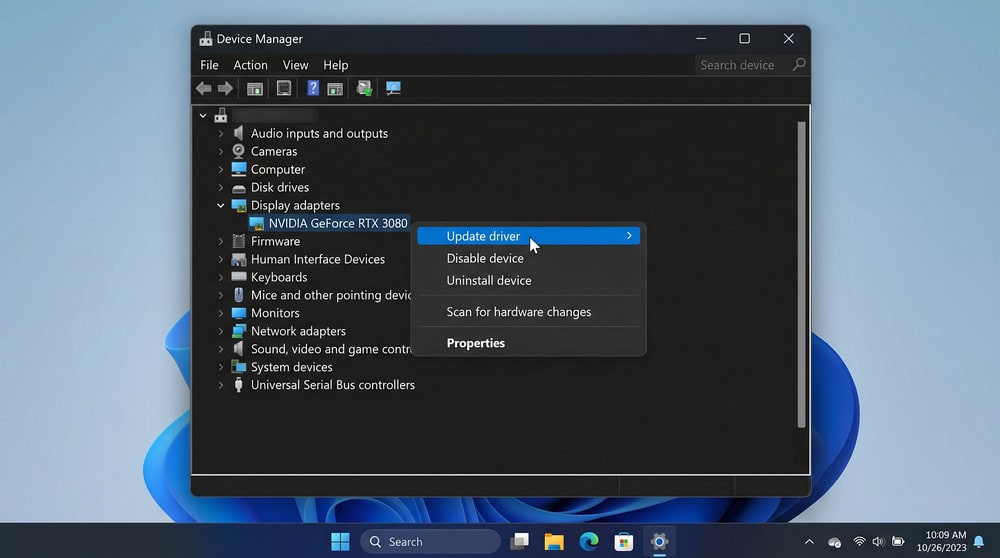
To target a single device, open Device Manager, right-click the component you want to fix, and choose Update driver, then let Windows search automatically or point it at a file you downloaded from the manufacturer. For background on how Windows delivers driver and firmware updates, see Microsoft's driver guidance. The manual route is reliable but slower, and Windows Update does not always carry the newest version a manufacturer has released, which is where a dedicated updater earns its keep.
Are Driver Updaters Safe? What to Watch Out For
Most reputable driver updaters are safe, but the category has a mixed reputation, so a little caution helps. The main risk is not the drivers but the setup process, where some tools quietly try to install unrelated software or bloatware alongside the program.
The other thing to watch is the upgrade nag. Several free tiers flag far more "issues" than they will fix without payment. That does not make them unsafe, but it pays to tell a genuine outdated driver from a marketing prompt. A tool with a clear refund policy, like the 30 to 60 day guarantees among our picks, keeps you protected either way.
Frequently Asked Questions
Do I really need a driver updater?
Not strictly. If you are happy checking each manufacturer's website and installing drivers yourself, you can keep your PC running smoothly without one. A driver updater mainly saves time and effort, which is most valuable after a fresh Windows install or when you are juggling many mixed-brand components.
Are free driver updaters safe to use?
The good ones are, but safety depends on the vendor. Stick to reputable tools, watch the installer for bundled software you did not ask for, and favor programs that back up your drivers before updating. Open-source options like Snappy Driver Installer avoid bundled offers entirely.
How do I know if my drivers need updating?
Common signs include crashes, freezes, no sound, stuttering games, or a device that Windows flags with a warning icon in Device Manager. Running a scan with any tool above, or checking Windows Update, will tell you which drivers are behind.
What is the best driver updater in 2026?
For most people we recommend IObit Driver Booster as the best overall, thanks to its large free database, easy one-click updates, and generous refund window. For a completely free, offline-friendly option, Snappy Driver Installer is the standout.
Conclusion: Our Top Pick
After testing all six tools across Windows 11 and 10, IObit Driver Booster is our top pick for most people. It pairs a large free database with simple one-click updates, adds backup and a 60-day refund on Pro, and keeps your hardware up to date without the manual searching. If you would rather not pay, Snappy Driver Installer delivers reliable, offline-capable updates with no ads or paywall, while Driver Easy is the friendliest pick for less technical users. Whichever you choose, keeping drivers current is one of the simplest ways to keep a Windows PC running smoothly.

 Best Computer Cleaner
 Best Registry Cleaner
 Best Disk Cleaner Software
 iolo System Mechanic Review
 Advanced System Optimizer Review
 Advanced SystemCare Review
 How to Fix a Slow Computer
 How to Speed Up Your Computer