
How Can I See My Kid's Text Messages? How to Monitor Texts on iPhone and Android

As a cybersecurity expert and a mother of two teenagers, I get asked one question more than any other: how can I see my kid's text messages? The honest answer is that it depends on the phone, on how much your child knows, and on whether you need to read the words or just know who they're talking to. This guide walks through every legitimate way to monitor your child's text messages on iPhone and Android, starting with the free built-in tools and ending with the apps that show you the messages themselves.
Viewing your kid's texts can help you spot cyberbullying, online predators, and pressure to share things they shouldn't. The goal isn't to read every word forever. It's to have enough visibility to step in when something is wrong, and to ease off as your child shows good judgment.
Can you monitor your child's text messages?
Yes, but each method sees a different slice of the conversation. Free parental controls on iPhone and Android control who your child can text and blur explicit images, but none of them let you read message content remotely. To read the texts themselves, you need either a shared account that syncs messages to your device or a parental monitoring app.
| Method | Platform | Shows the words? | Cost |
|---|---|---|---|
| Checking the phone together | Both | Yes, what's still on the phone | Free |
| Screen Time Communication Limits | iPhone, iPad | No (controls contacts) | Free |
| Communication Safety | iPhone, iPad | No (blurs nudity) | Free |
| Shared Apple Account / Messages in iCloud | iPhone, iPad | Yes (iMessage and SMS history) | Free |
| Google Family Link | Android | No (apps, time, location) | Free |
| Google Messages for web | Android | Yes (texts on the paired phone) | Free |
| Carrier family plans | Both | No (who and when only) | About $8-10/mo |
| Monitoring app (Eyezy, mSpy) | Both | Yes (texts, iMessages, chat apps) | From about $8/mo |
| Alert-based app (Bark) | Both | Only flagged messages | From $14/mo |
The rest of this guide covers how to set up each one. If your main goal is getting the messages delivered to your own phone, we cover forwarding, iCloud sync, and Messages for web step by step in how to get your child's text messages sent to your phone.
How to monitor your child's text messages on iPhone

Apple gives parents several free tools, and they work best layered together. Start by adding your child to Family Sharing as a child account, because Screen Time and Communication Safety are managed from your own iPhone through Family Sharing. The same settings cover a child's iPad or iPod touch, so you can monitor your child's text messages on an iPad the same way.
1. Check the phone together
The simplest way to see your kid's text messages is to look at them with your child. Many families make phone checks part of the deal when a child gets their first iPhone: you can open Messages at any time, and your child knows it. It costs nothing, needs no setup, and keeps the arrangement honest. Its limit is obvious: you only see what hasn't been deleted.
2. Control who they can text with Communication Limits
Screen Time's Communication Limits let you decide who your child can message, call, and FaceTime. On your iPhone, go to Settings > Screen Time, tap your child's name, then Communication Limits. You can allow Everyone, Contacts Only, or Contacts and Groups with at least one contact, and set a stricter limit during Downtime. Turn on Manage [child]'s Contacts to edit their contact list from your own phone.
In iOS 26, Apple went further for younger children: a child who wants to text a new number has to send a request, and you approve or decline it from your own device. That won't show you what they say, but it stops strangers from reaching them in the first place, which is often the real worry behind monitoring.
3. Turn on Communication Safety
Communication Safety scans images on the device and blurs photos and videos that contain nudity before your child sees them, with a prompt to message a trusted adult. It's on by default for child accounts under 13, and you can turn it on for older teens under Settings > Screen Time > [child] > Communication Safety. Apple processes everything on the phone, so you don't receive copies of the images or messages.
4. Read iMessages through a shared Apple Account
Can you monitor your child's iMessages? Only if the messages sync to a device you can open. iMessages and, with Text Message Forwarding, SMS and MMS texts sync across every device signed into the same Apple Account, including a Mac laptop, with Messages in iCloud turned on. Some families keep a young child on a shared account for exactly this reason. The trade-off is that a shared account also shares photos, purchases, and passwords, and it's not available if your child has their own Apple Account in Family Sharing. Our guide to getting your child's texts sent to your phone has the exact steps.
For the wider set of iPhone controls, including app limits and location sharing, see how to monitor your kid's iPhone.
How to monitor your child's text messages on Android

Android's free tools, on Samsung Galaxy and Pixel phones alike, are more limited for texts than Apple's, so most parents who want to monitor their child's text messages on Android combine Family Link with one of the options below.
1. Set up Google Family Link
Google Family Link is free and handles the basics: approving app downloads, daily limits, bedtime, and location. Install Family Link on your phone, sign your child into their Google Account on their Android, and follow the supervision prompts. Family Link does not show SMS content, so treat it as the foundation, not the text monitor.
2. Keep Google Messages' sensitive content warnings on
Google Messages can blur images that may contain nudity and warn the user before they view or send one. Google turns these warnings on for supervised child accounts, and parents manage the setting through Family Link. Like Apple's Communication Safety, it runs on the device and doesn't send you copies of anything.
3. Mirror texts with Google Messages for web
Google Messages for web mirrors the texts on an Android phone to a browser, so you can read conversations from a computer once it's paired. You pair it on your child's phone, so do it with their knowledge, and the phone needs to stay online for the view to update. We walk through pairing in our sent-to-your-phone guide.
For app blocking, Play Store limits, and Chrome filtering on top of this, see how to monitor your kid's Android phone.
Monitor texts with a parental monitoring app
Is there an app to monitor your child's text messages? Yes, and it's the only route that shows message content on both iPhone and Android without a shared account. Monitoring apps come in two types: apps that copy the messages into a dashboard, and apps that stay quiet until they flag something risky.
Apps that show you the texts: Eyezy and mSpy
Eyezy is our pick for parents who want to read the texts themselves. It puts your child's SMS threads, iMessages, and chats from WhatsApp, Instagram, and Snapchat into a web dashboard with timestamps and contact names, and its Magic Alerts notify you when a keyword you've chosen shows up. On iPhone it syncs from the iCloud backup using your child's Apple ID, so new messages appear after the phone backs up. On Android you install a small app on your child's phone, which takes a few minutes with the phone in hand. Premium starts at about $7.99 a month on the annual plan.
Get Eyezy →mSpy works the same way with a slightly wider set of supported chat apps and a keyword alert list, from about $11.67 a month billed annually. uMobix is the option if you mainly care about fast social media updates on Android.
Apps that alert you instead: Bark
Bark doesn't give you every message. It scans texts and supported apps for signs of bullying, self-harm, predators, and explicit content, then sends you an alert with the flagged snippet. That suits older kids and teens, because you hear about the conversations that matter without reading the rest.
We compare features, pricing, and test results for all of these in the best apps to monitor your child's text messages.
Can I monitor my child's text messages for free?
Partly. The free ways to see your kid's texts are checking the phone together, a shared Apple Account with Messages in iCloud, and Google Messages for web on Android. The free parental controls, Screen Time and Family Link, help you limit contacts and block explicit images, but they don't show message content. Reading texts remotely on a separate account means a paid app. If you mainly want free controls, our list of free parental control apps covers what each one actually does.
Can I monitor my child's texts without them knowing?
Technically, yes: several monitoring apps run without an icon on the child's phone, and iPhone apps that read the iCloud backup install nothing on the device at all. Whether you should is a different question. In our experience, secret monitoring works until the day your child finds out, and then it costs you the trust you were trying to protect. Kids also adapt quickly, moving to apps or devices you can't see.
We'd reserve covert monitoring for a genuine safety emergency, such as signs of grooming, self-harm, or contact with a dangerous adult. For everyday oversight, tell your child what you can see and why. The visibility is the same, and your child is more likely to come to you when something goes wrong.
How much monitoring is right for your child's age?
Match the method to your child's age, maturity, and track record, and plan to loosen it over time.
- Under 10: Contacts Only communication limits, contact approval, and Communication Safety cover most of the risk. Phone checks together are usually enough.
- Ages 10 to 13: Keep the contact limits, and add a monitoring app or a shared account if your child is starting group chats and social apps.
- Teens: An alert-based app like Bark respects more of their privacy while still catching serious problems. Read full messages only when you have a specific concern.
Whatever you choose, write it down together: what you can see, when you'll look, and what earns more independence. In our experience, clear rules agreed up front prevent most of the arguments about phones.
Is it legal to monitor your child's text messages?

In the United States and most other countries, parents can generally monitor the phone of their own minor child, especially on a device and plan the parent pays for. The picture changes once your child turns 18, if you're monitoring a phone you don't own, or if the other parent shares custody, and some countries give older teens stronger privacy rights. Recording other people's messages can also raise issues, because your child's friends haven't agreed to anything. If your situation isn't straightforward, check your local laws or ask a family lawyer before installing anything.
The ethical side matters just as much. Talk with your children about the dangers you're worried about and explain why monitoring their text messages is part of keeping them safe. Encourage them to bring concerning messages to you first, so the monitoring becomes a backstop rather than the only line of defense.
What to do if you find something concerning
Stay calm before you say anything. If the messages suggest your child is in danger, such as contact with an adult stranger, threats, or talk of self-harm, take screenshots, then talk to your child, and contact the school, the platform, or the police as needed. For everyday problems like rude language or a falling-out with a friend, talk it through without accusations, and focus on helping your child handle it better next time. Reacting harshly to small things teaches kids to hide the big ones.
Frequently asked questions
How can I monitor my child's text messages on iPhone?
Use Screen Time's Communication Limits to control who they can text, keep Communication Safety on, and, if you need to read the messages, either share an Apple Account with Messages in iCloud or use a monitoring app such as Eyezy that reads the iCloud backup.
Can I monitor my child's text messages from my own phone?
Yes. Monitoring apps put the messages in a dashboard you open in your phone's browser, and a shared Apple Account syncs iMessages to your iPhone. Carrier family tools from Verizon, AT&T, and T-Mobile show who your child texts and when, but not the words.
Can I see my child's deleted text messages?
Only if something captured them before they were deleted. Monitoring apps keep the messages they've already logged, but nothing recovers texts deleted before you set it up, and iCloud sync removes a deleted message from every device.
Do I need to jailbreak or root my child's phone?
No, not for text monitoring. iPhone apps that use the iCloud backup need no jailbreak, and Android apps install without root for SMS. Some deeper chat-app capture on Android can require root.
Can I monitor my child's phone calls too?
Monitoring apps like Eyezy and mSpy log call history, including numbers, times, and durations, alongside texts. Screen Time and Family Link can limit who your child calls, and your carrier's family plan shows call activity.
Can I monitor my child's texts through Verizon?
Verizon's family tools show text and call activity, such as the time and contact, but not message content, whether your child uses Verizon's Message+ app or Google Messages, and they don't cover iMessage or chat apps. We compare what each carrier shows in our guide to getting your child's texts sent to your phone.
The bottom line
To see your kid's text messages, start with the free tools: contact limits and Communication Safety on iPhone, Family Link and sensitive content warnings on Android, and phone checks you do together. When you need to read the messages on a separate account, Eyezy is the simplest way to monitor your child's text messages on iPhone and Android, and Bark is the gentler choice for teens. Whichever you pick, be open about it and loosen the rules as your child earns your trust.

 Get Kid's Texts Sent to Your Phone
 Best Text Monitoring Apps
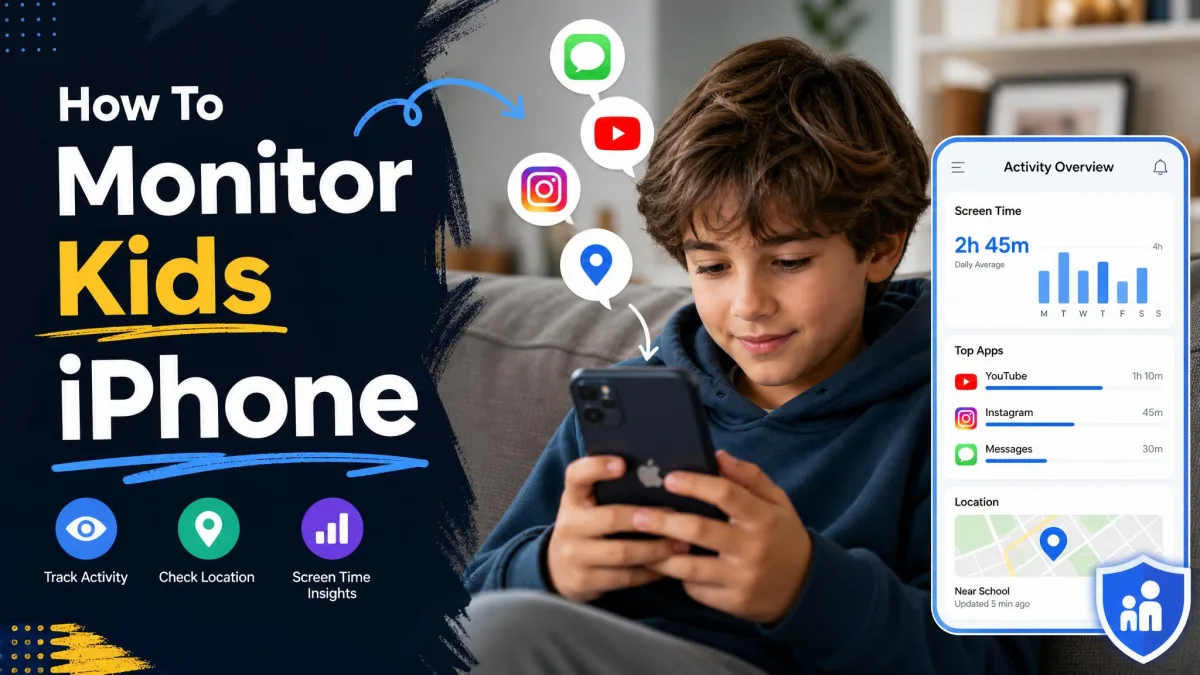 Monitor Your Kid's iPhone
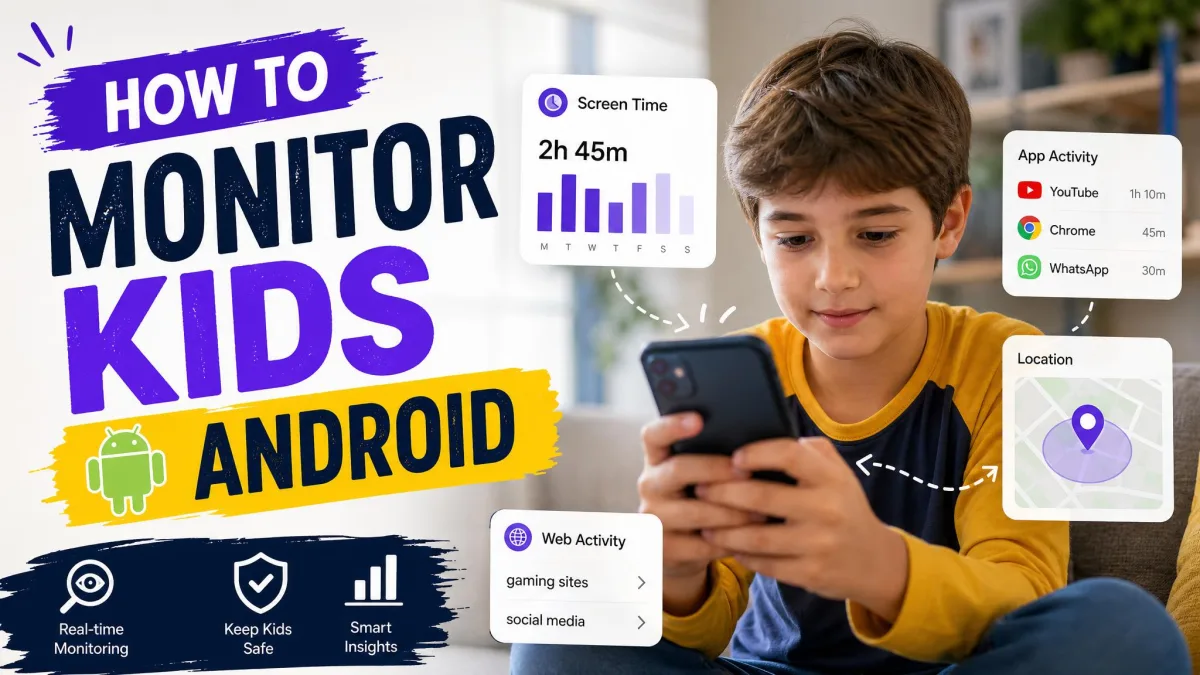 Monitor Your Kid's Android
 Find Hidden Texts on iPhone
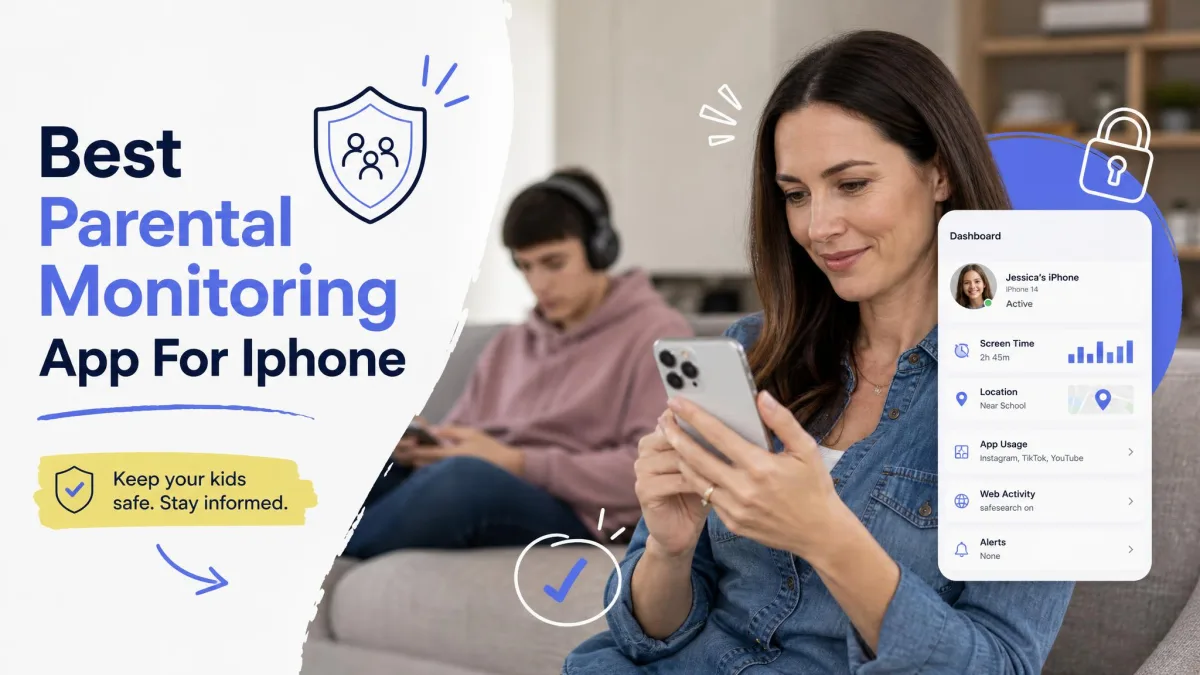 Best iPhone Monitoring Apps
 Monitor Without Invading Privacy