
5 Best Apps That Detect Spyware in 2026 (Android & iPhone)

Spyware software can secretly monitor what you do on a device and sends that information to someone else without your knowledge. On a phone it can read your messages, track your location, record audio, and copy your photos while staying hidden from the apps list. Spyware-detection apps find that hidden software before it does damage, and the right one can give you peace of mind in a few minutes.
In this guide, we'll rank the 5 best apps to detect spyware in 2026, compare them, and cover removal, free versus paid tools, and prevention. Then we'll explain what spyware is, walk through the signs your device is infected, and show how detection apps work.
- The 5 best apps to detect spyware
- What is spyware (and the types that hide on your phone)
- Spyware detection apps compared (free vs. paid, platforms, price)
- Signs your device may be infected with spyware
- How spyware detection apps work
- How to remove spyware once it's detected
- Free vs. paid spyware detection apps: which is right for you?
- How to prevent spyware infection
- Frequently asked questions
- The bottom line
The 5 best apps to detect spyware
To build this list, we weighed independent-lab detection results (AV-Comparatives, AV-TEST), real-time protection, platform coverage across Android and iPhone, ease of use, and the value of each free tier. The five below struck the best balance for users who want to find hidden threats without complicated settings.
1. Malwarebytes
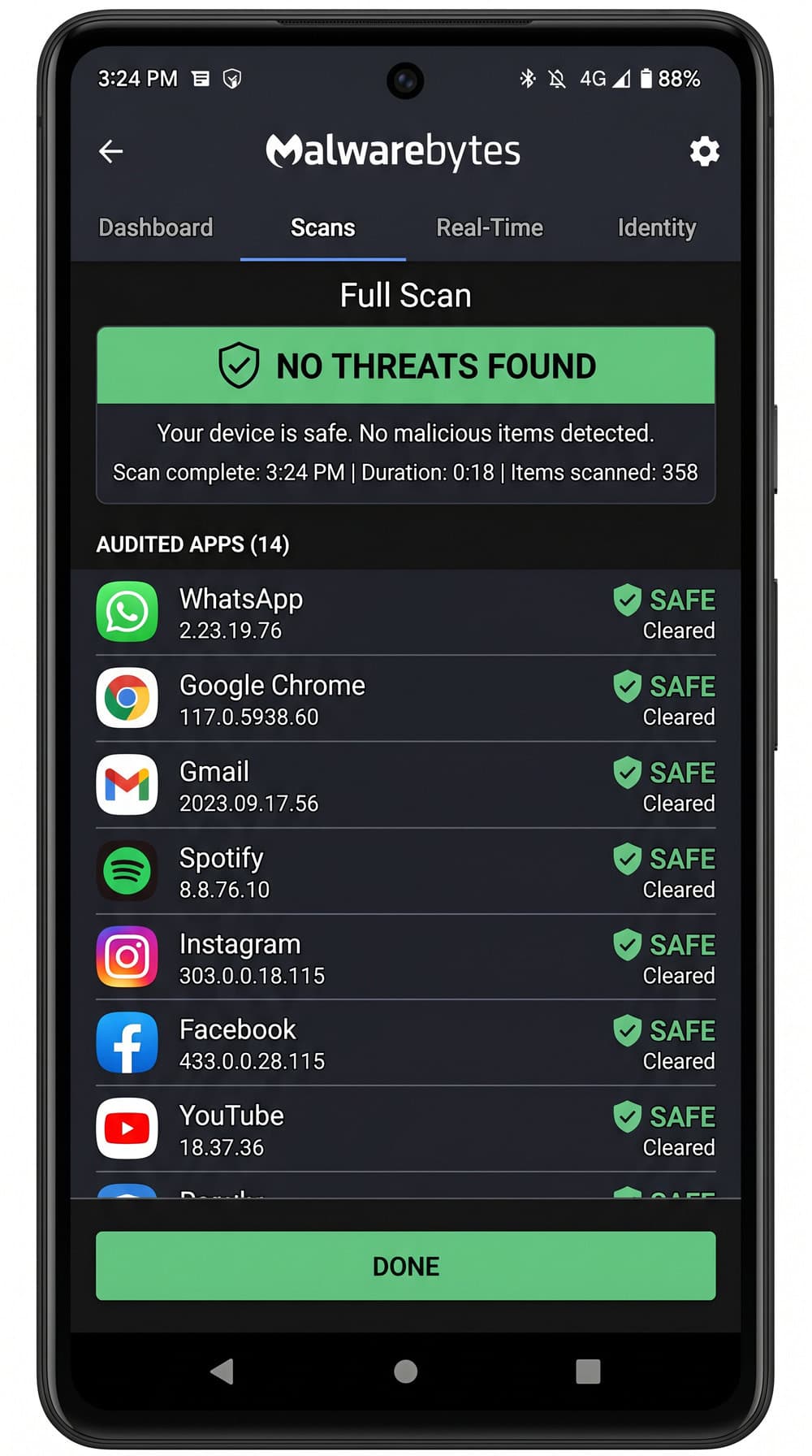
Malwarebytes built its reputation stripping malware off Windows PCs, and its mobile app brings the same focus to phones. The free version scans for spyware, stalkerware, and trojans and flags apps that quietly request invasive permissions. We found the interface plain: tap scan, wait, and read the results.
It runs on Android and iPhone, with a lighter feature set on iOS because of Apple's sandboxing, and adds real-time protection, a privacy audit, and browser tracker blocking on the paid tier. That protection sits on a low-cost subscription, so check current vendor pricing; the free tier scans on demand.
2. Bitdefender Mobile Security
Bitdefender consistently earns top marks from independent testing labs. It pairs malware and spyware scanning with an app anomaly detector that watches installed software for behavior typical of stalkerware.
Other features include web protection that blocks malicious links, account-breach monitoring, and a VPN allowance on the paid plan. The Android app is the more complete of its two versions, while the iPhone app focuses on web protection and breach alerts. A free Android scanner exists, but most protective features need a paid subscription, so check current vendor pricing.
Get Bitdefender Mobile Security3. Norton Mobile Security
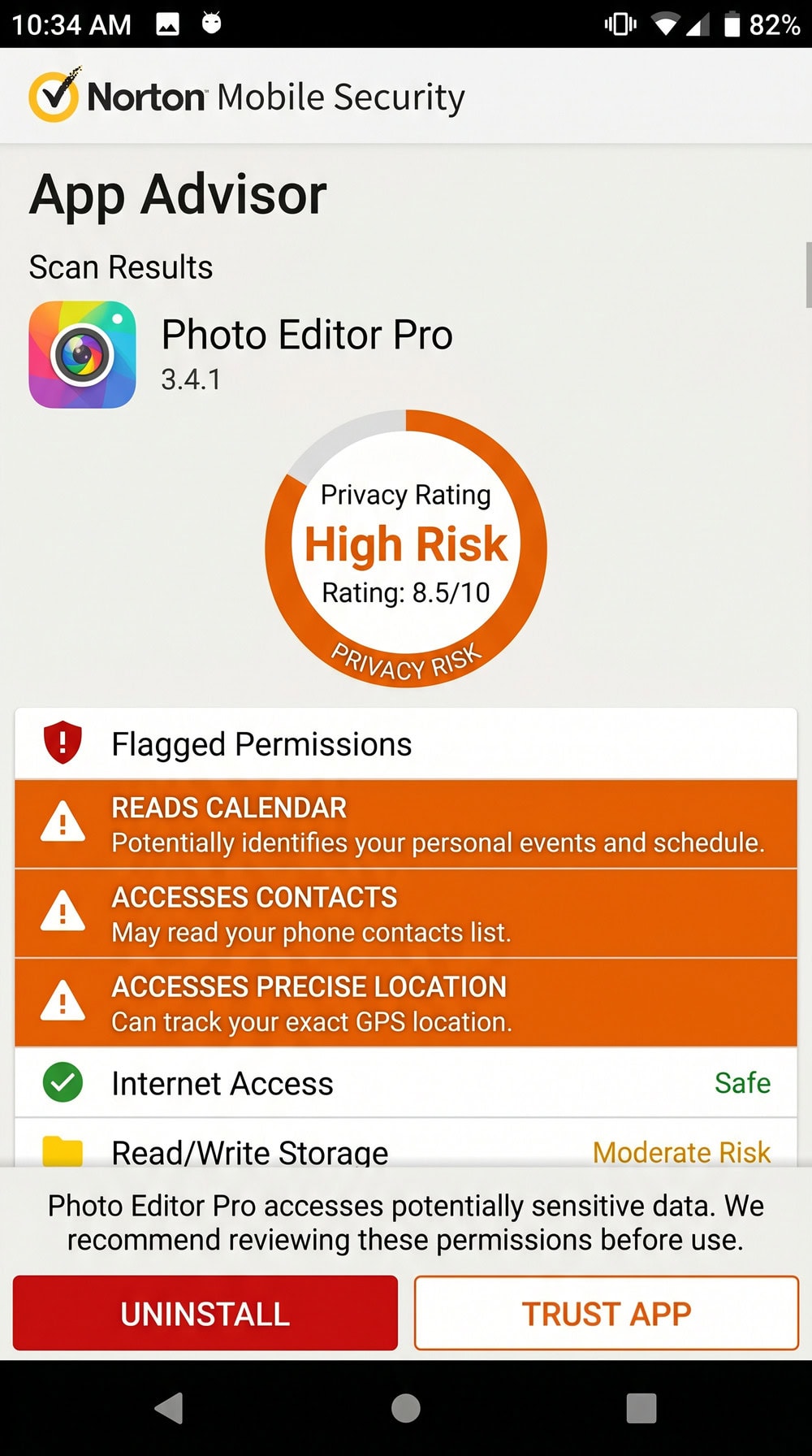
Norton brings decades of security experience and a polished mobile experience. Its app scans for spyware and malware, vets apps before you install them through App Advisor, and warns you about risky Wi-Fi networks that could be used to intercept your data.
It adds web protection and dark-web monitoring on higher tiers and covers Android and iPhone, with the iOS app leaning on web and Wi-Fi protection where on-device scanning is restricted. Norton is sold as a paid subscription, so check current vendor pricing; the lack of a meaningful free tier is its clearest downside.
4. Avast Mobile Security
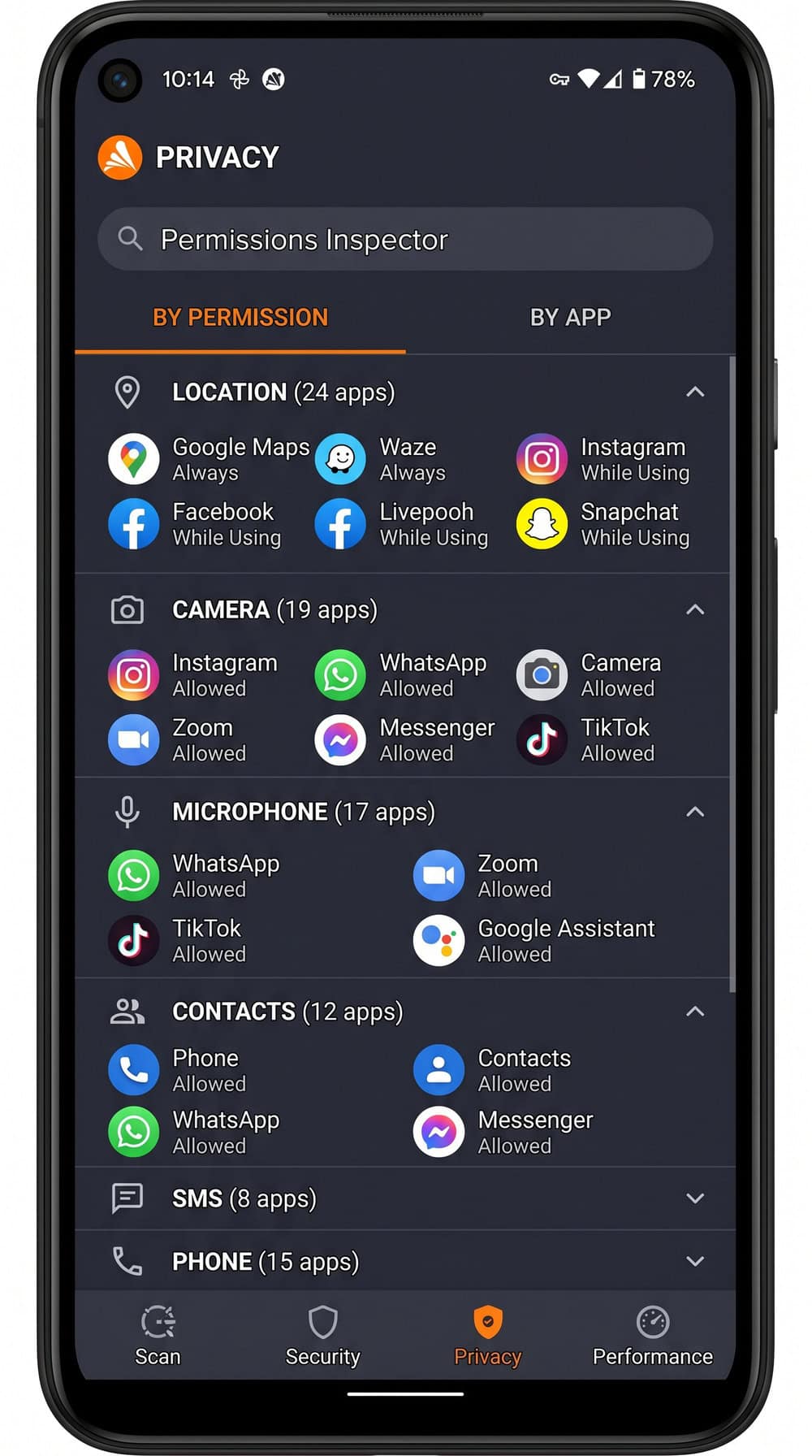
Avast offers one of the more generous free tiers, which makes it a popular starting point for anyone who wants to scan without paying first. The app detects spyware, malware, and trojans and includes a permissions inspector that shows exactly what each app can access.
It also bundles a Wi-Fi security check, app locking, and a photo vault on the paid plan, and runs on Android and iPhone with the fuller toolkit on Android. Removing ads and adding extras sits on a low-cost subscription, so check current vendor pricing; the free tier shows ads, which some users find intrusive.
5. Kaspersky
Kaspersky rounds out the list with strong detection scores and a dedicated focus on stalkerware through its work with the Coalition Against Stalkerware. Its app is built to surface the consumer spyware that someone close to you might install.
It pairs spyware scanning with stalkerware-specific alerts, a privacy report, safe browsing, and anti-theft tools, and supports Android and iPhone with deeper scanning on Android. Premium protection sits on a low-cost subscription, so check current vendor pricing. Worth noting: some government agencies have restricted Kaspersky on official devices, so check whether that affects you first.
Get Kaspersky for AndroidWhat is spyware (and the types that hide on your phone)
Spyware is malicious software designed to gather information about you covertly. According to the definition of spyware, the term covers any program that collects data and transmits it to a third party without consent. On a phone, that usually means apps masquerading as system tools or games while harvesting your data in the background.
A few types show up most often. Keyloggers record every keystroke you type, exposing passwords, banking logins, and private messages. Stalkerware is consumer spyware marketed for monitoring a partner, child, or employee, and it is frequently installed by someone with physical access to your device. Trojans disguise themselves as legitimate apps and open a back door for surveillance. Adware tracks your browsing to serve targeted ads, and it often bundles more invasive components.
Spyware detection apps compared (free vs. paid, platforms, price)
The table below puts the 5 apps side by side so you can match one to your platform and budget. Pricing models change often and vary by region, so confirm current rates with each vendor.
| App | Platform | Free tier? | Price | Key detection feature |
|---|---|---|---|---|
| Malwarebytes | Android, iPhone | Yes (scan) | Free + paid plans | Permission audit + signature scan |
| Bitdefender Mobile Security | Android, iPhone | Yes (Android scan) | Free tier; paid upgrade | App anomaly / behavioral detection |
| Norton Mobile Security | Android, iPhone | Limited | Paid subscription | App Advisor pre-install vetting |
| Avast Mobile Security | Android, iPhone | Yes (ad-supported) | Free + paid plans | Permissions inspector |
| Kaspersky | Android, iPhone | Yes (scan) | Free + paid plans | Stalkerware-specific alerts |
Signs your device may be infected with spyware
Spyware tries to stay invisible, but it almost always leaves traces, and a few warning signs help you decide whether to run a scan.
Unexplained battery drain is one of the most common red flags. Spyware records your location, listens through the microphone, and uploads what it collects, and all of that consumes power even when the phone sits idle. A battery that suddenly empties by midday when it used to last all day is worth investigating.
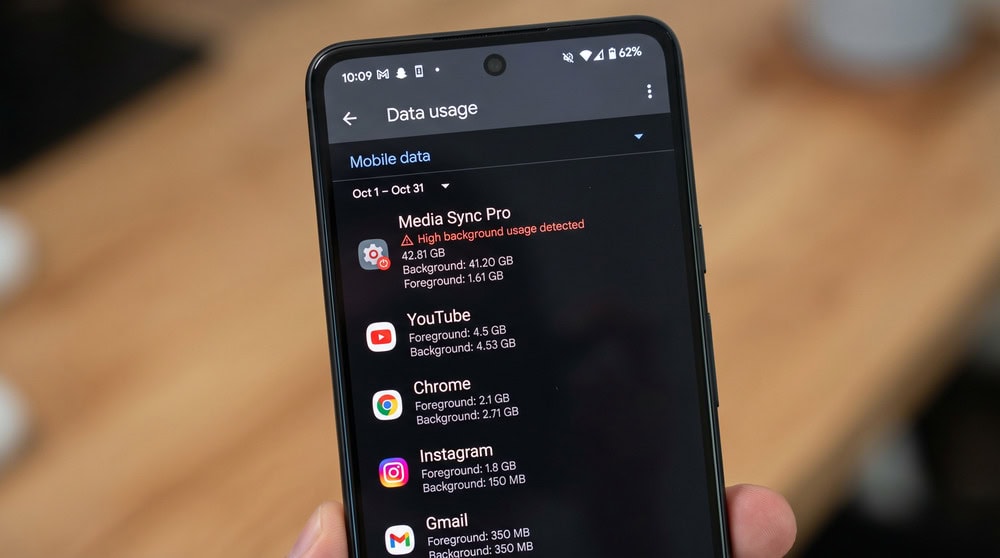
Higher data usage is another tell. Spyware sends what it captures to a remote server, and that traffic shows up in your monthly data. You can check your usage by opening Settings → Cellular on iPhone or Settings → Network & internet → Data usage on Android, then looking for an unfamiliar app near the top of the list.
Other signs include the phone running hot when idle, apps you do not remember installing, frequent crashes, and strange pop-ups. Any one of these can have an innocent cause, but together they point toward something running in the background that should not be there.
How spyware detection apps work
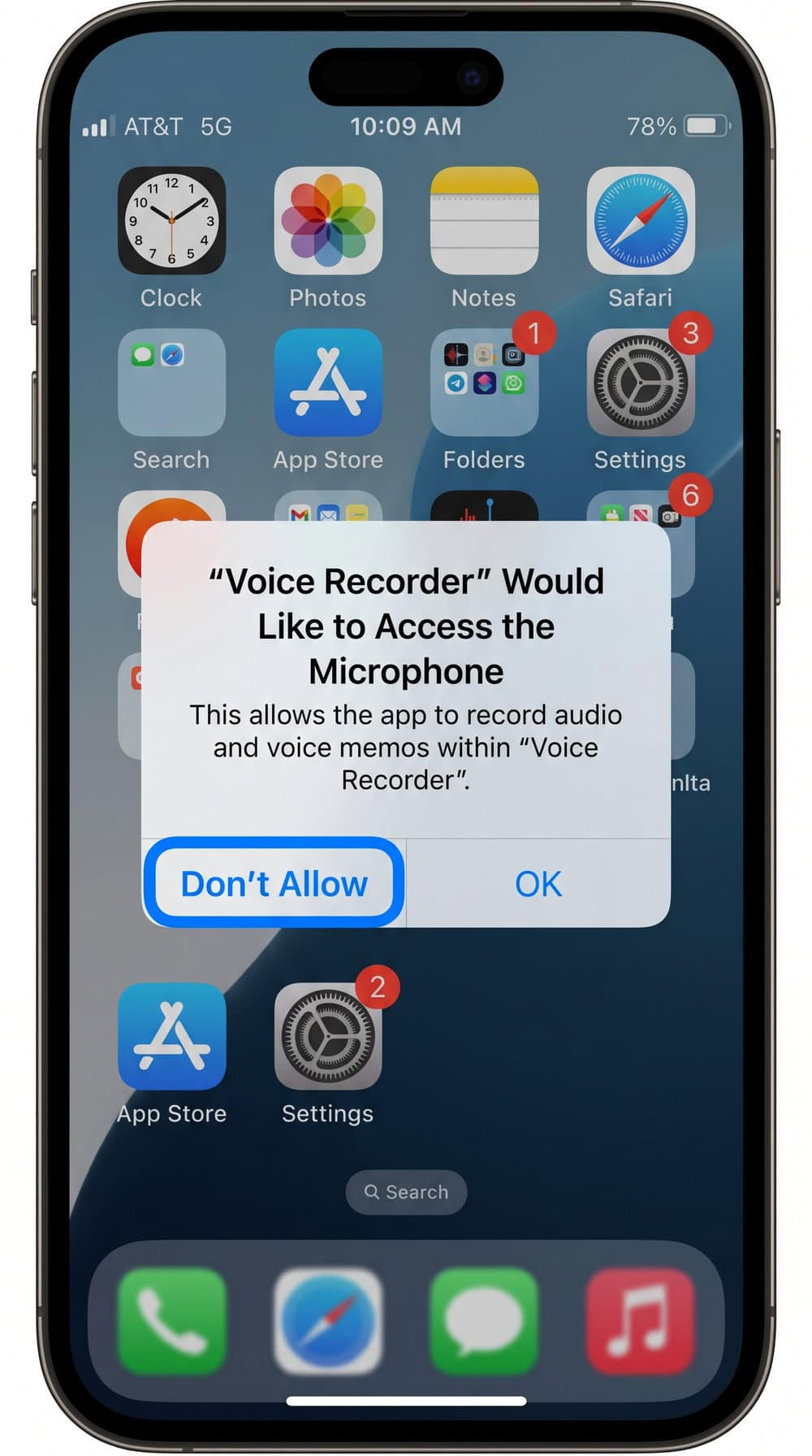
Spyware detection apps combine three techniques. Signature scanning compares the software on your phone against an updated database of known spyware fingerprints. Behavioral analysis watches for suspicious activity, such as an app requesting microphone access it has no reason to need, which catches new threats no database has cataloged yet. Permission auditing surfaces apps holding excessive access to your location, camera, or accessibility services, where stalkerware tends to hide.
Many tools now run these checks in real-time, scanning new installs the moment they happen. We lean on independent AV-Comparatives testing to gauge how reliably each engine catches real-world threats rather than trusting vendor claims.
How to remove spyware once it's detected
Once a scan flags something, removing it is usually straightforward, though a few situations call for extra care.
If you suspect the spyware was installed by an abusive partner, family member, or anyone with physical access to your phone, removing it suddenly can escalate the situation by alerting the person watching you. Make a safety plan first and decide when and how to act. Using an untracked device is often the safest way to seek help.
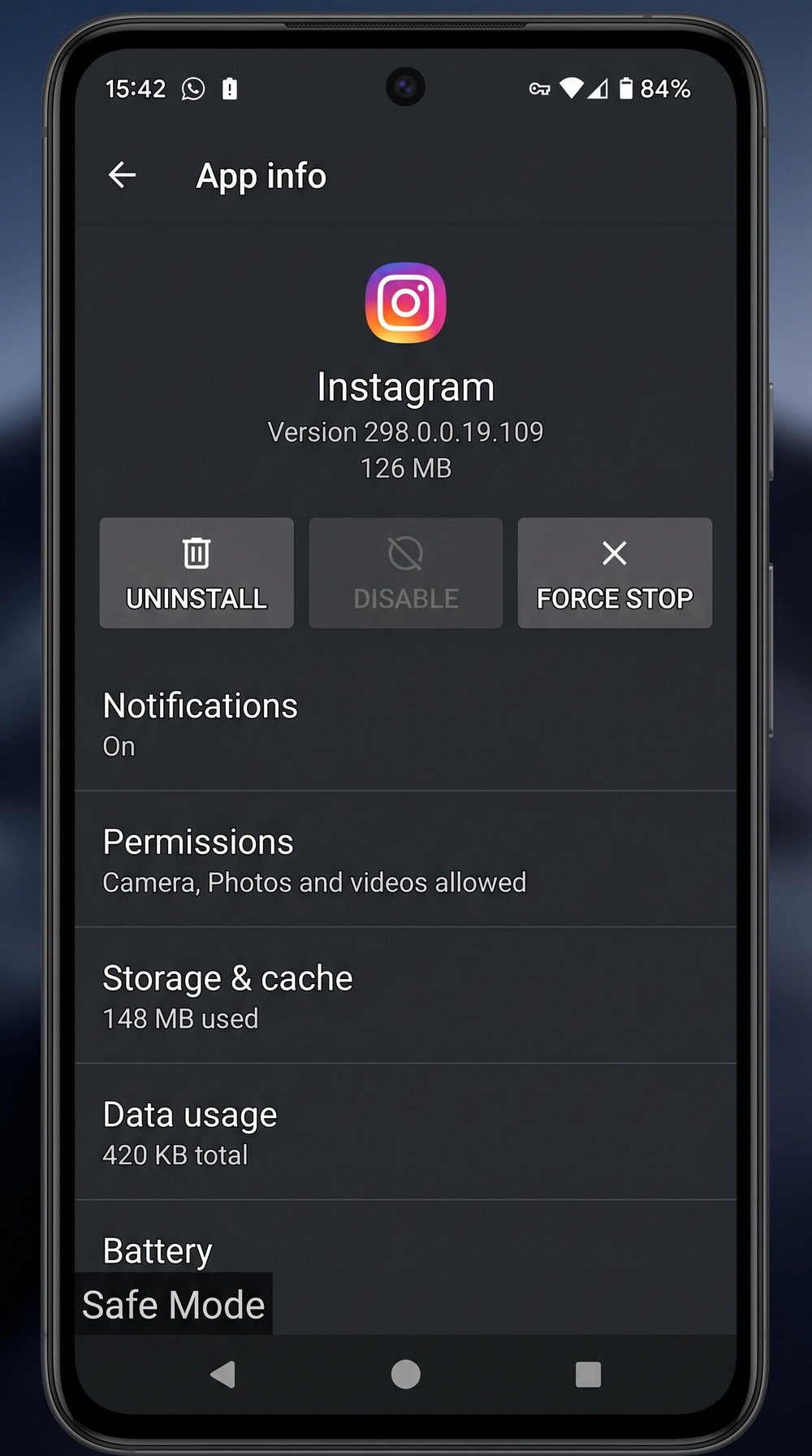
For most cases, let your detection app quarantine and remove the flagged item, which handles the bulk of consumer spyware automatically. If the app cannot remove it, restart your phone in Safe Mode, which loads only essential software and stops most spyware from running, then open your settings and uninstall the suspicious app manually.
Some stalkerware abuses device-administrator or accessibility permissions to block removal. Open Settings → Security → Device admin apps on Android and revoke access for anything you do not recognize before uninstalling. After removal, change the passwords for your important accounts from a device you trust, since the spyware may have captured your logins. If a threat resists every step, a factory reset is the last resort.
Free vs. paid spyware detection apps: which is right for you?
Free spyware detection apps are genuinely useful, and for many people they are enough. A free scanner from any of the names above reliably catches known spyware, stalkerware, and trojans through an on-demand scan, which covers the most common need: confirming whether something is on your phone right now.
The gap shows up with continuous protection. Paid tiers add real-time scanning that checks every new app the moment you install it, plus extras like VPNs and dark-web monitoring. If you install apps often, handle sensitive work on your phone, or worry that someone is spying on you, that always-on coverage is worth the modest monthly cost. Otherwise, start free and upgrade only if you keep getting flags.
How to prevent spyware infection
Prevention is far easier than removal, and a handful of habits keep most spyware off your phone.
Stick to official app stores. The Google Play Store and Apple App Store screen submissions, so the odds of downloading spyware drop sharply compared with sideloaded files from random websites. On Android, leave "install unknown apps" turned off unless you have a trusted reason to enable it.
Review permissions before and after you install: if a flashlight app asks for your microphone and contacts, deny it. Keep your operating system and apps updated, since updates patch the holes spyware exploits. Lock your phone with a strong passcode or biometrics so no one can install stalkerware during a few unattended minutes. Finally, keep one of the detection apps above installed and run an occasional scan so anything that slips through gets caught early.
On iPhone, Apple's strict sandboxing limits how deeply any third-party app can scan the system, which is why iOS spyware tools lean on web protection, breach alerts, and configuration checks rather than full device scans. The flip side is that iOS is genuinely harder for spyware to infect.
Frequently asked questions
What is spyware and why is it dangerous?
Spyware secretly monitors your activity and sends it to someone else without your knowledge. It is dangerous because it can expose your passwords, messages, location, and financial details, enabling identity theft or stalking.
Why can't iPhone apps scan as deeply as Android apps?
Apple's sandboxing isolates each app from the rest of the system, so an iOS security app cannot inspect other apps the way it can on Android. That is why iPhone tools focus on web protection, breach alerts, and configuration checks rather than full device scans.
Will a spyware detection app slow down my phone?
An on-demand scan uses noticeable resources only while it runs, then stops. Always-on real-time protection has a small steady footprint, but on modern phones that impact is usually too minor to feel in everyday use.
How often should you scan your phone for spyware?
A monthly manual scan is a sensible baseline. Scan immediately if you notice sudden battery drain, unusual data usage, or apps you do not recognize, or after someone else has had physical access to your phone.
Can someone spy on your phone without you knowing?
Yes. Stalkerware and similar tools are designed to run invisibly, often hiding their icon and masquerading as a system app. That is exactly why detection apps and the warning signs above matter.
Can spyware survive a factory reset?
In almost all cases a factory reset removes spyware, because it wipes installed apps and returns the phone to its original state. Rare, deeply embedded threats can persist, so restore from a clean backup and change your account passwords afterward.
The bottom line
Spyware thrives on staying unseen, but it is not invisible to the right tools. Any of the 5 apps above will scan your Android or iPhone, surface hidden threats, and help you remove them. Malwarebytes and Avast stand out for strong free tiers, while Bitdefender, Norton, and Kaspersky offer deeper continuous protection on paid plans. If you suspect someone is spying on you, start with a free scan today and upgrade only if you need always-on coverage. For platform-specific steps, see our guides on what apps detect spyware on iPhone and how to detect spyware on an Android phone.

 Best iPhone Spyware Detection Apps
 What Apps Detect Spyware on iPhone
 How to Detect Spyware on Android
 Find Hidden Spy Apps on Android
 Find Hidden Spy Apps on iPhone
 Signs Someone Is Spying on iPhone
 Signs Someone Is Tracking Your Phone
 How Spy Apps Work