AVG Secure VPN comes from Gen Digital, the company behind AVG antivirus, and is sold alongside AVG's security suite as a separate subscription. Its network is small and leans heavily on Europe, so it offers fewer countries to connect through than most rivals. Streaming is inconsistent, with several major services failing to load. AVG also keeps connection logs and has never published an independent audit, and advanced tools like obfuscation and port forwarding are missing.
If AVG Secure VPN has left you wanting more reach, more privacy or better streaming, we think NordVPN is the strongest replacement for most people. If you would rather not pay at all, Proton VPN's free plan is the one we would install first. For the full picture of what AVG does well, our AVG Secure VPN review covers the service in depth, and the picks below show where each alternative pulls ahead.
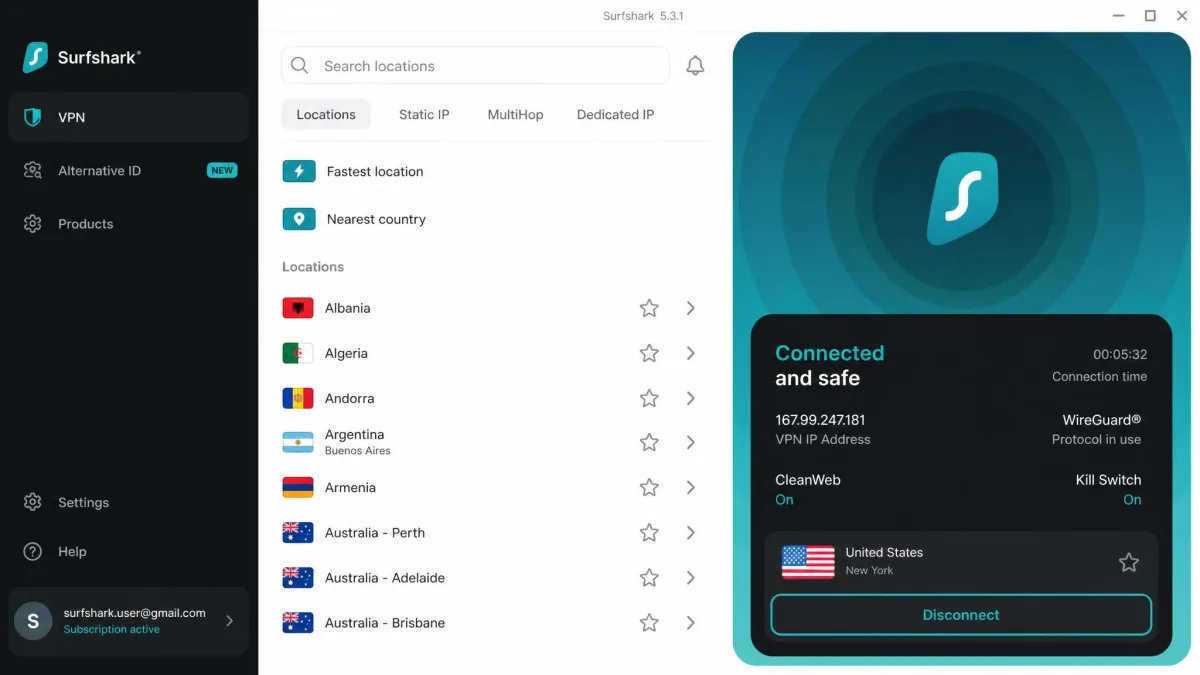
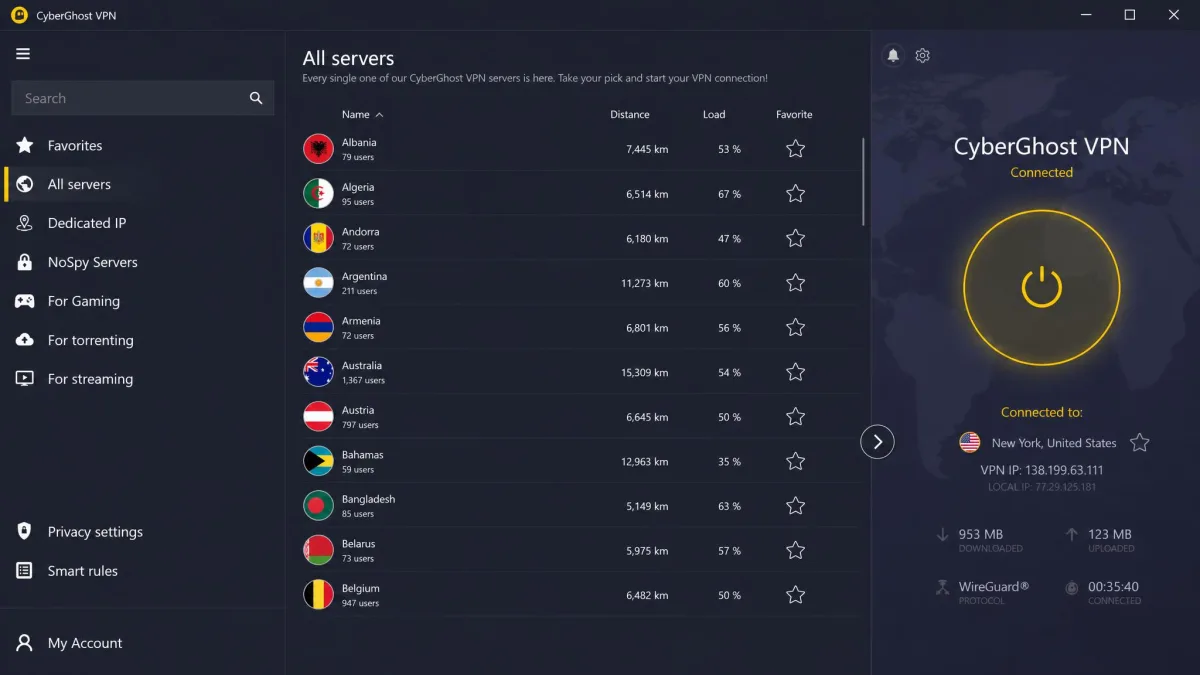
Best AVG Secure VPN alternatives at a glance
The table lists our seven picks in rank order, with AVG Secure VPN in the last row as the baseline. Prices are introductory long-plan rates, and most of them renew higher after the first term.
| Product | Buy | Starting price | Server countries | Devices | Streaming | Independent no-logs audit | Free plan |
|---|---|---|---|---|---|---|---|
 |
Check price → | About $3.49/mo2 years | About 118-167 (varies) | 10 | Reliable | Deloitte, 6th check (2025-26) | No |
 |
Check price | About $2.99/mo2 years | 140+ | 10 (1 on Free) | Reliable on paid plans | Securitum, 2025 | Yes |
 |
Check price | About $2.79/mo2 years | 105-113 | 10 (Basic) | Reliable | KPMG, 2025 | No |
 |
Check price | $2.49/mo2 years | 100 | Unlimited | Reliable | Deloitte, 2025 | No (7-day mobile trial) |
 |
Check price | About $2.19/mo26 months | 100 | 7 | Strong | Deloitte, Q4 2025 | No |
 |
Check price | About $2.03/mo3 years + 3 months | 91 + all 50 US states | Unlimited | Weak | Deloitte, Dec 2025 | No |
 |
Check price | $2.19/mo2 years | About 75-112 (varies) | Unlimited | Mostly works | Schellman, 2025 | No (7-day mobile trial) |
 |
$4.49/mo1 year | Unverified (AVG says 100+ locations) | 10 | Inconsistent | None published | No (60-day trial) |
1. NordVPN
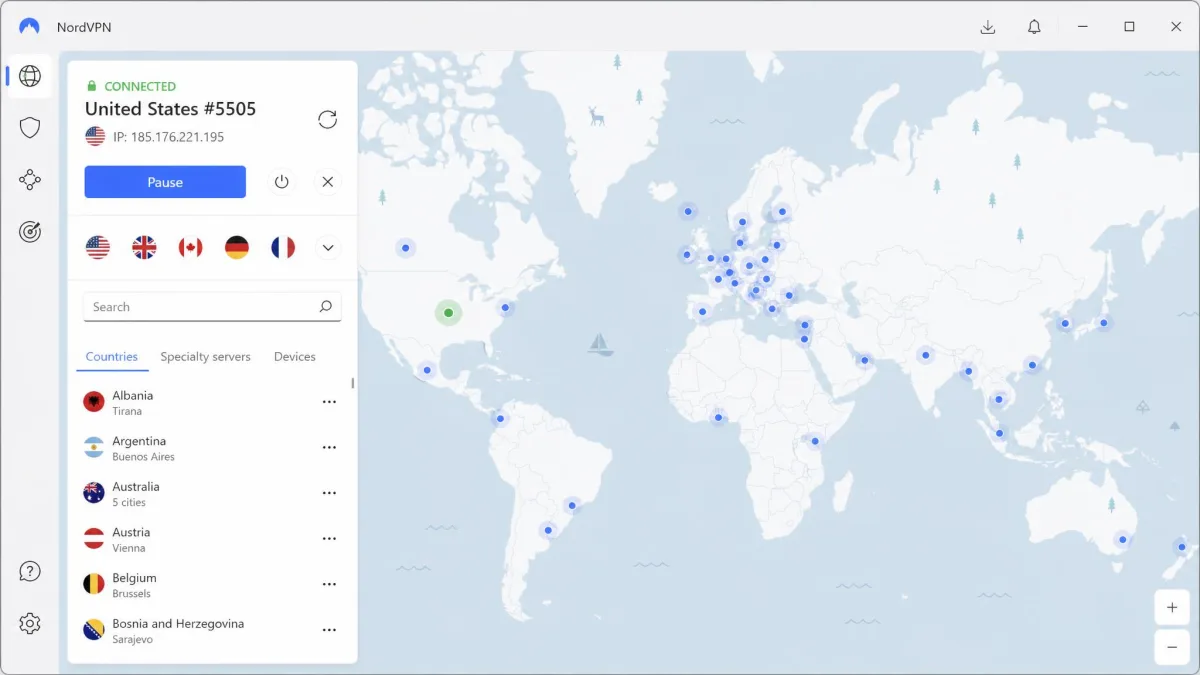
NordVPN is the best all-round replacement for AVG Secure VPN, and it scores 9.0/10 in our NordVPN review. It matches AVG's 10-device allowance, then adds the tools AVG leaves out, including Double VPN, Meshnet and obfuscated servers that run on NordWhisper, its in-house protocol launched in 2025.
The difference shows up first in speed. On nearby servers we lost only single-digit percentages of download and upload speed, and 4K streams played without buffering. Netflix, Hulu, BBC iPlayer, Prime Video, Disney+ and HBO Max all unblocked reliably. When the tunnel failed, the kill switch cut traffic straight away, and connections otherwise held without unexpected drops.
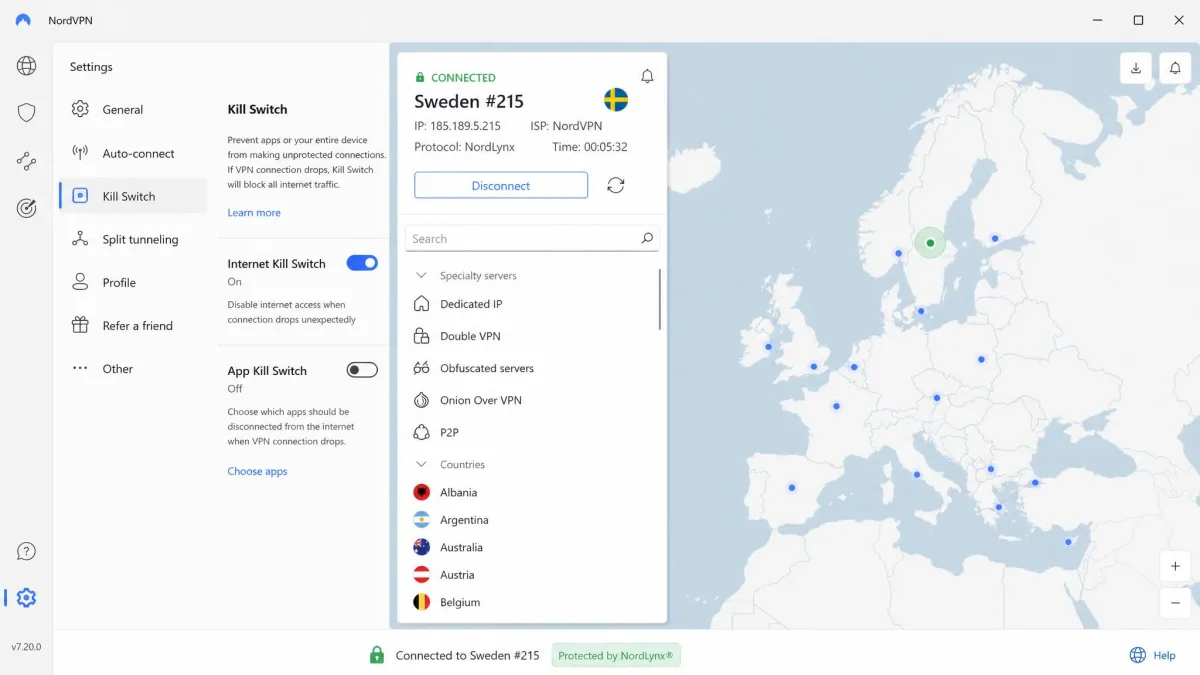
NordVPN runs more than 9,000 servers in roughly 118 to 167 countries, a total that depends on how virtual locations are counted. It uses NordLynx (built on WireGuard) and OpenVPN, and it is based in Panama. Deloitte has now checked its no-logs policy six times. Basic costs about $3.49 a month on the 2-year plan, an introductory rate that moves with promotions and renews higher, or $14.99 on monthly billing, with a 30-day money-back guarantee.
Pros
- RAM-only servers and post-quantum encryption
- Apps for Linux, Apple TV and Fire TV, which AVG lacks
- Threat Protection Pro blocks ads and malicious sites
Cons
- Renewal charges land about two weeks before the term ends
- Double VPN cuts speed by around 80 percent
- No free plan
2. Proton VPN
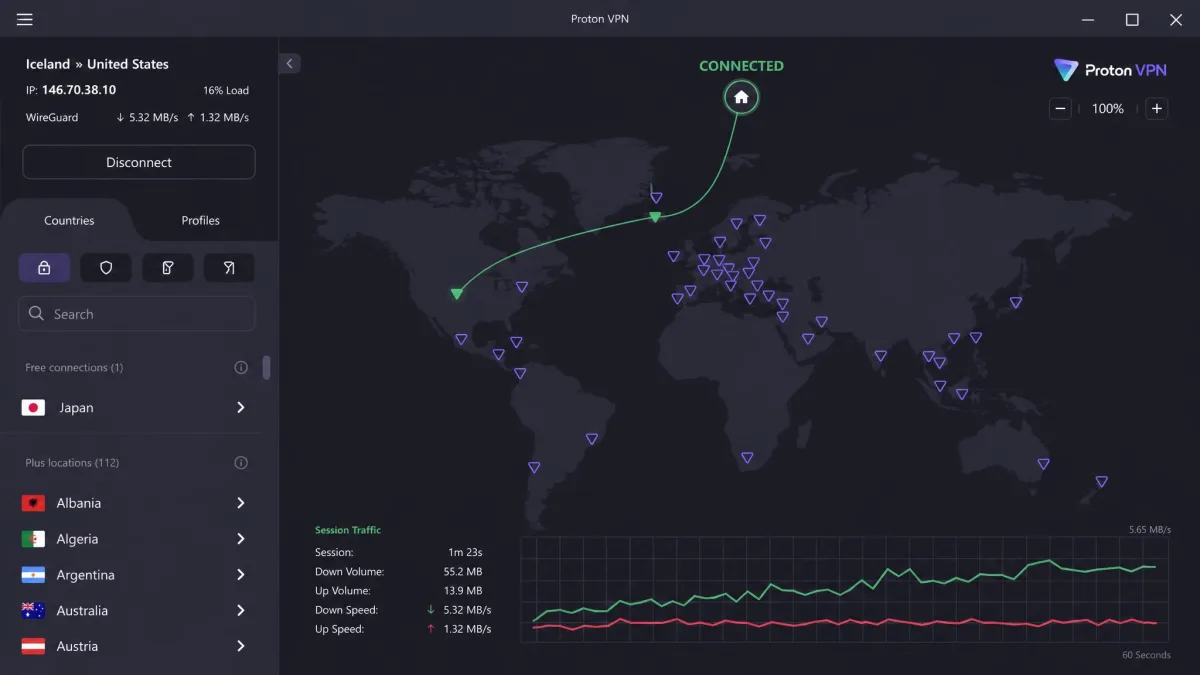
Proton VPN is the best choice if you want privacy first or a free plan, and it ties NordVPN at 9.0/10 in our Proton VPN review. Proton VPN has a free plan with unlimited data, and its paid VPN Plus tier covers 10 devices across 20,000+ servers in 140+ countries.
Installation took us about two minutes, and the apps explain each setting in plain language. On nearby servers, paid Proton VPN cut our download speed by under 10 percent. Netflix, Prime Video, BBC iPlayer, Disney+, HBO Max and Hulu all unblocked without server hopping, and we saw no DNS, IPv6 or WebRTC leaks across dozens of server countries.
Proton offers WireGuard, OpenVPN and its Stealth protocol, plus Secure Core routing and port forwarding on paid plans. It is based in Switzerland, and Securitum's 2025 no-logs audit of Proton VPN found it fully complies with its policy. VPN Plus costs $9.99 monthly or about $2.99 a month on the 2-year plan, a promotional rate that moves with Proton's seasonal sales and renews higher. The 30-day money-back guarantee is prorated, so only the unused part of your subscription comes back.
Pros
- Open-source apps
- NetShield ad and tracker blocker
- Port forwarding in the Windows and Linux apps
Cons
- Live chat is not 24/7
- Email replies can take about two days
3. ExpressVPN
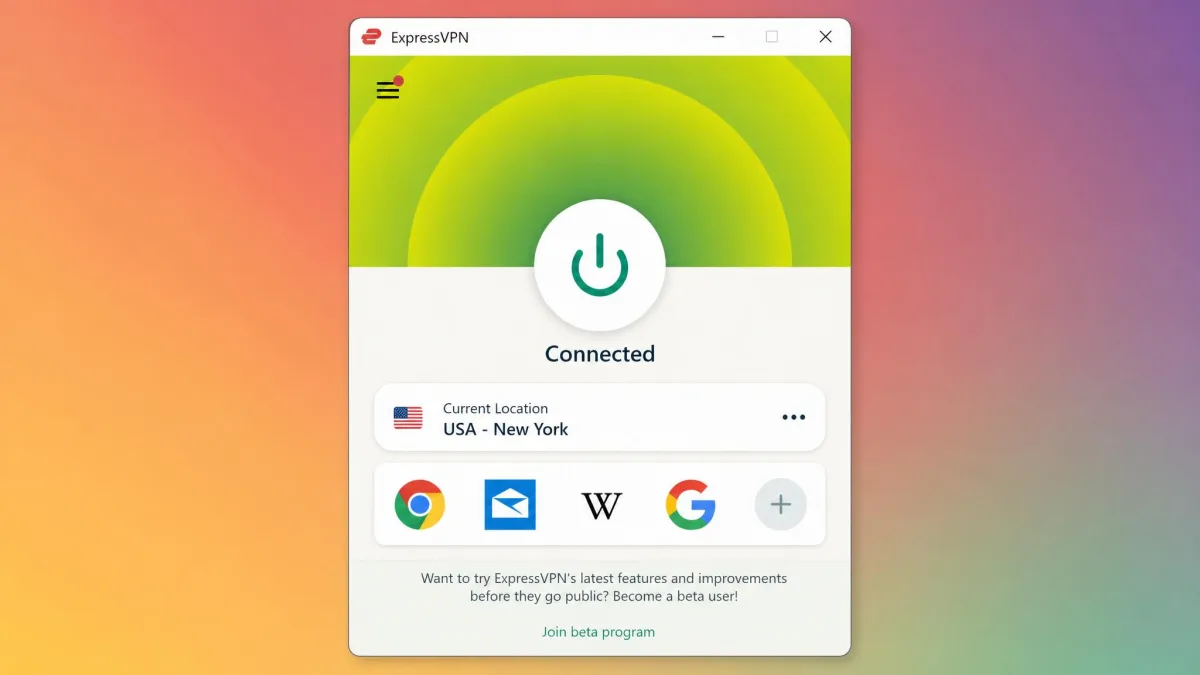
ExpressVPN is the pick for people who value steady, hands-off connections over extra features. Connections stayed rock solid through long daily use, and its Network Lock kill switch tripped only rarely, which is a big part of why it earns 8.8/10 in our ExpressVPN review.
We measured download speed drops of roughly 37 to 39 percent on Windows and Mac. That is a bigger hit than NordVPN, but ping rose by only 5 to 6 ms. Netflix, Hulu and ESPN+ loaded without issues. ExpressVPN's own Lightway protocol sits beside OpenVPN and WireGuard, and automatic obfuscation runs on every server.
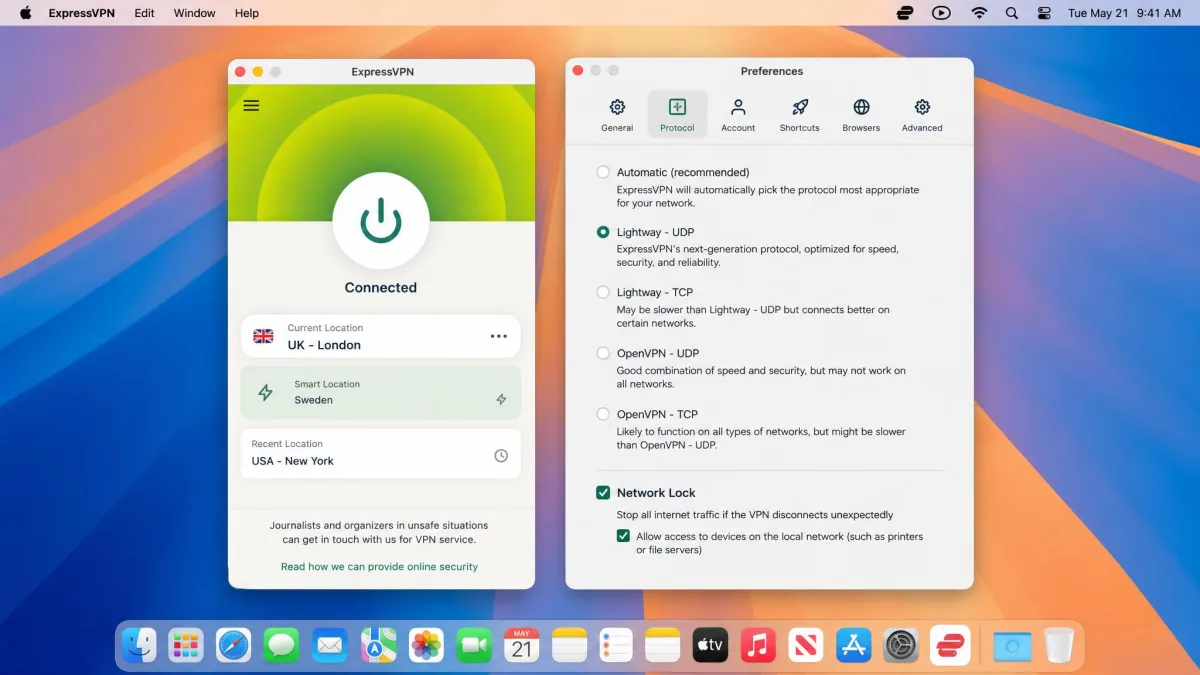
The network covers 105 to 113 countries, and the vendor's current figure runs ahead of older counts as it keeps adding locations. ExpressVPN is based in the British Virgin Islands, and KPMG assessed its no-logs policy in 2025. Basic covers 10 devices and costs $12.99 monthly or about $2.79 a month on the 2-year plan, a rate that moves with promotions and renews at about $99.95 a year. A 30-day money-back guarantee applies.
Pros
- TrustedServer RAM-only servers
- Router, Apple TV and console apps
- Advanced and Pro tiers add a password manager
Cons
- Email support can take about two days
- No free plan
4. Surfshark
Surfshark is the best value pick for households with lots of devices, and it scores 8.6/10 in our Surfshark review. Where AVG caps you at 10 devices, Surfshark allows unlimited simultaneous connections on one plan.
Our download speed dropped about 17 percent on Windows and about 31 percent on macOS, and latency stayed steady on both. Netflix worked across regions without the VPN being detected. Setup on Android TV, Apple TV and Fire TV was painless thanks to native apps, and the kill switch cut internet access instantly when the VPN dropped.
Surfshark runs 4,500+ servers in 100 countries over WireGuard, OpenVPN and IKEv2. It is based in the Netherlands, and Deloitte verified its no-logs policy in 2023 and again in 2025. Starter costs $2.49 a month on the 2-year plan and renews at $79 a year. There is no free plan, but a 7-day mobile trial and a 30-day money-back guarantee let you test it first.
Pros
- CleanWeb ad and tracker blocker
- Camouflage mode hides VPN traffic on OpenVPN
- RAM-only servers
Cons
- Monthly billing is expensive next to the 2-year rate
- Antivirus and data-removal tools cost extra on One and One+
5. CyberGhost
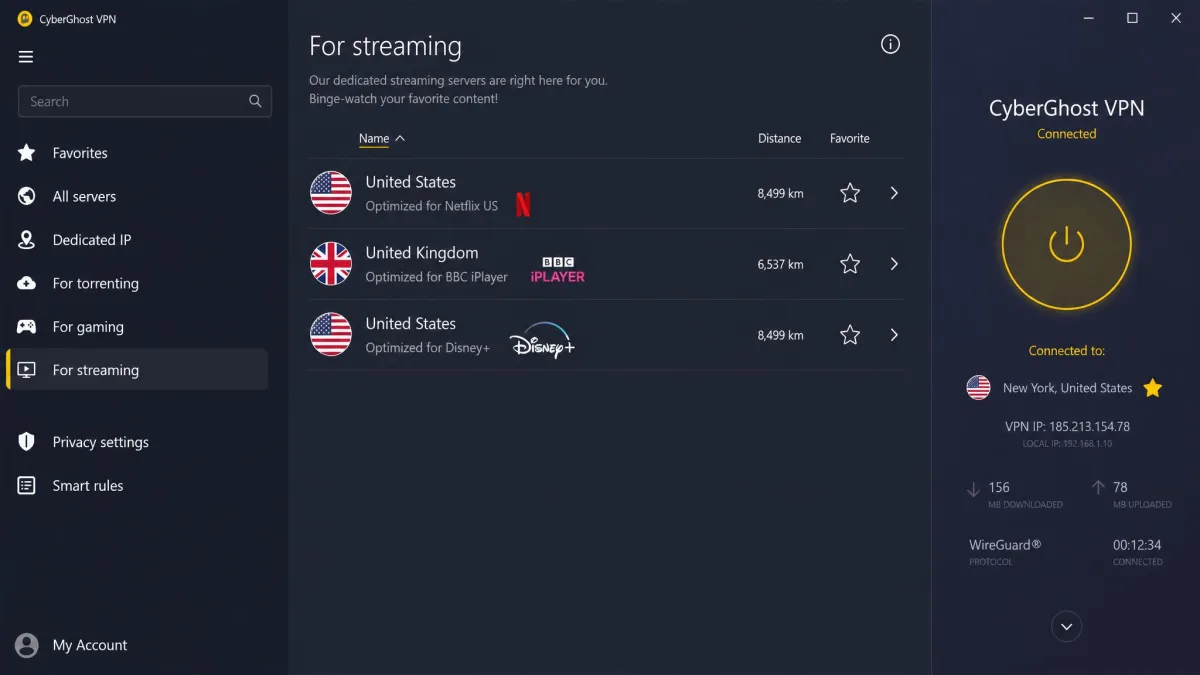
CyberGhost is the easiest step up for streaming fans who want a long refund window. Its servers are labeled by streaming service, which removes the guesswork AVG leaves you with, and our CyberGhost review scores it 8.4/10.
Netflix US, BBC iPlayer, Disney+ and Prime Video all unblocked on the first try through those dedicated servers. DAZN did not unblock in any region, though, and European streaming platforms were a struggle. Setup was quick, and switching protocols on desktop took about four seconds. Nearby servers lost only about 5 to 19 percent of speed, while long-distance servers dropped by about 44 to 59 percent.
CyberGhost has servers in 100 countries and supports WireGuard, OpenVPN and IKEv2. It is based in Romania, and Deloitte completed its third no-logs audit of the service in Q4 2025. Plans cost $12.99 monthly or about $2.19 a month on the 26-month plan, a rate that shifts between about $1.99 and $2.19 as promotions rotate. Long plans get a 45-day money-back guarantee, while the monthly plan gets 14 days.
Pros
- NoSpy servers and RAM-only hardware
- 24/7 live chat
- Regular transparency reports
Cons
- 7-device limit is tighter than most rivals
- Windows app looks dated next to the mobile apps
- No obfuscation or multi-hop
6. Private Internet Access (PIA)
PIA is the pick for tinkerers and torrent users who want control over every setting, and it scores 8.4/10 in our Private Internet Access review. It offers port forwarding, a feature AVG lacks, on every server outside the US.
Speed loss was small in our testing, at about 4 percent on local servers and 18 percent internationally. The desktop app's long settings list felt overwhelming at first, but became easy once we had tuned it. Streaming is the weak spot: US and UK Netflix no longer unblocked, and Disney+ and Hulu detected the VPN. The forwarded port also changed with every reconnect, so torrent clients need updating each session.
PIA covers 91 countries plus all 50 US states over WireGuard and OpenVPN, with a choice of AES-128 or AES-256 encryption. It is based in the United States and owned by Kape, and Deloitte completed its third no-logs audit of PIA in December 2025. The official prices are $11.95 monthly or about $2.03 a month on the 3-year-plus-3-month plan, although PIA rotates deal lengths and bonus months by date and region. Every plan allows unlimited devices and comes with a 30-day money-back guarantee for new subscribers.
Pros
- Open-source apps
- Split tunneling by app or IP address
- Dedicated IP and Smart DNS options
Cons
- Auto-renewal is on by default
- Refunds need a manual support request
7. IPVanish
IPVanish is a budget pick for streaming-device households. Unlimited simultaneous connections let one subscription cover every device in the home, and our IPVanish review scores it 8.0/10.
On a Fire TV stick, the IPVanish app was easy to navigate with the remote and stayed stable. Netflix was inconsistent through the tunnel at times, so we used split tunneling to route the Netflix app around the VPN, which got it playing again. The kill switch does not extend to streaming devices, though, which leaves the Fire TV stick unprotected if the connection drops.
Across our testing, Netflix, Disney+, Hulu, HBO Max and BBC iPlayer all unblocked, although iPlayer quality varied. Nearby-server speeds held up well, but the protocol choice made a big difference to our results.
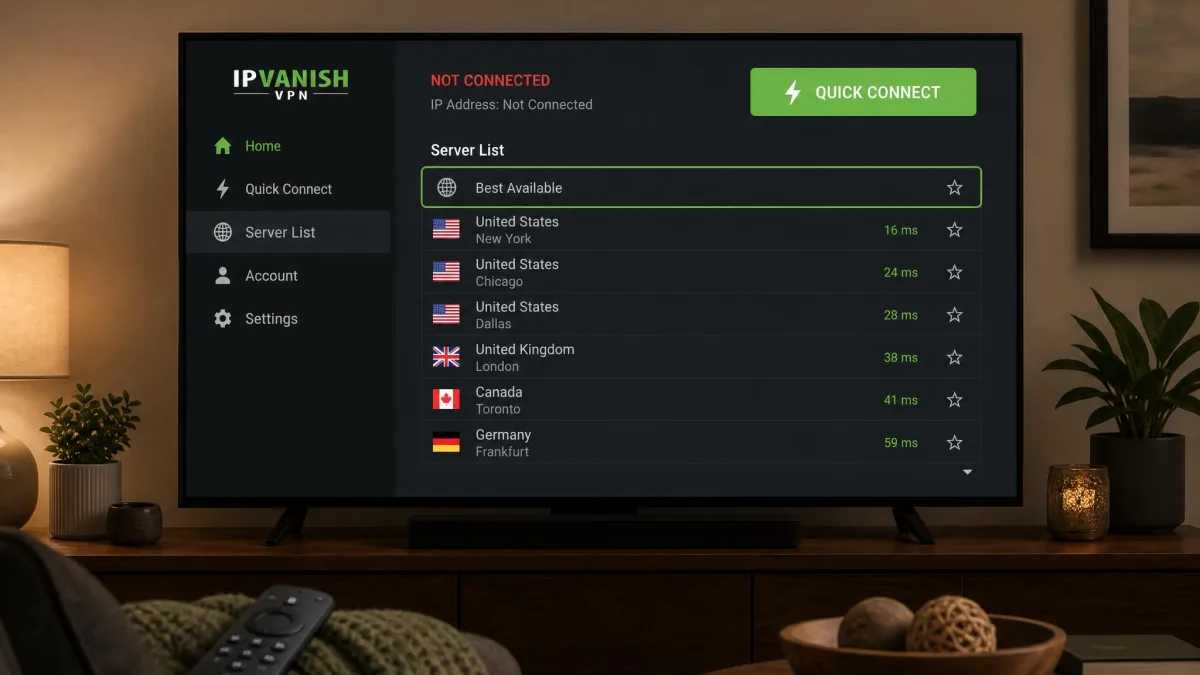
IPVanish runs roughly 3,200+ servers in about 75 to 112 countries, depending on whether virtual locations are counted. It supports WireGuard, OpenVPN and IKEv2, and it is based in the United States. In 2016 it handed connection logs to US authorities despite a no-logs claim, though ownership and policy have since changed, and Schellman audited its no-logs policy in 2025. Essential costs $2.19 a month on the 2-year plan and renews at $89.99 a year. The 30-day money-back guarantee covers annual and 2-year plans only.
Pros
- Scramble obfuscation on OpenVPN
- P2P allowed on every server
- SOCKS5 proxy included
Cons
- Refunds can take persistent follow-up
- No port forwarding
Is there a free alternative to AVG Secure VPN?
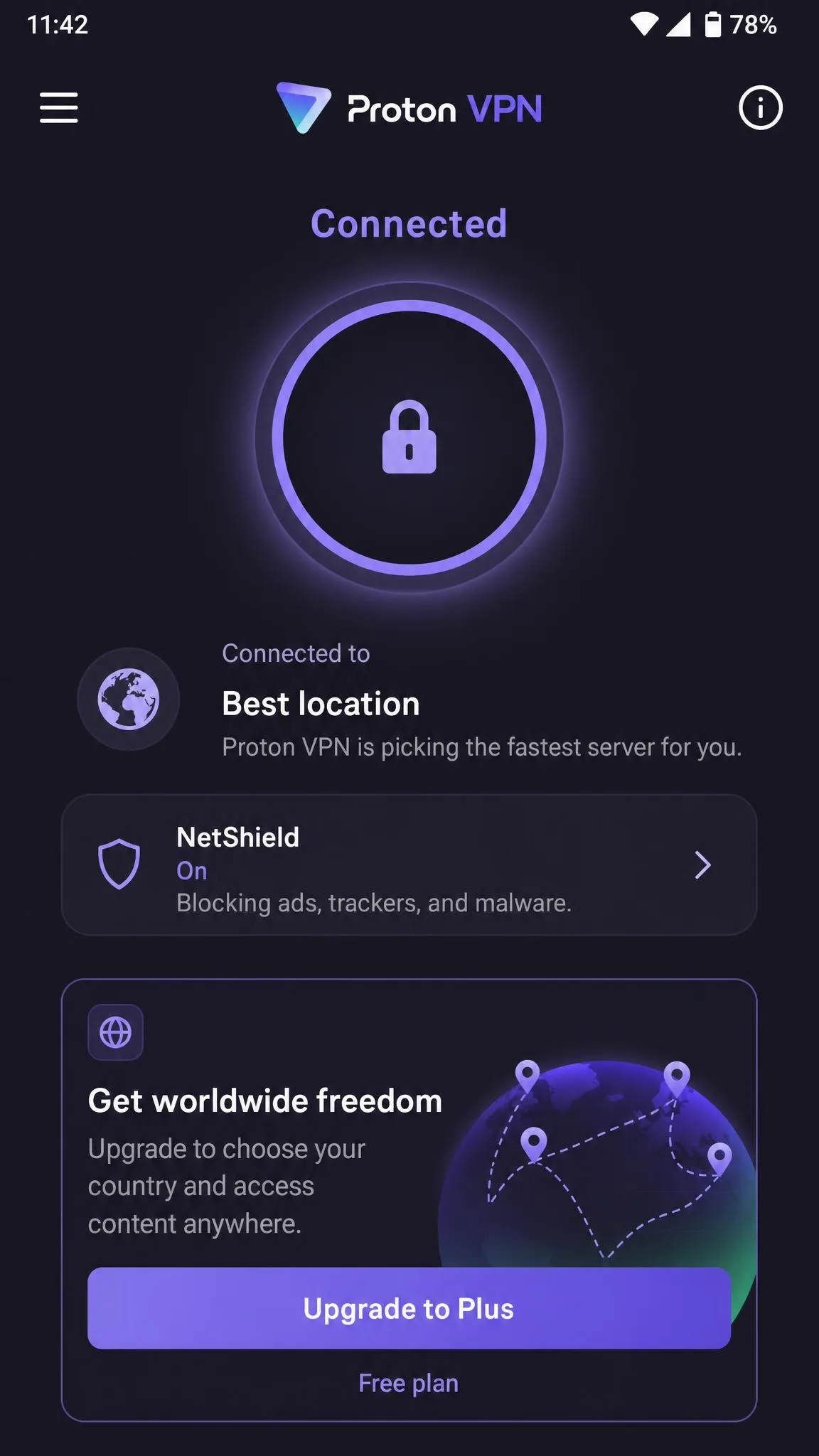
Yes. Proton VPN's free plan is the free alternative we recommend because it avoids the usual trade-offs. It has no data cap, no ads and no speed cap, and it does not ask for a credit card. In our testing the free tier showed no throttling, though it picks the server location for you and covers one device.
Free servers sit in a limited set of countries (Proton says 10), a number that keeps changing as it expands the free list. Streaming and P2P are off the table on the free plan, but the kill switch and the Stealth protocol are included, so your traffic stays encrypted even on restrictive networks. AVG, by comparison, offers only a 60-day trial that turns into a paid subscription unless you cancel.
Be careful with other free VPNs. A CSIRO study of Android VPN apps analyzed 283 apps and found that over 38% showed some malware presence, while 18% tunneled traffic without encryption. That is why we stick to free tiers from providers with audited paid services.
Other antivirus brands bundle VPNs too. Bitdefender VPN has a free tier capped at 200 MB per day per device, which covers email and a few pages but not streaming, and it scores 7.2/10, the same as AVG. F-Secure VPN has no free plan at all and scores 6.5/10. For more options, see our roundup of free VPN alternatives.
How we chose these AVG VPN alternatives
We started from AVG Secure VPN itself and asked what a buyer loses by staying with it. That gave us six criteria: price after the first term, logging record, independent audits, streaming, device limits and whether a free tier exists. Every pick had to beat AVG clearly on at least two of these, and we flag in each section where it still trails.
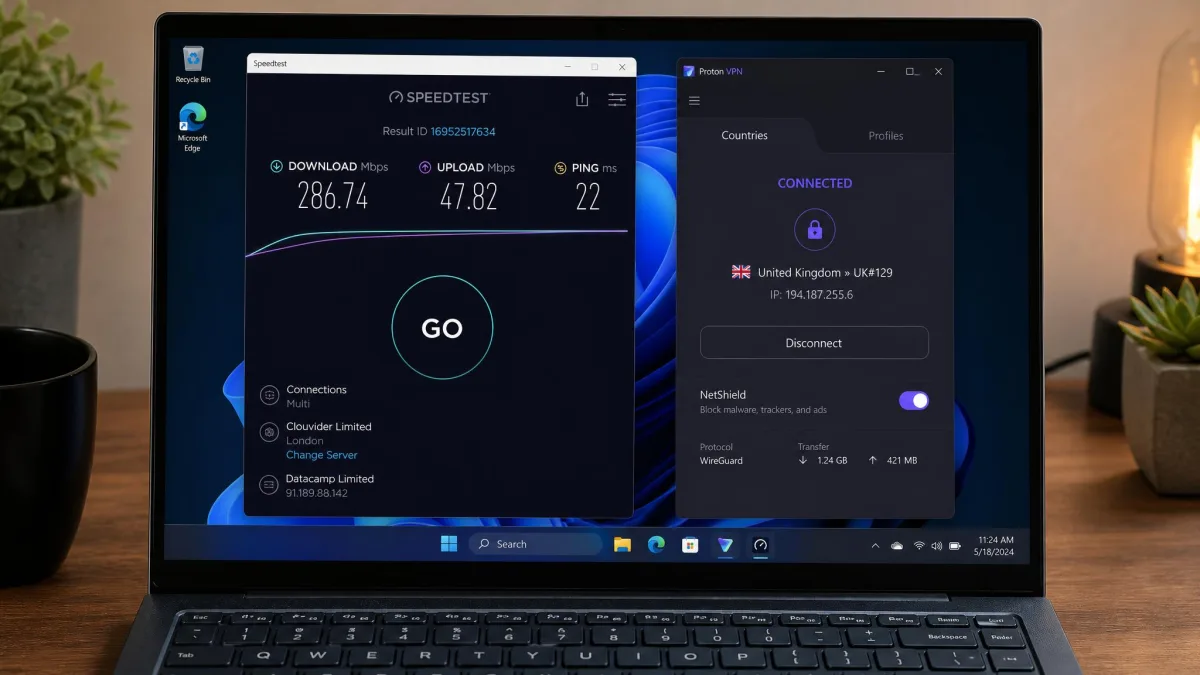
To compare each VPN fairly, we looked at speed loss on nearby and long-distance servers, streaming results across the major services, and how stable each connection stayed. We also read each privacy policy and audit report rather than trusting the marketing copy. The ranking follows our review scores, so NordVPN and Proton VPN share the top spot at 9.0/10 and IPVanish closes the list at 8.0/10.
Two services did not make the cut despite fitting the brief. Bitdefender VPN and F-Secure VPN are antivirus-bundled peers of AVG, but both score below IPVanish in our reviews.
Is AVG Secure VPN still worth using?
AVG Secure VPN is a decent basic VPN, and our review scores it 7.2/10. Setup is hassle-free, and picking and connecting to a server takes a couple of clicks in a simple interface. It uses AES-256 encryption, and we saw no DNS or WebRTC leaks in testing. AVG's own Secure VPN page lists coverage for up to 10 devices, a 60-day free trial and a 30-day money-back guarantee.
Performance is the weaker half. Download speed dropped about 22 percent on average, from under 9 percent on a same-country server to about 30 percent on a US-to-Australia connection. Upload speed took the biggest hit, falling by roughly three quarters on both Windows and Mac, and speeds swung widely between servers. The service also goes down for about an hour of scheduled maintenance every Saturday at 6PM US Eastern time.
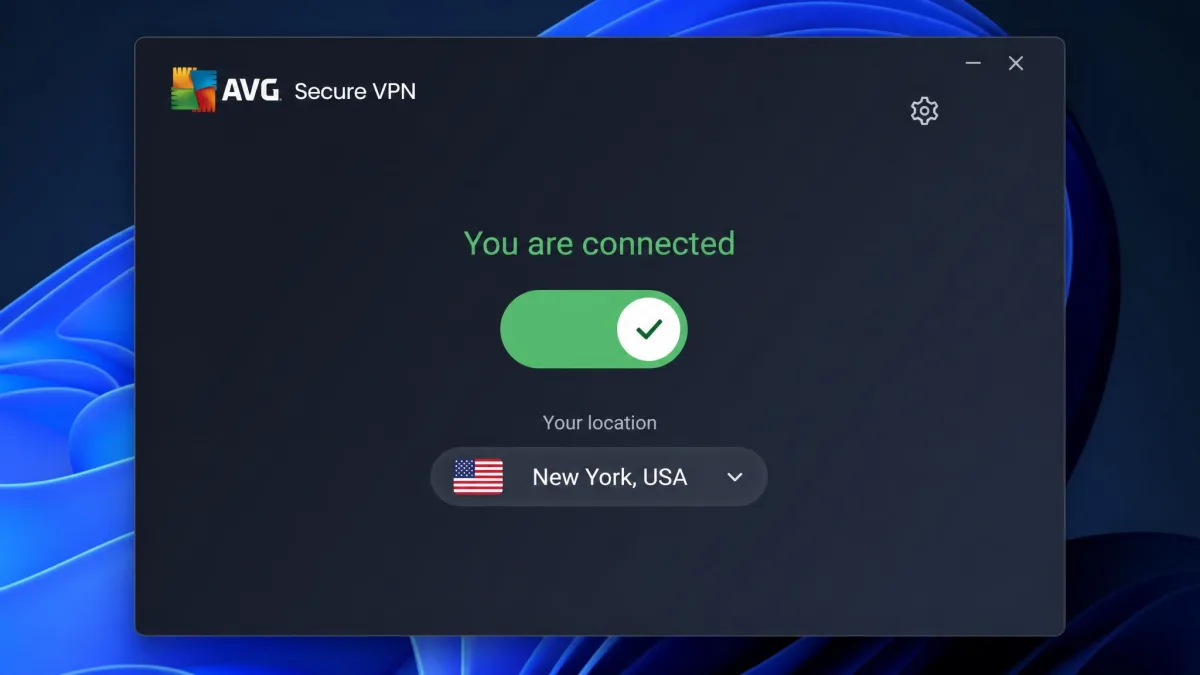
Price is the last sticking point. The 1-year plan costs $53.88 upfront, which works out to $4.49 a month, and there is no month-to-month desktop plan. After the first term, AVG renews at a price far higher than the introductory rate. If you only want basic Wi-Fi protection while you are online and already use AVG's apps, it still does that job. For anything more, the picks above do it better for less.
Why look for an AVG Secure VPN alternative?
The network is the first limit most people hit. AVG markets 100+ locations, but it counts locations rather than countries, and country totals range from about 34 to 74 depending on when the list was checked. The spread also tilts toward Europe, with 23 of 36 countries there, three in North America and one each in South America and Africa.
Streaming comes next. Netflix US was inconsistent on AVG's Miami and New York servers, and Disney+, Prime Video, Hulu and Max did not unblock. Dedicated streaming servers exist in only three countries, Germany, the UK and the US, which limits which content libraries you can reach.
Privacy is the third reason. AVG says it does not log websites visited, but it does store connection times, session length and bandwidth, along with a subnet of your originating IP address. It keeps those logs for about 35 days, although AVG does not state a retention window prominently. No independent audit has checked these claims, and AVG's 2023 transparency report shows user data shared in response to 5 of 51 government requests. The feature list is also thin, with no obfuscation, multi-hop, port forwarding or smart DNS, and AVG is detected and blocked in China.
Switching to Avast SecureLine does not solve any of this. Avast and AVG are both Gen Digital brands, and in a 2024 FTC order, sister brand Avast was required to pay $16.5 million and banned from selling browsing data for advertising. The order names Avast, not AVG, but the shared parent is why we look outside Gen entirely. Our guide to Avast SecureLine VPN alternatives covers that side of the family.
AVG Secure VPN alternatives FAQ
Is AVG Secure VPN a good VPN?
Is Avast SecureLine VPN the same as AVG Secure VPN?
Does AVG Secure VPN have a Chrome extension?
Does AVG VPN have port forwarding?
Can I cancel AVG Secure VPN and keep AVG antivirus?
Which AVG Secure VPN alternative works best on networks that block VPNs?
Bottom line
AVG Secure VPN covers the basics, and every pick above closes at least two of its gaps, most at a lower monthly cost on a long plan.