Avira Phantom VPN, also marketed simply as Avira VPN, comes from Avira, the German antivirus company that is now part of Gen Digital. Its free plan gives you 500 MB of data per month, or 1 GB if you register an account, which covers a little public Wi-Fi browsing and not much else.
Our top pick to replace it is NordVPN, with Proton VPN as the best free option. We ranked every alternative below by its HTS review score, then checked each one against the gaps that push people away from Avira: the data cap, the missing audit, the Windows-only kill switch and the slow distant servers we found in our Avira Phantom VPN review.
This guide covers Avira's VPN app, not the unrelated "Phantom" anonymizing network.
Why Look for an Avira Phantom VPN Alternative?
The data cap is the first wall most users hit. Avira's free plan caps you at 500 MB per month, and we ran through that allowance quickly. Even the 1 GB you get after registering is not nearly enough for regular browsing, let alone video.
Paying for VPN Pro removes the cap, but it adds surprisingly little else. Pro costs $10 a month on monthly billing, or $78 a year, which works out to $6.50 a month. Beyond unlimited data, you get full server choice and a kill switch that only exists in the Windows app. On a Mac, Android phone or iPhone, a dropped connection can expose your traffic with nothing to stop it.
Privacy is the second concern. Avira is a German company, and Germany belongs to the 14 Eyes intelligence-sharing alliance. Avira has never published an independent audit of its no-logs policy, so you are taking its word on what it keeps.
Speed and reach round out the list. The network has around 1,400 servers in roughly 35 to 37 countries, with none in Africa or the Middle East outside Israel. Nearby servers kept most of our line speed, but distant ones collapsed: a Japan server dropped to under 2 Mbps on a 62 Mbps line, and Netflix would not load at all.
Avira's free plan stops at 500 MB per month and has no kill switch on any device. Avira also belongs to Gen Digital, the group behind Norton, Avast and AVG, so switching within that family keeps you with the same parent company.
Avira Phantom VPN Alternatives Compared
Here are the seven picks side by side, with Avira Phantom VPN in the last row as the baseline. Starting prices are long-term rates unless noted.
| Product | Buy | Best for | Free plan (data cap) | Starting price | Simultaneous devices | Platforms | Audited no-logs policy |
|---|---|---|---|---|---|---|---|
 |
Check price → | Overall | No | ~$3.39/mo (2 yr) | 10 | Win, Mac, Linux, Android, iOS, TV, routers | Yes (Deloitte, 2025) |
 |
Check price | Free plan | Yes, no data cap | $2.99/mo (2 yr) | 10 (1 free) | Win, Mac, Linux, Android, iOS, TV, routers | Yes (Securitum, annual) |
 |
Check price | Streaming | No | ~$2.99/mo (2 yr) | 10 to 14 | Win, Mac, Linux, Android, iOS, TV, routers | Yes (KPMG, 2025) |
 |
Check price | Unlimited devices | No | $2.49/mo (2 yr) | Unlimited | Win, Mac, Linux, Android, iOS, TV, routers | Yes (Deloitte, 2023 and 2025) |
 |
Check price | Privacy | No | $5.60/mo flat | 5 | Win, Mac, Linux, Android, iOS, routers | Yes (Cure53, Assured AB) |
 |
Check price | Generous free tier | Yes, 10GB/month | $5.75/mo (1 yr) | Unlimited | Win, Mac, Linux, Android, iOS, TV, routers, browsers | No (security audits only) |
 |
Check price | Budget | No | ~$1.89/mo (3 yr) | Unlimited | Win, Mac, Linux, Android, iOS, routers | Yes (Deloitte, 2025) |
 |
Light use in the Avira bundle | Yes, 500 MB/month (1 GB registered) | $6.50/mo (1 yr) | Unlimited on Pro | Win, Mac, Android, iOS | No |
The 7 Best Avira Phantom VPN Alternatives in 2026
These are the seven, in order of their HTS review scores.
1. NordVPN - Best Overall Avira Phantom VPN Alternative
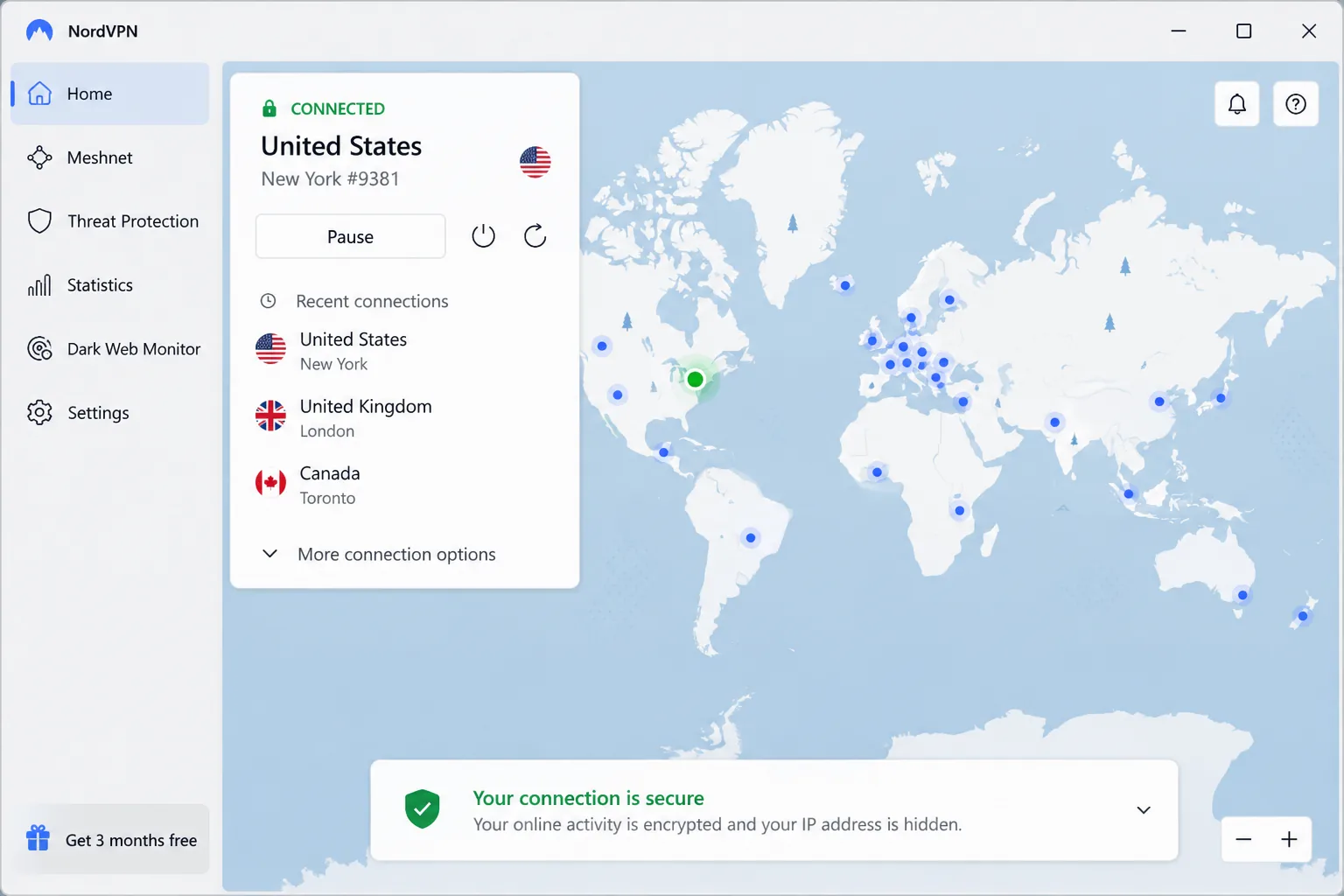
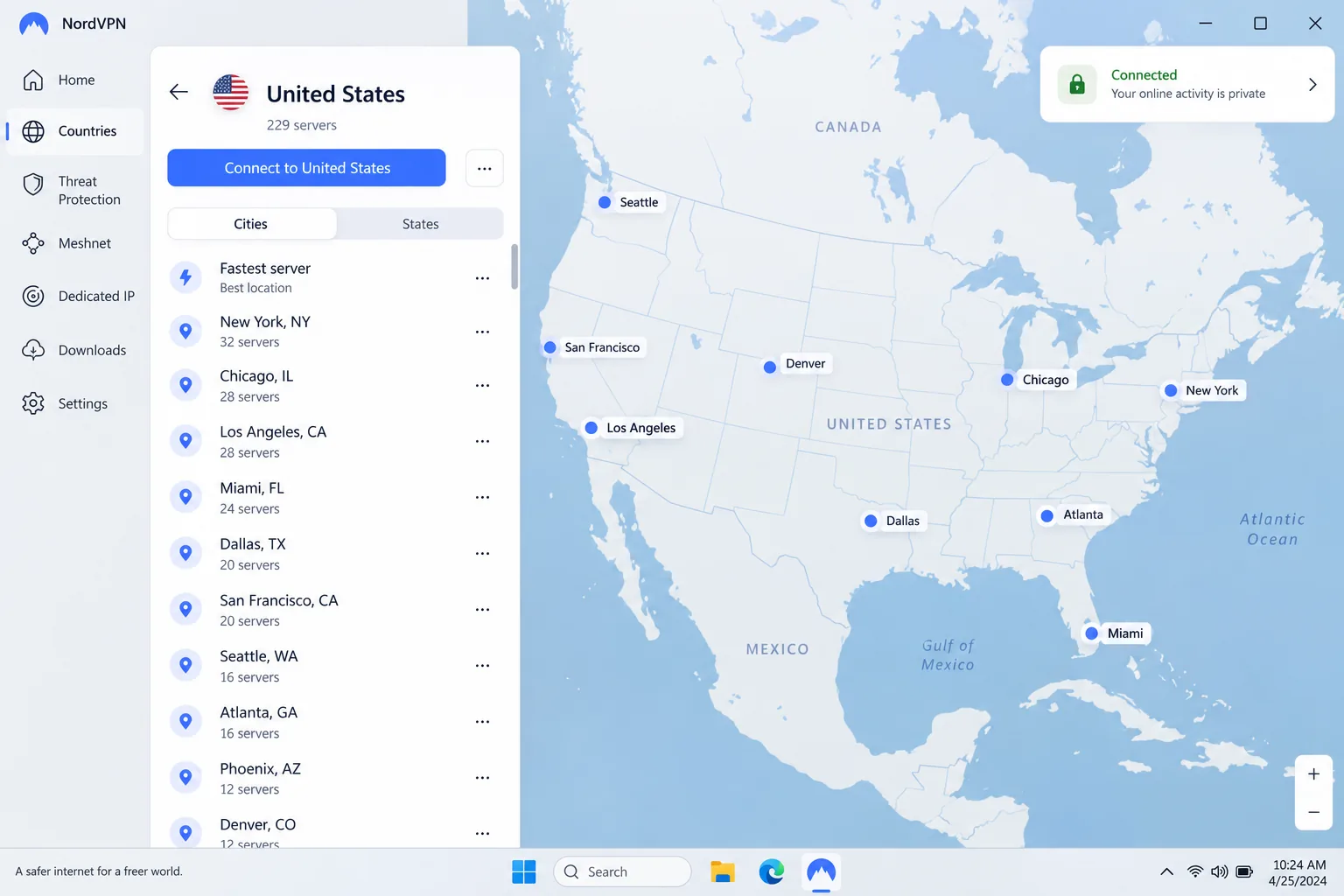
NordVPN is the upgrade for anyone leaving Avira who wants a faster, audited VPN on every device. Speed was the clearest gap between the two in our testing. On a nearby NordVPN server, we lost only about 4% of our download speed and 7% of our upload speed, and a 4K stream played with no buffering. Netflix, Hulu, BBC iPlayer and Prime Video all unblocked reliably, while Avira struggled to get past standard definition.
NordVPN has no free plan. The monthly plan costs $14.99. The two-year Basic plan runs about $3.39 to $3.49 a month, a range that moves with NordVPN's frequent promotions. It covers 10 devices and offers city-level choice across 211 locations, including every US state. Unlike Avira, it has a Linux app, and version 5.3.0 now installs the graphical client automatically. It also has router guides for OpenWrt, DD-WRT and Asus.
The company is based in Panama. NordVPN's sixth no-logs assurance engagement by Deloitte covered its standard, Double VPN, obfuscated and Onion Over VPN servers. Every plan has a 30-day money-back guarantee. Our NordVPN review has the full results.
Pros
- Threat Protection Pro blocks malware, ads and trackers
- RAM-only servers and post-quantum encryption
- Split tunneling on Windows, Android and Android TV
Cons
- Double VPN cuts speed by around 80%
- Live chat starts with a chatbot before a human takes over
2. Proton VPN - Best Free Alternative
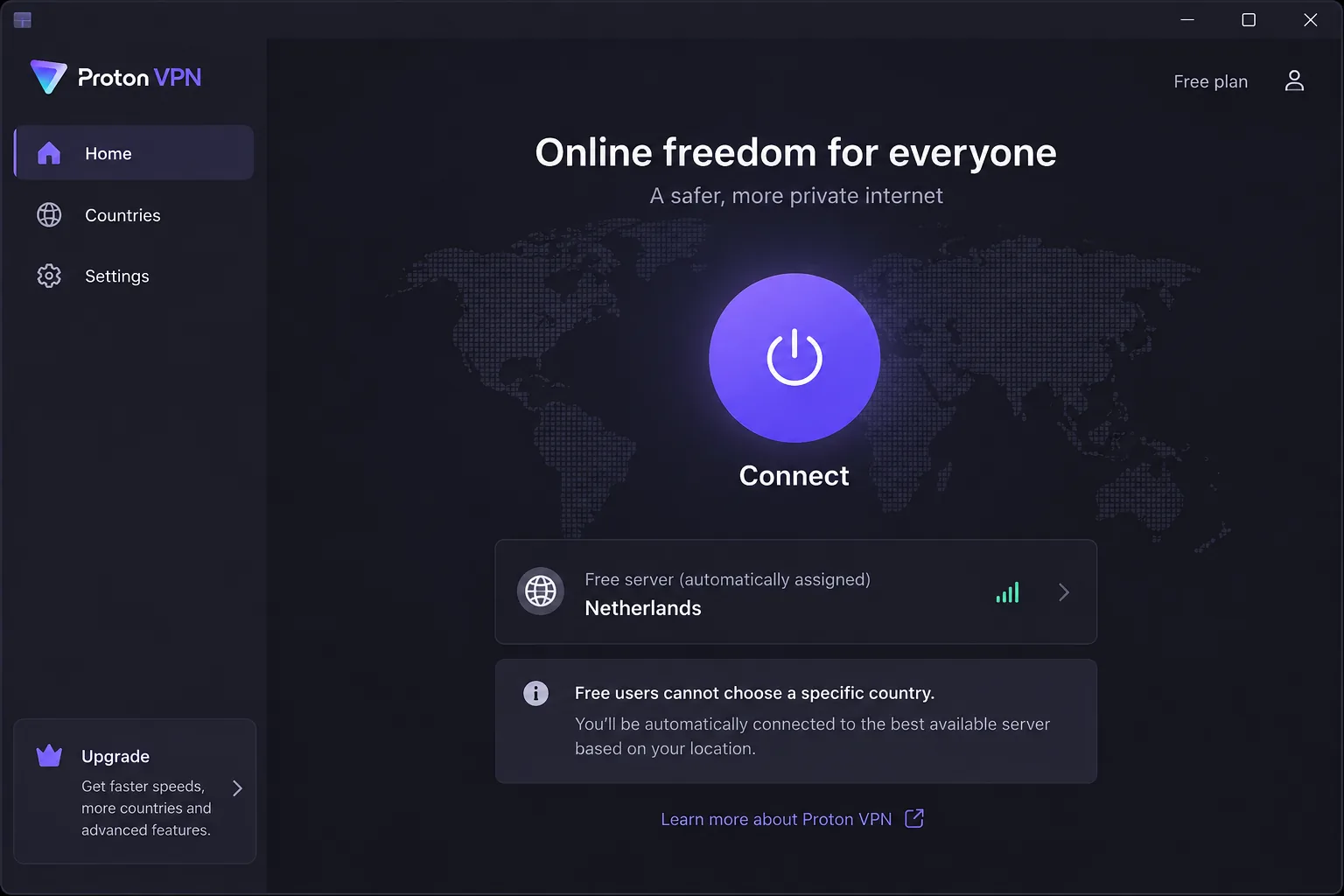
Where NordVPN has no free plan at all, Proton VPN is the pick for anyone who liked Avira's free plan but not its cap. Proton's free plan has no data limit and no ads, and it covers 1 device with servers in 10 countries.
We started on the free plan. It assigned us a server automatically, with no way to pick a country. The connection ran at medium speed, which was plenty for browsing and email. After we upgraded, nearby servers kept about 90% or more of our baseline download speed, while distant servers averaged around three-quarters. Upload speeds trailed NordVPN's, so anyone who sends large files will notice the gap. The US Netflix library loaded without any server hopping, and our DNS, IPv6 and WebRTC leak tests stayed clean across dozens of countries. Our Proton VPN review has the full results.
VPN Plus costs $9.99 a month, or $2.99 a month on the two-year plan, and covers 10 devices across 20,000+ servers in 140+ countries. There is a 30-day money-back guarantee on paid plans. Proton AG is based in Switzerland, and its apps have been open source since 2020. Proton's annual Securitum no-logs audit reached its fifth year in 2026.
Pros
- Secure Core multi-hop and the NetShield blocker
- Swiss jurisdiction and open-source apps
- Linux app and router setup on every plan, including Free
Cons
- Free plan covers only 1 device
- Live chat is not 24/7, and email replies can take two days or more
3. ExpressVPN - Best for Streaming
Proton VPN handles US Netflix well, but ExpressVPN is the safer bet if Avira's buffering streams were your reason to leave. In our testing it opened Netflix libraries in several countries, plus ESPN+ and Hulu, without a failed attempt. When a server timed out mid-session, its Network Lock kill switch cut traffic exactly as it should.
That reliability costs some speed. Downloads fell by roughly 37 to 39% on nearby servers, more than with NordVPN or Proton VPN. The apps, though, are the most polished in this group. See our ExpressVPN review for the full speed results.
ExpressVPN has servers in 113 countries. ExpressVPN's 2025 KPMG no-logs assessment checked its privacy policy. The company is based in the British Virgin Islands. New users get a 30-day money-back guarantee. The monthly price is $12.99, and the two-year Basic plan is about $2.99 a month, a rate that shifts with promotions and bonus months. Basic renews at $99.95 a year.
Pros
- Post-quantum Lightway protocol and RAM-only servers
- Router app plus its own Aircove routers
- Automatic obfuscation for restrictive networks
Cons
- Email support can take close to two days, so live chat is the faster route
- Device allowance depends on the tier: 10 on Basic, 12 on Advanced, 14 on Pro
4. Surfshark - Best for Unlimited Devices
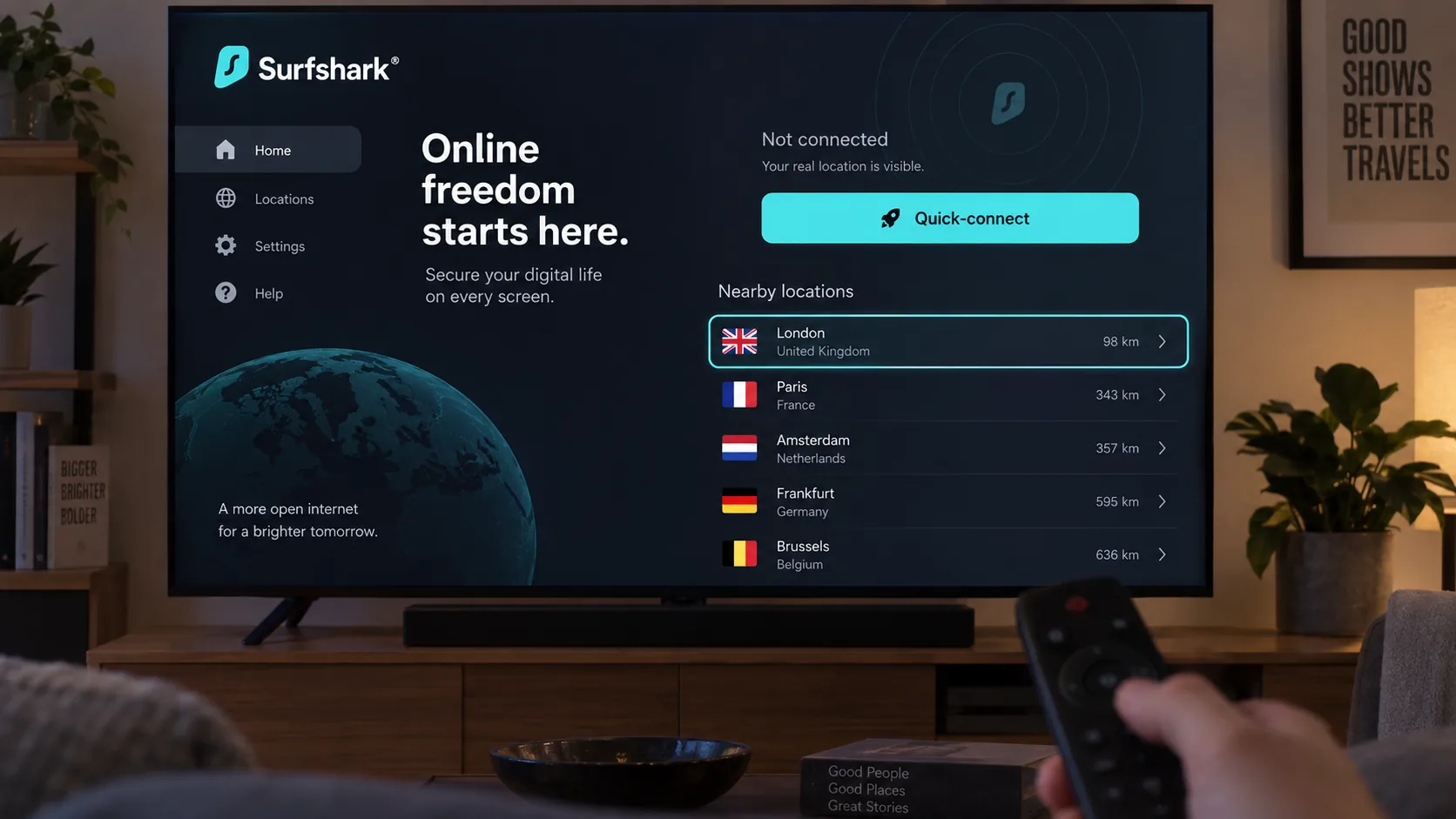
Where ExpressVPN caps you at 10 to 14 devices, Surfshark sets no limit on any plan, which suits households that want one subscription for every phone, laptop and TV. It also has native Android TV, Apple TV and Fire TV apps, which Avira lacks entirely.
We ran Surfshark on a transatlantic server from macOS, and downloads slowed by only about 10%. The Windows app showed bigger slowdowns and the odd ping spike. Its kill switch held when we dropped the connection, and we saw no IPv4, IPv6, DNS or WebRTC leaks. Netflix opened in more than 15 regional libraries, along with Max, Disney+, Hulu and BBC iPlayer.
Surfshark runs 4,500+ servers in 100 countries, with city-level US locations. The Starter plan costs $2.49 a month on the two-year term and renews at $79 a year. Month-to-month sits at roughly $15 to $16 depending on region and tax, so the value is in the longer plan. Surfshark is based in the Netherlands. Surfshark's Deloitte no-logs verification was repeated in 2025. It has a full Linux app and a 30-day money-back guarantee. Our Surfshark review has more.
Pros
- Camouflage obfuscation and RAM-only servers
- CleanWeb blocks ads, trackers and malware
- Low renewal price after the first term
Cons
- MultiHop slows connections a lot
- Monthly plan is among the priciest in the category
5. Mullvad VPN - Best for Privacy
Surfshark spreads one account across every screen in the house, while Mullvad goes the other way and keeps your identity off the account entirely. It is the pick for anyone whose main worry about Avira is the unaudited no-logs policy. Sign-up took us seconds: the app generated a random 16-digit account number, and that number is the only login. You never hand over an email address, username or password.
Mullvad has been through more than ten independent audits from firms including Cure53 and Assured AB. When Swedish police raided it in 2023, they found no user data to seize. Local speed loss in our testing was only around 6%, while distant servers slowed downloads noticeably. Streaming is hit or miss, because Netflix works on some servers but detects the VPN on others. Our Mullvad VPN review goes deeper on both privacy and speed.
Mullvad is based in Sweden and recently listed about 566 servers in 50 countries, though its live server list changes daily. There is no free plan, and new purchases get a 14-day refund, except those paid in cash, crypto or through the App Store. The price itself is the most unusual part: a flat EUR 5 a month, shown as $5.60, on any term, with no sales and no renewal jump.
Pros
- Split tunneling on desktop and Android
- Multihop, DAITA and several obfuscation modes
- Ad, tracker and malware blocking at the DNS level
Cons
- Only 5 devices
- Email-only support, with replies in hours rather than minutes
6. Windscribe - Best Generous Free Tier
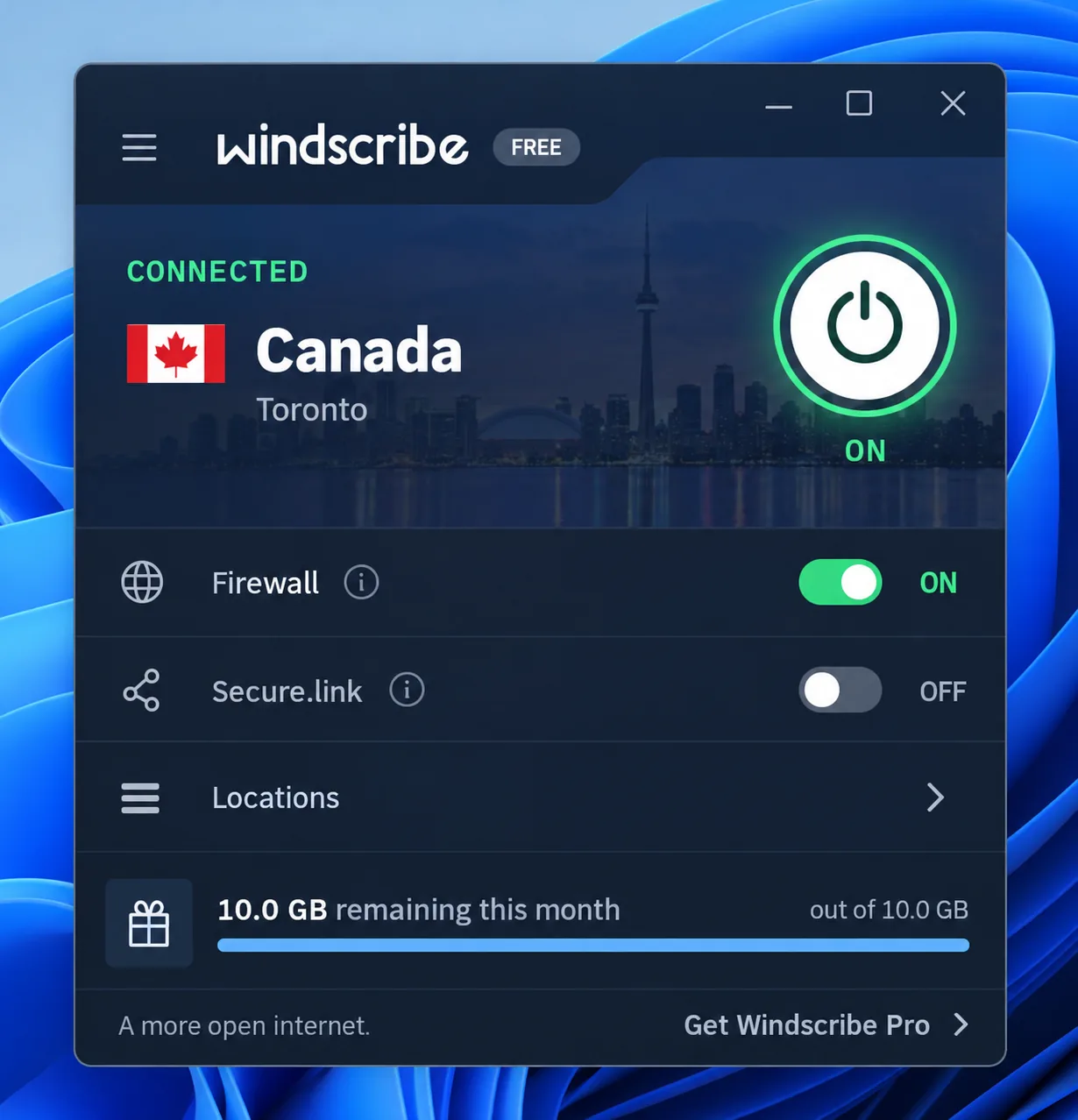
Mullvad has no free plan, but Windscribe gives free users twenty times Avira's 500 MB monthly allowance. Confirm your email and you get 10GB of data every month, with servers in 10 countries and no device limit.
On WireGuard, a nearby US server barely dented our speed, dropping from 94.6 to 91.8 Mbps, and Singapore still held about 68 Mbps. The free tier is less steady, since its speeds dipped by up to 90% roughly twice every three hours. We ran leak tests across dozens of free and Pro servers and found no IP, DNS or WebRTC leaks. Its desktop Firewall blocks all traffic outside the tunnel by default, so when we stopped the VPN process, traffic halted instead of falling back to our real IP. Read our Windscribe review for the rest.
Windscribe Limited is based in Canada. Its no-logs policy has not had a dedicated audit, although Leviathan and Packetlabs have run security audits. Refunds are strict: within 7 business days, under 10 GB used, and only for a technical fault. Pro costs $9.00 monthly or $69 a year ($5.75 a month). Build A Plan lets you pay $1 per location per month, with a $3 minimum.
Pros
- Split tunneling and a WireGuard, OpenVPN and IKEv2 config generator
- Apps for Linux, TVs, routers and browsers
- R.O.B.E.R.T. blocks ads, trackers and malware
Cons
- Human support replies can take about 18 hours
- Custom blocking rules and port forwarding live on the website, not in the app
7. Private Internet Access - Best Budget Option
Windscribe's paid plans are flexible, but Private Internet Access costs less if you commit to a long plan. It is also the cheapest audited VPN on this list. The three-year deal sits around $1.89 a month, though PIA rotates the term length and bonus months, so the intro rate differs by date and region. The one-year plan costs $47.88 and renews at the same $47.88, and the monthly plan is $11.95.
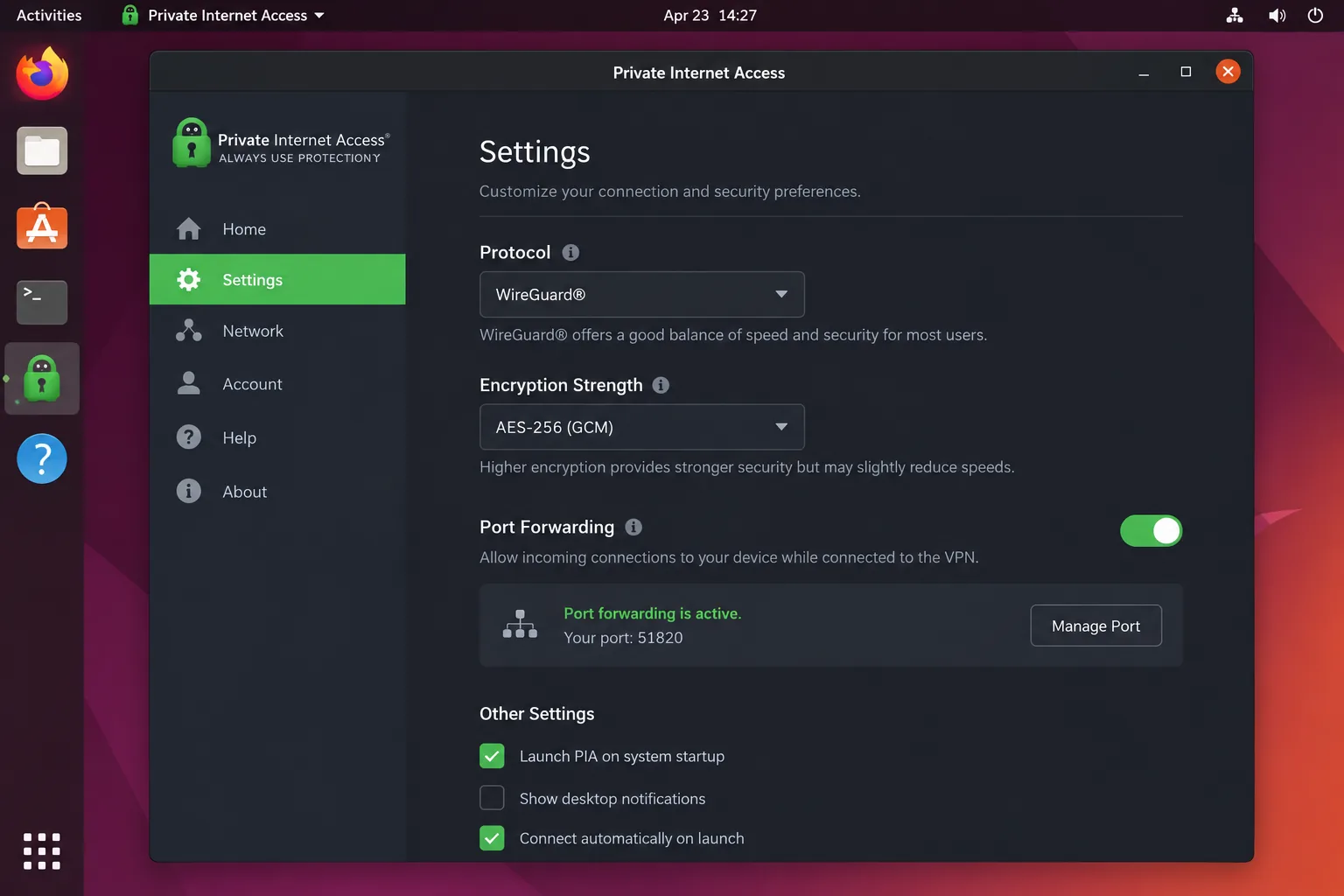
Speed loss in our testing was small, at about 4% on local servers and 18% internationally. The desktop app's long settings list felt overwhelming at first, but it became easy once we had tuned the protocol and encryption options. Torrenting through a forwarded port cost very little speed, though the port changed each time we reconnected. Streaming is the weak side, because PIA no longer unblocks US or UK Netflix.
PIA allows unlimited devices and has servers in all 50 US states. PIA's third Deloitte no-logs audit was completed in December 2025. PIA is based in the United States and has been owned by Kape Technologies since 2019. It offers a 30-day money-back guarantee. Our PIA review covers the rest.
Pros
- Open-source apps and the MACE blocker
- Unlimited devices and a flat yearly renewal
- Port forwarding outside the US
Cons
- Mobile upload speeds fall to around 70% of baseline
- Auto-renewal is on by default, and refunds need a support request
Best Free Avira Phantom VPN Alternatives
If you want to stay on a free plan, three services do the job better than Avira, each with a different trade-off.
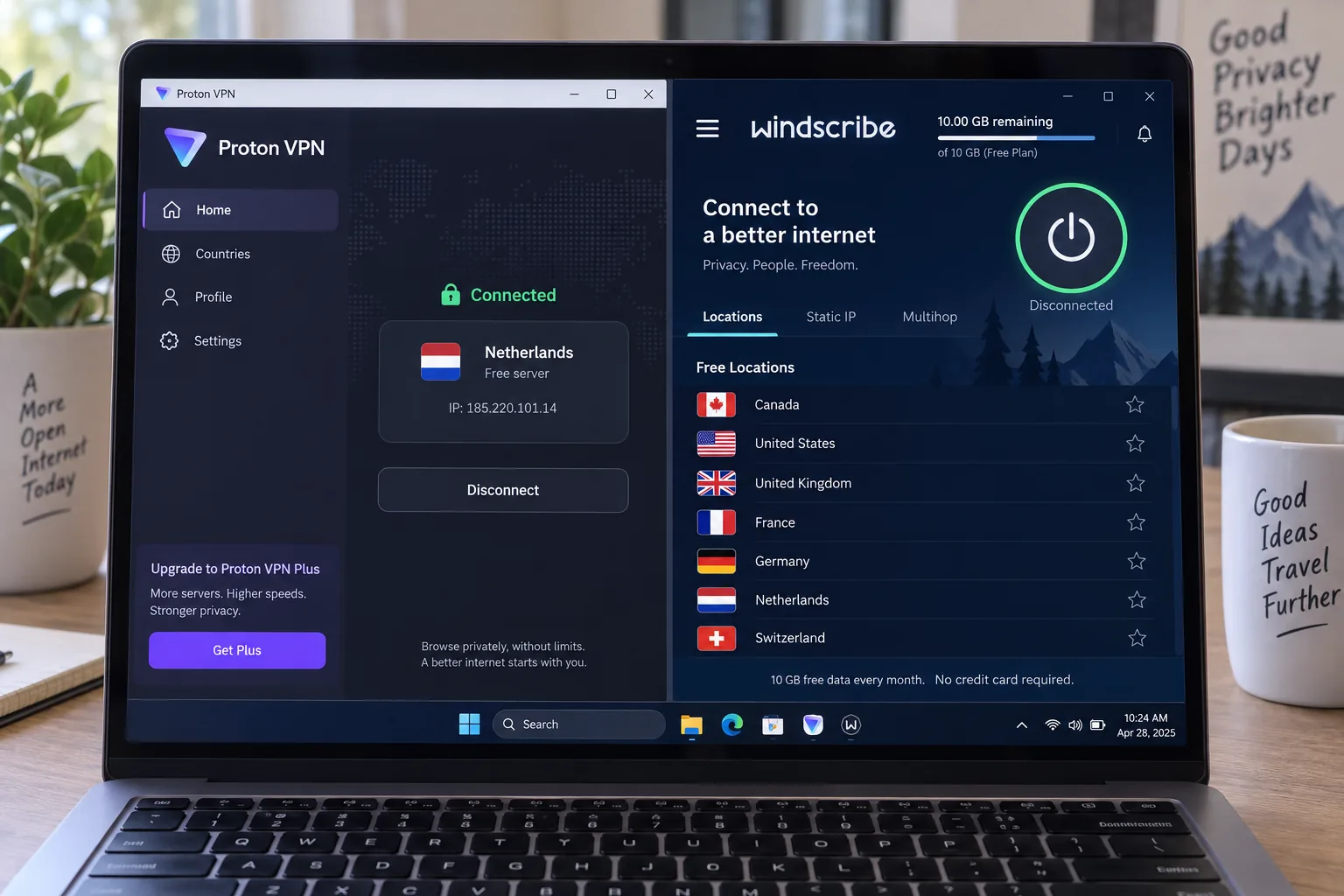
Proton VPN is the best fit for steady everyday use, because it has no data cap at all. The catch is that you get 1 device and cannot pick your country. Windscribe lets you choose from 10 countries and connect as many devices as you like, but stops at 10GB a month. Hide.me sits between them: its free plan has unlimited data at restricted speeds, 8 locations and 1 connection, with no credit card needed. Our hide.me review scores it 8.2/10.
All three beat Avira Free on server choice, since Avira's free desktop app connects you to the nearest server only. If you want more options, our list of the best free VPNs covers the wider field.
What About Other Antivirus-Bundled VPNs?
Moving from one antivirus company's VPN to another rarely fixes the problems above. Norton VPN, Avast SecureLine and AVG Secure VPN all belong to Gen Digital, the same group that bought Avira, so switching to any of them keeps you under Avira's parent. Our reviews score Norton VPN 7.5/10, AVG Secure VPN 7.2/10 and Avast SecureLine 6.5/10. In 2024 the FTC also ordered Avast to pay $16.5 million over the sale of browsing data.
Outside Gen Digital, the bundled options are not much stronger. Bitdefender VPN scores 7.2/10, and its free tier of 200 MB a day ran out after roughly 10 minutes of video. McAfee VPN scores 6.0/10, and its allowance drops to 500 MB a month if you turn off auto-renewal. Kaspersky VPN scores 6.5/10 and stopped receiving updates for US customers on September 29, 2024.
Leaving one of those instead? We have separate guides to Norton VPN alternatives, Avast SecureLine VPN alternatives, AVG Secure VPN alternatives, Bitdefender VPN alternatives, Kaspersky VPN alternatives and McAfee VPN alternatives.
Which Avira Phantom VPN Alternative Should You Pick?
Start with the reason you are leaving Avira. If speed and an audited privacy policy matter most, choose NordVPN. If the 500 MB cap is the problem and you do not want to pay, Proton VPN is the cleanest swap, with Windscribe as the free choice when you need several devices or a specific country.
ExpressVPN is for streaming first. Surfshark covers a whole household on one plan, Mullvad keeps your identity off the account entirely, and PIA gives you an audited VPN for the lowest long-term price.
How to Switch From Avira Phantom VPN
Follow these steps in order so you are never left unprotected or paying twice.
- Check your refund window. Avira refunds monthly plans within 14 days and annual plans within 60 days. Refunds go through a form on the Cleverbridge reseller site rather than a one-click cancel, so leave yourself time. Turn off auto-renewal too, because annual plans can bill up to 35 days before the renewal date.
- Uninstall Avira Phantom VPN. Disconnect first, then remove the app from each device. Two VPNs running at once can conflict and leave you with no connection.
- Install your replacement. Download the new VPN from the provider's site or your device's app store, sign in, and connect to a nearby server.
- Turn on the kill switch. Open the new app's settings and enable its kill switch on every device, not just Windows. Our explainer on what a VPN kill switch does covers why this matters.
- Check for leaks. Run a DNS and WebRTC leak test while connected, using our guide on how to test for DNS leaks.
In the first week, test the new VPN on your phone, your TV and the streaming services you use most, so you still have refund time left if it falls short.
Is Avira Phantom VPN Still Worth Using?
Avira's VPN still makes sense for one group: people who already pay for Avira Prime and only need a privacy layer on public Wi-Fi. In that bundle, the VPN comes along with the antivirus and password manager, so there is no extra bill. Leak protection also held up well, since our IP, DNS and WebRTC tests showed no leaks.
The trouble is everything around it. The desktop app is bare, with one connect button and a server list that shows latency but no city names. Server search is literal, so typing "US" works while "United States" returns nothing. Connections occasionally failed, and internet access sometimes stayed cut after we disconnected. Support is limited to paying users. Our full Avira Phantom VPN review has the details. As a standalone purchase at $10 a month, though, Avira's VPN is hard to justify against the picks above.
How We Chose These Avira Phantom VPN Alternatives
We ranked every pick by its HTS review score, which weighs privacy, speed, streaming, device support and value.
For this guide, we also checked each VPN against Avira's specific weak points. We looked for a free plan with more room than 500 MB, an independent no-logs audit, a kill switch on every platform rather than Windows alone, and apps for Linux, TVs and routers. We also measured speed loss on nearby and distant servers, ran DNS, IPv6 and WebRTC leak tests, and tried the streaming services people ask about most.
We left out Norton VPN, Avast SecureLine and AVG Secure VPN, because they share Avira's parent company. Hotspot Shield and TunnelBear came up often in our research too, but their HTS scores of 6.5/10 and 7.5/10 fell below every pick here.