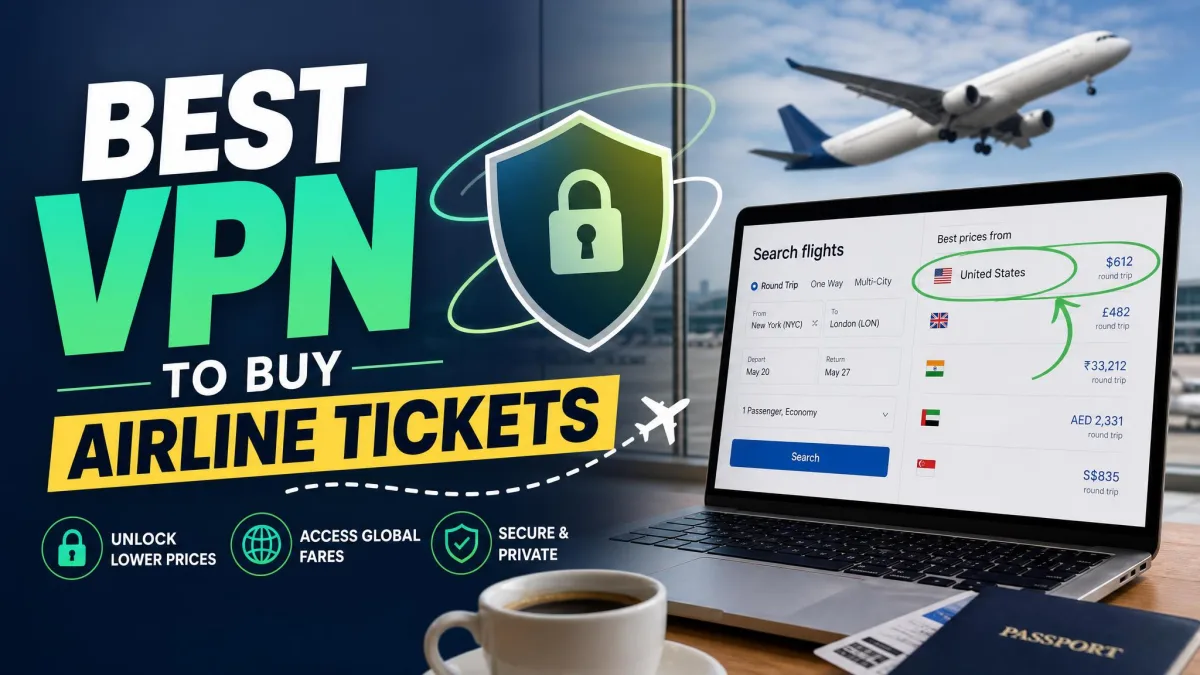
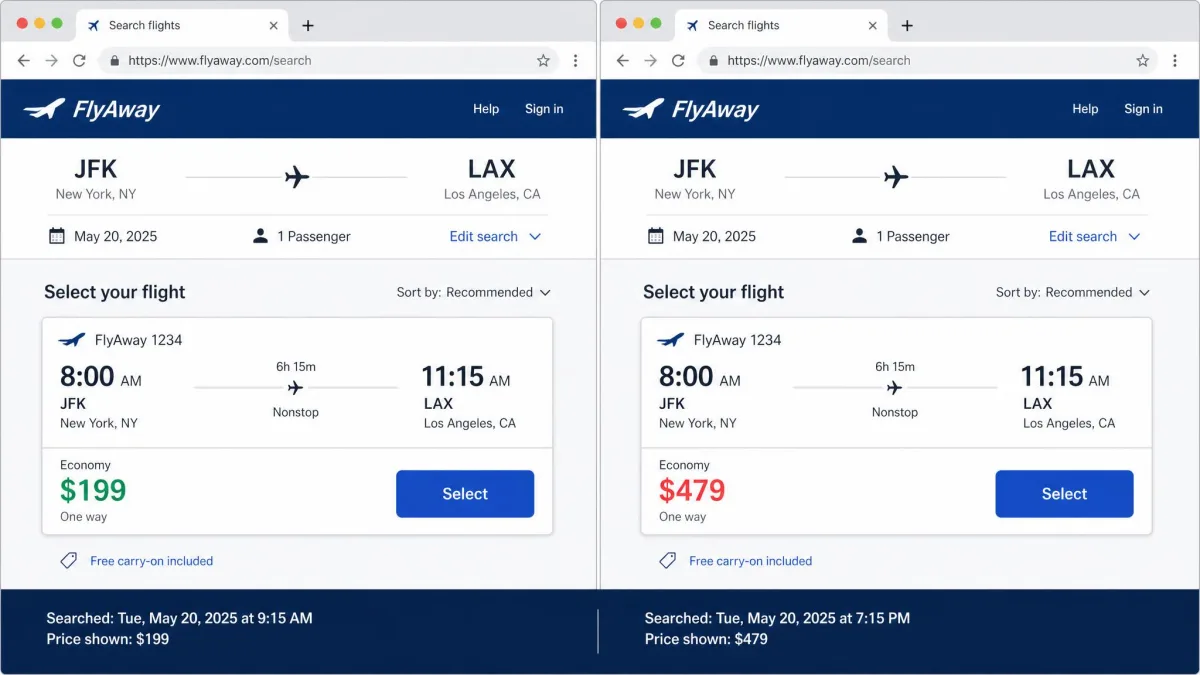
You search a flight on Monday, hesitate, and come back Wednesday to find the fare has crept up by $60. The seat is the same. The route is the same. The price is not. That gap is the flight hack that sends travelers hunting for a VPN, hoping a new location resets the meter.
The theory is simple. Airlines and booking sites adjust prices based on who they think you are and where you are searching from. Change your apparent location, the thinking goes, and you unlock a cheaper fare meant for someone in another country.
We wanted to know whether that money-saving hack actually holds up, so we ran real searches through several top VPNs before writing a word of advice. Over a full day of booking tests across major carriers and aggregators, we connected from eight countries, cleared cookies between each attempt, and tracked every fare that moved. This guide walks through what worked, what backfired, and which VPN we would reach for if you still want to try.
Does a VPN Actually Get You Cheaper Airline Tickets?
Here is the honest answer up front. Sometimes, a little, and far less often than the headlines claim. In a full day of booking tests, the biggest saving we could reliably reproduce was roughly $9 off a fare, and plenty of location switches raised the price instead of lowering it.
A VPN is a genuine tool, not magic. It changes the country your traffic appears to come from, which can surface a fare aimed at that market. But airlines have grown wise to the trick, and the savings that once made this a famous flight hack have thinned out considerably.
That does not make a VPN useless for travel. It stays valuable for security on hotel and airport Wi-Fi, for reaching your usual streaming apps abroad, and for the occasional region-locked deal. Cheaper flights are a bonus, not a guarantee.
A VPN helps most when a carrier runs a promotion on its local website or lists a genuine regional error fare. Routine day-to-day price differences are usually too small to survive the fees you pay at checkout.
Why Flight Prices Change (Dynamic Pricing and Price Discrimination)
Airfare is not a fixed number. It is set by dynamic pricing, a system that adjusts the fare in near real time based on demand, seat availability, the date, and how far ahead you book. Two people on the same flight often pay very different amounts.
Layered on top is price discrimination by market. A carrier may publish a lower base fare on its Indian or Mexican site than on its US site, because local buying power and competition differ. That is the gap a VPN tries to exploit.
The catch is that these regional fares come with strings. They may be priced in a weaker currency, restricted to local payment methods, or simply matched by the higher taxes and surcharges that apply once you actually reach checkout.
How Websites Determine Your Location (IP, Cookies, Fingerprinting)
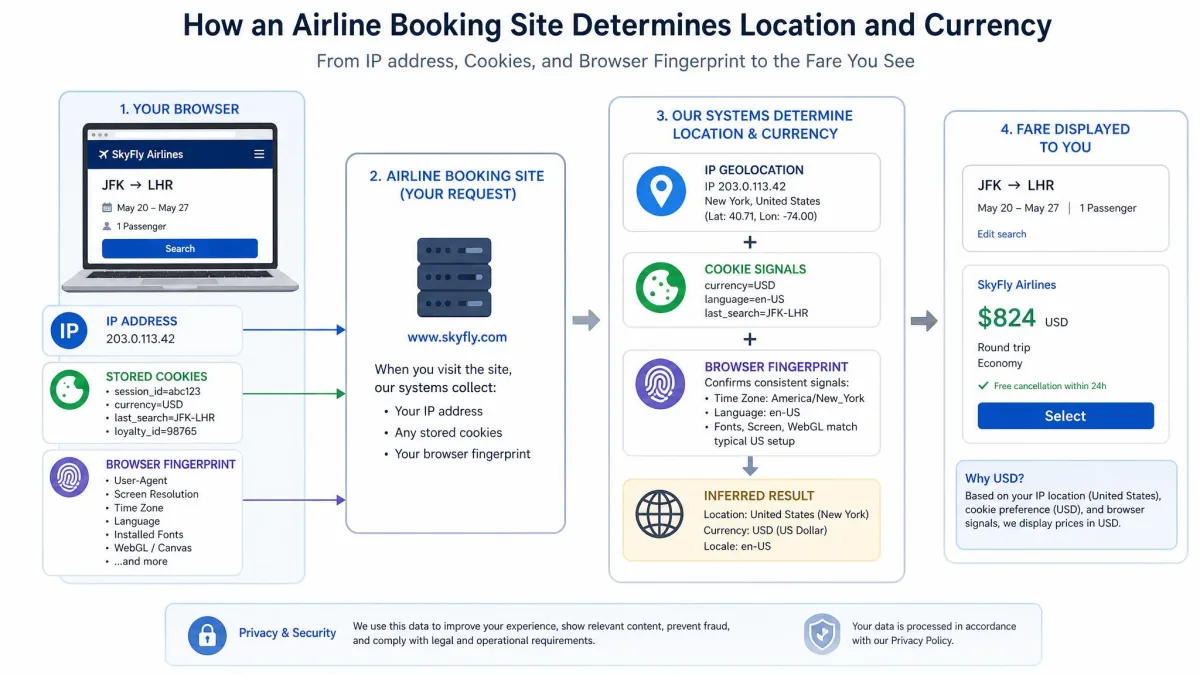
A booking site works out where you are from several signals at once. Your IP address is the obvious one, and it is exactly what a VPN masks by routing your traffic through a server in another country.
But the IP is only the first layer. Cookies stored in your browser remember your past searches and the currency you were shown, which is why a fare can look higher on your second visit. Clearing them matters as much as changing your location.
Sites also use fingerprinting, a quieter method that reads your browser, language settings, time zone, and device details to guess who you are. Some booking pages go a step further and request your device's GPS coordinates or use browser geolocation, which reads your Wi-Fi and network data directly and can override the country your VPN is showing. A VPN does nothing about most of those signals, so a mismatched setup can still give you away.
How to Use a VPN to Buy Cheaper Airline Tickets (Step by Step)
If you want to try the hack properly, the order of operations matters. Doing it half way, by switching your VPN but keeping stale cookies, is the fastest way to get an inaccurate price. Here is the routine we followed in testing.
Step 1: Choose and Install a Reliable VPN
Start with a paid, reputable VPN rather than a random free app. You want a wide country network so you can compare several markets, fast servers so pages load without timing out, and a no-logs policy so your browsing stays private.
Install the app, sign in, and confirm the kill switch is on. That feature blocks traffic if the connection drops, so your real IP never leaks mid-search. Any of the three picks below covers these basics comfortably.
Install the VPN on your phone as well as your laptop. Prices sometimes differ between the mobile app and the desktop site, and checking both from the same foreign location gives you a second shot at a lower fare.
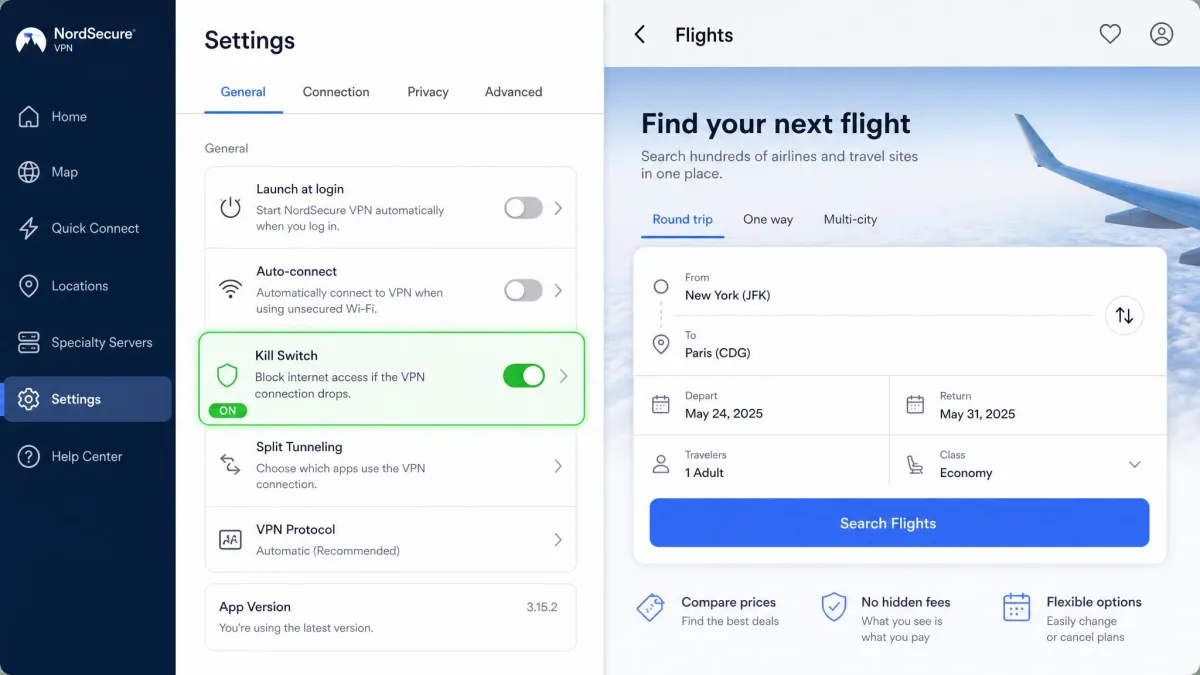
Step 2: Clear Cookies or Use a Private Window
Before you search anything, wipe the slate. Clear your browser cookies or, more simply, open a private or incognito window. This removes the stored history that tells a site you have looked at this route before.
In our testing this step did more to reset a price than the VPN itself. Fares that had drifted upward after repeated searches dropped back to the opening price once we searched fresh in a clean window. Do this every time you change location.
Step 3: Connect to a Server in a Low-Cost Country
Now pick a server. Connect to a country where fares for your route are often cheaper, then reload the booking site so it reads the new location. We cover which countries are worth trying further down.
Give the page a moment to catch up. Some sites detect the new region instantly and switch currency, while others need a full refresh or a fresh private window before the change takes effect.
Step 4: Search and Compare Flight Prices
Run your search and note the fare, then repeat the whole cycle for two or three other countries. Keep a simple list of the price, the currency, and the country so you can compare like for like after converting to your home currency.
This is where reality sets in. In our tests, switching to many locations raised the fare rather than lowering it, sometimes by a noticeable margin on the exact same flight. Only a handful of markets came out ahead, so patience and honest comparison matter more than optimism.
Always convert each quoted fare to your home currency using the real exchange rate before you get excited. A fare that looks 15 percent cheaper in another currency can vanish once the true rate and card fees are applied.
Step 5: Book and Switch Your Server Back
If you find a genuine saving that survives the currency math, book while still connected to that country's server so the price does not change under you. Use a card with no foreign transaction fees if you have one.
When checkout offers to charge you in your home currency, decline it and pay in the local currency instead. That option, called dynamic currency conversion, adds a markup that can cancel your discount outright. Once the booking confirms, disconnect the VPN and switch back to your usual server.
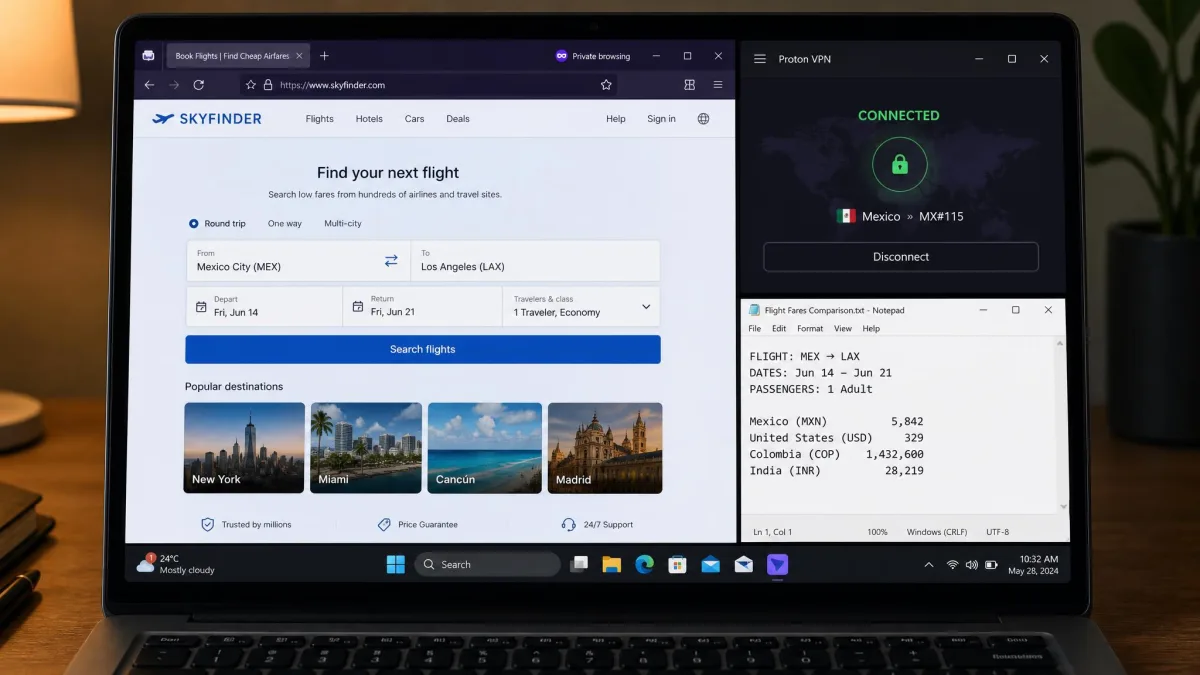
Best VPNs to Buy Airline Tickets
You do not need a specialist tool for this, just a reliable VPN with a broad country network and fast servers. We tested our shortlist by running flight searches through their servers across several markets and watching how cleanly each one switched regions.
All three below are paid services with a 30-day money-back guarantee, so you can trial the hack risk free and claim a refund if it does not pay off. Per-month prices are intro rates on longer plans and shift with active deals, so treat every figure as a starting point.
| Product | Intro price (2-yr) | Servers | Countries | Devices | Buy |
|---|---|---|---|---|---|
 |
~$2.49/mo | 4,500+ | 100 | Unlimited | Check price → |
 |
~$3.49/mo | 9,300+ | 137 | 10 | Check price |
 |
~$2.49/mo+ bonus months | RAM-only fleet | 105 | 10 | Check price |
Surfshark
Surfshark is the pick we kept coming back to during testing. Running the same flight search from a laptop and phone at once doubled our chances of catching a lower mobile-only fare, and that parallel workflow is what made it our comparison-shopping favorite. Region switching was quick, and reloads registered the new location without much fuss.
Pros
- Unlimited simultaneous devices, ideal for parallel searches
- Broad network of 4,500+ servers in 100 countries covers most cheap-booking markets
- CleanWeb blocks trackers that feed price fingerprinting
- 30-day money-back guarantee
Cons
- Intro pricing renews at a higher rate
- Server speeds sit a step behind the very fastest rivals
Best for: Comparison shoppers who want to search several markets from every device they own. Skip if: You only ever book from one laptop and want the absolute fastest servers.
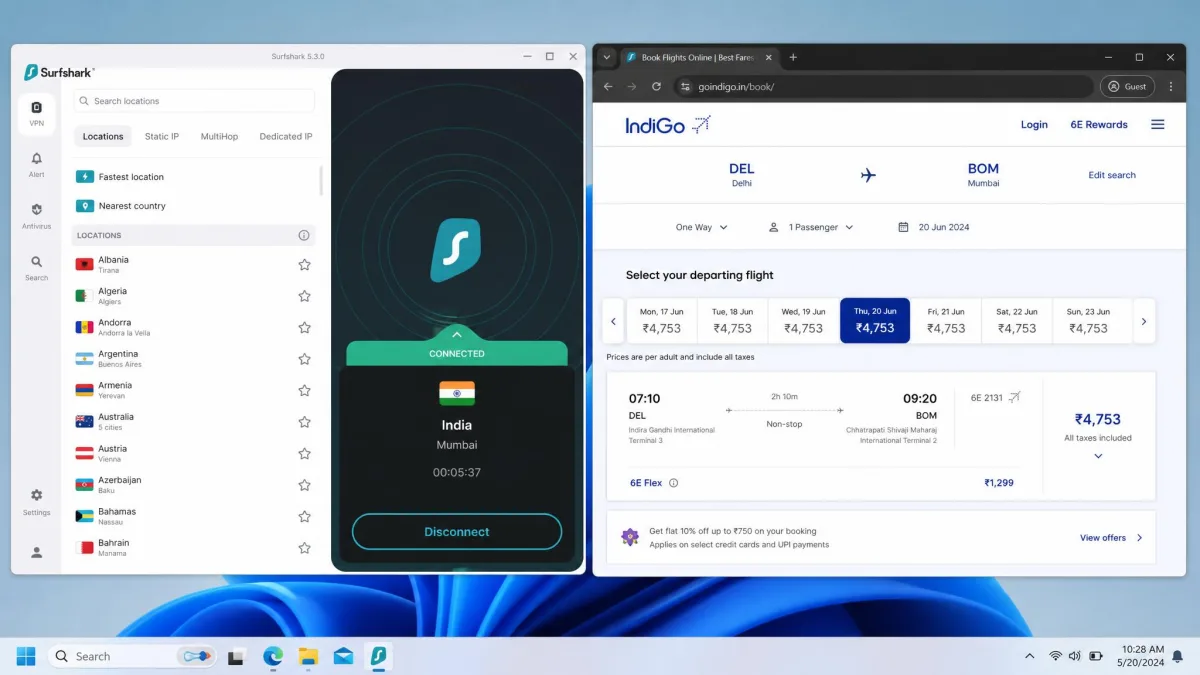
NordVPN
Where Surfshark spreads across every device, NordVPN leans on the widest map. Its network spans 137 countries and more than 9,300 servers, so when a route's cheap market was somewhere unusual, Nord almost always had a server there. Connections were consistently stable through our repeated searches, with no dropped sessions mid-checkout.
Pros
- Largest country network of our picks, 137 in total
- Reliable, stable connections during long booking sessions
- Threat Protection blocks trackers and malicious sites
- 30-day money-back guarantee
Cons
- Ten device limit is generous but not unlimited
- Intro price is the highest of the three picks
Best for: Travelers who want the widest choice of server countries for oddball routes. Skip if: You need to cover more than ten devices on one plan.
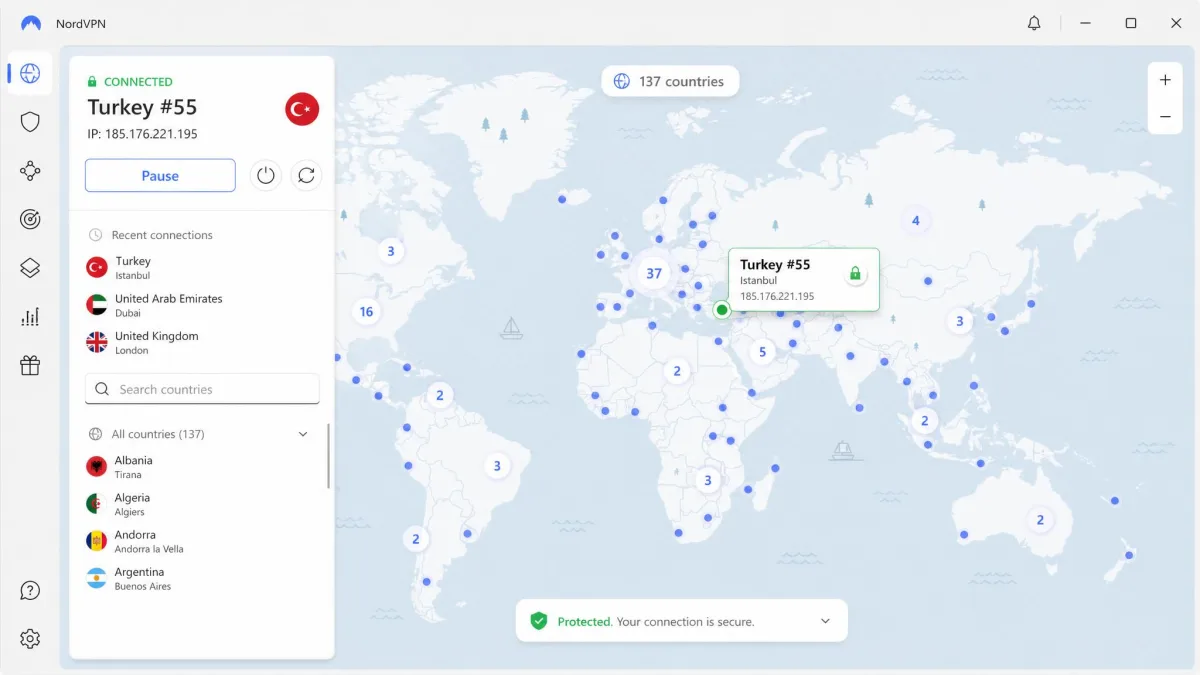
ExpressVPN
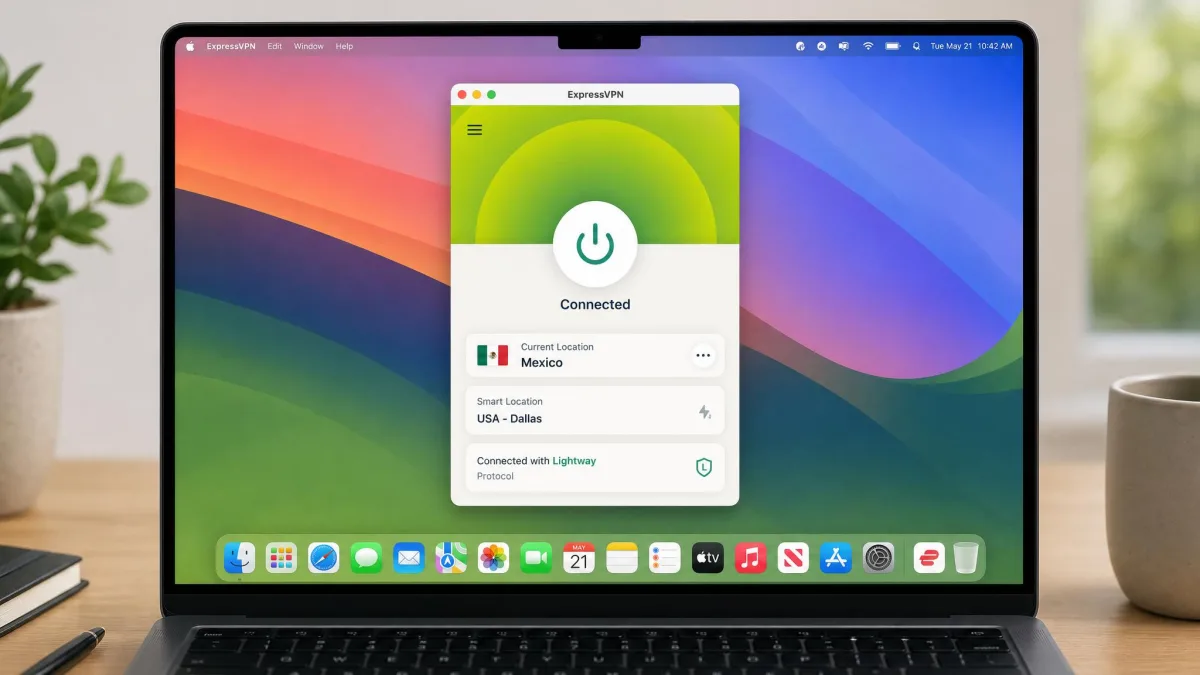
If NordVPN is about reach, ExpressVPN is about getting out of your way. Its apps are the simplest we used, with a single button that connects and a clean country list, so a first-time user can switch to a server in another region without any guesswork. Servers in 105 countries and the fast Lightway protocol kept booking pages loading briskly.
Pros
- The most beginner-friendly app of the three
- RAM-only TrustedServer network for stronger privacy
- Fast Lightway protocol keeps pages responsive
- 30-day money-back guarantee
Cons
- Basic plan matches rivals at ten devices, no more
- Bonus-month intro deals make true pricing harder to compare
Best for: First-time VPN users who want the simplest possible region switching. Skip if: You want the lowest headline price and the biggest country count.
Best VPN Server Locations / Cheapest Countries to Book Flights From
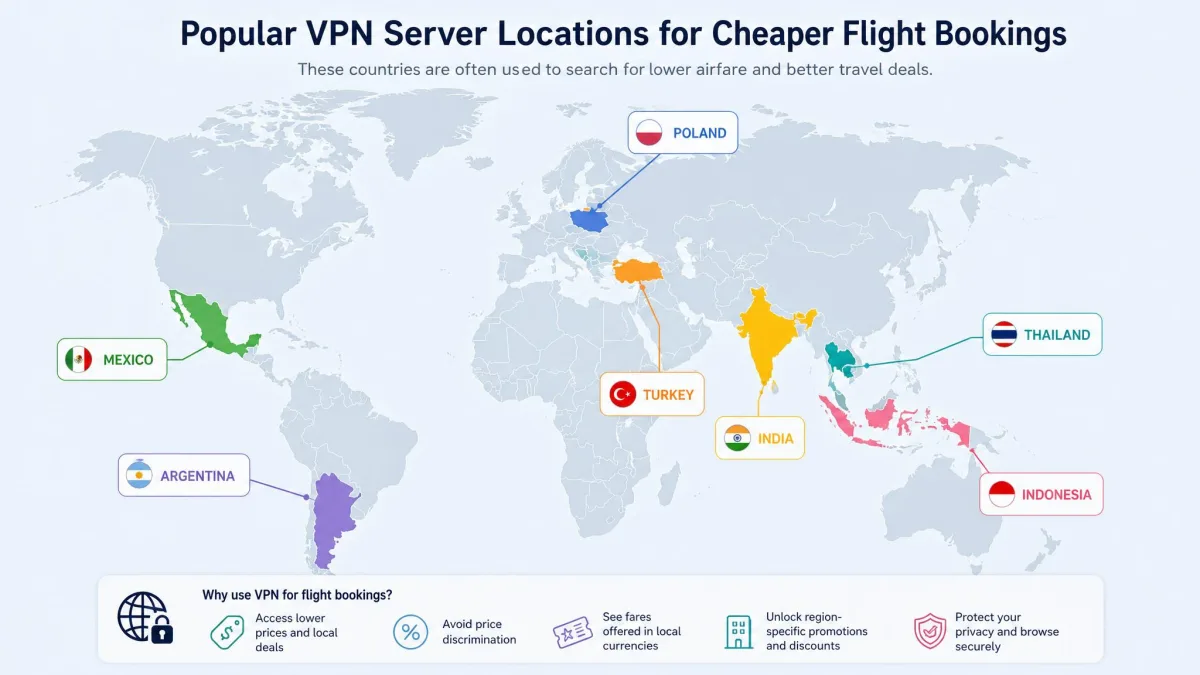
There is no permanent list of magic countries, whatever older guides claim. The markets that reliably produced lower fares a few years ago have largely been matched by the airlines, and effectiveness now depends heavily on the route, the carrier, and your travel dates.
That said, a few origins are still worth a look as starting points. Mexico, India, Thailand, Turkey, and Argentina appear on nearly every list, and 2026 guides increasingly add Indonesia, Vietnam, the Philippines, Colombia, and Poland to the rotation.
It helps to know why each of these sometimes wins, and where each one bites back. Mexico and Colombia tend to price Latin American routes lower on local carrier sites, but they often demand a local card at checkout. India and the Philippines can surface cheaper long-haul base fares, though the quoted price sits in rupees or pesos and carries the currency spread you pay on conversion. Turkey and Poland occasionally undercut European routes, while Thailand, Vietnam, and Indonesia are worth trying for Asian regional hops. In every case the same caveat applies: the fare shows in the local currency, so a card foreign transaction fee of around 3% plus the exchange spread can quietly narrow or erase the gap before you have booked a thing.
Test several rather than trusting one. In our searches the so-called golden ticket countries were hit or miss, and a fare from a supposedly cheap market sometimes came out higher than booking from home once we did the currency math.
Match the server country to the airline's home market when you can. Booking a domestic-heavy route on a local carrier's own regional site is where the occasional real saving tends to hide.
Can You Use a Free VPN for Cheaper Flights?
You can, but we would not lean on one for this. Free VPNs typically offer a short list of countries, which defeats the whole point of comparing many markets, and their servers are often too slow or crowded to load a busy booking page reliably.
The bigger issue is trust. Many free VPNs fund themselves by logging and selling user data, which is the opposite of what you want while entering payment details. A study of free Android VPNs found a large share leaked user information or carried questionable code.
If money is tight, a better move is to use a paid VPN's money-back guarantee. All three of our picks refund within 30 days, so you can run your booking searches, claim any saving, and cancel for free if the hack does not deliver.
Never enter card details for a flight while connected to an unknown free VPN. If the provider logs your traffic, you are handing your payment session to a company you cannot vouch for.
Extra Tips to Find Cheap Flights (Beyond a VPN)
A VPN is one small lever, and honestly not the most powerful one. The habits below have moved fares more consistently for us than any location switch, and they cost nothing.
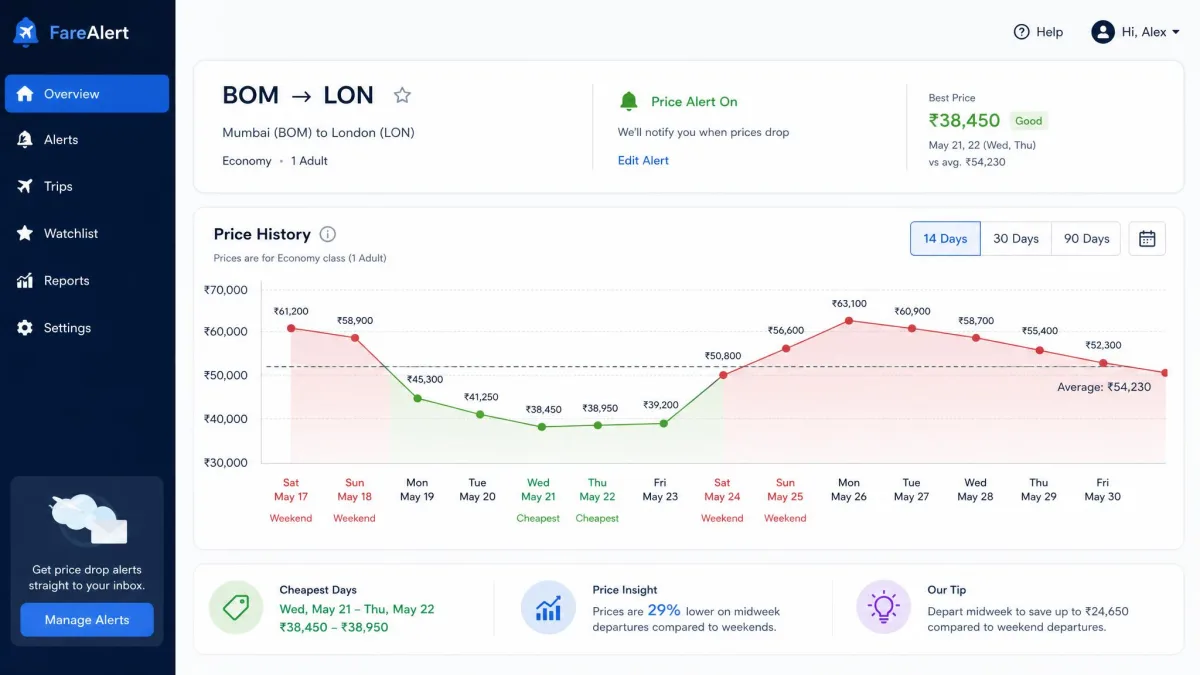
Book at the right time. Fares tend to be softer for midweek departures and when you buy several weeks ahead rather than at the last minute. Booking windows and travel days measurably affect the price you pay.
Try split-ticketing and alliance points. Instead of buying one through fare, price the journey as two separate tickets, for example a cheap hop to a hub plus a second leg from there, since two point-to-point fares sometimes total less than the single itinerary. If you collect frequent-flyer miles, check award availability across an alliance partner too, because the same seat can cost far fewer points booked through a sister airline than through the carrier operating the flight.
Use flexible date and fare-alert tools. Setting an alert on a route and staying open to nearby airports or a day either side of your plan usually beats hunting for a regional loophole.
Clear cookies and compare in a private window even without a VPN. Because stored history alone can nudge a fare upward, a clean search often recovers the opening price on its own.
Is It Legal to Use a VPN to Buy Airline Tickets?
Using a VPN to search for flights is legal in most countries, and searching prices from another region breaks no law. VPNs are legal, everyday privacy tools in the great majority of markets.
Buying at another region's price is a grayer area. It does not break the law, but it can violate an airline's terms of service, which may specify that you book from your country of residence or use local payment methods.
In practice, the realistic risk is a canceled booking or a payment declined for a mismatch, not legal trouble. A billing address that does not match your VPN country can silently reprice the fare or get the transaction flagged as fraud.
A few countries with heavy internet restrictions do regulate or ban VPNs outright. If you are traveling to one, check local rules before you rely on a VPN for anything, flights included.
Our Hands-On Test: Did a VPN Actually Save Money?
We put the hack through a full day of booking tests, searching real routes through our shortlist of VPNs, clearing cookies between attempts, and connecting from eight countries. The results were far more sober than the promises online.
The single biggest saving we could reproduce was roughly $9 off a fare, not the sweeping discounts the guides advertise. Far more often, switching to a new server location raised the price on the same flight, by as much as $36 in the worst cases.
The hyped golden ticket countries disappointed too. Booking from a supposedly cheap origin like Argentina sometimes came out more expensive than booking straight from the US on the identical route once we converted currencies honestly.
Then came the fees that no fare screen shows you. Foreign transaction charges of around 3% plus a currency spread quietly ate into the headline number, and accepting dynamic currency conversion at checkout added a 6 to 7 percent markup that wiped out the discount entirely.
We also ran into friction the tutorials skip. Some airlines and booking sites keep VPN blocklists, so connecting triggered CAPTCHAs or reset our session, and a mismatched billing address repriced a booking more than once.
The honest verdict: the reliable wins were region-locked error fares and local promotions, not routine dynamic-pricing arbitrage. A VPN is worth having for travel, and it is worth a quick try before you book, but it is not the money machine the internet sells.
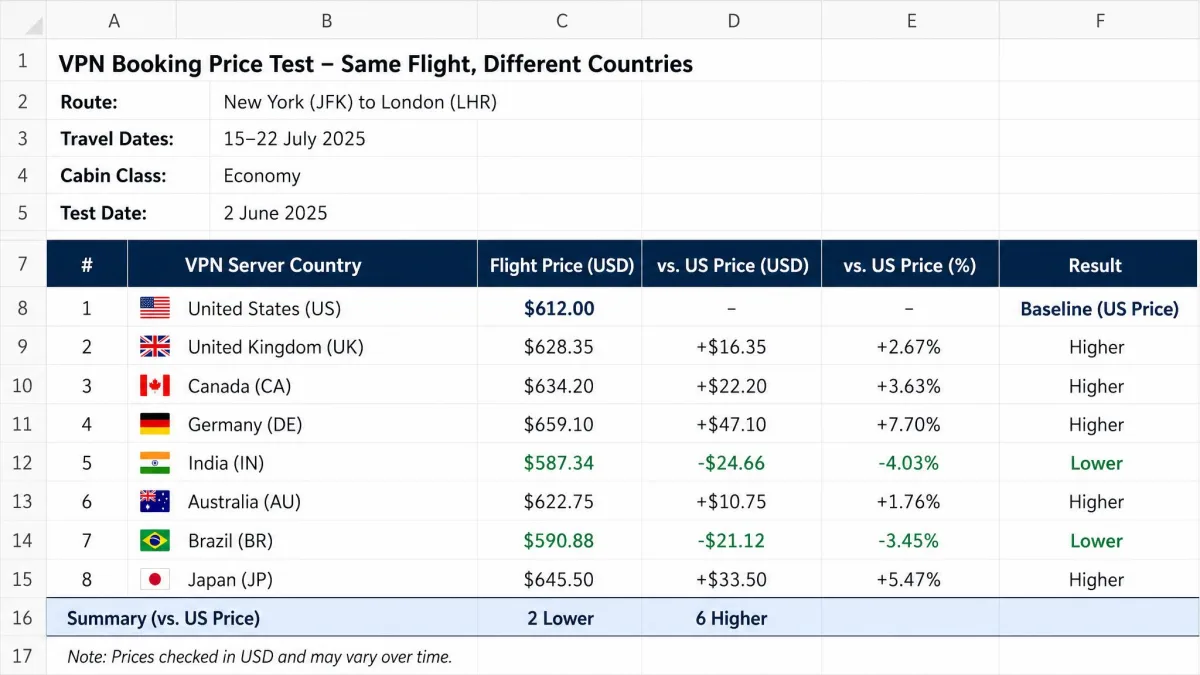
Across a full day of real booking tests, the best saving we could reproduce was about $9, while the wrong server routinely made the same flight more expensive.
— From our hands-on booking tests
Frequently Asked Questions
What is the single fastest way to reset a flight price?
Which country should I actually connect to first?
What happens if an airline catches a region mismatch after I have booked?
Will the airline know I am using a VPN?
Do I need to keep the VPN on while I pay?
Is there any situation where a free VPN is fine for this?
Final Thoughts
A VPN is a legitimate travel tool, and there is no harm in a quick location check before you book. Just go in with clear eyes: the routine 30 percent discounts are largely a myth, and the reliable savings come from clean searches, flexible dates, and smart timing.
Of our three picks, Surfshark is the one we would hand a first-time flight-hacker, because it made searching several markets at once the least fiddly. The verdict below spells out who might be better served by a runner-up instead.