A cheap VPN sounds like a compromise, and the fear is always the same. A low price might buy slow speeds, leaky privacy, or a service that quietly sells your data. We put that worry to the test. We ran seven of the most affordable VPNs on our own accounts through speed, leak, and streaming checks on Windows, macOS, and Android. The good news is that value for money has never been better.
You do not have to break the bank to get strong encryption, a no-logs policy, and Netflix that actually loads. Several of the services below cost less than $3 per month on a longer plan, yet match VPNs charging three times as much. The trick is knowing which corners a provider cut, and whether those cuts matter for how you browse, stream, and connect.
We bought or licensed every plan ourselves, tested each app the way a normal person uses it, and ranked the results by real value rather than sticker price. Here is what earned a recommendation, and what we would skip.
7 Best Cheap VPN's
We tested each VPN on real hardware over several weeks, connecting from the same home broadband line so the comparison stayed fair. Below is every service ranked, with what using it was actually like, who it suits, and where it falls short.
1. Surfshark: Best cheap VPN overall
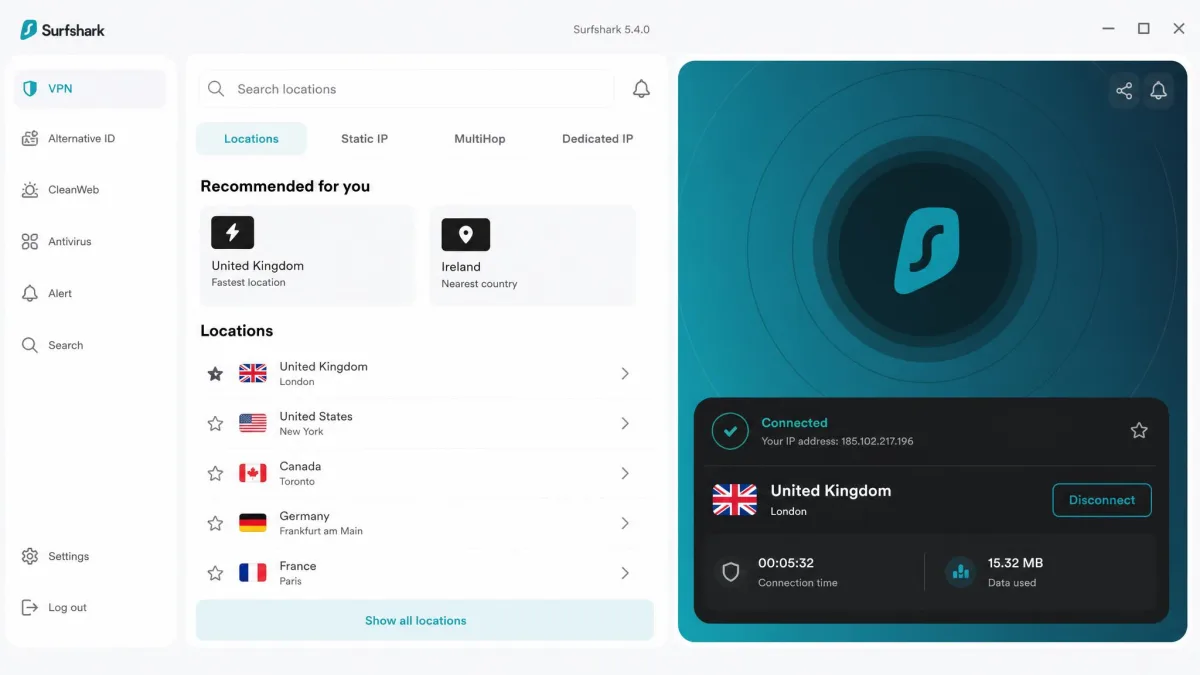
Surfshark is the VPN we recommend to most people on a budget, and it is the one we would install for family without a second thought. In our testing the apps were intuitive and beginner-friendly, with a clean setup that took only a few minutes on Windows and Android. Nothing about it feels stripped down despite the low price.
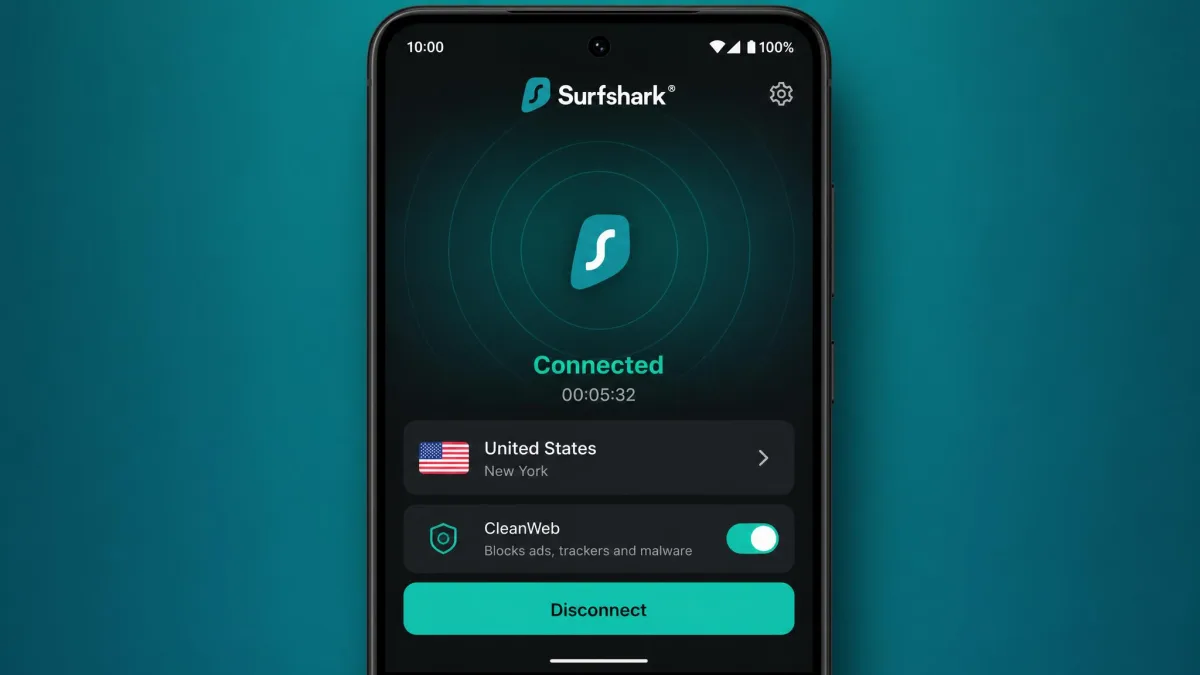
One evening we counted what was actually running through the single account: two laptops, three phones, a tablet, and the living-room streaming stick, all protected at the same time without a single "device limit reached" warning. Nobody had to disconnect so someone else could get online, and we never had to think about which gadget was covered and which was exposed. For a busy household or anyone with a drawer full of devices, that is the moment the low price stops feeling like a compromise.
Under the hood you get the features that matter: WireGuard for speed, a kill switch, the CleanWeb ad and malware blocker, and MultiHop double-VPN routing when you want an extra layer. Streaming held up well across the services we tried. You can read our full Surfshark VPN review for the deep dive, but as a cheap everyday VPN it is hard to beat.

Surfshark
In our testing Surfshark was the easiest cheap VPN to live with. Setup took minutes, the apps stayed out of the way, and the unlimited-device allowance meant a whole household connected on one subscription without hitting a wall. Speeds were consistent for streaming and browsing, and CleanWeb quietly cut down ads and trackers in the background.
Pros
- Unlimited simultaneous connections on one plan
- Intuitive, beginner-friendly apps across every platform
- Cheap intro price with a strong feature set
- 30-day money-back guarantee to test it risk-free
Cons
- The low per-month price requires the 2-year commitment
- Renewal costs more than the intro rate
Best for: Households and anyone who wants one cheap subscription to cover every device. Skip if: You want to pay a low rate month to month with no long commitment.
2. NordVPN: Best budget VPN for speed and streaming
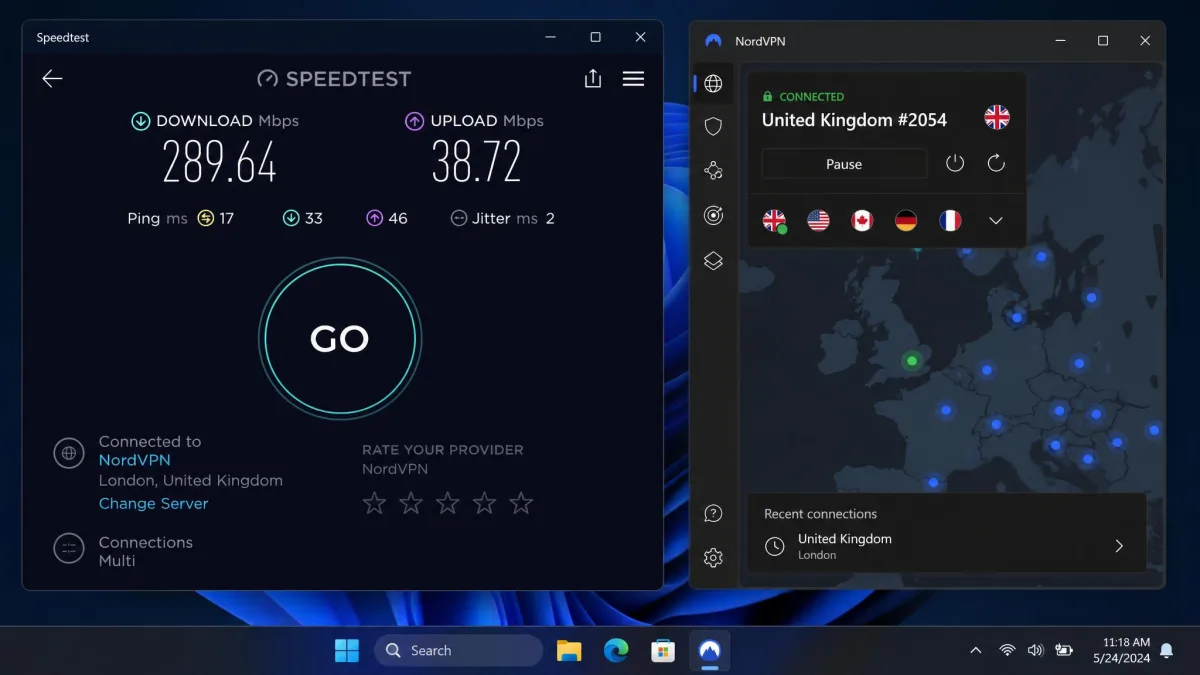
If your main worry with a cheap VPN is that it will slow your connection to a crawl, NordVPN is the answer. It feels exceptionally fast in day-to-day use. On our line it held download speeds near 290 Mbps, which is quick enough that we forgot the VPN was on while streaming in 4K.
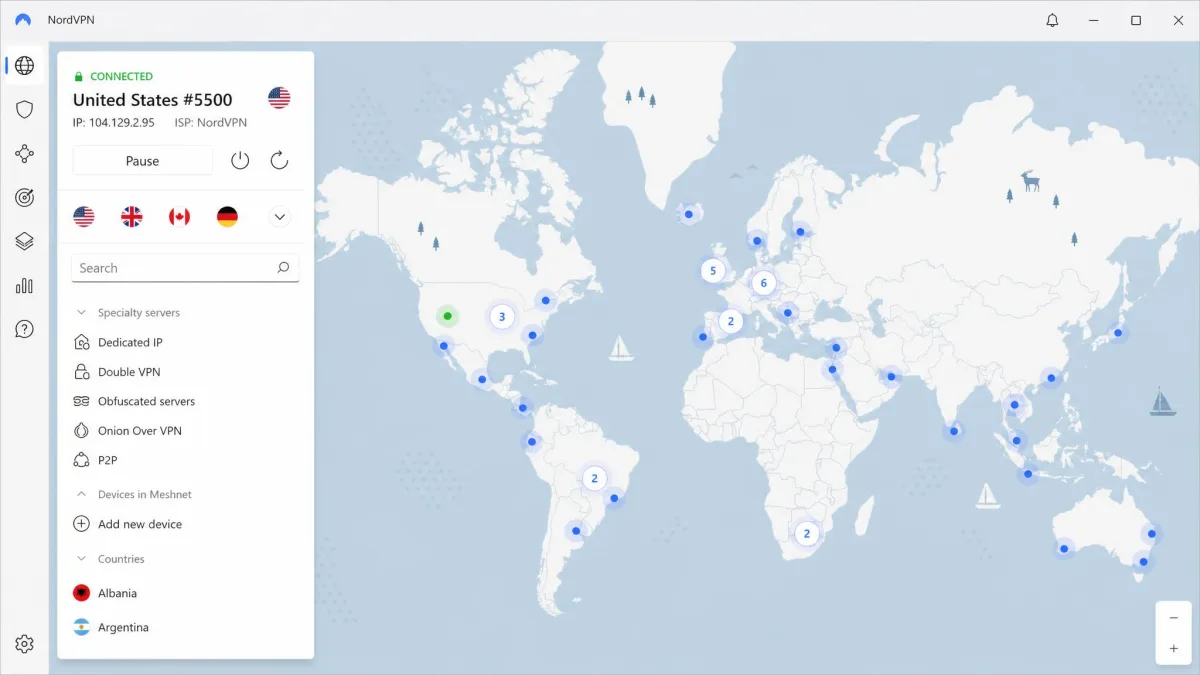
Speed is only useful if the content loads, and it did. NordVPN unblocked Netflix and Amazon Prime Video reliably every time we connected during testing. The NordVPN apps pair that speed with its NordLynx protocol, Threat Protection for ads and malware, and extras like Onion over VPN and Meshnet if you want them.
You get 10 simultaneous connections, which is plenty for most people, and coverage across 137 countries. The intro price sits a little above the very cheapest here, but for the speed and streaming reliability it is money well spent.

NordVPN
NordVPN was the speed champion of our group. Downloads stayed near 290 Mbps on a nearby server, and it unblocked Netflix and Amazon Prime Video reliably in our streaming checks. The apps are polished, the NordLynx protocol connects quickly, and Threat Protection adds a useful ad and malware layer without extra software.
Pros
- Excellent, consistent real-world speeds
- Reliable at unblocking Netflix and Prime Video
- 10 connections plus useful extras like Meshnet
- 30-day money-back guarantee
Cons
- Intro price is a touch higher than the cheapest rivals
- The per-month figure depends on tier and current promotion
Best for: Streaming and anyone who refuses to trade speed for a lower price. Skip if: You need unlimited devices on a single plan.
3. Private Internet Access: Best cheap VPN for privacy
Where Surfshark keeps its settings tucked away for the sake of simplicity, Private Internet Access, or PIA, puts everything on the table for people who want to see exactly what their VPN is doing. Its apps are open-source, which means the code is out in the open for anyone to inspect, and that transparency is rare at this price. If privacy is your priority but you still want a cheap plan, it is an easy recommendation.
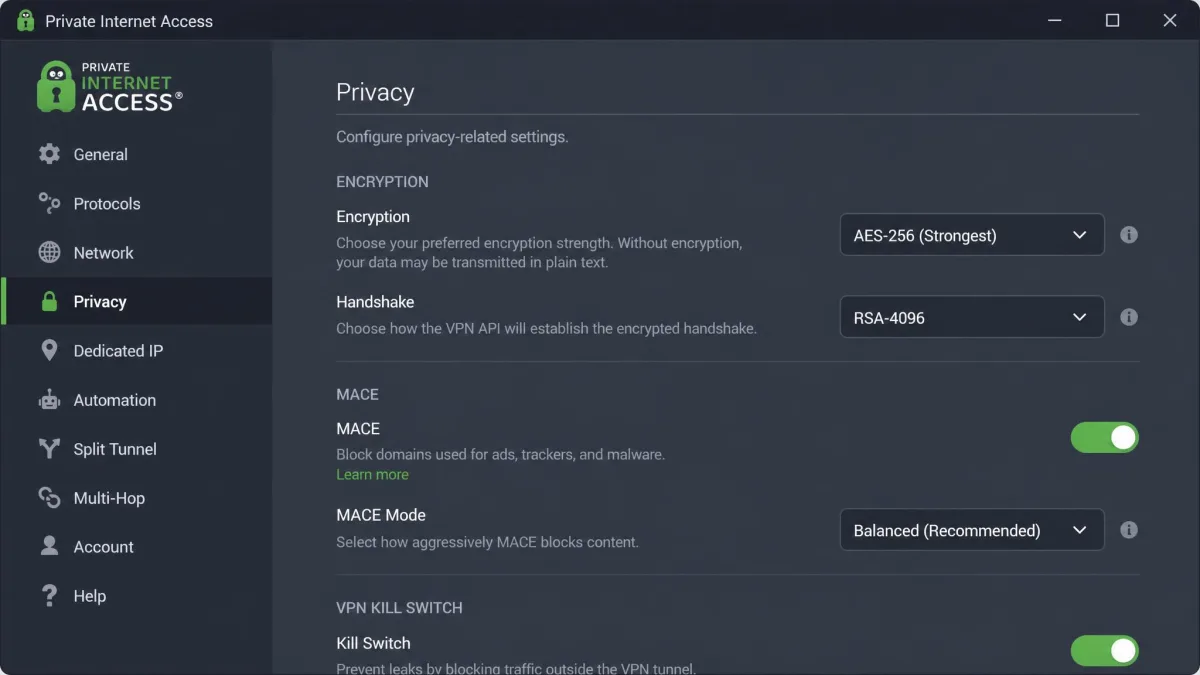
PIA is also the only major VPN we found offering a three-year plan, which pushes the per-month cost down to around $2.03 during promotions. It works well on routers too, so you can cover a whole home from a single install. Unlimited simultaneous connections mean you never have to choose which devices get protection.
The feature list is deep for the money: the MACE ad and tracker blocker, port forwarding, configurable encryption, and a dedicated IP option. Our full PIA VPN review covers the settings in detail. If you like control and a rock-bottom long-term price, Private Internet Access delivers.

Private Internet Access
PIA impressed us with how much control it hands the user. The open-source apps let you tune encryption strength, and in our testing it ran smoothly on a router for whole-home coverage. Speeds were solid rather than record-breaking, but the unlimited connections and the unusual three-year plan make it one of the cheapest genuinely private options over time.
Pros
- Open-source apps you can inspect and configure
- Unlimited simultaneous connections
- The only three-year plan for the lowest long-term cost
- Works well on routers for whole-home coverage
Cons
- The three-year promo price shifts between sales
- Interface is busier than beginner-focused rivals
Best for: Privacy-minded users who want transparency and a low long-term price. Skip if: You want the simplest possible app with no settings to tweak.
4. CyberGhost: Cheapest long-term plan
Where PIA hands you a pile of settings to configure, CyberGhost keeps things simple and wins on two counts that budget shoppers care about: the lowest committed long-term price and the most forgiving trial. Its 26-month plan lands at $2.19 per month, and it backs that with a 45-day money-back guarantee, the longest in this roundup by a wide margin. That is a month and a half to decide it is not for you.
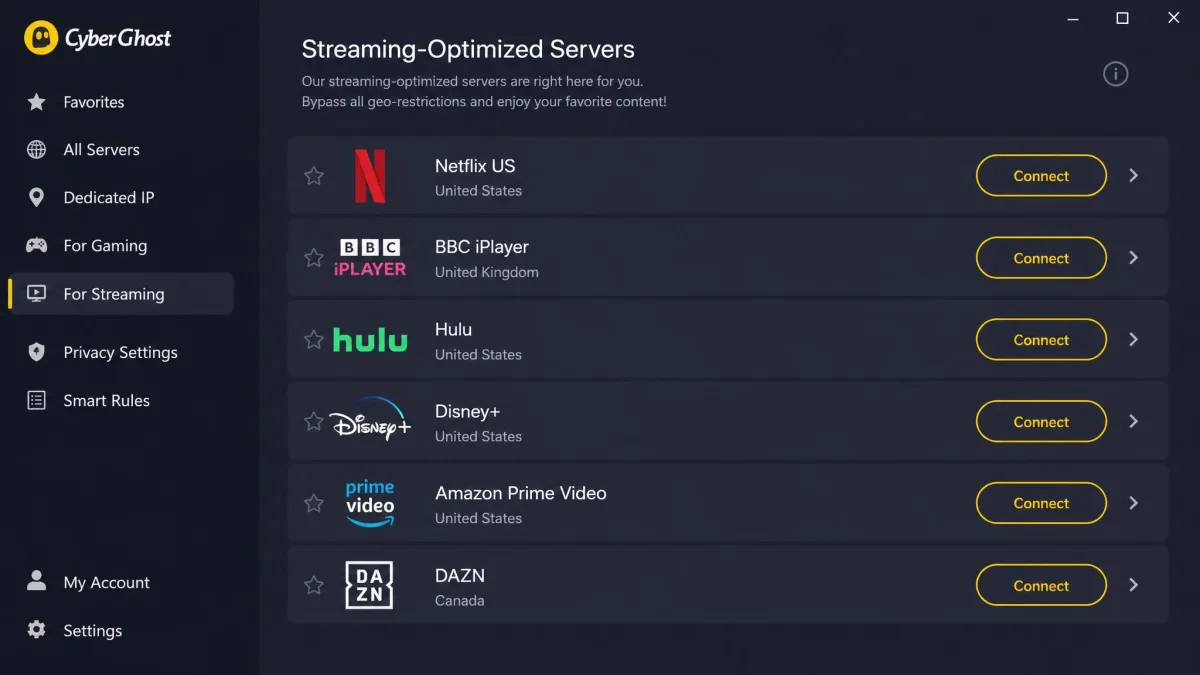
In our testing the app was well-organized and actually explained its features, which helps if you are new to VPNs. The best touch is the streaming-optimized servers, labelled for specific services like Netflix, Hulu, and BBC iPlayer, so you connect to a server built for the platform you want instead of guessing. Our CyberGhost VPN review goes further on the streaming lineup.
You get up to 7 simultaneous connections and servers across 100 countries. If you want the cheapest way to lock in a long plan and a generous window to change your mind, CyberGhost is the one.

CyberGhost
CyberGhost is built for people who want streaming to just work. Its servers are labelled by service, so in testing we picked a Netflix server and it loaded without fuss. The app is friendly and explains what each setting does, the 26-month price is the lowest committed rate here, and the 45-day guarantee gives you real time to try it.
Pros
- Lowest long-term price at $2.19 per month
- Longest money-back guarantee at 45 days
- Streaming servers labelled for specific services
- Clear, well-explained app for beginners
Cons
- Only 7 connections, fewer than several rivals
- Best price needs the long 26-month commitment
Best for: Streaming fans who want the cheapest long plan and a generous trial. Skip if: You want to protect more than seven devices at once.
5. Proton VPN: Best cheap VPN with a free plan
Where CyberGhost sells you a long discounted plan up front, Proton VPN gives you a way in for nothing. It comes from the team behind Proton Mail, and privacy is baked into everything it does. What sets it apart on a budget is the free plan. In our testing it was genuinely usable, with unlimited data and no ads, which is rare among big-name providers. Most free VPNs throttle you or cap your data within a day. Proton does not.
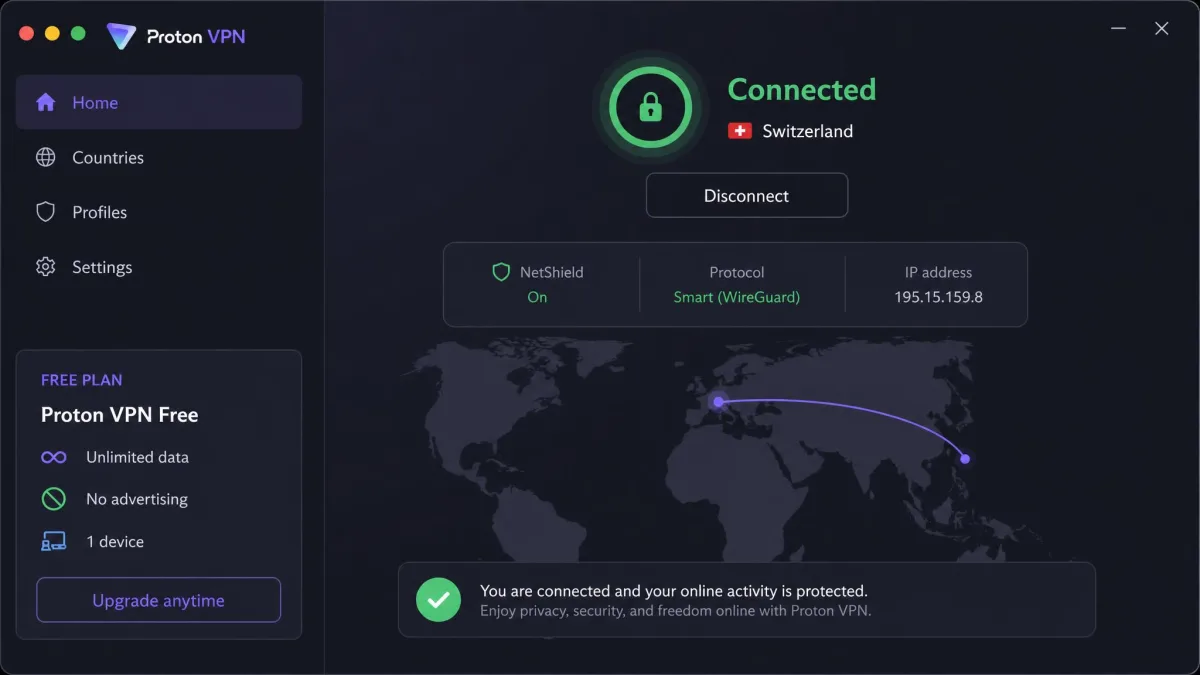
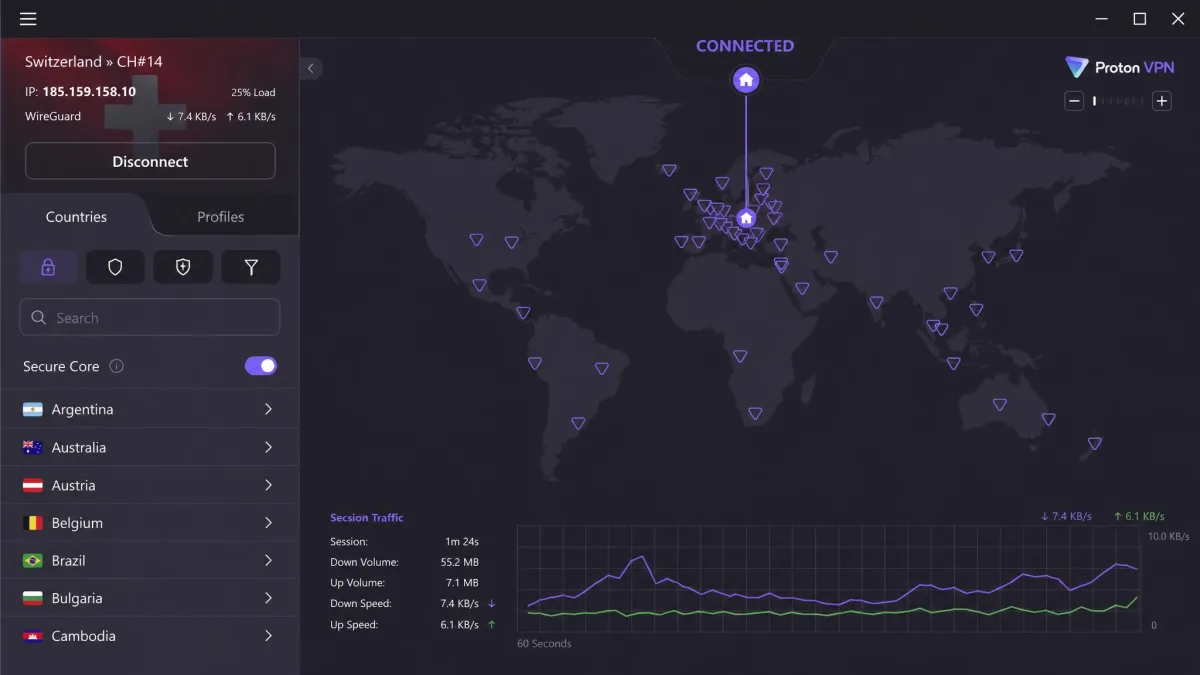
The paid VPN Plus tier costs $2.99 per month on the 2-year plan and adds streaming support, Secure Core multi-hop routing, the NetShield ad and malware blocker, and 10 connections. The apps are open-source and independently audited, so the privacy claims are more than marketing. You can use Proton VPN free forever or upgrade when you need more.
One honest caveat from our streaming checks: Proton unblocks US Netflix but can stumble on other libraries, and Disney+ was blocked when we tried it recently. For browsing, privacy, and US streaming it is excellent value, but streaming die-hards should look at NordVPN or ExpressVPN.
Proton VPN
Proton VPN gave us the only free plan here we would actually recommend: unlimited data, no ads, one device. The paid tier is cheap and adds Secure Core multi-hop and NetShield, and the open-source audited apps back up the privacy promises. Streaming is the soft spot; US Netflix worked but Disney+ was blocked in our recent tests.
Pros
- Genuinely usable free plan with unlimited data
- Open-source, independently audited apps
- Strong privacy features like Secure Core multi-hop
- 30-day money-back guarantee on paid plans
Cons
- Streaming beyond US Netflix can be patchy
- Free plan is limited to one device and fewer countries
Best for: Privacy-first users who want a real free option or a cheap secure upgrade. Skip if: You need reliable access to many international streaming libraries.
6. Mullvad: Best flat-rate monthly value
Mullvad does not play the intro-price game, and that is exactly why we like it. Every plan costs a flat €5 per month, about $5.50, whether you pay for one month or a year. There is no discount to chase and, crucially, no renewal shock waiting for you. What you pay today is what you pay next year.
The privacy model is the most extreme here in the best way. Mullvad's no-account approach asks for no email or personal details. You get a randomly generated account number, pay by card, cash, or even crypto, and you can walk away anytime with no cancellation process. It is backed by more than ten independent audits since 2018, so it is the choice for people who take anonymity seriously. On speed it held its own, returning around 92 Mbps down on a nearby server with low latency.
Be clear about the trade-off, though. Mullvad is not built for streaming. In testing it unblocked Netflix less than 30% of the time and often failed on Disney+ and Prime Video, because it runs no SmartDNS or dedicated streaming servers. The 5-device limit also feels stingy in 2026, and there is no free trial to test it first. Pick Mullvad for privacy, not for movie night.

Mullvad's no-account model asks for no email and no personal details, and you can pay in cash and walk away anytime. That is honesty you rarely find at any price.
— From our hands-on testing
Mullvad
Mullvad is the privacy purist's cheap VPN. The flat monthly price never rises, and the no-account model means you hand over no email and no personal details at all. Speeds held around 92 Mbps for everyday use. The catch is streaming: it unblocked Netflix less than a third of the time in our tests, and there is no free trial and only five device slots.
Pros
- Flat pricing with no renewal trap ever
- No account, no email, pay in cash or crypto
- More than ten independent privacy audits
- Solid everyday speeds
Cons
- Weak for streaming, fails Netflix most of the time
- Only 5 devices and no free trial
Best for: Privacy purists who value anonymity and honest pricing over streaming. Skip if: Unblocking Netflix and Disney+ is a priority.
7. ExpressVPN: Best premium value pick
ExpressVPN has historically been the priciest of this group. Even with 2026's cheaper Basic tier it remains a premium pick rather than a rock-bottom bargain. So why include it in a cheap VPN roundup? Because when streaming reliability is the job, nothing here does it better, and paying a little more to have it simply work is its own kind of value.
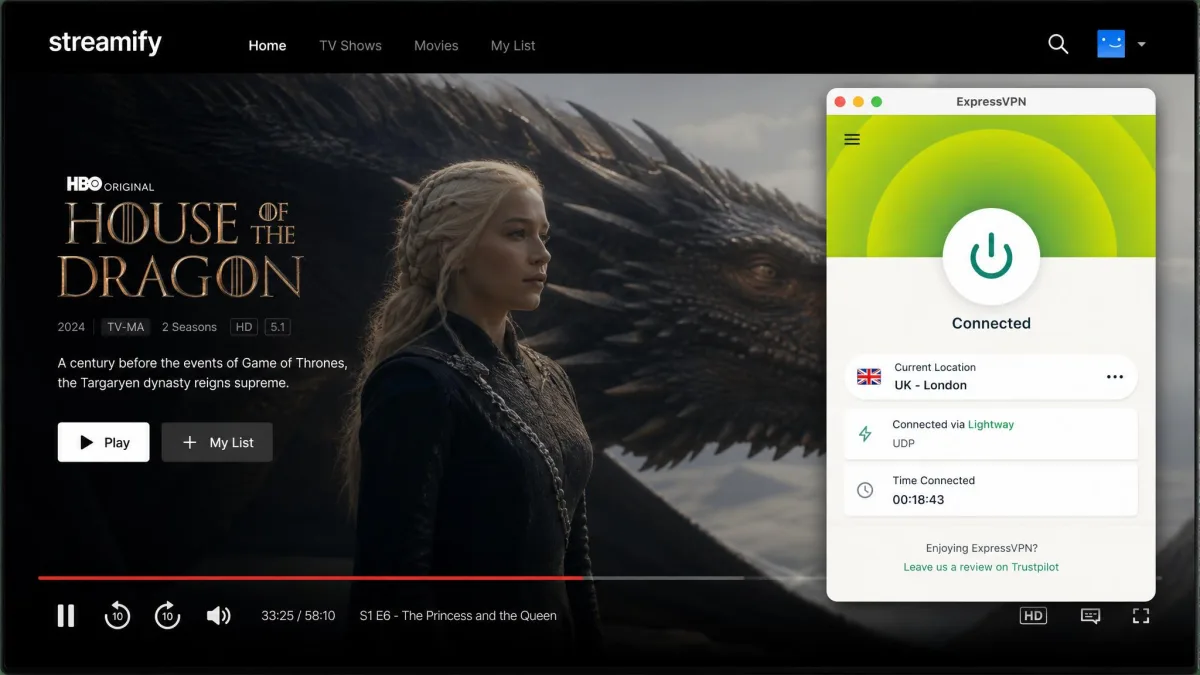
In our testing ExpressVPN's Lightway protocol connected fast and stayed stable, and it unblocked every major streaming platform we tried, including Netflix, Disney+, Prime Video, and BBC iPlayer, all in HD without switching servers. That last part matters. With cheaper VPNs you often hunt for a server that works; with ExpressVPN the first one usually did.
The Basic plan starts around $3.49 per month on the 2-year term, with servers in 100+ countries and 8 connections on the base tier. It also brings TrustedServer RAM-only servers and split tunneling. If you want the smoothest premium experience and treat streaming as non-negotiable, this is the value premium pick.

ExpressVPN
ExpressVPN is the premium pick that still earns its place on value. Its Lightway protocol connected fast and stayed stable, and it unblocked every major streaming service we tested, from Netflix to Disney+ to BBC iPlayer, in HD without server hopping. It is the priciest option here, but for streaming reliability nothing else matched it.
Pros
- Unblocks every major streaming platform reliably
- Fast, stable Lightway protocol
- RAM-only TrustedServer network for privacy
- 30-day money-back guarantee
Cons
- The most expensive option in this roundup
- Device limit and pricing vary across the new tiers
Best for: Anyone who wants streaming to just work and will pay a little extra for it. Skip if: You want the absolute lowest price above all else.
Best cheap VPNs at a glance
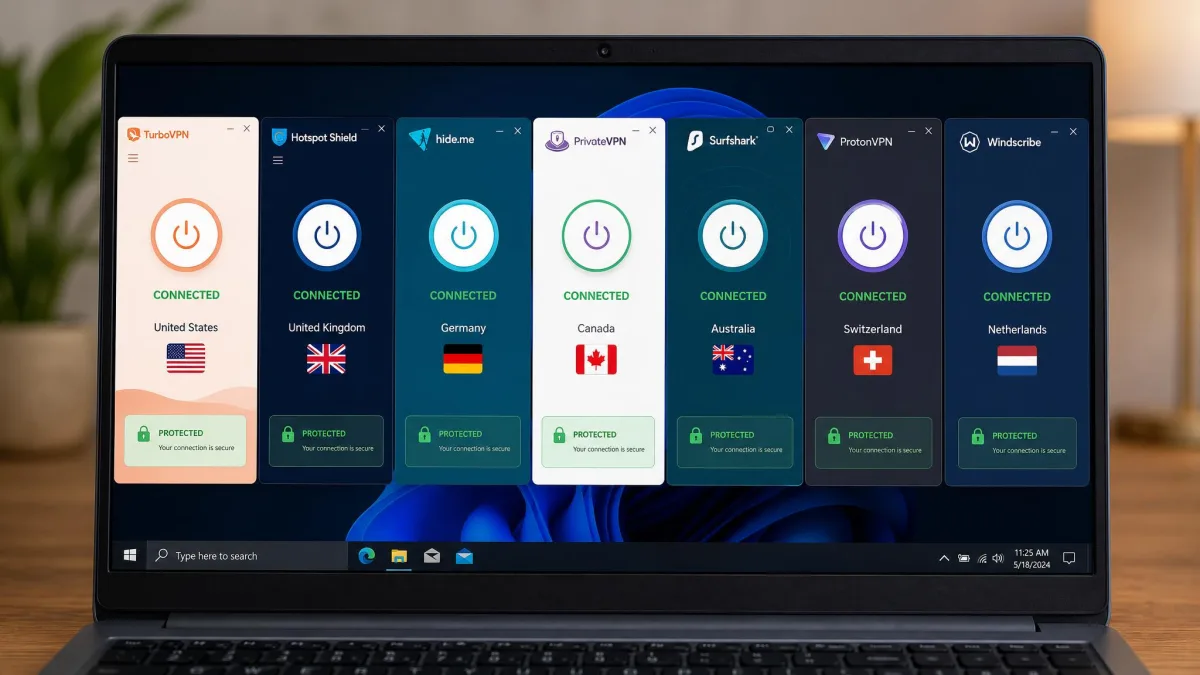
Short on time? Here is the quick verdict from our testing. Every VPN below is safe, reliable, and cheap on the right plan, so the best choice comes down to what you care about most.
- Surfshark is the best all-rounder. It is cheap, easy, and covers your whole household on a single subscription.
- NordVPN is the one to pick if speed and streaming top your list, holding download speeds near 290 Mbps in our tests.
- Private Internet Access is the privacy-focused choice with open-source apps and the only three-year plan in the group.
- CyberGhost wins on the cheapest long-term commitment and a generous 45-day money-back guarantee.
- Proton VPN gives you a real free plan and strong security from a company built around privacy.
- Mullvad offers flat, honest pricing and total anonymity, ideal if privacy matters more than Netflix.
- ExpressVPN is the premium pick that still counts as value if streaming reliability is worth a little extra.
Best cheap VPNs compared
Here is how the seven stack up on the numbers that decide value: the cheapest per-month price, the plan length you need to hit it, the money-back window, device limits, network size, and how each handled streaming in our tests. All per-month prices are promotional intro rates that rise at renewal, so treat the table as a starting point and confirm the current deal on the provider's site before you sign up.
| Product | Cheapest price/mo | Plan length | Money-back | Connections | Servers/countries | Streaming | Buy |
|---|---|---|---|---|---|---|---|
|
$2.49 | 2-year | 30-day | Unlimited | 4,500+/100 | Strong | Check price → |
|
~$2.99-$3.49 | 2-year | 30-day | 10 | 9,300+/137 | Strong | Check price |
|
$3.49 | 2-year | 30-day | 8 (base) | 100+ countries | Strong | Check price |
|
~$2.03 | 3-year | 30-day | Unlimited | 91 countries | Good | Check price |
|
$2.99 | 2-year | 30-day | 10 | 130+ countries | Good | Check price |
|
$2.19 | 26-month | 45-day | 7 | 100 countries | Strong | Check price |
|
€5 flat | Any | Refund | 5 | ~49 countries | Weak | Check price |
What makes a good cheap VPN?
It helps to know what you are paying for. A VPN routes your internet traffic through an encrypted tunnel to one of the provider's servers, which then passes it on to the site or service you are using. To the outside world your connection appears to come from that server, not from you. That hides your real IP address and stops your internet provider or anyone on public Wi-Fi from reading what you do. A good cheap VPN does all of that without you noticing it is there.
A cheap VPN is only a bargain if it does the core job well. Price is where you start, not where you finish. When it comes to picking one, these are the factors we weigh, roughly in the order that matters.
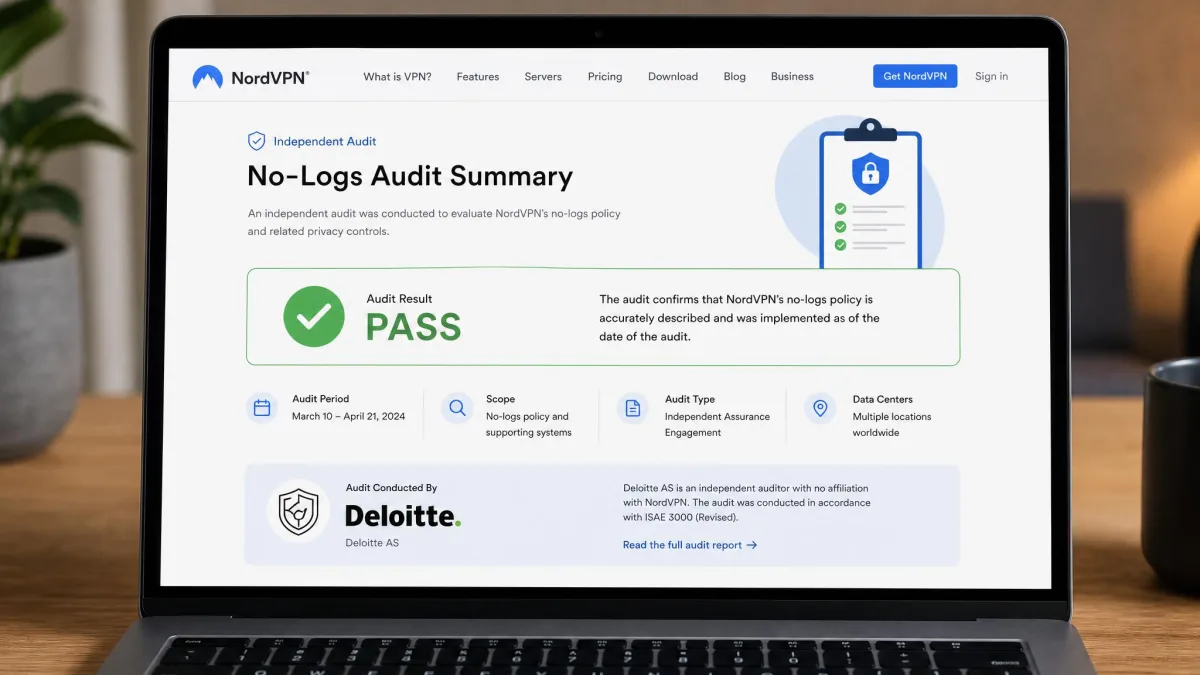
Privacy and a no-logs policy. The whole point of a VPN is to keep your browsing private, so a provider that logs and sells your activity defeats the purpose. Look for a clear no-logs policy, ideally one backed by an independent audit. Every paid VPN in this roundup passes that bar.
Real-world speed. A VPN adds a hop to your connection, so some slowdown is normal, but a good one is barely noticeable. We test speeds on the same line for every service. NordVPN and ExpressVPN led our results, but all seven were fast enough for smooth browsing and HD streaming.
Device limits and platforms. Check how many devices connect at once and whether there are apps for your phone, laptop, and anything else. Surfshark and PIA offer unlimited connections, while others cap you between five and ten.
Streaming and unblocking. If you want Netflix, Disney+, or BBC iPlayer, this makes or breaks the choice. Some cheap VPNs handle it beautifully; others, like Mullvad, do not try.
The real price, including renewal. The headline figure is an intro rate. Always check what it becomes after the first term, because that is what you will actually pay long term.
Use the money-back guarantee as a free trial. Sign up, run your own speed and streaming tests for a few days, and request a refund if it disappoints. CyberGhost gives you a full 45 days to decide.
The cheapest headline price is rarely the cheapest VPN. The number that matters is what you pay in year two, after the intro deal expires.
— From our hands-on testing
Are cheap VPNs safe and trustworthy?
This is the question we hear most, and it is a fair one. The honest answer is that a cheap VPN can be every bit as safe as an expensive one, but a free or unknown VPN is a different story. Cheap does not mean low quality when the provider makes its money from a large, subscription-paying base rather than from your data.
Every paid service in this roundup uses strong encryption, offers a kill switch, and publishes a no-logs policy. Several, including Proton VPN, Mullvad, and PIA, back those claims with independent audits or open-source code you can inspect. That is the real trust signal, not the price.
Where you should be careful is with free VPNs and no-name lifetime deals. A service with no clear revenue stream has to make money somehow, and too often that means logging your activity, injecting ads, or throttling your connection. The safe move is to stick with an established provider on a cheap paid plan, and to check for an audit before you trust it with your traffic.
Be wary of "lifetime" VPN subscriptions sold for a one-time fee. VPNs cost money to run every month, so a lifetime deal often signals a provider that may cut corners, get acquired, or vanish. A cheap recurring plan from an audited provider is the safer bet.
Free VPNs vs cheap VPNs: which should you choose?
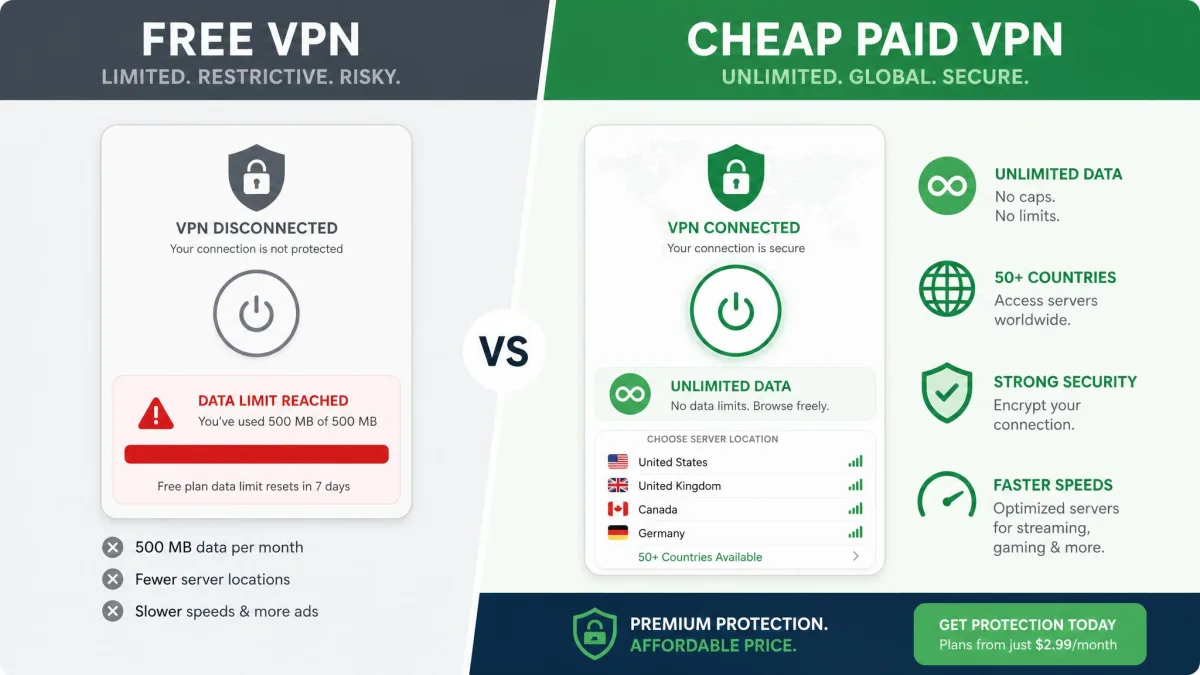
Free is tempting, but for most people a cheap paid VPN is the smarter choice. The trouble with the average free VPN is the hidden cost: data caps that stop you mid-stream, painfully slow speeds, tiny server lists, and business models that can involve selling your browsing data. A VPN meant to protect your privacy should not be the thing profiting from it.
There is one big exception, and it is on this list. Proton VPN's free plan is genuinely usable, with unlimited data, no ads, and no logging, because Proton funds it through paid subscribers. If you need a VPN occasionally and only on one device, it is a real option rather than a trap. For more, see our guide to the best free VPNs, tested and the best free VPN alternatives.
For everyone else, a cheap paid plan wins. At around $2 to $3 per month you get unlimited data, fast servers in dozens of countries, reliable streaming, and support that answers. That is a small price for a service you leave running all the time, and it removes every compromise that makes free VPNs frustrating. You also get things free tiers almost never include: 24/7 support, apps for every device, and the streaming access that makes a VPN worth leaving on. Spread across a year, the difference between free and cheap is a couple of coffees, and the upgrade in reliability is worth far more than that.
Will a cheap VPN work for streaming?
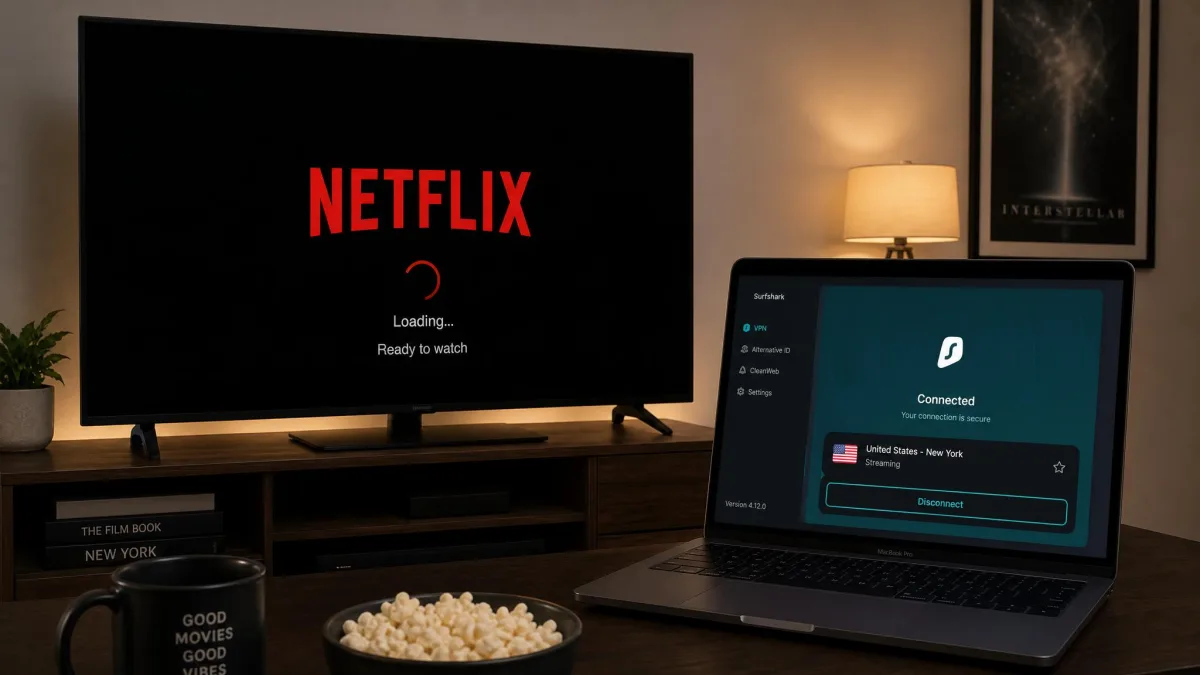
Yes, and often very well, but not every cheap VPN is equal here. Streaming services actively block VPN traffic, so unblocking Netflix or Disney+ takes ongoing effort from the provider. The cheap VPNs that invest in it deliver a smooth experience; the ones that do not leave you staring at an error screen.
From our testing, NordVPN and ExpressVPN were the most reliable, unblocking every major platform on the first try. CyberGhost made it easy with servers labelled by service, so you connect straight to a Netflix or BBC iPlayer server. Surfshark and PIA handled the big platforms well too. Proton VPN managed US Netflix but struggled with Disney+ and other libraries, and Mullvad, which runs no streaming servers at all, unblocked Netflix less than a third of the time.
It is worth breaking the results down by platform, because a VPN rarely unblocks everything equally. Netflix is the easiest of the big services to reach on a cheap VPN, and six of our seven picks opened the US library without a fight. Disney+ was pickier: ExpressVPN and NordVPN loaded it every time, CyberGhost managed it through a labelled server, and Proton stumbled. BBC iPlayer was the toughest, since it checks aggressively for VPN traffic, and here CyberGhost's iPlayer-specific server and ExpressVPN's UK endpoints were the ones we trusted. Amazon Prime Video sat in the middle, opening reliably on NordVPN, ExpressVPN, and Surfshark. If a particular service is the reason you want a VPN, match your pick to that column rather than the overall score.
The practical tip: if streaming is why you want a VPN, pick one built for it and use the money-back guarantee to confirm it unblocks your services before you commit. A cheap VPN that streams reliably exists; you just have to choose the right one.
One more thing worth knowing: the platform you stream on can matter as much as the VPN. A VPN might unblock Netflix flawlessly in a web browser yet trip up inside a smart-TV app that checks your location differently. When we test streaming we try both the app and the browser, and we check more than one library, because a VPN that opens US Netflix does not always open the UK or Japanese catalogue.
How to get the cheapest VPN price
The advertised price and the price you end up paying are rarely the same. Here is how to get the genuine best deal and avoid the trap that catches most buyers.
Commit to a longer plan for the lowest monthly rate. Every provider here reserves its cheapest per-month price for its longest term. Surfshark's $2.49 needs the 2-year plan, PIA's $2.03 needs three years, and CyberGhost's $2.19 needs 26 months. If you know you want a VPN long term, the long plan is where the value is.
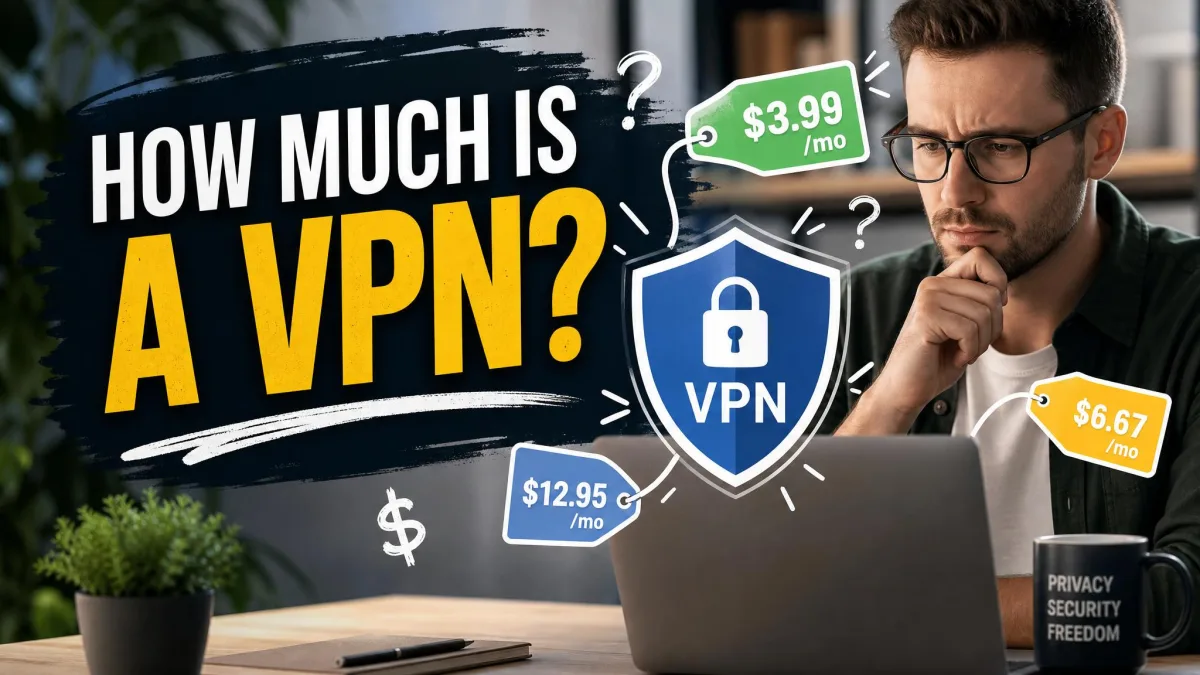
Do the two-year math, not the monthly math. The per-month sticker hides how the intro-versus-renewal gap actually plays out. Take Surfshark as a worked example. Its 2-year plan at $2.49 per month is billed up front, so the first term costs roughly $60 for 24 months of cover. If that renews at, say, $12 per month, year three alone is about $144. Over a full two-year cycle plus one renewal year you have paid close to $204, and the effective average is nearer $5.70 per month than the $2.49 on the ad. Mullvad, at a flat €5 the whole time, costs about $198 across the same three years with no surprise jump. The lesson is simple: a rock-bottom intro rate and an honest flat rate can land within a couple of dollars of each other once the renewal hits, so weigh the second year before the first one seduces you.
Watch the renewal trap. This is the big one. That low intro price applies to the first term only, and it jumps sharply when the plan auto-renews. A VPN advertised at $2.49 can renew at two or three times that. Set a calendar reminder for when your term ends so the renewal never surprises you.
Use the money-back guarantee. Every paid VPN here offers at least 30 days back, and CyberGhost offers 45. That lets you test at the intro price with zero risk.
Consider flat pricing to dodge the trap entirely. Mullvad's flat €5 never changes, intro or renewal. You pay more upfront than a promo rate, but you never get burned at renewal, and over several years that honesty can work out cheaper.
When your intro term is about to end, do not just let it renew. Contact support or check for a current promo first. Providers often extend a discount to keep you, and a two-minute message can save you the full renewal price.
How we test and choose cheap VPNs
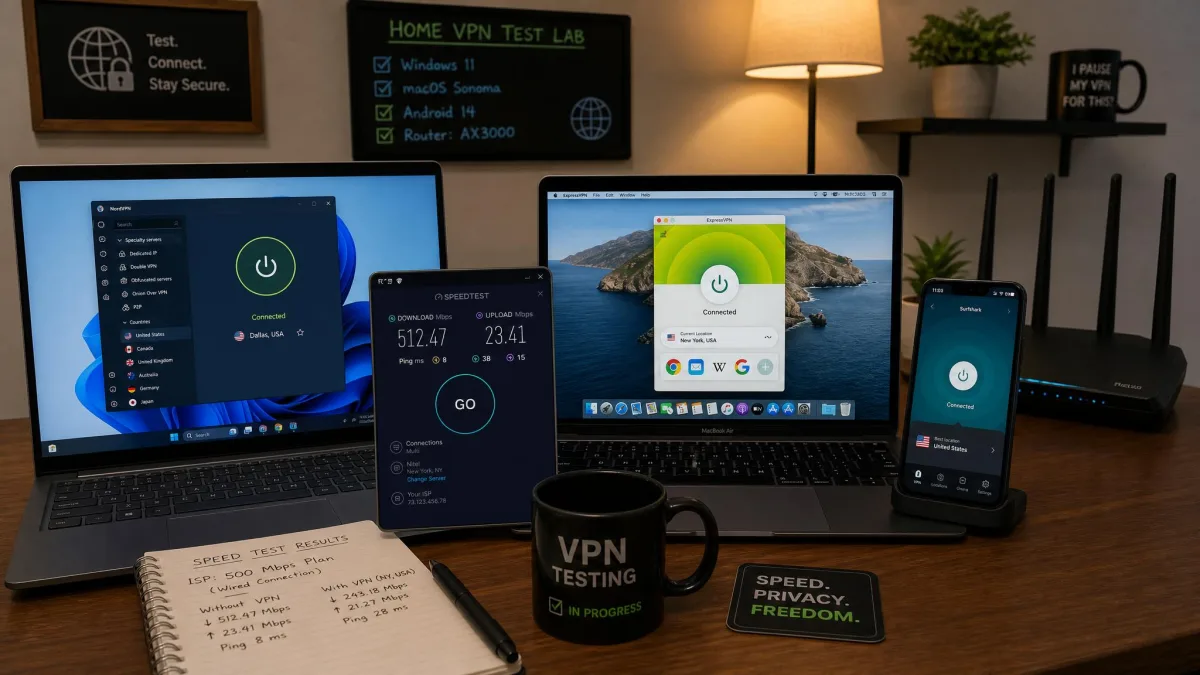
We do not rank VPNs from a spec sheet. We bought or licensed each of these seven plans ourselves and used them the way you would, over several weeks, across Windows, macOS, and Android on the same home broadband line so every result was comparable.
For each VPN we ran speed tests on nearby and distant servers, checked for DNS and IP leaks, and tried to unblock Netflix, Disney+, Prime Video, and BBC iPlayer to see what actually loaded. We set up the apps from scratch to judge how easy they are for a newcomer, tested the kill switch, and read each provider's logging policy and audit history. Then we weighed all of that against the real price, including what the plan costs at renewal, not just the intro deal.
A VPN earns a recommendation only when it combines a low price with strong privacy, dependable speed, and apps we would happily hand to a friend. That balance, not the cheapest sticker, is what our rankings reward. We also revisit prices and streaming results regularly, because cheap-VPN promos and streaming blocks both change often, and a pick that was right six months ago can shift. When a provider changes its plans or an app update alters performance, we retest rather than assume. If you are still deciding on a platform, our guides to the best VPN for PC and the best VPN for iPhone go deeper by device, and how to get a VPN walks through setup.
Bottom line: which cheap VPN should you choose?
There is no single right answer, and the honest truth is that the best cheap VPN is the one that fits the job you have in mind. Which one that is comes down to what you value most, so it helps to match the pick to your priority rather than the sticker price.
Choose NordVPN for the fastest speeds and rock-solid streaming, ExpressVPN if streaming reliability is worth a small premium, Proton VPN for a genuinely usable free plan, PIA for open-source privacy on a long cheap plan, CyberGhost for the lowest long-term price, or Mullvad for flat, anonymous pricing with no renewal trap. Whichever you pick, a good cheap VPN no longer means a compromise. Sign up on the longest plan you are comfortable with for the lowest rate, test it against your own streaming services within the money-back window, and set a reminder before renewal so the intro price never quietly doubles on you.