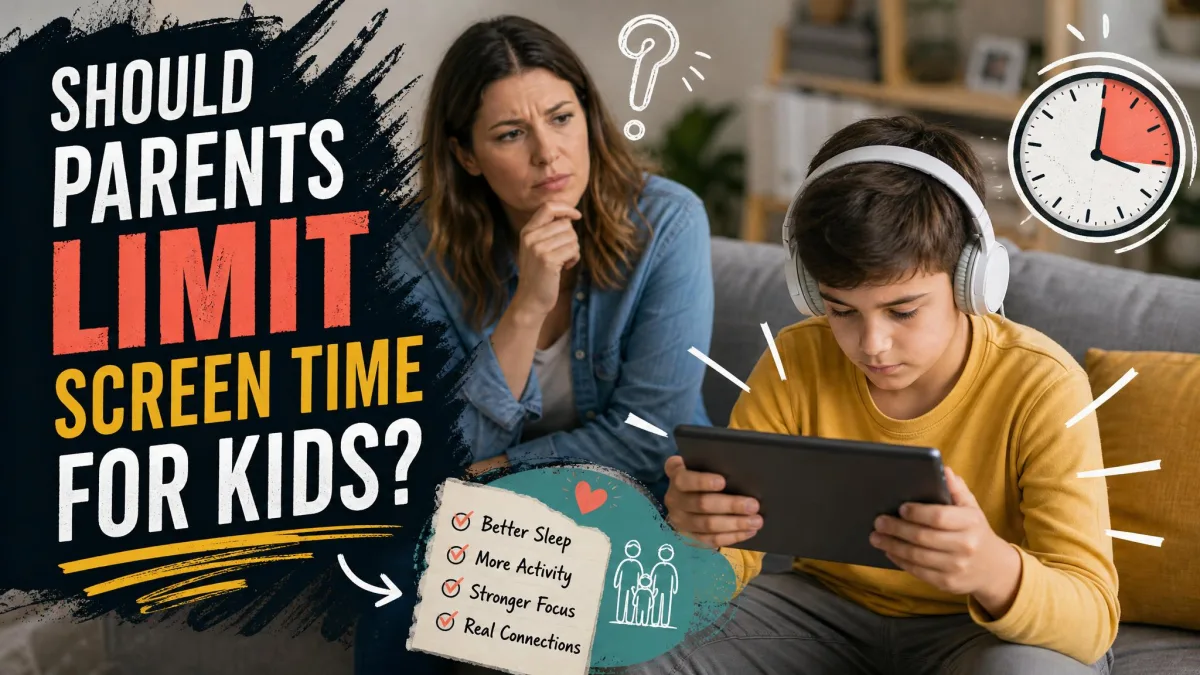
Screens have become part of family life in ways no one fully planned for. A phone rides along to the grocery store, a tablet goes to restaurants, and the television stays on during breakfast. It's a rare parent who hasn't wondered where the line belongs.
The concern is reasonable. Pediatrics research links heavy screen use in early childhood to slower language and thinking development, poorer sleep, and less active play. Read carefully, the same evidence shows that screens are not simply bad, especially as kids get older.
In this guide we sort through what the AAP recommends and what the research supports. Then we get practical about limits that survive a regular Tuesday evening.
The AAP's long-standing Media and Young Minds guidance caps kids ages 2 to 5 at 1 hour a day of high-quality programming, watched together with a parent. In January 2026 the AAP replaced the old age-based hour caps with a broader framework built around the 5 C's of Media Use and a Family Media Plan, while keeping roughly the same range for the youngest children. The 1-hour figure is still the benchmark most pediatricians and health organizations reach for.
Key Takeaways
- Kids ages 2 to 5: no more than 1 hour a day of high-quality programming, co-viewed.
- Children under 18 months should skip screens almost entirely; video-chatting with family is the one exception.
- Bedroom screens are linked to shorter, poorer sleep, so where devices live matters as much as the total.
- For school-age kids and teens, content and crowding-out matter more than the exact number of hours.
- Limits stick best when the device ends the session at a natural stopping point.
Why Limit Screen Time? The Case for Setting Limits
A limit is easier to keep when you can point to what the research shows. The case for capping screen time rests on five areas: brain development, sleep, physical health, social skills, and content exposure. None of these effects is dramatic or guaranteed, but each is consistent enough that pediatricians keep returning to it.

Brain Development and Cognitive Effects
Very young children are the most sensitive. Before about 18 to 24 months, babies show what researchers call a video deficit. They learn less from a screen than from hands-on play and live conversation, and they struggle to apply what they watch without an adult explaining it.
One 2019 JAMA Pediatrics study of 2,441 mother-child pairs tracked toddlers over time. More screen time at age 2 predicted lower developmental screening scores at age 3. The pattern repeated between ages 3 and 5.
The study was observational, so it shows an association rather than proof of cause, but the direction was consistent. A PNAS systematic review of four decades of research found a small but significant link to attention-related behaviors. The question of cause remains open.
Sleep Quality and Disruption
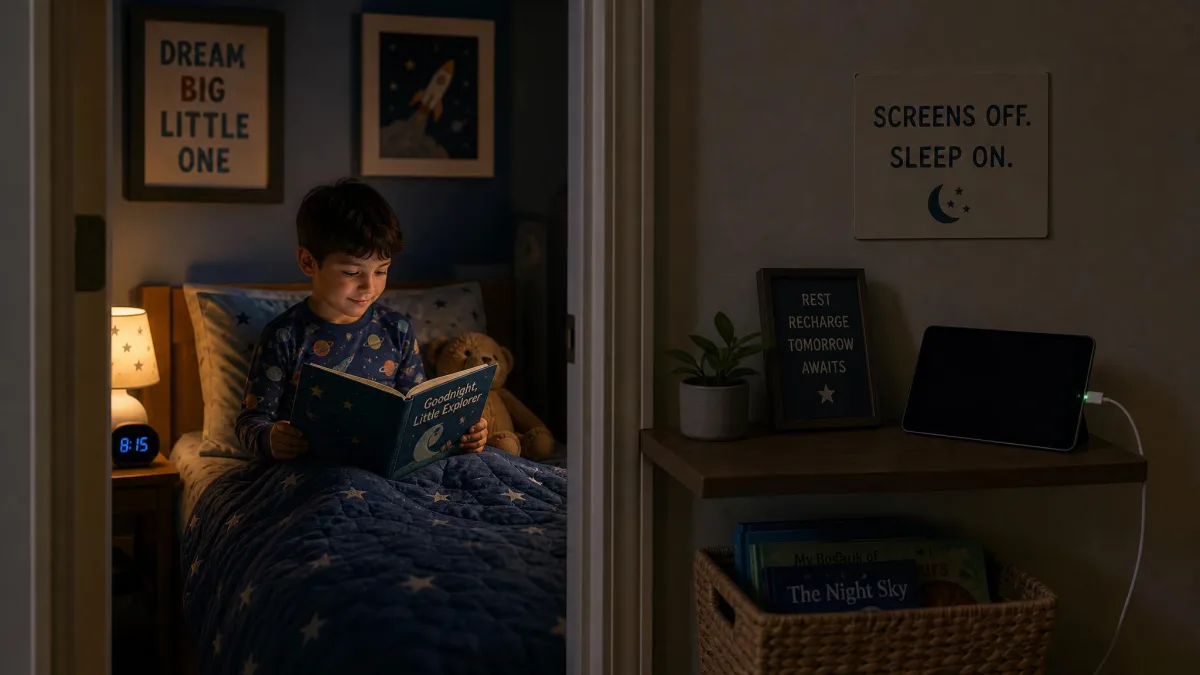
Sleep is where the evidence gets hardest to argue with. A meta-analysis of 125,198 children found that a device in the bedroom meant shorter sleep and poorer sleep quality. Daytime sleepiness rose too, even when the child wasn't actively using the device at bedtime.
Access alone appears to matter, not just use. Screens also push bedtime later, by roughly 5 to 10 minutes for every additional hour of television a child watches.
Physical Health and Activity
The strongest evidence of harm sits somewhere unexpected: weight. A BMJ Open systematic review of 13 reviews found the most consistent link between screen time and obesity. The evidence on sleep problems and cognition was weaker.
The mechanism isn't mysterious: an hour on a tablet is an hour not spent running, climbing, or riding a bike. For school-age kids, the AAP is explicit that screens shouldn't replace physical activity, sleep, or other healthy behaviors.
Social Skills and Emotional Regulation
Early social skills grow through real, face-to-face exchange. When a child spends hours watching instead of talking, taking turns, and reading expressions, those skills get less practice.
Pediatricians watch for downstream signs: irritability, mood changes, and a shrinking interest in offline play. None of this means screens make a child antisocial. It means the balance of the day still has to favor people.
Risk of Exposure to Inappropriate Content
Then there is what a child can actually encounter. A curious preschooler with a tablet can reach confusing or frightening content in a few taps, and autoplay feeds make it worse.
That's one reason the AAP's newer guidance puts content at the center of its framework. Choosing programming in advance and keeping screens out of bedrooms lowers the risk. Handle it before it becomes a conversation you did not plan for.
The Benefits of Screen Time: It's Not All Bad
Limits make more sense when you also see what screens do well. The research on older kids is genuinely reassuring. A Nature Human Behaviour study of 355,358 adolescents found a small association between digital use and lower well-being. The effect explained at most 0.4% of the variation, and the authors judged it too small to warrant policy change.
Set against the toddler findings above, the pattern is clear. The risks are front-loaded in the early years and taper off as kids grow.
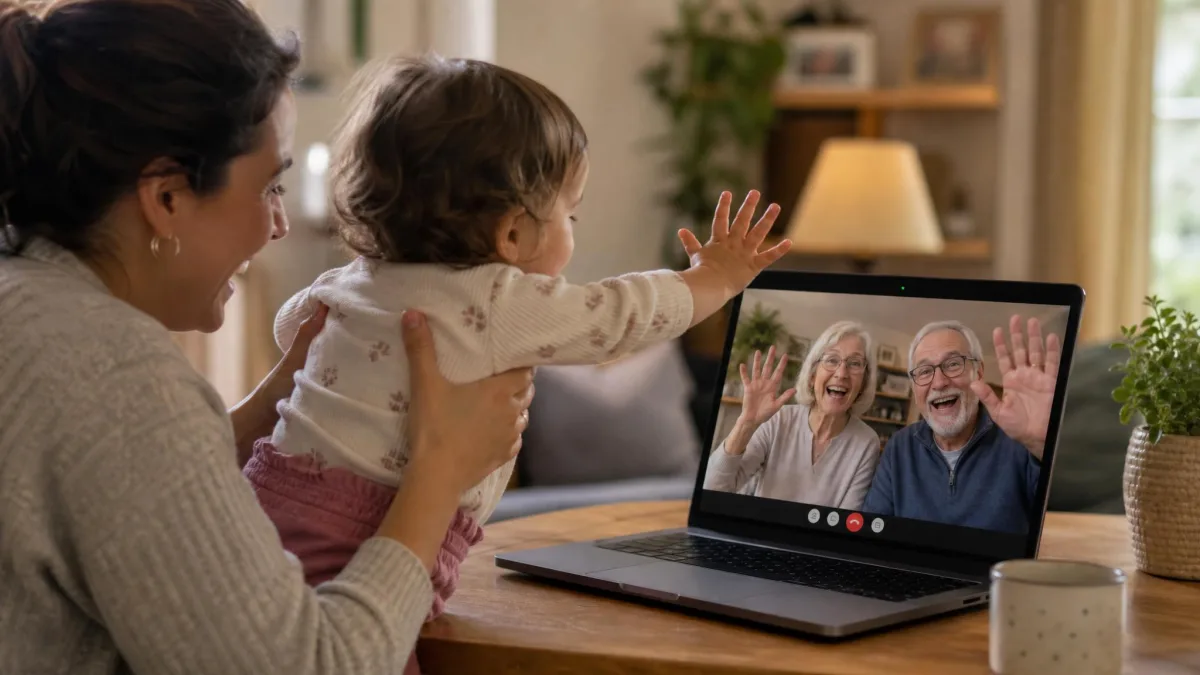
Quality content earns its place. High-quality programming can teach vocabulary, counting, and social lessons. Video-chatting with family is such a special case that the AAP exempts it, even for babies. Co-viewing turns passive watching into shared learning, which is why the toddler recommendations assume a parent in the room.
The goal is not to fear screens; it is to choose them well.
Screen Time Limits by Age: How Much Is Too Much?
The 1-hour figure gets the most attention, and it comes from the AAP's classic guidance for ages 2 to 5. The guidance has evolved since then, so it helps to know both the benchmark and what changed.
AAP and Expert Recommendations by Age
Children under 18 months should avoid screen media almost entirely, according to the AAP's Media and Young Minds policy statement. Video-chatting is the exception, because a live conversation with a grandparent behaves more like real interaction than television.
For ages 18 to 24 months, the AAP is more permissive. If digital media is introduced, keep it to high-quality educational programming that an adult co-views and helps the child understand.
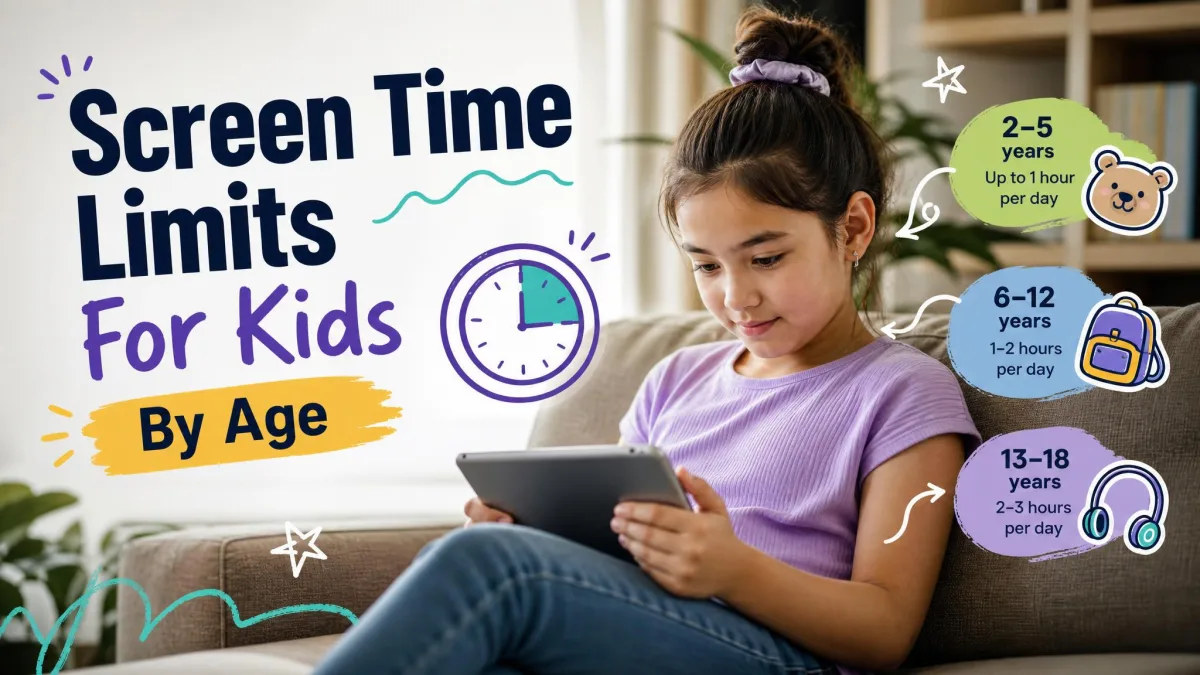
For ages 2 to 5, the long-standing cap is 1 hour a day of high-quality programming, watched with a parent. The World Health Organization recommends a similar limit for ages 2 to 4 and notes that less is better.
In January 2026 the AAP replaced the old age-based caps with the 5 C's of Media Use: Child, Content, Calm, Crowding Out, and Communication. A Family Media Plan sits at the center of the new framework.
The newer guidance stops insisting on one number and frames screen time limits by age as flexible ranges. Toddlers and preschoolers land at roughly under 1 hour a day. School-age kids and teens might reach 1 to 2 hours or more, tailored to each family.
The AAP's Children and Adolescents and Digital Media policy covers the older ages. It advises consistent limits on time and type. Screens shouldn't crowd out sleep, schoolwork, or physical activity.
| Age band | Recommended limit | Rationale | Implementation tip |
|---|---|---|---|
| 0–18 months | No screen media except video-chatting (AAP); WHO recommends none | Children learn far less from screens than from hands-on play and live interaction | Keep the background TV off; save video calls for family; don't hand over your phone |
| 18–24 months | High-quality programming only, co-viewed with an adult | The learning gap narrows when an adult explains what's on screen | Keep sessions short; narrate what is happening on screen |
| 2–5 years | No more than 1 hour a day of high-quality programming, co-viewed (AAP; WHO says less is better) | Protects time for active play, sleep, and connection | Pre-pick the show; watch together; build a predictable routine |
| 6+ and teens | Consistent limits so screens don't crowd out sleep, school, or activity (2026 AAP: the 5 C's and a Family Media Plan instead of a strict cap) | The harm evidence is real but modest, so quality and crowding-out matter more than hours | Make a family media plan; keep meals and bedrooms screen-free; co-view important content |
Signs of Unhealthy Screen Use
Limits are easier to set when you know what to watch for. The AAP, the Canadian Paediatric Society, and the American Academy of Child and Adolescent Psychiatry list the same warning signs. Sleep disruption and mood changes top the list, along with slipping grades and a drop in offline friendships.
Strong resistance when limits apply is another sign. When several of these show up together, the problem is usually not the screen itself but the space it has taken in the day. That's the cue to revise the plan, not just the timer.
How to Set and Enforce Healthy Screen Time Limits
Once you have a target in mind, the real work of limiting kids' screen time begins. Limits that survive real family life share a few traits. The tactics below are the ones experts and experienced parents keep returning to.
Lead by Example
Kids imitate what they see far more reliably than what they are told. A child who watches a parent reach for a phone at every quiet moment learns that the phone is the default answer to boredom.
The AAP's Family Media Plan is explicit: every family member, parents included, gets a plan. That can be as simple as leaving your phone in another room at dinner. Or take a moment to check how much time you spend on apps before you ask a child to cut back.
Create a Family Media Plan
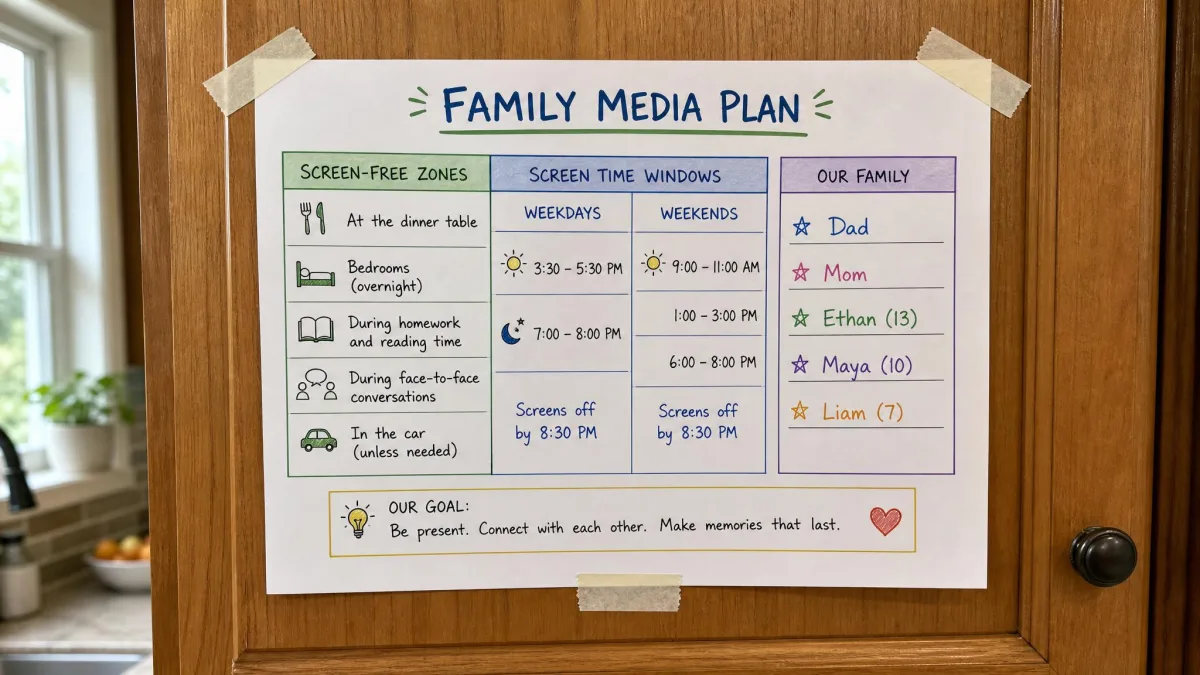
Writing the rules down changes how they land. The AAP's Family Media Plan tool covers a lot of ground: media-free zones at the dinner table, screens out of bedrooms, and an evening shut-off.
Autoplay and notifications go off, and there is room for reading, outdoor play, and family time. Because the whole household is in the plan, a limit stops feeling like something done to the child. It becomes how this family does things.
Establish Screen-Free Zones and Times
Some battles disappear just by changing where screens are allowed. Keeping devices out of bedrooms is the single most effective move, because it protects sleep at the source. Meals and the car are the other classic zones, doubling as spaces where conversation happens.
Pick two zones to start; a family that holds the dinner table and the bedroom is already most of the way there.
Prioritize Quality Over Quantity
For school-age kids, the hours matter less than what fills them. The finding that digital use barely moved adolescent well-being undercuts the panic. It also points somewhere useful: an evening spent video-calling friends is not the same as three hours of autoplay-driven feeds.
Independent content reviews are the standard place to separate genuinely good content from the rest. When in doubt, choose content that is slow and that your child talks about, ideally something you would watch together.
Offer Engaging Off-Screen Alternatives
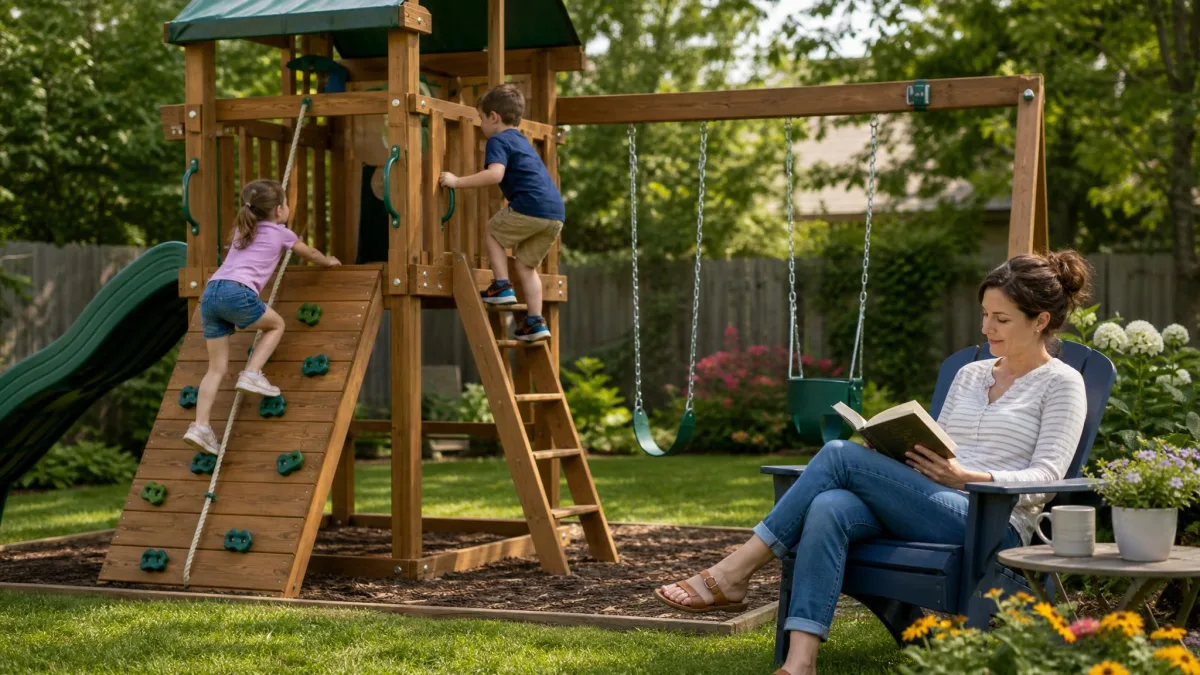
A limit works best when something better is waiting on the other side. The reliable off-screen lineup is simple: outdoor play, reading, board games, building, sports, and time with friends in person.
The trick is to make the alternative the path of least resistance: have a few options ready before the tablet comes out. A child choosing between two good things is a child who is not fighting for the screen.
Use Parental Controls Thoughtfully
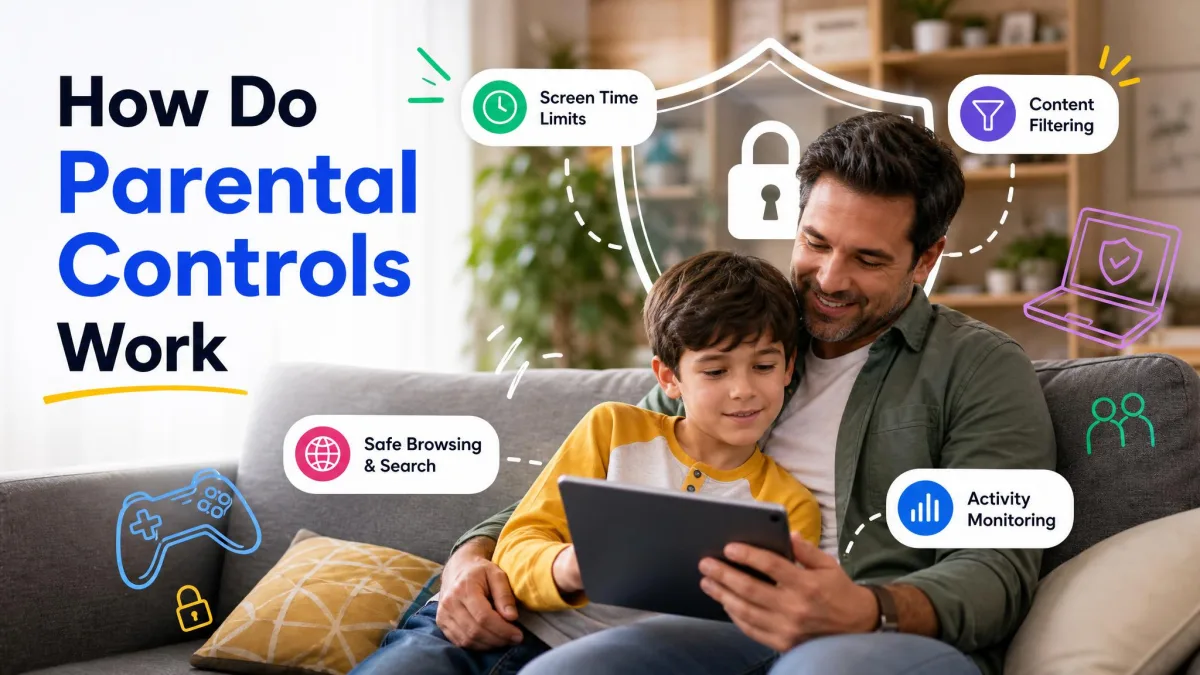
Parental controls are a useful second line, not a replacement for a family plan. Apple's Screen Time and Google's Family Link can set limits and block apps, and both show the raw usage numbers. You can check screen time on an iPhone or check screen time on Android.
They also have real gaps. Family Link only manages supervised child accounts, and its daily limit is shared across all supervised devices. A determined kid can clear restrictions with airplane mode or by resetting the Play Store app.
Apple's Screen Time has had its own enforcement issues, including limits that reset when the device clock changes. Expect a negotiation and workaround cycle, and treat the tool as a helper rather than a babysitter.
If you are setting up fresh, our guide to set up parental controls walks through the process. You can also see what parents can see on parental controls to decide how much visibility feels right.
Let Kids Be Bored Sometimes
Boredom has a bad reputation and an important job. Neuropsychologist Dr. Alice Ann Holland of Children's Health notes that boredom builds self-sufficiency and focus, so you're not obligated to provide constant entertainment.
Families who stop trying find that quiet afternoons are also the most creative.
What to Do When Kids Push Back on Limits
Pushback is part of the process, and it is often less dramatic than parents fear. In one University of Washington study of kids ages 1 to 5, most transitions ended with a neutral reaction. Very few turned into fights.
The battles that stick in memory are real, but they are the minority of the week. The first few days of a cutback tend to be the hardest. Parents describe a rough opening stretch, with complaining peaking in the first days and emotional outbursts easing by about day four.
Young children sometimes don't fight a no-screen stretch at all once expectations are set. The harder part, by most accounts, is on the parent's side: filling the gap and absorbing the complaints.
Once you are in the transition itself, pick the moment carefully. Two-minute warnings make tantrums worse for kids ages 1 to 5. Transitions go smoother at natural stopping points, like the end of a video or a fully drained battery.
Let the device end the session. Built-in timers and stop-watching features on consoles and tablets close a session without a parent reaching for the power button, and kids accept a limit far more easily when the device, not a person, delivers it.
Consistency matters more than intensity. Giving in sometimes trains a child to ask more often, because occasional success is the most reinforcing pattern. When you hold the line, name the boundary as the family's rule, not a punishment, and stay calm through the protest.
The research is clear that the withdrawal phase passes and engagement comes back.

Frequently Asked Questions
Does video-chatting with family count as screen time?
What counts as high-quality programming for young kids?
How much resistance is normal when screens turn off?
When should screens be off before bed?
Should families aim for zero screen time?
What should parents do if a child's screen habits are already unhealthy?
The Bottom Line
Should parents limit screen time for kids? Yes, with the strongest focus on the early years and a lighter touch as kids grow. The most compelling case sits in the toddler and preschool window. The 1-hour-a-day benchmark and the video-deficit research give you a clear target.
For school-age kids and teens, the research is more forgiving, and the guidance shifts toward content and consistency. Screens shouldn't crowd out sleep, movement, schoolwork, or relationships.
Set the limits and write them into a family media plan, and keep bedrooms screen-free. The goal is not perfect numbers; it is a balanced media diet your family can actually live with.