We put NordVPN, Proton VPN, ExpressVPN, Surfshark and CyberGhost through the tests that matter down under. We connected to their Australian servers in cities like Sydney and Melbourne, checked how much speed each one kept on a normal home NBN line, and tried the Aussie catch-up and sports apps that block overseas visitors. We also looked hard at the long trip out of Australia, because Sydney sits about 138 ms from Los Angeles before a VPN adds anything.
Privacy is the other half of the story. Australian ISPs must keep customer metadata for two years, so your VPN company's home base and logging policy matter more here than in most countries. You can see exactly what we checked in how we tested the best VPNs for Australia.
Quick Picks: The Best VPNs for Australia
If you only have a minute, these are the five services that came out on top in our testing, ranked by their scores from our full reviews.
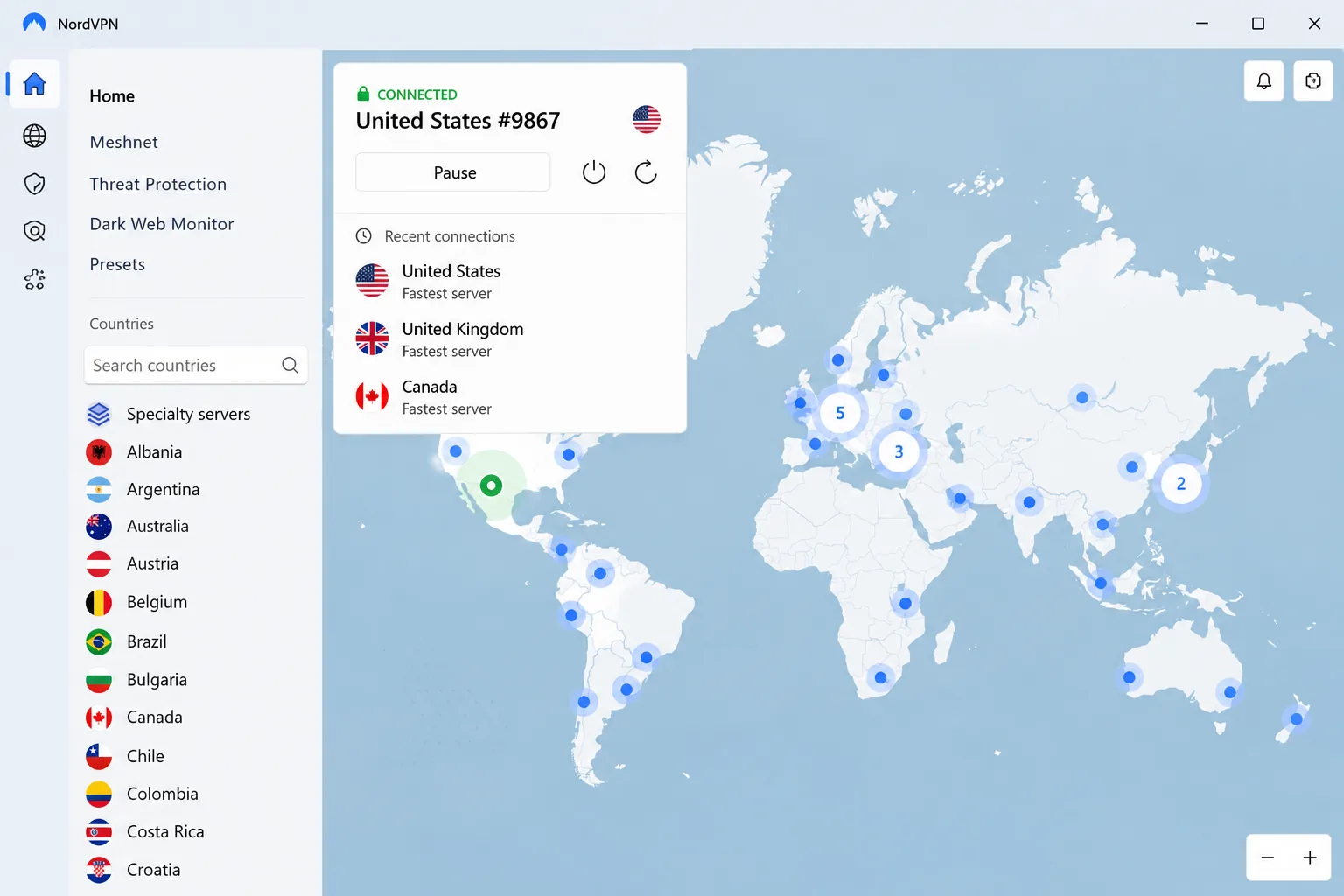
- NordVPN (9.0/10): best overall. Every Australian streaming app we tried played on its local servers, and Kayo worked on whichever server we picked.
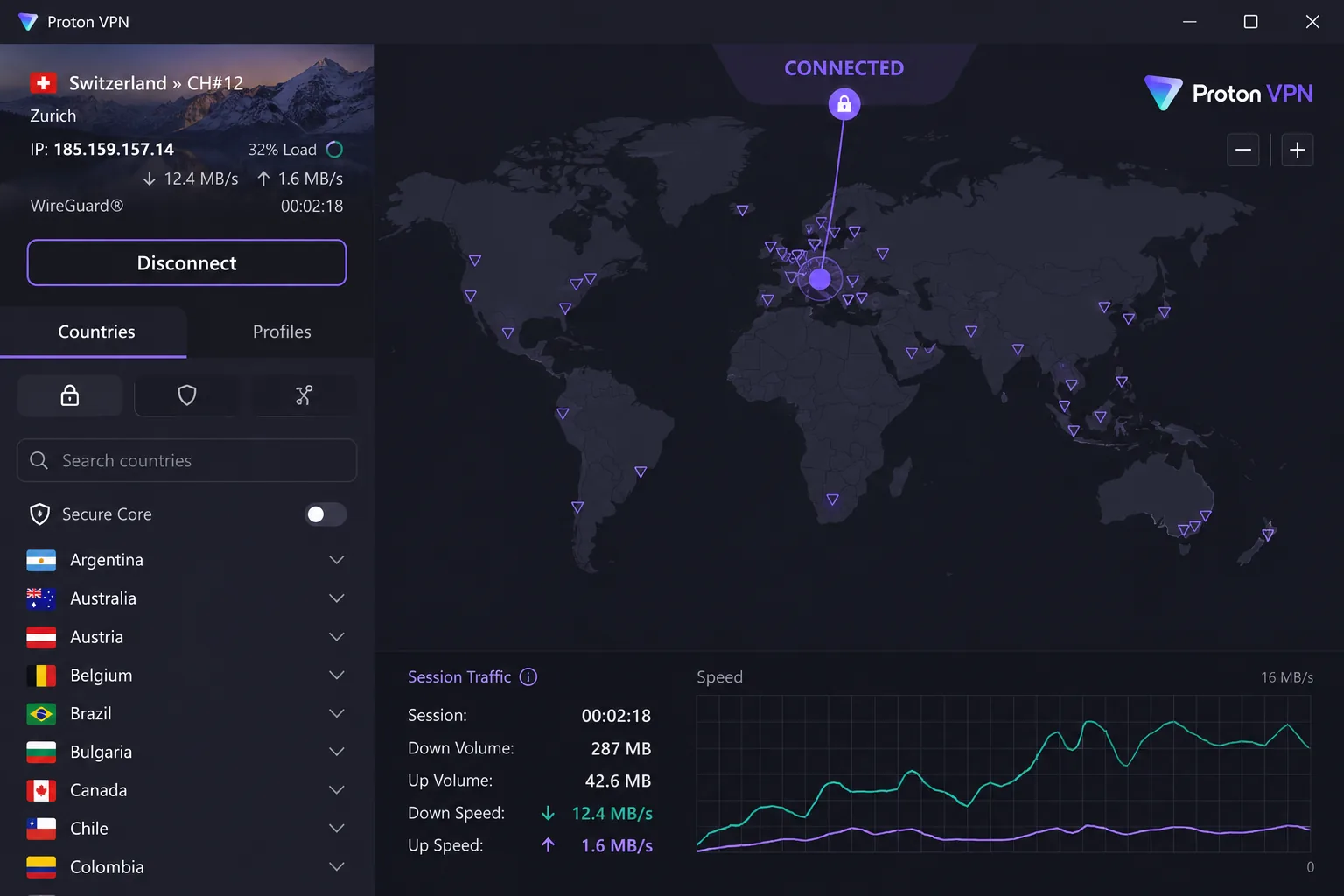
- Proton VPN (9.0/10): best for privacy, with a free plan. Swiss law, yearly audits and open-source apps make it the strongest privacy choice, though its free tier has no Australian servers.
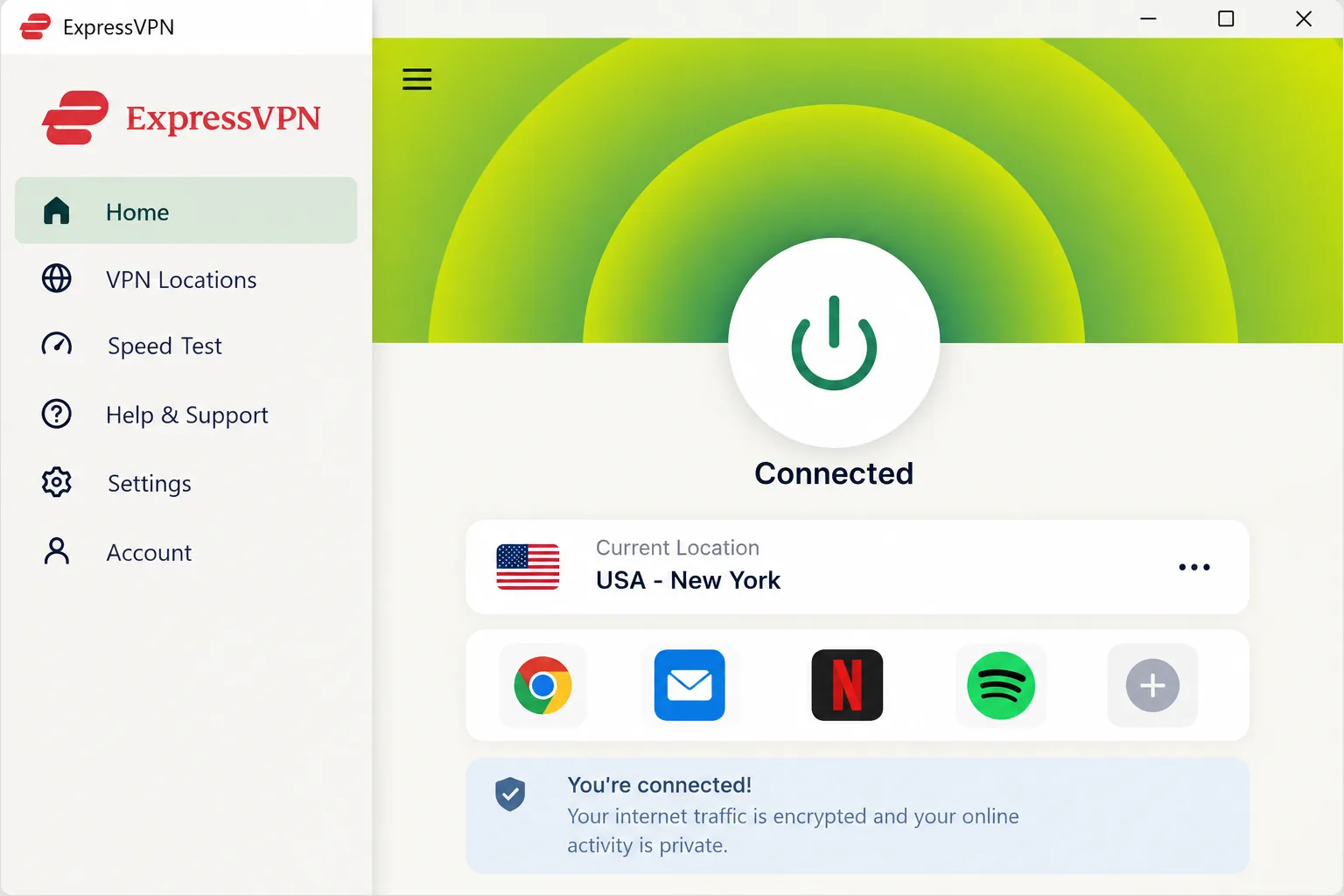
- ExpressVPN (8.8/10): easiest to use. Its apps needed almost no setup, and its phone app connected in under three seconds.
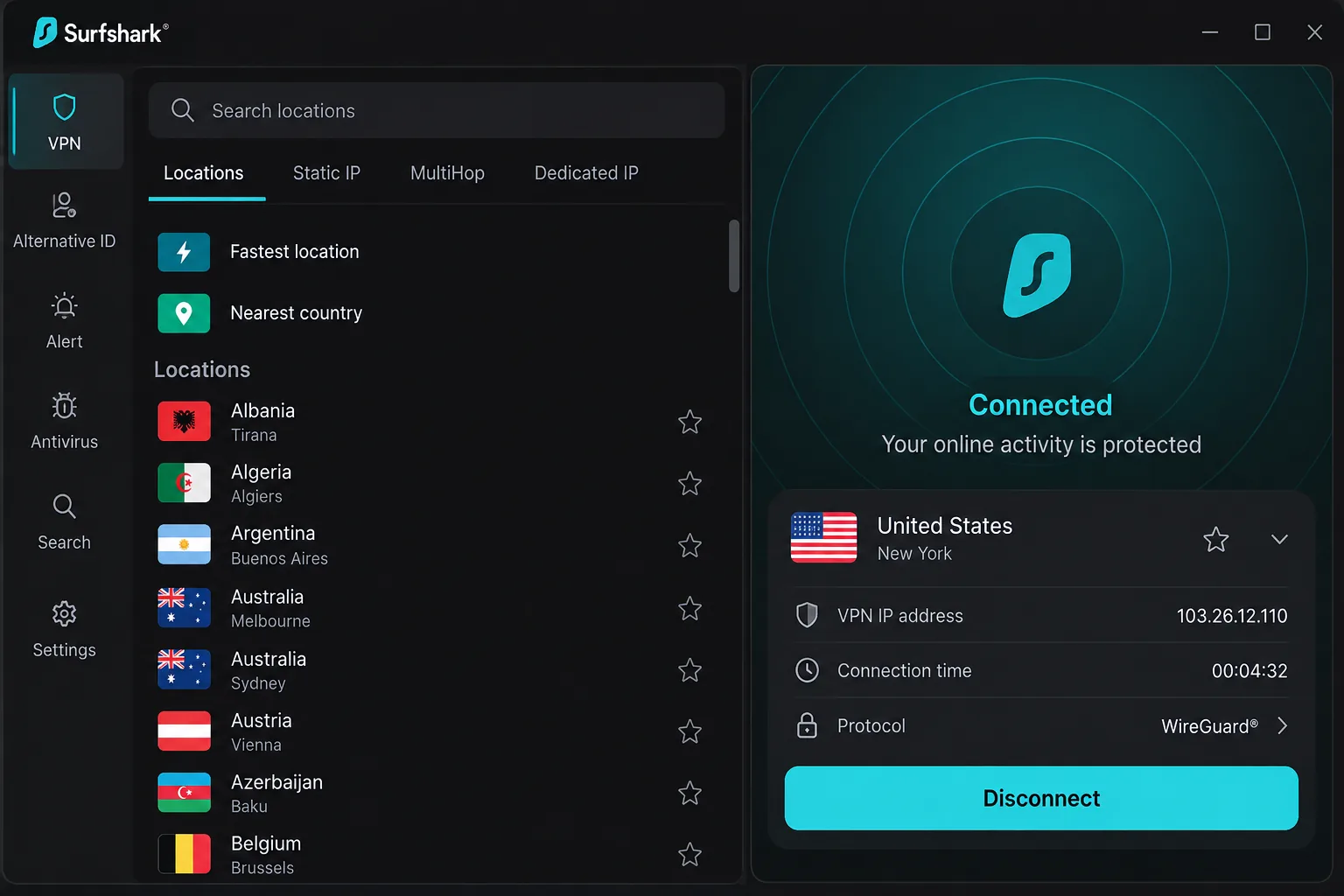
- Surfshark (8.6/10): best budget pick. It costs $2.49 a month on a two-year plan and covers unlimited devices.
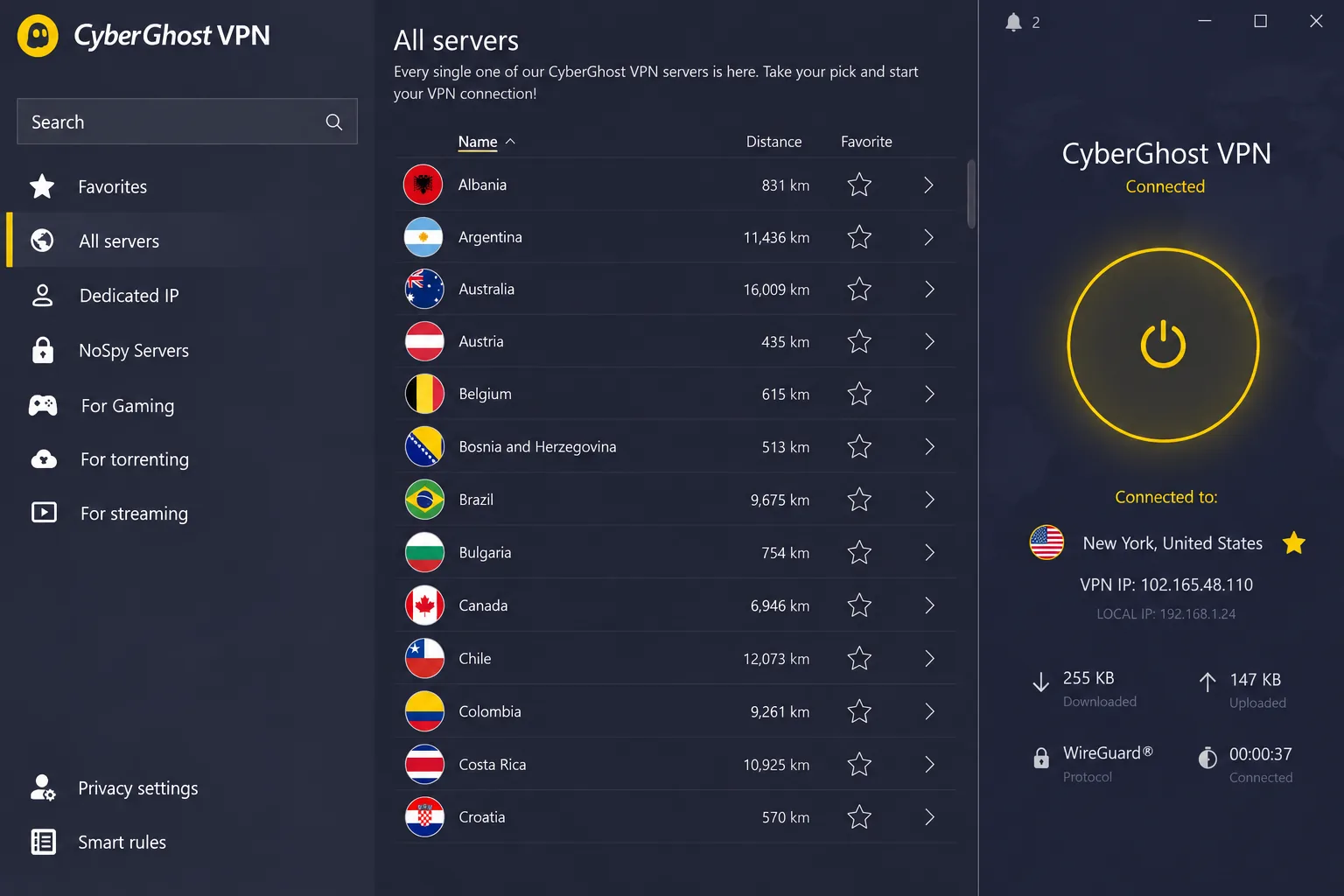
- CyberGhost (8.4/10): best for beginners. Its security features are on from the first launch, and its 45-day refund window is the longest of the five.
Best VPNs for Australia Compared
The table below lines up the details that matter most in Australia, from local server cities to the catch-up services that actually played.
| Product | Buy | Price (2-yr plan) | Australian server cities | Australian speed | Australian streaming | Devices | Kill switch | Audited no-logs | Jurisdiction | Free plan or refund |
|---|---|---|---|---|---|---|---|---|---|---|
 |
Check price → | From about $3.49/mo(varies with sales) | Adelaide, Brisbane, Melbourne, Perth, Sydney (190+ servers) | About 5 percent loss nearby | Stan, Kayo, Binge, ABC iview, SBS On Demand, 9Now (10 play untested) | 10 | Internet and App kill switch | Deloitte 2022 to 2025 | Panama | 30-day refund |
 |
Check price | From about $3/mo(varies with sales) | Adelaide, Brisbane, Melbourne, Perth, Sydney (paid plans) | Strong uploads, more variable | ABC iview, Kayo, 10 play (SBS and 9Now claimed by Proton) | 10 (1 on Free) | Yes, off by default on most platforms | Securitum 2022 to 2026 | Switzerland | Free plan (no AU servers) plus 30-day refund |
 |
Check price | $2.99/mo(Basic) | Adelaide, Brisbane, Melbourne, Perth, Sydney, Woolloomooloo | 90 to 95 percent retained | Stan, Kayo, Binge, ABC iview, SBS On Demand, 9Now (10 play untested) | 10 / 12 / 14 by tier | Network Lock | KPMG 2025 | British Virgin Islands | 30-day refund |
 |
Check price | $2.49/mo(Starter) | Adelaide, Brisbane, Melbourne, Perth, Sydney (40 servers) | Even downloads, weak uploads | Stan, Kayo, Binge, ABC iview, SBS On Demand, 9Now, 10 play | Unlimited | Yes | Deloitte 2023, 2025 | Netherlands | 30-day refund, 7-day trial |
 |
Check price | $2.19/mo(2 yrs + 2 months) | Brisbane, Melbourne, Sydney (217 servers) | Slower into Australia, latency can top 100 ms | Stan, ABC iview, dedicated 9Now and 10 play servers (Kayo unreliable) | 7 | On by default | Deloitte 2022, 2024, 2025 | Romania | 45-day refund |
1. NordVPN: Best VPN for Australia Overall
NordVPN takes the top spot because it was the most complete package on Australian servers, with no weak area we had to work around. It shares our highest score of 9.0 with Proton VPN, and you can read the longer breakdown in our full NordVPN review. The company was founded in 2012 and is incorporated in Panama, outside the Five Eyes alliance. Its no-logs policy has been through six independent assessments: PwC in 2018 and 2020, then Deloitte in 2022, 2023, 2024 and 2025. The latest results were announced on February 6, 2026. If you want the deeper trust picture, we cover it in is NordVPN safe.
Australian Servers and Speed
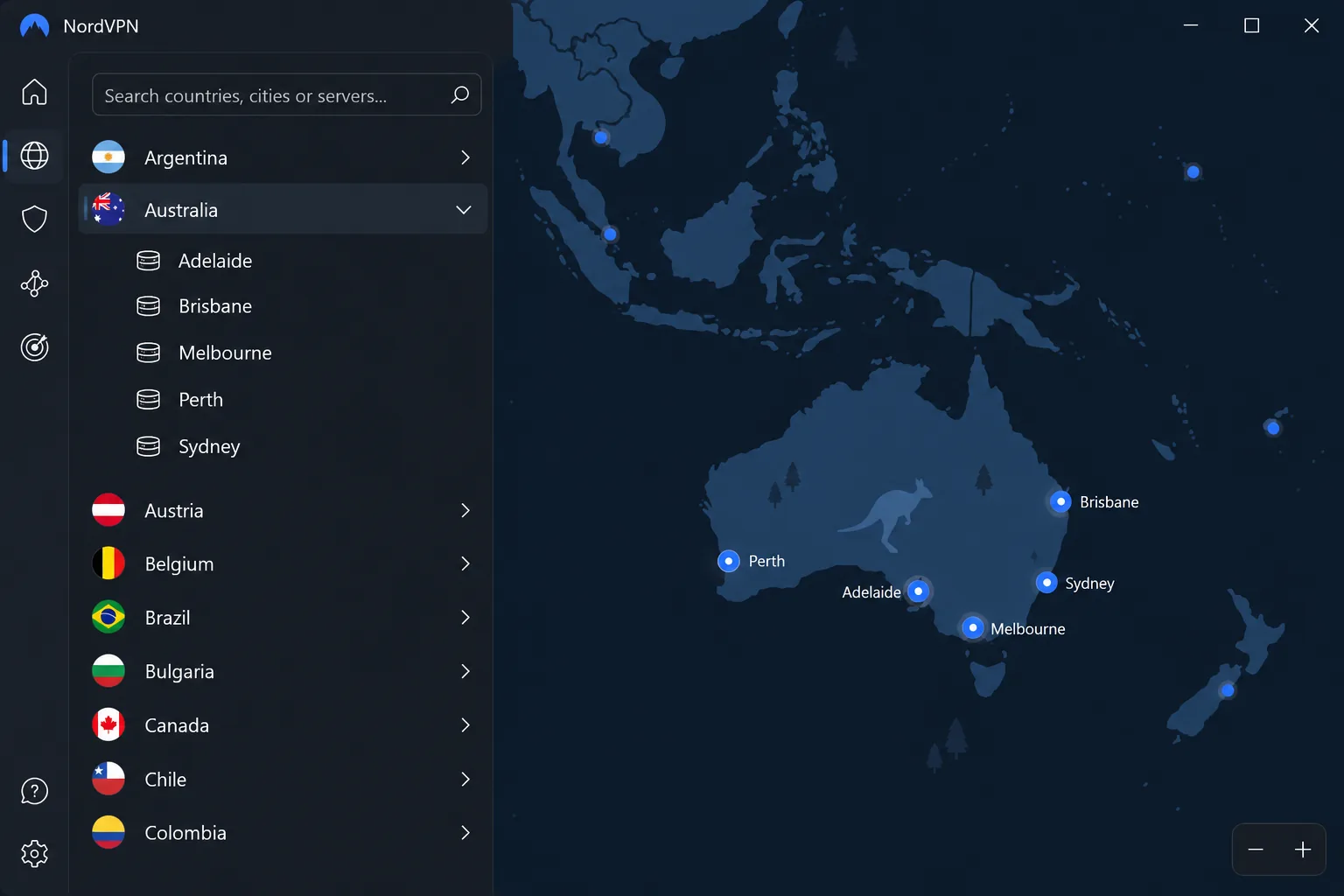
NordVPN runs more than 190 Australian servers across Adelaide, Brisbane, Melbourne, Perth and Sydney, so a local server is never far away. When we connected to a nearby city over NordLynx, its WireGuard-based protocol, download-speed loss averaged around 5 percent. Connections came up in a handful of seconds with no failed handshakes. What impressed us most was consistency: on a modest home line, our results on Australian servers varied by only about 2 Mbps from one test to the next.
We also checked the privacy basics. The apps passed our DNS and IP leak tests, and the settings menu stays well organised despite the long list of options. A dedicated IP add-on is available in Sydney and Melbourne if you need a fixed Australian address for work logins. One gap is worth knowing: NordVPN has no Double VPN server in Australia, so multi-hop routes have to exit elsewhere.
The obfuscated servers are best left alone. They were noticeably slow in our runs, so we'd keep them off for everyday NBN use and save them for networks that block VPNs.
Streaming and Torrenting
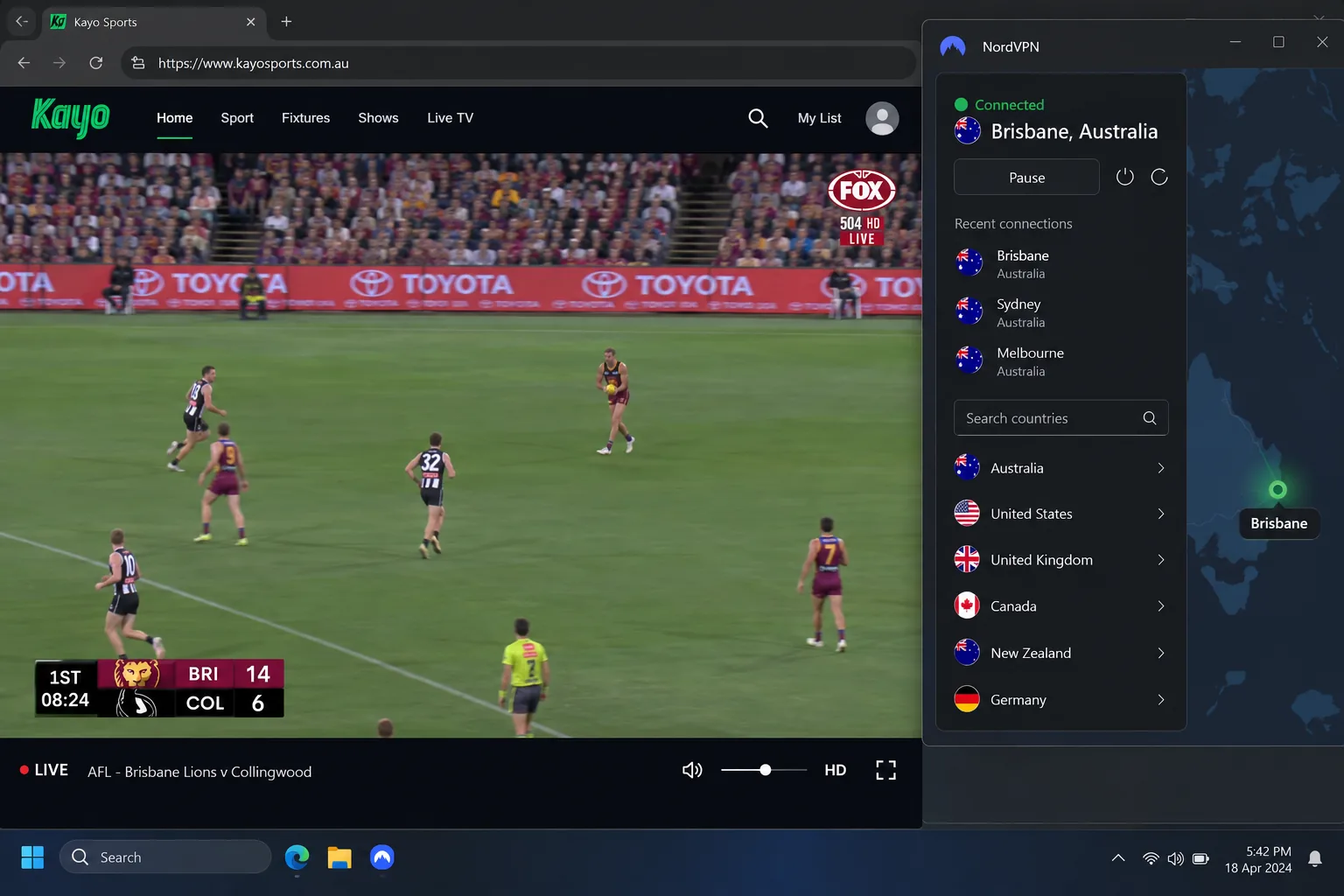
This is where NordVPN pulled clear of the field. ABC iview, SBS On Demand, 9Now, 7plus, Kayo, Stan, Binge and Netflix Australia all played on its Australian servers, and even the cheapest plan worked with iview. Kayo is usually the hardest of the lot, yet it played on any NordVPN Australian server we picked, without the usual hunt for a working one. The one Aussie service we haven't yet confirmed on NordVPN is 10 play.
For torrenting, NordVPN automatically redirects P2P traffic to its dedicated P2P servers, so you don't have to pick one yourself. It isn't suited to port forwarding, though. If torrenting is your main use, our guide to the best VPN for torrenting compares the options in more depth.
Pros and Cons
Pros
- Every major Australian streaming service we tried played, Kayo included
- Six independent no-logs assessments since 2018
- Extras like Meshnet, Threat Protection and a Sydney or Melbourne dedicated IP
- Fast, helpful support from human agents
Cons
- Renewal prices climb steeply, and the best discounts need a two-year commitment
- The Pause button causes more trouble than it solves, and disconnecting takes two steps
- The desktop app feels bloated next to leaner rivals
The price above is NordVPN's two-year promo rate. It changes with sales and currency, so expect the monthly figure to shift by tens of cents.
2. Proton VPN: Best for Privacy (With a Free Plan)
Where NordVPN wins on breadth, Proton VPN wins on trust. It ties NordVPN on our 9.0 score, and our Proton VPN review explains why. Proton VPN launched in 2017 and is run by Proton AG in Switzerland, outside both the Five Eyes and Fourteen Eyes groups. Its apps are open source, and the most recent Securitum no-logs report was added on June 16, 2026.
Australian Servers and Speed
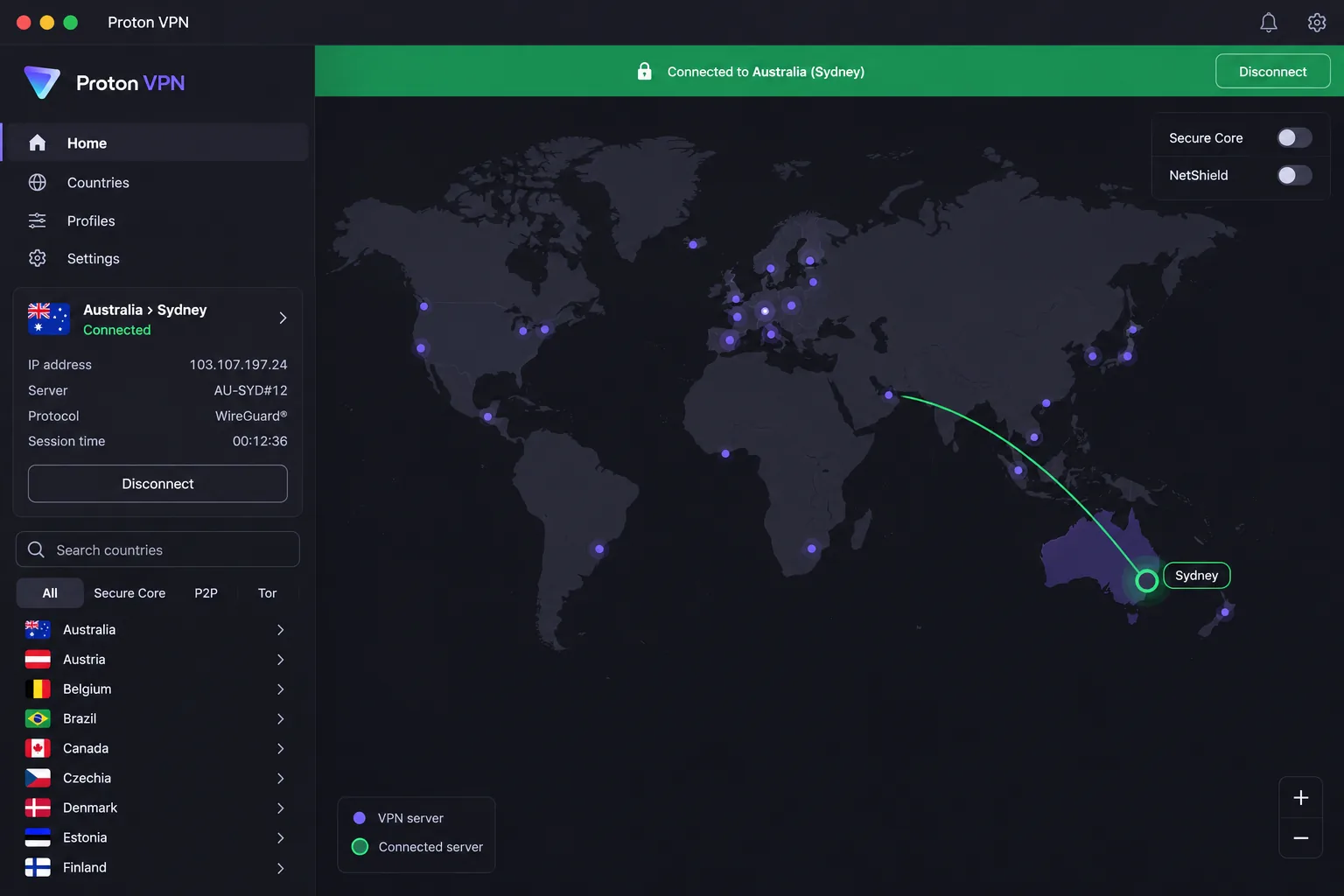
Paid plans include Australian servers in Adelaide, Brisbane, Melbourne, Perth and Sydney, five cities in total. Proton doesn't publish an Australian server count, and outside estimates range widely, so the city list is the more useful guide here. Across the wider network it runs over 20,000 servers in over 140 countries.
Proton's strength on our bench was upload speed and latency. On Australian servers, both ranked among the best of the major VPNs, an edge that shows up in video calls and cloud backups. The trade-off is stability: speeds fluctuated more from test to test than with NordVPN, though they always stayed fast enough for live streaming on a typical NBN plan. Proton also advertises VPN Accelerator, which it says can raise speeds by up to 400% on long-distance connections. Treat that as Proton's best-case figure for long hauls, not a typical gain.
We hit one connection snag worth sharing. When the default Smart protocol struggled to connect, we switched manually to WireGuard or OpenVPN, then to Stealth if needed, and got through each time. The kill switch is also off by default on most platforms, so switch it on before you use public Wi-Fi.
Streaming and Torrenting
On a paid plan, Australian Netflix streamed in 4K, and ABC iview, 7plus and 10 play all worked. Kayo works with Proton as well. Proton's own Australia page also lists SBS On Demand and 9Now, but we haven't confirmed either independently. Stan isn't covered at all. That makes Proton a solid streaming choice, just not as proven across every Aussie app as NordVPN or ExpressVPN.
Torrenting is allowed on paid plans, and the Secure Core multi-hop servers add another layer of protection if you're cautious. The free plan is a different product. It blocks P2P, picks your server automatically, and only offers servers in 10 countries, none of them in Australia.
Pros and Cons
Pros
- Swiss jurisdiction and a no-logs audit every year since 2022
- Upload speed and latency on Australian servers rank near the top
- A genuine free plan with no data cap and no ads
- Clean world-map interface for everyday use
Cons
- The free plan never connects to Australia, and its servers get crowded at peak hours
- Speeds vary more between sessions than NordVPN's
- No round-the-clock live chat; chat can take several minutes and email about two days
- Advanced tools like Secure Core take some learning
The $9.99 figure is the month-to-month VPN Plus price. On the two-year plan, the price starts from about $3 a month, though that rate changes between sales.
3. ExpressVPN: Easiest VPN to Use in Australia
If Proton rewards a little tinkering, ExpressVPN asks for almost none. It scores 8.8 in our ExpressVPN review, and it was the service we'd hand to someone who just wants Australian TV to work. ExpressVPN was founded in 2009, is registered in the British Virgin Islands and has been owned by Kape Technologies since 2021. KPMG assessed its TrustedServer setup and privacy policy in a report published on June 25, 2025. Its network now covers 113 countries.
Australian Servers and Speed
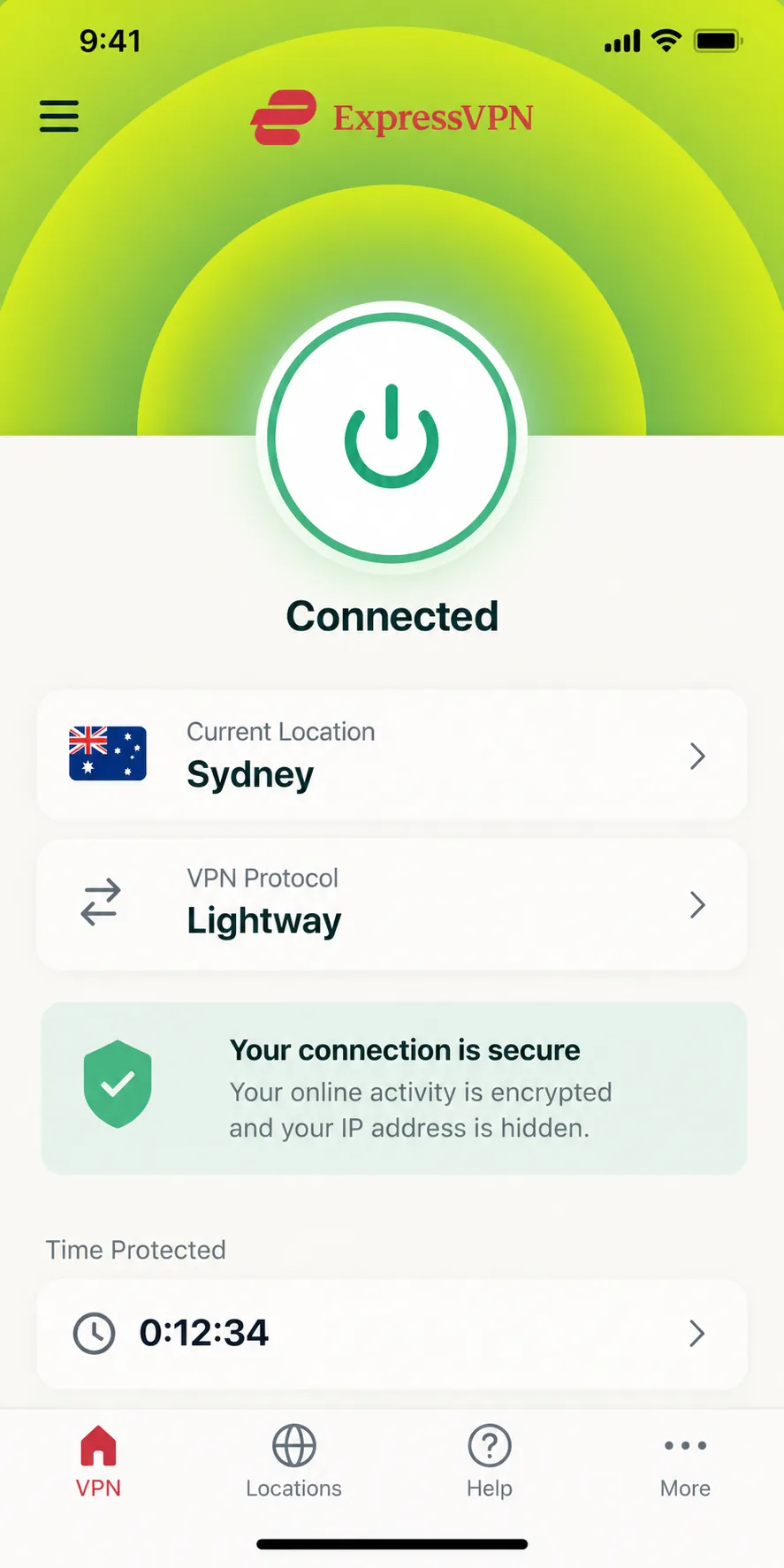
ExpressVPN lists Australian locations in Adelaide, Brisbane, Melbourne, Perth, Sydney and Woolloomooloo, a Sydney suburb. It adds and renames Australian locations over time, so the count differs between its own pages and outside reviews. The city list, though, is stable. Picking "Australia" auto-selects a location, or you can choose a specific Sydney server.
The mobile app was the quickest to connect of anything we tried, coming up in just under 3 seconds. Server distance made no difference to that connection time. Once connected, ExpressVPN held roughly 90 to 95 percent of our base download speed in everyday use, and it stayed steady during 4K streaming. Lightway also handled our phone's switches between Wi-Fi and mobile data smoothly, and battery use stayed low.
Distance still costs speed, as it does with every VPN. For the best results, pick the closest Australian location and use Lightway over UDP.
Streaming and Torrenting
ExpressVPN matched NordVPN on Aussie streaming. ABC iview, SBS On Demand, 9Now, 7plus, Kayo, Stan, Binge and Netflix Australia all worked on its Australian servers. From an Australian connection it also reached US Netflix, BBC iPlayer and Disney+, and live TV streamed without stutter. Kayo used to be hit and miss on ExpressVPN, but it now plays reliably after a server overhaul. As with NordVPN, we haven't confirmed 10 play on ExpressVPN.
When a streaming service flagged one Sydney IP, switching to a different Sydney location got it working again. ExpressVPN's smart DNS feature, MediaStreamer, covers devices that can't run a VPN app. For torrenting, ExpressVPN works but has no port forwarding, which matters if you seed heavily.
Pros and Cons
Pros
- Apps need little or no manual setup
- Holds 90 to 95 percent of base speed in daily use
- Lightway copes well when a phone hops between Wi-Fi and mobile data
- Router app and the Aircove router for whole-home coverage
Cons
- Costs more than rivals for a similar core feature set
- No multi-hop and no port forwarding
- Free trial only through the mobile app stores, and its length changes with app-store offers
- Split tunneling isn't available on iOS
The $2.99 rate is the Basic tier on a two-year plan, with Advanced at $4.49 and Pro at $7.49 a month. Renewals jump to $99.95, $119.95 and $199.95 a year respectively, and the tiers cover 10, 12 and 14 devices.
4. Surfshark: Best Budget VPN for Australia
ExpressVPN charges for polish, while Surfshark charges as little as possible. At $2.49 a month on the two-year Starter plan, it's the cheapest of our top four. CyberGhost's $2.19 rate is lower still, but it covers 7 devices to Surfshark's unlimited, so Surfshark is the better value for a household. It scores 8.6 in our Surfshark review. Surfshark was founded in 2018, is based in the Netherlands (a Nine Eyes member) and merged with Nord Security in 2022. Deloitte verified its no-logs policy in 2023 and again in 2025.
Australian Servers and Speed
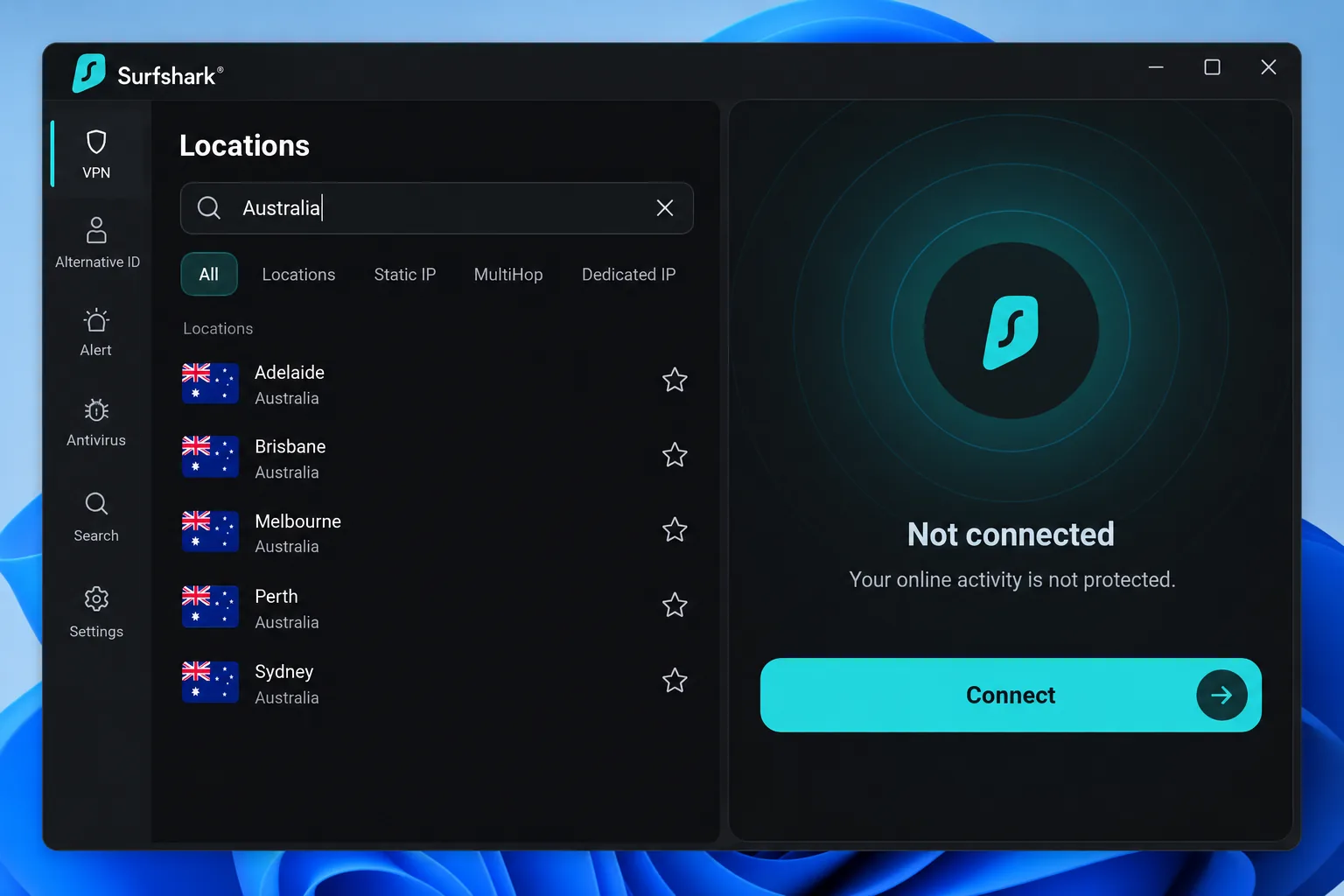
Surfshark runs 40 Australian servers in Adelaide, Brisbane, Melbourne, Perth and Sydney, part of a network of 4,500+ servers in 100 countries. It has fewer local servers than NordVPN or CyberGhost, but the spread covers all five major cities.
Speeds on Australian servers were the most even of any pick, with about 1 Mbps between the fastest and slowest results. Downloads held up well, though a 5 GB file still finished about three minutes behind NordVPN. Uploads were the real weakness, falling off sharply on every Australian server we tried. Connections sometimes took more than 5 seconds to come up, especially on mobile. Latency also jumped even on nearby servers. We noticed it in calls and gaming, but never while browsing.
Setup is quick. Getting from download to a connected server took us under five minutes, and the apps passed our leak tests.
Streaming and Torrenting
ABC iview, SBS On Demand, 9Now, 7plus, Kayo, Stan and Binge all worked on Surfshark's Australian servers, and 10 play streamed too. Netflix Australia is the weak spot: it's hit and miss on Surfshark. Picture quality on Australian streams can also drop during peak evening hours, when everyone else is watching too.
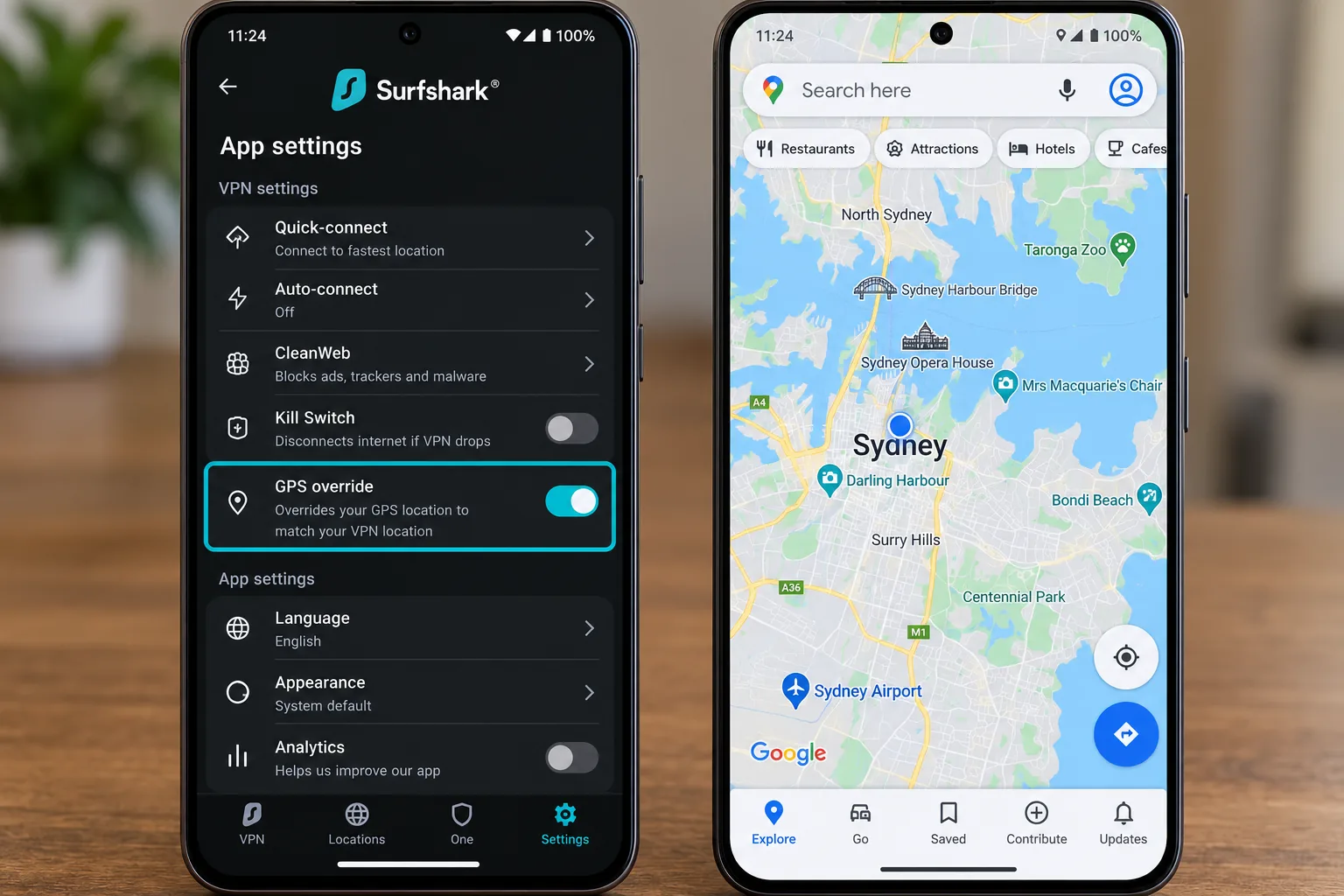
Surfshark has one trick no other pick offers. Its GPS override on Android made location-checking apps like Kayo accept the Australian location. We confirmed that location in Google Maps. It's Android-only, so it won't help on an iPhone. For torrenting, Surfshark works, but we'd point heavy seeders to NordVPN because Surfshark's weak upload speeds slow seeding down.
Pros and Cons
Pros
- Unlimited simultaneous connections on every plan
- Very consistent download speeds across Australian servers
- Android GPS override helps with location-checking apps
- Dynamic MultiHop can use Australia as one of the hops
Cons
- Uploads drop off sharply
- Desktop apps are cluttered, the window can't be resized, and the app nudges you toward paid add-ons
- No Smart DNS and limited router support compared with ExpressVPN
- Netflix Australia is unreliable
Surfshark doesn't print its renewal price on the pricing page. Expect the Starter plan to renew at about $79 a year, though the figure varies by term and currency. A 30-day money-back guarantee and a 7-day trial on desktop and mobile let you test it first.
5. CyberGhost: Best for Beginners
Surfshark sells itself on price, while CyberGhost sells itself on simplicity. It earns its 8.4 score in our CyberGhost review mainly on value, streaming and ease of use. The apps are very easy to use, even for someone new to VPNs. On mobile, picking a server connects you straight away, with no settings to visit first. CyberGhost S.R.L. is based in Bucharest, Romania, and has been owned by Kape Technologies since 2017. Deloitte issued no-logs assurance reports on it in 2022, 2024 and 2025.
Australian Servers and Speed
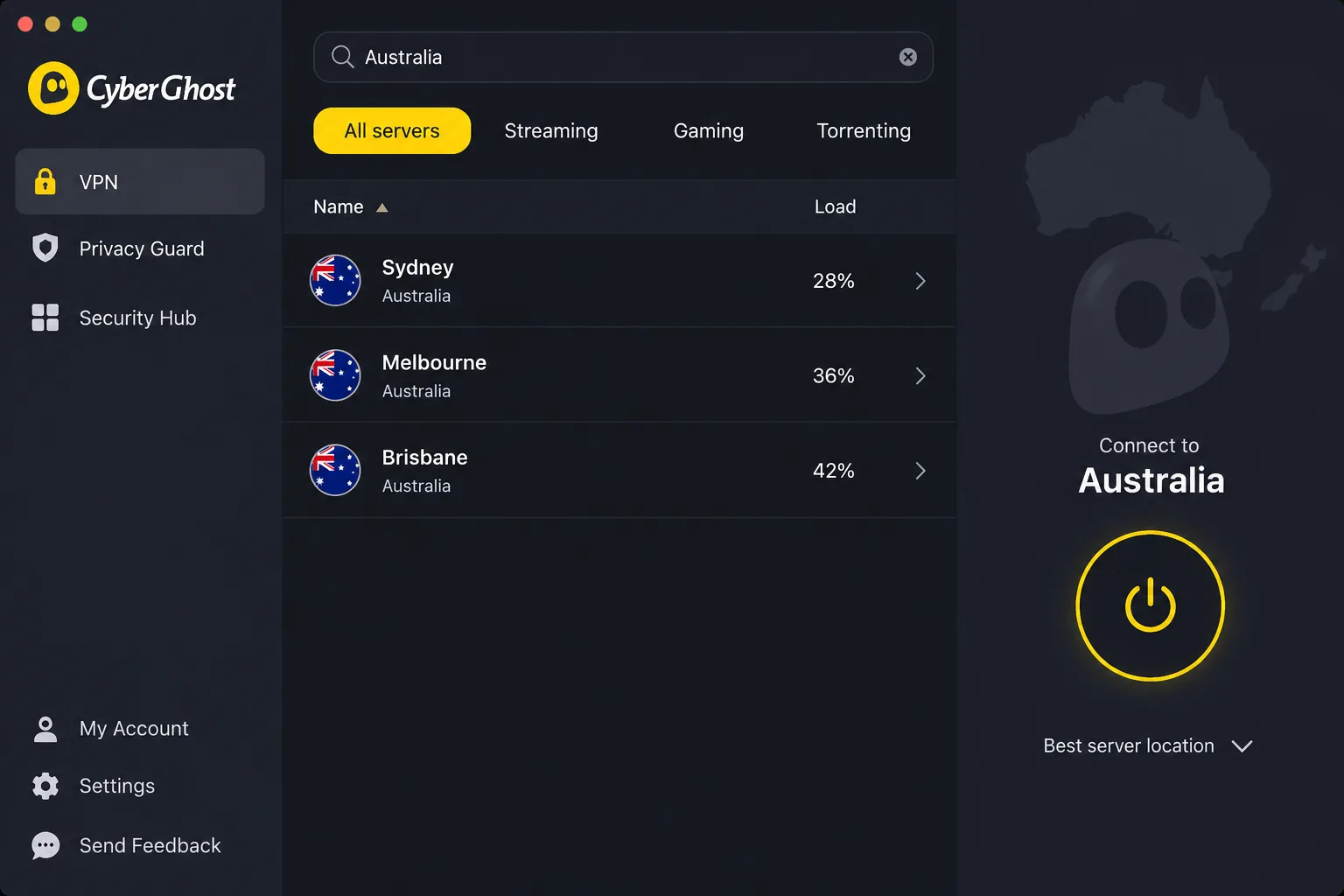
CyberGhost officially lists the most Australian servers of our five picks: 217 across Sydney (100), Melbourne (89) and Brisbane (28), none marked virtual. There's nothing in Perth or Adelaide, which matters if you live in Western or South Australia. The wider network runs 9,600 servers in 100 countries.
Speed was CyberGhost's weakest area in our testing. On a modest home line, it stayed usable for HD streaming, but of our five picks it finished furthest behind the line speed. Speeds also dipped at certain times of day, and latency on Australian servers topped 100 ms at times, which is poor for gaming. Connecting into Australia from overseas was slower than with the top picks, too.
Two quirks are worth knowing. Switching server locations briefly drops the tunnel before the new connection settles, and the macOS app can show a false "no internet" message. Both can confuse a first-time user, so it helps to know they are quirks rather than faults.
Streaming and Torrenting
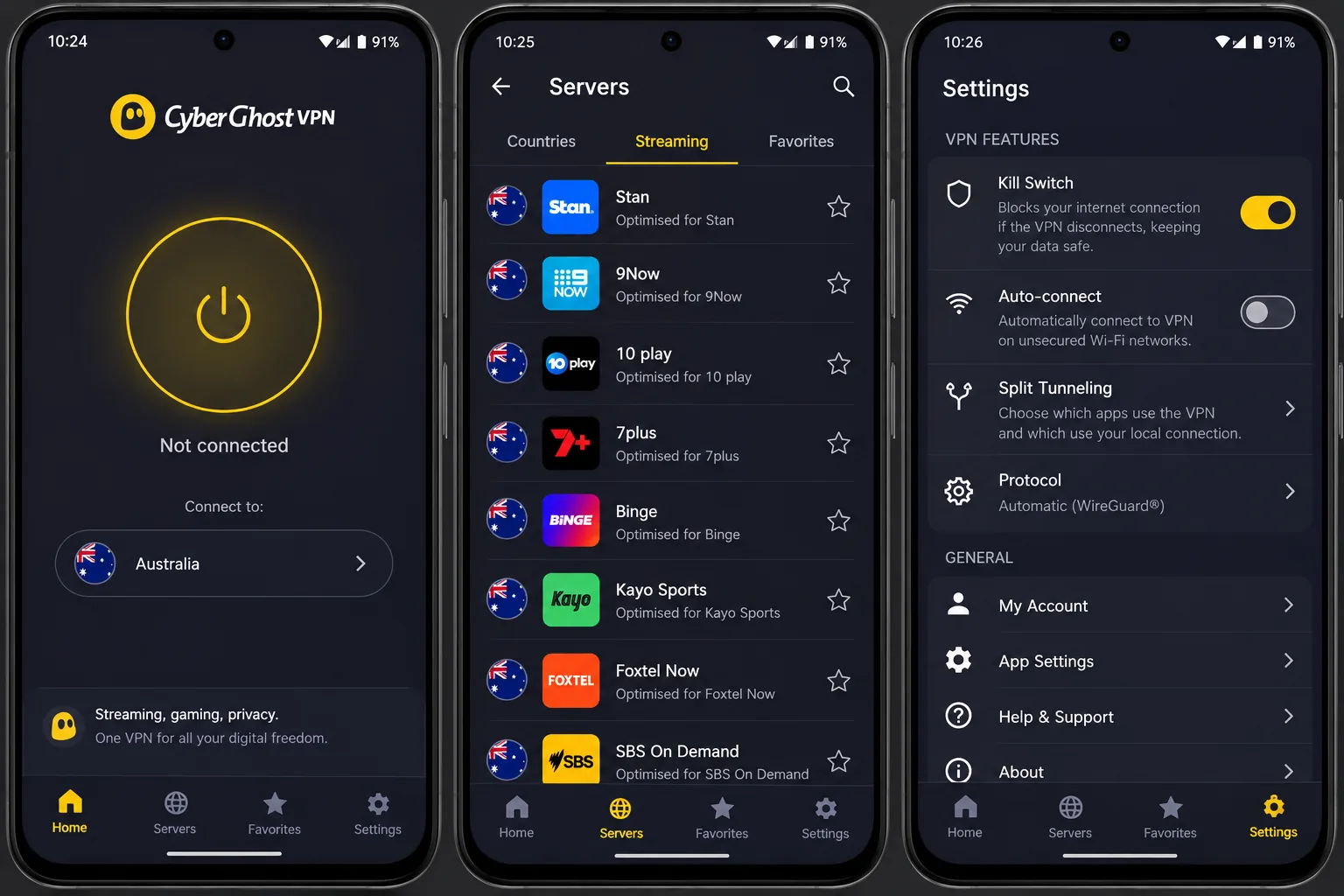
Streaming is where CyberGhost earns its place. On its nearby streaming servers, HD and 4K streams started quickly without buffering. ABC iview and Stan worked on its Australian servers, and CyberGhost sets aside servers for Stan, 9Now and 10 play. For SBS On Demand, CyberGhost tells users to connect to any Australian server, though we haven't confirmed that advice ourselves. Netflix and Disney+ were not always reachable from its Australian servers, and we wouldn't rely on it for Kayo.
CyberGhost also runs dedicated torrenting servers, which take the guesswork out of P2P for beginners.
Pros and Cons
Pros
- Kill switch and DNS leak protection on by default
- Dedicated servers for Stan, 9Now and torrenting
- 217 Australian servers, the largest official count of our picks
- 45-day money-back guarantee on plans of six months or longer
Cons
- No servers in Perth or Adelaide
- No multi-hop and no obfuscation strong enough for heavy censorship
- Advanced users may find the settings limited
- Covers 7 devices, the fewest of our picks
The $2.19 rate applies to the two-year plan with two extra months included.
Why You Need a VPN in Australia
Beyond the individual picks, a VPN in Australia does three practical jobs. It keeps your browsing away from your ISP's records, it gives you a layer of protection on public Wi-Fi, and it lets you reach Aussie streaming services when you travel. The legal background explains why the first job matters more here than in many countries.
Mandatory Data Retention and What Your ISP Can See
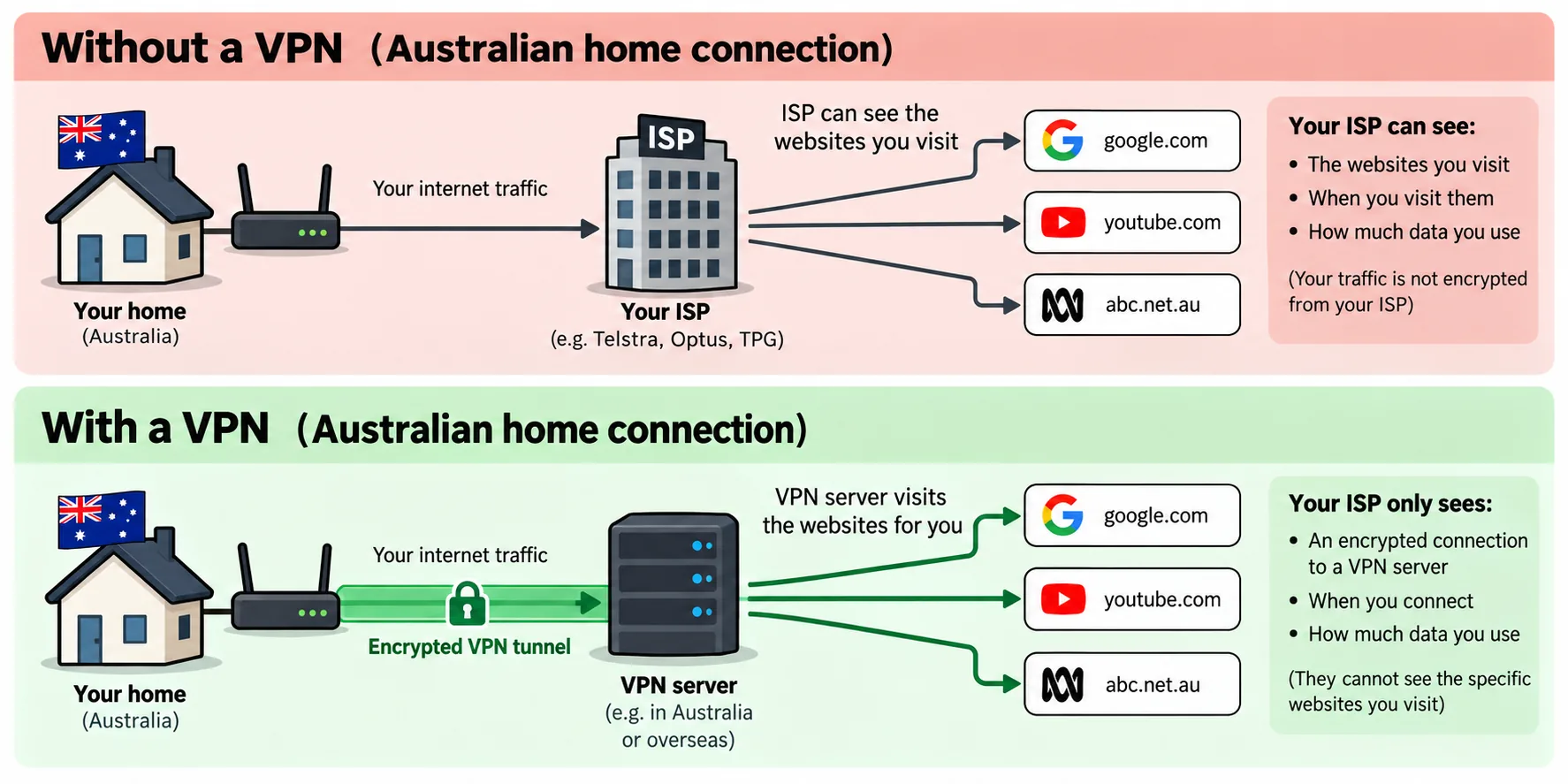
Australia's 2015 data retention law requires carriers, carriage service providers and ISPs to keep prescribed metadata for at least two years. Subscriber information is kept for the life of the account plus two years. The scheme started in October 2015, and full compliance became mandatory in April 2017.
The retained data covers your account details and, for each communication, its source, destination, date, time, duration and type, plus the location of the equipment. It does not cover the content of your communications or your web browsing history. With a VPN on, the destination your ISP logs is the VPN server rather than each site you visit. We explain the limits of that protection in our guide on whether your internet provider can see your history with a VPN.
Five Eyes and the Assistance and Access Act
Australia is a member of the Five Eyes intelligence-sharing alliance with the US, the UK, Canada and New Zealand. On top of that, the 2018 Assistance and Access Act lets agencies ask or compel communications providers to help with access. Agencies can make voluntary Technical Assistance Requests and issue compulsory Technical Assistance Notices. The government can also issue Technical Capability Notices, which require a provider to build a new capability.
The law says notices cannot require a "systemic weakness" or backdoor, and a decision-maker must find each notice reasonable, proportionate, practicable and technically feasible. Critics point out that "systemic" is not defined and that there is no judicial oversight. A later law, the Surveillance Legislation Amendment (Identify and Disrupt) Act 2021, gave the AFP and ACIC data disruption, network activity and account takeover warrants.
Be careful with VPN companies headquartered in Australia. The Assistance and Access Act can compel Australian companies to assist with access, so a provider headquartered here can be served those notices directly under Australian law. All five of our picks are based outside Australia.
Age Verification and the Under-16 Social Media Ban
Since 10 December 2025, age-restricted social media platforms must take reasonable steps to stop Australians under 16 from having accounts. At the start, the eSafety Commissioner's social media minimum age rules covered Facebook, Instagram, Kick, Reddit, Snapchat, Threads, TikTok, X, YouTube and Twitch. Platforms face civil penalties of up to 150,000 penalty units, about A$49.5 million. Under-16s and their parents or carers are not penalised, because the duty sits with the platforms.
The guidance doesn't prescribe one age-check method. Platforms must find and deactivate existing under-16 accounts, stop new ones and explain which age assurance options they use. They must also mitigate "known and reasonably foreseeable circumvention risks." Age assurance can involve facial age estimation or bank-verified identity. YouTube said it would estimate age from Google account data and other signals. A VPN changes your IP address, but it doesn't change the account signals platforms use for these checks. About 4.7 million age-restricted accounts had been removed or restricted by mid-December 2025, according to eSafety's compliance update.
Site Blocking and Public Wi-Fi
Australia also blocks some websites at the ISP level. Section 115A of the Copyright Act 1968 lets rights holders get Federal Court orders that make ISPs block overseas sites that infringe copyright. Foxtel and Roadshow won the first injunctions in December 2016, and later orders cover hundreds of domains. Rights holders have also gone after downloaders directly. In 2015, the Dallas Buyers Club case sought the details of thousands of iiNet customers, though the court set tight conditions and the claim was dismissed that December.
Public Wi-Fi is the everyday risk. Airport, café and hotel networks are shared, and a VPN encrypts your traffic before it leaves your device. Our explainer on whether a VPN protects you on public Wi-Fi covers what it does and doesn't stop.
Are VPNs Legal in Australia?
With all those surveillance and blocking laws on the books, it's fair to ask whether the VPN itself is allowed. Yes, VPNs are legal in Australia, and no law restricts their use. Anything illegal without a VPN, such as copyright infringement, stays illegal with one. That's the whole rule, and it's simpler than in many countries.
Surfshark states plainly on its Australia page that using a VPN in Australia is legal for privacy and security purposes, and ExpressVPN and Proton VPN say the same. Streaming services are a separate matter. Their terms of service may limit access by region, but breaking a service's terms is a contract issue between you and that service, not a crime.
How We Tested the Best VPNs for Australia
We judged every VPN on how it behaves for someone in Australia or someone trying to reach Australian content from abroad. Our scores come from our full hands-on reviews, and the ranking on this page follows those scores.
Here's what we checked for each service:
- Australian servers. Which cities each provider covers, since a Perth or Adelaide user needs a nearby server.
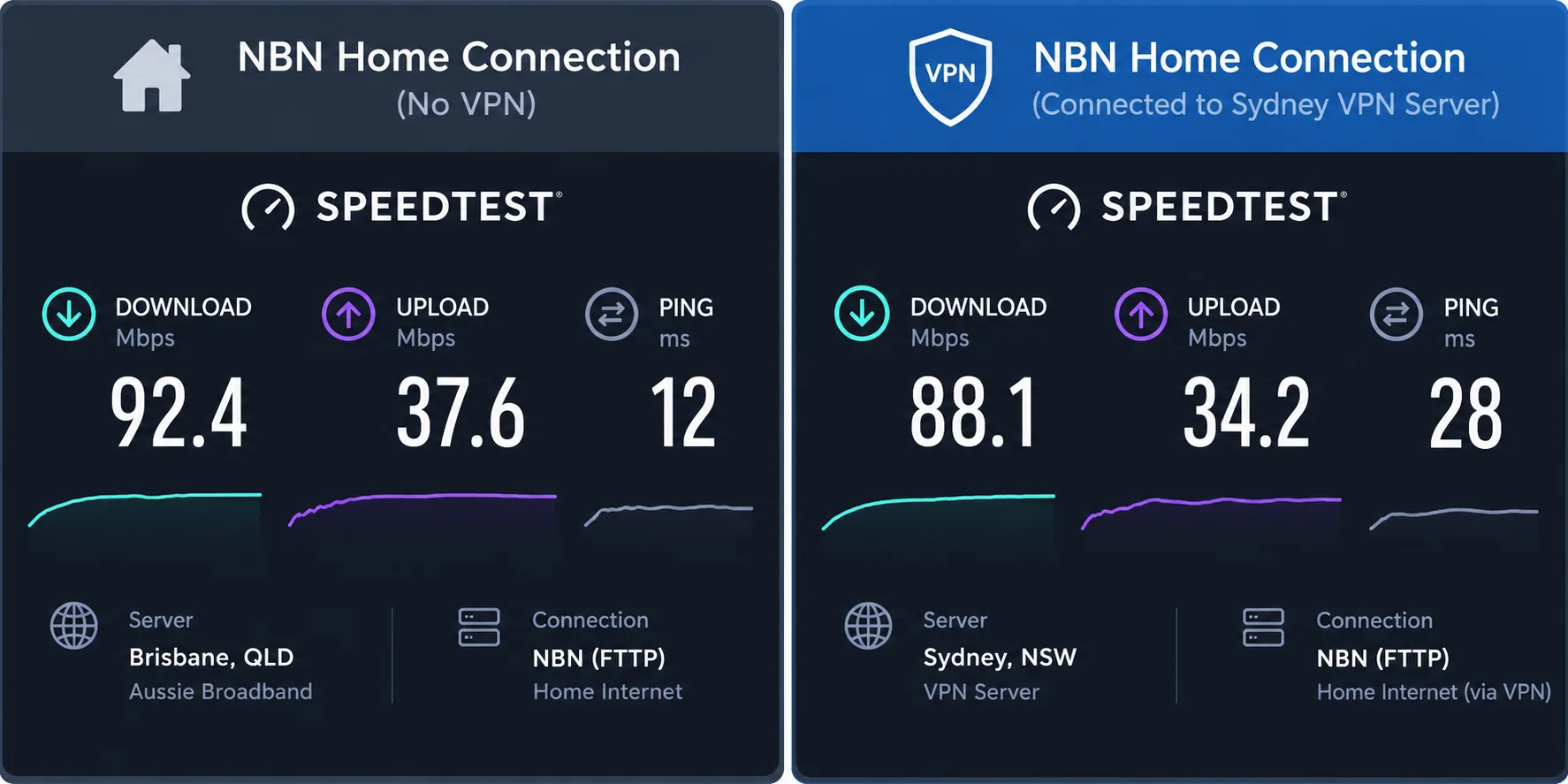
- Local speed. How much download and upload speed each VPN kept on Australian servers using WireGuard-based protocols, and how steady the results were.
- Long-distance speed. How each one coped with the long round trip to US and European servers.
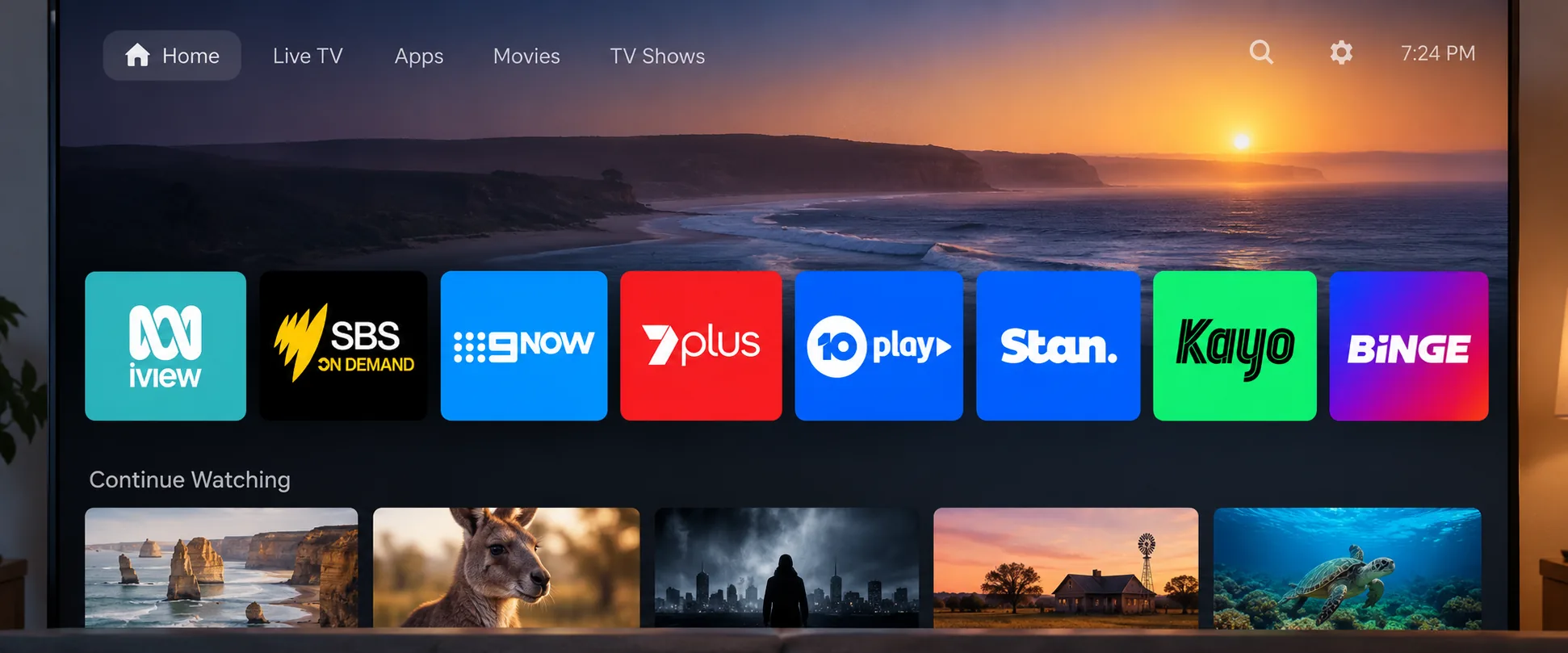
- Australian streaming. Whether ABC iview, SBS On Demand, 9Now, 7plus, 10 play, Stan, Kayo, Binge and Netflix Australia played.
- Leaks and safeguards. DNS and IP leak results, plus whether the kill switch is on by default.
- Trust and value. Independent no-logs audits, jurisdiction, device limits, renewal prices and refund terms.
Two services came close. Private Internet Access ties CyberGhost on 8.4 in our PIA review and is strong for torrenting. However, only its dedicated streaming servers unlocked services reliably, and its uploads were slow. IPVanish scores 8.0 in our IPVanish review. It's quick on nearby servers and passes leak tests, but its streaming is occasionally inconsistent and Kayo is unreliable. It's also US-based, and in 2016, under previous ownership, it handed connection logs to US authorities despite a no-logs claim.
How to Choose a VPN for Australia
Now that the five picks and their trade-offs are laid out, the best VPN for you depends on where you live, what you stream and how much you care about jurisdiction. Three things separate the good options from the great ones.
Australian Server Locations
Look for servers in the city closest to you. NordVPN, Proton VPN, ExpressVPN and Surfshark all cover Adelaide, Brisbane, Melbourne, Perth and Sydney. CyberGhost covers only Sydney, Melbourne and Brisbane, so Perth users connect across the country. More cities also means more Australian IP addresses to switch between when a streaming service blocks one.
Connect to the Australian city closest to you, usually Sydney or Melbourne on the east coast or Perth in the west. A shorter route means faster speeds and lower ping.
Speed and Distance
Protocol choice matters as much as the provider. We got the best NBN speeds by picking the closest Australian city and a WireGuard-based protocol, such as NordLynx, Lightway or plain WireGuard. Obfuscated servers were noticeably slower. If a provider defaults to an older protocol, change it in the app settings.
No-Logs Policy and Jurisdiction
A no-logs promise is only worth something if someone has checked it. All five of our picks have had independent audits, from Deloitte, KPMG or Securitum. Jurisdiction comes next. Panama, Switzerland, the British Virgin Islands and Romania sit outside the Five Eyes, while Surfshark's home in the Netherlands is part of the wider Nine Eyes group. Avoid providers based in Australia for the reasons covered under the Assistance and Access Act.
A local server keeps your speed loss small, but the long haul out of Australia is where a VPN's real cost shows up.
Can You Use a Free VPN in Australia?
Price came up throughout the buying criteria above, so the obvious next question is whether you need to pay at all. You can use a free VPN, but it's a weak choice for Australia. The main free tiers, including Proton Free, Windscribe Free and PrivadoVPN Free, have no Australian servers at all. That rules them out for watching Aussie TV from overseas, and Kayo spots free VPN IP addresses quickly anyway.
Data caps are the second problem. Windscribe Free gives you 10GB a month, which runs out after roughly four hours of HD video. PrivadoVPN Free also caps you at 10GB and one device. Proton Free is the exception on data, with no cap and no ads. That makes it a good free option for private browsing, even without Australian servers. Our roundup of the best free VPNs covers the safest options.
Some free VPNs pay their bills with your data. A CSIRO study of 283 Android VPN apps found that 18% tunnelled traffic without encryption and 38% had malware detections. Top10VPN's review of 150 free VPNs found that 88% leaked IP or DNS data. Urban VPN has been caught selling user data. The "VPN Australia: Unlimited Proxy" app refuses data deletion and is linked to a farm of data-harvesting clone apps, while Hola's free apps can turn your device into an exit node for other people's traffic.
If you only need a VPN for a short trip, a paid plan with a money-back guarantee is a safer route than a free app. CyberGhost offers 45 days on plans of six months or longer, and the other four picks offer 30 days.
Will a VPN Slow Down Your NBN Connection?
Speed came up in every review above, so here is the wider picture. A good VPN on a local server barely slows down an NBN connection. The ACCC's Measuring Broadband Australia final report, released on 17 June 2026, found fixed-line NBN downloads averaged 99.4% of plan speed in busy evening hours. In other words, most homes get close to the speed they pay for, and the VPN becomes the main variable.
On nearby servers, our top picks kept almost all of that speed, as the per-pick figures in the reviews show. Even on a modest home line of around 40 Mbps, all five picks stayed usable for HD streaming on Australian servers, with NordVPN and Surfshark closest to the line speed.
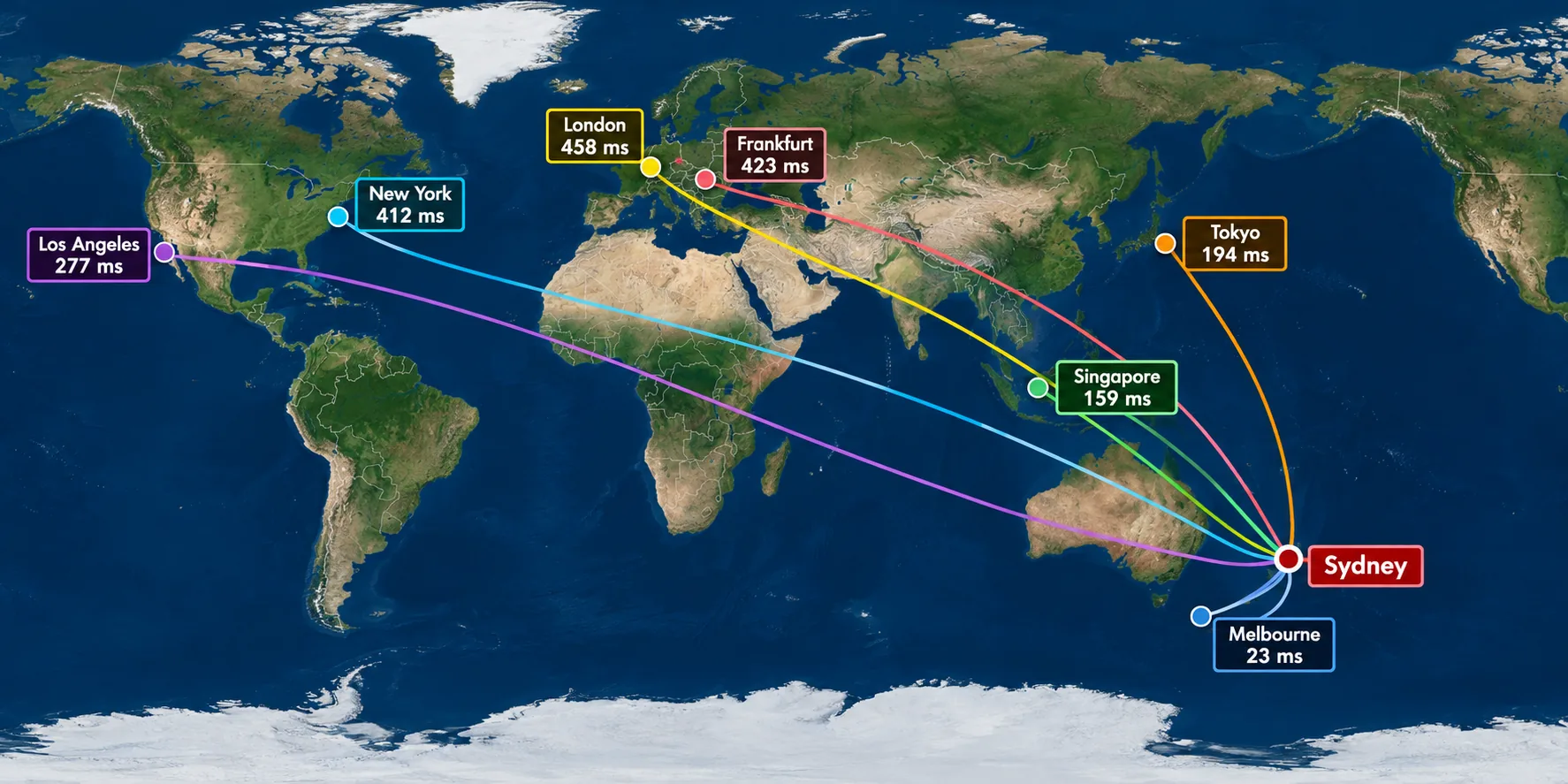
Distance is what really slows you down. Backbone round-trip times from Sydney are about 9.8 ms to Melbourne, 101.5 ms to Tokyo, 137.7 ms to Los Angeles and 256.4 ms to London, before any VPN overhead. That's why US and European servers feel slower from Australia, even when local results are blazing fast. Our guide on whether a VPN slows down your internet speed explains the overhead in more detail.
How to Set Up a VPN in Australia
Once you've picked a provider and know what speed to expect, getting it running is the easy part. Setting up a VPN in Australia takes a few minutes on any device. Our general guide on how to set up a VPN covers routers and less common devices, but the basic steps are the same everywhere.
- Choose a provider and plan. A two-year plan gives the lowest monthly price, but check the renewal rate first.
- Install the app. Download it from the provider's website or the App Store or Google Play for iOS and Android.
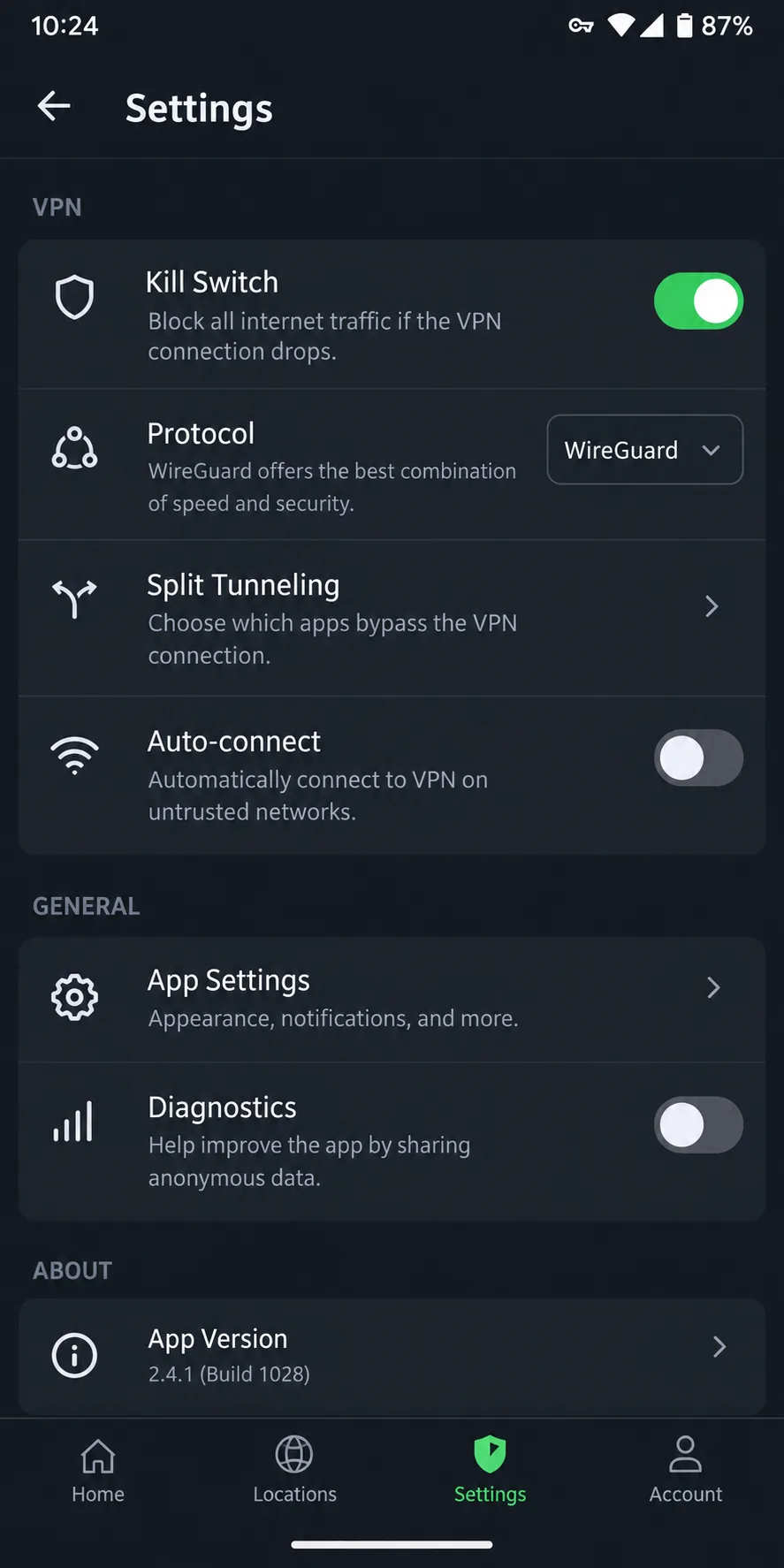
- Sign in and pick a modern protocol. Leave it on automatic, or open the app's settings and choose WireGuard, NordLynx or Lightway.
- Turn on the kill switch. Check it's enabled before you rely on the VPN, because Proton VPN leaves it off by default on most platforms.
- Connect to the nearest Australian city. Choose Sydney, Melbourne, Brisbane, Adelaide or Perth, whichever is closest to you.
- Check for leaks. Visit a DNS leak test site to confirm it shows your VPN's IP address, not your ISP's.
For whole-home coverage, ExpressVPN's router app and its Aircove router protect every device on your network, including smart TVs and consoles that can't run a VPN app.
How to Watch Australian TV and Sports With a VPN
Once the VPN is installed, the most common reason Australians switch it on is to keep watching home TV while abroad. Australia's streaming services check your IP address and block anyone outside the country. ABC iview, SBS On Demand, 9Now, 7plus and 10 play are free-to-air catch-up services that need an Australian IP. Stan, Kayo and Binge are paid services and are geo-restricted too. If you're travelling or living overseas, a VPN with Australian servers gets you back in.
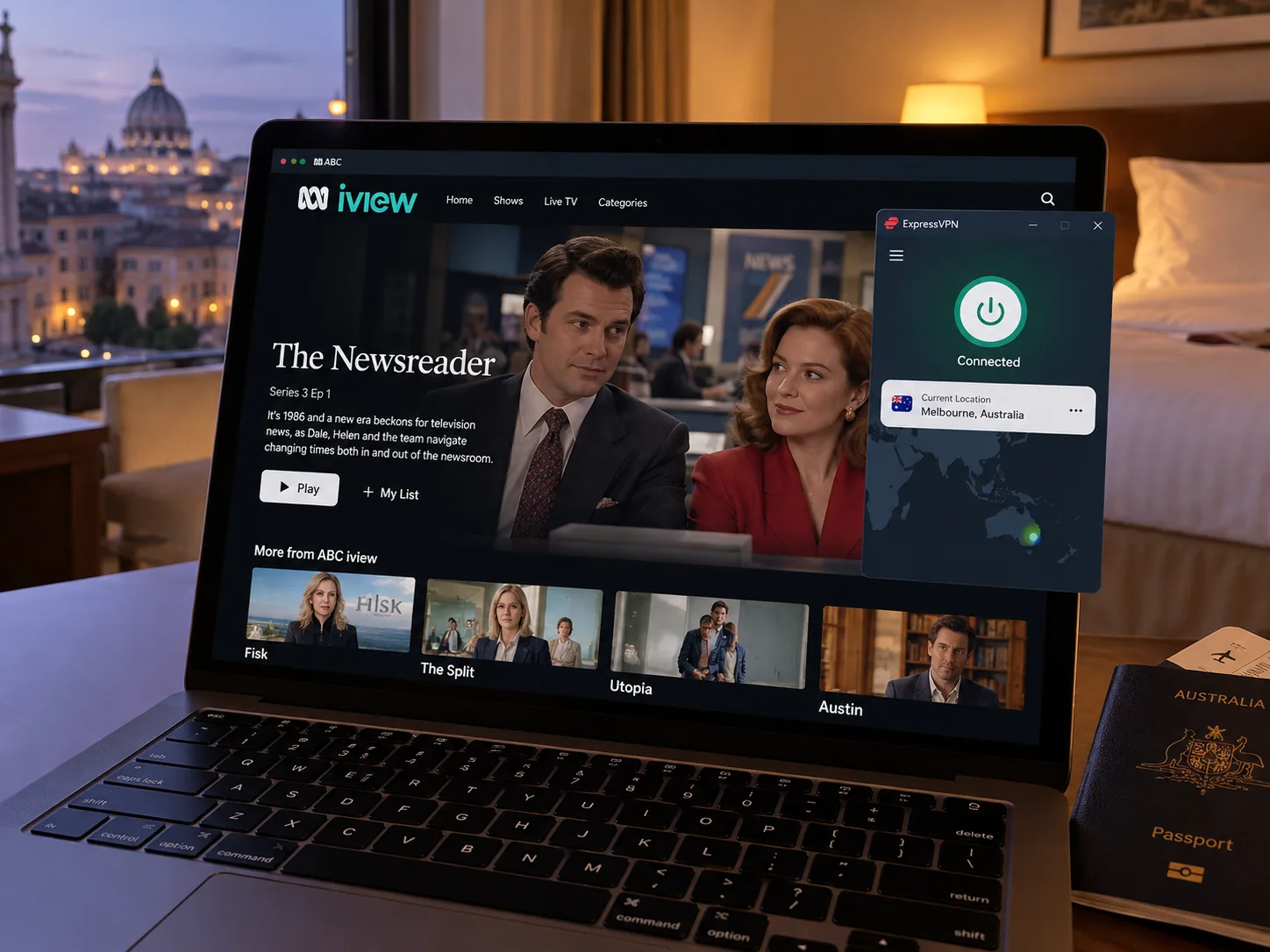
Here's how to do it:
- Connect to an Australian server. Any of our five picks will do for iview, and all but Proton VPN have a confirmed record with Stan. NordVPN, ExpressVPN and Surfshark were the most reliable for Kayo.
- Clear your browser cookies. Stale cookies can carry your real location, so clear them or use a private window.
- Sign in to the service. ABC iview needs a free ABC account for on-demand viewing, while live channels stay watchable without logging in.
- Switch servers if you see an error. These services block at the IP level, so when iview, Stan or Kayo shows an error, switching to another Australian server usually fixes it.
Kayo needs extra care. An Australian IP is not always enough, because signing up needs an Australian phone number and the app is only listed in the Australian app stores. Top10VPN tested 59 VPNs with Kayo, and NordVPN, ExpressVPN and Surfshark gave the most consistent access. For more options on overseas catalogues, see our picks for the best VPN for streaming.
The Bottom Line
For most people, the choice comes down to what you value most. Pick Proton VPN if privacy comes first and you can live with variable speeds. Pick ExpressVPN if you want apps that need no fiddling and you're willing to pay a little more for them. Choose Surfshark for a big household on a budget, or CyberGhost if this is your first VPN and you want the longest refund window. If you want one service that does everything well in Australia, our verdict is below.