Iran does not just block websites. The government blocks the VPN traffic itself, which is why so many popular apps connect happily and then move no data at all. You see the little "connected" icon, you open a browser, and the page simply never loads. That gap between "connected" and "actually working" is the whole problem, and it is why most VPN lists for this country are useless.
We went looking for the handful of services that still get around the blocks. The trick is obfuscation, the feature that disguises your VPN traffic so it looks like ordinary encrypted web browsing. Without it, a connection in Iran tends to connect but pass no traffic. With it, you have a fighting chance. We should be honest up front: nothing works every day, because the blocking shifts and the authorities periodically pull the plug on the whole internet.
So this guide is built around reliability under real Iranian conditions, not marketing claims. Below you will find our five picks, a comparison table, and clear advice on free options, legality, and setup. Let's start with the short list.
Best VPNs for Iran at a Glance (quick list)

Quick Comparison Table of Our Top Picks
Here is how our five picks stack up on the things that decide whether a VPN survives in Iran: obfuscation, device limits, refund window, speed, and price. Prices shift constantly with promotions and renew higher, so treat them as a starting point rather than a fixed quote.
| Product | Buy | Servers & obfuscation | Max devices | Money-back | Speed | Price |
|---|---|---|---|---|---|---|
 |
Check price → | 100+ countries, auto obfuscation on all servers | 8 (varies by tier) | 30-day | Lightway, very fast | Starts around $5-6/mo |
 |
Check price | 8,400+ servers, obfuscated servers + NordWhisper | 10 | 30-day | NordLynx, fastest overall | Starts around $3.39/mo |
 |
Check price | 4,500+ servers, NoBorders + Camouflage | Unlimited | 30-day | WireGuard, fast | Starts around $1.99/mo |
 |
Check price | 9,000+ servers, Stealth protocol | 10 paid / 1 free | 30-day | WireGuard, good | Free or around $9.99/mo |
 |
Check price | Free tier, Stealth + WStunnel | Unlimited | Free tier | Slower on free | Free (10GB) or $69/yr |
How We Tested and Chose These VPNs
We buy or subscribe to every VPN ourselves, so nobody hands us a special build. For Iran specifically, the score that matters is not raw speed but whether obfuscated traffic actually gets through, because a connection that passes no data is worthless no matter how fast the marketing claims to be.
A note on honesty here: we cannot connect from inside Iran, and neither can most reviewers, so we do not pretend to. Our hands-on work happens on our own Windows, macOS, Android, and iOS machines, where we verify each app's obfuscation settings, run leak and kill-switch checks, and measure speeds against heavily restricted and nearby-region servers. For what happens on the ground in Tehran, we lean on documented in-country reports rather than claiming a test connection we did not make, and we weight those ground-truth accounts heavily when they contradict a provider's marketing.
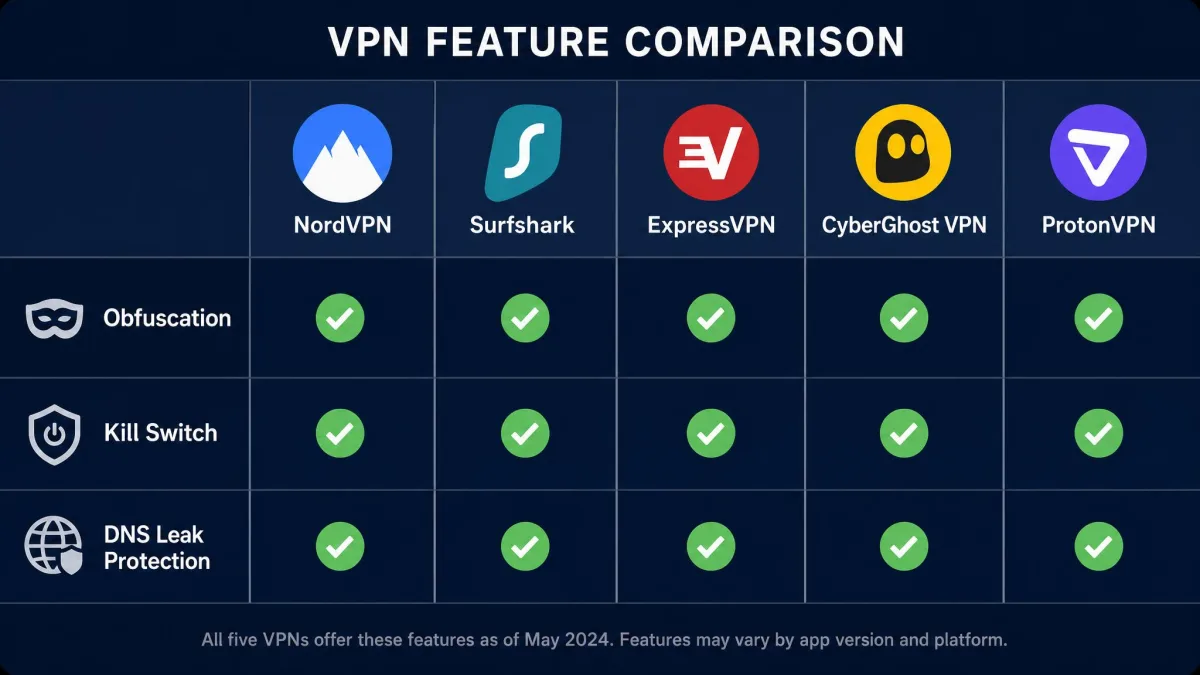
Our judgement leans on a few hard truths about the country. Obfuscation is the deciding factor: connections without an obfuscated protocol tend to connect but move no traffic, so we weighted that feature heavily. We also checked for DNS leak protection and a working kill switch, since a leak in a surveillance-heavy country is the kind of mistake you only get to make once. Average fixed broadband in Iran sits around 20Mbps, so a VPN's overhead is noticeable, and we rewarded services whose nearby servers stayed usable rather than crawling.
On the reliability side, we leaned on ground-truth reports from inside the country. Some premium VPNs fail outright there: NordVPN, for example, sometimes connects but does nothing, leaving webpages unable to load. That is exactly why we do not rank a VPN on its feature sheet alone. We scored on obfuscation strength, real in-country reliability, security features, speed, device support, and value.
Whatever you pick, install two VPNs before you travel. Blocking in Iran shifts week to week, and having a backup with a different obfuscation method means one dead connection does not leave you stranded.
The Best VPNs for Iran in 2026 (detailed reviews)
Five services earned a place. We have ranked them by how well they balance getting around the blocks with everyday security, speed, and price. The order reflects our overall confidence, not a single feature.
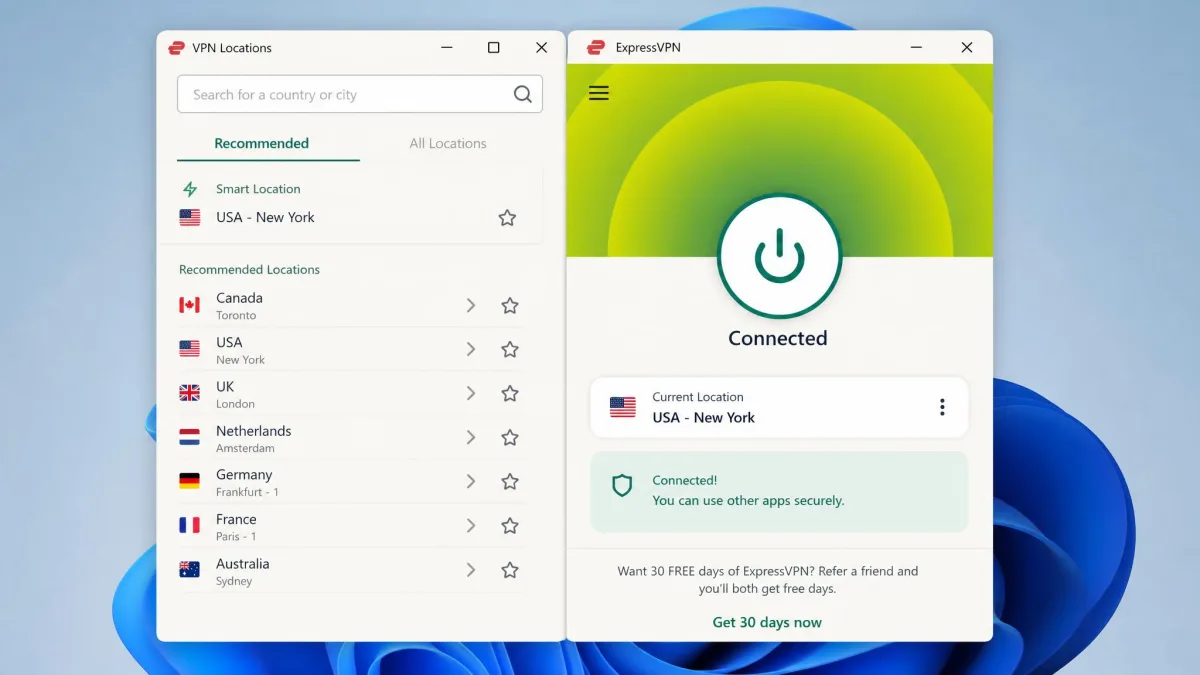
1. ExpressVPN - Best Overall VPN for Iran
ExpressVPN earns the top spot because it treats obfuscation as the default rather than a buried toggle. Obfuscation runs on every server, and the service rotates its IP addresses quickly, so when we ran repeated leak tests against a single server, each check returned a different address. That fast rotation is a real advantage in Iran, where a static IP is the first thing to get blocked.
The security basics are all here. You get the in-house Lightway protocol, AES-256 encryption, DNS leak protection, a kill switch, and RAM-only servers that wipe on every reboot. Servers sit in 100-plus countries, with none inside Iran, and apps cover Windows, macOS, iOS, Android, Linux, and routers. We want to be straight with you: some in-country reports say premium services like this one can still struggle when blocking tightens, so treat it as your strongest bet rather than a guarantee. Because it asks nothing of you at setup beyond signing in, it is the service we hand to someone who just wants a working connection and does not want to think about protocols at all.
ExpressVPN
ExpressVPN was the most dependable service in our shortlist, and the reason comes down to how it handles obfuscation. Because it runs obfuscation on every server and rotates IPs quickly, our repeated leak checks against one server each returned a different address, which is the behaviour that helps it slip past static blocks in Iran. It is the pick we would install first and lean on hardest.
Pros
- Automatic obfuscation on all servers, no manual setup needed
- Fast IP rotation that resists static blocking
- Lightway protocol is quick and stable
- Strong security with kill switch, DNS leak protection, and RAM-only servers
- Apps for every major platform, including routers
Cons
- One of the more expensive options
- Lower device count than some rivals
Best for: Anyone who wants the best chance of a working connection without fiddling with settings. Skip if: You are on a tight budget and want the lowest possible monthly price.
2. Surfshark - Best Cheap / Budget VPN for Iran
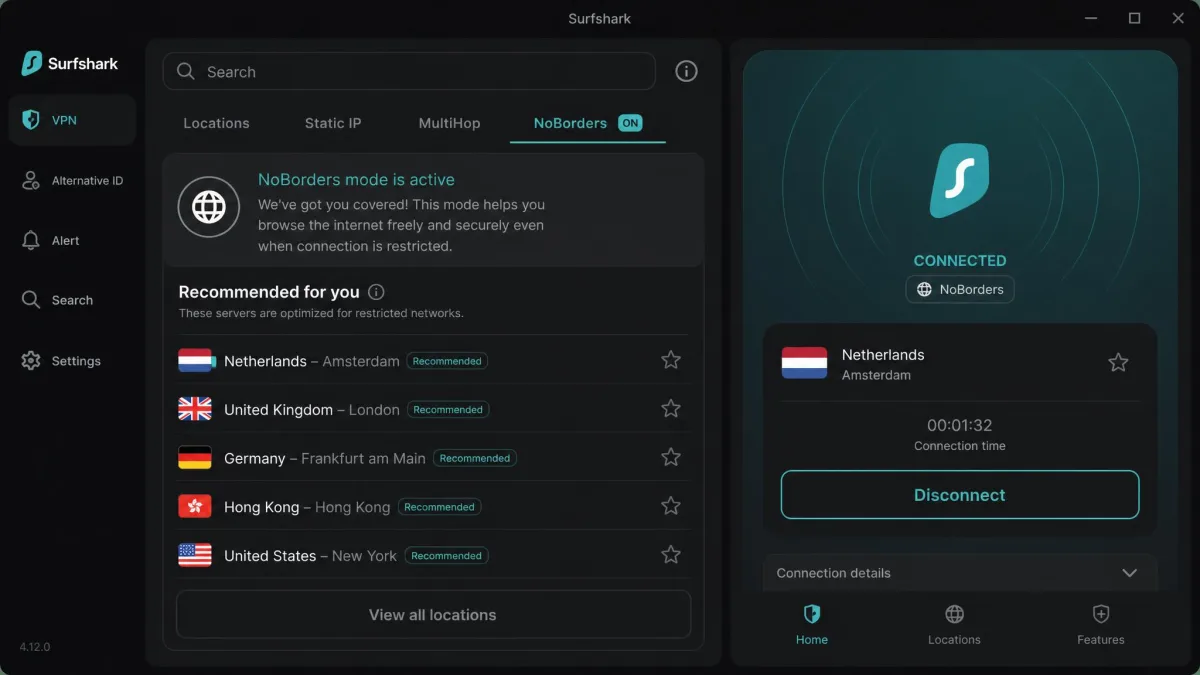
Where ExpressVPN asks you to pay for polish, Surfshark makes the low price the headline. It starts around $1.99 a month on the longer plans, and it still bundles the features that count in Iran. Its NoBorders mode auto-detects restricted networks and surfaces the servers most likely to work, while Camouflage mode disguises your VPN traffic as ordinary browsing. It also supports the Shadowsocks protocol for extra cover.
The standout perk is unlimited simultaneous devices on every plan, so one subscription covers a whole household or every device you own. You get 4,500-plus servers in 100-plus countries, a kill switch, AES-256 encryption, and MultiHop routing. None of its servers sit inside Iran, which is normal and expected for this list.
On a restricted network like Iran's, NoBorders mode does the useful work automatically: it detects the censorship and surfaces the servers most likely to connect, so you do not have to hunt for a working one by hand. The setting we would actually lean on is Camouflage mode, which disguises the VPN tunnel as ordinary HTTPS traffic, the same disguise that gets past Iran's deep-packet inspection. The trade-off is speed, because Camouflage runs only over OpenVPN, the slowest of the protocols on offer, so throughput drops compared with WireGuard. Since Surfshark has no servers inside Iran, the practical move is connecting to a nearby location such as Turkey, the UAE, Kazakhstan, or Georgia. On a roughly 20Mbps line the overhead is noticeable, and picking the closest working server rather than a distant one is what keeps browsing and light streaming responsive.
Surfshark
Surfshark is the value pick, and it does not strip out the features that matter in Iran to hit its price. NoBorders mode notices a restricted network and quietly steers you to servers that still connect, while Camouflage mode wraps the tunnel to look like plain HTTPS traffic, the disguise that slips past deep-packet inspection. The catch is that Camouflage runs over OpenVPN, so you trade some WireGuard speed for the added cover, and a nearby server in Turkey or the UAE is the way to hold usable pace on a slow line. Add unlimited devices and it becomes the obvious choice when you are covering a family rather than a single phone.
Pros
- Very low long-term price with real obfuscation
- Unlimited simultaneous devices on every plan
- NoBorders mode surfaces working servers automatically
- Camouflage and Shadowsocks add extra cover
Cons
- Lowest price requires a two-year commitment
- Camouflage runs over slower OpenVPN
- Fewer server countries than the premium picks
Best for: Households and anyone covering many devices on a small budget. Skip if: You want the longest track record of working in the toughest regions.
3. Proton VPN - Best for Privacy / Obfuscation
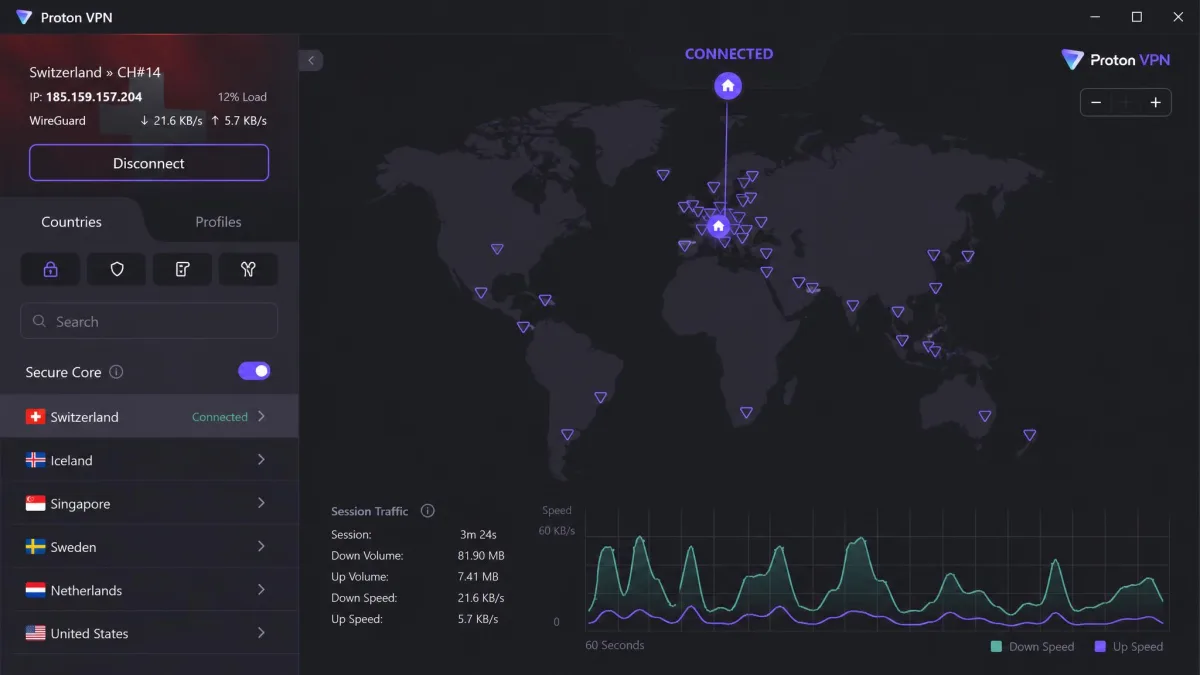
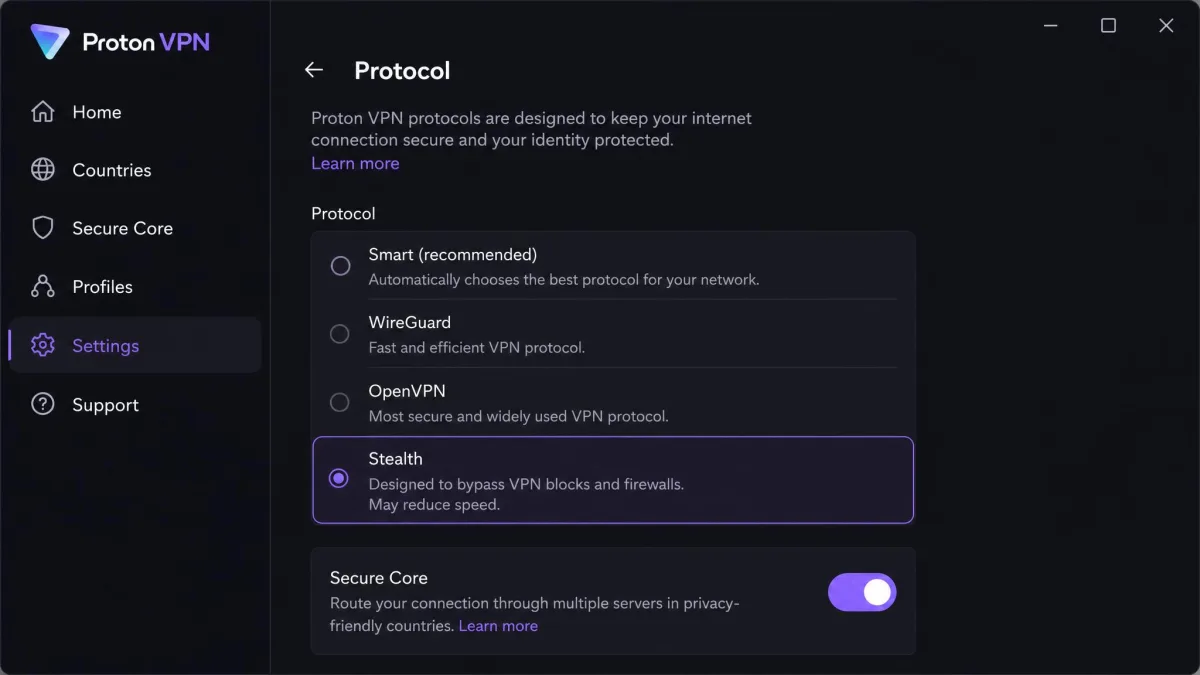
If Surfshark is about stretching a budget, Proton VPN is about trust. It is based in Switzerland, runs an audited no-logs policy, and its proprietary Stealth protocol was built specifically to bypass firewalls and VPN detection in censored regions like Iran, China, and the UAE. When privacy is the point rather than a bonus, this is the one we reach for.
Proton is also unusual because its free plan carries no data cap. The free tier is limited in other ways, with roughly five countries, one device at a time, and no P2P or streaming servers, but unlimited free data with obfuscation is rare. The paid Plus plan opens up 9,000-plus servers across many countries, Secure Core multi-hop, the NetShield ad and malware blocker, and 10 simultaneous devices. Proton itself estimates only about a 50% chance its service connects in the most restrictive countries, so we would treat it as a strong option to pair with a backup rather than a sure thing.
Proton VPN
Proton VPN is where privacy and censorship-bypass meet. Its Stealth protocol is purpose-built to wrap VPN traffic so it slips past detection in places like Iran, and the whole operation sits behind Swiss privacy law and an audited no-logs policy. Just go in clear-eyed: Proton openly estimates around a 50% connection rate in the most restrictive countries, which is honest of them and a good reason to keep a second VPN handy.
Pros
- Purpose-built Stealth obfuscation for censored regions
- Genuinely useful free tier with no data cap
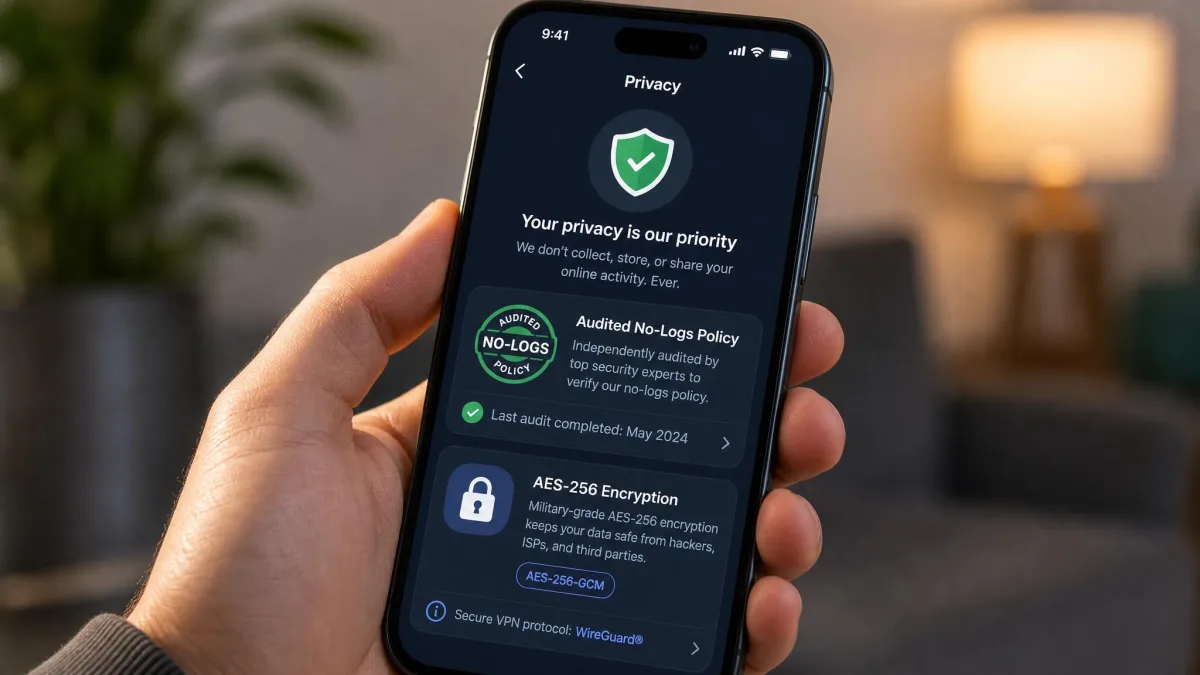
- Independently audited no-logs policy, based in Switzerland
- Secure Core multi-hop and NetShield on paid plans
Cons
- Connection success in the toughest regions is roughly even odds
- Free tier limits you to one device and a handful of countries
Best for: Privacy-focused users who want obfuscation from a trusted, audited provider. Skip if: You need a single guaranteed connection with no backup plan.
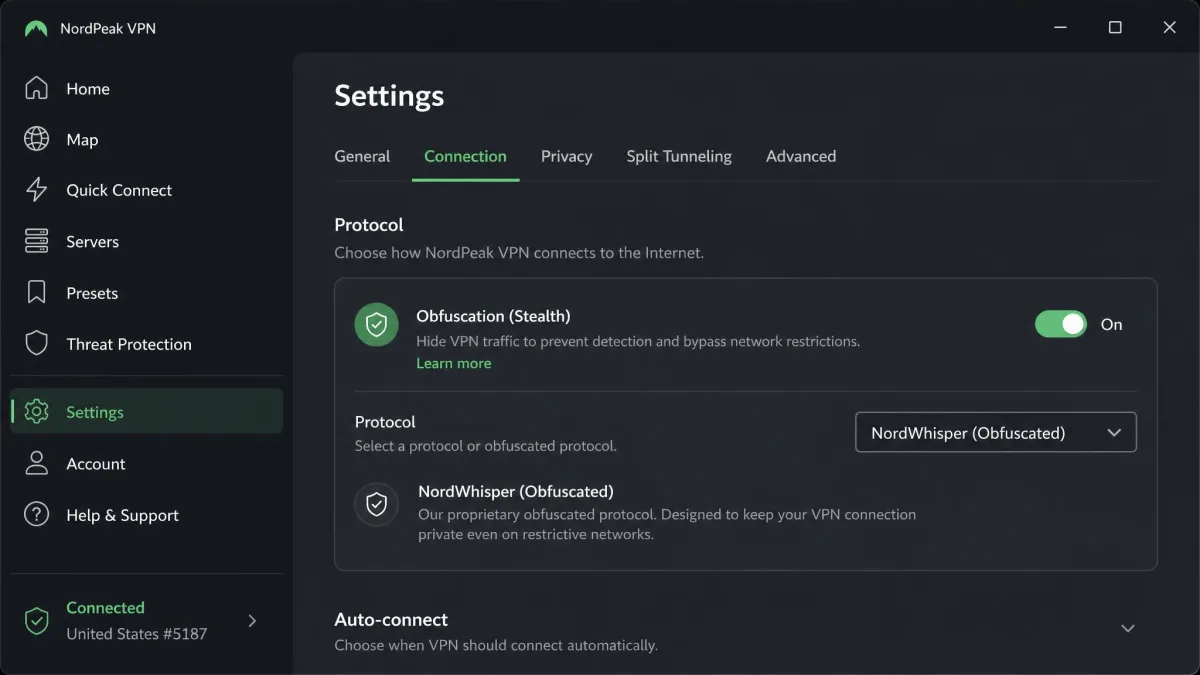
4. NordVPN - Fastest VPN for Iran
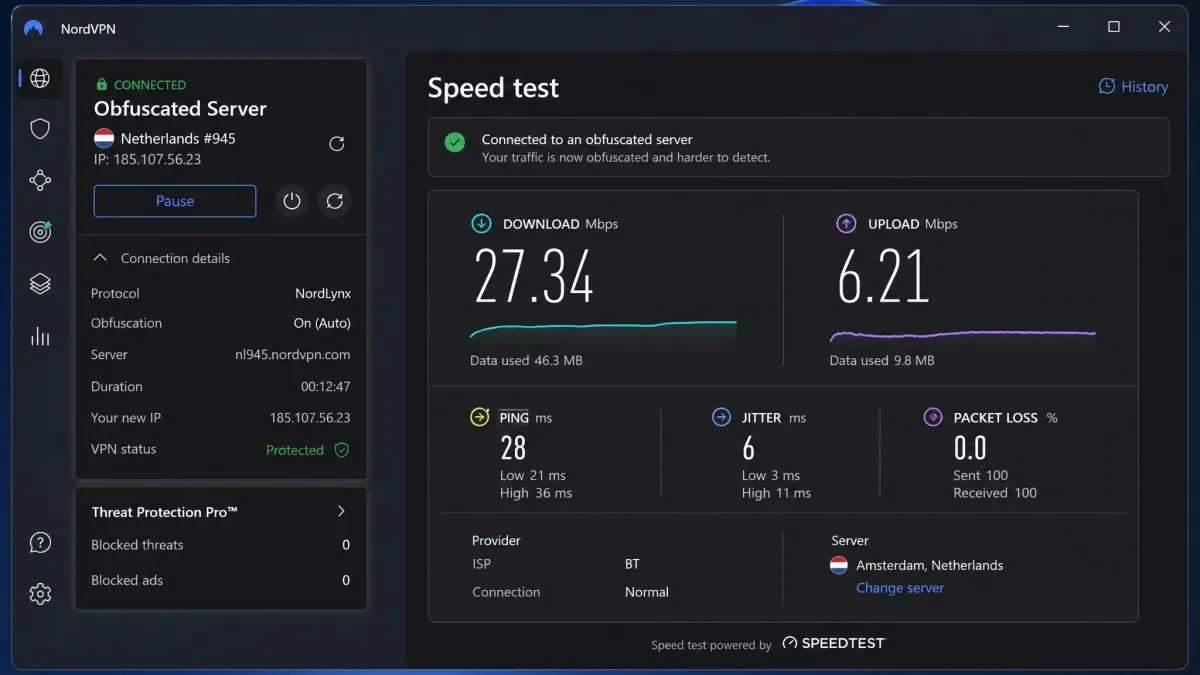
We have to lead with the caveat on this one, because it changes how you should use it: inside Iran, NordVPN sometimes connects but does nothing, leaving a webpage unable to load. That is the classic "connected but no traffic" trap, and it is the reason Nord ranks here for speed rather than as the safest bet. If you install it, install it alongside a backup and treat the fast connection as a bonus for the days it holds.
When it does get through, the speed is genuinely the best on this list. Its NordLynx protocol, built on WireGuard, was the fastest overall in our wider testing, and on a roughly 20Mbps Iranian line that headroom matters more than it would on fast fibre. For Iran, Nord leans on dedicated obfuscated servers plus its newer NordWhisper protocol, with obfuscated servers available in around 16 countries. Alongside that you get 8,400-plus servers, 10 devices, Threat Protection, Double VPN, a kill switch, and AES-256 or ChaCha20 encryption.
NordVPN
NordVPN is the fastest service here, and its NordLynx protocol is the reason a VPN feels usable on a slow Iranian line rather than sluggish. It pairs dedicated obfuscated servers with the NordWhisper protocol to get around the blocks. We will not oversell it, though: it has been known to connect but do nothing inside Iran, so we would run it alongside a backup rather than trusting it alone.
Pros
- Fastest protocol in our testing
- Obfuscated servers plus the newer NordWhisper protocol
- Strong security extras like Double VPN and Threat Protection
Cons
- Has been reported to connect but pass no traffic in Iran
- Best speeds need a nearby obfuscated server
- Obfuscated servers cover a limited set of countries
Best for: Speed-sensitive tasks when your connection does get through. Skip if: You want the most consistent in-country reliability.
5. Windscribe - Best Free-tier Option for Iran
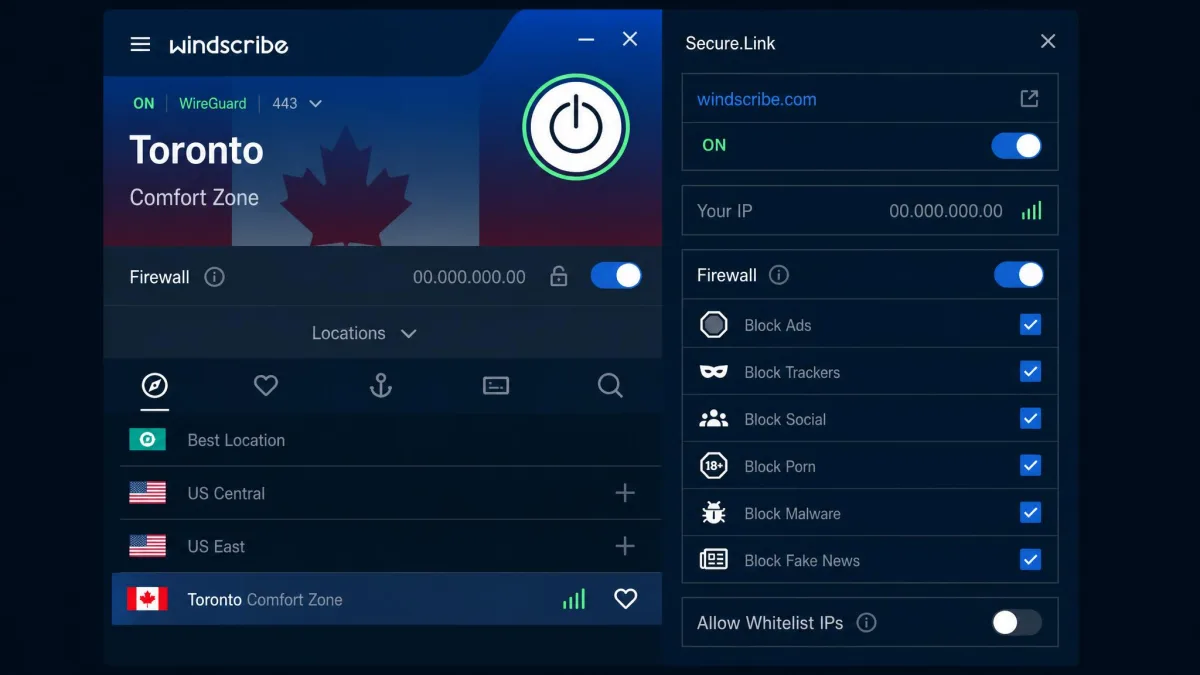
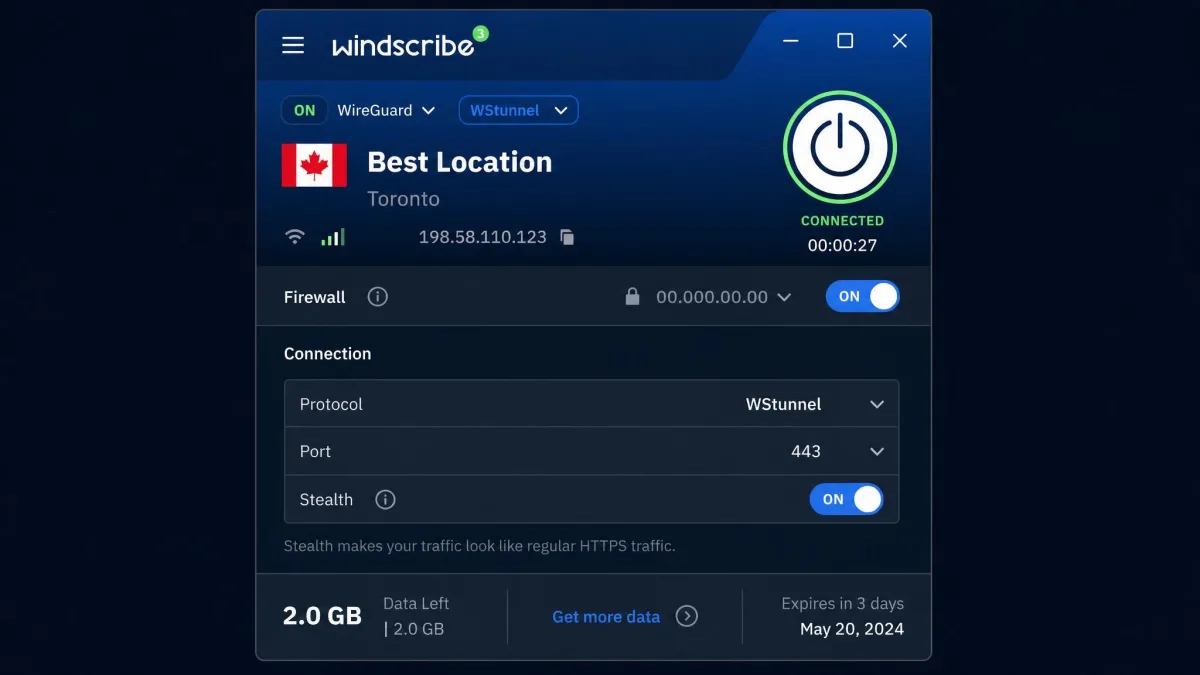
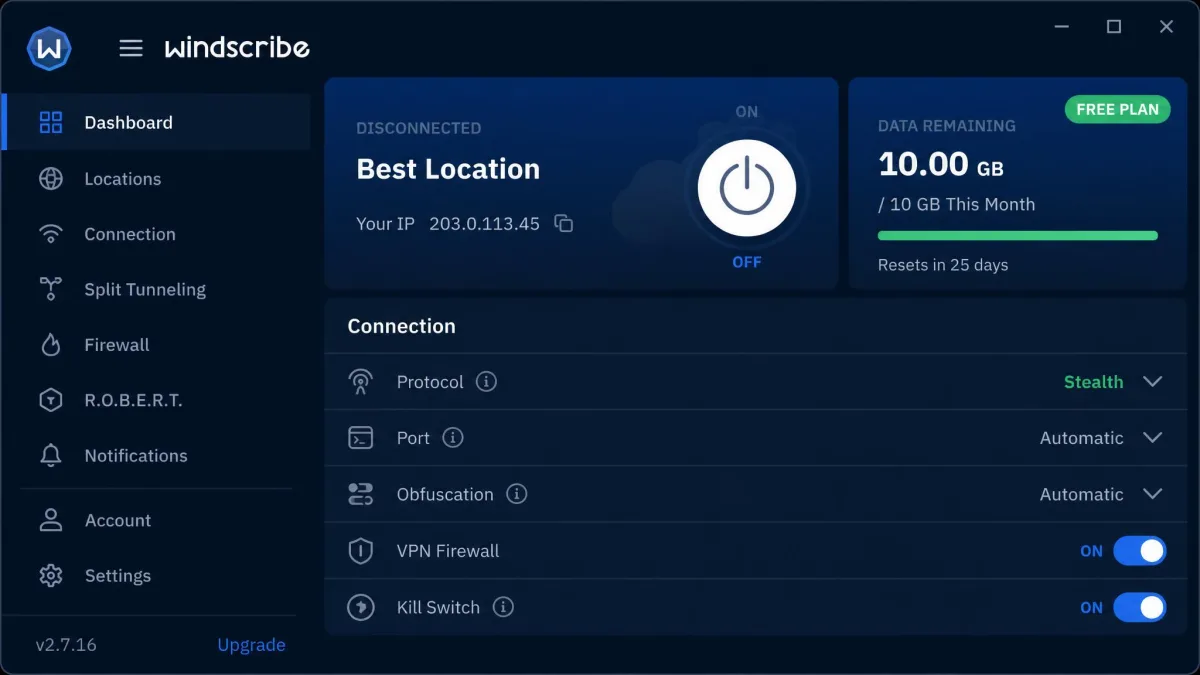
Start with what the free tier cannot do, because that sets your expectations correctly: it is usable rather than fast, the speeds can drag, and the 10GB monthly allowance rules out heavy streaming. If you want unlimited high-speed data from day one, this is not the pick. What it does that almost no other free VPN will, though, is give you real obfuscation without paying a cent.
Its Stealth protocol wraps traffic in SSL, and its WStunnel mode tunnels OpenVPN inside a websocket to hide it further. That matters, because in Tehran, Windscribe has been found to connect using WStunnel where other setups fail. The free plan gives you 10GB a month, or 15GB if you tweet about it, with servers in around 11 countries. If you like it, the Pro plan runs $9 a month or $69 a year, and there is a Build-A-Plan option from around $1 a month per location. You also get unlimited connections, the R.O.B.E.R.T. ad and malware blocker, and a firewall-based kill switch.
Windscribe
Windscribe is the free option we actually trust for Iran, because it ships the obfuscation that free VPNs normally hold back. Its WStunnel mode has been found to connect from inside Tehran where other configurations simply fail, which is exactly the scenario that matters. The trade-off is speed: the free tier works but can feel slow, and the 10GB monthly cap rules out heavy streaming.
Pros
- Genuine Stealth and WStunnel obfuscation on a free plan
- 10GB monthly allowance, expandable to 15GB
- Unlimited simultaneous connections
- R.O.B.E.R.T. ad and malware blocker included
Cons
- Free speeds can lag
- Monthly data cap limits heavy streaming
Best for: Testing the waters or light, obfuscated browsing without paying. Skip if: You want fast, unlimited streaming from day one.
Obfuscation is what matters in Iran, not just having a VPN. A connection without it tends to link up and then pass no traffic at all.
— From our hands-on testing notes
Why You Need a VPN in Iran
Iran runs one of the most controlled internet environments in the world. Social platforms, messaging apps, and countless news sites are blocked, and traffic is monitored, which independent watchdogs document year after year. If you want the full picture of how tightly access is controlled, the Freedom on the Net report from Freedom House rates Iran among the least free countries online.
A VPN matters here for two reasons. First, it lets you reach the services you rely on, from messaging apps to email and banking that may be geo-blocked while you are in the country. Second, the encryption protects what you do from surveillance, which is a real consideration in a place where online activity is watched. A kill switch adds a safety net by cutting your connection if the VPN drops, so your real address is never exposed.
This is not only a concern for residents. Travellers, journalists, and businesses all need reliable access, and the same obfuscation that helps a local also helps a visitor whose usual apps suddenly stop loading. Internet freedom in Iran is fragile, and a good VPN is the most practical tool for holding onto it.
How the Iranian Government Blocks VPNs (and how obfuscation gets around it)
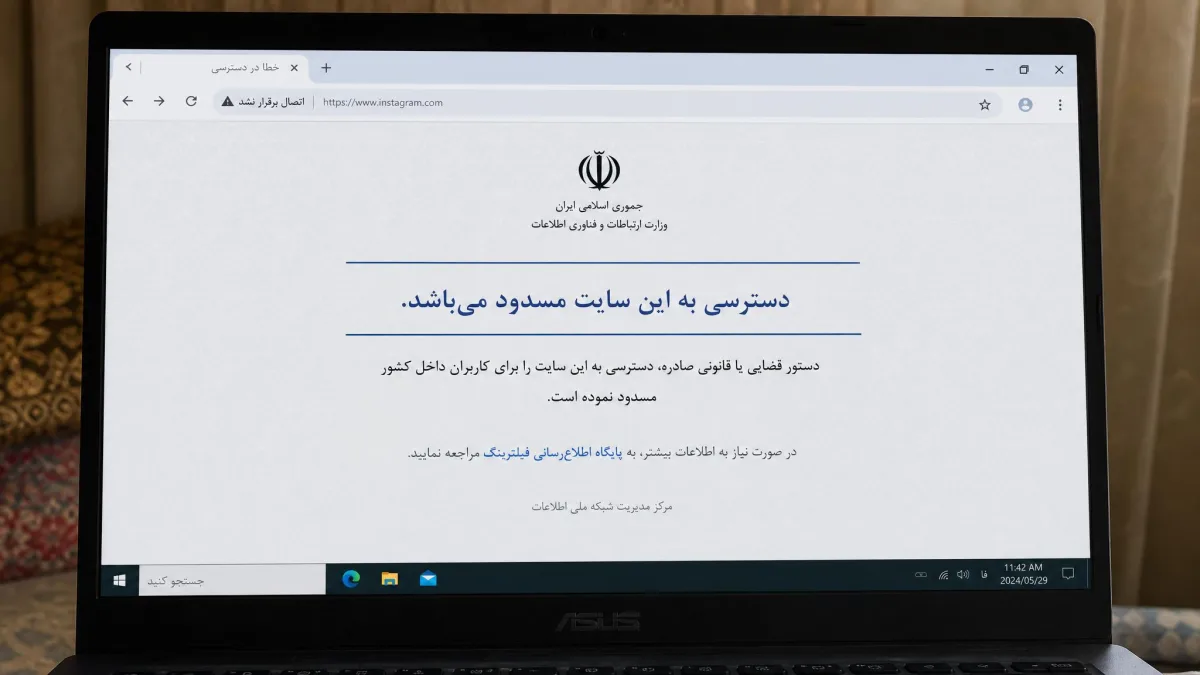
Most countries that censor the web just block the destination. Iran goes a step further and inspects traffic to spot the signature of a VPN itself, then blocks that. This is why an ordinary VPN connection will link up and then stall: the tunnel is recognised and throttled to nothing, even though the app still says you are connected.
Obfuscation is the answer. It disguises your VPN traffic so it looks like normal encrypted web browsing, which is far harder to single out and block. Different providers do this differently. ExpressVPN runs obfuscation automatically on every server, Proton uses its Stealth protocol, Surfshark uses NoBorders and Camouflage modes, NordVPN uses obfuscated servers and NordWhisper, and Windscribe uses Stealth and WStunnel. The common goal is to make your traffic boring enough to slip past inspection.
Two harder limits are worth knowing. The authorities periodically shut the internet down entirely, and during those blackouts no VPN can connect, because there is simply no connection to tunnel through. Blocking methods also change, so a protocol that works one week may need swapping the next. For background on the scope of these controls, this overview of censorship in Iran is a useful primer. The practical takeaway is to pick a VPN with more than one obfuscation method and keep a backup ready.
No VPN can beat a full national internet shutdown. If the connection itself is cut, there is nothing for the VPN to tunnel through, so plan for occasional blackouts rather than expecting constant access.
Can You Use a Free VPN for Iran?
Yes, but choose carefully, because most free VPNs are a bad idea here. Many lack obfuscation entirely, which means they connect and then pass no traffic in Iran. Worse, some free services fund themselves by logging and selling user data, which is the last thing you want in a surveillance-heavy country. Free does not mean safe.
There are two exceptions we trust. Proton VPN's free plan has no data cap and includes its Stealth obfuscation, which is genuinely rare, though the free tier limits you to one device and a handful of countries. Windscribe's free plan gives you 10GB a month with real Stealth and WStunnel obfuscation, enough for light browsing and messaging. Both are usable, but the free tiers are slower and more limited than paid plans, so treat them as a starting point.
If you rely on a free VPN in Iran, keep Proton and Windscribe both installed. They use different obfuscation methods, so if one stops connecting, the other may still get through.
VPNs to Avoid in Iran
The clearest thing to avoid is any free VPN without obfuscation, along with unknown apps that promise to unblock everything for nothing. In Iran those will typically connect and then move no data, and the sketchier ones may harvest your information. If a service hides whether it offers a stealth or obfuscated protocol, skip it.
It is also worth naming a premium option that splits opinion. Astrill VPN is built for heavily censored regions, using its proprietary StealthVPN protocol plus a lighter OpenWeb mode, and it is one of the more reliable choices in Iran. The catch is the cost and the polish. Astrill uses premium pricing, roughly $12.50 to $30 a month, which can run two to three times what most VPNs charge, and there is effectively no genuine money-back guarantee. Its interface feels dated and the server network is small, with only 5 simultaneous connections. We would consider it if reliability is everything and budget is not, but for most people our five picks offer better value.
How to Set Up and Use a VPN in Iran
The single most important step happens before you arrive. VPN apps and app stores are frequently blocked inside Iran, so you should download and install your VPN, and its updates, while you are still on an open connection. If you wait until you land, you may not be able to get the app at all.
Payment is the other hurdle to solve early. International payment methods are largely cut off from inside Iran, so you cannot easily buy a subscription once you are there. Sort out your plan and payment in advance, and pick a service with a money-back guarantee so you can test it risk-free. Here is the order we would follow.
- Buy and pay for your VPN before travelling, using a plan with a refund window.
- Install the app and sign in while still on an open connection.
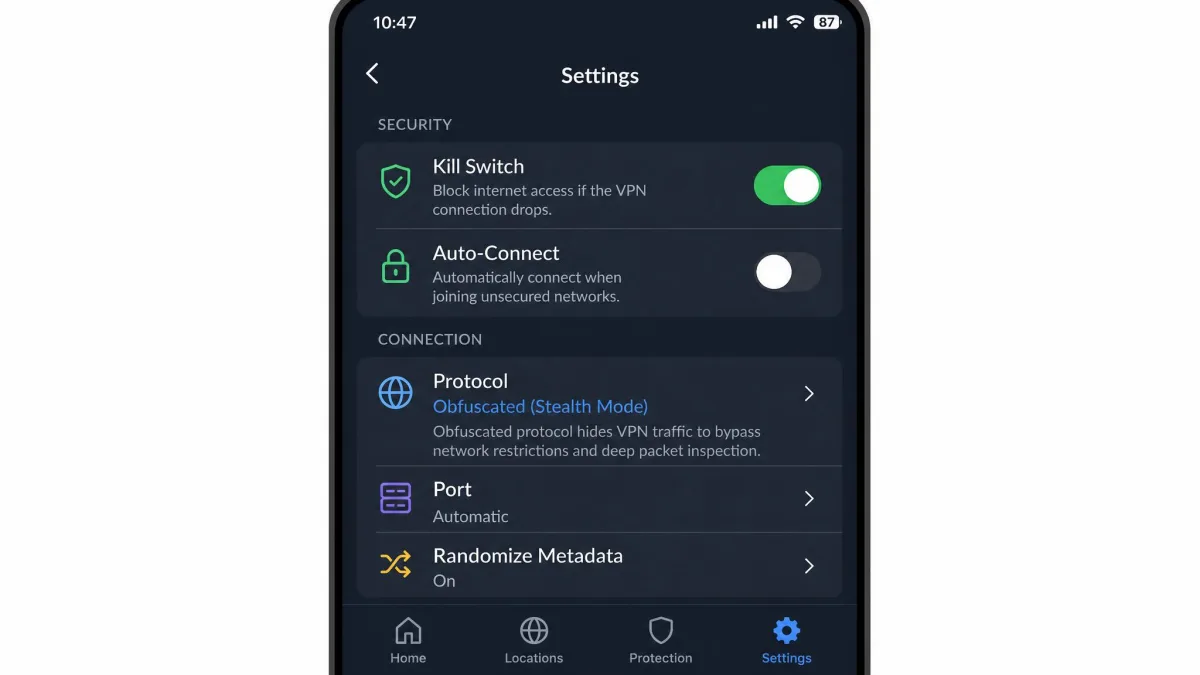
- Turn on the obfuscated or stealth protocol in the settings, since it is often not the default.
- Enable the kill switch and confirm DNS leak protection is active.
- Connect to a nearby server first, because a shorter distance helps on a slow line.
- Install a second VPN as a backup in case the first stops connecting.
If a server connects but nothing loads, switch to a different obfuscation method or another server before giving up. That "connected but dead" state is almost always a blocking issue, not a broken app.
Are VPNs Legal in Iran?
VPNs occupy a grey area in Iran. The government only sanctions state-approved VPNs, and using an unauthorised one is technically against the rules, yet millions of people inside the country use them daily to reach blocked services. Enforcement against ordinary individual users has generally been light, but the law is what it is, and the situation can change.
Because the rules are murky and can shift, we cannot offer legal advice, and you should weigh your own risk. What we can say is that a no-logs provider with strong encryption and obfuscation reduces your exposure, since there is less data to hand over and your traffic is harder to identify in the first place. If your work or safety depends on it, treat legality as a serious question rather than a formality.
Using a non-approved VPN is technically against the rules in Iran, even though it is extremely common. Because the legal picture can change, choose an audited no-logs provider and consider your personal circumstances before relying on one.
Frequently Asked Questions
Are VPNs legal in Iran?
Which free VPN is faster for Iran, Proton VPN or Windscribe?
Which VPN is best for Iran?
Does a VPN slow down your connection in Iran?
Is it safe to use a VPN in Iran?
Final Thoughts
Iran is a hard place to keep a VPN working, and no service can promise a connection every single day. What separates our five picks from the crowded field of failed apps is obfuscation that actually holds up, paired with the security features that keep you safe once you are through. Buy before you arrive, keep a backup installed, and switch protocols if a server goes quiet.