
Looking for an AzireVPN alternative? AzireVPN is a Swedish no-logs VPN, launched in 2012, that runs WireGuard on owned, RAM-only servers and supports port forwarding. Malwarebytes bought the service in November 2024. What AzireVPN still lacks is reach and routing flexibility. The network is small, split tunneling lives only in the Android app, and there is no multi-hop at all.
We compared eight replacements on speed, leak protection, streaming, audits, port forwarding and price, working from our full review of each service. Our AzireVPN review scores it 6.8/10, and the numbered picks follow our review scores. Proton VPN and NordVPN tie at 9.0, and Proton goes first, as our top pick for most people switching, because its privacy focus fits AzireVPN's audience better. Windscribe scores 8.5 but sits under "Other alternatives" because its Canadian base may change and its port forwarding runs on 7-day rules, a looser fit for AzireVPN's core traits. Mullvad VPN is the closest match if you want to stay with a Swedish, privacy-first provider.
Quick picks: the best AzireVPN alternatives at a glance
These four cover the most common reasons people leave AzireVPN. The full ranking of all eight follows below.
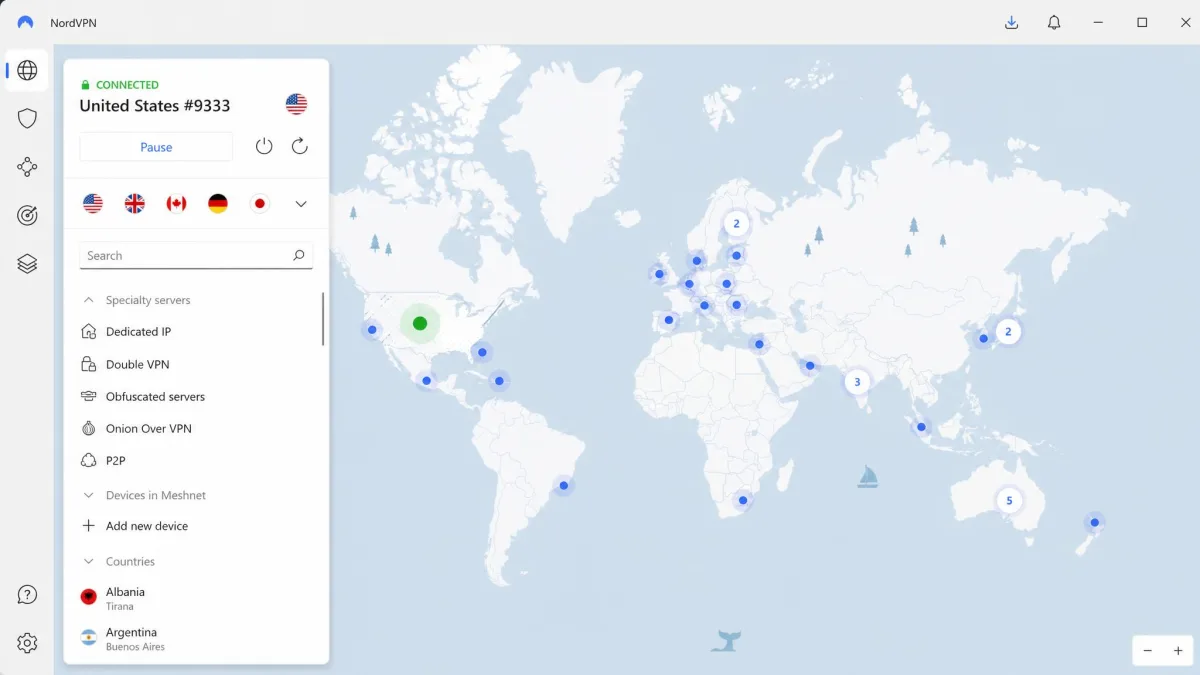
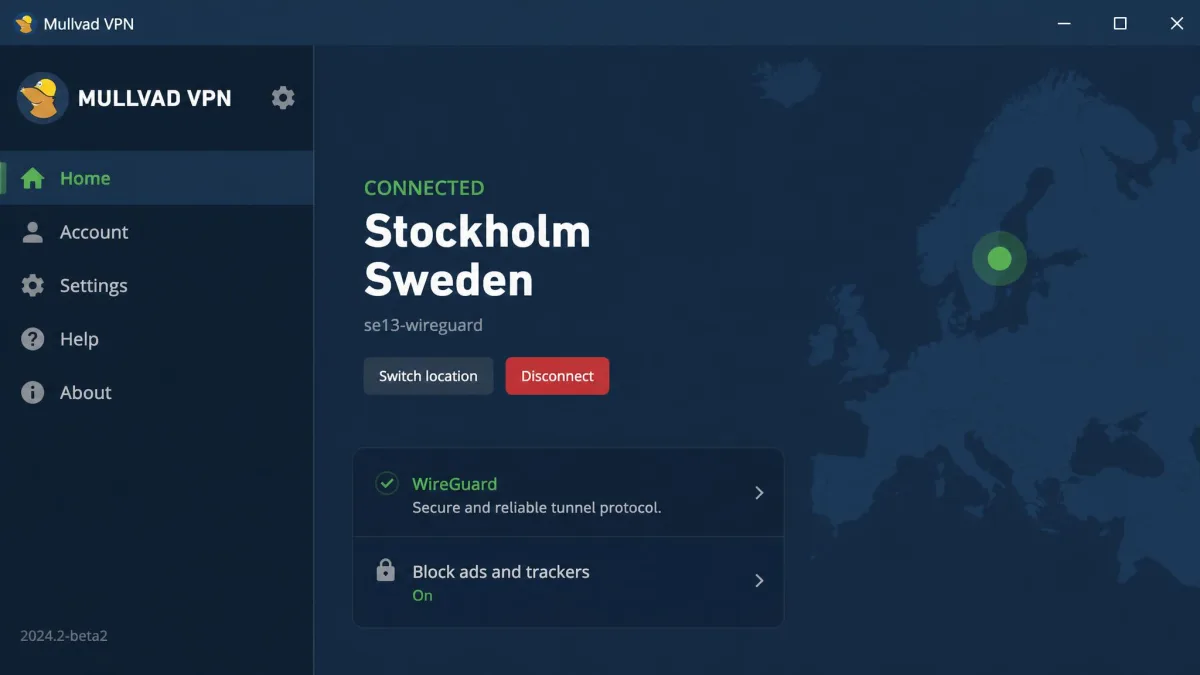
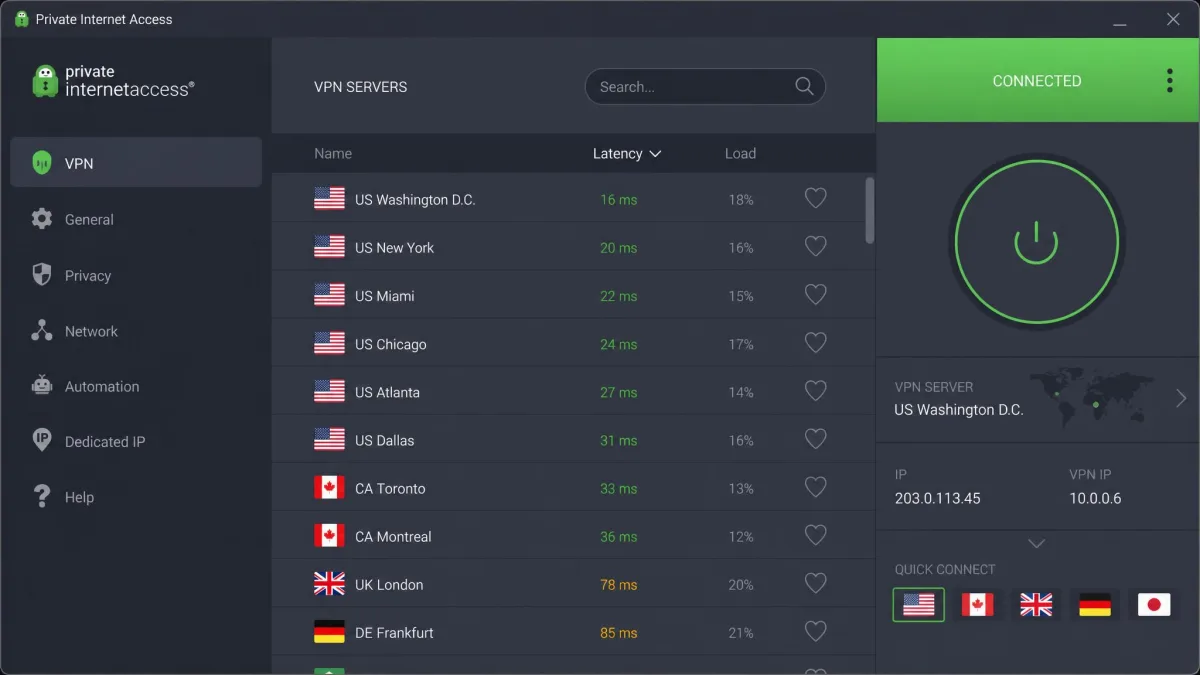
1. Proton VPN - best overall AzireVPN alternative
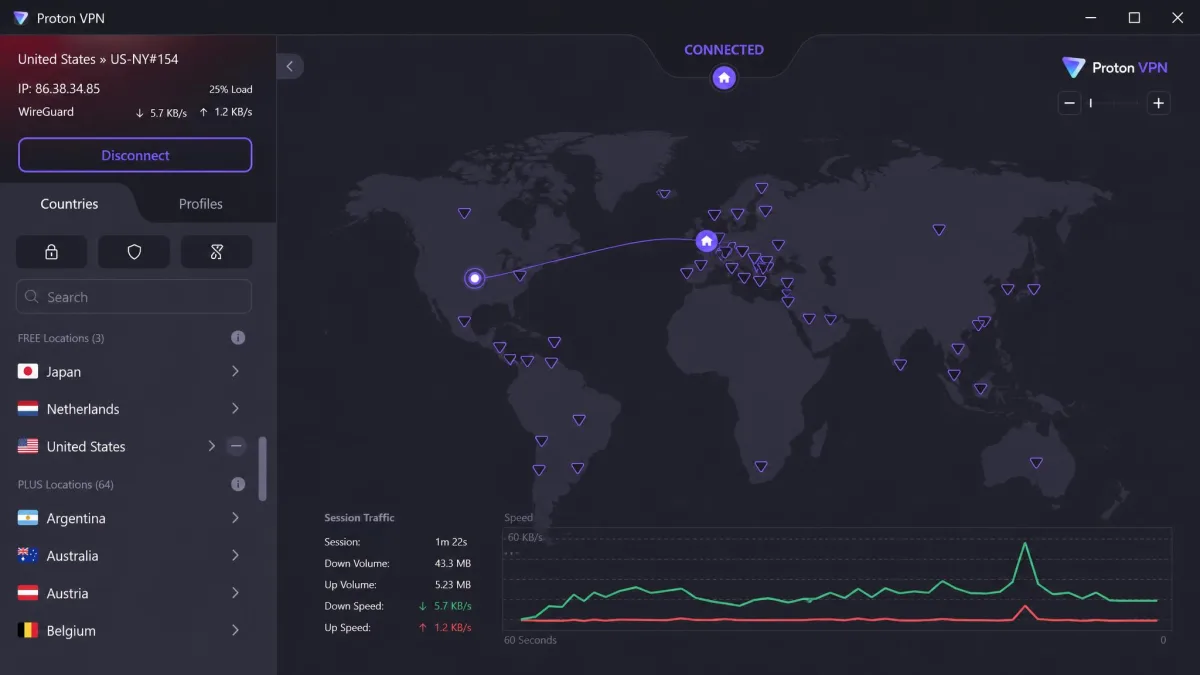
Proton VPN is the AzireVPN alternative we recommend first, and it scores 9.0/10 in our Proton VPN review. It keeps port forwarding, open-source apps (since 2020) and a no-logs policy that Securitum audits every year. It then adds Secure Core multi-hop, split tunneling and 20,000+ servers in 140+ countries, all run from Switzerland.
Nearby servers kept about 90% or more of our baseline download speed, and distant servers averaged around three-quarters, a far gentler drop than the 80% loss we saw on AzireVPN's Thailand route. The US Netflix library loaded without server hopping, and our DNS, IPv6 and WebRTC leak tests stayed clean across dozens of countries. The forwarded port changed on every reconnect, though, so we had to update our torrent client's listening port each session.
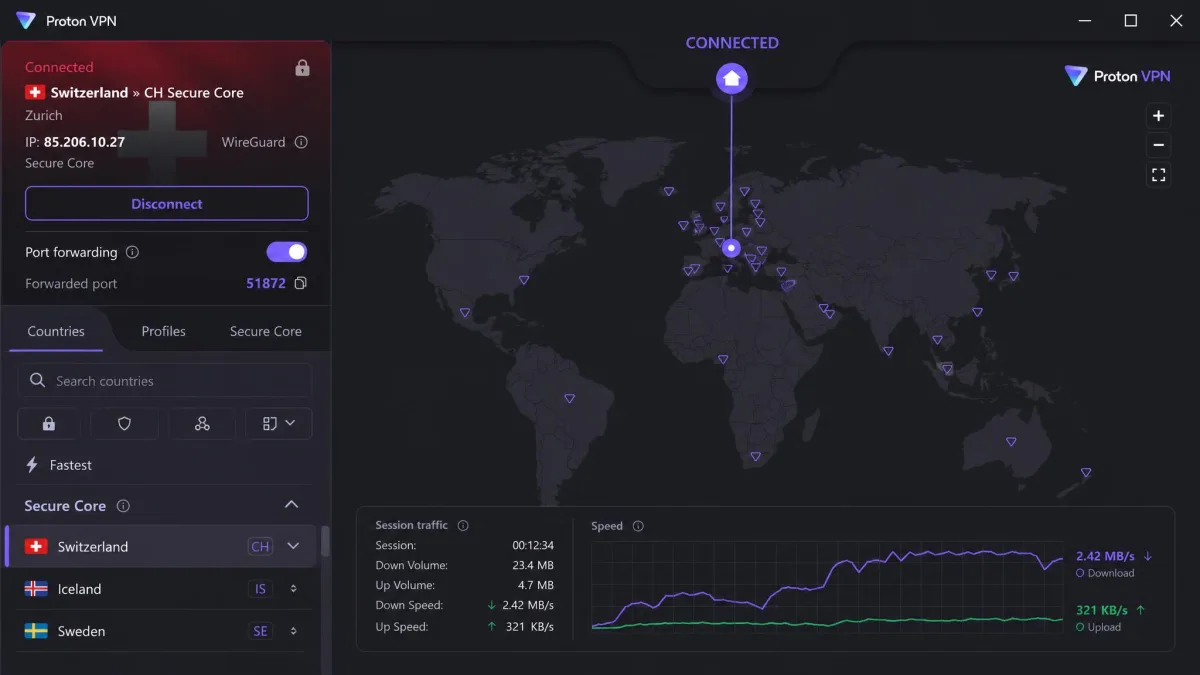
Proton uses full-disk encryption (LUKS) rather than RAM-only servers. VPN Plus costs $9.99 monthly, or between about $2.99 and $3.49 a month on 2 years because Proton changes that promo rate by region. It covers 10 devices, accepts cash and Bitcoin, and has a 30-day money-back guarantee.

2. NordVPN - best for a large server network and speed
NordVPN ties Proton VPN at 9.0/10 in our NordVPN review and suits anyone whose main complaint is AzireVPN's small network. It runs roughly 8,400 to 9,500 servers in 130+ countries (NordVPN counts virtual locations differently across its own pages), all RAM-only, with Double VPN, split tunneling and the WireGuard-based NordLynx protocol.
On nearby servers we lost only about 4% of download and 7% of upload speed, and 4K streams played with no buffering. Netflix, Hulu, BBC iPlayer and Prime Video all unblocked reliably, fixing the Hulu and iPlayer failures we hit on AzireVPN. Double VPN fared worse, cutting our speed by around 80% on its preset server pairs.
The catch for AzireVPN switchers: NordVPN has no port forwarding. It is based in Panama, and Deloitte has checked its no-logs policy six times. Basic costs $14.99 monthly or roughly $3.39 to $3.49 a month on 2 years, depending on the promotion, and renews higher. It covers 10 devices with a 30-day refund.

3. ExpressVPN - best for streaming and beginners
Where NordVPN chases scale, ExpressVPN chases simplicity, and it suits people who want streaming and simple apps more than settings to tune. It scores 8.8/10 in our ExpressVPN review. Its whole fleet runs RAM-only, it uses its own open-source Lightway protocol, and KPMG audited its privacy setup in June 2025.
Netflix libraries in several countries loaded for us without blocks. When we dropped the connection, the kill switch tripped and held traffic, something AzireVPN's desktop apps never showed us. The cost was speed: downloads fell by about 37 to 39 percent on Windows and Mac, and email support took nearly two days to reply.
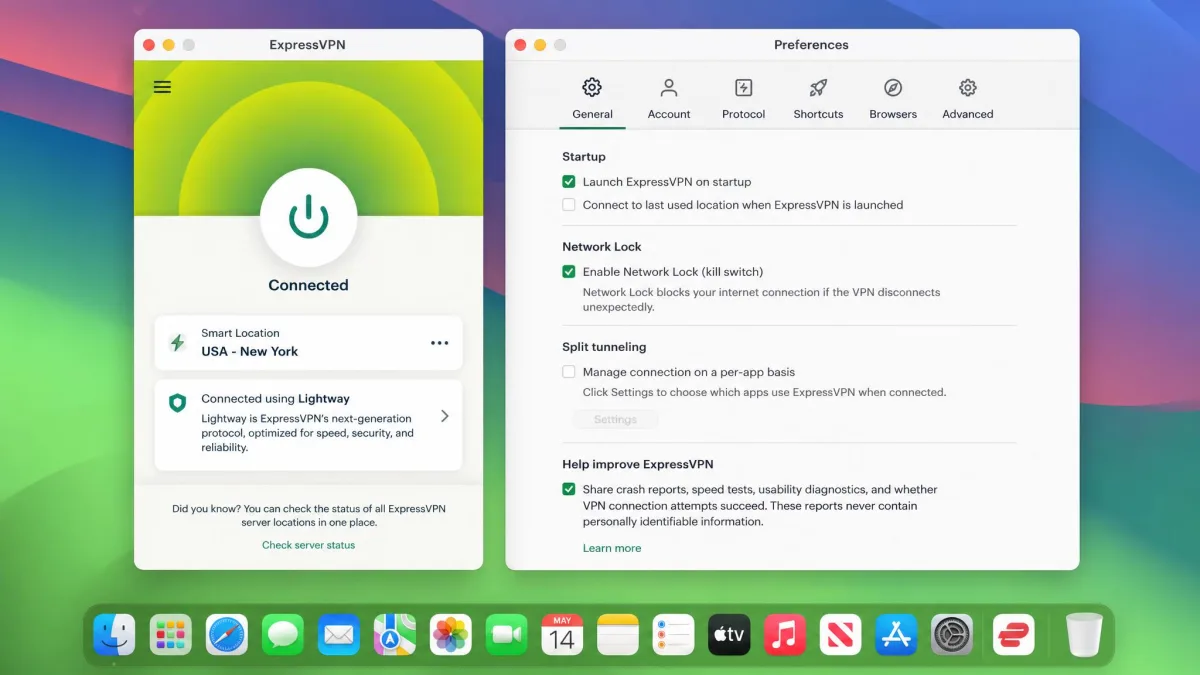
ExpressVPN has no multi-hop, and port forwarding works only through its router app or Aircove. It is based in the British Virgin Islands and covers 105 to 113 countries as it adds locations. Basic costs $12.99 monthly or about $2.49 to $2.79 a month on 2 years, with 10 devices and a 30-day guarantee.

4. Mullvad VPN - best for anonymous, Sweden-based privacy
Mullvad VPN is the closest match to AzireVPN's original spirit, because it is also Swedish, it moved to RAM-only servers in 2023, and it has run WireGuard only since 15 January 2026. It scores 8.5/10 in our Mullvad VPN review. When Swedish police searched its office in 2023, they left with no customer data.
Sign-up took us seconds, since the site issued a random account number and asked for no email or name. Speeds held up across distance, at about 92 Mbps nearby, 85 Mbps to Japan and 71 Mbps to South Africa. Multihop roughly halved that, and Netflix and Disney+ worked only some of the time.
Mullvad removed port forwarding in July 2023, which makes seeding harder. It costs a flat €5 a month for any length, covers 5 devices, has a 14-day refund and takes cash by mail or Monero. Its live list showed 566 servers in 50 countries, though that count shifts as servers come and go.

5. Private Internet Access - best for port forwarding on a budget
Private Internet Access scores 8.4/10 in our PIA review and is the cheapest way to keep port forwarding after leaving AzireVPN. It forwards ports on every server except US locations, allows unlimited devices, runs RAM-only servers and publishes open-source apps. Deloitte completed its third no-logs assurance in December 2025.
Torrenting through a forwarded port slowed our downloads by only about 4%, and overall speed loss was about 4% locally and 18% internationally. The desktop app's long settings list overwhelmed us at first, but it got easy once we tuned it. Streaming is the weak spot: US and UK Netflix no longer unblocked, and Disney+ and Hulu detected the VPN.
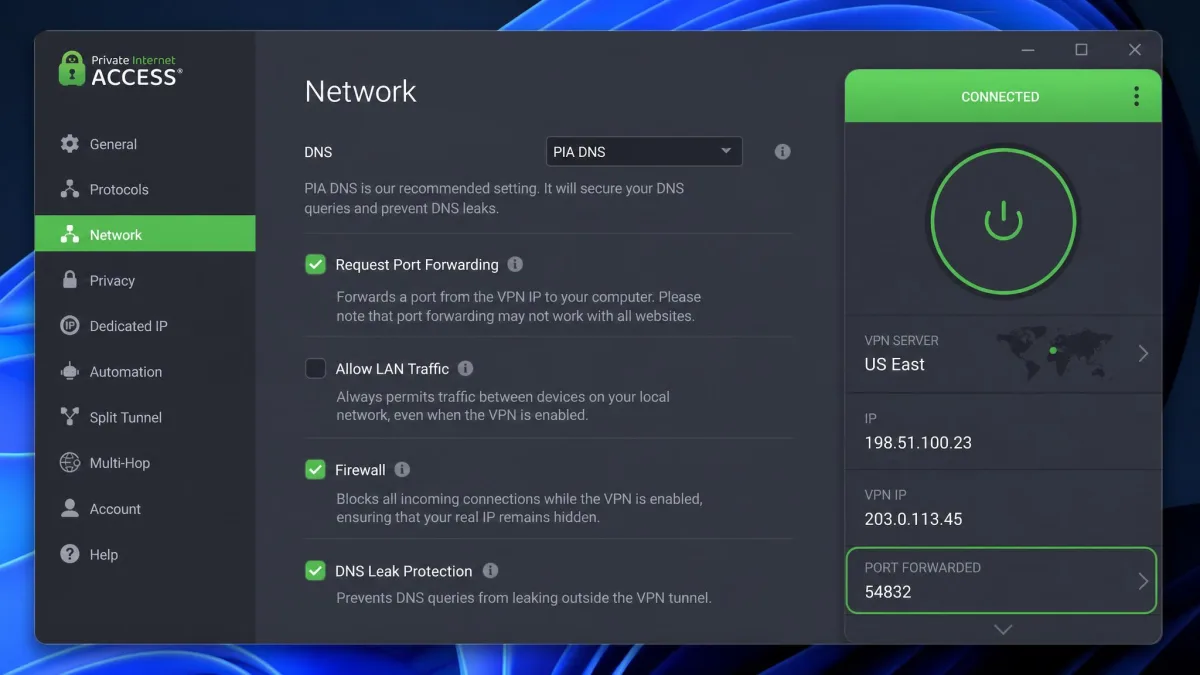
PIA is based in the US and owned by Kape Technologies, which matters if you chose AzireVPN for its Swedish base. It covers 91 countries plus all 50 US states. It costs $11.95 monthly or about $2.03 a month on 3 years plus 3 months, though PIA rotates deal lengths and bonus months. Auto-renewal is on by default, and refunds within 30 days need a support request.

6. OVPN - closest Swedish, RAM-only match to AzireVPN
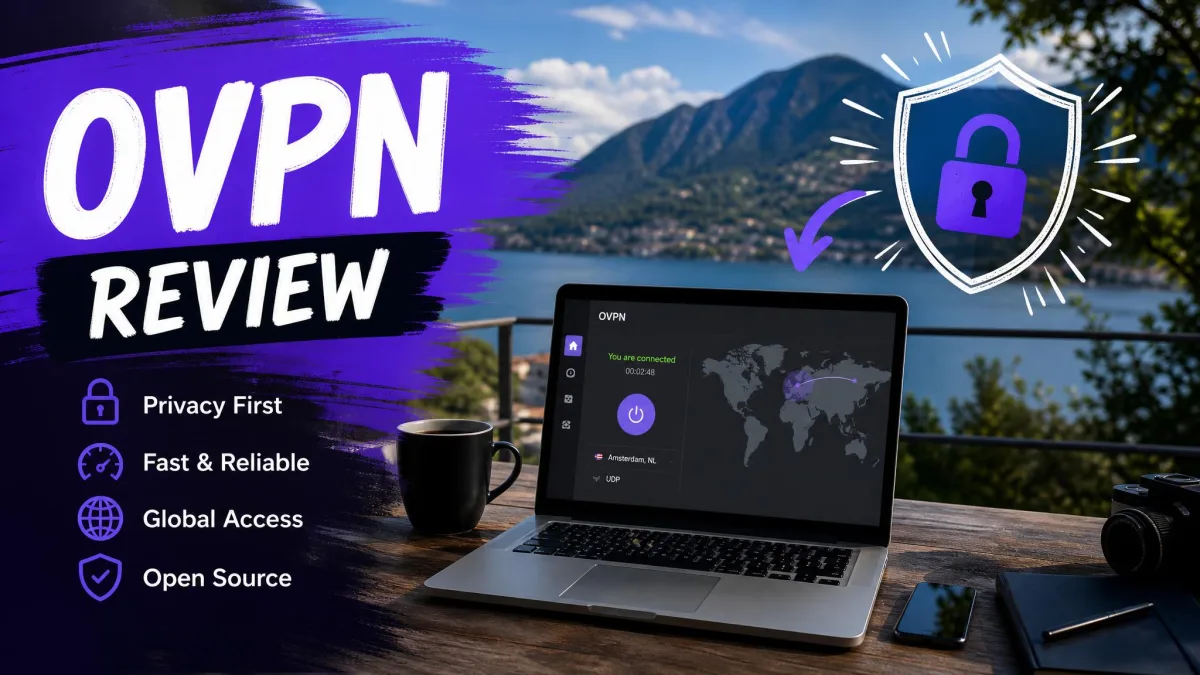
OVPN is the closest like-for-like swap for AzireVPN, running from Stockholm on diskless, self-owned servers with WireGuard, port forwarding and multihop. It scores 7.4/10 in our OVPN review. In September 2020 a Stockholm court rejected rights holders' demand for its user data, finding no evidence that OVPN keeps logs.
WireGuard stayed fast nearby, with US servers dropping only about 5% from baseline, while Singapore cost us close to half our speed. We saw no IP, DNS or WebRTC leaks, and the desktop and Linux apps were easy to set up. The mobile apps have no kill switch, split tunneling is Windows-only, and support sometimes took days to respond.
OVPN has belonged to Pango Group, the US parent of Hotspot Shield, since May 2023, so its effective jurisdiction is disputed. It costs $12 for one month or $4.22 a month on 36 months, with 4 to 7 devices by plan length. The network is small, at about 96 servers in 17 to 29 regions depending on how locations are grouped.

7. AirVPN - best for advanced users who need port forwarding
AirVPN scores 7.2/10 in our AirVPN review and suits technical users who want port forwarding with fine control. Every server supports inbound forwarding, new accounts reserve up to 5 ports, and the open-source Eddie client adds the Network Lock kill switch, DNS blocklists and split tunneling via Routes.
Eddie is where the learning curve bites. It paused roughly 10 to 30 seconds on every connect and disconnect, and its dated interface needed some trial and error from us. Same-country servers lost only about 5% of speed, long-distance servers lost over half, and our leak tests came back clean. There is no iOS app, so iPhone setup meant importing config files into a third-party app.
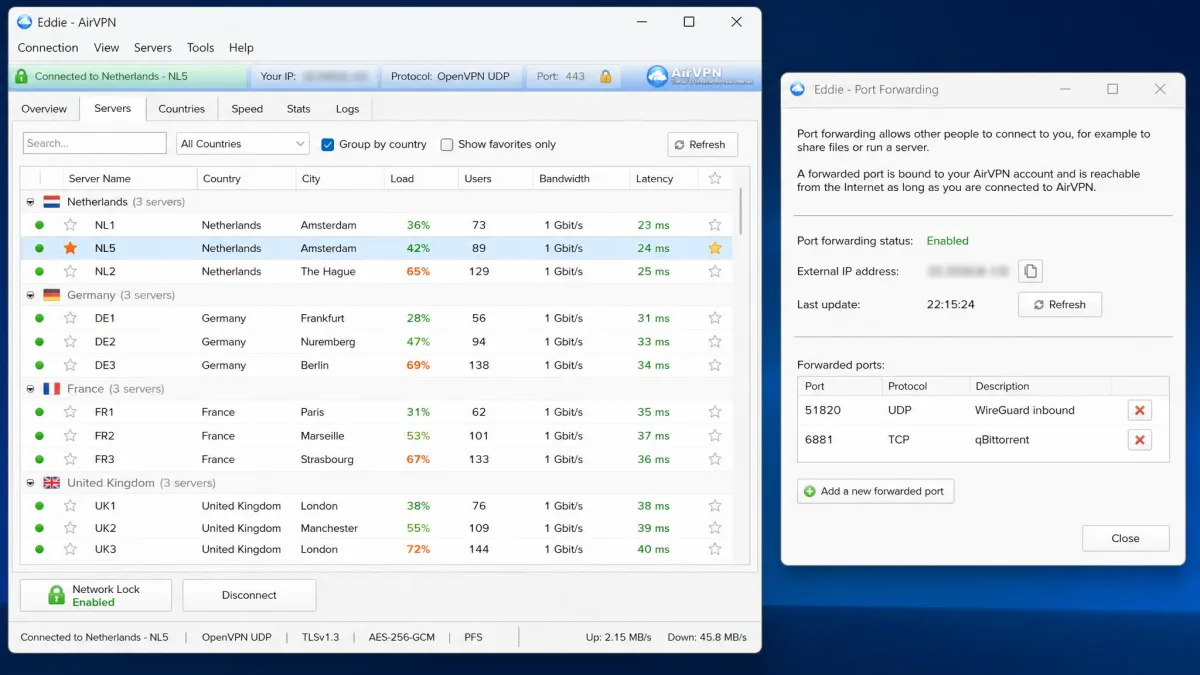
AirVPN is based in Italy, with about 250 servers in 23 countries, and it has no independent audit. It costs €7 for one month or €2.75 a month on 3 years, allows 5 connections and takes Monero.

8. IVPN - best small, privacy-first provider with multi-hop
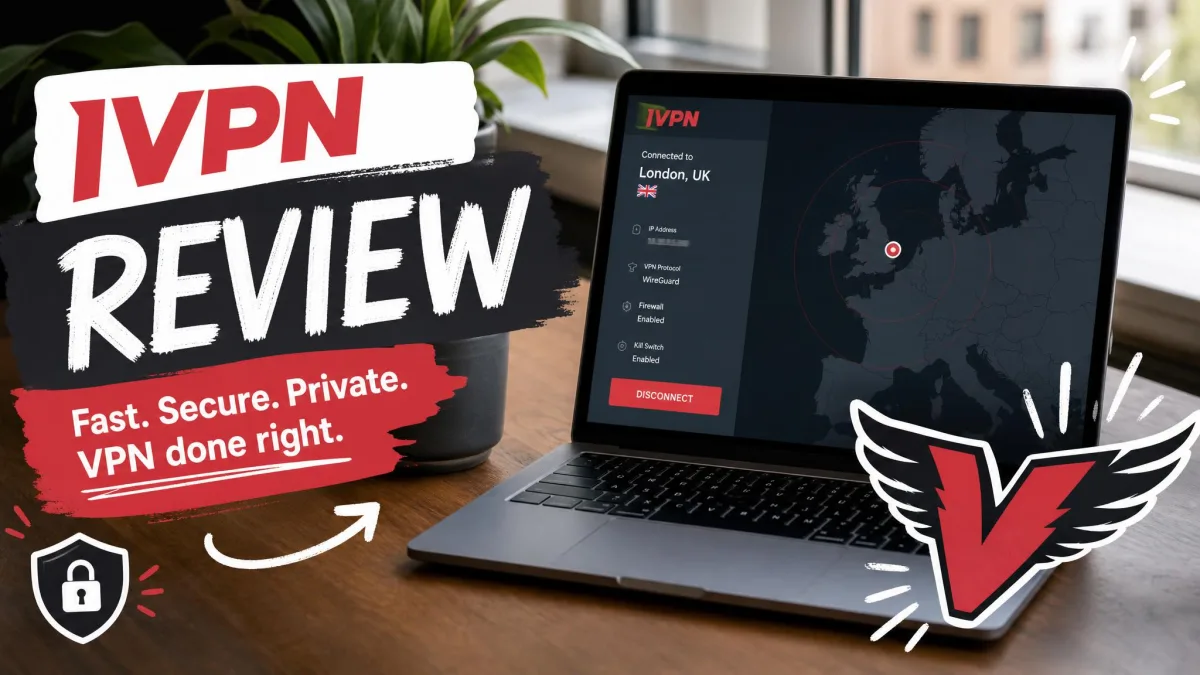
IVPN fills AzireVPN's multi-hop gap for people who want another small, privacy-first provider, and it includes multi-hop on every plan. It scores 7.0/10 in our IVPN review, all apps are open source, and you sign up with an account ID and no email. It is based in Gibraltar and has run annual Cure53 security audits since 2019.
WireGuard speeds were strong, at about 5% loss locally and 14% internationally, and the kill switch worked as advertised. Everyday use had rough edges, though. The apps logged us out on their own from time to time, and picking a server did not connect until we flipped the toggle separately. Streaming barely worked, with only US Netflix loading, inconsistently.
IVPN removed port forwarding in September 2023, and it blocks P2P on US servers. Its network covers 89 gateways in 41 countries. Standard costs $6 a month or $60 a year for 5 devices, Pro Suite costs $100 a year for 10, and refunds are open for 30 days.

Other AzireVPN alternatives worth knowing
TorGuard, Windscribe and Mozilla VPN
Windscribe scores 8.5/10 in our Windscribe review and is the one to try if you want a free option. The free plan gives 10GB a month and servers in 10 countries, though that cap ran out quickly when we streamed. Pro costs $69 a year with unlimited devices and port forwarding, but its Canadian base may change if Bill C-22 passes.
Mozilla VPN (7.9/10 in our Mozilla VPN review) runs on Mullvad's WireGuard network with US-based Mozilla handling billing. It costs $4.99 a month on the annual plan, covers 5 devices and passed Cure53 audits in 2021 and 2023.
TorGuard (7.4/10 in our TorGuard review) offers self-service port forwarding for ports above 2048, 8 connections and Shadowsocks and Stunnel stealth options. Its price swings widely with term and add-ons, and refunds last only 7 days.
AzireVPN vs the alternatives: side-by-side comparison
Our eight picks appear in rank order, with AzireVPN last as the baseline. Starting prices are the cheapest long-plan rates, and most renew higher.
| Product | Buy | Jurisdiction | Servers / countries | Independent audit | Port forwarding | Multi-hop | Split tunneling | Devices | Starting price |
|---|---|---|---|---|---|---|---|---|---|
|
Check price → | Switzerland | 20,000+ / 140+ | Securitum (annual) | Paid, P2P servers | Yes | Yes | 10 | About $2.99-$3.49/mo |
|
Check price | Panama | About 8,400-9,500 / 130+ | Deloitte (6th) | No | Yes | Yes | 10 | About $3.39-$3.49/mo |
|
Check price | British Virgin Islands | 105-113 countries | KPMG + Cure53 | Router only | No | Windows, Android, Linux | 10 | About $2.49-$2.79/mo |
|
Check price | Sweden | 566 / 50 | Cure53 + X41 | No | Yes | Not macOS/iOS | 5 | €5/mo |
|
Check price | US | 91 + 50 US states | Deloitte | Yes (not US) | Via proxy | Yes | Unlimited | About $2.03/mo |
|
Check price | Sweden (US parent) | About 96 / 17-29 | None | Yes | Yes | Windows only | 4-7 | $4.22/mo |
|
Check price | Italy | About 250 / 23 | None | Yes | No | Yes | 5 | €2.75/mo |
|
Check price | Gibraltar | 89 / 41 | Cure53 | No | Yes | Windows, Linux, Android | 5 | $5/mo |
 |
Sweden | About 63-80 / 14-26 | X41 D-Sec | Yes | No | Android only | 5 | €3.75/mo |
Why people look for an AzireVPN alternative
Most people leave AzireVPN over what is missing rather than what is broken. Trustpilot rates it 3.4 out of 5 across 23 reviews, praising WireGuard speed and owned servers while criticizing limited locations, support and the missing split tunneling.
A small server network in few countries
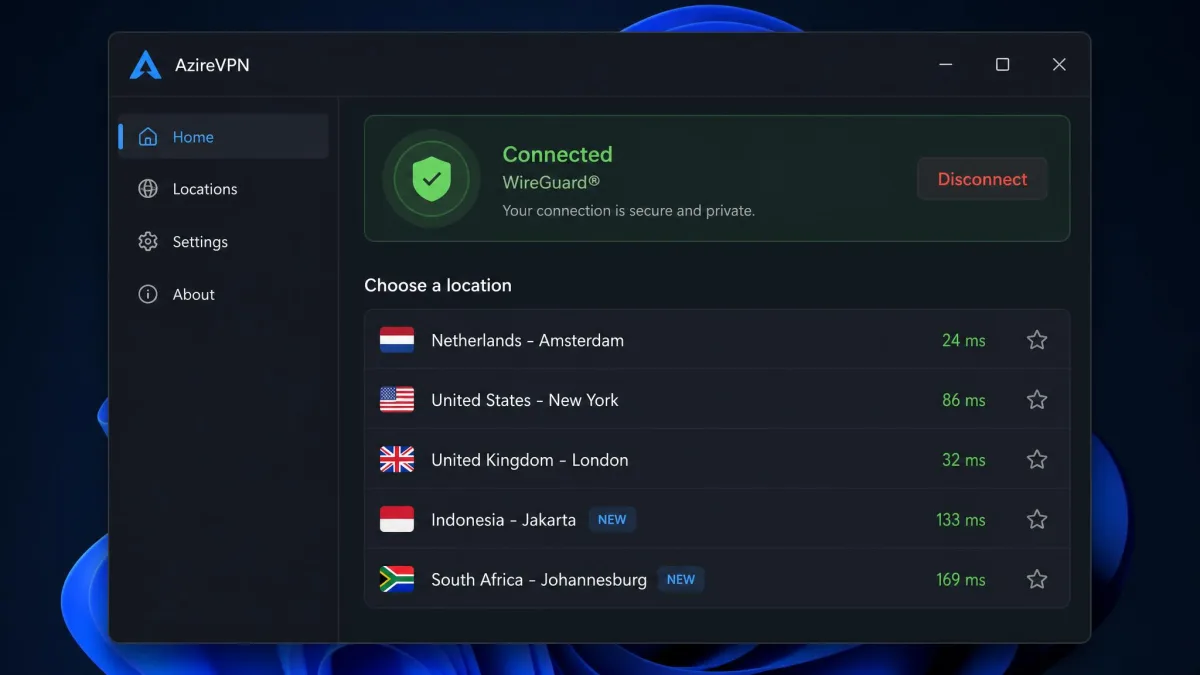
AzireVPN does not publish a server total, and the counts we found sit around 63 to 80 servers in 14 to 26 countries. New servers in Jakarta and Johannesburg widened its reach, but distance still hurts. Nearby servers kept speeds close to our baseline, while a connection to Thailand lost over 80%. Netflix, Disney+ and Prime Video loaded, but Hulu and BBC iPlayer failed.
No split tunneling or multi-hop
Split tunneling exists only in the Android app, so on Windows, macOS and iOS all traffic goes through the tunnel, and there is no multi-hop at all. The desktop apps also lacked auto-connect and obfuscation, and they asked for the password again on every connect and server switch.
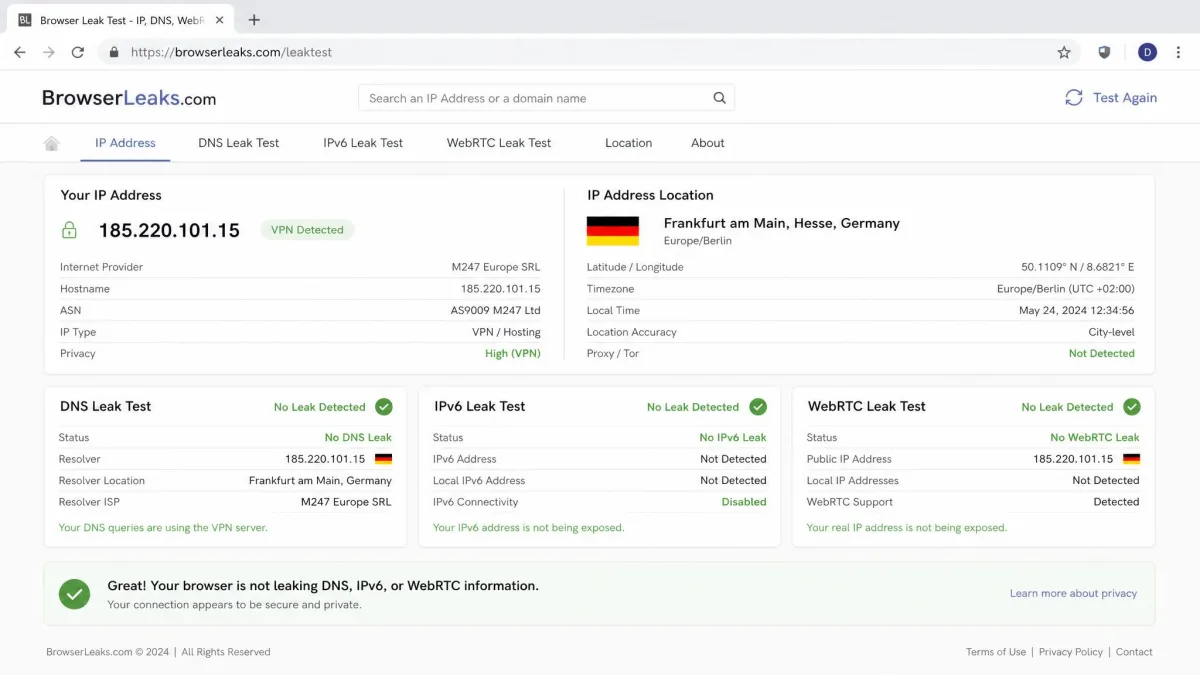
AzireVPN advertises an always-on kill switch, but its behavior differs by platform and app version, and the desktop apps we used did not show a working one. DNS requests also leaked in our testing while the real IP address stayed hidden.
How we chose these AzireVPN alternatives
We started from what makes AzireVPN appealing: WireGuard, RAM-only servers, port forwarding and a no-logs policy. Then we looked for services that match those features while fixing at least one of its gaps. Each pick has a full HTS review behind its score.
We ran speed checks, leak tests and streaming checks across these services, then compared audits, jurisdiction, devices, payment and price. Where server counts conflict, we give the range rather than the most flattering number.
What to look for in an AzireVPN replacement
A replacement should first match what AzireVPN already does well. These five areas separate an upgrade from a sideways move.
No-logs proof, RAM-only servers and independent audits
A promise not to record what you do online means little until an outside firm checks it. AzireVPN's first audit came from X41 D-Sec, which reviewed its software and penetration-tested servers shipped to Germany. X41 D-Sec's public audit report on AzireVPN was published on 2 April 2026, and the auditors did not observe evidence of user activity logging. It also listed critical and medium issues, some still being fixed at publication.
Mullvad has the longer record, with more than ten audits. Mullvad's 2024 Cure53 infrastructure audit found no way to compromise user traffic anonymity. RAM-only servers add a second safeguard because nothing is written to disk. AzireVPN, Mullvad, OVPN, NordVPN, ExpressVPN and PIA all run RAM-only, while Proton relies on full-disk encryption.
Match what AzireVPN already does well first, then judge a replacement on what it adds.
WireGuard and protocol support
AzireVPN pairs WireGuard (ChaCha20) with OpenVPN (AES-256), and most of our picks offer the same pair. Our explainer on how WireGuard works covers why the protocol connects quickly and keeps speed loss low. ExpressVPN leads with Lightway instead, and Mullvad has dropped OpenVPN. Our list of the best WireGuard VPNs ranks the field on this protocol alone.
Port forwarding and P2P
AzireVPN supports port forwarding and allows P2P on every server. Mullvad and IVPN removed port forwarding in 2023, NordVPN never offered it, and ExpressVPN limits it to routers. Our roundup of VPNs with port forwarding goes deeper if seeding or self-hosting matters most.
Anonymous sign-up and payment
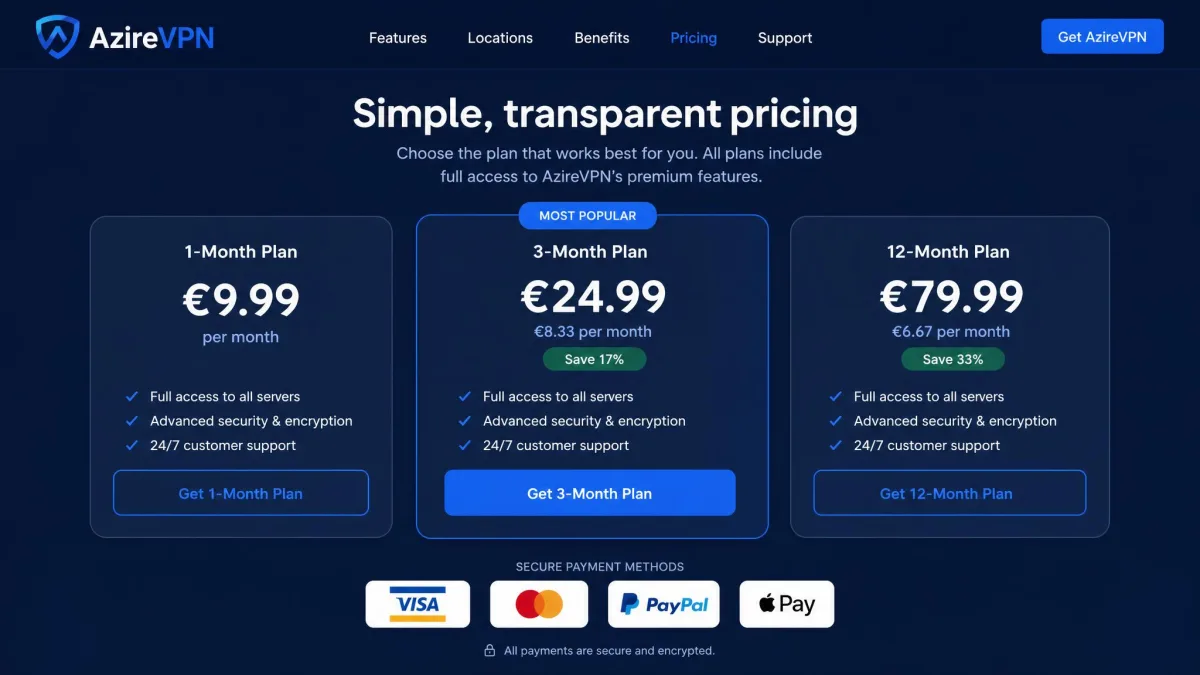
AzireVPN needs no personal data to sign up, but its checkout now lists only cards, PayPal and Apple Pay, and cash is no longer accepted. Crypto is not shown either, so anonymous crypto payment may no longer be available. Mullvad and IVPN go furthest, with account-number sign-up and cash or Monero payment.
Jurisdiction, server locations and device limits
AzireVPN is based in Sweden, a 14 Eyes member. Proton (Switzerland), NordVPN (Panama), ExpressVPN (British Virgin Islands) and IVPN (Gibraltar) are based elsewhere. AzireVPN lets you register 10 devices but connect only 5 at once. If you share one account across multiple devices, PIA and Windscribe set no limit. Our guide to the best VPNs for privacy weighs jurisdiction in more depth.
Is AzireVPN still worth using?
AzireVPN is still a sound choice for a narrow group. Malwarebytes kept its owned, diskless servers and Blind Operator technology, and the X41 D-Sec audit gives it the independent check it lacked. Torrenting worked on every server we tried, with a 1.7GB download finishing in about 13 minutes, and connections came up in about 2 seconds.
Support is email-only, with replies within about a day, and the service does not work in China. According to AzireVPN's pricing page, it costs €5.00 for one month, €4.00 a month on 3 months or €3.75 a month on 12 months (billed €45.00). The 7-day money-back guarantee skips the 1-month plan. If you torrent on a desktop near its servers and rarely stream, staying put makes sense.
AzireVPN alternatives FAQ
What is the best alternative to AzireVPN?
Is AzireVPN safe, and does it keep logs?
Is there a free AzireVPN alternative?
Which AzireVPN alternatives support port forwarding?
Is Mullvad better than AzireVPN?
Final verdict: which AzireVPN alternative should you choose?
Proton VPN is the replacement we would pick for most people leaving AzireVPN. If you mainly torrent on a tight budget and rarely stream, PIA is the one to check first.