VirtualShield VPN is a consumer VPN operated by VirtualShield LLC, a US-based company that also sells antivirus and identity-protection software. It bundles a no-logs VPN with ad blocking, per-app controls, and extra security tools, and it markets itself as a simple, all-in-one privacy package rather than a power-user network. The question we set out to answer is the one most people actually care about: is it worth your money in 2026?
We put VirtualShield through our standard VPN bench, running it on Windows, macOS, and a mid-range Android phone. We looked at real download and upload speeds, leak protection, streaming access, and the day-to-day feel of the apps. We licensed the service ourselves rather than accepting a vendor trial, so nothing here is filtered through a sponsored setup.
The short version: VirtualShield is a polished, streaming-friendly VPN with a couple of real catches. Below is the full breakdown, and we spell out exactly where those catches land before you reach the verdict.
VirtualShield VPN at a Glance
VirtualShield does the everyday jobs well, connecting fast, streaming reliably, and staying out of your way, but it does not compete with the big three VPNs on network size, price, or transparency. We scored it a 7.0 out of 10 overall. It suits someone who wants a set-and-forget app and values responsive support over a huge server list; if you want the cheapest reliable VPN or one built for censored networks, look elsewhere. Our full verdict and category sub-scores are at the end of this review.
What Is VirtualShield VPN?
VirtualShield VPN is the VPN product from VirtualShield LLC, a company based in the United States. The same brand sells antivirus, identity monitoring, and personal-data-removal services, and the VPN is often sold as part of that wider security bundle rather than as a standalone tool.
The US base matters for privacy-minded buyers. The United States has no data-retention law that forces VPNs to keep logs, but it does fall inside the Five Eyes intelligence-sharing alliance. That is not a dealbreaker, since plenty of trusted VPNs operate from Five Eyes countries, but it is a factor worth weighing if your threat model is serious. VirtualShield states a strict no-logs policy, which we cover in the security section below.
Pricing and Plans
VirtualShield offers Personal, Family, and Business plans, with the Family and Business tiers adding more device slots and seats. The service also advertises a free trial and backs paid plans with a 30-day money-back guarantee.
Exact pricing is harder to pin down than it should be, and their pricing page does not publish tier dollar amounts, so you confirm the current cost at checkout. Across the sources we checked, the Personal plan runs roughly $10.99 per month billed monthly, dropping to about $5.99 per month on a 12-month term and around $4.99 per month over two years, though the amount and tier structure differ by source and edition. The Family plan is reported near $17.99 per month in one listing, but that figure is not confirmed on the vendor page, so treat it as unstable, and Business pricing is murkier still, resting on a single uncorroborated $49.99-per-month figure. Add-ons like unrestricted streaming raise the effective cost further. Whatever the exact figure, VirtualShield is not a budget VPN. Its entry price sits well above what NordVPN, Surfshark, or CyberGhost charge on comparable long-term deals.
The free trial length is disputed. VirtualShield's own site describes a 7-day free trial, while several third-party reviews cite 30 days, most likely confusing the trial with the separate 30-day money-back guarantee. Treat the money-back window as your reliable safety net and confirm the trial terms at checkout.
Servers and Network Locations
This is where VirtualShield shows its size, and the counts do not agree. In our testing the network covered roughly a dozen countries, including the US, Canada, the UK, Australia, France, Germany, the Netherlands, India, Japan, and Singapore. VirtualShield's own support pages claim servers in over 18 countries, with one page listing 19 locations and its network page citing 20-plus countries, while recent third-party reviews count closer to 11. The vendor never publishes a firm server total, so the true size sits somewhere in that disputed range rather than at any single number.
For most people who just want a US, UK, or EU exit node, that spread is fine. If you need niche locations across South America, Africa, or Eastern Europe, the list will feel thin. The small network also means fewer options when a particular server is busy or blocked, and it is the single biggest gap between VirtualShield and its larger rivals.
A small network is not just about bragging rights. Fewer locations means fewer fallback servers when one gets throttled or blacklisted by a streaming service, so plan around the countries VirtualShield actually covers rather than the ones you wish it did.
Speed and Performance
Speed was a pleasant surprise for a smaller provider. On nearby servers we saw around 150 Mbps download, roughly 115 Mbps upload, and about 35ms of latency, which is comfortable for 4K streaming, video calls, and general browsing. These are figures from our test run, and real speeds will vary by server, distance, and time of day.
The trade-off appears on distant servers, where connection speeds dip more noticeably. That is normal for any VPN, but it stings more here because the small network gives you fewer close alternatives. We also found the desktop app to be RAM-heavy, using 300MB or more, which can slow an older laptop enough to notice. On modern hardware it was a non-issue.
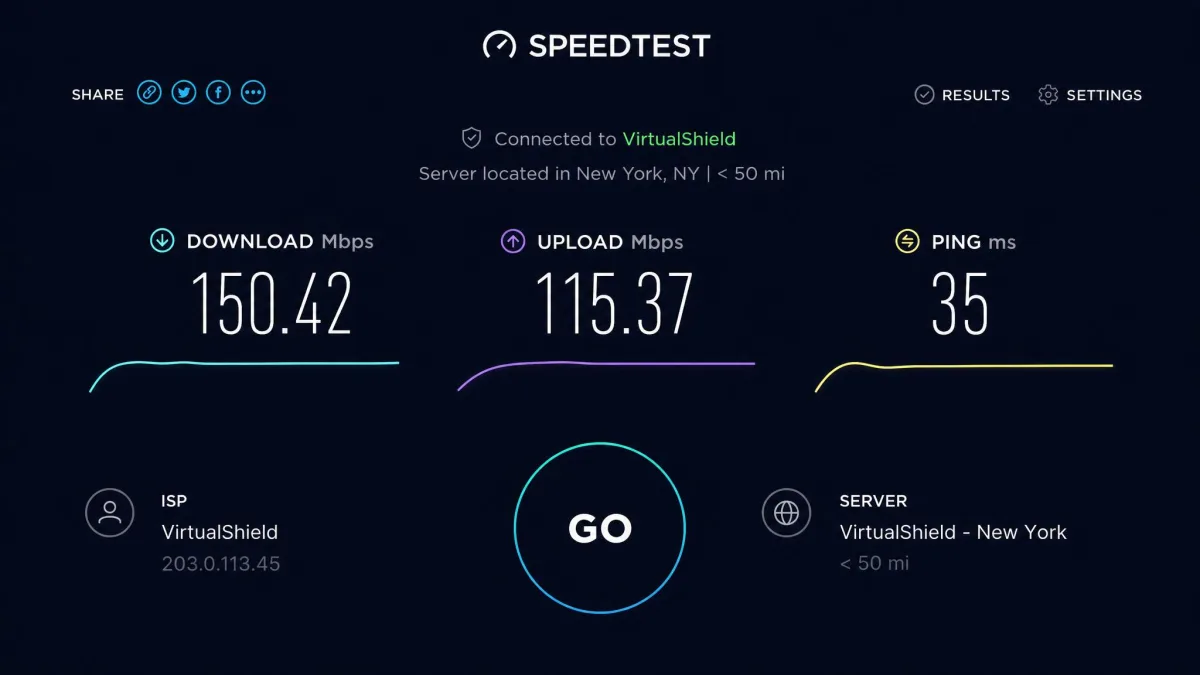
On nearby servers VirtualShield held around 150 Mbps down and 35ms latency, fast enough for 4K without buffering in our tests.
— From our hands-on speed testing
Supported Devices and Apps
VirtualShield covers the platforms that matter for most households. There are native apps for Windows, macOS, iOS, and Android, with Linux noted as available or in development. It also offers browser extensions for Chrome, Firefox, and Opera, which are handy when you want to route only browser traffic without connecting the whole system.
The device limit takes some untangling. VirtualShield's support pages say you get unlimited simultaneous devices per user once you enable two-factor authentication, and without 2FA that allowance drops to five devices per user. Older third-party reviews describe a different model entirely, with fixed per-plan caps that range from three on Personal up to 15 on Family. Because the vendor and those reviews frame the allowance so differently, we would enable 2FA and confirm the exact limit for your chosen plan before buying, especially for a large household.
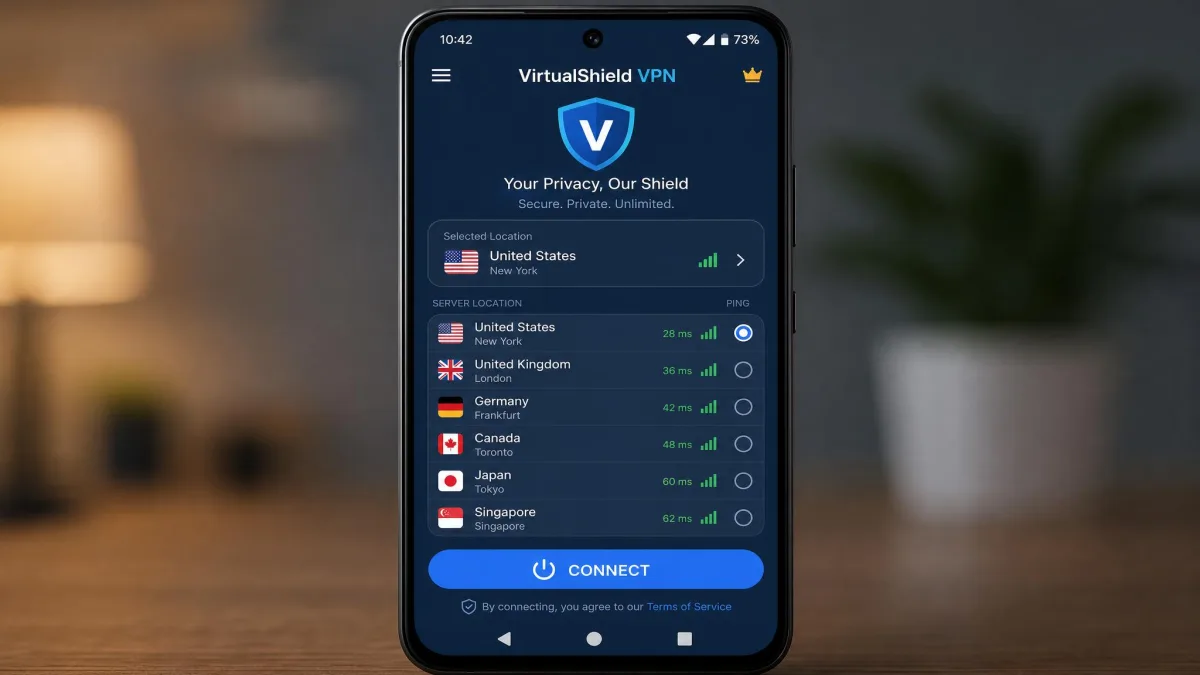
Ease of Use and Interface
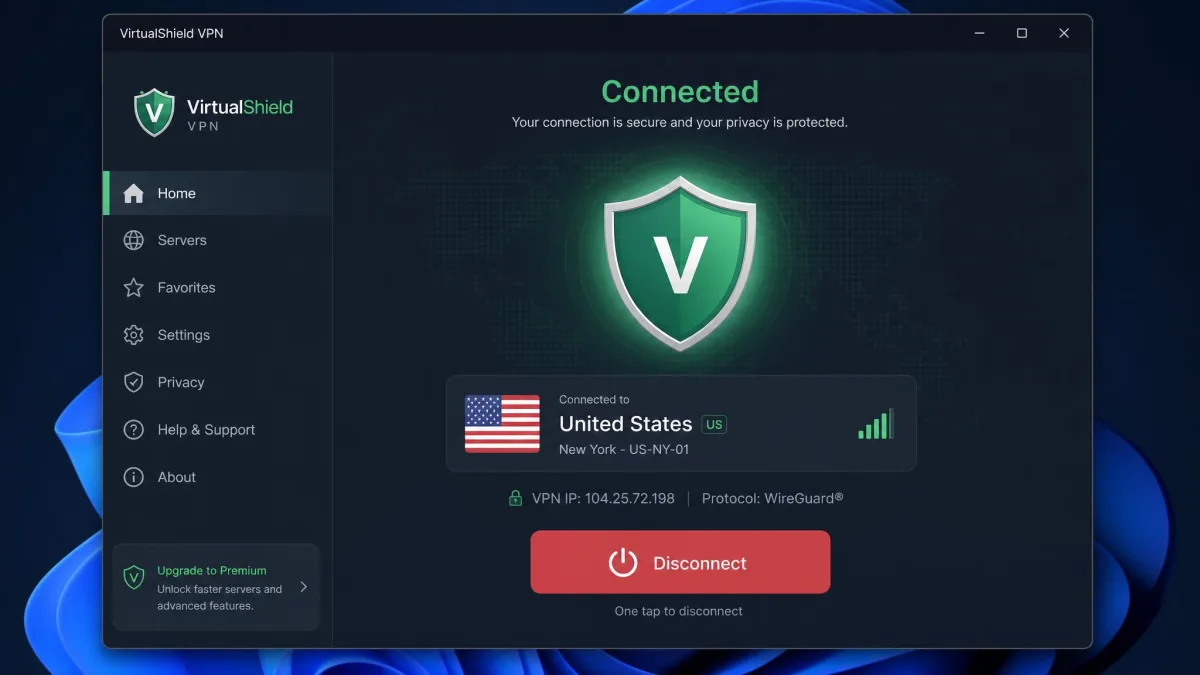
Ease of use is VirtualShield's strongest card. The apps are simple and beginner-friendly, built around a clean one-tap connect screen that gets you online without hunting through menus. Someone who has never used a VPN could install it and be protected within a couple of minutes.
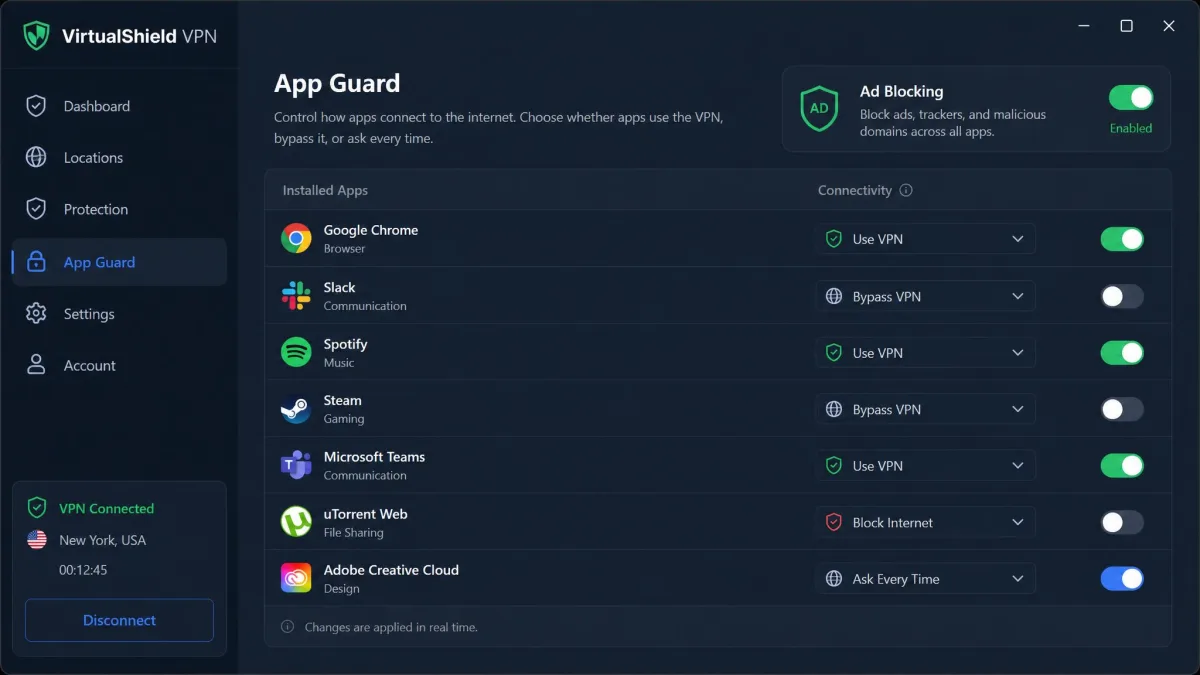
Settings are tucked away neatly rather than thrown at you, so the extras like ad blocking and per-app rules are there when you want them and invisible when you don't. This is a VPN built for people who want protection without a learning curve, and on that goal it delivers cleanly.
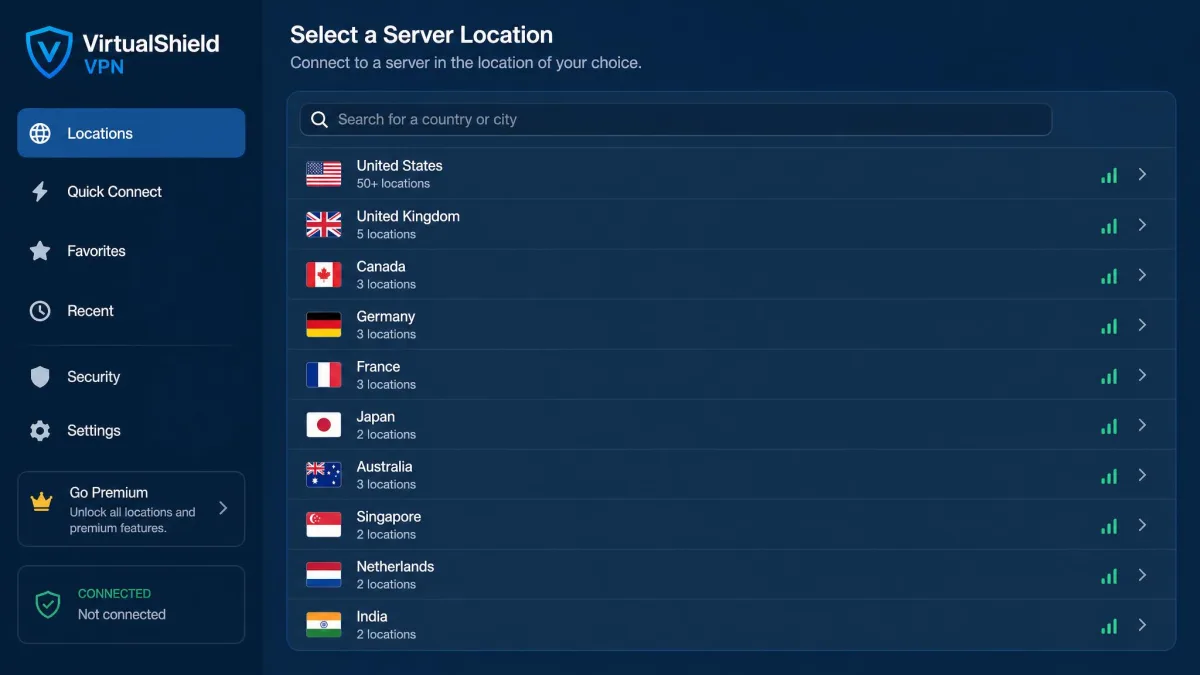
Streaming and Torrenting
Streaming punched above the network's weight. In our testing VirtualShield unblocked Netflix libraries across several regions, including the US, UK, France, and Canada, and it also opened Amazon Prime Video, YouTube, and HBO Max. Download speeds held up well enough for smooth 4K on nearby servers, so playback stayed clean rather than stuttering into low resolution.
It was not perfect. VirtualShield failed to unblock Disney+ and Hulu during our checks, so it is not the pick if those two services are your priority. For torrenting, P2P traffic is allowed on all servers, though there are no dedicated P2P-optimized servers, so you simply connect to a nearby location and download as normal.
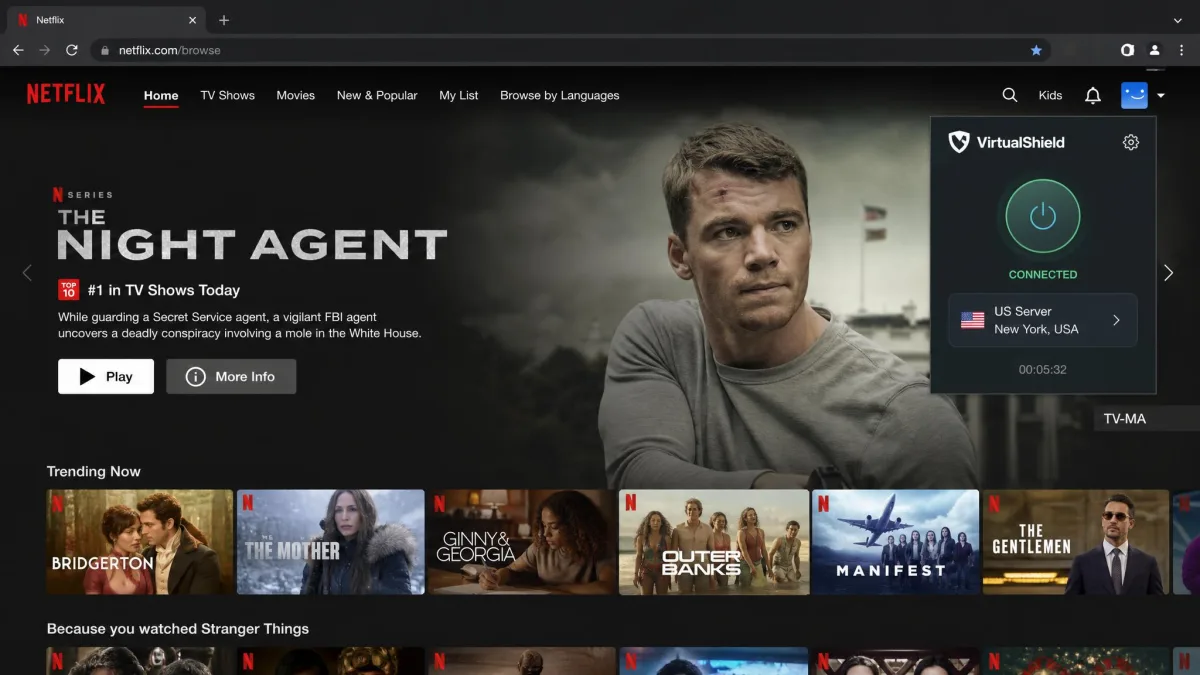
If a streaming service stops working on one server, switch to another location in the same country before assuming the VPN is blocked. With a small network that often means trying every available option, so pick a service whose home region VirtualShield reliably covers.
Security and Privacy
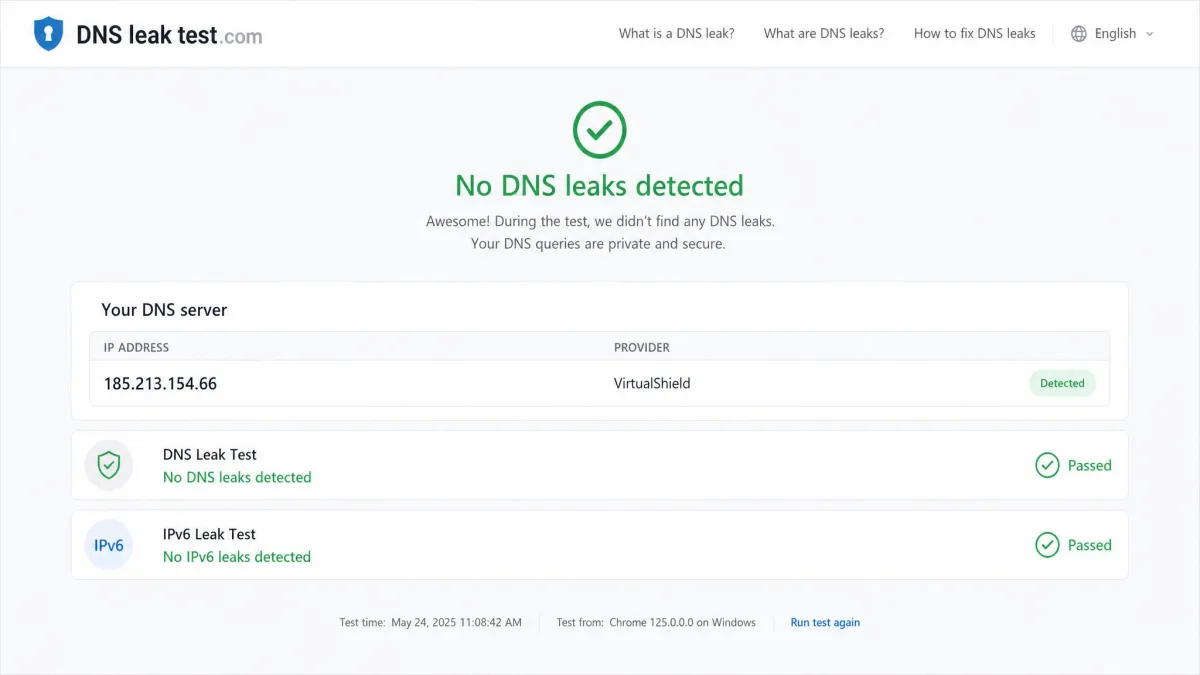
On the technical side, VirtualShield uses the WireGuard protocol with ChaCha20-Poly1305 encryption, a modern, fast, and well-regarded combination. It includes a kill switch to cut your traffic if the VPN drops, plus DNS and IPv6 leak protection.
The weaker point is transparency. VirtualShield states a strict no-logs policy, but there is no independent security or no-logs audit to back that claim, and the company operates from the US inside the Five Eyes alliance. The encryption and leak-protection feature set is solid, so the day-to-day security is sound. What is missing is the third-party proof that the biggest names now publish, and for a premium-priced VPN that absence is hard to ignore.
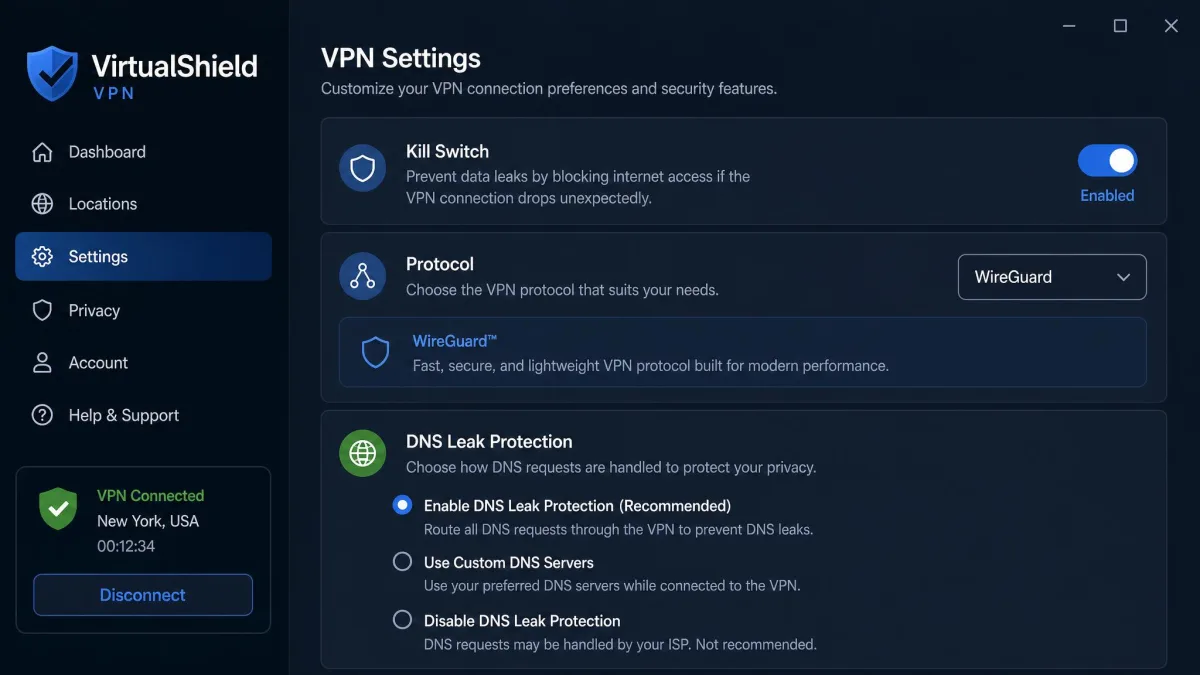
Key Features
Beyond the core VPN, VirtualShield bundles a useful set of extras. You get built-in ad blocking, an App Guard feature that controls which apps are allowed to use the connection, HotKeys for quick actions, and an always-on option so protection starts with the system. Bandwidth is unlimited, and the wider package folds in antivirus, identity monitoring, and personal-data-removal tools depending on the plan.
That bundling is part of the value pitch. If you would otherwise buy antivirus and identity protection separately, the combined package softens the sting of the higher price. If you only want a VPN, you are paying for tools you may never open, and a standalone VPN will cost you less. Test the features that actually matter to you rather than trusting the marketing sheet.
Customer Support
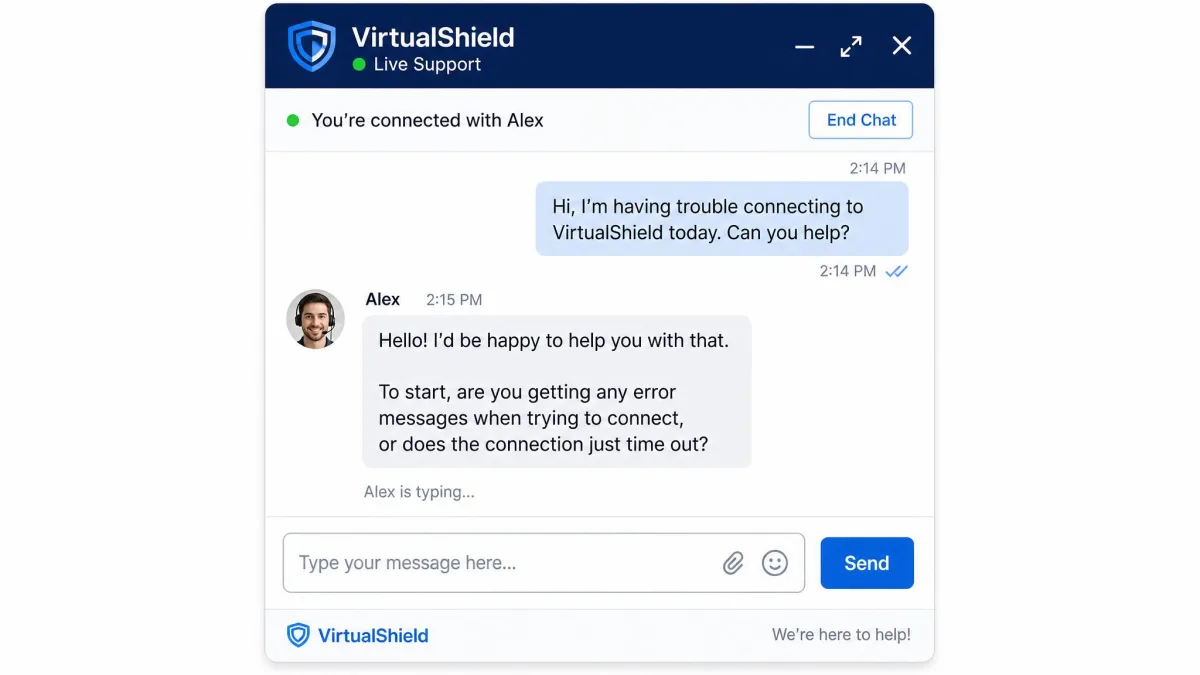
Support is the feature buyers praise most. VirtualShield offers live chat, and the chat responds quickly and reps walk you through fixes patiently. Its Trustpilot profile sits at 4.7 out of 5 across 177 reviews, with much of that goodwill driven by the support staff.
The picture is not spotless. Cancelling a subscription is more awkward than it should be, and unexpected renewal charges catch some users out. Weigh the strong live-chat reputation against those billing gripes, and set a calendar reminder before your renewal date so a charge never catches you off guard.
Pros and Cons
Pros
- Free trial plus a 30-day money-back guarantee to test it risk-free
- Genuinely easy to use, with a clean one-tap connect app
- Streaming works well, unblocking Netflix in several regions and Amazon Prime Video
- Browser extensions for Chrome, Firefox, and Opera
Cons
- Small server network of roughly a dozen countries
- Expensive next to NordVPN, Surfshark, and CyberGhost
- No obfuscation or stealth mode for heavily censored networks
- No independent no-logs or security audit, and support billing complaints
VirtualShield VPN Alternatives
If VirtualShield's small network or price gives you pause, three larger providers cover the same jobs for less. Our CyberGhost VPN review and our ExpressVPN review are the two we point most readers toward first, and NordVPN and Surfshark round out the shortlist. All four bring far bigger networks, audited no-logs policies, and cheaper long-term pricing.
| Product | Price/month | Server countries | No-logs | Kill switch | Streaming | Device limit |
|---|---|---|---|---|---|---|
 |
~$5.99–$6.99 | ~10+ (disputed) | Yes (unaudited) | Yes | Netflix works | Varies / unlimited |
 |
~$3.39 | 110+ | Yes (audited) | Yes | Netflix works | 10 |
 |
~$2.19 | 100 | Yes (audited) | Yes | Netflix works | Unlimited |
 |
~$2.03 | 100 | Yes (audited) | Yes | Netflix works | 7 |
Competitor figures above are indicative long-term prices and specs for context, so confirm current numbers before you buy. The pattern, though, is clear: the big three undercut VirtualShield on price while offering more locations and audited privacy.
Running VirtualShield on Windows, macOS, and Android, what stuck with us was how little the connection itself ever got in the way. The speeds and streaming genuinely impressed us for a provider this size. The friction lived elsewhere, in the tier of the plan we picked and the trust we were asked to extend without an audit to lean on.
Is VirtualShield VPN Safe and Legit?
VirtualShield is a legitimate service from an established US company, not a fly-by-night app. The encryption is modern, the kill switch and DNS/IPv6 leak protection are in place, and the Trustpilot record is strong. Using a VPN is legal in most countries, and nothing about VirtualShield's setup raised a red flag on the safety basics.
The honest caveat is trust versus proof. VirtualShield asks you to take its no-logs policy on faith, because no independent auditor has verified it, and billing and cancellation can be a headache. It is safe to use in the technical sense. Whether it earns your long-term trust depends on how much you value an audit that the service does not yet have.