Proton VPN is a Swiss service with open-source apps, an independently audited no-logs policy, and one of the few free plans we would actually recommend. It scores 9.0/10 in our own review, so nobody needs to leave it in a hurry. Still, people switch for clear reasons: speeds that sag on distant servers, a 10-device cap, long-term pricing that runs higher than several rivals, live chat that closes overnight, and patchy streaming outside English-speaking markets.
Our top Proton VPN alternative is NordVPN, which matches Proton's score and holds its speed better on long routes. If you want to stay free, Windscribe is the pick. We held every service to the same yardstick as Proton, and our methodology section below explains exactly what we measured.
Our Top Proton VPN Alternatives at a Glance
- NordVPN (9.0/10): Best Proton VPN alternative overall. It keeps fast speeds on far-away servers and adds 24/7 live chat.
- ExpressVPN (8.8/10): Best for speed and streaming. It has the most polished apps we used and a kill switch that never missed.
- Surfshark (8.6/10): Best value with unlimited devices. One account covers every device in the house.
- Mullvad (8.5/10): Best for privacy purists. You sign up with a random account number instead of an email.
- Windscribe (8.5/10): Best free Proton VPN alternative. Its free plan lets you choose your server location.
- Private Internet Access (8.4/10): Cheapest Proton VPN alternative. It has the lowest long-term rate on this list, plus unlimited connections.
- CyberGhost (8.4/10): Best for streaming on a budget. Its labelled streaming servers worked on the first try.
Why Look for a Proton VPN Alternative?
Proton VPN gets a lot right, and it deserves credit before we pick it apart. It is run by Proton AG in Switzerland, its apps are open source, and it has an independently audited no-logs policy that Securitum has now checked for five years running. The company also publishes Proton's transparency report, which lists the legal requests it receives. The free plan has no data cap and no ads. We cover all of this in our full Proton VPN review.
The gaps show up once you lean on it. In our testing, paid servers lost about 8-12% of download speed locally and about 16% internationally, and both figures are fine. Distant servers were another story: downloads dropped about 36% on South Africa servers and 24% on Australia servers. Secure Core, Proton's multi-hop routing, ran at least a third slower than standard servers.
Streaming worked well on US and UK Netflix, BBC iPlayer, Disney+ and Prime Video, with 4K starting in under four seconds. Outside those markets it was less dependable, and ZDF, Sky Go Germany and Movistar+ all detected the VPN.
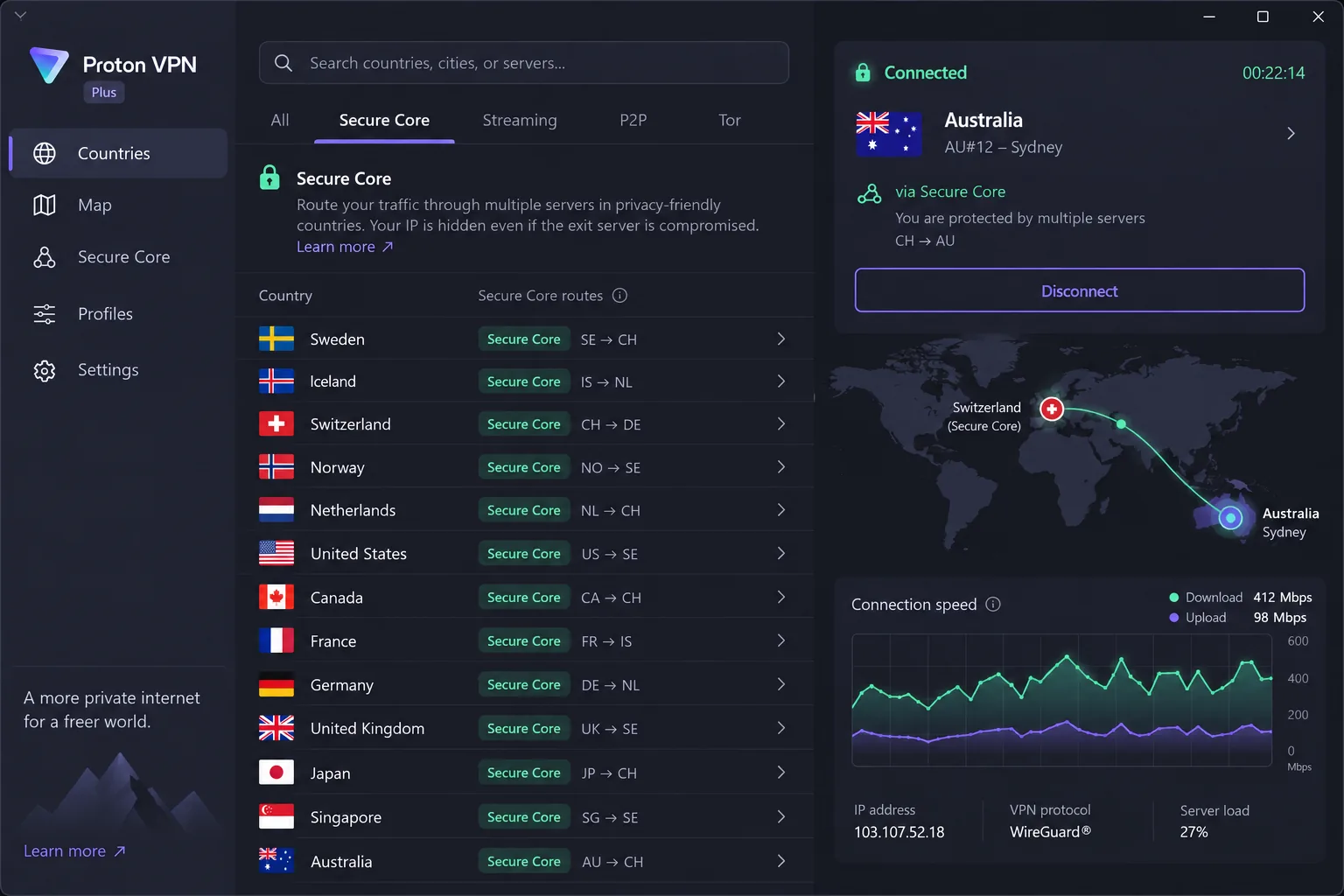
A few smaller frictions add up too. The kill switch is off by default, and the Fire TV, Apple TV and Android TV apps have none at all. NetShield ad blocking left gray boxes on pages and did not stop YouTube ads. During opening hours, live chat put us through to a person in about 30 seconds, but it is closed overnight and unavailable on the free plan.
Then there is cost. VPN Plus is $9.99 on monthly billing. Proton changes its two-year promotional rate, so that plan sits at roughly $3 to $3.50 a month depending on when and where you buy. The two-year plan then renews at $83.88 every 12 months. You also get 10 devices, while Surfshark, PIA and Windscribe allow unlimited connections. If safety is your main worry rather than features, our guide on whether Proton VPN is safe answers that question directly.
Proton VPN Alternatives Compared
| VPN | Buy | Best for | Starting price (2-year) | Simultaneous devices | Servers/countries | Free plan | Audited no-logs | Where it beats Proton VPN |
|---|---|---|---|---|---|---|---|---|
 |
Check price → | Best overall | About $3.09-$3.49/mo (promo varies) | 10 | 118-160+ countries (counts vary) | No | Yes (Deloitte, 6th) | Faster on distant servers, 24/7 chat, RAM-only servers |
 |
Check price | Speed and streaming | About $2.79-$2.99/mo (2 yr + 4 mo) | 10 Basic / 14 Pro | 113 countries | No | Yes (KPMG, 2025) | Most polished apps, 24/7 chat, up to 14 devices |
 |
Check price | Value, unlimited devices | $2.49/mo (2 yr + 3 mo) | Unlimited | 4,500+ / 100 countries | No | Yes (Deloitte, 2023 and 2025) | Unlimited devices, cheaper 2-year price |
 |
Check price | Privacy purists | $5.60/mo flat (EUR 5) | 5 | About 50 countries (list changes daily) | No | Infrastructure audits (Cure53, 2024) plus 2023 police search | No email needed, flat price |
 |
Check price | Best free | No 2-year plan: $69/yr | Unlimited | 69 countries | Yes: 10GB/mo, you choose location | No (Packetlabs infrastructure audit, 2024) | Pick your free location, unlimited devices |
 |
Check price | Cheapest | About $1.89/mo (3 yr + 3 mo) | Unlimited | About 104 countries plus all 50 US states | No | Yes (Deloitte, Dec 2025) | Lowest long-term price, unlimited devices |
 |
Check price | Streaming on a budget | About $1.99/mo (2 yr + 2 mo) | 7 | 9,600+ / 100+ countries | No | Yes (Deloitte, 3rd, Feb 2026) | Labelled streaming servers, 45-day refund |
 |
Baseline | About $3-$3.50/mo (promo varies) | 10 (1 on free) | 20,000+ / 140+ countries | Yes: no data cap, 10 countries auto-assigned | Yes (Securitum, 5th annual) | n/a |
How We Tested These Proton VPN Alternatives
We compared each service against Proton VPN on the same eight points: independent no-logs audits, jurisdiction, speed, streaming, price, device limits, free-plan terms and support. For speed, we measured download loss on nearby servers and on long routes, including Australia and South Africa, because those are the routes where Proton slowed down most.
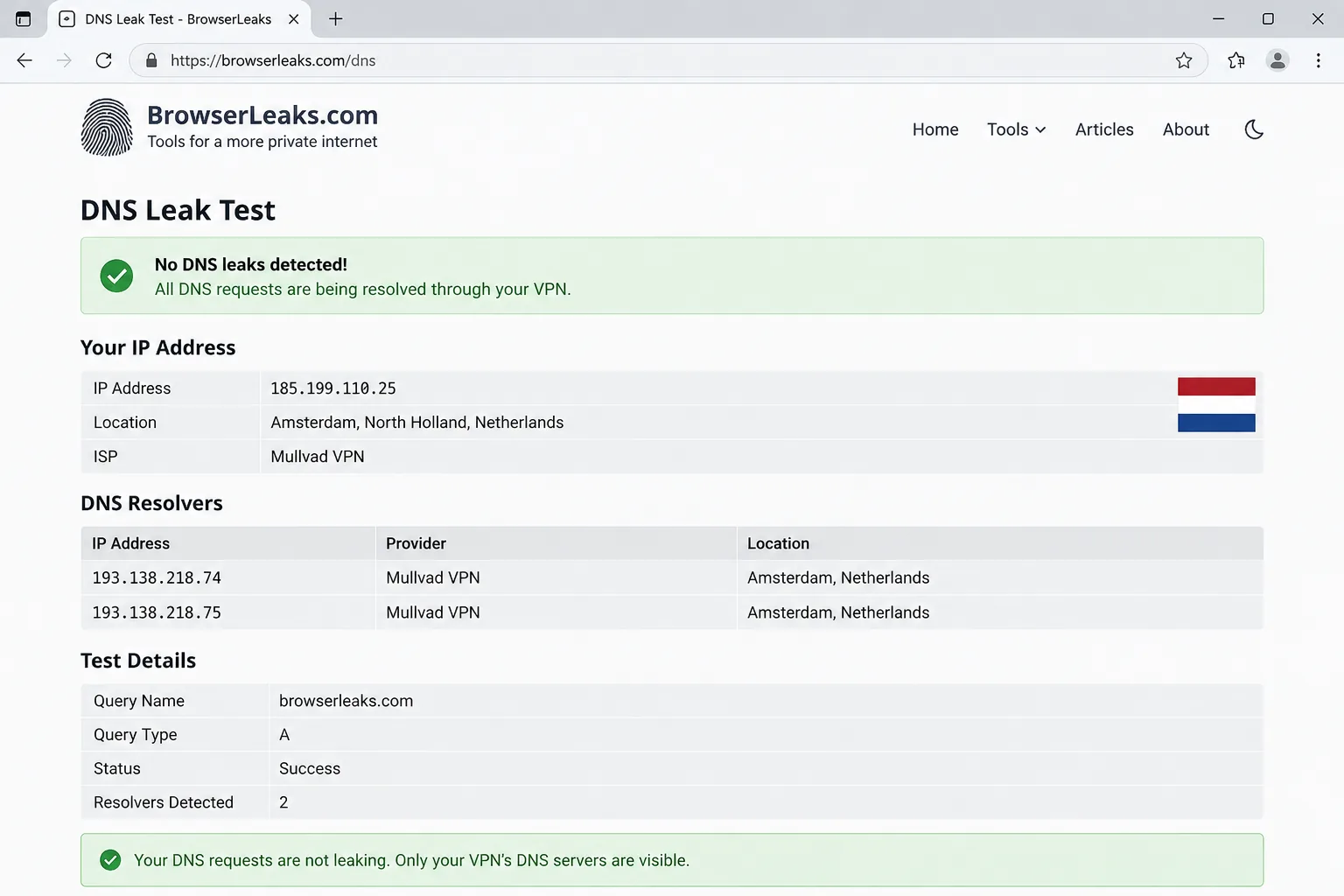
For streaming, we checked the major services, including Netflix, BBC iPlayer, Disney+, Hulu and Prime Video. For security, we ran DNS, IPv6 and WebRTC leak tests and checked whether kill switches held when a connection dropped. Proton itself passed these checks cleanly across dozens of countries, so every alternative had a high bar to clear. We also contacted support and read the refund terms, since those matter most when you are switching.
1. NordVPN: Best Proton VPN Alternative Overall
Who it's for: anyone leaving Proton who wants the same level of trust with better long-distance speed and round-the-clock help.
NordVPN matches Proton VPN's 9.0/10 in our NordVPN review, and it is the most complete swap on the market. It allows 10 simultaneous connections, the same as Proton VPN Plus, and its no-logs policy has now passed a sixth assurance engagement by Deloitte. The company is based in Panama.
Speed is where we noticed the difference first. On nearby servers we lost only about 4% of download and 7% of upload speed, and 4K streams played with no buffering. We then ran it on Australia and South Africa servers, the same long routes where Proton slowed down, and NordVPN held above 60 Mbps on both. Its regular servers also unblocked Netflix, Hulu, BBC iPlayer, Prime Video, Disney+ and HBO Max, so we never needed a dedicated streaming server.
Where NordVPN Beats Proton VPN
NordVPN keeps more of your speed on far-away servers, where Proton lost about a quarter to more than a third of its download speed. It runs RAM-only servers, which Proton does not, and it offers 24/7 live chat instead of Proton's daytime window. Proton still wins on price, though. NordVPN's monthly plan is $14.99 against Proton's $9.99. Because NordVPN runs rolling promotions, its two-year Basic rate moves between roughly $3.09 and $3.49 a month, and it renews higher. NordVPN also has no free plan.
Pros
- Only about 4% download loss on nearby servers
- Unblocks the major streaming services on regular servers
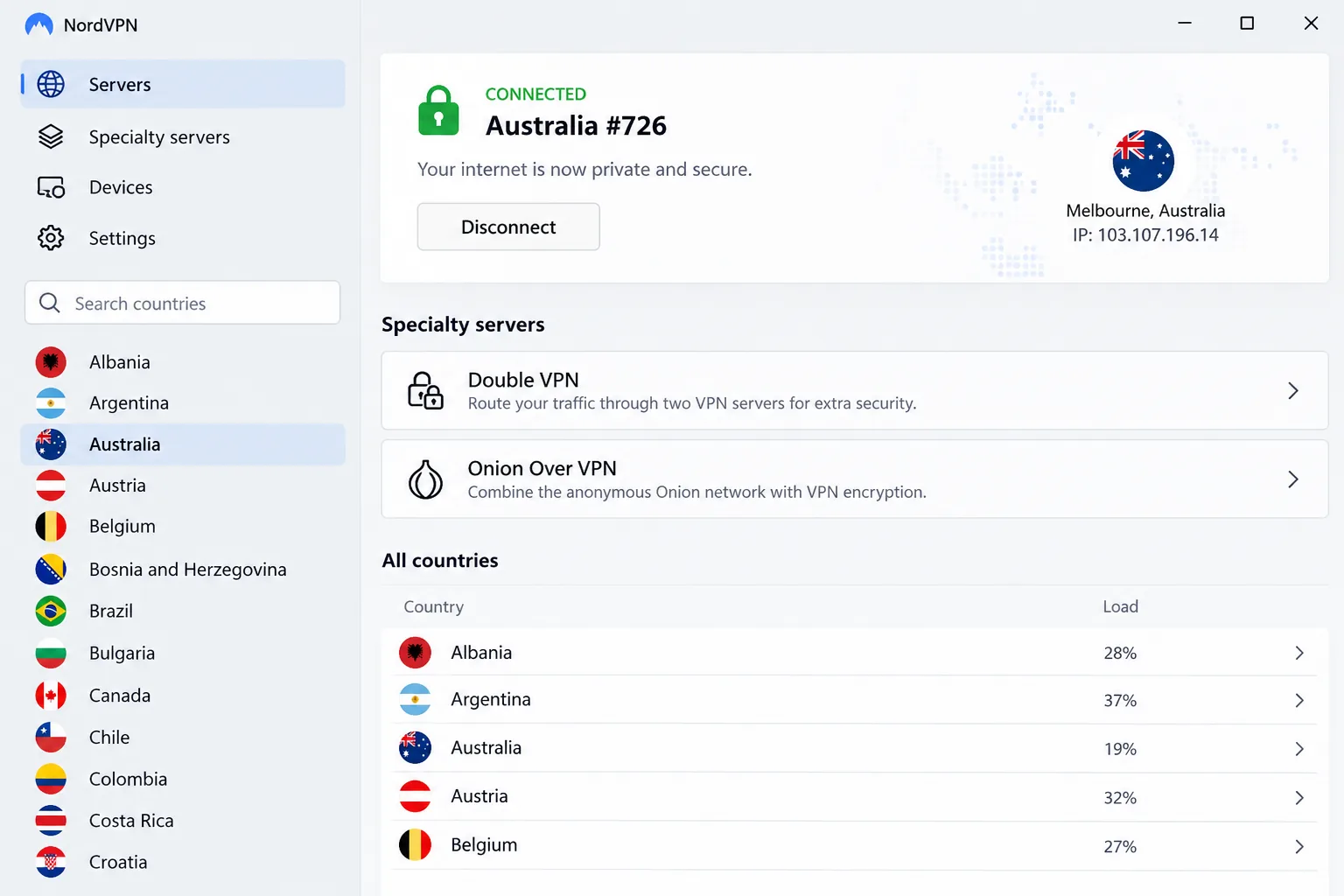
- Specialty servers for Double VPN and Onion Over VPN
Cons
- Double VPN cuts speed by around 80% and only works on preset server pairs
- Live chat starts with a chatbot before a person takes over
- Renewal price is much higher than the intro rate
2. ExpressVPN: Best for Speed and Streaming
Who it's for: people who value polished, user-friendly apps and steady streaming over the lowest price.
If NordVPN is the closest like-for-like swap, ExpressVPN is the premium alternative. It has servers in 113 countries, a Lightway protocol with post-quantum protection, and RAM-only TrustedServer hardware. KPMG audited its privacy commitments in 2022, 2023 and June 2025. Our ExpressVPN review scores it 8.8/10.
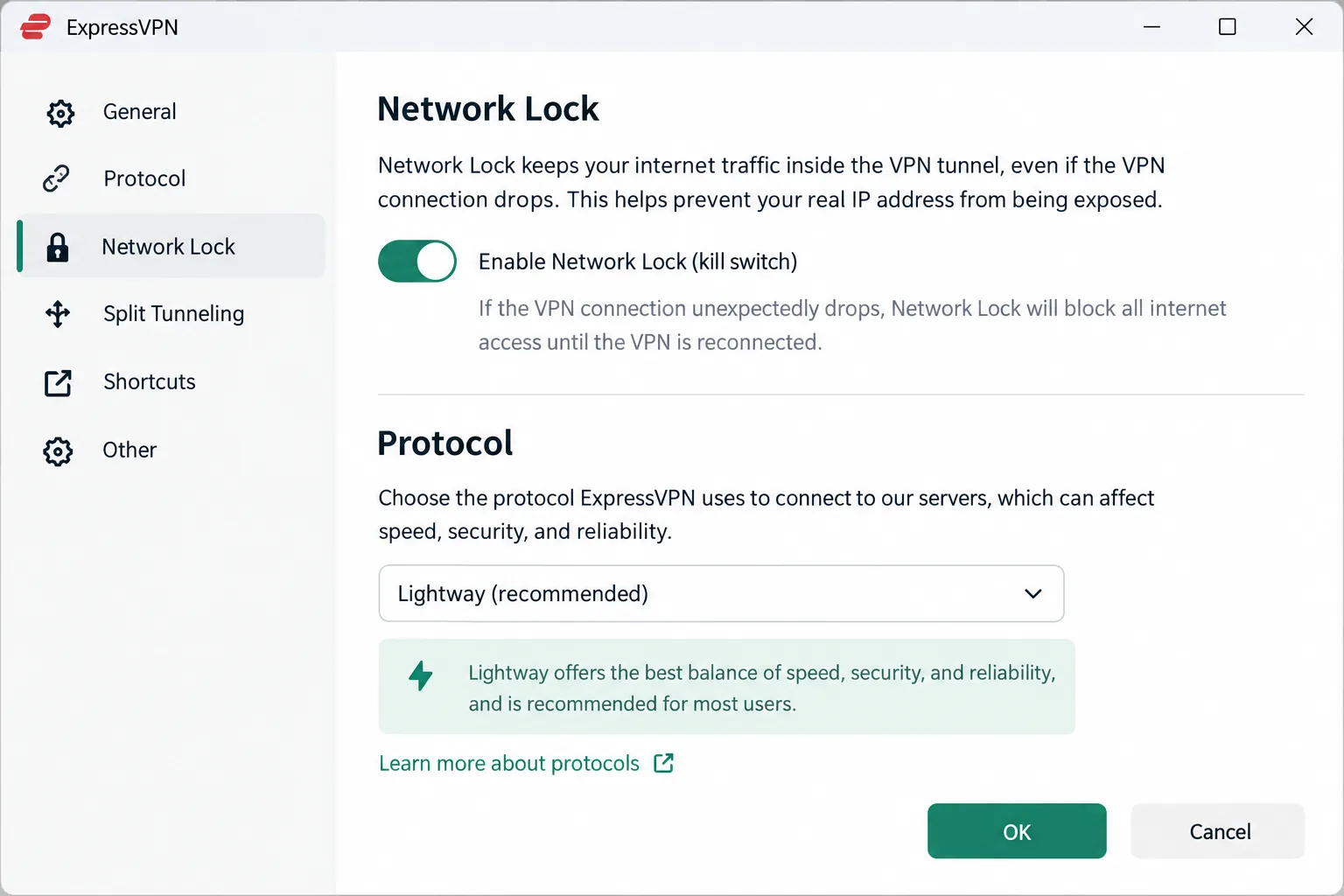
Its apps were the most polished of the group, and the Network Lock kill switch fired correctly every time a server timed out or our network changed. Streaming was a highlight: Netflix libraries in several countries, ESPN+ and Hulu all played without issues. Its claim to the speed title needs one caveat. Downloads fell roughly 37-39% on nearby servers, more than NordVPN or Proton VPN lost, so ExpressVPN earns its place through consistent connections rather than raw throughput.
Where ExpressVPN Beats Proton VPN
ExpressVPN's Pro tier covers up to 14 devices, where Proton stops at 10. Proton also leaves its kill switch off by default and skips it on the TV apps. Proton's live chat closes overnight, while ExpressVPN's runs 24/7. Proton keeps the edge on the monthly plan and at renewal: ExpressVPN's monthly Basic plan is $12.99 against Proton's $9.99, and it renews at $99.95 per year against Proton's $83.88. Its two-year intro rate, around $2.79 to $2.99 a month, is slightly below Proton's.
Pros
- The most polished apps in this roundup
- Network Lock kill switch reacts to dropped servers and network changes
- Strong streaming support across Netflix regions, Hulu and ESPN+
Cons
- Bigger speed loss on nearby servers than NordVPN or Proton VPN
- Device allowance depends on the tier you buy
- Email support can take close to two days
3. Surfshark: Best Value With Unlimited Devices
Who it's for: households and families that have outgrown Proton's 10-device limit.
Where ExpressVPN tops out at 14 devices on its Pro tier, Surfshark removes the limit on every plan. The two-year Starter plan costs $2.49 a month, billed $67.23 for 27 months. It runs 4,500+ servers in 100 countries, is based in the Netherlands, and passed Deloitte no-logs assurance checks in 2023 and again in 2025. It also publishes a warrant canary. Read our Surfshark review for the full scoring.
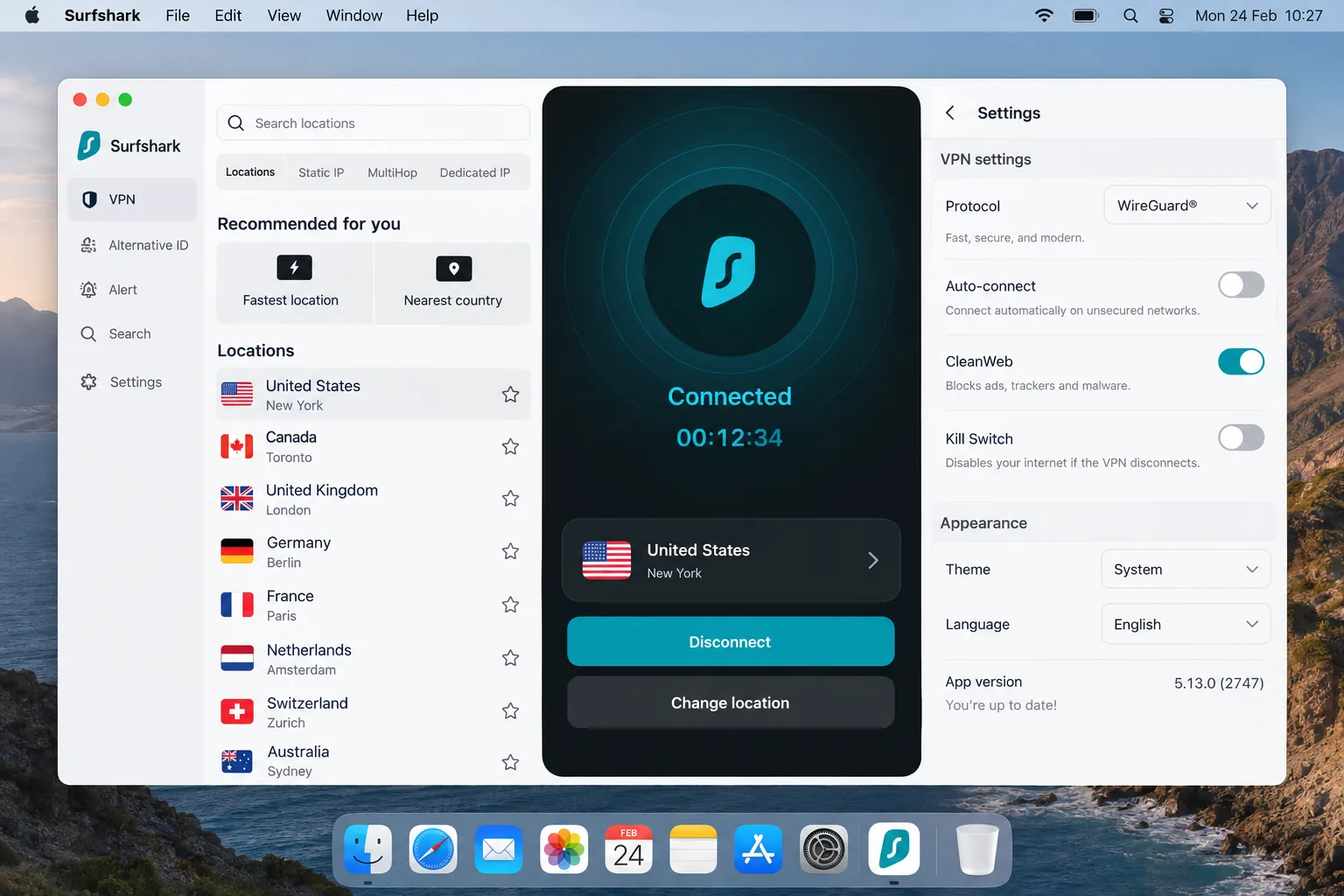
On macOS, a transatlantic server slowed downloads by only about 10%. The Windows app was less steady, with bigger slowdowns and occasional ping spikes. Surfshark unblocked Netflix in 15+ regional libraries, along with Max, Disney+, Hulu and BBC iPlayer. When we cut the connection, the kill switch held, and we saw no IPv4, IPv6, DNS or WebRTC leaks.
Where Surfshark Beats Proton VPN
Surfshark allows unlimited devices; Proton VPN caps you at 10. Its two-year price also undercuts Proton's roughly $3 to $3.50 a month. Proton is the better buy on a monthly plan, though. Surfshark's month-to-month price differs by region and tax, but at roughly $15 to $16 it is one of the priciest in the category. Proton also has more countries and a free plan.
Pros
- About 10% download loss on a transatlantic macOS connection
- Netflix in 15+ regional libraries
- Kill switch held with no leaks in our checks
Cons
- Windows app showed bigger slowdowns than the macOS app
- MultiHop slows connections significantly
- Month-to-month plan is expensive
4. Mullvad: Best for Privacy Purists
Who it's for: people who chose Proton for privacy and want to go further, even at the cost of streaming.
Where Surfshark adds convenience, Mullvad strips everything back. Pricing is a flat EUR 5 a month (about $5.60) on any term, with no long-term discounts and no renewal jump. Mullvad covers up to 5 devices and offers a 14-day refund on new payments. Our Mullvad VPN review gives it 8.5/10.
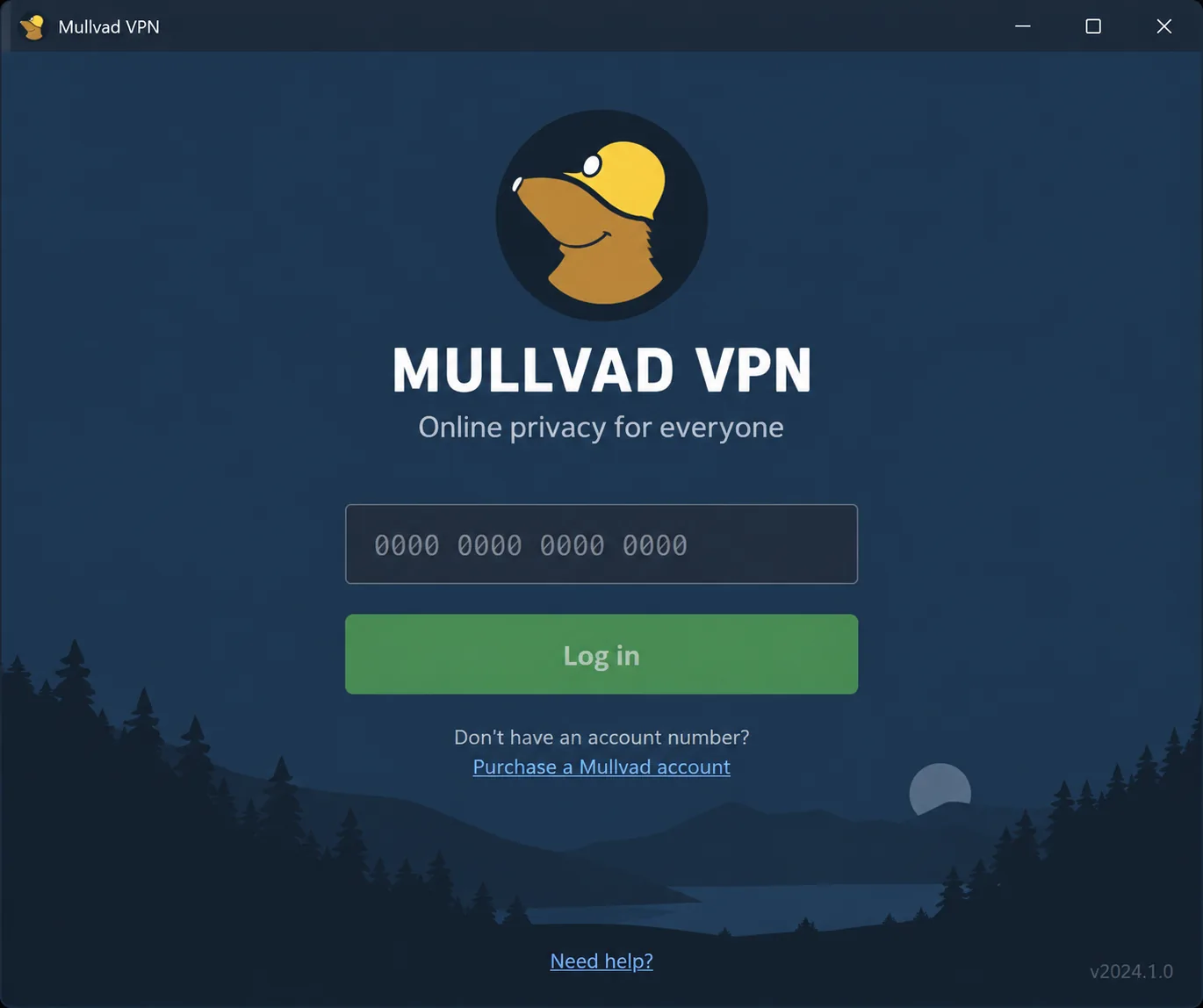
Sign-up was the first thing that felt different. We opened the app, it generated a random 16-digit account number, and that number became our only login, with no email, username or password to enter. The whole process took seconds. Once we connected, a nearby server cost us only around 6% of download speed, but distant servers slowed downloads noticeably. Streaming was the weakest part of our test, since some servers unblocked Netflix while others were detected.
Its track record is the main draw. In April 2023, Swedish police arrived in Gothenburg with a search warrant, and police found no customer data when they searched Mullvad's office because none was stored. Mullvad also publishes outside audits, including a Cure53 infrastructure audit in 2024 and an X41 D-Sec account and payment audit in 2026. These check infrastructure security rather than issuing a no-logs opinion, so whether Mullvad counts as "audited no-logs" depends on your definition.
Where Mullvad Beats Proton VPN
Proton requires an email-based account; Mullvad needs nothing but a number. Mullvad also runs RAM-only servers, which Proton does not, and its roughly 6% local speed loss beat Proton's 8-12%. Proton leads almost everywhere else. Its network spans 140+ countries against about 50 on Mullvad's live list, which changes daily. Proton also adds a free plan and live chat. If Mullvad feels too spartan, our list of Mullvad VPN alternatives covers similar privacy-first services.
Pros
- Flat monthly price with no renewal shock
- Police search in 2023 found no customer data
- WireGuard apps with DAITA traffic-analysis defence
Cons
- Streaming is hit or miss
- Only 5 devices and no port forwarding
- Email-only support, with replies in hours rather than minutes

5. Windscribe: Best Free Proton VPN Alternative
Who it's for: anyone on Proton's free plan who wants to choose their server location and connect every device.
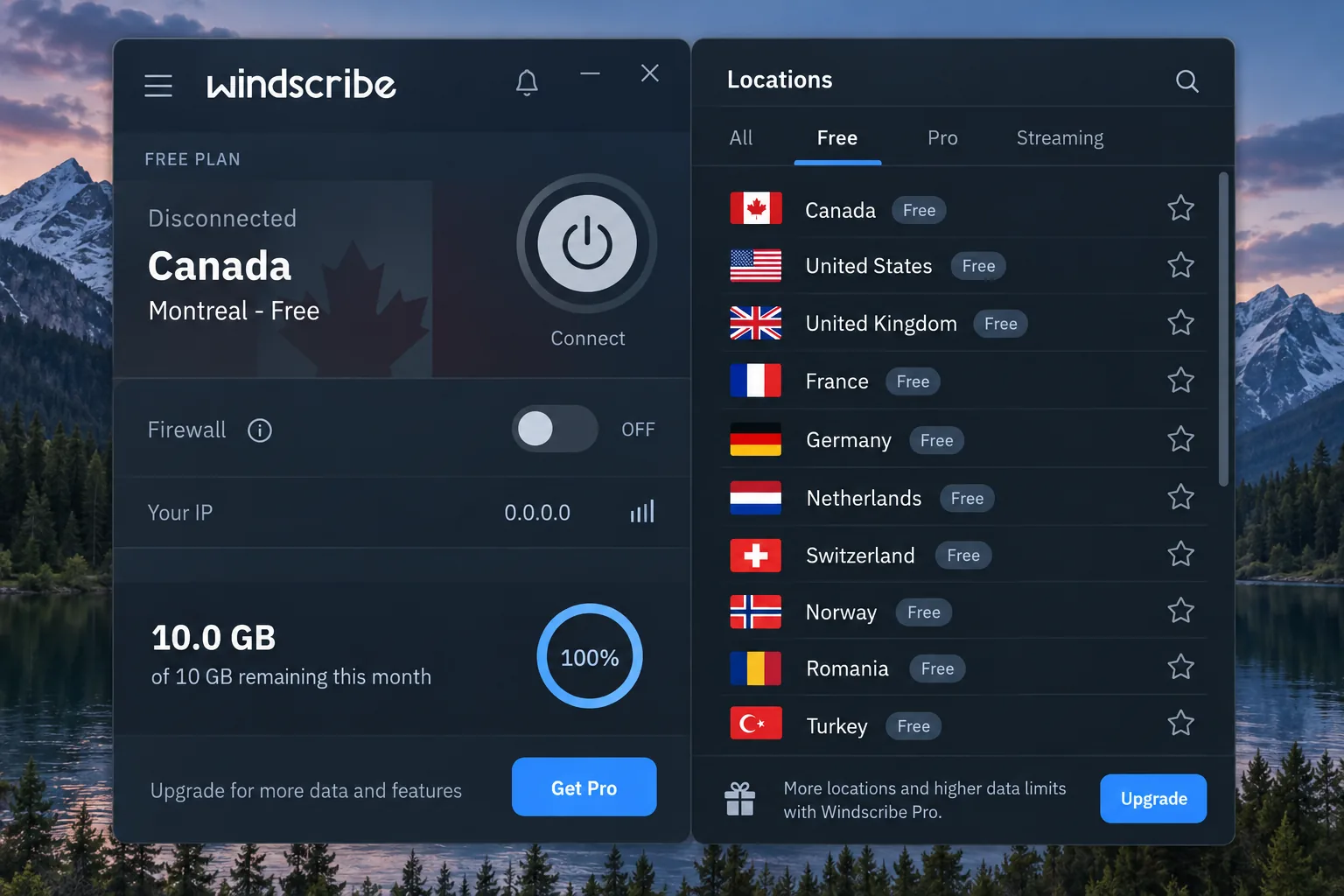
Windscribe is the only other service here with a real free plan. You get 10GB per month with a confirmed email, or 2GB without one. Free servers cover about 10 countries. Windscribe rotates its free locations, so the count moves between 10 and 11. Unlike Proton's free plan, you choose the location yourself. Every plan, including free, allows unlimited simultaneous connections. Our Windscribe review rates it 8.5/10.
Connecting took under 30 seconds on a Windows laptop and three taps on Android. On WireGuard, speed loss was small nearby and grew with distance: about 3% on a US server, 10% in Europe and 28% to Singapore. Free servers occasionally slowed by up to 90% during traffic surges, which happened roughly twice in three hours of use. Otherwise, free and Pro speeds were similar. We also killed the VPN process on purpose, and the Firewall kill switch blocked all traffic. Repeated leak tests on free and Pro servers showed no IP, DNS or WebRTC leaks.
Where Windscribe Beats Proton VPN
Proton's free plan picks the server for you, makes you wait before changing location, and covers one device. Windscribe lets you choose, and it puts no limit on devices. Prime Video and BBC iPlayer unblocked on the first try for us, while Proton's free plan streams nothing. Proton's free plan has no data cap, though, and that matters a lot. Windscribe's monthly data runs out quickly if you stream, so it suits browsing and light use. Netflix, Disney+ and Max also needed several server switches.
Pros
- Quick setup, connected in under 30 seconds on Windows
- Firewall kill switch blocked traffic when we killed the VPN process
- No IP, DNS or WebRTC leaks on free or Pro servers
Cons
- 10GB monthly cap on the free plan
- Crowded app with labels that appear only on hover
- No human live chat: the Garry AI assistant answers first
6. Private Internet Access: Cheapest Proton VPN Alternative
Who it's for: anyone on a tight budget who likes to tune settings and cares more about torrenting than streaming.
Windscribe wins on free, but Private Internet Access, or PIA, wins on long-term price. PIA rotates its long-term deal length and bonus months, so the intro rate differs by date and region. When we checked, it was about $1.89 a month on a three-year plan. The monthly plan is $11.95. It allows unlimited connections, has servers in all 50 US states, and passed its third Deloitte no-logs assurance audit in December 2025. Our PIA review scores it 8.4/10.
Speed loss was small: about 4% on local servers and 18% internationally. The long settings list overwhelmed us at first, but it became easy to work with once we had it tuned. Torrenting with port forwarding cost very little speed, but the forwarded port changed every time we reconnected.
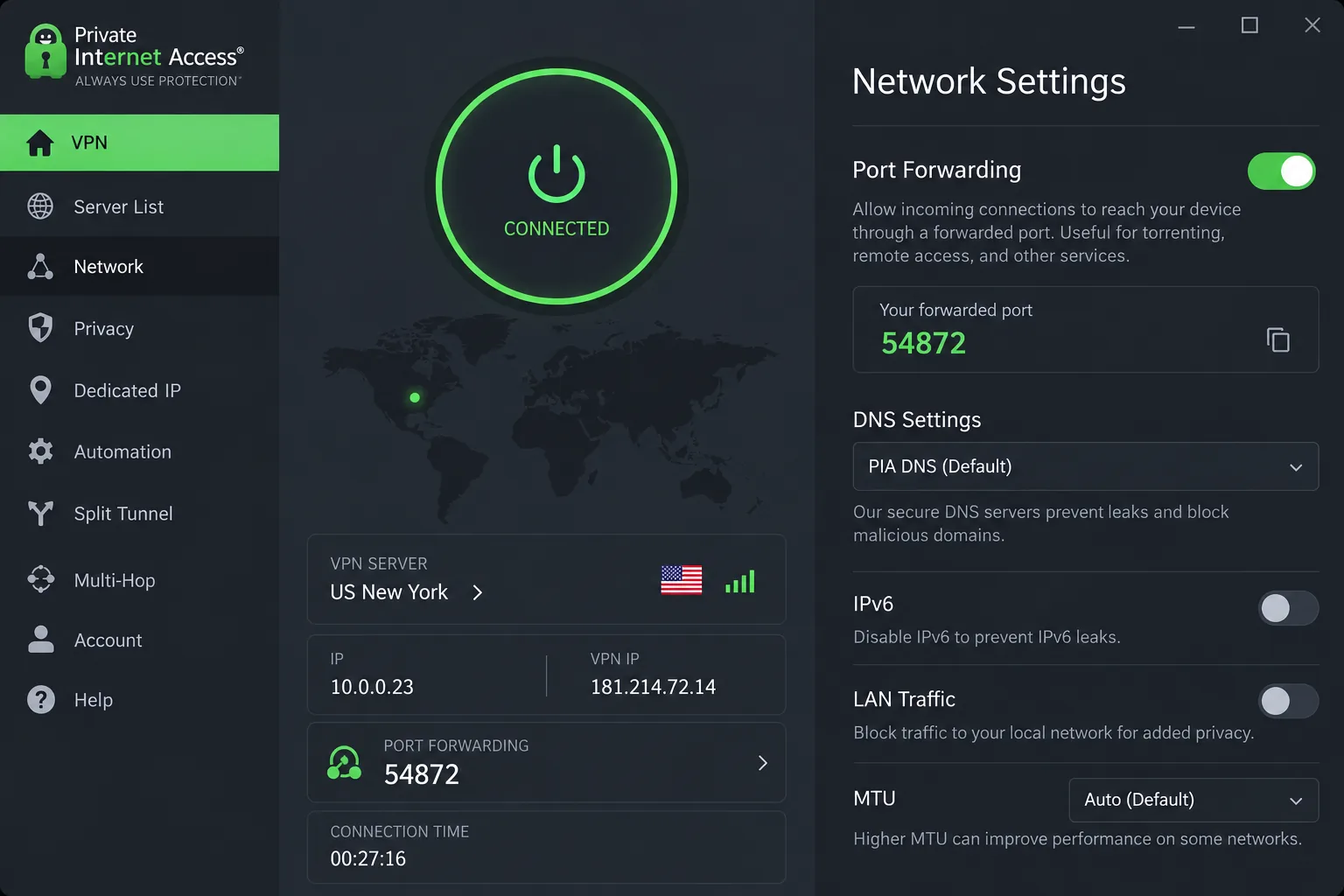
Where PIA Beats Proton VPN
PIA costs less than Proton on a long plan and drops the 10-device cap entirely. Its local speed loss was also lower than Proton's 8-12%. Proton wins on streaming by a wide margin: US and UK Netflix did not unblock on PIA, and Disney+ and Hulu detected the VPN. PIA is based in the United States and has been owned by Kape Technologies since 2019, two facts that privacy-focused Proton users may weigh against its Deloitte audit.
Pros
- Port forwarding with very little speed cost
- Servers in all 50 US states
- Deep settings you can tune once you learn them
Cons
- Poor streaming: Netflix, Disney+ and Hulu failed
- Settings can overwhelm beginners at first
- Auto-renewal is on by default, and refunds need a manual support request
7. CyberGhost: Best for Streaming on a Budget
Who it's for: streamers who want a budget-friendly plan and servers labelled by platform.
If PIA is the budget pick for torrenting, CyberGhost is the budget pick for streaming. Its servers are labelled by platform, so you pick "Netflix US" instead of guessing. The long plan runs about $1.99 a month for two years plus two months, though CyberGhost changes that promotion every few weeks. The monthly plan is $12.99. Its no-logs policy has been audited by Deloitte three times, most recently in February 2026. Read our CyberGhost review for the 8.4/10 breakdown.
On first launch, the app connected to a nearby server in under ten seconds. We then opened the dedicated streaming servers for Netflix US, BBC iPlayer, Disney+ and Prime Video, and each loaded on the first try without server-hopping. During normal browsing, though, those same servers triggered website CAPTCHA checks fairly often.
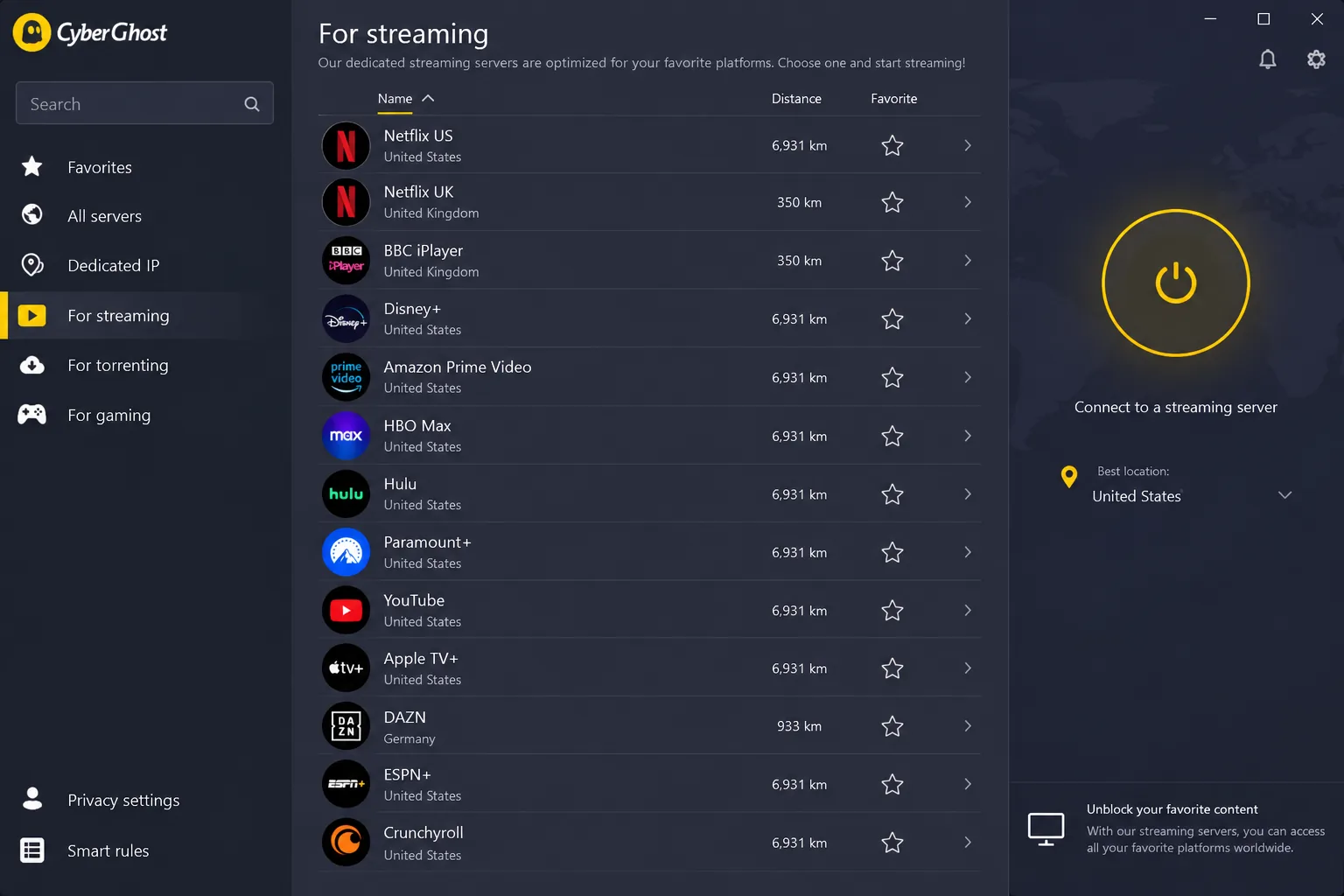
Where CyberGhost Beats Proton VPN
CyberGhost offers a 45-day money-back guarantee on its long plans, against Proton's 30-day window. Its two-year rate of about $1.99 a month is also well below Proton's. Proton is the faster and roomier service, though. CyberGhost's downloads dropped by more than 55% on Australia and South Africa servers, and nearby servers lost about 20%. It also allows only 7 devices, a cap that fills up quickly in a household with phones, laptops, a TV stick and tablets.
Pros
- Labelled streaming servers that work on the first try
- Fast first connection
- No-logs policy audited by Deloitte three times
Cons
- Big speed drops on long-distance servers
- Only 7 simultaneous devices
- First renewal roughly doubles the effective monthly rate
Is There a Good Free Proton VPN Alternative?
Yes, but be honest about what free means. Proton VPN's free plan is already one of the strongest available, with no data cap and no ads. Most free alternatives trade that away for data limits, fewer countries or slower servers at busy times. Windscribe is the one we would switch to, mainly because you choose your location and connect as many devices as you like.
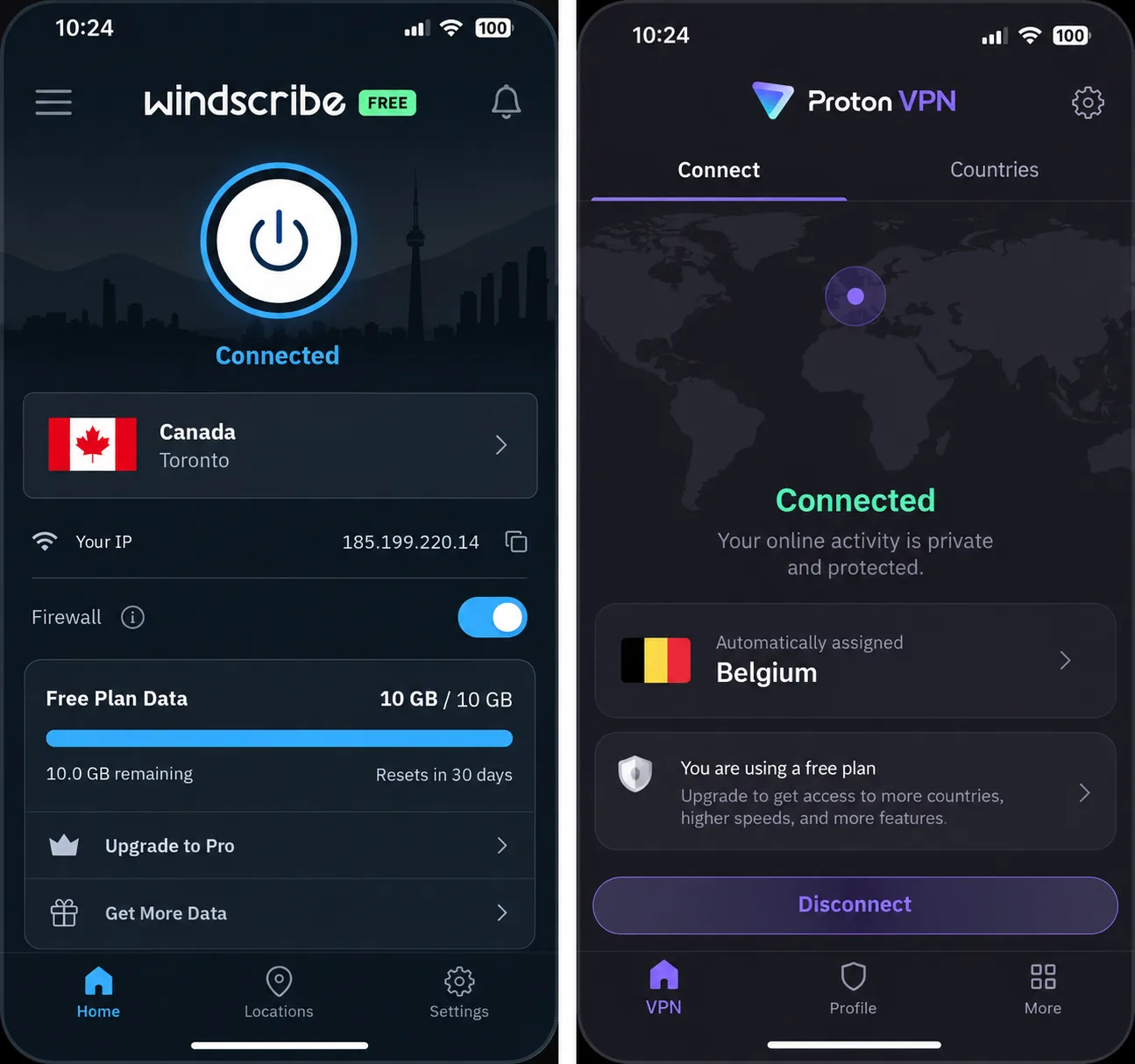
The cost is data. At 10GB a month, Windscribe's free plan suits browsing, email and the odd download. It will not last through a month of streaming. For a wider look at no-cost options, see our roundup of free VPN alternatives.
Free VPNs from unknown developers often pay their bills with your browsing data. Stick to services that publish their privacy policy, name the company behind them, and offer a paid plan that funds the free one.
How to Choose the Right Proton VPN Alternative
Start with the reason you are leaving. If Proton felt slow on distant servers, NordVPN is the clearest upgrade. If you ran out of device slots, Surfshark, PIA and Windscribe all allow unlimited connections. If price is the issue, PIA and CyberGhost have the lowest long-term rates, while Mullvad's flat price never jumps at renewal.
Privacy-first users should check two things: whether the no-logs policy has been independently audited, and where the company is based. Every pick here except Mullvad and Windscribe has a no-logs assurance audit, and Mullvad's 2023 police search is strong evidence in its own right. Streaming fans should favour NordVPN, ExpressVPN, Surfshark or CyberGhost, and avoid PIA.
Plan your exit from Proton before you buy. If you subscribed through Apple, Google Play or Amazon, you have to cancel and request any refund through that store, not through Proton.
Bottom Line: Which Proton VPN Alternative Should You Pick?
NordVPN is the pick we would make for most people leaving Proton, and the verdict below explains why. If you need more than 10 devices, Surfshark is the value pick: unlimited connections at $2.49 a month on its two-year plan. If your reason for switching is narrower, the "How to Choose" advice above points to the right specialist. For the wider field beyond Proton's rivals, our best VPN guide ranks every service we score.