
"Panda VPN" is two unrelated products. PandaVPN is a standalone VPN app registered in the Seychelles, and Panda Dome VPN is the VPN inside Panda Security's antivirus suites, now a WatchGuard brand. This guide covers replacements for both.
People leave PandaVPN because its connections drop out, its streaming results swing from one session to the next, and its no-logs policy has never been independently audited. People leave Panda Dome VPN because the free tier stops at 150 MB a day and picks the server for you.
Our top pick is NordVPN, which pairs a sixth Deloitte no-logs assurance with fast connections that held up in our streaming checks. Below, we explain which Panda you're replacing and then rank all eight alternatives.
Which Panda VPN are you replacing? PandaVPN vs Panda Dome VPN
PandaVPN is unrelated to Panda Security. PandaVPN's privacy policy says the company registered its business in the Seychelles and operates under Seychelles law, but it lists no street address. The company name is not consistent either. The website footer reads MOPUBI LIMITED, while its App Store listings name Wildfire Inc. as the developer, so it is unclear who legally operates the service.
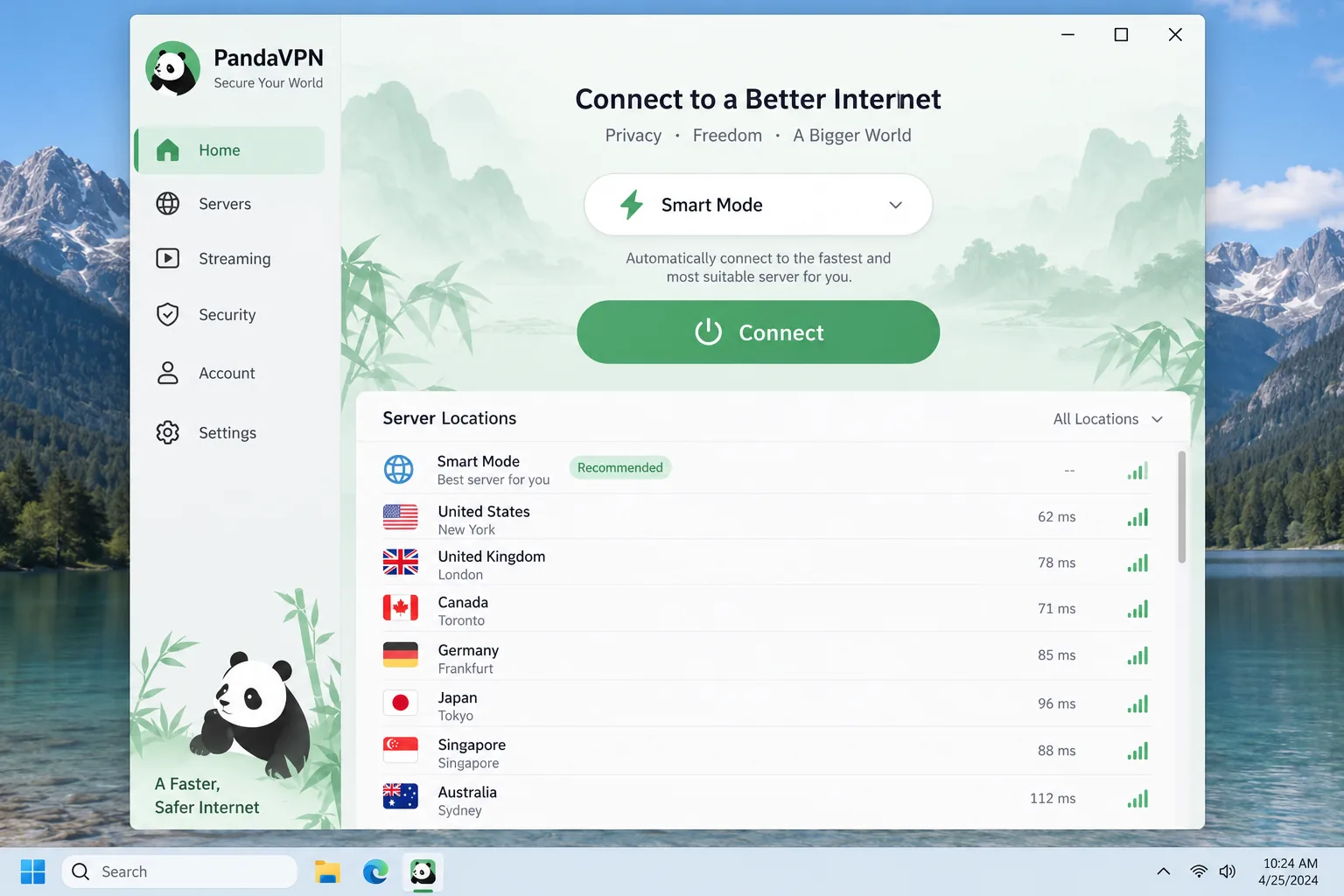
PandaVPN scored 5.5/10 in our Panda VPN review. Setup is quick, and the apps connected within a couple of minutes of paying, but daily use was less smooth. Connections dropped out and servers went down for maintenance during normal sessions. Latency sat around 141 ms, a delay that gaming and video calls feel first.
Streaming was the clearest example of that inconsistency: in one round, Netflix, Hulu, Disney+, HBO Max, BBC iPlayer and Prime Video all failed. In another, Netflix, Disney+, HBO Max and Hulu unblocked while Prime Video still refused to load.
The privacy picture is mixed. WebRTC and DNS leak tests pass, and the policy says PandaVPN does not log browsing history, traffic destinations or DNS queries. It does not address connection timestamps or session IPs, though, and no independent audit has checked any of it. We also found no kill switch in the desktop or mobile apps, and the macOS app has no security settings to check at all.
Pricing is cheap on paper. PandaVPN charges $4.99 for 7 days, $9.99 for a month, or $2.49 a month on its 12 Months + 12 Months Free plan billed at $59.99. Its pricing page also shows different billed totals for the same plans, so the checkout amount may not match the headline rate.
PandaVPN offers a 7-day money-back guarantee, but it does not cover the 7-day plan. Our refund request sat unanswered across chat, email and Twitter, and confirmation arrived about a week later, which used up the whole window. If you want out, ask on day one.
Panda Dome VPN is a different product from a different company. WatchGuard Technologies completed its acquisition of Panda Security in June 2020, and Panda Security's own VPN page describes the company as a WatchGuard Technologies brand. Its VPN runs on Windows, macOS, Android and iOS.
Every Panda Dome tier below Premium caps the VPN at 150 MB of secure traffic per day, and the Free tier connects only to the nearest server. Premium removes the cap and offers more than 60 virtual locations on up to 5 devices, with a 30-day money-back guarantee. There is no kill switch on either tier.
Panda VPN alternatives at a glance
Every provider below has an independent no-logs audit, which PandaVPN cannot claim. "Works in China" status changes with each round of Great Firewall blocking, so read that column as a snapshot.
| Provider | Buy | Price per month | Free plan | Servers/countries | Works in China | Independent no-logs audit | Best for |
|---|---|---|---|---|---|---|---|
 |
Check price → | About $3.09-$3.49(2-yr promo) | No | About 9,300+ servers | Sometimes (obfuscated servers, NordWhisper) | Deloitte (6th, 2026) | Best overall |
 |
Check price | $3.49(2-yr) | Yes (1 device, 10 countries) | 20,000+ / 140+ countries | Sometimes (Stealth, paid only) | Securitum (annual) | Privacy and a free plan |
 |
Check price | About $4.99(intro term) | No (7-day mobile trial) | 113 countries | Often, but inconsistent | KPMG (2025) | Ease of use and streaming |
 |
Check price | $2.49(2-yr) | No | 4,500+ / 100 countries | Sometimes (NoBorders + Camouflage) | Deloitte (2023, 2025) | Unlimited devices on a budget |
 |
Check price | EUR 5flat | No | About 566 / 50 countries | Unverified | Cure53 (2024 infrastructure) | Anonymous sign-up |
 |
Check price | About $1.89(3-yr + 3 mo) | No | 104 countries | Unreliable | Deloitte (Dec 2025) | Customization and torrenting |
 |
Check price | About $1.99-$2.19(26-mo) | No | 100+ countries | No (no obfuscation) | Deloitte (Feb 2026) | Beginners who stream |
 |
Check price | $2.19(2-yr) | No | 3,000+ servers / 150+ locations | No | Schellman (Feb 2025) | Whole-household coverage |
The best Panda VPN alternatives
Before ranking anything, we set one hard rule: every pick needed a published independent no-logs audit, the thing PandaVPN has never had. From there, we judged each alternative against the problems we hit with PandaVPN and Panda Dome VPN: how much speed it kept on nearby and distant servers, whether leak tests came back clean, and how its kill switch behaved when a connection dropped.
We also weighed how reliably each one unblocked the major streaming services, since that is one of the main reasons people leave PandaVPN. On the paperwork side, we compared jurisdiction, ownership, device limits, refund windows and renewal prices. The order below follows each provider's HTS review score, and where two scores tie, as NordVPN and Proton VPN do at 9.0, we ranked by breadth of features and streaming reliability.
1. NordVPN
NordVPN is the replacement we'd hand to anyone who wants one subscription that does everything well. It scored 9.0/10 in our NordVPN review.
Speed is where the gap with PandaVPN shows most: on nearby servers we lost only about 4% of download and 7% of upload speed, and 4K streams played with no buffering. Netflix, Hulu, BBC iPlayer and Prime Video unblocked reliably, a consistency PandaVPN could not manage from one session to the next.
The advanced features carry a cost. Double VPN cut our speed by around 80% and only runs on preset server pairs, so it suits sensitive sessions rather than everyday use. The map view also needs zooming before you can pick a server, and the list view is quicker.
NordVPN is based in Panama and covers 10 devices. Its sixth Deloitte no-logs assurance (ISAE 3000) was announced in February 2026. Features include NordLynx, Threat Protection Pro, RAM-only servers and a kill switch. There's no free plan, and the two-year promotional rate changes often, so expect about $3 to $3.50 a month before a higher renewal.
2. Proton VPN
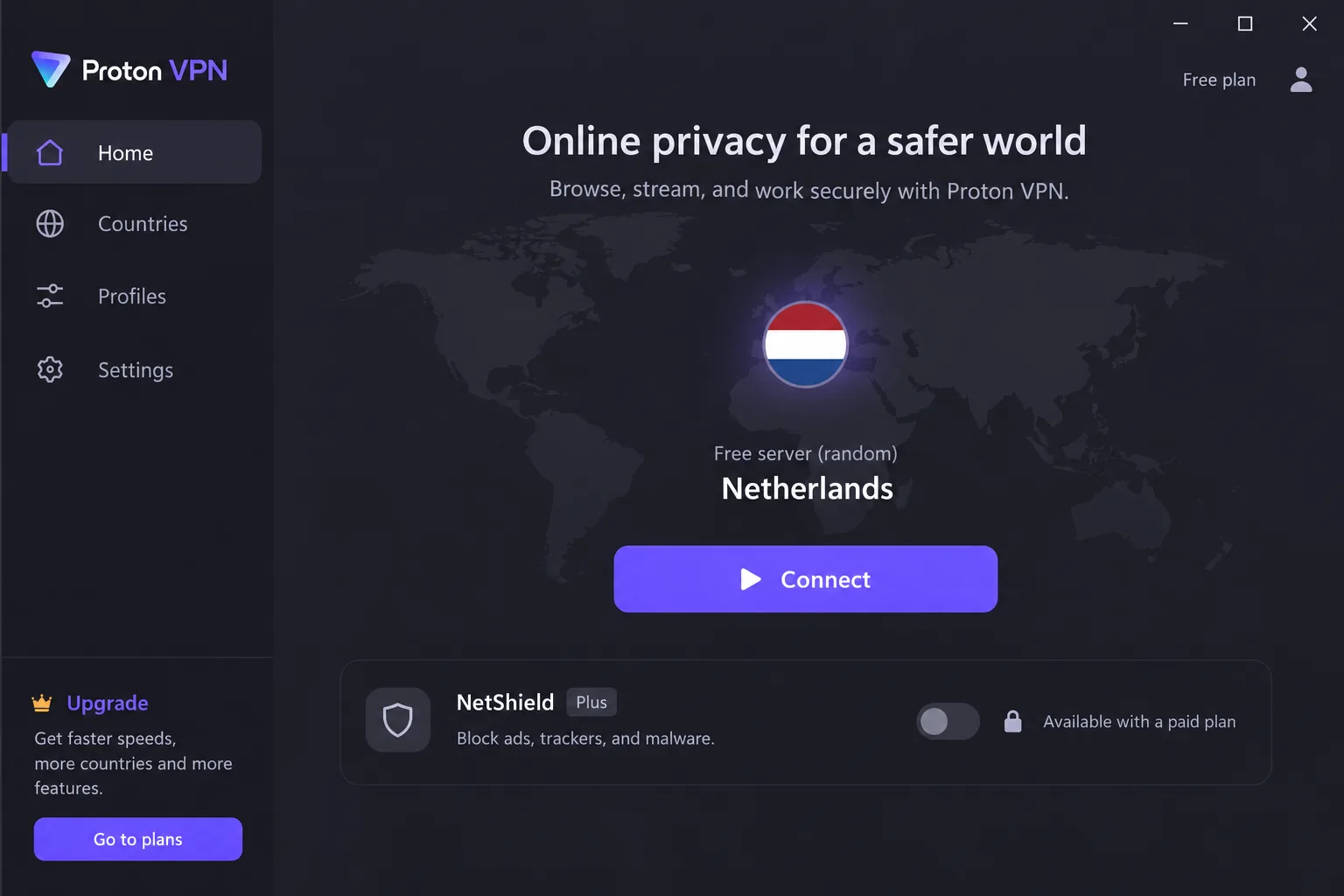
Proton VPN ties NordVPN at 9.0/10 in our Proton VPN review and is the stronger choice if privacy comes first or you want a free plan that actually works. It is run by Proton AG in Switzerland, and its apps have been open source since 2020.
Our leak tests for DNS, IPv6 and WebRTC stayed clean across dozens of countries. Nearby servers kept about 90% or more of our baseline download speed, and distant servers averaged around three-quarters. The US Netflix library loaded without any server-hopping.
Upload speeds trail NordVPN, and support is the weak spot. Live chat runs roughly 9am to midnight CET rather than around the clock, and our email replies took two days or more.
Securitum's annual no-logs audits of Proton VPN reached their fifth round in 2026. VPN Plus costs $9.99 monthly or $3.49 a month on the two-year plan ($83.76 for the first 24 months), covers 10 devices and reaches 20,000+ servers in 140+ countries. Secure Core multi-hop, the NetShield blocker and the Stealth protocol are included.
3. ExpressVPN
Where Proton VPN puts privacy first, ExpressVPN puts simplicity first. Its apps are among the easiest we've used: one large connect button, a recommended Smart Location and very little to configure. It scored 8.8/10 in our ExpressVPN review.
Netflix, BBC iPlayer, Disney+, Prime Video and Hulu unblocked across many regions for us. When a server timed out or our network changed, Network Lock (the kill switch PandaVPN lacks) fired correctly. On a slower home line, though, downloads dropped by roughly 37 to 39 percent on nearby servers, a bigger hit than NordVPN or Proton VPN took.
ExpressVPN is based in the British Virgin Islands and has been owned by Kape Technologies since September 2021. A KPMG assessment published in June 2025 checked its TrustedServer and privacy-policy claims. Basic covers 10 devices and includes servers in 113 countries, with a 30-day money-back guarantee and a 7-day free trial on iOS and Android.
The renewal is the sticker shock. When we checked, the intro rate was $4.99 a month for the first 15 months, though ExpressVPN changes that term often. Basic then renews at $99.95 a year.
4. Surfshark
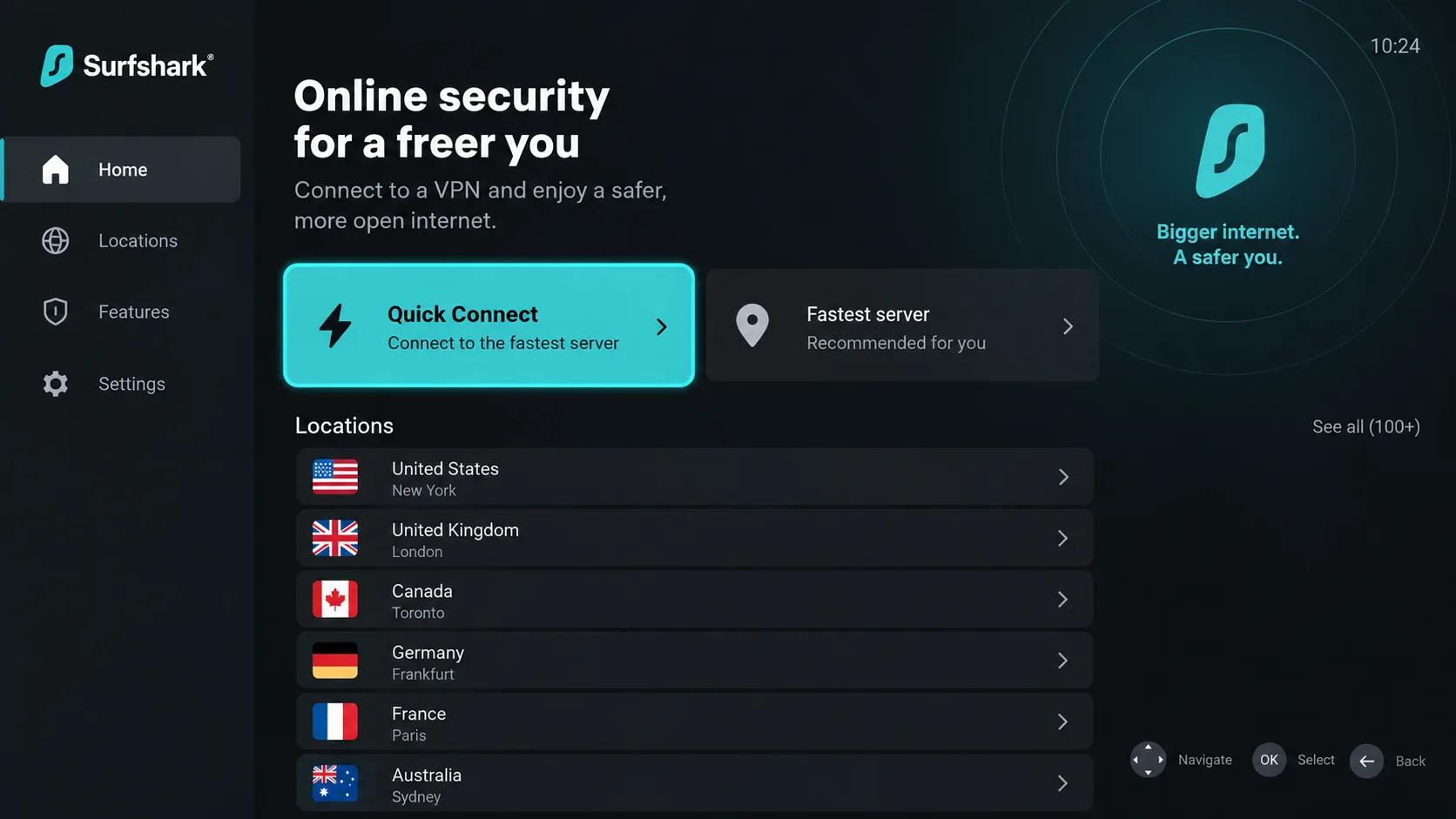
Surfshark is the value pick, and the only top-four alternative with unlimited simultaneous connections. That beats PandaVPN's device cap, which depends on the plan you buy.
On macOS, our downloads slowed by only about 10% even on a transatlantic server. The Windows app showed bigger slowdowns and occasional ping spikes, so Mac users get the better experience. The kill switch held, and no IPv4, IPv6, DNS or WebRTC leaks appeared. Netflix unblocked in 15+ regional libraries, and so did Max, Disney+, Hulu and BBC iPlayer. Native Android TV, Apple TV and Fire TV apps made TV setup simple. Those results earned it 8.6/10 in our Surfshark review.
Starter costs $2.49 a month on the two-year plan (24 months plus 3 bonus months), billed $67.23 up front, then renews at $79 a year. The month-to-month plan is among the priciest in the category, so the value is on the long plan.
Surfshark B.V. is based in Amsterdam, and Deloitte verified its no-logs policy in 2023 and again in 2025. It runs 4,500+ servers in 100 countries, with the CleanWeb blocker, MultiHop and Camouflage obfuscation.
5. Mullvad VPN
Signing up for Mullvad took us seconds. The site issued an account number and asked for no name or email, which is the one habit it shares with PandaVPN. The difference is that Mullvad has an audit trail to back up its privacy claims. On nearby servers, it also held almost all of our baseline speed, about 92 of 95 Mbps.
Streaming is inconsistent: in some sessions Netflix, Prime Video, Disney+ and BBC iPlayer loaded on the first try while Max and Hulu failed, and in others Netflix and Disney+ would not cooperate. Websites also threw CAPTCHA challenges often while we were connected. Support is by email only.
Mullvad VPN AB is based in Gothenburg, Sweden, and it scored 8.5/10 in our Mullvad VPN review. Cure53's fourth infrastructure audit of Mullvad was completed in June 2024. The service has run on WireGuard only since its OpenVPN servers shut down on 15 January 2026, and it adds DAITA traffic-analysis defence, multihop and an always-on kill switch. Pricing is a flat EUR 5 a month (about $5.61) on any term, with no sales, 5 devices per account and a 14-day money-back guarantee.
6. Private Internet Access (PIA)
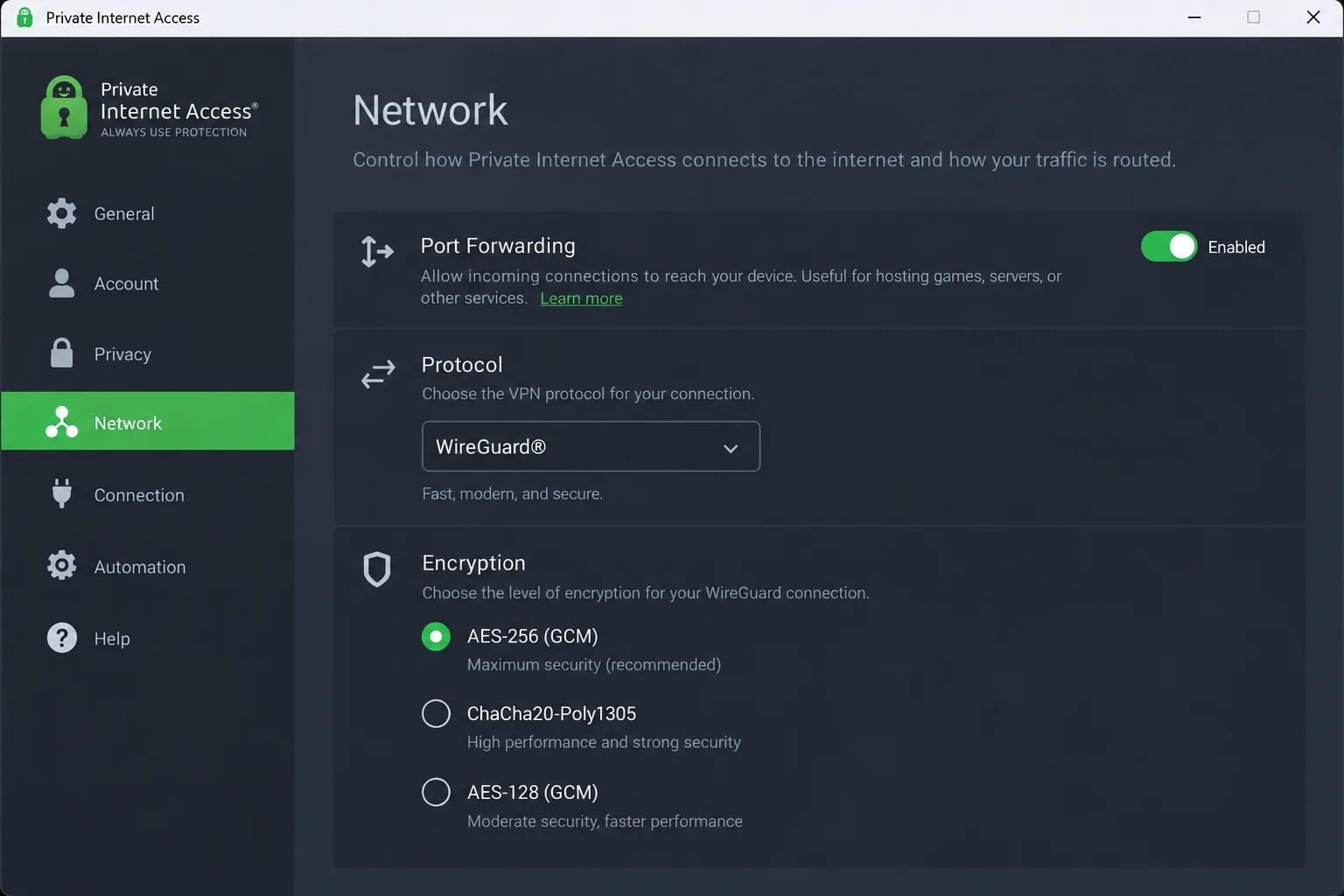
Torrenting through PIA with port forwarding cost us very little speed, but the forwarded port changed on every reconnect, so we had to update the torrent client each time. That small chore sums up PIA well: it hands you every setting, and it expects you to manage them.
If Mullvad strips settings back, PIA is the best Panda VPN alternative for people who want to tune encryption, ports and routing themselves. The desktop app's long settings list overwhelmed us at first, but it became easy to work with once we had it tuned. Speed loss was small, about 4% on local servers and 18% internationally. It scored 8.4/10 in our PIA review.
Streaming is weak, since US and UK Netflix no longer unblock, and Disney+ and Hulu detect the VPN. Mobile upload speeds were also noticeably weaker, around 70% of baseline.
PIA is based in the United States and has been owned by Kape Technologies since 2019. Its third Deloitte no-logs assurance was completed on 19 December 2025. It allows unlimited simultaneous connections across NextGen servers in 104 countries, with open-source apps and RAM-only servers. PIA rotates its long-term deal. When we checked, it was $1.89 a month ($73.71 billed) for three years and three months. The one-year plan is $47.88 and the monthly plan $11.95. Auto-renewal is on by default, and refunds need a manual support request within the 30-day window.
7. CyberGhost VPN
Where PIA struggles with streaming, CyberGhost builds its app around it. That makes CyberGhost the easiest pick here for beginners who mainly want to watch. It scored 8.4/10 in our CyberGhost VPN review.
On first launch the app connected to a nearby server in under ten seconds. We then opened the dedicated streaming servers for Netflix US, BBC iPlayer, Disney+ and Prime Video, and each loaded on the first try without server-hopping.
Long-distance connections are the weak spot. Downloads dropped by more than 55 percent on Australia and South Africa servers, while nearby servers lost about 20 percent. The 7-device cap also filled up quickly in a household with phones, laptops, a TV stick and tablets.
CyberGhost has been owned by Kape Technologies since 2017 and operates from Bucharest, Romania. Its third Deloitte no-logs report was published on February 24, 2026. The network spans 100+ countries and includes NoSpy and RAM-only servers.
The 26-month plan costs about $1.99 to $2.19 a month depending on the current promotion, and the monthly plan is $12.99. The first renewal rolls into a yearly term at the same dollar amount, roughly doubling the monthly rate. The 45-day money-back guarantee on long plans is the longest here (14 days on monthly).
8. IPVanish
IPVanish's WireGuard speeds swung widely from one location to the next. A Seattle server peaked at 829 Mbps, while a Los Angeles server dropped to about 262 Mbps, so it pays to try a few nearby locations before settling on one. Netflix US and UK and BBC iPlayer still streamed in full HD, and IP, DNS and WebRTC leak tests passed on every server we checked.
Like Surfshark and PIA, it allows unlimited connections, and its simpler app layout was easy to learn. Together, those make IPVanish a solid household pick. The Scramble obfuscation feature works with OpenVPN, and Threat Protection Pro is available on Windows and macOS.
IPVanish is owned by Ziff Davis and based in the United States, and it scored 8.0/10 in our IPVanish review. Leviathan Security Group and Schellman Compliance have audited its no-logs policy, most recently Schellman in February 2025. It runs over 3,000 servers in 150+ locations. Essential costs $2.19 a month on the two-year plan ($52.56) or $12.99 monthly, then renews at $89.99 a year, a sharp jump after the promotional term. The 30-day money-back guarantee excludes monthly plans.
Free alternatives to Panda VPN
None of the eight picks above is free except Proton VPN, and that makes Proton VPN Free the obvious first stop. It covers 1 device on servers in 10 randomly selected countries, with no data limits and no ads, at medium speed. That alone beats Panda Dome Free's 150 MB a day.
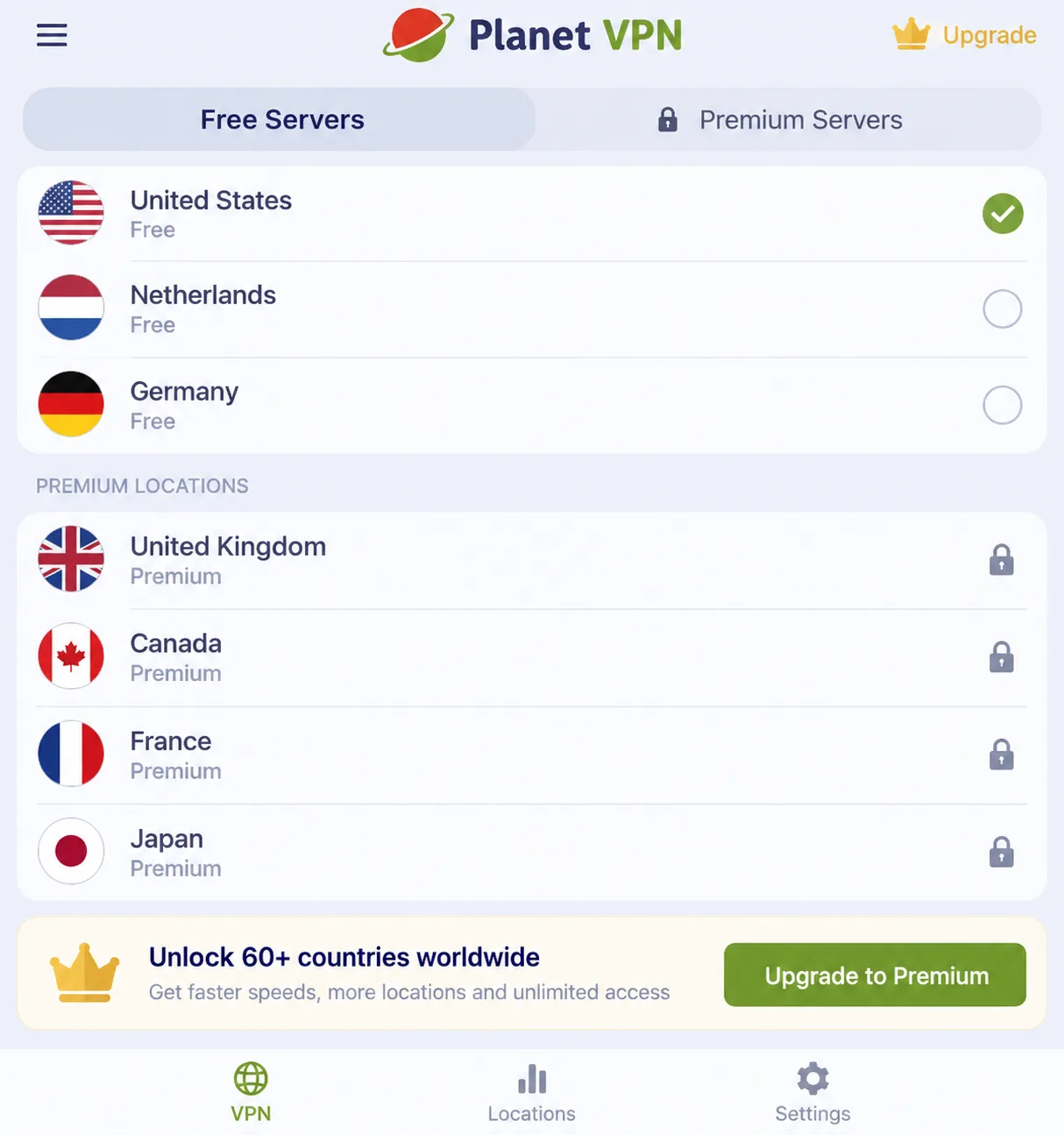
Planet VPN is the no-account option. Its free plan has 6 servers across 5 countries, no data cap and no sign-up, but it is ad-supported and excludes P2P, streaming, a kill switch and split tunneling. Premium is $3.99 a month billed yearly. See our Planet VPN review.
ClearVPN, from MacPaw, is harder to call free. Its own help center says "ClearVPN is not free" and offers a 3-day trial. Whether a limited free version appears depends on your platform and account. Premium starts at $3.75 a month on the yearly plan.
VeePN's free version gives you one random server location, two-hour sessions and lower speeds on Windows, Android, iOS and browser extensions. VeePN is based in Panama, and its no-logs claim has not been publicly verified by an independent audit report.
Hotspot Shield, Hide.me and TorGuard also turn up on other lists, but we kept this guide to services with an HTS score. For more options, see our best free VPN alternatives.
Best Panda VPN alternative for China and restricted networks
PandaVPN's default connect option, Smart Mode, is a Shadowsocks-based obfuscation setting built for restricted networks. We found no recent test of PandaVPN inside China, so treat that as a design claim rather than a result.
Astrill VPN is the specialist alternative. Its StealthVPN protocol uses dual-layer encryption built to evade the Great Firewall, and OpenWeb is its second option. It scored 7.5/10 in our Astrill review. The trade-offs are clear: speeds dropped roughly 46 to 50% even on nearby servers under the heavier stealth protocols, and the app interface feels dated.
Astrill is expensive at $12.50 a month on the two-year plan, and all sales are final with no money-back guarantee. The 7-day free trial needs no card, but it is not available to users already inside China, so set it up before you travel.
Among the eight picks, ExpressVPN connects most often thanks to automatic obfuscation, though "connected but no internet" failures still happen. NordVPN's obfuscated servers and NordWhisper, Proton VPN's paid-only Stealth protocol and Surfshark's NoBorders mode with Camouflage sometimes work. PIA is unreliable there, Mullvad's China performance is unverified, and CyberGhost and IPVanish do not work. Blocking changes from week to week and differs by city and mobile carrier, so see our best VPN for China guide before you rely on any single service.
How we picked these alternatives
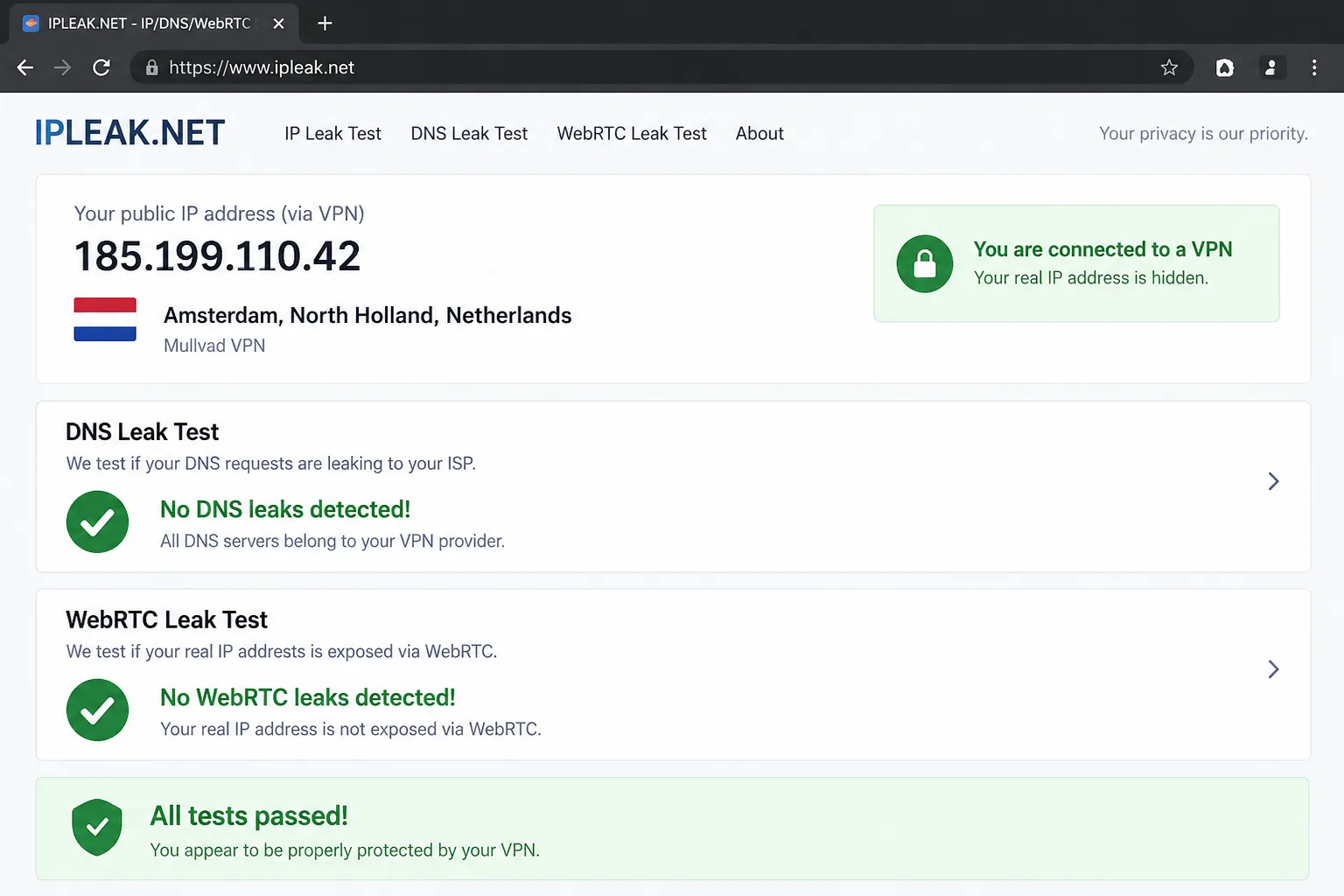
The selection rules sit above the picks, so this is the short version: an independent no-logs audit was the entry ticket, and the HTS review score set the order. The one test we'd ask you to repeat yourself is a leak check after you switch, which confirms your new VPN is hiding your real IP address and DNS servers.
How to choose the right Panda VPN alternative
With eight strong options, the right one depends on why you're leaving Panda. A VPN helps protect your digital identity online and keeps your internet traffic private on any network, but only if the company behind the software delivers what its policy promises. That is why independent reviews of the policy, including audits, matter more than feature lists.
If PandaVPN's unaudited policy and unclear ownership worry you, pick a provider with a recent independent audit and a named, consistent company behind it. Proton VPN and Mullvad are the strongest on that count.
If streaming was the problem, NordVPN, ExpressVPN and CyberGhost gave the most consistent results across platforms. That consistency matters if you want your usual libraries anywhere you travel. PIA and Mullvad are weaker choices for that, even though both are good at privacy.
Count your devices before you buy, because CyberGhost's 7-device cap and Mullvad's 5 can fill fast, while Surfshark, PIA and IPVanish allow unlimited connections. For a small business or a busy household, that alone can decide it.
The cheapest monthly rate on a VPN checkout page is a promotion. The renewal price is what you'll pay from year two onward.
Check the renewal price, not just the intro rate. ExpressVPN renews at $99.95 a year and IPVanish at $89.99, while Mullvad's flat EUR 5 never changes. Finally, look at the refund window: CyberGhost gives you 45 days on long plans, most others give 30, and Mullvad gives 14.
Install your new VPN and confirm it connects before you cancel Panda. That way you're never browsing without protection, and you can still use the old refund window if the new app doesn't suit you.
How to switch from Panda VPN (cancel and uninstall)
Uninstalling PandaVPN does not stop billing, so cancel the subscription first, in the place where you originally paid.
- iPhone or iPad purchase: Open Settings, tap your name, then tap Subscriptions > PandaVPN > Cancel Subscription.
- Android purchase: Open the Google Play Store, tap your profile icon, then tap Payments & subscriptions > Subscriptions > PandaVPN > Cancel subscription.
- Website purchase: Sign in to your Panda account page and cancel there, or email PandaVPN support and keep the reply.
- Panda Dome VPN purchase: Sign in to My Panda, then go to Products and services > Manage product > Cancel subscription.
Next, remove the apps. On Windows, open Settings > Apps > Installed apps, select PandaVPN or Panda Dome, and choose Uninstall. On a Mac, quit the app and drag it from Applications to the Trash. On a phone, press and hold the app icon and choose to remove or uninstall it.
Then connect with your new VPN and run a leak test to confirm your IP address and DNS servers have changed.