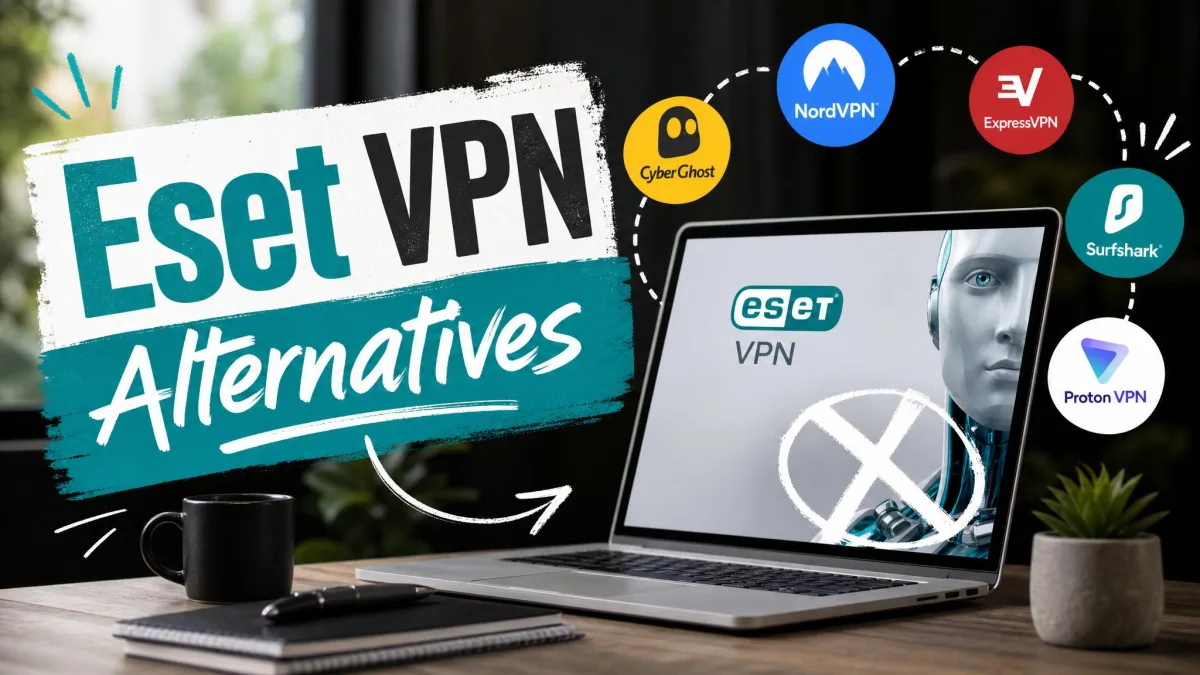
ESET VPN is a capable service, but you can't buy it on its own. It only comes inside ESET HOME Security Premium and ESET HOME Security Ultimate, so you pay for a full security suite to get it, and the cheaper Premium plan covers fewer VPN devices than antivirus devices. In our ESET VPN review it scored 6.8/10, which is decent for a bundled extra but well behind the best standalone services.
Because these factors matter most when you switch, we compared seven dedicated VPNs against it on independent no-logs audits, download speed on near and distant servers, streaming access, device limits and price. We also ran leak checks and tried kill switches wherever our full reviews covered them. Our top pick is Proton VPN, which pairs an audited no-logs policy with a huge network and a free plan.
ESET VPN alternatives at a glance
Here is how the seven picks compare, ranked by the score each earned in our full review, with ESET VPN in the last row as the baseline.
| Product | Buy | Starting price | Simultaneous devices | Server countries | Independent no-logs audit | Free plan | Streaming |
|---|---|---|---|---|---|---|---|
 |
Check price → | $2.99/mo (2-yr) | 10 | 149 | Yes, Securitum 2026 | Yes | Strong (20+ Netflix libraries) |
 |
Check price | $3.49/mo (2-yr) | 10 | About 137 (incl. virtual) | Yes, Deloitte 2025 | No | Strong |
 |
Check price | About $3/mo (2-yr promo) | 10 (Basic) | 113 | Yes, KPMG 2025 | No | Strong |
 |
Check price | $2.49/mo (2-yr) | Unlimited | 100 | Yes, Deloitte 2025 | No (7-day trial) | Strong |
 |
Check price | EUR 5/mo flat | 5 | 50 | Infrastructure audit (Cure53 2024) | No | Inconsistent |
 |
Check price | $5.75/mo ($69/yr) | Unlimited | 69+ | Infrastructure audit (Packetlabs 2024) | Yes (10GB/mo) | Netflix US/UK; patchy elsewhere |
 |
Check price | $2.03/mo (3-yr) | Unlimited | 91 | Yes, Deloitte 2025 | No (7-day mobile trial) | Good on streaming servers |
 |
Bundled only(Ultimate $179.99/yr) | 3-5 (Premium) / 10-25 (Ultimate) | 40 (Premium) / 70+ (Ultimate) | No public audit | No | Netflix in some regions; others hit-or-miss |
Why switch from ESET VPN?
Most people who search for an alternative already have ESET antivirus and like it. The real question is whether the VPN inside the suite is good enough to be your only VPN, and for many households it isn't quite there.
What ESET VPN does well
ESET didn't bolt on a bare-bones VPN. It supports six protocols (WireGuard, IKEv2, OpenVPN UDP, OpenVPN TCP, Stealth and Wstunnel), and you can switch between them on the fly. In our testing WireGuard gave the snappiest connections, and everyday browsing and streaming felt on par with many standalone VPN clients.
Both plans include unlimited bandwidth. You also get split tunneling on desktop and Android, DNS leak protection and a desktop kill switch with Always-on and Automatic modes. Ultimate adds VPN for Router and a network of over 450 servers in more than 70 countries. Everything is managed from your ESET HOME account, right next to the antivirus and identity protection features you already pay for.
Where ESET VPN falls short
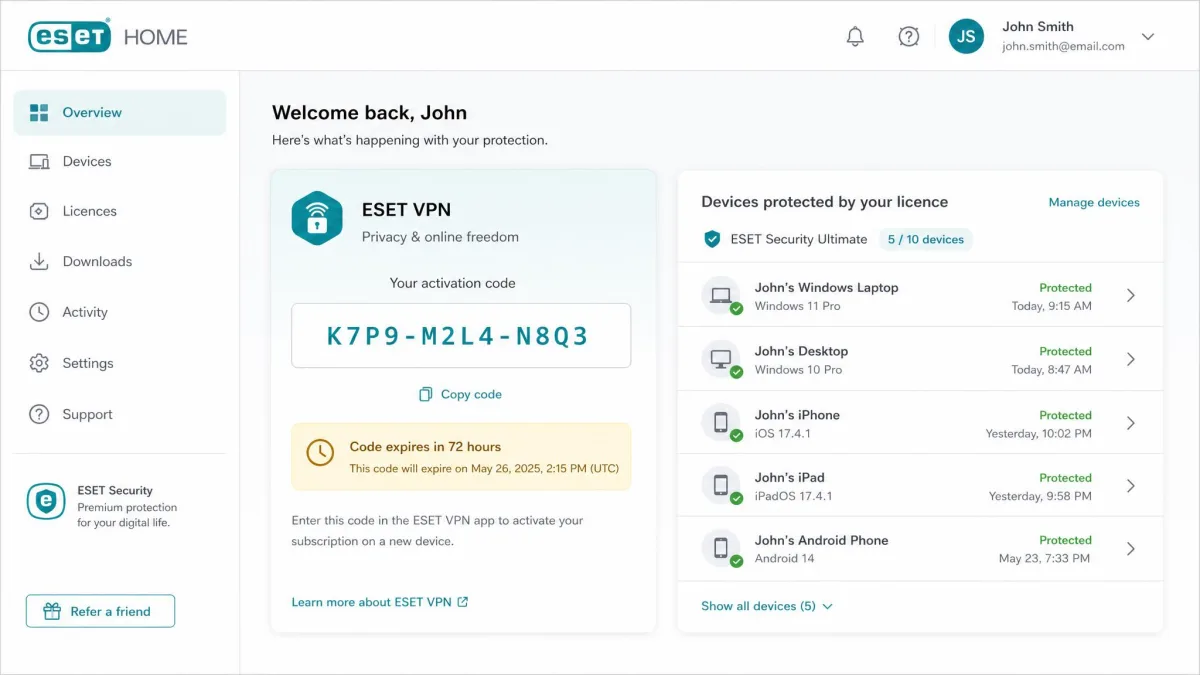
The biggest limit is packaging. ESET sells the VPN only inside its HOME Security Premium and Ultimate plans, and the entry Essential plan leaves it out. Premium reaches up to 40 countries and allows the VPN on just 3 devices on subscriptions of up to 10 devices, regardless of how many devices the security licence covers. A family with four or more protected devices can therefore end up with some that have antivirus but no VPN. Ultimate lifts the limits, at a cost of $179.99 for the first year.
Speed dropped more than we'd like on distant servers, and long routes felt noticeably slower. Download speeds fell around 15 to 25 percent on nearby servers and by half or more on long-distance routes. Netflix worked in a few key regions. Prime Video, Max, Disney+ and Hulu were hit-or-miss, and a server that worked one day could throw a proxy error the next.
Setup is also fiddlier than a standalone app, because each device needs its own single-use 10-character code from the account owner and the code expires after 72 hours. We also saw the kill switch fail during the first moments of a server connection, which left a brief window where the real IP could leak. Finally, ESET had published no independent audit of its no-logs policy as of September 2026.
1. Proton VPN - best overall ESET VPN alternative
Proton VPN is the best choice if you want an audited, privacy-first VPN with no device juggling, and it earns a 9.0 in our Proton VPN review.
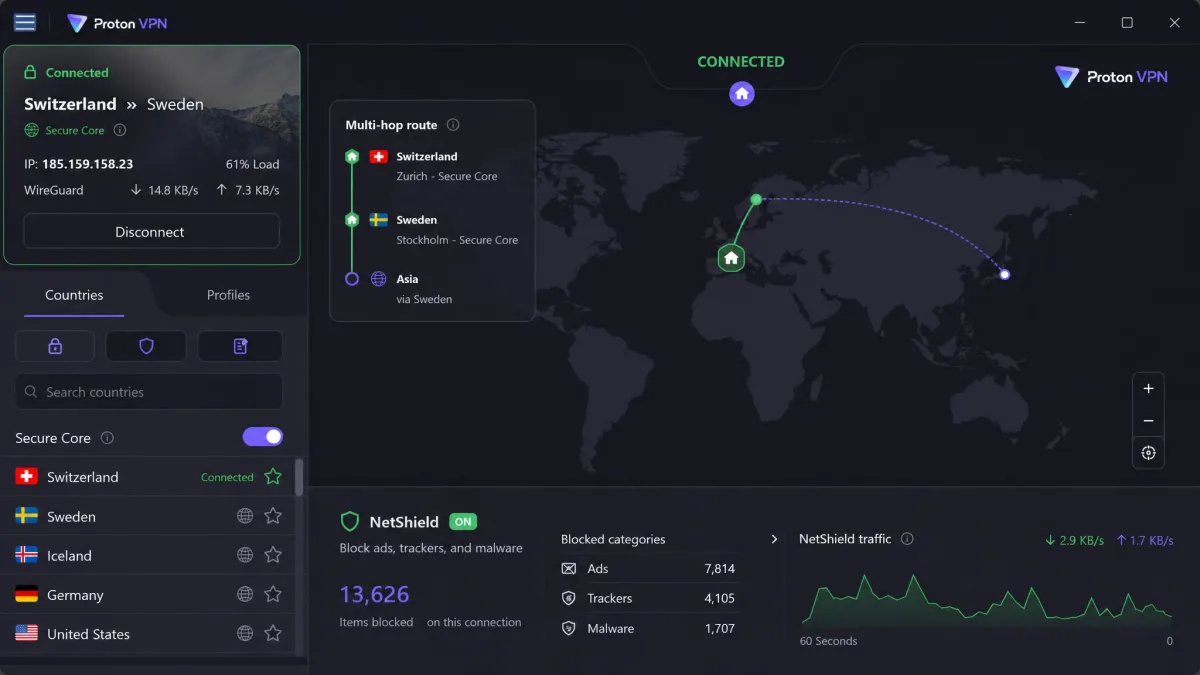
The network dwarfs ESET's, with 20,798 servers in 149 countries. VPN Plus covers 10 devices and costs about $2.99 a month on the 2-year plan ($71.76 upfront, renewing at $6.99 a month equivalent), or $9.99 month to month. Proton AG is based in Switzerland, and its independently audited no-logs policy has now passed a fifth consecutive annual review by Securitum, with the 2026 report published in June.
On our connection, download speed dropped by only about 8 percent on nearby servers, and 4K video loaded in under four seconds without buffering. The paid plan unlocked more than 20 Netflix libraries, and we saw no IPv6, DNS or WebRTC leaks across dozens of countries. Each install took about two minutes per device on Windows, macOS, iOS, Android and Android TV.
Proton also has a free plan with no ads and no data cap, though it's limited to one device, a small pool of servers and no streaming. Protocols include WireGuard, OpenVPN and Stealth, and refunds within 30 days are prorated, so you get back only the unused portion.
Anyone who wants proof of their VPN's privacy claims gets it here, along with 10 VPN seats and no suite to buy.
Pros
- Five consecutive Securitum no-logs audits
- Free plan with no data cap
- Secure Core multi-hop and NetShield blocker
Cons
- Secure Core costs roughly a third of your speed
- Live chat runs 9 a.m. to midnight CET, not 24/7
2. NordVPN - best for speed and security extras
Where Proton leads on privacy proof, NordVPN is our choice if raw speed and a long feature list matter most. It ties Proton at 9.0 in our NordVPN review.
NordVPN runs 9,300+ servers in about 137 countries, a count that includes virtual locations. The Basic plan costs $3.49 a month on the 2-year plan or $14.99 month to month, covers 10 devices and comes with a 30-day money-back guarantee. The company is based in Panama, and Deloitte completed its sixth no-logs assurance engagement in 2025, while protocols include NordLynx (built on WireGuard), OpenVPN and IKEv2.
Speed was the standout in our testing. Downloads dipped around 7 percent, with no buffering in 4K streams and no stutter on video calls. It unblocked Netflix, HBO Max, Prime Video, Disney+, ESPN+ and YouTube TV, and any server worked for streaming. Connections stayed stable with no disconnects, and DNS and WebRTC leak tests came back clean.
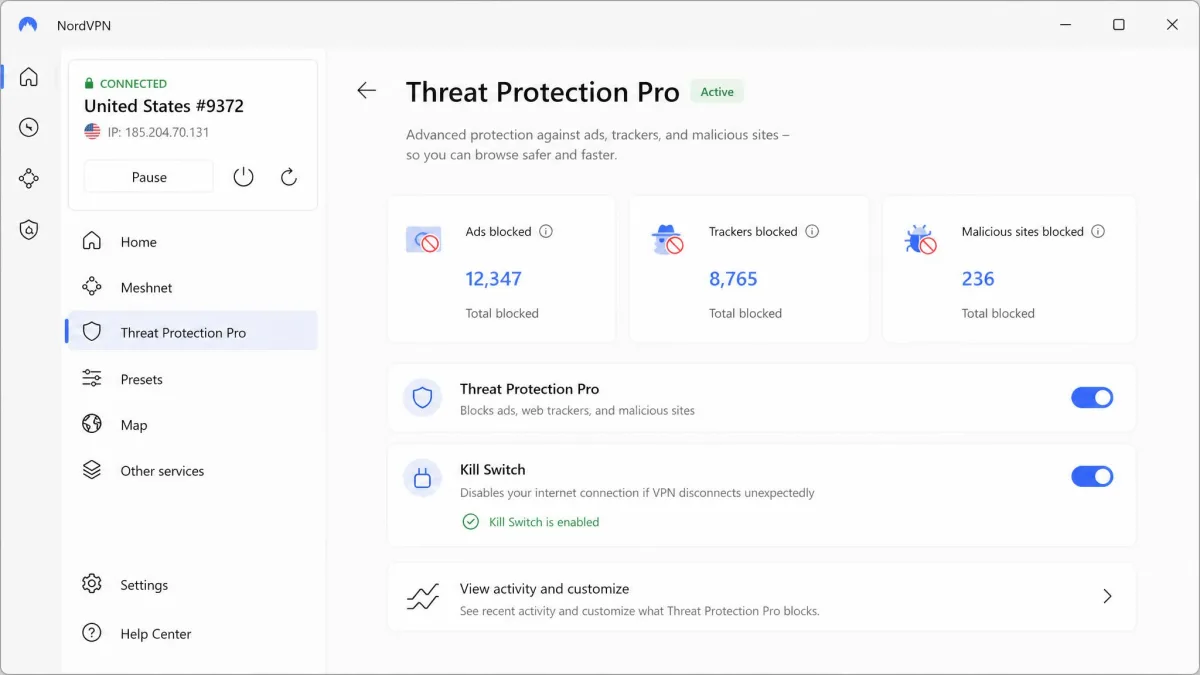
Extras include Threat Protection Pro, Double VPN, Meshnet and Dark Web Monitor. Double VPN slowed our downloads by about 80 percent, though, and its server pairs are fixed, while the kill switch ships with aggressive defaults that we had to adjust.
Next to ESET VPN, it wins on speed, streaming reliability and device count, all at a lower yearly cost than Ultimate.
Pros
- Only about 7 percent download loss nearby
- Unblocks every major streaming service we tried
- Six independent no-logs assurance engagements
Cons
- Obfuscated servers in only about 16 countries
- Month-to-month price is steep
3. ExpressVPN - best for streaming and travel
NordVPN is faster, but ExpressVPN suits travelers and streamers who want an app that just works in any country. It scores 8.8 in our ExpressVPN review.
Servers sit in 113 countries, and every one runs on TrustedServer, which keeps data in RAM only. The company is based in the British Virgin Islands, and a KPMG no-logs audit assessed its privacy-policy claims in 2025. Plans are tiered: Basic covers 10 devices, Advanced 12 and Pro 14. The 2-year Basic plan runs from about $3 a month depending on the current deal, and new users get a 30-day money-back guarantee.
Our download speeds dropped by roughly 37 to 39 percent on Mac and Windows, yet stayed fast enough for 4K streaming and gaming. It unblocked international Netflix libraries and worked with Hulu and ESPN+ on iOS. The Network Lock kill switch tripped only rarely under heavy daily use, and DNS and WebRTC leak tests passed.
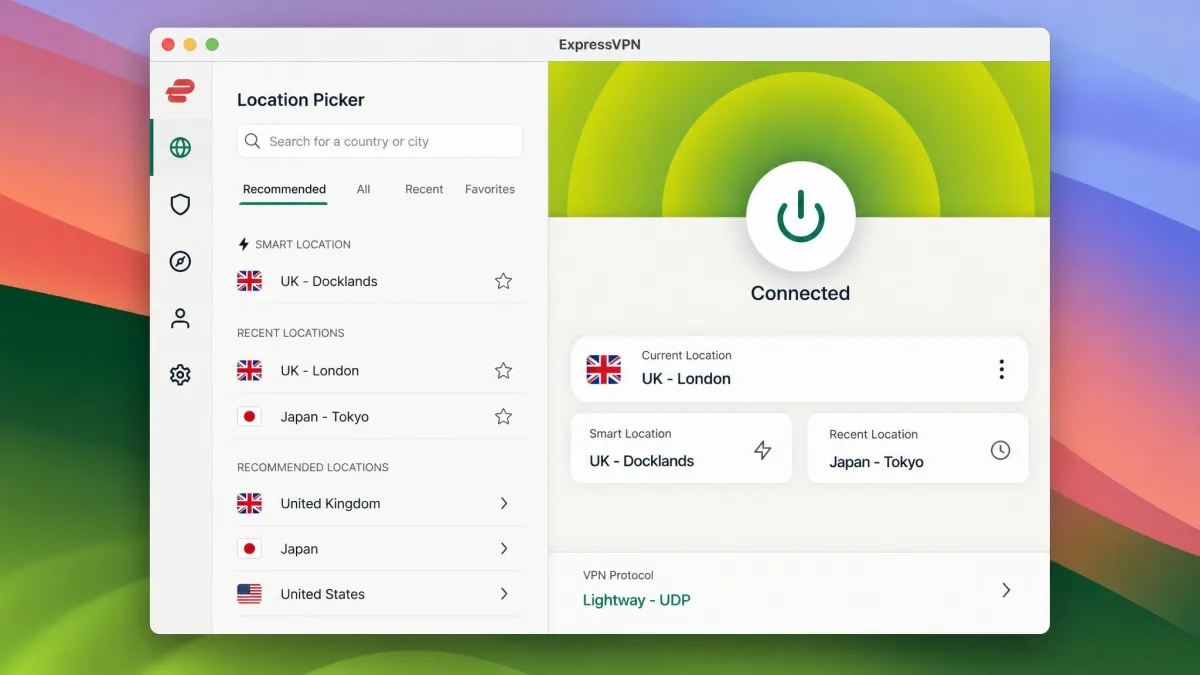
ExpressVPN's own Lightway protocol is the default, and MediaStreamer Smart DNS helps on devices that can't run a VPN client. On the downside, email support can take close to 48 hours, and it costs more than NordVPN and Surfshark for comparable terms.
For streaming, the gap with ESET is clear: international libraries opened reliably here, where ESET's servers came and went.
Pros
- RAM-only TrustedServer network
- Apps for routers, Fire TV and Apple TV
- Very stable connections
Cons
- Bigger speed drop than NordVPN or Proton
- Pricier than rivals on similar terms
4. Surfshark - best value for unlimited devices
The first three picks cap you at 10 to 14 seats. If ESET's device limit is what pushed you to look elsewhere, Surfshark removes the cap entirely and earns an 8.6 in our Surfshark review.
One Starter subscription covers unlimited simultaneous devices and costs $2.49 a month on the 2-year plan ($67.23 for the first 27 months), running on 4,500+ RAM-only servers in 100 countries. Surfshark B.V. is based in the Netherlands, and its no-logs policy was verified again by Deloitte in 2025. You get a 30-day money-back guarantee, plus a 7-day free trial if you start on Android, iOS or macOS.
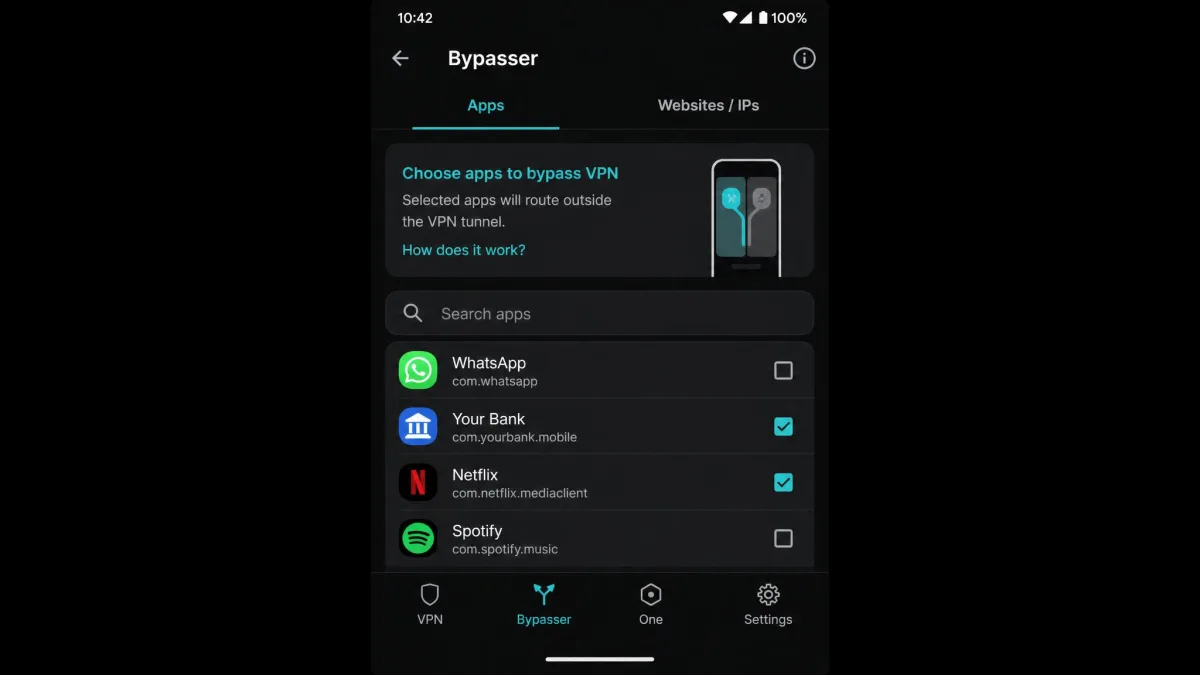
It changed Netflix regions without being flagged in our testing, and torrenting with Camouflage Mode on ran only about 5 percent slower than without the VPN. Download losses ranged from about 10 percent on long-distance links to around 30 percent on some Mac tests, and upload speeds were only passable. The kill switch held during connection drops, and Bypasser gave us fine-grained app and site exclusions.
CleanWeb blocks ads and trackers, and some platforms add post-quantum encryption. Month-to-month billing costs several times the long-term rate, so the 2-year plan is where the value sits.
Large households are where Surfshark pulls furthest ahead of ESET, since every phone, laptop and TV gets covered without a seat cap or activation codes.
Pros
- Unlimited devices on every plan
- Low 2-year price
- Camouflage Mode barely slows torrents
Cons
- Windows speeds can lag behind Mac
- Upload speeds are only passable
5. Mullvad VPN - best for anonymous sign-up
Surfshark wants an email address like most VPNs, while Mullvad VPN is for readers who want a VPN that never learns who they are. It scores 8.5 in our Mullvad review.
Sign-up asks for no email, just a random account number, and you can pay with cash, crypto, card or PayPal. The price is a flat EUR 5 a month (about $5.69) with no long-term discounts, and one account covers up to 5 devices. There's no free plan or trial, only a 14-day money-back guarantee that excludes cash payments.
Mullvad is based in Sweden and runs 566 servers in 50 countries. It has no dedicated no-logs certification, but its privacy claims have been tested in practice. A 2023 police search found no customer data and officers left empty-handed, and Cure53 completed a fourth infrastructure audit in 2024.
Speed was excellent, with an average download loss of only about 2 percent, and some nearby servers tested slightly faster than no VPN at all. The kill switch worked, Lockdown Mode added stricter blocking, and DNS and WebRTC leak tests passed. Streaming was the weak spot, because Netflix Canada and Australia worked while the US and UK libraries were repeatedly blocked. The app also has no setup tutorial and no automatic fastest-server option, and it's WireGuard only.
ESET ties its VPN to a named ESET HOME account, so Mullvad is the clear step up for anyone who wants privacy without that link.
Pros
- Account numbers instead of email sign-up
- Near-zero speed loss
- Quantum-resistant tunnels and DAITA
Cons
- Unreliable for US and UK Netflix
- Email-only support, no live chat
6. Windscribe - best free ESET VPN alternative
Every pick so far costs money, so Windscribe is the one to try if you'd rather not pay for a VPN at all. It scores 8.5 in our Windscribe review.
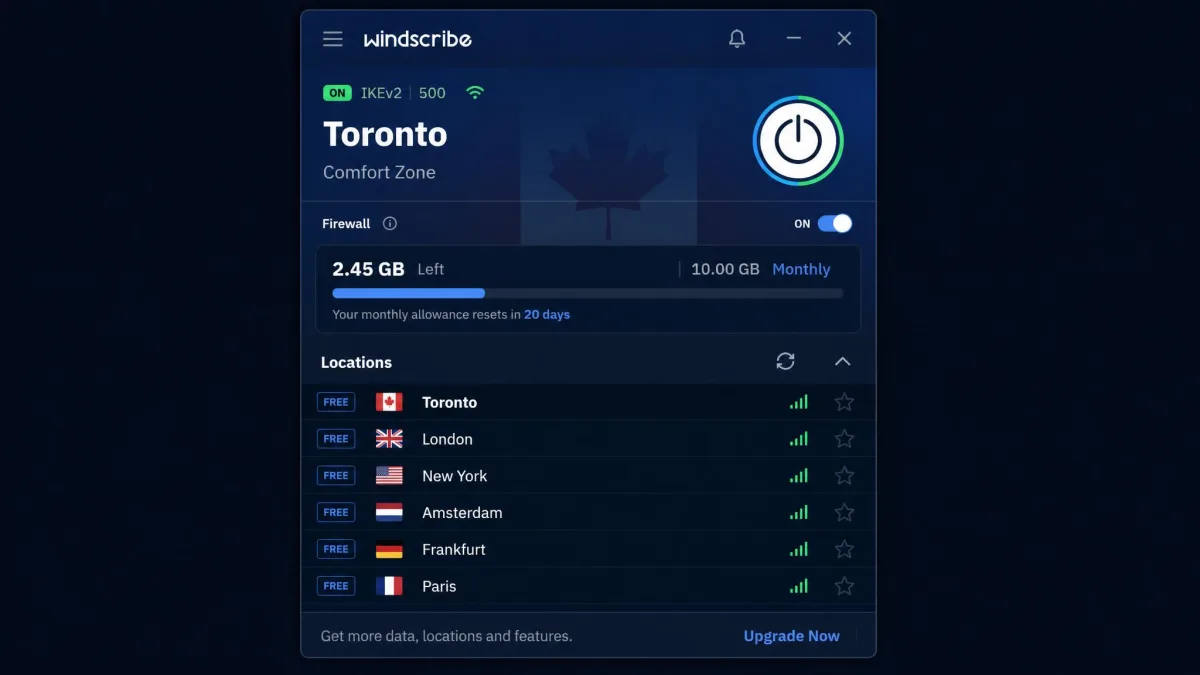
The free plan gives you 10GB a month with a confirmed email (2GB without), unlimited devices, the same encryption as Pro and R.O.B.E.R.T. ad and tracker blocking. Free users get about 10 countries, since Windscribe rotates the list, and there are no streaming-optimized servers or torrenting on free. If you want more free choices, our guide to free VPN alternatives covers the field.
Pro costs $69 a year ($5.75 a month) or $9.00 month to month, and it opens servers in over 69 countries. You can also build a plan at $1 per location per month, with a $3 minimum. Refunds are short, with 7 days from your first purchase and only if you have used less than 10GB on the paid plan, and renewals are not refundable. Windscribe is based in Canada and has no dedicated no-logs audit. Packetlabs did audit its RAM-only server stack in 2024, and a Dutch server seizure in February 2026 turned up no logs.
On Pro, our speeds held near the baseline on nearby servers (about 92 of 95 Mbps) but fell off on long routes such as Singapore. Netflix US and UK worked, while several regional services stayed blocked. The desktop app has more menus and toggles than most VPNs while the mobile apps are much simpler, and custom R.O.B.E.R.T. rules live in the website account panel rather than the app.
On cost, nothing here undercuts ESET: the free tier adds a VPN to every device without any ESET subscription.
Pros
- Generous free plan with unlimited devices
- Flexible Build a Plan pricing
- Supports WireGuard, Stealth and WStunnel
Cons
- Busy desktop app
- Human support tickets can take around 18 hours
7. Private Internet Access - best for power users
Windscribe keeps things simple on mobile, but Private Internet Access (PIA) is built for people who like to tune every setting, and it scores 8.4 in our Private Internet Access review.
PIA covers unlimited devices and has servers in 91 countries, including all 50 US states. The 3-year plan costs $2.03 a month ($79 billed every three years), the 1-year plan $3.99 a month and monthly billing $11.95. New subscribers get a 30-day money-back guarantee, and mobile users can start with a 7-day free trial. PIA is based in the United States and has been owned by Kape Technologies since 2019. Its record is solid: Deloitte completed a third no-logs review in 2025, and in a 2016 FBI case a subpoena produced no usage logs.
Settings are where PIA shines. You can pick AES-128 or AES-256 encryption on OpenVPN, forward ports and use a SOCKS5 proxy. The Advanced Kill Switch blocks all internet access until the VPN connects. On nearby servers our download speed dipped only about 5 percent, and WireGuard ran about 5 to 10 percent faster than OpenVPN. International routes were another story, with losses averaging close to 60 percent and uploads falling steeply.
Streaming worked on 20+ platforms, including Netflix, Prime Video, Max and BBC iPlayer, but only on the streaming-optimized servers. The main screen is easy to use, though the deeper settings screen feels dense.
ESET's six protocols are a good start, but PIA gives power users far more control on top, from encryption strength to port forwarding.
Pros
- Unlimited devices on a low 3-year price
- Deep protocol and encryption controls
- Fast 24/7 live chat
Cons
- Big speed losses on overseas servers
- MACE can't block YouTube ads
Standalone VPN vs the VPN in your ESET security suite
With the seven picks covered, the bigger question is whether to leave the suite model at all. An all-in-one suite is convenient, because one account covers antivirus, the VPN and identity protection, and you only renew once. The trade-off is that the VPN is one feature among many, so its device seats, server network and audit record depend on how ESET chooses to package it.
A standalone VPN is built around that one job: keeping your traffic encrypted and your digital footprint small. The providers above compete on speed, streaming and privacy proof, so they publish audits, expand their networks and let you install the app on as many devices as the plan allows. If you're weighing the suite route instead, our roundup of antivirus suites that include a VPN compares the bundles.
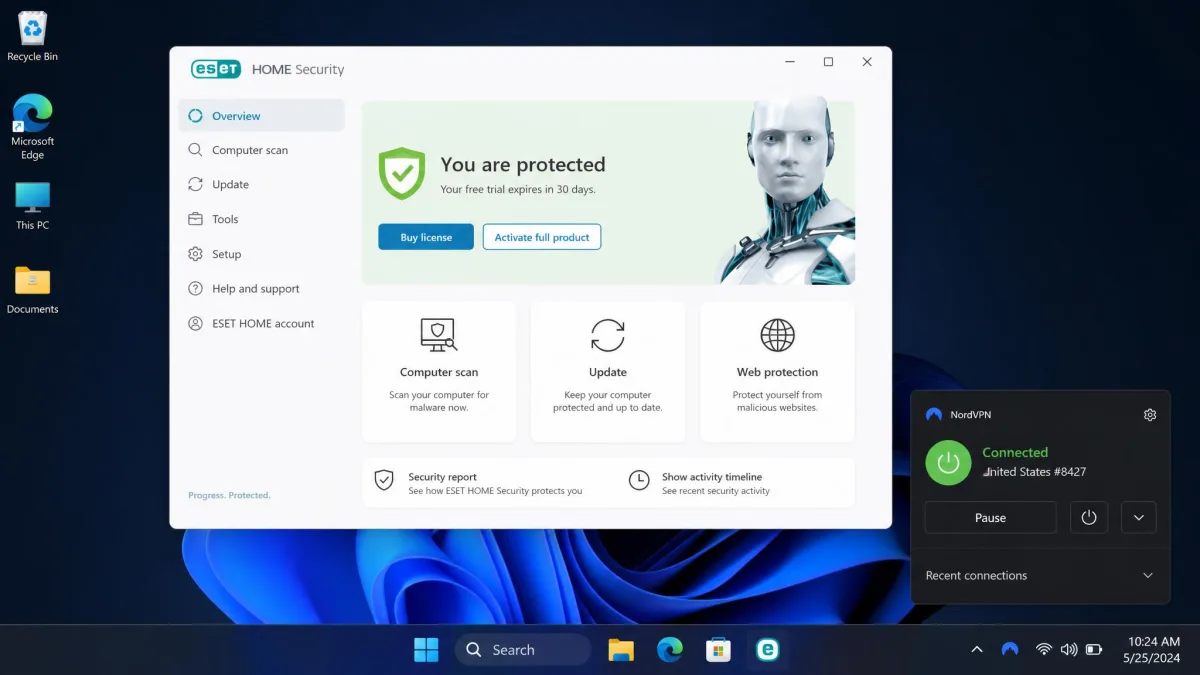
You don't have to choose one or the other. ESET says running a third-party VPN won't reduce the protection its product gives you, so keeping ESET antivirus and adding one of these VPNs is a normal setup.
ESET's VPN seat caps rise on bigger subscriptions. Above 10 protected devices, Premium's VPN allowance goes from 3 to 5 devices and Ultimate's from 10 to 25, so a 12-device household on Premium still has seven devices with antivirus but no VPN.
How to choose an ESET VPN alternative
Four criteria separate a good replacement from a sideways move, so weigh them in the order that matches why you're leaving ESET.
Privacy policy and no-logs audits
A no-logs policy is only a promise until someone checks it, so look for a recent independent audit, ideally repeated each year. Proton, NordVPN, ExpressVPN, Surfshark and PIA all have one from 2025 or 2026. Mullvad and Windscribe have infrastructure audits and real-world tests instead, which is a different kind of evidence. Jurisdiction matters too: PIA is in the United States, while Proton is in Switzerland and Mullvad is in Sweden.
Speed and server network
A bigger network gives you more nearby servers and more countries to connect through, and Proton's 149 countries and ExpressVPN's 113 are well beyond ESET's 70+ on Ultimate. Speed loss matters more than raw server counts, though. In our testing Mullvad, Windscribe Pro and PIA lost the least on nearby servers, with NordVPN and Proton close behind. PIA fell hardest on international routes, and among the rest ExpressVPN posted the biggest overall drop, at roughly 37 to 39 percent.
Device limits and platform support
Count every phone, laptop, tablet and TV in your home before you pick. Surfshark, Windscribe and PIA cover unlimited devices, while Proton and NordVPN allow 10 and Mullvad allows 5. Check platform support as well, since most of these have apps on Google Play, iOS, Windows, macOS and TV devices, and ExpressVPN and Windscribe also run on routers.
Price and free options
Long-term plans cut the cost sharply, but renewal prices are higher, so check what you'll pay in year three. If you just want to experiment, Proton's free plan has no data cap and Windscribe's free plan allows unlimited devices.
Test your replacement inside its money-back window. Most of these offer 30 days, but Mullvad offers 14 and Windscribe only 7 (void after 10GB of paid use), so try your streaming apps and your farthest-away servers in the first week.
How we tested ESET VPN alternatives
We scored each VPN in its own full review, and this ranking mirrors those scores rather than a one-off experience. For this comparison we put the seven picks next to ESET VPN on the same criteria.
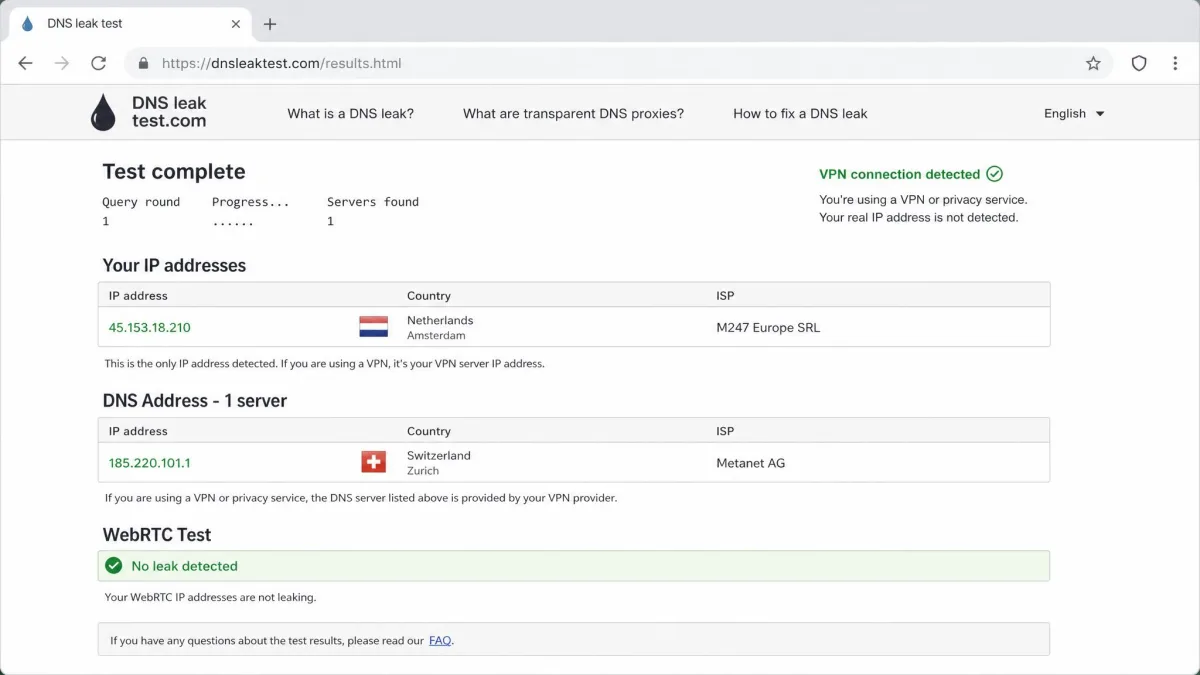
We measured download speed loss against an unprotected connection on nearby and distant servers. We ran DNS and WebRTC leak tests and checked how kill switches behaved when a connection dropped, and we tried Netflix and the other major streaming libraries on every service that advertises streaming.
For ESET VPN specifically, we activated devices through the ESET HOME account and switched protocols to see which ran best. On iOS, authentication failures on some protocols cleared up once we moved to WireGuard. We then checked each provider's audit history, device limits, refund terms and current prices.
ESET VPN alternatives FAQ
Is ESET VPN any good?
Is ESET VPN free?
What is the best free alternative to ESET VPN?
Can I use another VPN alongside ESET antivirus?
Does ESET VPN keep logs?
How many devices does ESET VPN cover?
Final verdict
Proton VPN is the best ESET VPN alternative for most people, with an audited no-logs policy, 10 device seats and a free plan to start with. Pick NordVPN for speed, ExpressVPN for streaming abroad, Surfshark for a large household, Mullvad for anonymous sign-up, Windscribe for free use and PIA for fine control.