PrivadoVPN gets more right than its size suggests. It offers a free plan with 10GB of data a month, WireGuard on its main apps, and cheap long-term plans, all from a company that began in Switzerland and now runs the service through an Icelandic company. If you've hit the free plan's data cap, need more server locations, or want a no-logs policy that an outside auditor has actually checked, it's worth looking further. Below are the seven VPNs we would switch to, ranked by the scores they earned in our full reviews, with a clear use case for each one.
Why look for a PrivadoVPN alternative?
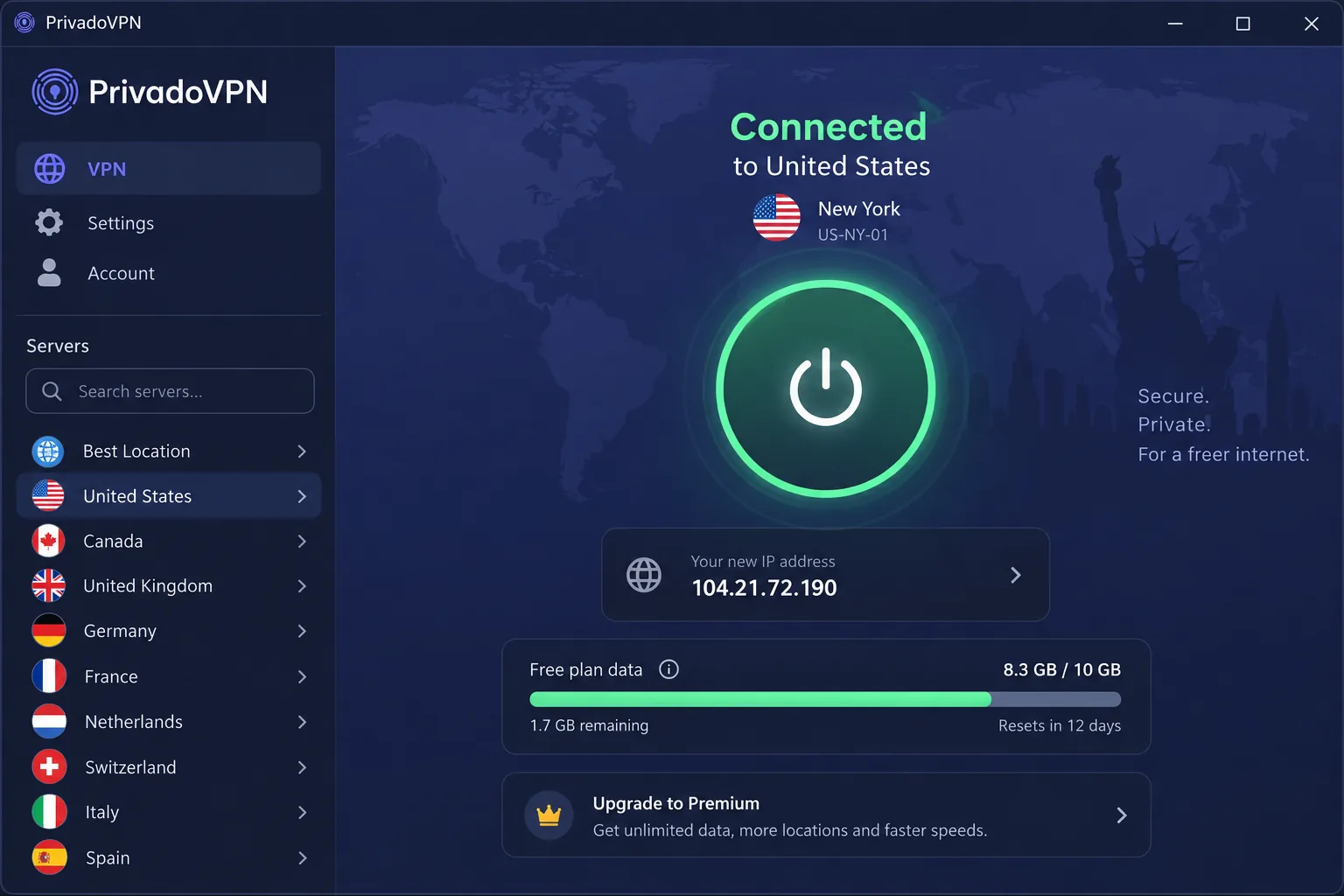
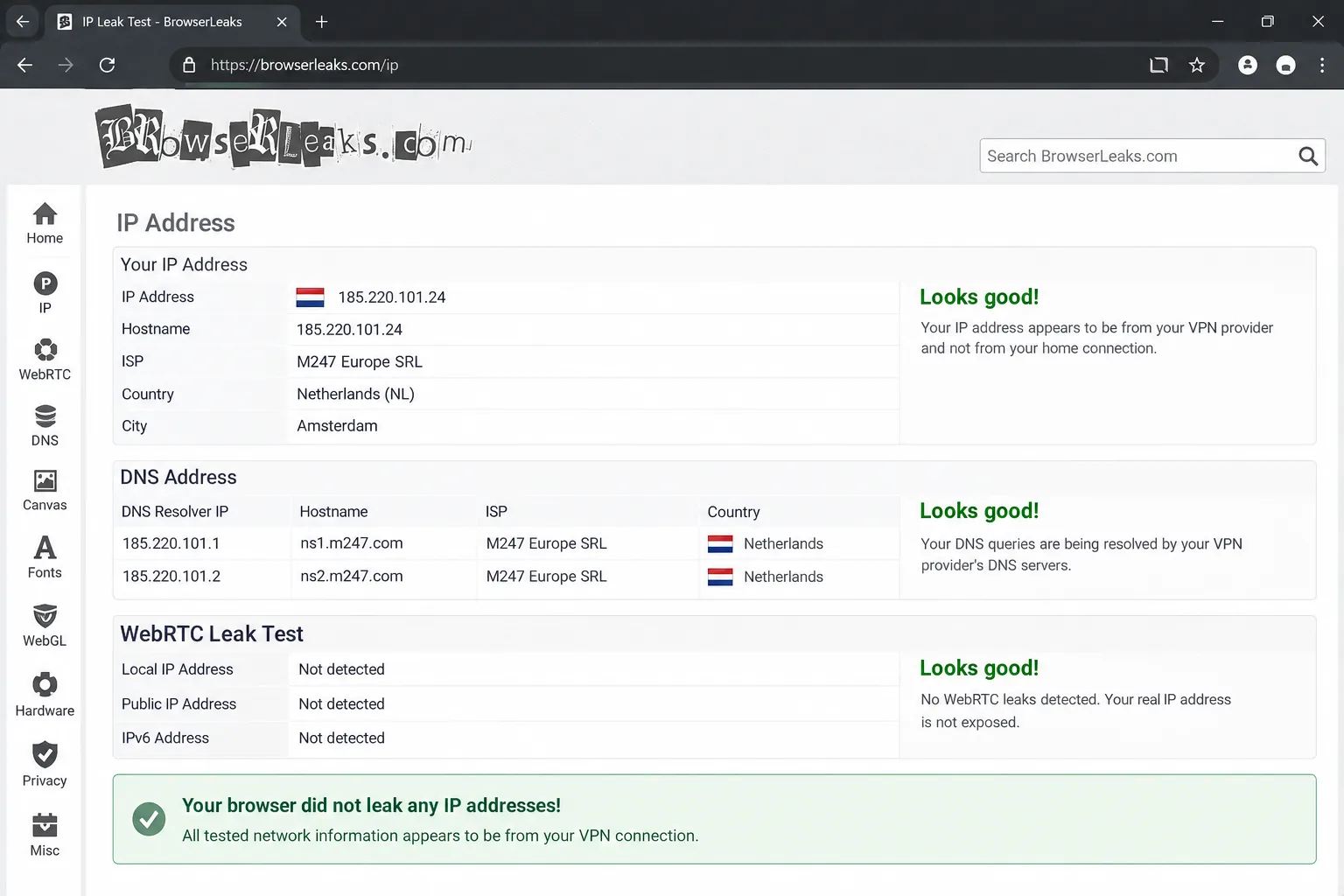
Credit first, because PrivadoVPN earns it. The free plan gives you 10GB every 30 days across servers in 10 countries, and all it asks for is a verified email address, with no credit card. Paid plans start at $1.11 a month on the 24-month term (plus three free months) and cover 10 connections. Our IP, DNS and WebRTC leak tests came back clean, with no real IP addresses exposed. Paid servers also opened US and UK Netflix reliably. That's why it scores 7.5/10 in our PrivadoVPN review.
The limits show up once you lean on it. The network covers 49 countries and 66 cities. Support is email tickets with no live chat, and our replies ranged from minutes to a full day. BBC iPlayer worked in one session and failed in the next, and because there are no dedicated streaming servers, finding a server that works can take a few tries. The macOS app lacks WireGuard and split tunneling, and Linux users have to configure OpenVPN by hand.
Privacy is the gap a security-minded user will notice most. PrivadoVPN's no-logs policy promises it keeps nothing, but no independent audit has been published and the page names no auditor. The company has also moved. Under PrivadoVPN's privacy policy updated May 1, 2026, the service is now contracted by Privado Networks ehf in Iceland, while Swiss and Delaware affiliates only process some payments. PrivadoVPN told TechRadar it was leaving Switzerland because of a March 2025 Swiss proposal to extend surveillance duties to VPN providers. None of this makes PrivadoVPN unsafe, but you are trusting a policy rather than checking one.
The best PrivadoVPN alternatives at a glance
Each pick below is ranked by the headline score from its full HTS review, with PrivadoVPN in the last row as the baseline.
| VPN | Buy | Price from | Free plan / data cap | Simultaneous devices | Independent audit | Best for |
|---|---|---|---|---|---|---|
 |
Check price → | About $3.09-$3.49/mo (2-yr) | No free plan | 10 | Yes (Deloitte, 6th, 2025) | Overall |
 |
Check price | $2.99/mo (2-yr) | Yes, no data cap (1 device) | 10 | Yes (Securitum, 5th annual) | Free plan |
 |
Check price | About $2.79-$2.99/mo (2-yr) | No free plan | 10 Basic / 14 Pro | Yes (KPMG, 2025) | Streaming |
 |
Check price | $2.49/mo (2-yr) | No free plan | Unlimited | Yes (Deloitte, 2023 and 2025) | Unlimited devices |
 |
Check price | $5.60/mo (flat) | No free plan | 5 | Infrastructure (Cure53, 2024) | Anonymous sign-up |
 |
Check price | $5.75/mo (yearly) | Yes, 10GB/month | Unlimited | Security audits only | Free plan, more locations |
 |
Check price | About $1.89/mo (3-yr) | No free plan | Unlimited | Yes (Deloitte, 2025) | Customization |
 |
$1.11/mo (2-yr) | Yes, 10GB/month | 10 | No | Baseline |
How we tested PrivadoVPN alternatives
We started with PrivadoVPN itself, because a replacement only makes sense if it fixes something specific. We ran IP, DNS and WebRTC leak checks against it and watched the tunnel in Wireshark to confirm the traffic was encrypted. We also measured speeds on nearby and distant servers and tried the streaming services people most often ask about. Then we compared each alternative on speed, streaming and leak protection, using the results from our full review of that VPN.
Beyond raw results, we weighed what matters to a privacy-minded switcher: whether an outside firm has audited the no-logs claim, where the company is based, whether the kill switch is on by default and what it blocks, and what the free plan and refund terms really include. Every score quoted here is the headline score from our full review of that VPN.
1. NordVPN - Best overall PrivadoVPN alternative
NordVPN is the upgrade we'd point most PrivadoVPN users toward, and it scores 9.0 in our NordVPN review. It fixes the two gaps that matter most: a much larger network and a no-logs policy that Deloitte has now checked six times, most recently in fieldwork from November 10 to December 12, 2025.
The extra privacy tools are where we spent the most time. When we turned on Double VPN to route traffic through two servers, our speed fell by around 80%, and the feature only runs on preset server pairs. We keep it for sensitive sessions. In everyday use, Netflix, Hulu, BBC iPlayer and Prime Video unblocked reliably, which settles the iPlayer coin-flip we had with PrivadoVPN.
There's no free plan. Basic costs $14.99 on monthly billing or about $3.09 to $3.49 a month on two years, a range set by NordVPN's rolling promotions, and it renews at a higher price. The Panama-based company backs every plan with a 30-day money-back guarantee, and you keep the same 10 simultaneous connections you had on PrivadoVPN. Its network reaches far more countries than PrivadoVPN's 49, though NordVPN counts virtual locations differently across its own pages, so the exact total depends on which page you read.
Pros
- No-logs policy assured by Deloitte six times
- RAM-only servers and a full Linux app
- Double VPN, Onion Over VPN and Meshnet
Cons
- No free plan
- Renewal price is much higher than the intro rate
- Live chat opens with a chatbot before a human takes over
2. Proton VPN - Best free PrivadoVPN alternative
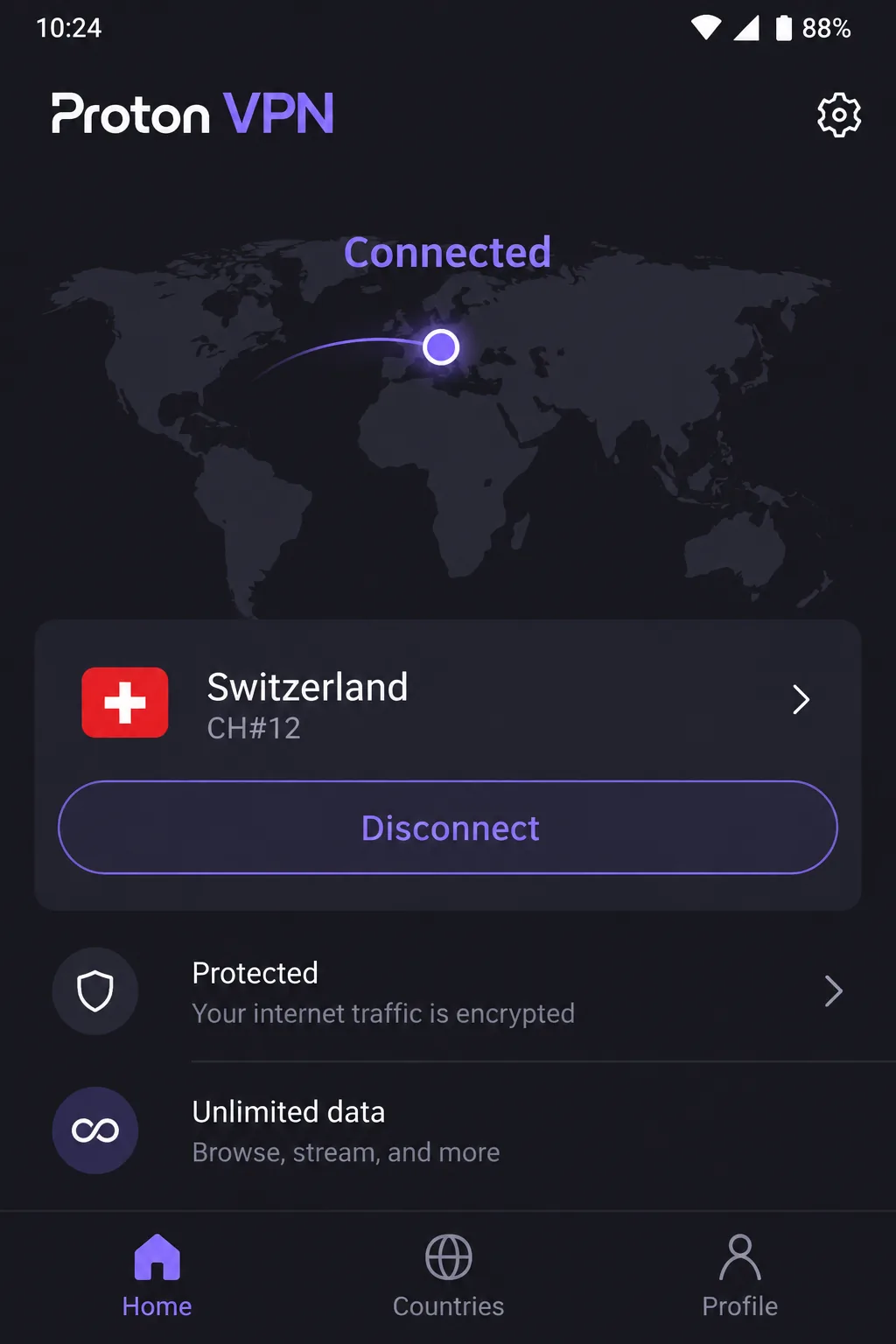
NordVPN asks you to pay from day one, while Proton VPN fixes PrivadoVPN's 10GB cap without charging anything, because its free plan has no data cap at all. It ties NordVPN at 9.0 in our Proton VPN review.
The trade-off showed up the first time we pressed connect. Proton picked a server for us from its 10 free countries, and there's no menu to choose one yourself. You take whatever it assigns, at medium speed. The free plan covers just 1 device. On VPN Plus, the picture changed: the US Netflix library loaded without hopping between servers, and DNS, IPv6 and WebRTC leak tests stayed clean across dozens of countries.
VPN Plus costs $9.99 monthly, $3.99 a month on one year or $2.99 a month on two years ($71.76 for the first 24 months), backed by a 30-day money-back guarantee. It also opens 20,000+ servers in 140+ countries. Proton AG is based in Switzerland and has said it would also leave if the surveillance proposal becomes law. If you want to read what the auditors checked, Securitum's annual no-logs audit of Proton VPN sets out the scope of each year's report.
Pros
- Free plan with no data cap and no ads
- Five consecutive Securitum no-logs audits
- Open-source apps on every platform
Cons
- Free plan assigns your server for you
- Upload speeds trail NordVPN
- Live chat runs roughly 9am to midnight CET, not 24/7
3. ExpressVPN - Best for streaming
ExpressVPN is the pick if mixed streaming results are why you're leaving, and it scores 8.8 in our ExpressVPN review. Its apps are the most polished of the group.
Streaming content is where ExpressVPN earned its place. Netflix libraries in several countries, ESPN+ and Hulu all played without issues. We also put the kill switch to the test: when a server timed out and when we changed networks mid-session, Network Lock cut traffic correctly both times.
Basic is $12.99 monthly or about $2.79 to $2.99 a month on two years plus four bonus months, depending on the current promotion, and it renews at $99.95 per year. The company is based in the British Virgin Islands under Kape Technologies, and its device allowance climbs with the tier: 10 on Basic, 12 on Advanced and 14 on Pro. Servers sit in 113 countries, there's no free plan, and a 30-day money-back guarantee gives you time to run your own streaming checks.
Pros
- Most polished apps, including routers and Apple TV
- KPMG audits of its privacy commitments in 2022, 2023 and 2025
- Lightway protocol and RAM-only servers
Cons
- Costs more than NordVPN and Surfshark
- Device allowance depends on the tier
- Email support can take close to two days
4. Surfshark - Best for unlimited devices
Where ExpressVPN rations devices by tier, Surfshark drops the limit altogether, which suits households that run out of slots on PrivadoVPN's 10 connections. It scores 8.6 in our Surfshark review.
We leaned on it hardest for streaming and leak protection. Netflix opened in more than 15 regional libraries, plus Max, Disney+, Hulu and BBC iPlayer. When we dropped the connection on purpose, the kill switch held, and we saw no IPv4, IPv6, DNS or WebRTC leaks. MultiHop, which chains two servers together, slowed connections significantly, so we only use it when we want the extra hop.
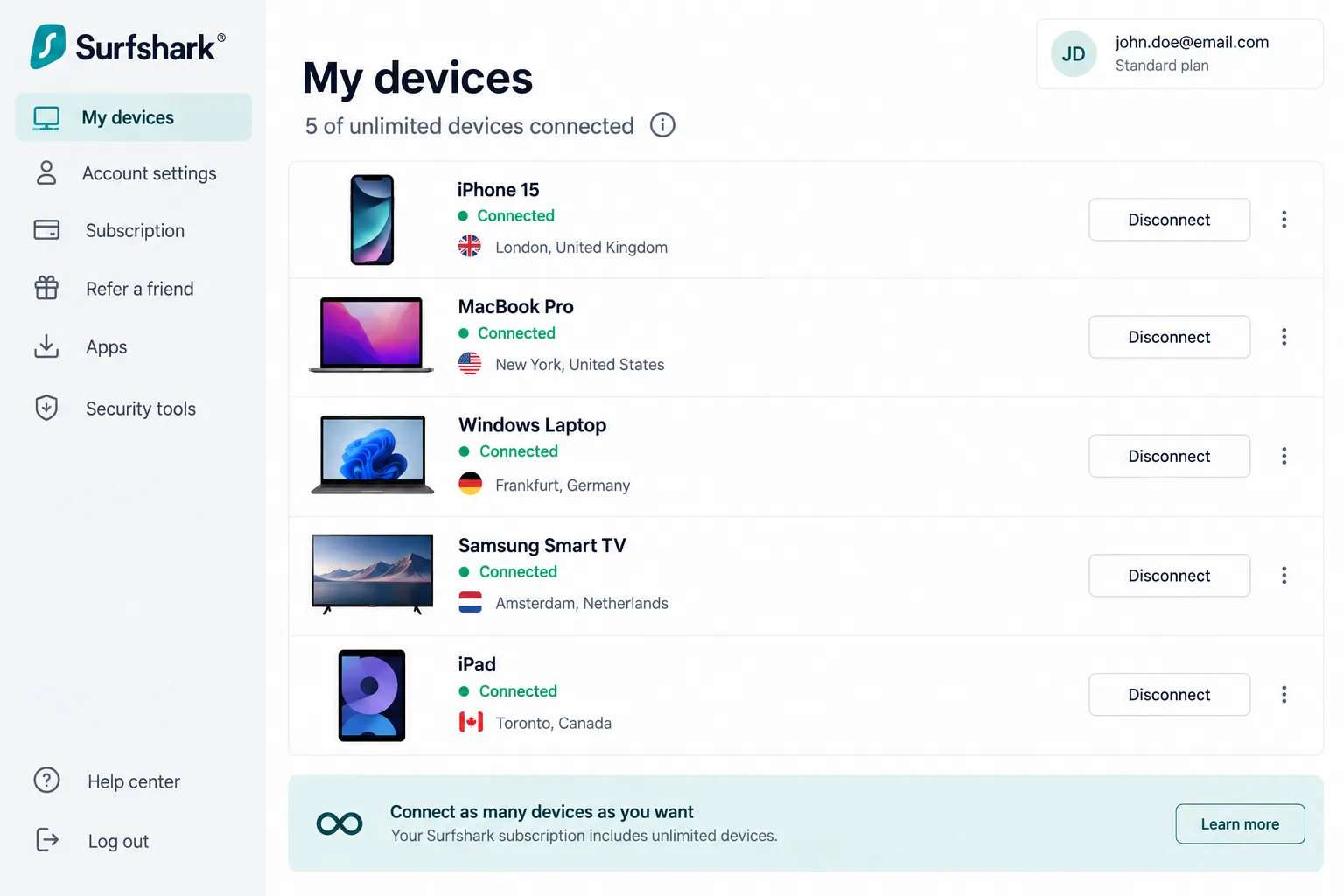
The value is on the two-year plan. Starter costs $2.49 a month on two years plus three months, billed as $67.23 for 27 months. Month-to-month sits at roughly $15 to $16 depending on region and tax. The Netherlands-based company runs 4,500+ servers in 100 countries and offers a 30-day money-back guarantee. For the detail behind its audit record, Surfshark's 2025 Deloitte no-logs assurance explains what the second check covered.
Pros
- Unlimited devices on every plan
- Deloitte-verified no-logs policy, twice
- Strong streaming across 15+ Netflix regions
Cons
- Month-to-month plan is among the priciest
- MultiHop slows connections significantly
- Windows app showed occasional ping spikes
5. Mullvad VPN - Best for anonymous sign-up
Mullvad goes further than any pick above on sign-up privacy, and it is built for the PrivadoVPN user who never wanted to hand over an email address in the first place. It scores 8.5 in our Mullvad review.
Sign-up took us seconds. Mullvad generated a random 16-digit account number, and that number is the only login, with no email, username or password. You can pay in cash or crypto, and the flat price of EUR 5 (about $5.60) a month never changes with term length. Mullvad's promise to keep nothing has also been tested in public: when Swedish police searched its office in April 2023, they left with no customer data because none was stored.
The rest is a lean privacy toolkit from a company based in Sweden. Mullvad has published several audits, including Mullvad's 2024 Cure53 infrastructure audit and an X41 D-Sec review of its account and payment systems in January 2026. It runs WireGuard only and adds DAITA traffic-analysis protection. The live server list shows about 566 servers in 50 countries, though it changes daily. Refunds run for 14 days on new payments, but cash, crypto and App Store payments are excluded, so pay by card if you want that safety net.
Pros
- No email needed, only a random account number
- Pay in cash or crypto at one flat price
- Published infrastructure and app audits
Cons
- Only 5 devices
- Streaming is hit or miss by server
- Email-only support, with no port forwarding
6. Windscribe - Best free plan with more locations
If Mullvad strips sign-up down to a number, Windscribe keeps PrivadoVPN's free-plan shape (10GB a month across 10 countries) and gives you more room to grow. When you need more, Build A Plan provides extra locations for $1 each per month ($3 minimum), and Pro unlocks servers in 69+ countries. That flexibility helps it reach 8.5 in our Windscribe review.
The Firewall is the feature that impressed us. It blocks traffic outside the tunnel by default on desktop, so when we killed the VPN process mid-session, traffic simply stopped instead of exposing our real IP address. Across dozens of Pro and free-server tests, we saw no IP, DNS or WebRTC leaks. The free plan didn't unblock US Netflix for us, but the UK, French and German libraries worked.
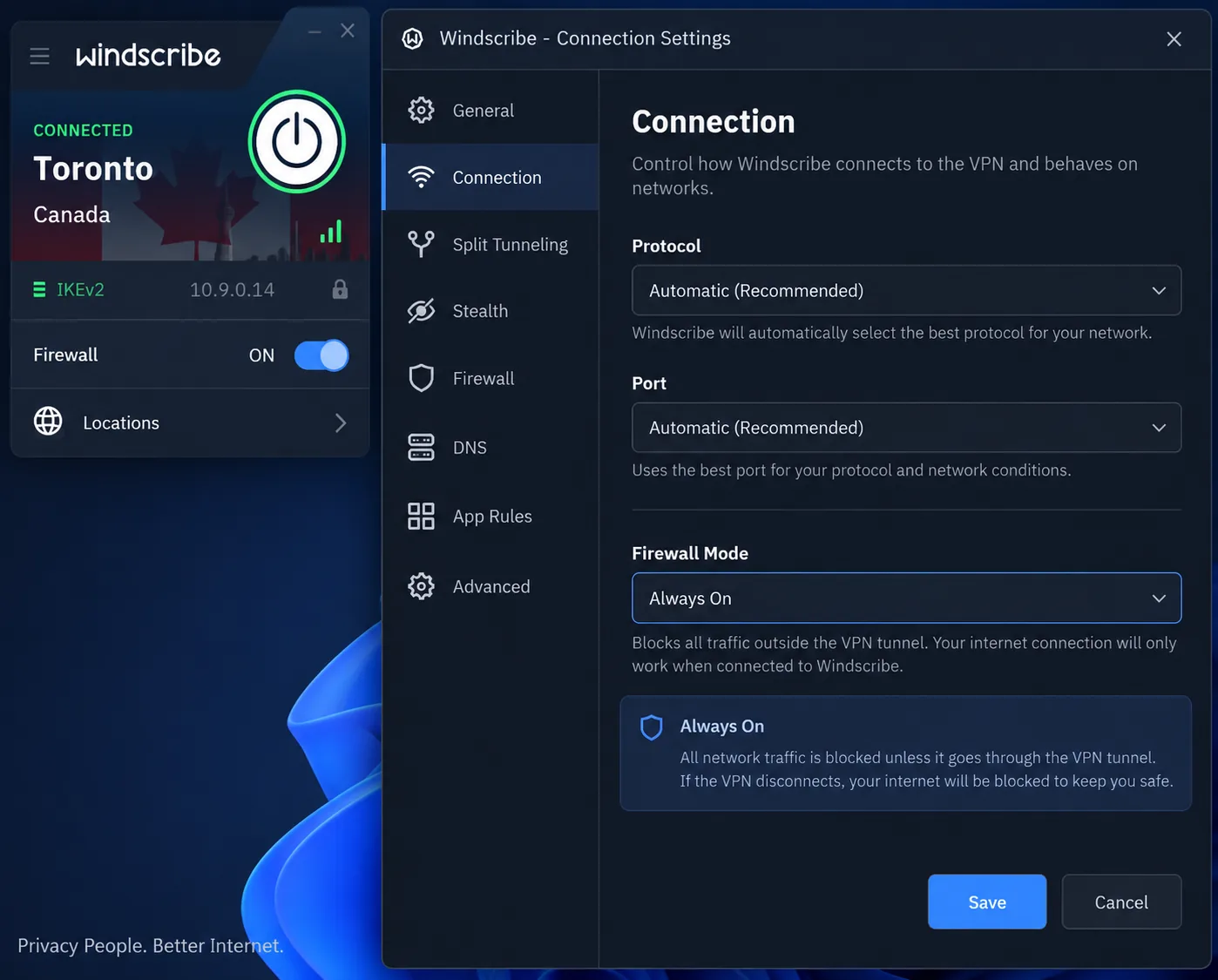
The desktop window is small with tiny text, and custom blocking rules live on the account website rather than in the app. Pro costs $9.00 monthly or $69 a year ($5.75 a month). Refunds are strict: first payment only, within 7 business days, under 10 GB used, and only for a technical issue support cannot fix. Windscribe operates from Canada, a Five Eyes member, and its audits so far are security reviews (Leviathan and a June 2024 Packetlabs review of its server stack). Its logging claim did hold up on April 11, 2025, when an Athens court dismissed the case against its CEO because no user logs existed.
Pros
- Unlimited connections, even on the free plan
- Firewall kill switch on by default
- Pay per location with Build A Plan
Cons
- No independent no-logs audit
- Very strict refund terms
- Human support replies are slow
7. Private Internet Access - Best for customization and open-source apps
After Windscribe's small desktop window, Private Internet Access takes the opposite approach, with a long settings list for tinkerers who want more control than PrivadoVPN gives them. It scores 8.4 in our Private Internet Access review.
That settings list overwhelmed us at first, but it became easy to use once we had it tuned. We spent most of our time on torrenting, where port forwarding cost very little speed, though the forwarded port changed every time we reconnected. Streaming is PIA's weak spot: US and UK Netflix didn't unblock, and Disney+ and Hulu detected the VPN.
The 1-month plan costs $11.95, and the long-term deal (three years plus three months) sits at about $1.89 a month. PIA rotates the deal length and bonus months by date and region. Because PIA is based in the United States, its port forwarding works on every server except US locations. The official page lists 104 countries, a figure that has risen over recent weeks. Deloitte completed its third no-logs assurance (ISAE 3000) on December 19, 2025. A 30-day money-back guarantee applies.
Pros
- Open-source apps with deep settings
- Choice of AES-128 or AES-256
- Unlimited connections and servers in all 50 US states
Cons
- Weak with Netflix, Disney+ and Hulu
- US jurisdiction
- Auto-renewal is on by default and refunds need a support request
Speed test results
Speed is where PrivadoVPN's smaller network shows most. Close to home it's fast, and on a local paid server our download held at about 350 of 353 Mbps over IKEv2. A UK server ran around 129 Mbps, which is enough for 4K streaming and video calls. On a distant paid server, though, speed fell to about 90 Mbps. With fewer servers per region to spread the load, long-haul routes lose far more speed than they do on the biggest providers.
| VPN | Nearby server | Distant or long-haul server |
|---|---|---|
| NordVPN | About 4% download and 7% upload loss | n/a |
| Proton VPN | About 10% loss from a 190 Mbps baseline | Around three-quarters of baseline |
| ExpressVPN | About 37-39% download loss | n/a |
| Surfshark | n/a | About 10% loss on a transatlantic server (macOS) |
| Mullvad VPN | About 6% loss | Noticeable slowdown |
| Windscribe | 94.6 to 91.8 Mbps (WireGuard, US) | About 68 Mbps (Singapore) |
| Private Internet Access | About 4% loss | About 18% loss |
| PrivadoVPN (baseline) | About 350 of 353 Mbps (IKEv2) | About 90 Mbps |
Across a multi-server run, NordVPN, Surfshark and Proton VPN finished close together, averaging about 254, 254 and 249 Mbps. NordVPN also streamed 4K on nearby servers with no buffering. ExpressVPN lost the most on nearby servers, so its strengths lie in streaming and apps rather than raw speed. Surfshark's macOS app held up better than its Windows app, which showed bigger slowdowns and occasional ping spikes.
Free vs paid PrivadoVPN alternatives
Free plans are where PrivadoVPN is most tempting, and also where it runs out soonest. PrivadoVPN's free plan caps you at 10GB a month, and that allowance disappears quickly if you stream video. PrivadoVPN's own pages disagree on whether the free plan covers one device or unlimited devices, so check the terms on your account before you rely on it.
Proton VPN's free plan is the cleanest swap. It has no data cap, so a long weekend of streaming or a big download won't strand you, but it covers one device and assigns the server for you. Windscribe's free plan matches PrivadoVPN's 10GB and 10 countries while allowing unlimited connections. Its free-tier speeds periodically dropped by up to 90% for us, though, roughly twice every three hours. For a wider shortlist, see our roundup of the best free VPNs.
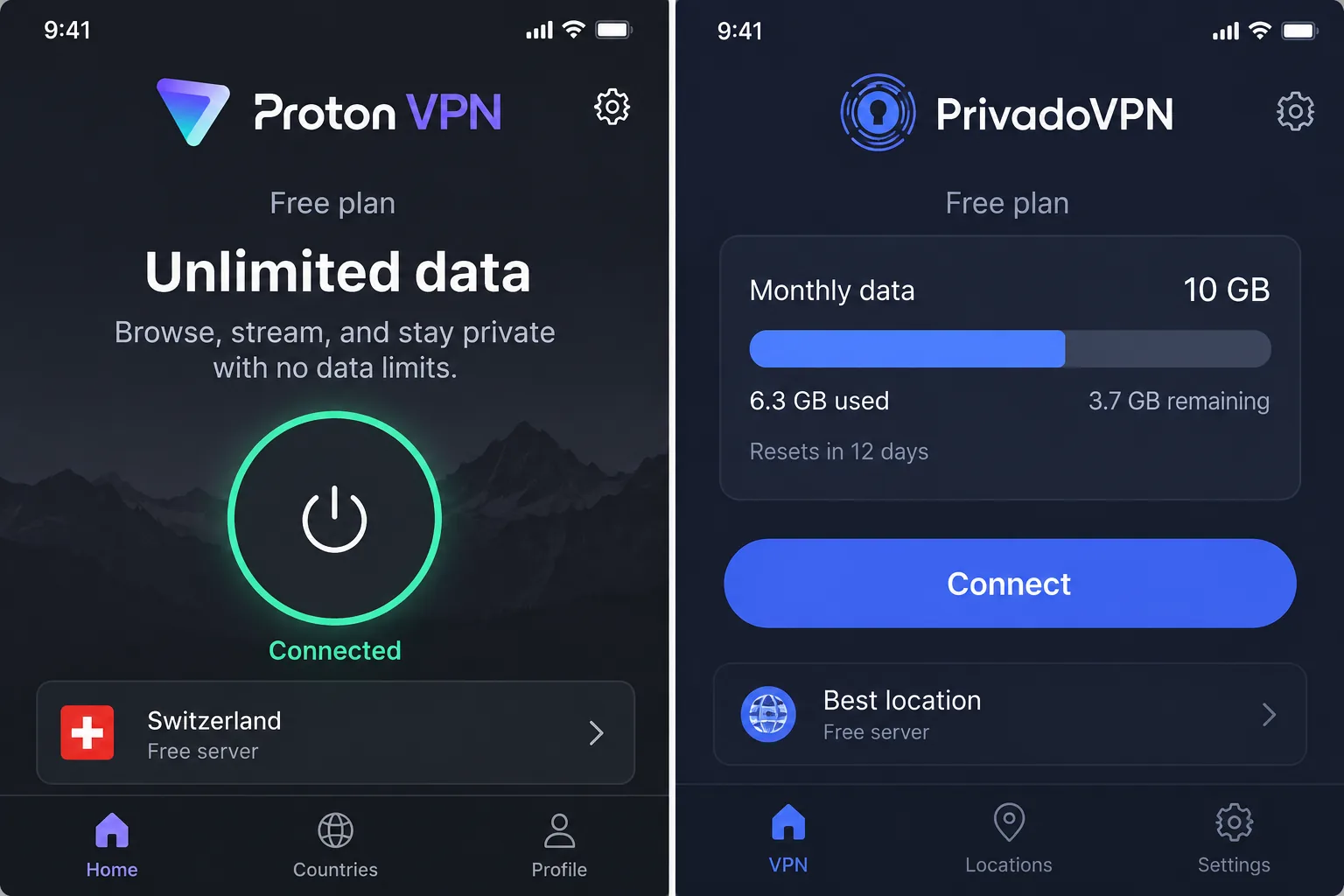
Paying adds what free plans hold back: every server location, unlimited data, reliable streaming, more devices and a money-back window. Two names come up in this search that we didn't rank. Psiphon is a free, open-source censorship-circumvention tool that mixes VPN, SSH and HTTP proxy transports, but its own FAQ says it is not designed to protect against surveillance. Avast SecureLine has no free plan at all, only a 60-day desktop trial that needs a card and renews at $99.99 a year. The FTC also sent about $15.3 million to Avast customers in December 2025 over deceptive privacy claims.
How to choose a PrivadoVPN alternative
Start with the features that protect you when something goes wrong. A kill switch should block all traffic the moment the tunnel drops, and Windscribe's on-by-default Firewall is the model to look for. If you want the detail, here's how a VPN kill switch works. DNS leak protection matters just as much, because a leaked DNS query can reveal the sites you visit online even while the VPN is on.
Protocols decide your speed and compatibility. WireGuard is the modern default on every pick here, and OpenVPN is the fallback for routers and older devices, but Mullvad has dropped OpenVPN entirely. For encryption, look for the ciphers behind the "military-grade" label on VPN marketing pages: AES-256 or ChaCha20 (which PrivadoVPN itself uses on mobile). Our guide on how VPN encryption works explains the difference.
A no-logs promise is only as strong as the audit, court case or police search that has tested it.
Trust comes next. Open-source apps let anyone inspect the code, and Proton VPN, Mullvad, Windscribe and PIA all publish theirs. Jurisdiction tells you which laws apply to the company holding your account, so weigh Panama, Switzerland or Sweden against the US or a Five Eyes country like Canada. Then check the practical terms: how many simultaneous devices you need, what the plan renews at, and how long the money-back window runs.
Set up your new VPN on every device while its money-back window is open, and cancel PrivadoVPN only once you're happy. PrivadoVPN subscriptions auto-renew, so turn renewal off before the next billing date.
FAQ
Is there a free alternative to PrivadoVPN?
Is PrivadoVPN an American company?
Why switch from PrivadoVPN?
Are there open-source alternatives to PrivadoVPN?
Does a VPN slow down internet speed?
Is PrivadoVPN's free plan enough?
Bottom line
NordVPN is the PrivadoVPN alternative we'd choose for most people, and Proton VPN is the one to take if you want to stay free without a data cap. For streaming, more devices, anonymous sign-up, a growable free plan or deep settings, the comparison table above shows which of the other five fits.