Tired of watching an ad every time Potato VPN connects, only for the connection to drop a few minutes later? Proton VPN is the best free replacement, with no ads and no data cap. NordVPN is the best paid upgrade if you want a fast, secure connection backed by an audited no-logs policy.
Potato VPN earned just 4.6 out of 10 in our Potato VPN review. The free app is easy to start, since it connects with one tap and no account. The trouble starts once you rely on it every day, because the ads, the silent drops and the missing kill switch add up quickly. The seven alternatives below fix those problems in different ways, so we matched each one to the type of user it suits best.
Potato VPN Alternatives at a Glance
Here are the seven picks side by side, with Potato VPN in the last row as the baseline. Long-term prices are the lowest advertised rate and usually depend on a two-year commitment.
| Alternative | Buy | Best for | Free plan | Monthly price | Best long-term rate | Devices | Kill switch | No-logs proof |
|---|---|---|---|---|---|---|---|---|
 |
Check price → | Best free alternative | Yes: no data cap, 10 countries | $9.99 | $2.99/mo (2 yr) | 1 free, 10 paid | Yes, free plan too | Securitum audit (5th annual) |
 |
Check price | Best overall | No | $14.99 | ~$3.09-$3.49/mo (2 yr) | 10 | Yes | Deloitte (6th, 2025) |
 |
Check price | Value, unlimited devices | No | ~$15.45-$16.45 | $2.49/mo (2 yr + 3 mo) | Unlimited | Yes | Deloitte (2023 and 2025) |
 |
Check price | Free plan for bypassing blocks | Yes: 10GB/month, 10 countries | $9.00 | $5.75/mo (1 yr) | Unlimited | Yes (Firewall) | Security audits; 2025 court case |
 |
Check price | Fast, simple mobile apps | No | $12.99 | ~$2.79-$2.99/mo (2 yr + 4 mo) | 10 to 14 by tier | Yes (Network Lock) | KPMG (2025) |
 |
Check price | Streaming | No | $12.99 | ~$1.99-$2.19/mo (2 yr + 2 mo) | 7 | Yes | Deloitte (2026) |
 |
Check price | Anonymity | No | $5.60(EUR 5) | $5.60/mo flat | 5 | Yes | Cure53 infrastructure audit (2024) |
 |
Baseline | Yes: six named countries, cap not stated | $11.99 | $5.99/mo (1 yr, website) | 1 free | No | None |
Every pick removes the ads and includes a kill switch, which Potato VPN lacks on both its free and Premium tiers.
The Best Potato VPN Alternatives
We kept the order that matches what most Potato VPN users need first: a better free app, then the strongest paid upgrades, then specialist picks. Each pick was judged on ads, free-tier limits, audit status, price and mobile apps, and every score comes from its full HTS review.
1. Proton VPN - Best Free Alternative
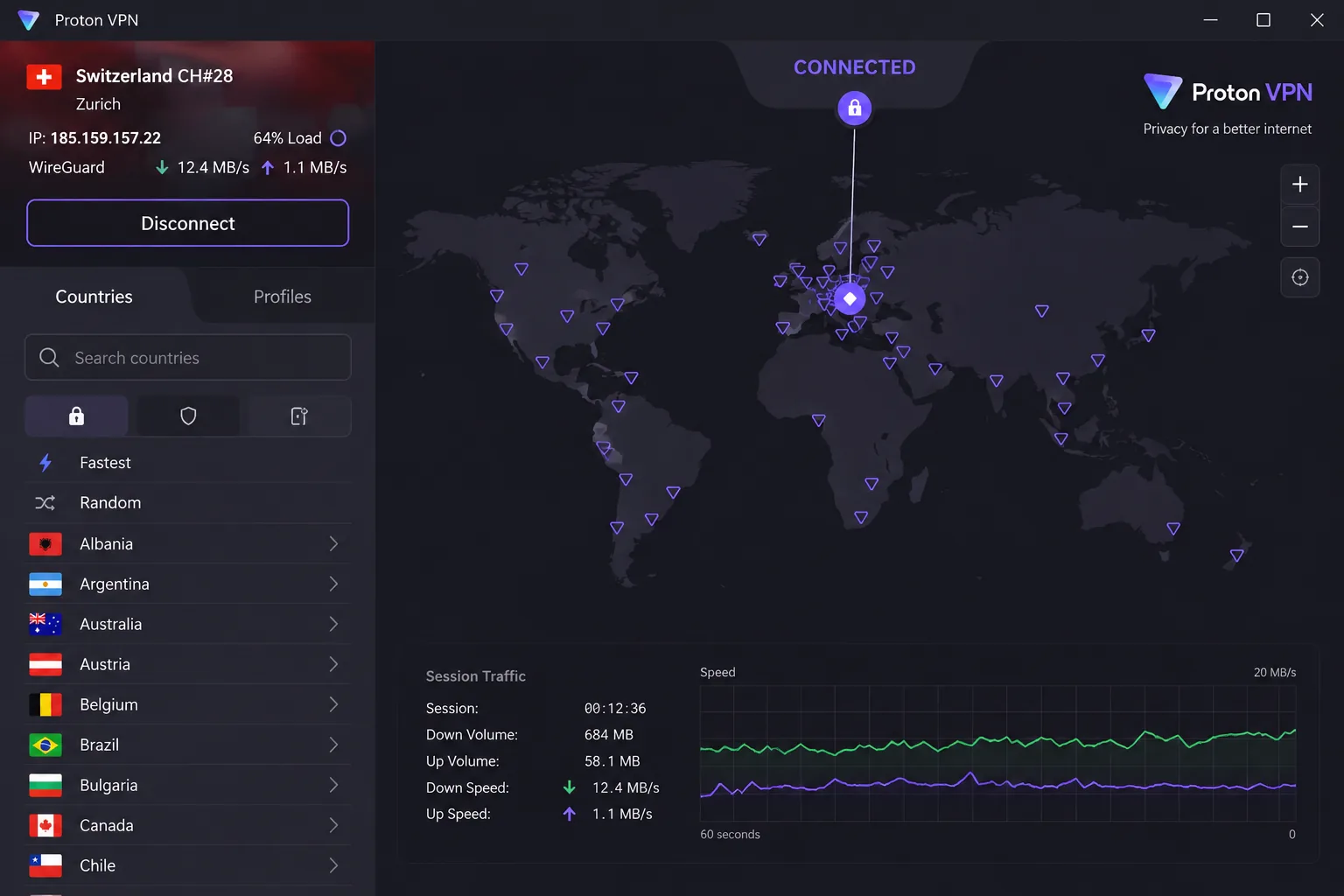
Proton VPN does what Potato VPN's free tier cannot: it gives you unlimited data with no ads at all. The free plan has no data or time limit, covers 1 device, and connects to servers in 10 countries. Proton picks the server for you, since choosing a country is a paid feature. Even so, the free plan includes a kill switch.
Installation took us about two minutes, and the settings are explained in plain language, so a Potato VPN user will not feel lost. After we upgraded to VPN Plus, nearby servers kept about 90 percent or more of our baseline download speed, and distant servers averaged around three-quarters. The US Netflix library loaded without hopping between servers, and our DNS, IPv6 and WebRTC leak tests stayed clean across dozens of countries. The one weak spot was support, because live chat is not 24/7 and email replies took about two days.
Proton AG is based in Switzerland, and Proton VPN's 2026 no-logs audit by Securitum is its fifth in a row. VPN Plus costs $9.99 a month, or $2.99 a month on the two-year plan, with 10 devices, 20,000+ servers in 140+ countries and a 30-day money-back guarantee. Our Proton VPN review has the full results.
We rate Proton VPN 9.0 out of 10, and it is the first app we would install after deleting Potato VPN.
2. NordVPN - Best Overall
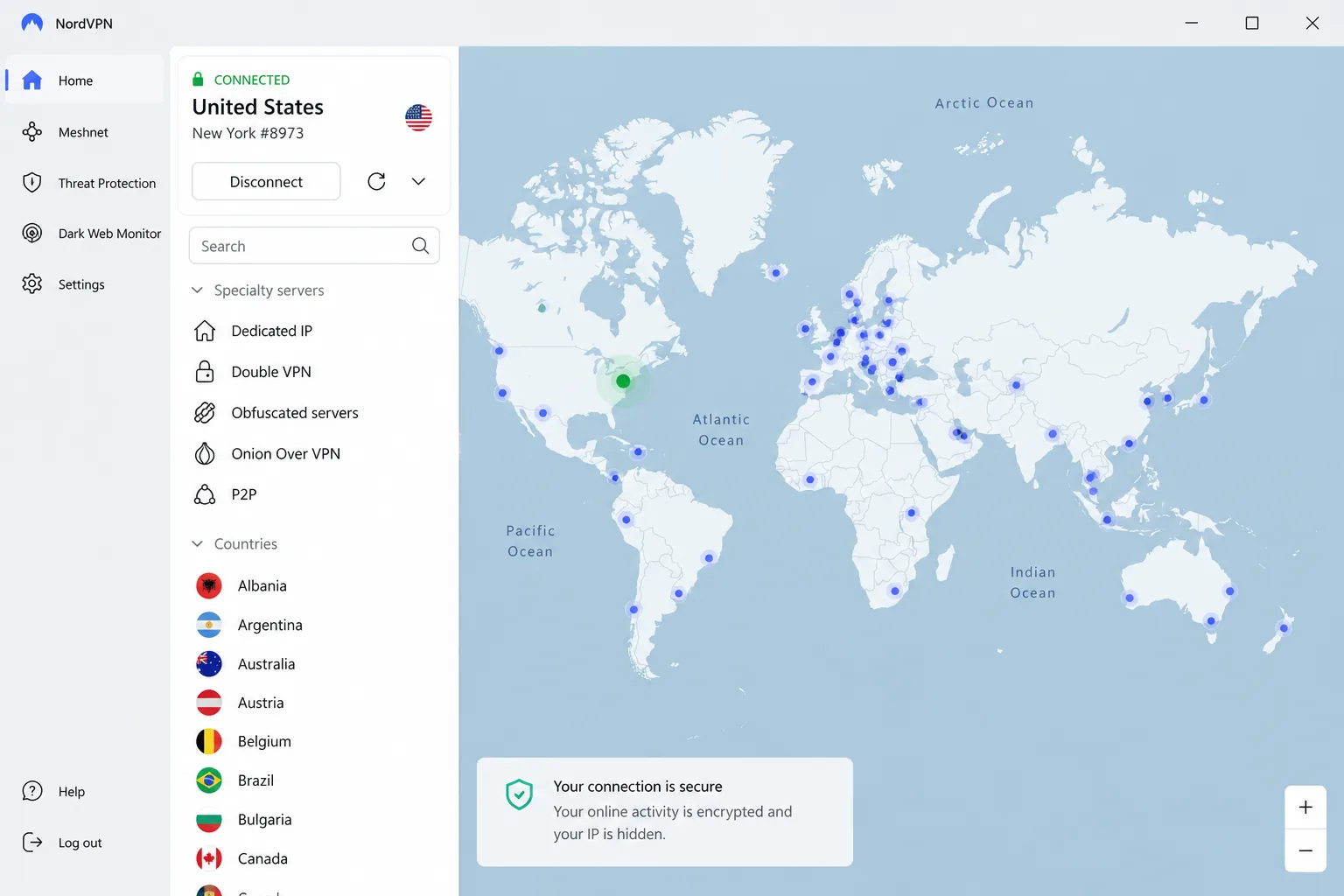
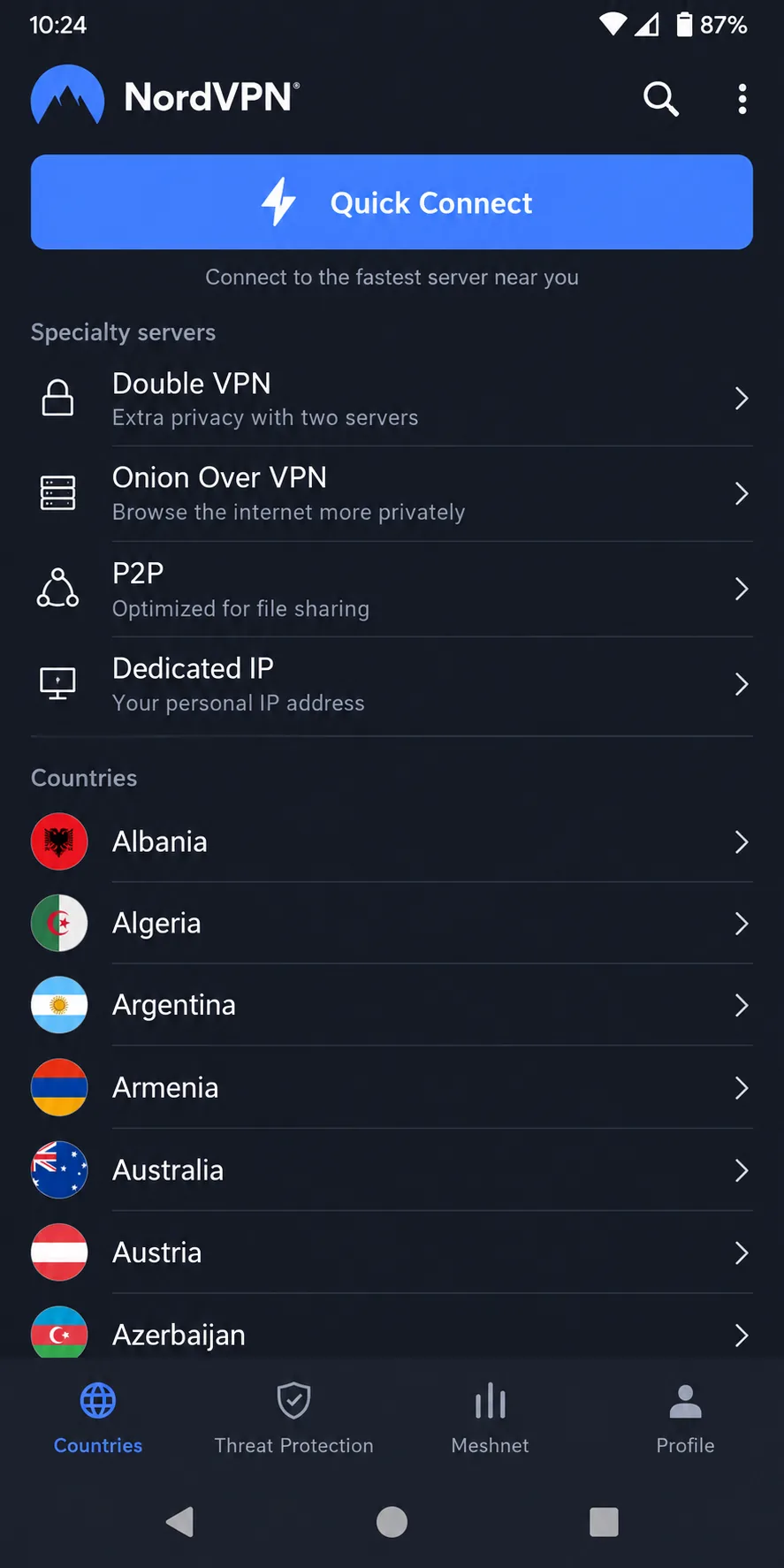
Where Proton VPN wins on free access, NordVPN wins on raw performance, the area where Potato VPN struggles most. On a nearby server we lost only about 4 percent of our download speed and 7 percent of our upload speed. A 4K stream played with no buffering, and Netflix, Hulu, BBC iPlayer and Prime Video all unblocked reliably.
Not every feature is free of trade-offs. Double VPN cut our speed by around 80 percent and only runs on preset server pairs. The map view needed zooming to pick a server, so we switched to the quicker list view. Live chat also opened with a chatbot before a human took over.
NordVPN is based in Panama, and NordVPN's sixth no-logs assurance engagement by Deloitte was announced in February 2026. There is no free plan. Monthly billing costs $14.99, and the two-year Basic plan runs about $3.09 to $3.49 a month, a rate that moves with promotions and renews higher. The renewal charge lands about two weeks before the term ends, so set a reminder. You get 10 devices and a 30-day money-back guarantee. See our NordVPN review for the speed data.
We rate NordVPN 9.0 out of 10, the best paid upgrade if you can commit to two years.
3. Surfshark - Best Value for Unlimited Devices
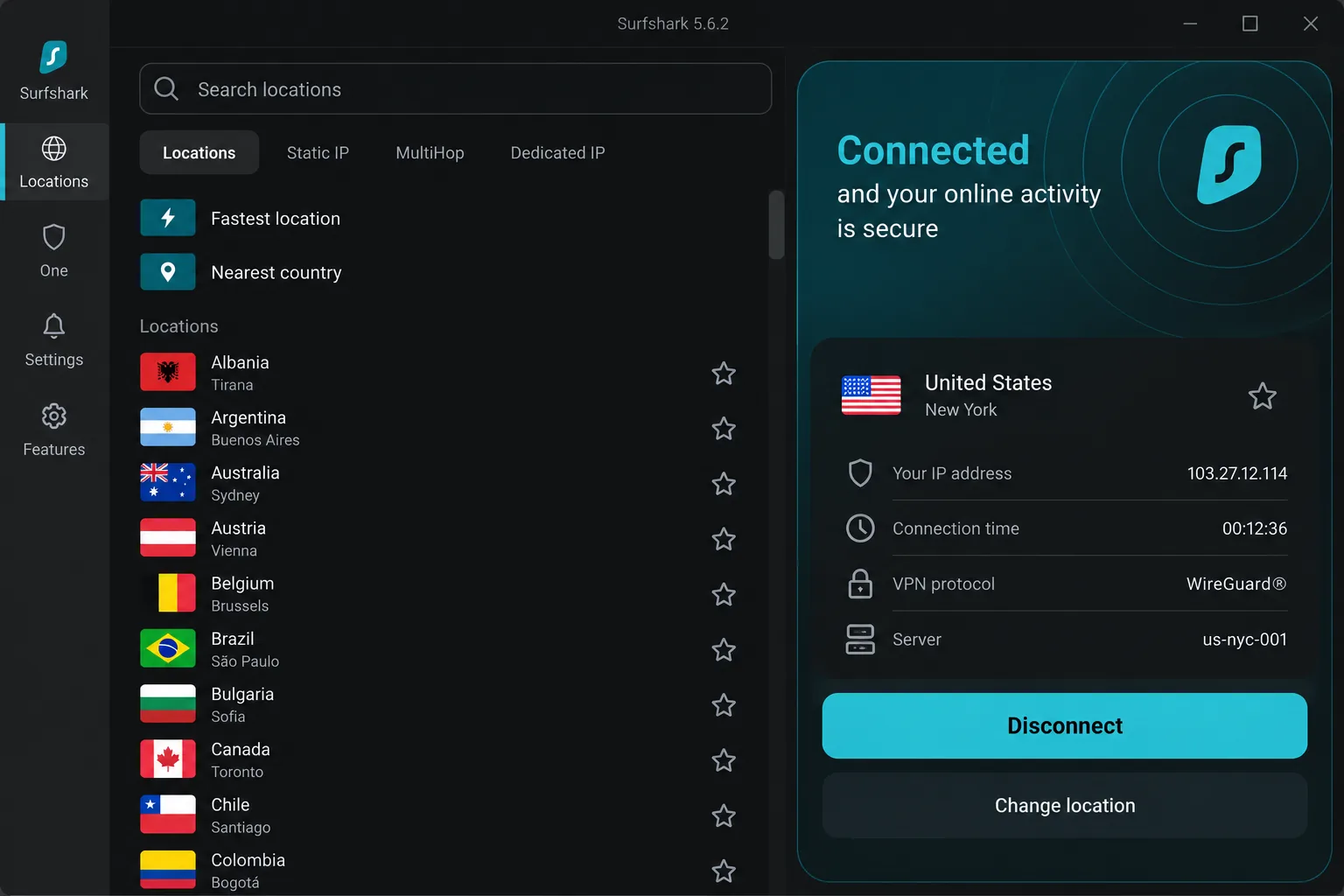
NordVPN caps you at 10 devices, while Surfshark sets no limit at all. That suits a family that shares one Potato VPN Premium account today. On macOS, a transatlantic server slowed our downloads by only about 10 percent. The Windows app showed bigger slowdowns and occasional ping spikes, so Mac users get the better experience.
Streaming was a highlight. We unblocked 15+ regional Netflix libraries, along with Max, Disney+, Hulu and BBC iPlayer. When we cut the VPN connection on purpose, the kill switch blocked internet access instantly, and we saw no IPv4, IPv6, DNS or WebRTC leaks. MultiHop slowed our connections significantly, so keep it for the moments you need it.
Surfshark is based in the Netherlands, and Surfshark's 2025 no-logs audit by Deloitte repeated its 2023 result. The Starter plan costs $2.49 a month on the two-year plan plus 3 months. The month-to-month plan costs roughly $15 to $16 depending on region and tax. That puts it among the priciest in the category, so the value sits in the long plan. Our Surfshark review covers the rest.
We rate Surfshark 8.6 out of 10 for households with many devices.
4. Windscribe - Best Free Plan for Bypassing Blocks
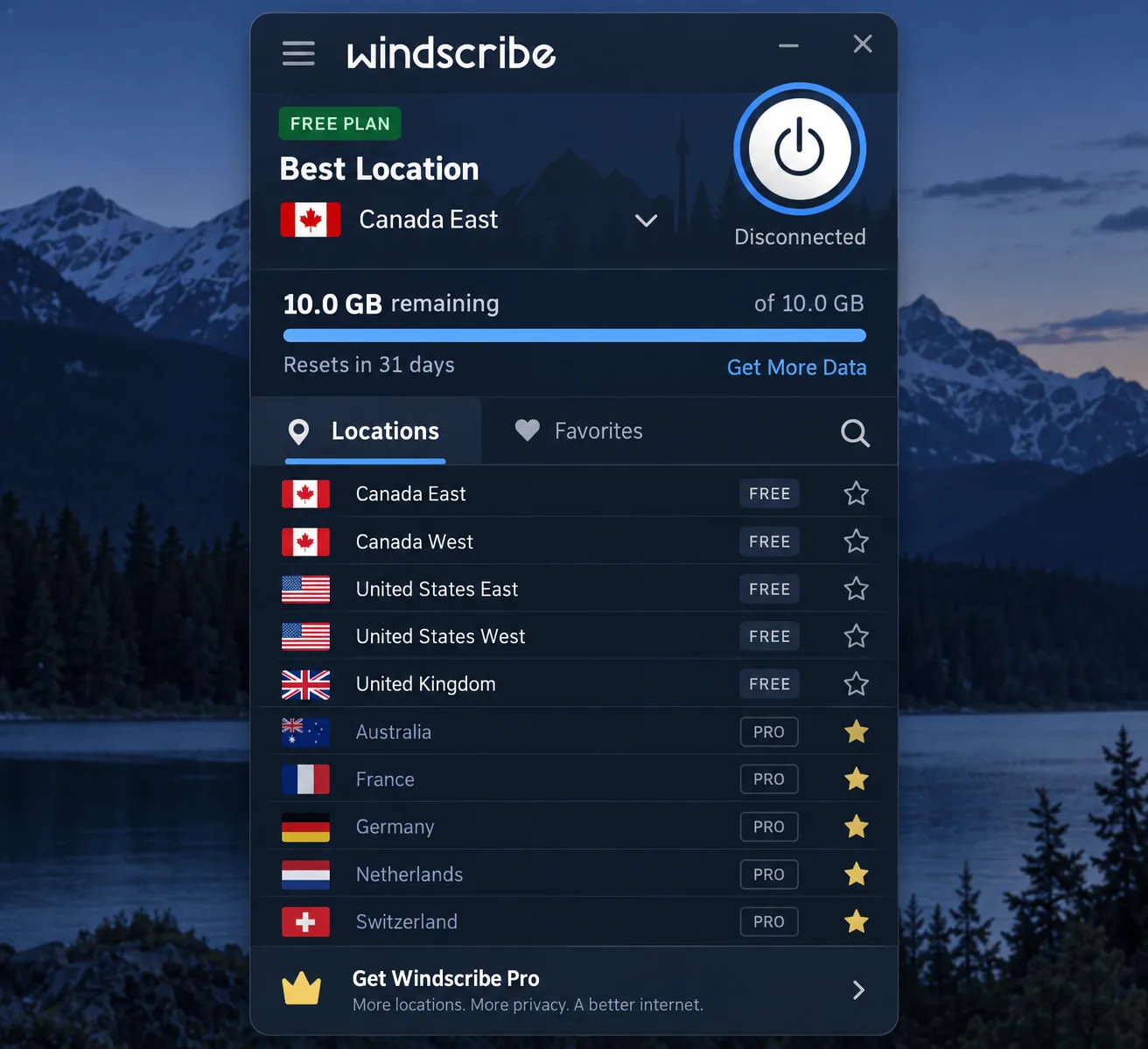
Windscribe is the free alternative to pick if you want to choose your own location, which Proton's free plan does not allow. The free plan gives you 10GB a month with a confirmed email, servers in 10 countries and unlimited devices. Its Stealth and WStunnel protocols are built for networks that block VPNs. Those networks are a real gap for Potato VPN, which fails in China, Turkey, Saudi Arabia, the UAE, Iran and Russia.
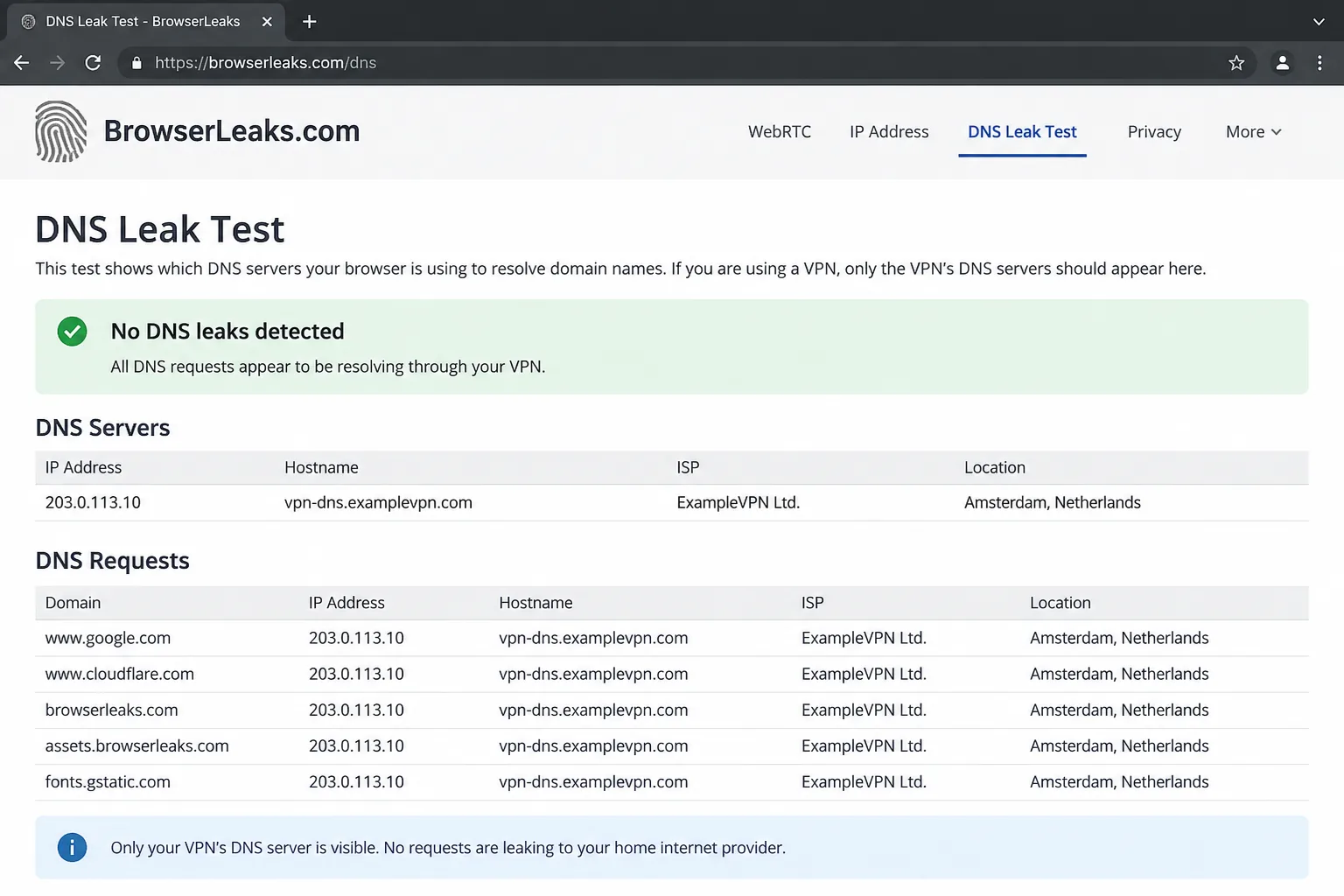
Speeds surprised us. On WireGuard, a nearby US server barely dented our connection, moving from 94.6 to 91.8 Mbps, and a Singapore server still held about 68 Mbps. The free tier is less steady, since speeds dropped by up to 90 percent roughly twice every three hours. The free plan did not unblock US Netflix but worked with the UK, France and Germany libraries. When we stopped the VPN process, the Firewall blocked all traffic outside the tunnel instead of exposing our real IP, and we saw no IP, DNS or WebRTC leaks.
Some setup lives on the account website rather than in the app, including R.O.B.E.R.T. custom rules and port forwarding. The desktop window is small with tiny text. Pro costs $9.00 a month or $69 a year ($5.75 a month), and Build A Plan charges $1 per location per month with a $3 minimum. Refunds are limited to 7 business days and under 10 GB of use, and they cover only technical faults that support cannot fix. Windscribe Limited is based in Canada, and an Athens court dismissed the case against its CEO on April 11, 2025, because no user logs existed. Its audits by Leviathan and Packetlabs are security audits, not no-logs audits. Read our Windscribe review for more.
We rate Windscribe 8.5 out of 10, the best free choice for restrictive networks.
5. ExpressVPN - Best for Fast, Simple Mobile Apps
If Potato VPN's one-tap simplicity is what you liked, ExpressVPN keeps that feel with far more polish. Its apps are the most refined of the seven, and Netflix libraries in several countries, ESPN+ and Hulu streamed without issues for us. When a server timed out and when we changed networks, Network Lock fired correctly each time.
That polish costs some speed. Our downloads fell roughly 37 to 39 percent on nearby servers, more than with NordVPN or Proton VPN. ExpressVPN also costs more than Surfshark on the long plan. Email support took close to two days, so use live chat instead.
ExpressVPN has servers in 113 countries and is based in the British Virgin Islands. ExpressVPN's 2025 privacy audit by KPMG was its third with that firm. Basic costs $12.99 a month, or about $2.79 to $2.99 a month on the two-year plan depending on the promotion, and it renews at $99.95 a year. Devices range from 10 on Basic to 14 on Pro. Our ExpressVPN review has the details.
We rate ExpressVPN 8.8 out of 10 for anyone who wants an app that needs no tuning.
6. CyberGhost - Best for Streaming
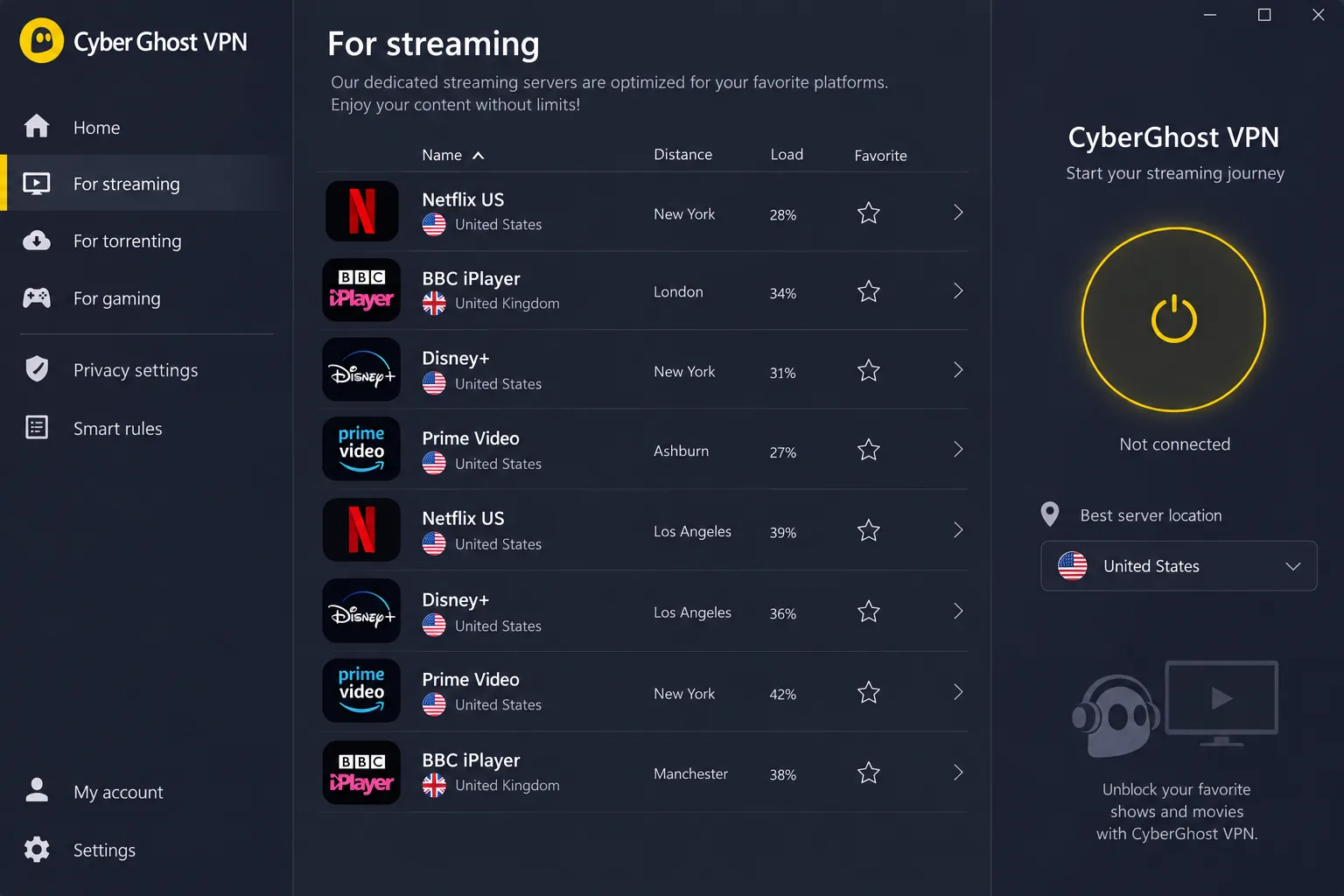
ExpressVPN streams well, but CyberGhost makes streaming easier by labeling servers for each service. Its dedicated streaming servers loaded Netflix US, BBC iPlayer, Disney+ and Prime Video on the first try for us. That compares well with Potato VPN, where free streaming struggles and Premium results were mixed. DAZN did not unblock, and European streaming platforms were a struggle.
Nearby servers lost roughly 5 to 19 percent of our speed, and long-distance servers about 44 to 59 percent. The Windows app looks dated next to the cleaner mobile apps. The 7-device cap also filled up quickly in a busy household.
CyberGhost is based in Romania and, like ExpressVPN, is owned by Kape Technologies. Deloitte has audited its no-logs policy three times, most recently in February 2026. It costs $12.99 a month, or about $1.99 to $2.19 a month on the two-year plan plus 2 months, depending on the seasonal offer. The 45-day money-back guarantee on longer plans is the most generous here. Our CyberGhost review covers the streaming tests.
We rate CyberGhost 8.4 out of 10 for people who mainly want a VPN for TV.
7. Mullvad VPN - Best for Anonymity
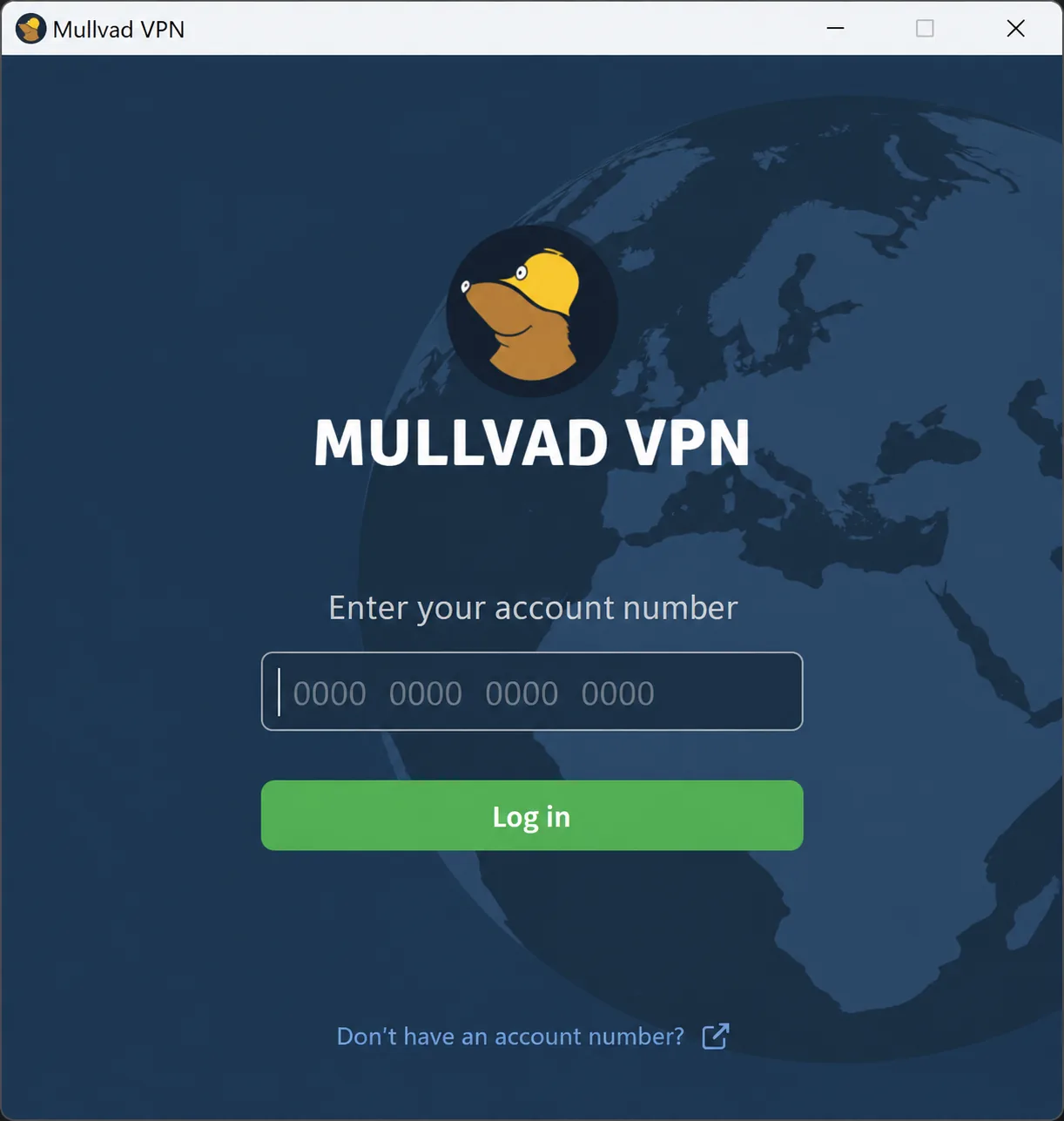
Mullvad sits at the opposite end from Potato VPN on privacy. Potato VPN collects an optional email and payment details, while Mullvad asks for nothing. Sign-up took us seconds, because a random 16-digit account number is the only login, with no email, username or password.
Local speed loss was only around 6 percent, while distant servers slowed downloads noticeably. Streaming was hit or miss, since some servers got Netflix and others were detected. Support is email-only, with replies in hours rather than minutes.
Mullvad VPN AB is based in Sweden. When Swedish police searched its office in 2023 they left with no customer data, because none was stored. Mullvad's 2024 Cure53 infrastructure audit found five issues, none of them remotely exploitable. Pricing is a flat EUR 5 (about $5.60) a month on any term, for 5 devices, with a 14-day refund on new payments. See our Mullvad VPN review for more.
We rate Mullvad VPN 8.5 out of 10 for users who want to stay anonymous rather than stream.
Apps Like Potato VPN on Android and iPhone
Beyond these seven, most people first find Potato VPN in an app store, next to other free one-tap proxy and VPN apps that promise private browsing with no sign-up. Turbo VPN and Thunder VPN are the closest look-alikes, but they share the same ad-supported model. Turbo VPN interrupts connecting and disconnecting with unskippable video ads on mobile, as our Turbo VPN review explains. Thunder VPN is Android-only and shows pop-up ads on nearly every connect and disconnect. It can also drop the connection when the phone sleeps, with no kill switch to catch it. Our list of Thunder VPN alternatives and our SuperVPN alternatives cover more of this free app class.
For a mobile user, the better swap is one of our picks. Proton VPN and Windscribe both have free Android and iPhone apps without ads, and ExpressVPN has the most refined paid mobile app. Each one keeps the one-tap connect that made Potato VPN easy to start with. Potato VPN itself needs iOS 15 or later, so any phone that runs it will run these apps too.
How We Picked These Alternatives
We judged every candidate on five criteria: ads, free-tier limits, logging and audit status, price, and the quality of its mobile apps. Potato VPN set the baseline. In our testing its download speeds fell by more than 90 percent, so a file that took about 5 minutes without the VPN took close to 50 minutes through it. Ping stayed under 50ms on nearby servers, yet Roblox, Overwatch and PUBG failed to load.
We then compared the alternatives on speed across nearby and distant servers, leak-test results, kill-switch behavior and streaming access. We also looked for independent proof that each service keeps no logs, which Potato VPN has never published. A provider had to beat Potato VPN clearly on privacy and stability to make the list, and the HTS review score set the rating shown for each pick.
Why Look for a Potato VPN Alternative?
Those criteria start from what Potato VPN gets wrong. Potato VPN works for quick, light use, which explains its 4.7 score across 118K App Store ratings. Many of those reviews praise the free tier, but the complaints keep returning to random drops and ads you need to watch to connect. Our Potato VPN review covers every test, and the sections below sum up why people leave.
Ads and Only Six Free Locations
The free tier runs on advertising. Ads appear between connections, and free users sit through them to connect or stay online. The App Store listing names six free countries: the US, Canada, the UK, Germany, Singapore and India. Potato VPN does not publish a fixed free-location list, though, and other counts run as high as 15 locations. The free plan also allows only 1 connection at a time, and the free version struggles with streaming.
Dropped Connections and Speed Limits
Stability was the biggest problem in our testing. The desktop app dropped the connection every couple of minutes without any notification, while the Android app could stay connected for hours. Connections dropped even on the paid Premium tier. A working server could also stop connecting after a few days, until we switched country, changed connection mode or reinstalled. No DNS or IP leaks showed up while connected, but with no kill switch, every silent drop exposes your traffic.
Auto-Renewal and Billing Complaints
Premium costs $11.99 a month on monthly billing, the same as Turbo VPN. The yearly price depends on where you buy: Potato VPN charges $71.99 a year on its website but lists $49.99 a year inside the iOS app. Subscriptions renew automatically by default, and auto-renewal can be hard to cancel. Getting a refund can also take more than one request, and the money takes several days to arrive.
Paid Potato VPN plans renew automatically by default when you pay by card or PayPal. On iPhone, auto-renew must be off at least 24 hours before the period ends, so cancel a day early rather than on the last day.
Privacy Policy and Ownership Questions
Potato VPN's privacy policy says it never collects your IP address or the servers you connect to. It does collect usage data, including your protocol, connection timestamp and network type, and keeps it for no more than 48 hours. It also records city-level location, device details, your registration date and payment information. Potato VPN launched in 2020 and is run from Singapore. Its privacy policy and its App Store seller listing point to two different Singapore companies, and neither document explains how they relate. There is no third-party no-logs audit and no transparency report.
How to Choose the Right Potato VPN Alternative
Start with the reason you are leaving. If ads and drops pushed you out, any pick on this list fixes both, so the choice comes down to budget and devices. If you want to stay free, decide whether unlimited data or choosing your own country matters more.
Next, check the kill switch and the audit record. A kill switch matters most for Potato VPN users, because silent drops were its biggest flaw. All seven picks have one, and all of them use modern encryption: AES-256 (often sold as military-grade encryption) or ChaCha20 under WireGuard. Look for a named auditor such as Deloitte, KPMG or Securitum rather than an unproven claim. Extra features like split tunneling, ad blocking and multi-hop are useful, but they matter less than a VPN tool that stays connected.
Finally, think about where you connect from. If you travel to countries that block VPNs, choose Windscribe for its Stealth protocols. If you stream most of the time, CyberGhost or NordVPN will save you the most server hopping. If you share the service with a family, Surfshark's unlimited devices are the simplest answer.
Use the money-back guarantee as your trial. Most paid picks give you 30 days, and CyberGhost gives 45 days on longer plans. Either window is enough time to test speeds on your own network before you commit.
Free vs Paid Potato VPN Alternatives
Whichever you choose, free VPNs pay their bills somehow. Potato VPN, Turbo VPN and Thunder VPN do it with ads. Turbo VPN also caps its free plan at 500MB per day. Thunder VPN has passed 100M+ Google Play downloads despite failing to load Netflix, Disney+, Hulu, HBO Max and BBC iPlayer. Proton VPN and Windscribe sell paid plans alongside their free tiers, and neither shows ads to free users.
The trade-off is in the limits: Proton's free plan stops at 1 device, Windscribe's at 10GB a month, and neither is built for heavy streaming.
Paid plans remove those limits and usually cost less than Potato VPN Premium on a long-term plan. Surfshark's two-year rate is $2.49 a month and Proton VPN Plus is $2.99, both well under Potato VPN's $11.99 monthly price. For more free options outside this list, see our roundup of the best free VPN alternatives.