
A VPN on Android routes your device's internet traffic through an encrypted tunnel to a remote server. Sometimes you need that traffic to flow normally again, whether for a bank app, a local streaming service, or a speed test. The good news is that turning a VPN off takes seconds once you know where the control lives. This guide covers every route, from the Quick Settings tile to the Settings app to the provider's own app.
We tested these steps across stock Android, Samsung, Xiaomi, and OnePlus devices, and the paths differ just enough to trip people up. Below we walk through each method, then cover how to stop a VPN from reconnecting and how to confirm it is truly off.
Quick answer: how to turn off a VPN on Android
The fastest way to turn off a VPN is to open the app you connected with and tap Disconnect. If you set up the VPN manually, go to Settings, then Network & internet, then VPN, tap the active connection, and choose Disconnect. Both routes drop the tunnel immediately, and the key icon in your status bar disappears once you are off.
How to turn off a VPN from Quick Settings
Many VPN apps place a tile or a persistent notification in the panel you pull down from the top of the screen. This is the shortest path when the app is already running.
Swipe down from the top of the display to open the notification panel. Look for your VPN's ongoing notification, then tap it or its Disconnect action to drop the connection. Some apps also add a Quick Settings tile you can tap straight from the shade. If neither appears, the app may not expose a tile, so use the Settings app or the provider's app instead.

How to turn off a VPN from the Settings app
If you added a VPN profile by hand, or the app has no tile, the system Settings app always has a control. On stock and Pixel devices the path is short and predictable.
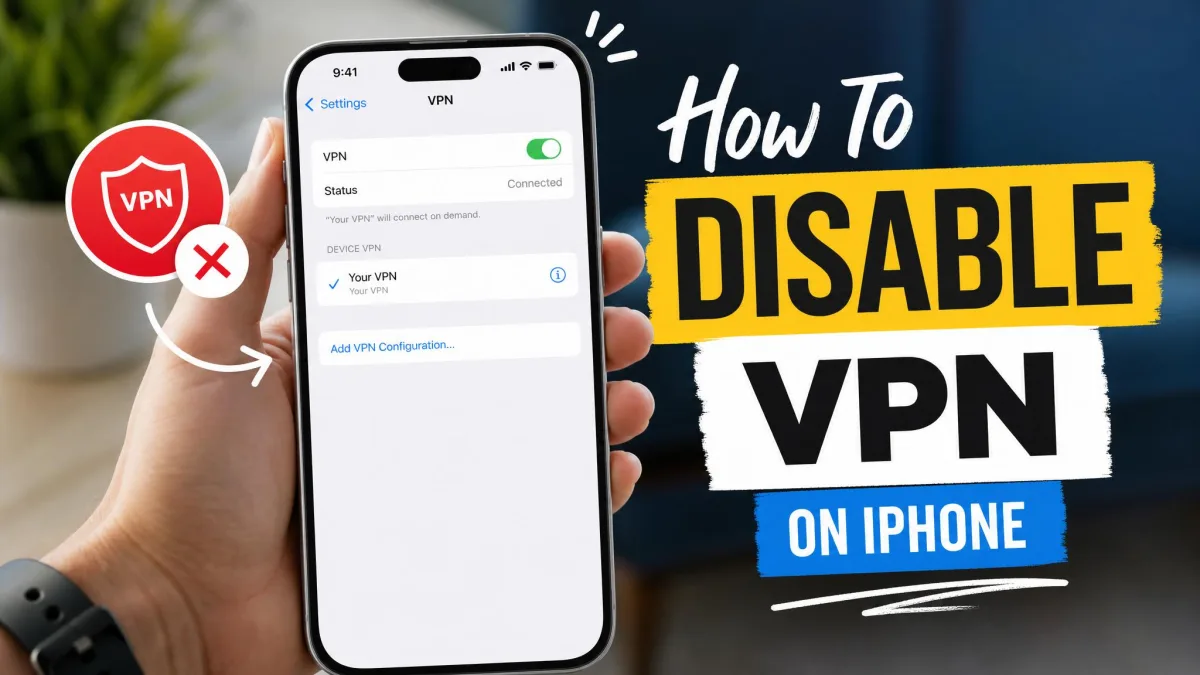
Open Settings, tap Network & internet, then tap VPN. Tap the name of the active VPN, then choose Disconnect. On a manual profile you may see a simple toggle instead of a button; switch it off. The connection drops right away, and the status bar key icon clears.

If you do not see the VPN entry under Network & internet, use the search bar at the top of Settings and type "VPN." It jumps you straight to the right screen on almost every Android skin.
Where VPN settings live on Samsung, Google Pixel, Xiaomi, and OnePlus
Manufacturer skins move the VPN menu around, so the same steps do not map cleanly across brands. On our test devices the top-level menu name changed even when the final VPN screen looked identical. Samsung's One UI has also relabeled and relocated the entry across versions, and Xiaomi and OnePlus rename their menus too, so treat the paths below as version-dependent starting points.
| Phone | Settings path to VPN | Disconnect action | Always-on toggle |
|---|---|---|---|
| Stock / Pixel | Network & internet > VPN | Tap VPN > Disconnect | Gear icon next to VPN |
| Samsung (One UI) | Connections > VPN | Tap VPN > Disconnect | Gear icon next to VPN |
| Xiaomi (MIUI/HyperOS) | Connection & sharing > VPN | Tap VPN > Disconnect | Gear icon next to VPN |
| Oppo / OnePlus (ColorOS) | Additional settings > VPN | Tap VPN > Disconnect | Gear icon next to VPN |
If your menu names differ, the search trick from above finds the VPN screen no matter what your manufacturer calls the parent menu. Google's own Android VPN help page documents the built-in client and its toggles if you want the reference.
How to turn off a VPN from the VPN provider's app
For most people this is the everyday method. NordVPN, ExpressVPN, Proton VPN, and similar apps all put a large connect control on their home screen.
Open the app and tap the Disconnect button or the power icon, usually the same button you used to connect. The tunnel closes and the app's status flips to "Not connected" or "Off." On an Android TV, where there is often no built-in VPN toggle in system settings, this is the only way to disconnect, so open the VPN app and turn it off from there.

How to stop a VPN from turning back on (disable Always-on VPN)
If your VPN keeps reconnecting seconds after you disconnect, Always-on VPN is almost certainly still enabled. This setting relaunches the tunnel automatically, which is great for security and frustrating when you want off.
Go to Settings, Network & internet, VPN, then tap the gear or settings icon next to your VPN's name. Turn off Always-on VPN. While you are there, check Block connections without VPN, sometimes labeled "Only allow connections through VPN." That kill switch cuts all traffic when the VPN is down, so leave it off if you want normal internet without the VPN.

Turning off a VPN exposes your real IP address and drops the encryption around your traffic. On public or shared Wi-Fi, that means anyone on the network can potentially see what you are doing, so reconnect before you handle anything sensitive.
How to confirm your VPN is off
Android gives you a clear signal. A key icon sits in the status bar whenever a VPN is active, and it disappears once you disconnect. Glance at the top of your screen first.

For a stronger check, open a browser and search for "what is my IP." If the location and address match your real network rather than the VPN server, you are fully disconnected. This IP check is the most reliable confirmation because it tests your actual outgoing traffic rather than a label in a menu.
The status-bar key icon occasionally lingers even after the tunnel closes. If it does, force-stop the VPN app and restart the phone, and the icon clears along with any stuck connection state.
Why (and when) you might want to turn off your VPN
There are plenty of good reasons to disconnect. A VPN can slow your connection, block a local banking or government app that refuses foreign IP addresses, or interfere with a streaming service tied to your home region.
You might also turn it off to run an accurate speed test, to use a device or website that flags VPN traffic, or simply to save battery on a long day. Turning the VPN off for a specific task and back on afterward is a normal, sensible pattern.
When you should NOT turn off your VPN
There are moments to leave it running. On public Wi-Fi at a cafe, airport, or hotel, the VPN is what shields your traffic from others on the network, so keeping it on is the safer choice.
Also leave it connected when you are handling banking, logging into accounts, or sending anything private over a network you do not control. If your only reason to disconnect is a minor speed dip, the security tradeoff usually is not worth it.
Troubleshooting: problems after turning off your VPN
Sometimes the internet stays broken right after you disconnect, which surprises people who expect an instant return to normal. In our testing the causes were consistent and easy to fix.
The most common culprit is a leftover custom DNS. A VPN can set a Private DNS that stays in place after the tunnel closes, so open Settings, Network & internet, Private DNS, and switch it to Automatic or Off. Internet access usually returns at once.
If the phone looks completely offline even though Wi-Fi and mobile data are on, Always-on VPN plus Block connections without VPN may be holding traffic hostage while the app is stuck. Disable both in the VPN's gear menu. Individual apps can also stay blocked until you switch DNS or relaunch the app, and a restart, while rarely required, reliably clears any lingering no-internet state.