Private Internet Access earns its loyal following honestly. As we found in our full PIA VPN review, it covers unlimited devices on one subscription, ships open-source apps, supports port forwarding and stays cheap on its longest plan.
Still, plenty of people go looking for a replacement. PIA is based in the United States and owned by Kape Technologies. It also has no free plan, and its desktop client is busier than it needs to be. Streaming and speeds also swing from server to server, which gets tiresome when you just want a show to load.
NordVPN is our top pick, but each of the six alternatives below fixes a different PIA gap. The right choice depends on which gap bothers you most.
Why Look for an Alternative to Private Internet Access?
PIA scored 8.4/10 in our testing, which is a good score, not a warning sign. The reasons to leave are specific, and each one points to a different replacement. Knowing which one applies to you narrows the shortlist quickly.
U.S. Jurisdiction and Ownership
PIA's operating company, PIA Private Internet Access, Inc., is a U.S. business. Its Terms of Service are governed by Colorado law, with disputes heard in Denver County courts. That U.S. base places the service inside the Five Eyes intelligence-sharing alliance. A strict no-logs policy limits what any legal request can return, but if you would rather your provider sit outside U.S. law entirely, PIA can't offer that.
Ownership is the second concern. Since 2019, PIA has belonged to Kape Technologies, a London-based company that traded as Crossrider until it renamed itself in March 2018. Kape also bought CyberGhost in 2017 and ExpressVPN in 2021.
That matters for this list. If ownership is your main reason for leaving, note that two of our six picks share PIA's parent company: ExpressVPN and CyberGhost. NordVPN (Panama), Proton VPN (Switzerland), Surfshark (Netherlands) and Mullvad (Sweden) are the options outside the Kape family.
Audits and Transparency
PIA's no-logs policy is independently checked, and recently. Its latest assessment was carried out by Deloitte Audit Romania under the ISAE 3000 (Revised) standard and completed on December 19, 2025. It was the third Deloitte audit, after earlier rounds in 2022 and 2024.
The scope was broad. Deloitte looked at VPN infrastructure configuration, access control, incident response and change management. It also inspected VPN and distribution servers, interviewed staff and covered the token-based Dedicated IP system. According to PIA's Deloitte no-logs audit report, nothing came to Deloitte's attention that contradicted PIA's no-logs description.
So PIA doesn't fall short on audit quality. The real difference is frequency. PIA's audits have landed every one to two years, while NordVPN and Proton VPN now audit every year. If you want the shortest possible gap between independent checks, those two pull ahead.
No Free Plan or Trial
PIA has no free plan, and its own website checkout offers no free trial either. Month-to-month access costs $11.95. The one exception is a 7-day trial offered only through the iOS and Android app stores, and whether you can get it depends on your platform and region. On Windows or Mac, the closest thing to a trial is the 30-day money-back guarantee, which means paying first and asking for a refund later.
Proton VPN is the only pick on this list with a permanent free tier.
Speeds, Streaming and the Desktop App
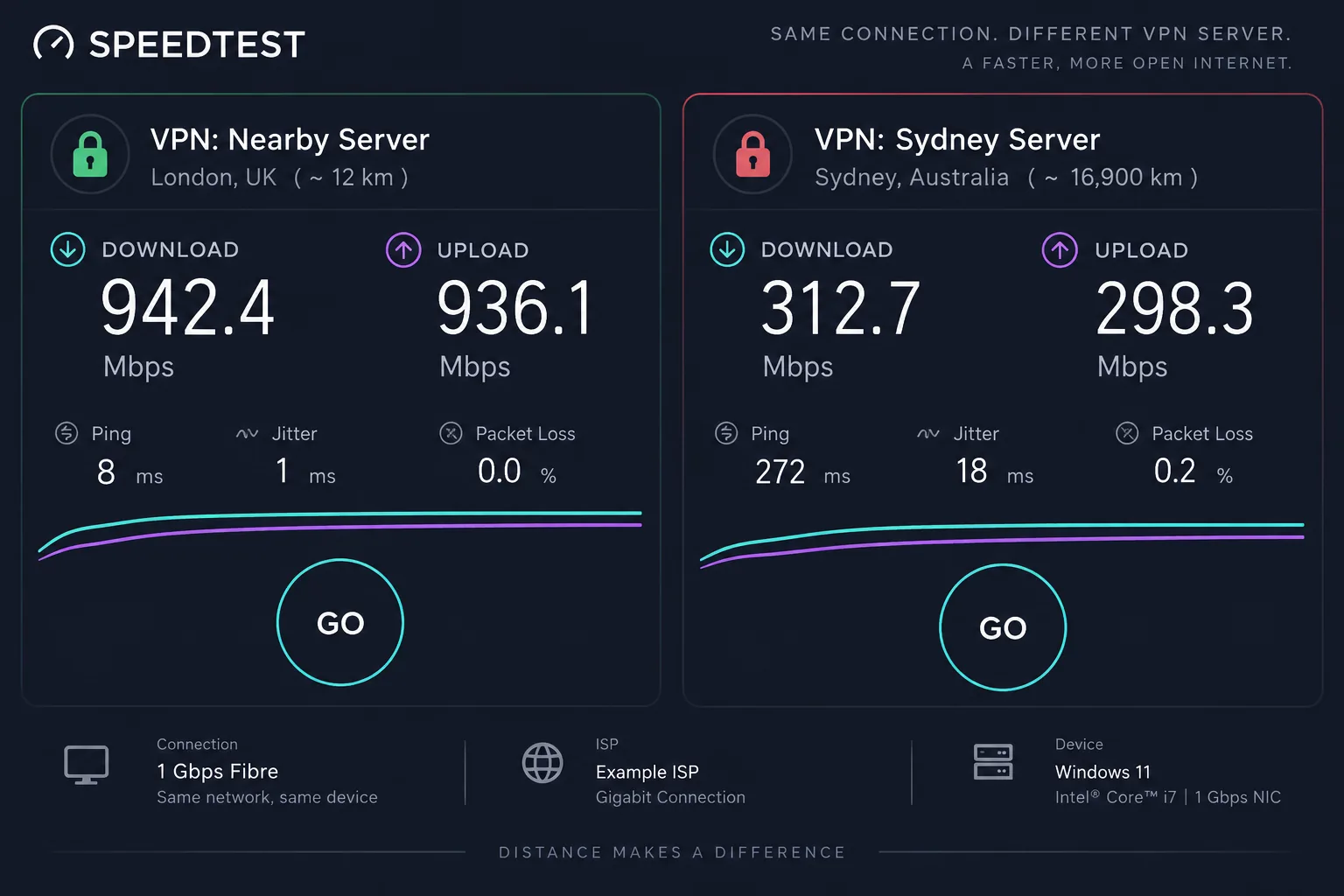
Speed is where PIA was least predictable on our bench. On a gigabit line, its Seattle WireGuard server held only about 299 Mbps, a 75 percent drop. New York managed about 500 Mbps.
On a slower connection, PIA's slowdown barely registered. Downloads fell about 4 percent on nearby servers and under 20 percent on a long hop to Sydney. Far-off servers such as South Africa still dipped hard, even when U.S. speeds kept pace with NordVPN. In practice, PIA's limits show up mostly on fast lines and distant servers.
Streaming was less consistent. In one session, Netflix US played on the first try from a regular U.S. server. On other servers, Netflix detected the VPN and dropped us into its Originals-only global catalogue. HBO Max blocked a standard U.S. server and then played in 4K on a streaming-optimized one. Those optimized servers sit in a separate list that is easy to miss, so a regular server often fails first. Hulu and Disney+ failed to load on some servers, and Sky Go and every DAZN region we tried stayed blocked.
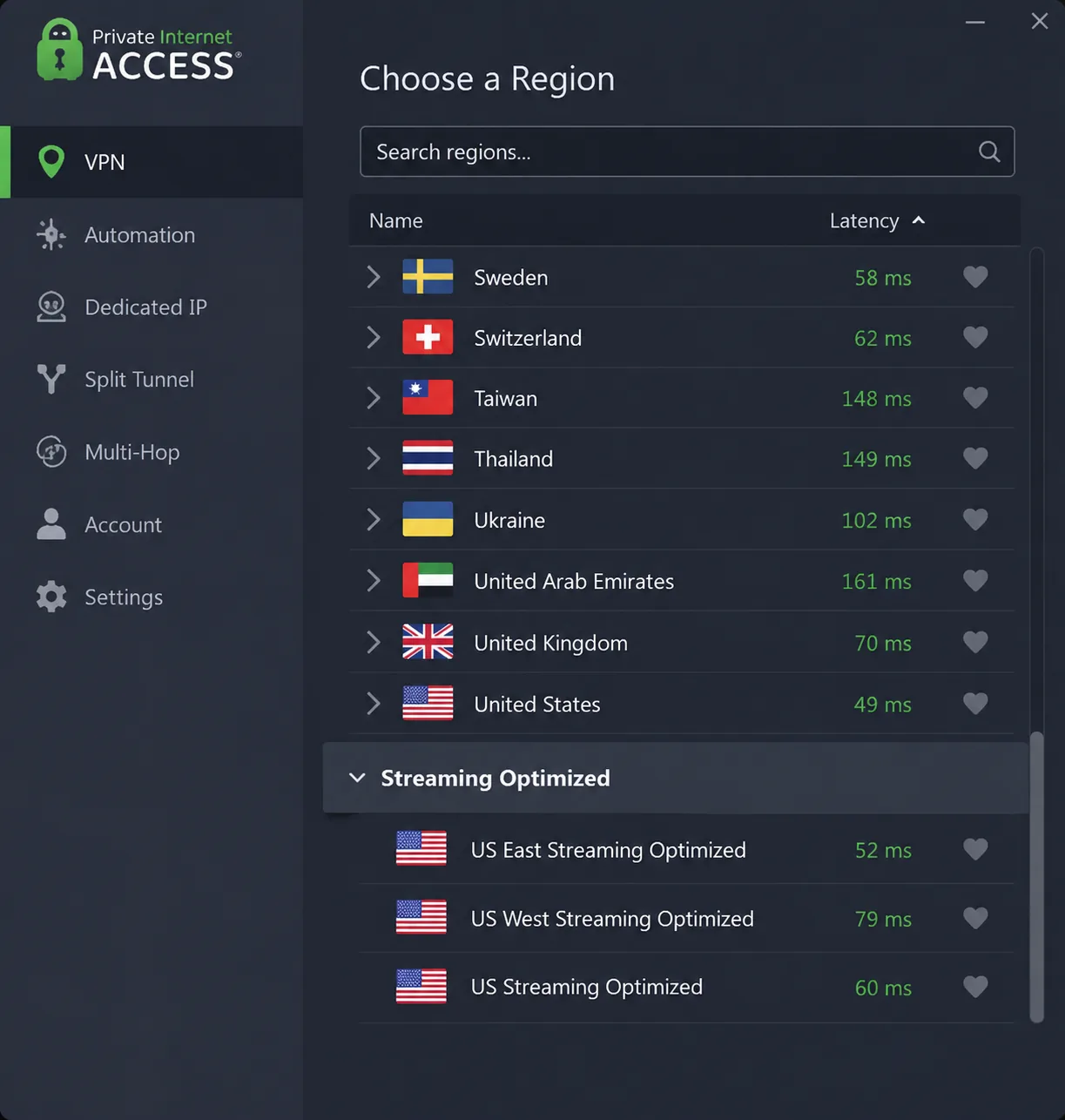
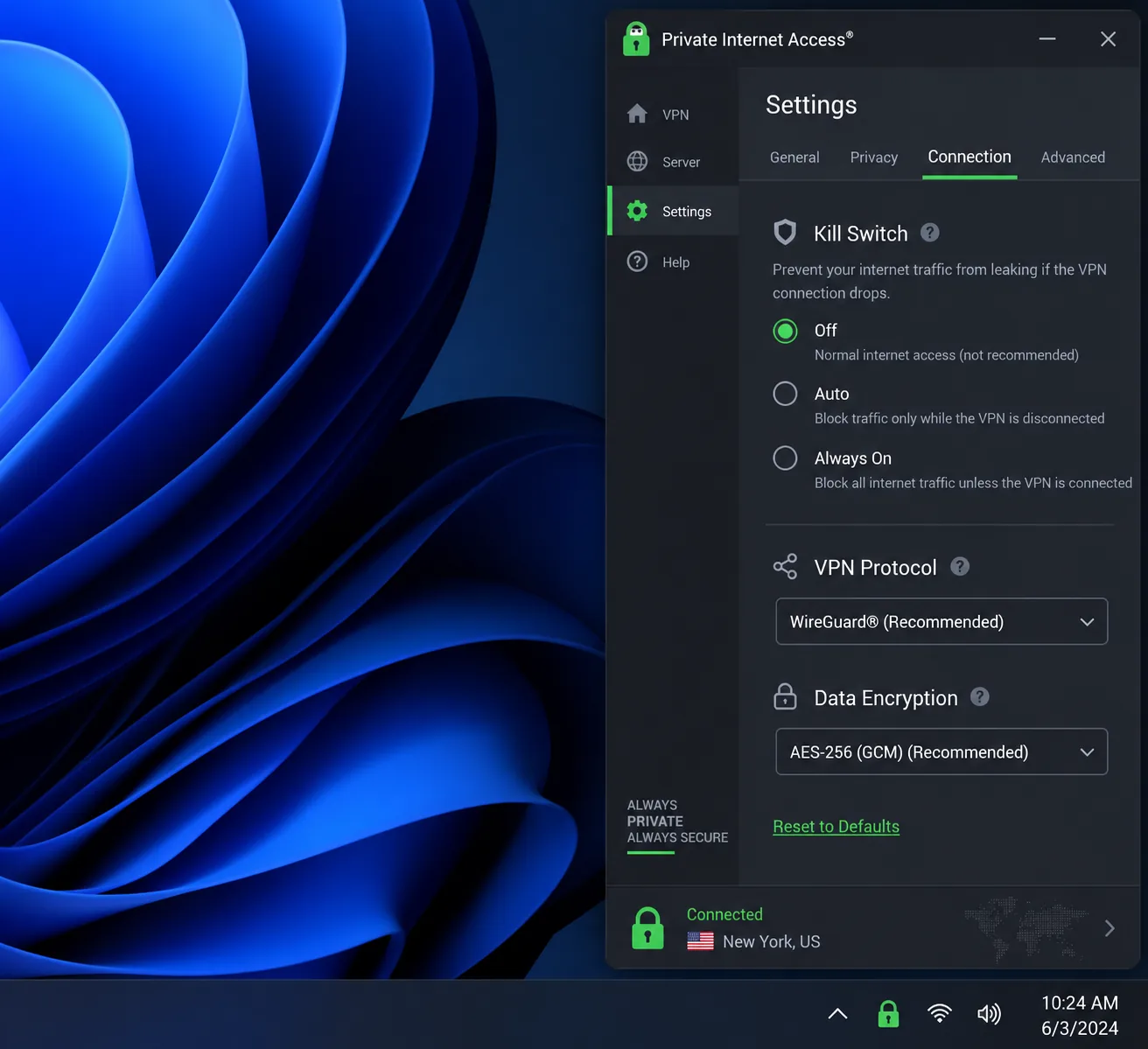
The Windows app has its own quirks. By default the app docks to the system tray, so one click outside the window closes it mid-change. The option to detach the window is buried in General settings. The depth of settings suits tinkerers but overwhelms beginners. On iOS, the app drops the MACE ad blocker, split tunneling and obfuscation. PIA also defaults to AES-128 encryption (AES-256 is one setting away) and offers no post-quantum option.
PIA vs the Best Alternatives: Quick Comparison
Here is how the six picks stack up against PIA on the points that usually drive a switch. Promo prices move every few weeks, so treat the price column as a range.
| VPN | Buy | Monthly price (2-year or longest plan) | Simultaneous connections | Jurisdiction | Independent no-logs audit | Streaming / Netflix | Free plan | Standout feature |
|---|---|---|---|---|---|---|---|---|
 |
Check price → | About $3.09-$3.49(2-year) | 10 | Panama | Six verifications, latest by Deloitte (Feb 2026) | Strong on regular servers | No | Post-quantum encryption, Threat Protection Pro |
 |
Check price | About $2.99-$3.49(2-year) | 10 (free plan: 1) | Switzerland | Securitum, every year 2022-2026 | Strong on paid plans | Yes: 1 device, 10 countries | Free plan, Secure Core |
 |
Check price | About $2.99-$4.99(plan length varies) | 10 / 12 / 14 by tier | British Virgin Islands (Kape) | KPMG, 2025 | Strong | No (7-day mobile trial) | Lightway protocol, polished apps |
 |
Check price | $2.49(2-year) | Unlimited | Netherlands | Deloitte, 2023 and 2025 | Strong | No | Unlimited devices, CleanWeb |
 |
Check price | €5flat | 5 | Sweden | Cure53 infrastructure audits (not a no-logs opinion) | Weak | No | Anonymous account number, no email |
 |
Check price | About $1.99-$2.19(2 years + bonus months) | 7 | Romania (Kape) | Deloitte, third audit (Feb 2026) | Strong via labelled servers | No | Labelled streaming servers, 45-day refund |
 |
About $1.89-$2.19(longest plan) | Unlimited | United States (Kape) | Deloitte, 2022, 2024 and Dec 2025 | Mixed, server-dependent | No (7-day mobile trial) | Port forwarding, open-source apps |
ExpressVPN currently sells a 15-month plan rather than a two-year one, which is why its range is wider than the rest.
How We Picked and Tested These Alternatives
We started from our own review scores and only considered VPNs that scored at or above PIA's 8.4/10. That ruled out IPVanish at 8.0 and left six providers, ranked by score from NordVPN and Proton VPN at 9.0 down to CyberGhost at 8.4.
Then we measured each one against PIA's specific weak spots. We ran speed checks on both a gigabit line and a slower connection, using nearby and long-distance servers, because that is where PIA's results swung most. We tested Netflix on every VPN and added HBO Max, Hulu, Disney+, Prime Video and BBC iPlayer where they mattered. On Windows and Mac, we put PIA's leak protection and kill switch through repeated network drops. We also used the Android and iOS apps, compared features across platforms and contacted support.
On the paperwork side, we read each provider's latest no-logs audit and checked its jurisdiction, ownership, and refund and renewal terms. Renewal pricing counted as much as the headline promo, since that is the price you pay from year three onward.
The Best Private Internet Access Alternatives, Ranked
Every pick fixes at least one of PIA's weak spots and brings trade-offs of its own, which we spell out in each section.
1. NordVPN: Best Overall PIA Alternative
Best for: PIA users on fast connections who want steady speeds and streaming that works without a special server list.
NordVPN beats PIA where PIA was least predictable. On the gigabit route where PIA's Seattle server sagged to about 299 Mbps, NordVPN held above 800 Mbps. On nearby servers it barely dented our speeds, with downloads down about 7 percent. We saw no buffering during 4K streams or video calls. Regular servers unblocked Netflix, HBO Max, Prime Video, Disney+, ESPN+ and YouTube TV, so we never had to dig through a separate streaming list the way we did with PIA.
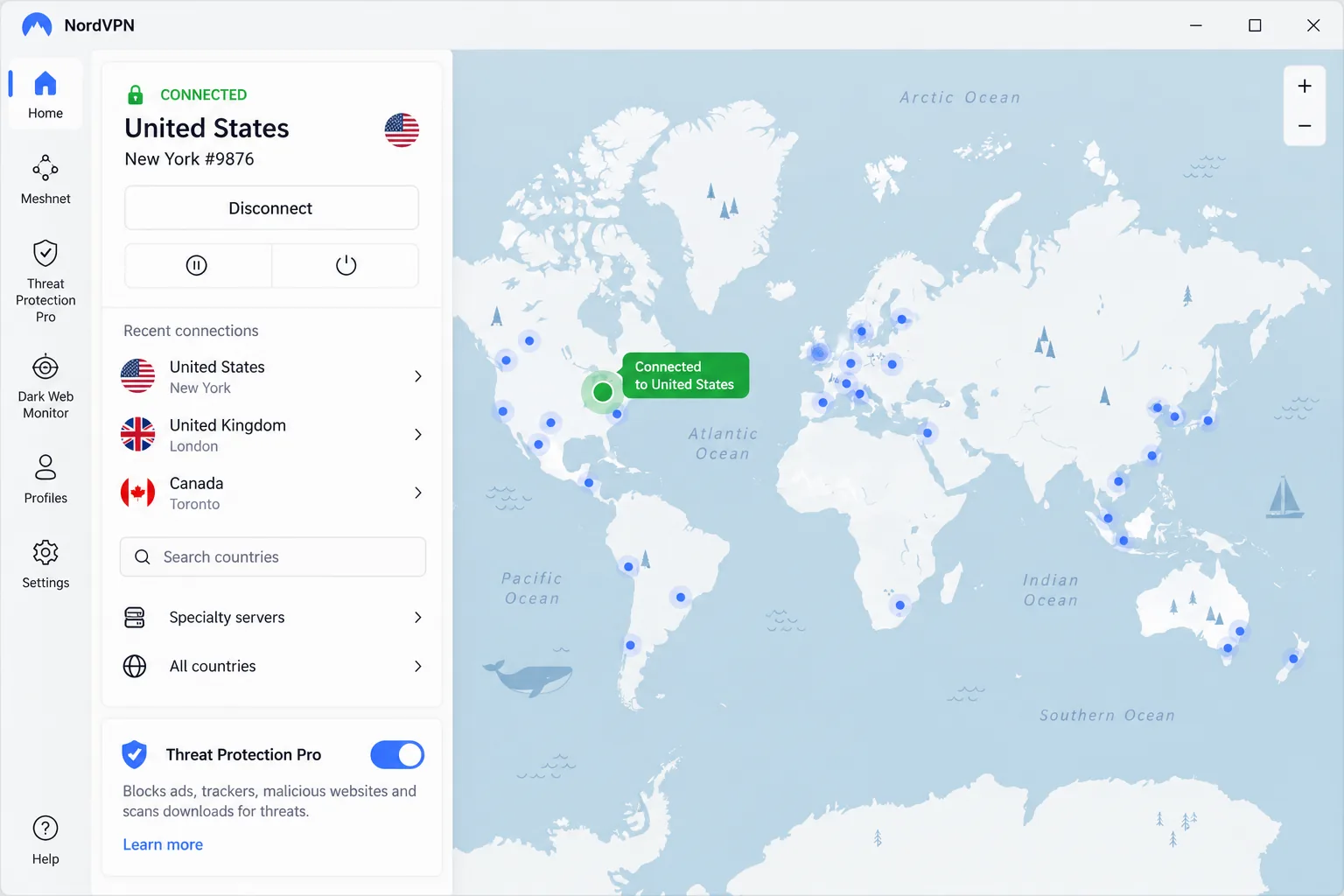
Privacy holds up too. NordVPN is based in Panama, and its 2025 no-logs assurance engagement with Deloitte, published February 6, 2026, was the sixth time its policy has been verified. We cover the full audit history in our NordVPN safety guide, and the rest of our findings are in our NordVPN review.
The main trade-off for PIA users is port forwarding. NordVPN doesn't support it and points you to Meshnet for remote access instead. Setup was smooth for us, although one installation had to be removed and reinstalled to clear a first-run glitch.
Pros
- Post-quantum encryption, which PIA doesn't offer
- Threat Protection Pro blocks malware, ads and trackers
- Apps for Windows, macOS, Linux, Android, iOS, TVs and routers
- 30-day money-back guarantee
Cons
- No port forwarding
- 10 simultaneous connections instead of PIA's unlimited
- Renews at a much higher rate after the first term
- Double VPN cuts speed by about 80 percent
2. Proton VPN: Best for Privacy and a Free Plan
Best for: privacy-first users who want Swiss jurisdiction, yearly audits and a free plan to try before paying.
Where NordVPN wins on speed, Proton VPN wins on jurisdiction and the cost of entry. Proton AG is based in Switzerland and majority-owned by the nonprofit Proton Foundation. Securitum has audited its no-logs policy every year from 2022 to 2026. That annual cadence is the clearest step up from PIA. See our Proton VPN safety guide for the audit details.
The app installed in under two minutes and explained each setting in plain language, a sharp contrast with PIA's crowded desktop client. On paid servers, download speed dropped no more than about 8 percent. VPN Accelerator also lifted throughput noticeably on distant servers, exactly where PIA dipped. Paid plans also unblocked Netflix libraries, BBC iPlayer, Disney+ and HBO Max consistently.
Pricing is simple. VPN Plus costs $9.99 per month on a monthly plan. The 2-year deal has moved between $2.99 and $3.49 a month within the past few weeks, and it renews at $83.88 every 12 months. Secure Core routing ran about 35 percent slower than standard connections for us, so save it for sessions that need the extra hop. More detail is in our Proton VPN review.
Pros
- Free plan with no data limit and no ads
- NetShield blocks ads and malware on paid plans
- Port forwarding on paid plans, unlike most picks here
- Open-source apps, like PIA's
Cons
- Free plan covers 1 device and picks the server for you
- Live chat isn't 24/7 and isn't open to free users
- 10 devices on paid plans instead of unlimited
- Stealth protocol is slower than WireGuard
3. ExpressVPN: Best for Streaming and Simplicity
Best for: people who want a VPN that just works on every screen and don't mind paying more for it.
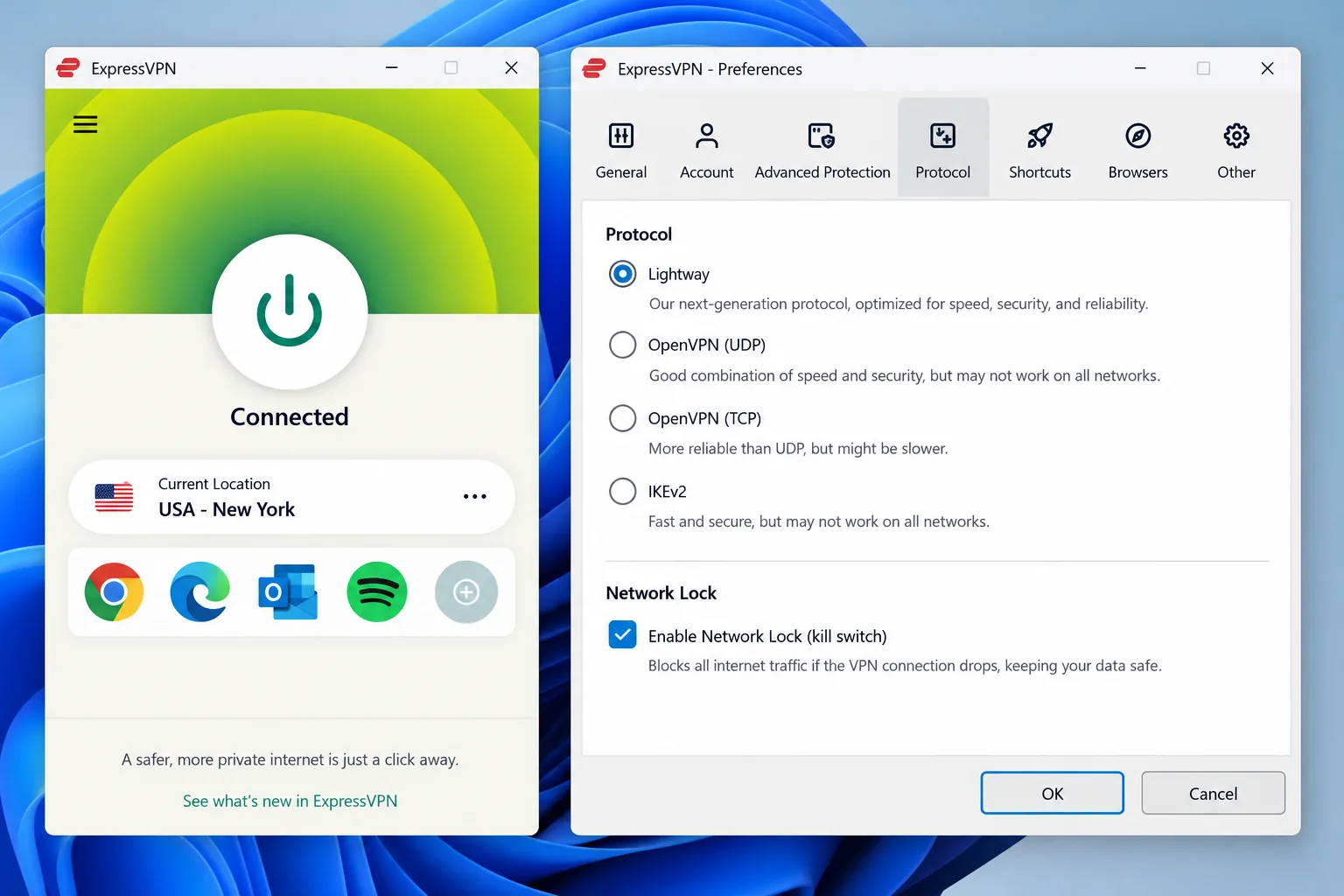
If Proton is the privacy pick, ExpressVPN is the one to hand to someone who never wants to open a settings menu. Its apps are the most polished of the group. Netflix libraries in several countries streamed without issues, as did ESPN+. So did Hulu, one of the services that failed on some PIA servers. When a server timed out or our network changed, the Network Lock kill switch fired correctly each time.
Be clear on one point before you switch. ExpressVPN has been owned by Kape Technologies since 2021, the same parent as PIA, so it fixes PIA's usability and streaming gaps but not the ownership concern. Its jurisdiction is the British Virgin Islands. KPMG assessed its TrustedServer setup and privacy policy as of February 28, 2025, and published the result in June 2025.
Speed is the trade-off. Downloads fell roughly 37 to 39 percent on nearby servers, more than with NordVPN or Proton VPN. ExpressVPN switches its headline offer between 2-year and 15-month terms, so its lowest monthly rate ranges from about $2.99 to $4.99 depending on which plan is on sale. Basic renews at $99.95 a year. Email support took close to two days to reply, so use live chat. Our full results are in our ExpressVPN review.
Pros
- The most polished apps among our picks
- Lightway protocol and post-quantum encryption
- Servers in all 50 U.S. states, matching PIA
- 7-day free trial through the mobile app stores
Cons
- No port forwarding in the apps, only through manual router setup
- Bigger speed drop than NordVPN or Proton VPN
- Device limit depends on tier: 10, 12 or 14
- Costs more than NordVPN and Surfshark on comparable terms
4. Surfshark: Best for Unlimited Devices on a Budget
Best for: households that rely on PIA's unlimited devices and want better streaming at a similar price.
ExpressVPN caps devices by tier, but Surfshark keeps the one PIA feature most families depend on: unlimited simultaneous connections on every plan. It is the only pick here that matches PIA on that count, which makes it the easiest like-for-like switch.
It also travels well. Surfshark slowed our downloads by only about 10 percent, even on a transatlantic server. Torrenting a 4GB file with Camouflage Mode running came in about 5 percent slower than an unprotected connection. Netflix worked reliably across several regions. Native Android TV, Apple TV and Fire TV apps also made TV setup simple, something PIA's Smart DNS didn't do for us.
Surfshark B.V. is based in the Netherlands, and Deloitte verified its no-logs policy in 2023 and again in 2025. The network runs 4,500+ servers in 100 countries. The Starter plan costs $2.49 a month on the 2-year plan, billed $67.23 for the first 27 months. That is where the value sits, because the month-to-month plan is among the priciest in the category. The macOS app ran noticeably better than the Windows app, where ping spiked on some servers. Read our Surfshark review for the full picture.
Pros
- CleanWeb ad and tracker blocker
- Bypasser split tunneling and RAM-only servers
- Native apps for Android TV, Apple TV and Fire TV
- 30-day money-back guarantee
Cons
- No port forwarding
- Ping spikes on some servers in the Windows app
- Expensive month to month
- MultiHop slows connections significantly
5. Mullvad VPN: Best for Anonymous Sign-Up
Best for: privacy purists who don't want to hand over an email address or a card number.
Surfshark wins on device count, and Mullvad goes the other way, trading features for anonymity. Signing up took seconds. Mullvad issued a random 16-digit account number and asked for no email or name. Pricing is just as plain, with no tiers and no long-term discounts, so there is no renewal jump to plan around.
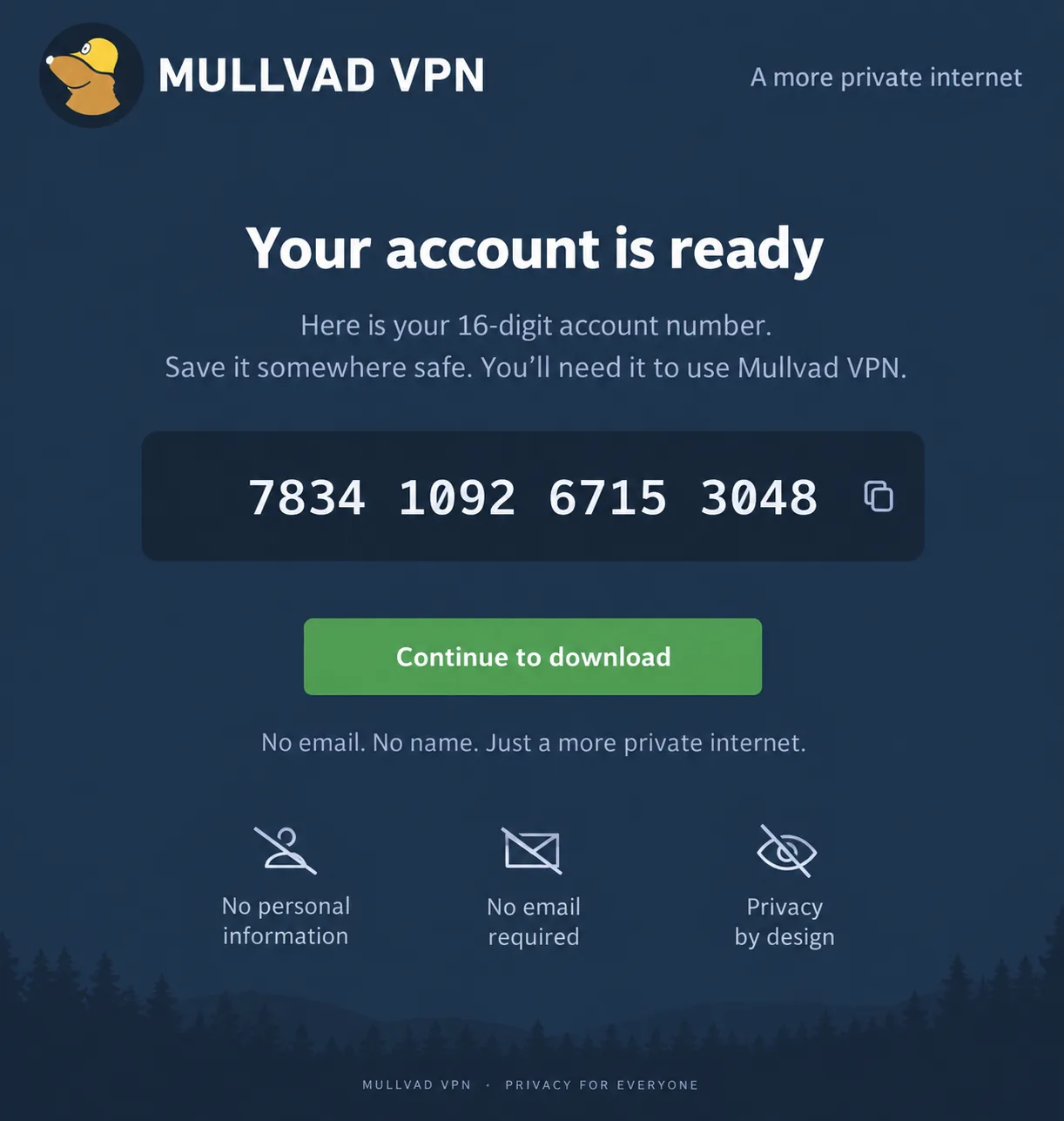
Mullvad is based in Sweden. When Swedish police visited in 2023, they left with no customer data. Cure53 completed its fourth infrastructure audit in June 2024 with no privacy-compromising issues found, and X41 D-Sec reviewed the account and payment systems in January 2026. These are security and infrastructure audits rather than a formal no-logs opinion like PIA's Deloitte report, so whether Mullvad counts as having an "audited no-logs policy" depends on your definition.
The trade-offs are steep for streamers and torrenters. Netflix US and BBC iPlayer blocked Mullvad servers with a VPN/proxy error, and access that worked in one session failed minutes later. Websites threw CAPTCHA challenges often, speeds varied a lot by server, and support is email-only. Mullvad removed port forwarding in 2023 and has run on WireGuard only since its OpenVPN servers went offline in January 2026. See our Mullvad VPN review for more.
Pros
- Pay with cash, crypto or a voucher
- Flat €5 a month, whatever the plan length
- DAITA traffic-analysis defence and quantum-resistant tunnels
- Open-source apps with multihop and DNS content blocking
Cons
- Weak streaming support
- No port forwarding since 2023
- Only 5 devices per account
- 14-day money-back window, and none on cash payments
6. CyberGhost: Cheapest PIA Alternative
Best for: budget streamers who want PIA-level pricing with an easier app.
Mullvad never discounts, while CyberGhost lives on discounts. Its longest plan runs about $1.99 to $2.19 a month as promos change, the lowest of our six picks and roughly level with PIA. The catch comes at the first renewal. The long plan rolls into a 12-month term at the same dollar amount, which roughly doubles the effective monthly rate. The auto-renew toggle is also easy to miss.
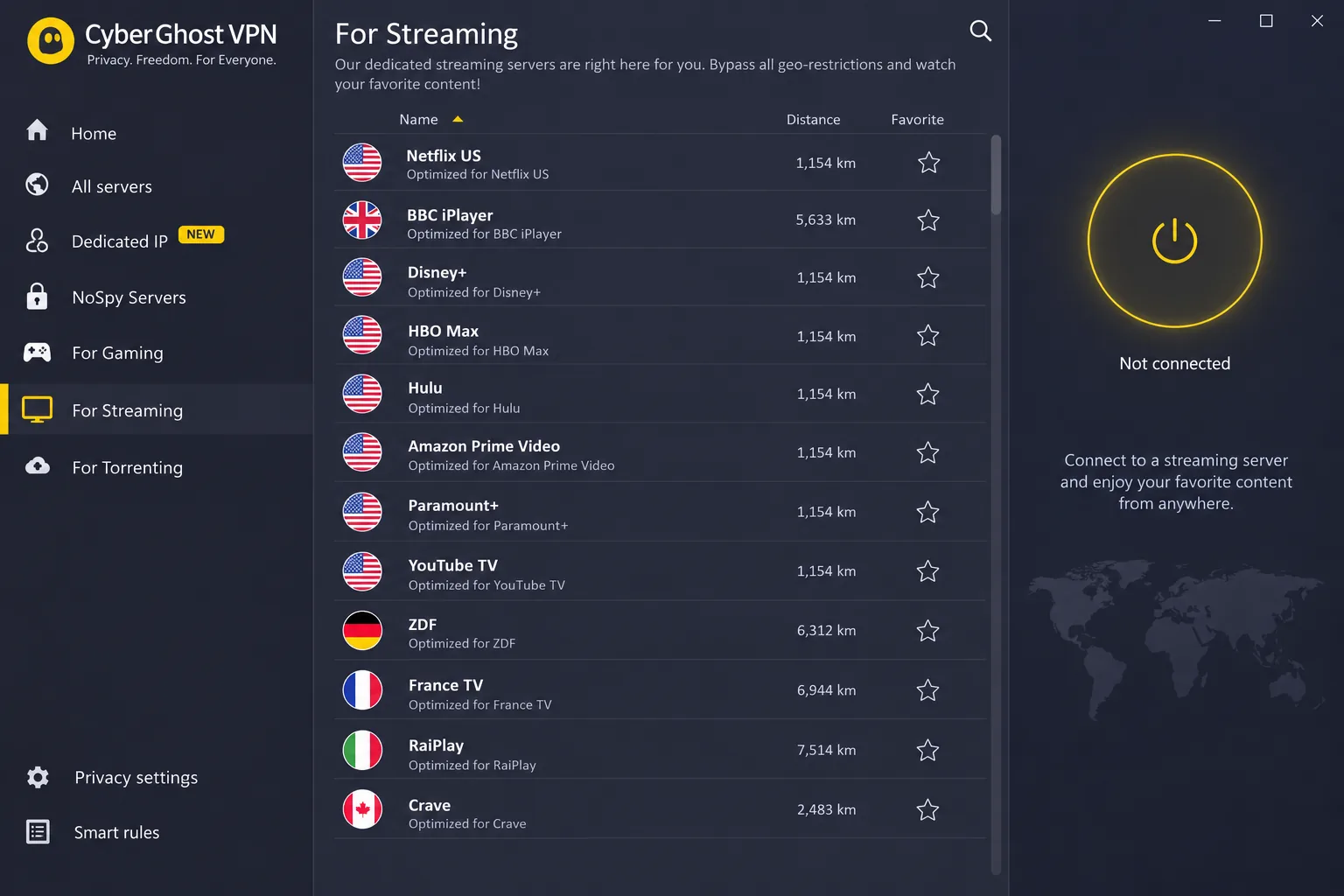
The app connected to a nearby server in under ten seconds on first launch. Its labelled streaming servers for Netflix US, BBC iPlayer, Disney+ and Prime Video loaded on the first try, with none of the server-hopping we went through on PIA. Long hops were the weak spot. Downloads dropped more than 55 percent on Australia and South Africa servers, against about 20 percent on nearby ones.
CyberGhost S.R.L. is based in Romania and has been owned by Kape Technologies since 2017, so it shares PIA's parent. Deloitte has audited its no-logs policy three times, most recently in a report published February 24, 2026. More in our CyberGhost review.
Pros
- Lowest long-plan price of our six picks
- 45-day money-back guarantee on the 6-month and long plans
- Streaming servers labelled by platform
- Dedicated torrenting and NoSpy servers
Cons
- Only a 14-day refund window on the monthly plan
- 7 devices instead of PIA's unlimited
- First renewal roughly doubles the monthly rate
- Streaming servers trigger frequent CAPTCHA checks
Is There a Free Alternative to PIA?
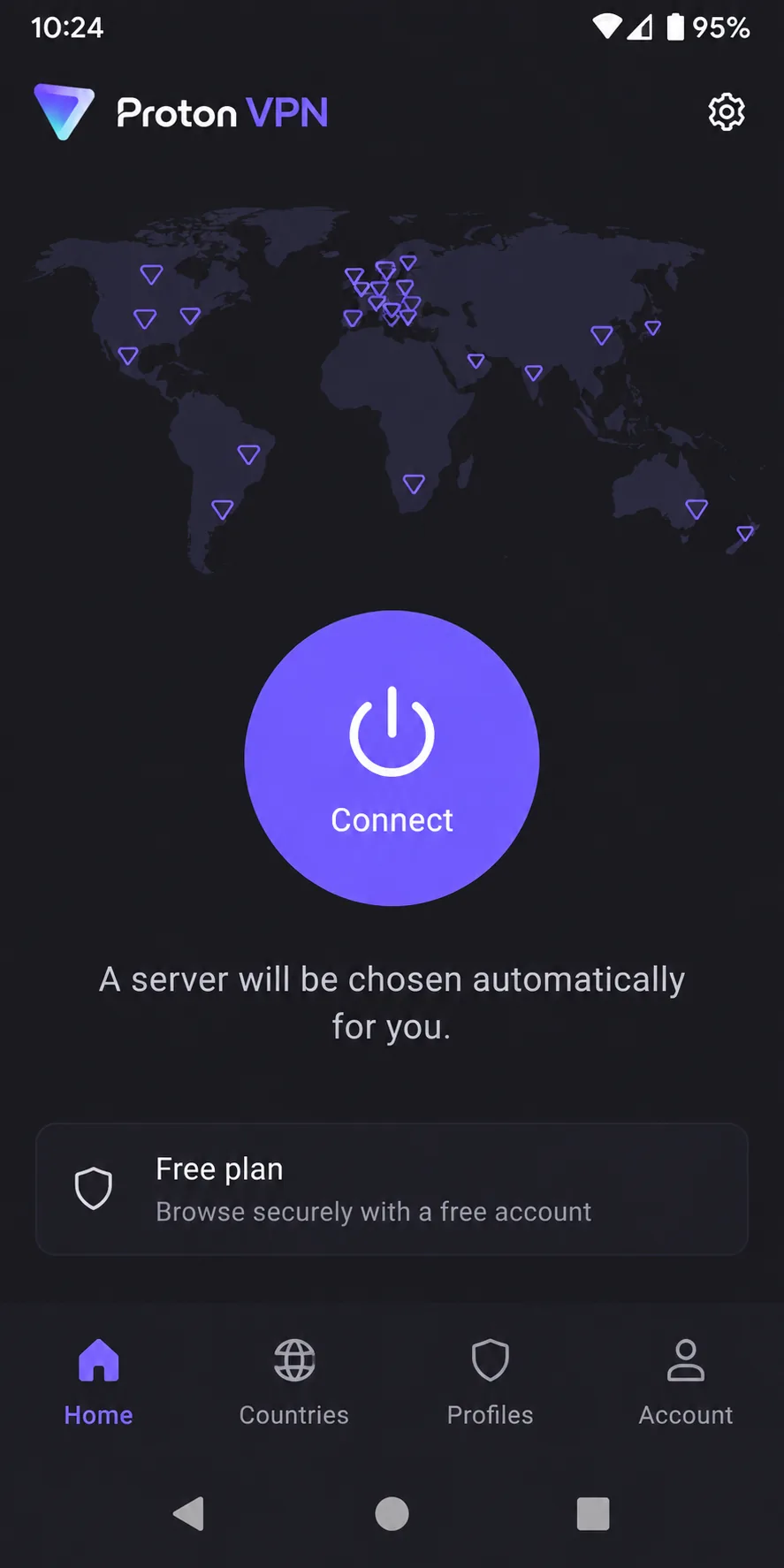
Yes, and only one we would recommend. Proton VPN's free plan costs $0, connects 1 device at a time to servers in 10 countries, has no data limit and shows no ads. The trade-offs are real limits rather than hidden ones: speed is medium, the app picks the server for you, and the free plan doesn't support streaming or torrenting. For more options, see our roundup of the best free VPNs.
Be careful with unknown free apps. A 2016 study of 283 Android VPN apps found that about 75% embedded third-party tracking libraries, and about 18% tunneled traffic without encryption. Paying isn't a guarantee on its own either. A 2018 analysis of 62 commercial VPN services found that many leaked user traffic, often unintentionally, and about 10% had servers in countries other than the ones they advertised. That is why we weighted independent audits so heavily.
If you want to try a paid service without risk, the money-back guarantees work as a de facto trial. NordVPN, Proton VPN, ExpressVPN and Surfshark give you 30 days, CyberGhost gives 45 days on its longer plans, and Mullvad gives 14.
What PIA Still Does Better
Before you cancel, weigh what you would give up. PIA still beats most of this list in a few areas.
- Unlimited devices. Only Surfshark matches it. Everyone else caps you at 5 to 14.
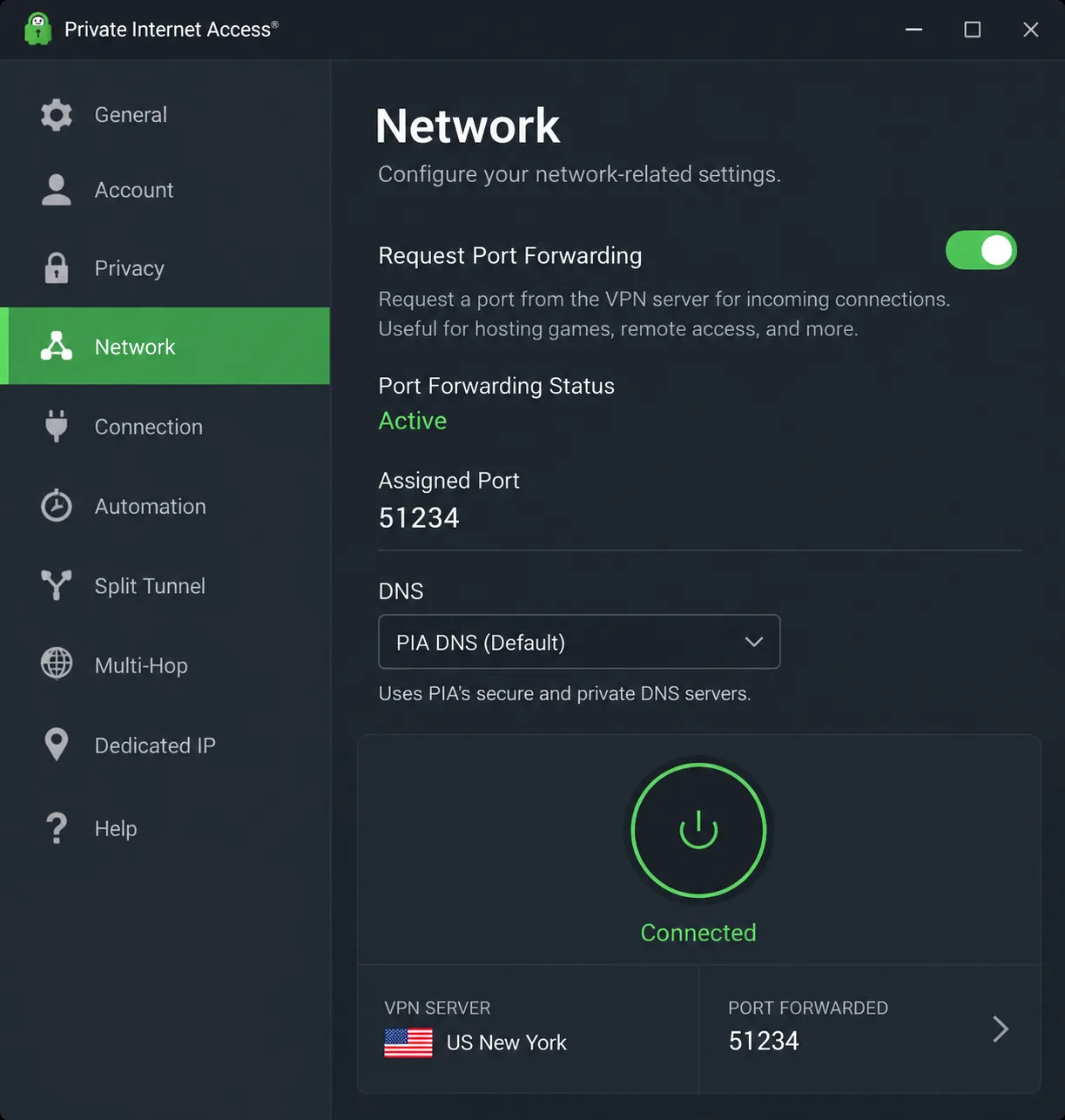
- Port forwarding. PIA builds it into its desktop and Android apps. Proton VPN offers it on paid plans, but NordVPN, ExpressVPN, Surfshark, Mullvad and CyberGhost don't. The forwarded port changes on every connection, so you'll need to update your torrent client each time. Port forwarding also isn't available on U.S. servers or iOS.
- Torrenting. P2P is allowed on every server, and our torrent downloads ran only about 4 percent slower than an unprotected connection.
- Open-source apps and servers in all 50 U.S. states.
- Long-term price. PIA rotates its long-plan length and promo price every few weeks, so the lowest rate lands anywhere from about $1.89 to $2.19 a month.
Its leak protection held up too. The app gives you granular control over how a connection is protected, from three kill switch levels to a choice of protocols. We saw no leaks on Windows or Mac, and the kill switch held through repeated network interruptions. Live chat opened with an AI bot, then handed us to a human agent who answered quickly and knowledgeably, usually within a minute. If port forwarding and unlimited devices are the features you use every day, staying with PIA is a reasonable call.
How to Switch From PIA: Cancel, Refund and Auto-Renewal
Sign up for the new VPN first and run it on your own devices within its refund window. Once you're happy with it, close down PIA in this order.
- Turn off auto-renewal. Log in to your PIA account, open Subscription and turn off auto-renewal in the Next Billing area. A confirmation message appears, and your access continues until the paid term ends. Cancelling this way stops future charges but doesn't refund anything.
- Request a refund if you qualify. Open a ticket with PIA's 24/7 support. The 30-day window applies to the initial purchase and to each renewal, so a fresh auto-renewal can still be refunded if you act quickly.
- Wait for the money. Refunds take 5-10 business days or more to appear, depending on your payment provider.
- Uninstall PIA's apps and check that the new VPN's kill switch is switched on before you rely on it.
PIA denies refund requests made more than 30 days after a purchase or renewal. In that case the account stays active until the end of the billing cycle, and you won't get money back for the unused time. If you're near a renewal date, turn off auto-renewal now, even if you plan to keep using PIA for a while.
Bottom Line: Which PIA Alternative Should You Choose?
Each pick solves a different PIA problem, so match it to the one that pushed you to look. For a wider field than this list of PIA rivals, see our guide to the best VPN overall.
- Choose NordVPN if speed and streaming were your main complaints.
- Choose Proton VPN if you want Swiss jurisdiction, yearly audits or a free plan.
- Choose ExpressVPN if you want the simplest apps and don't mind the Kape connection or a higher renewal price.
- Choose Surfshark if you need unlimited devices and want a straight swap from PIA.
- Choose Mullvad VPN if you want to sign up without an email address.
- Choose CyberGhost if price comes first and labelled streaming servers appeal to you.