If you're heading to La Paz or working from a Santa Cruz café, you'll find Bolivia's internet open but uneven. About 71.3% of the population is online, and there are more cellular connections than people, so most browsing happens over mobile data. When people aren't on mobile, they're usually on hotel, hostel or café Wi-Fi shared with strangers. Very little is blocked, but Bolivia has no comprehensive data protection law yet, so the rules on what happens to your browsing data are thin.
A VPN fixes the parts you can control. It encrypts your traffic on shared networks, keeps your browsing away from your internet provider, and gives you an IP address back home for streaming and banking. It can't fix a weak signal, and it won't make a slow 4G connection faster than the line underneath it.
We ranked the five picks below by the scores from our full reviews. The How We Picked section further down explains the method.
Best VPNs for Bolivia: Quick Picks
Every pick below has apps for the major platforms, a 30-day money-back guarantee and an audited no-logs policy.
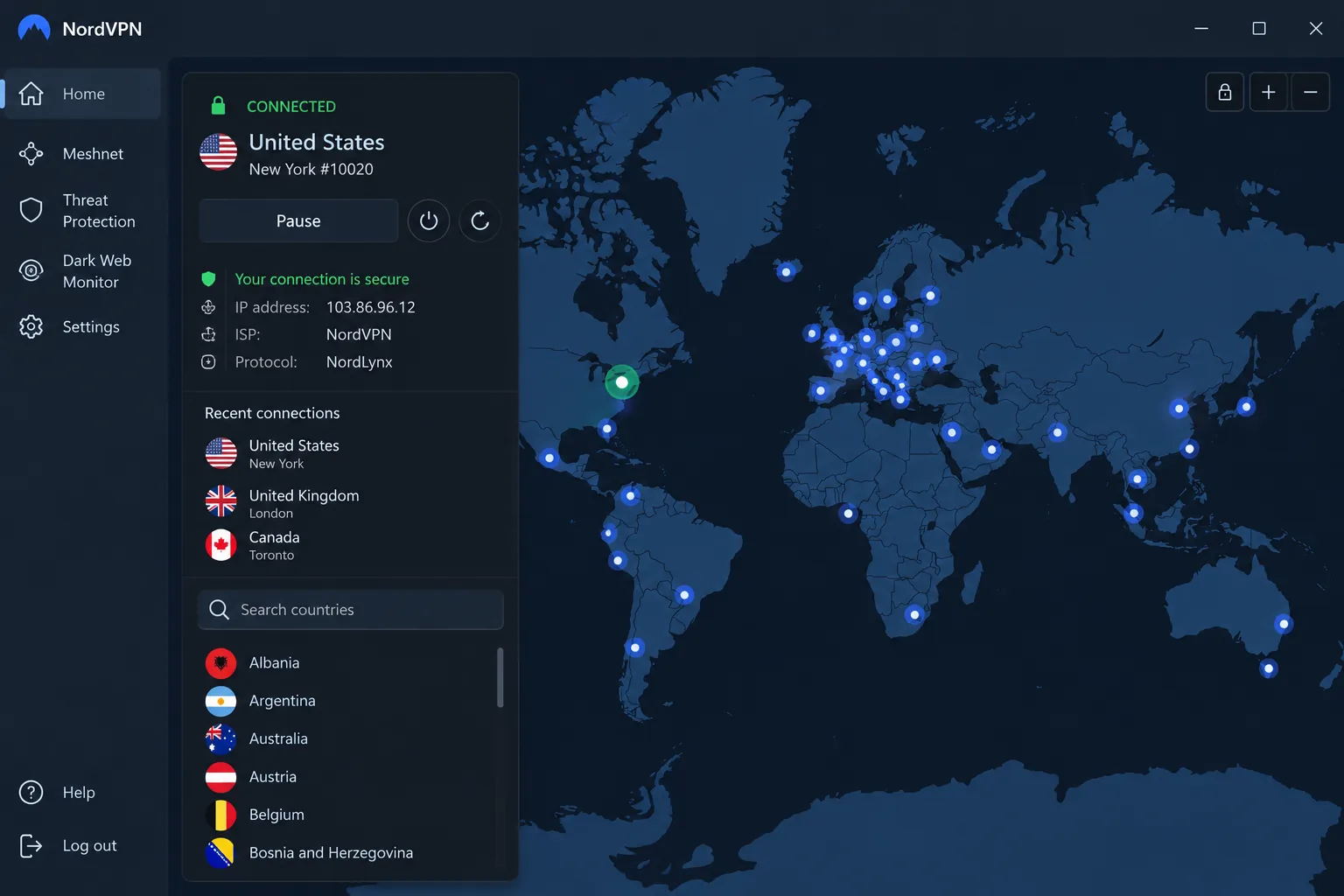
If you only want one name, start with NordVPN. It's the all-rounder of the group, and it gives you a Bolivian IP whenever you need one.

Best VPNs for Bolivia Compared
Four of these services offer a Bolivia location, but every one of them is virtual. The table shows where each Bolivian IP really exits and which nearby countries have physical servers you can pick instead.
| Product | Buy | Best for | Starting price (2-year) | Bolivia location | Nearest physical South American servers | Devices | Protocols | Streaming | No-logs audit | Money-back |
|---|---|---|---|---|---|---|---|---|---|---|
|
Check price → | Best overall | About $3.49/mo | Virtual, physical server in Chile | Chile | 10 | NordLynx (WireGuard), OpenVPN, NordWhisper | Netflix, Disney+, Hulu | Deloitte 2025 (sixth assessment) | 30-day |
 |
Check price | Privacy | $3.49/mo, plus a free plan | Smart Routing, hosted in Miami (paid plans) | Chile, Peru, Argentina, Brazil, Colombia | 10 (1 on Free) | WireGuard, OpenVPN, Stealth | Paid plans only | Securitum, every year 2022 to 2026 | 30-day, prorated |
 |
Check price | Travellers | $2.99/mo | Virtual, via Brazil | Chile, Argentina, Brazil, Colombia, Paraguay | 10 / 12 / 14 by tier | Lightway, OpenVPN | Steady in 4K | KPMG 2025 | 30-day |
 |
Check price | Budget | $2.49/mo | 4 virtual servers, host country not named | Not stated per country | Unlimited | WireGuard, OpenVPN, IKEv2 | Occasional buffering | Deloitte 2023 and 2025 | 30-day |
 |
Check price | Public and shared Wi-Fi | About $2.19/mo | Not confirmed | 11 South American countries (list not confirmed) | Unlimited | WireGuard, OpenVPN, IKEv2 | US Netflix, Disney+, Hulu, HBO Max | Leviathan 2022, Schellman 2025 | 30-day (not on monthly plans) |
NordVPN's and IPVanish's 2-year rates are promotional and move with each provider's sales and your currency, so expect them to shift by tens of cents. Every price here is a first-term rate, and all five renew higher.
The Best VPNs for Bolivia, Reviewed
No pick runs a physical server inside Bolivia, so each review names where the Bolivian IP actually exits and which nearby country to choose when speed matters more than the label.
1. NordVPN - Best Overall VPN for Bolivia
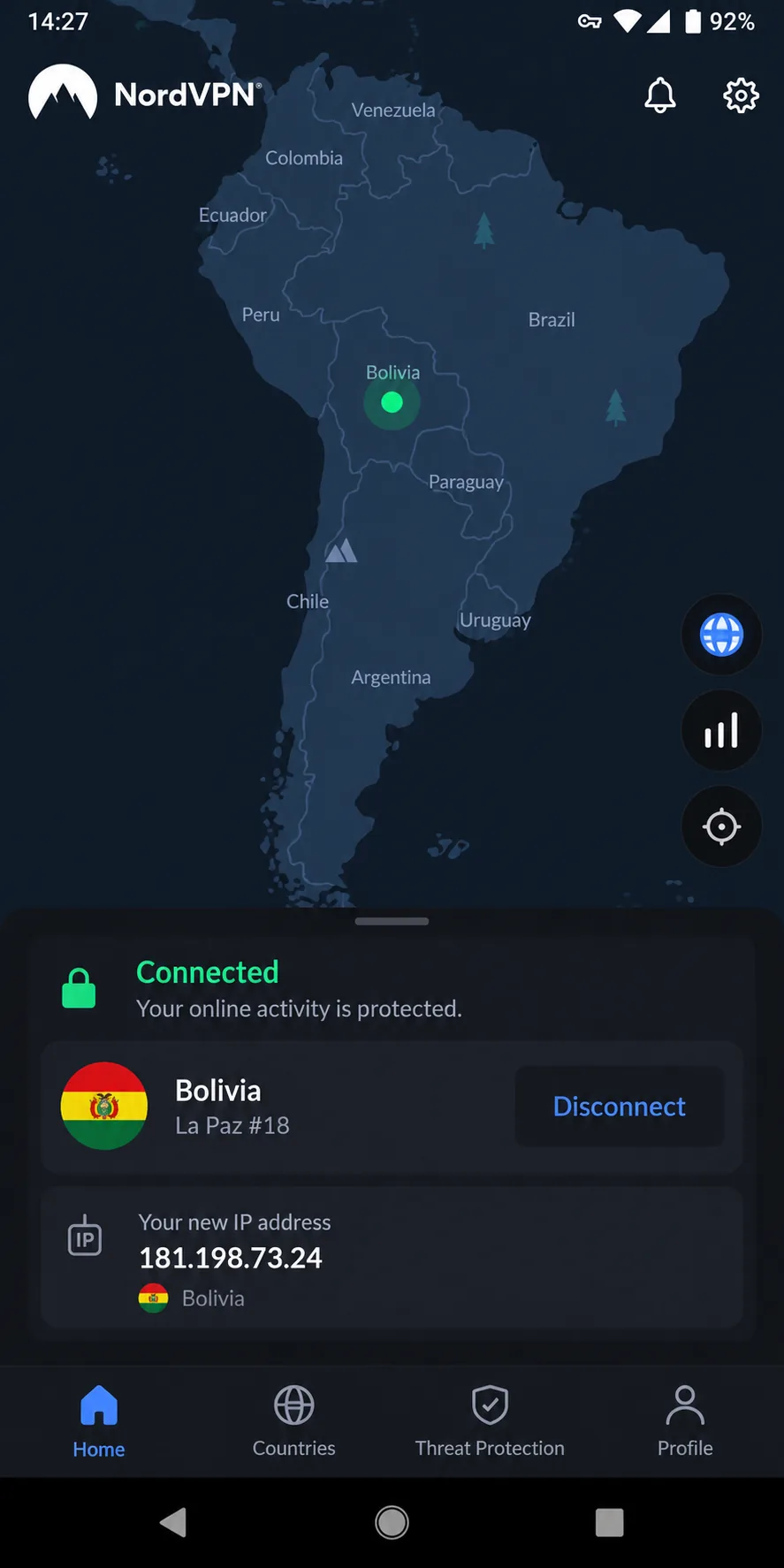
NordVPN takes the top spot because it handles the two jobs most people in Bolivia need, fast nearby servers and a clean Bolivian IP. It does both without making you think about either. When we opened the app, Bolivia showed up as its own location in the server list. Connecting gave us a Bolivian IP served from NordVPN's physical server in Chile. On nearby NordLynx servers our download-speed loss averaged around 5 percent, which is small enough to barely notice in everyday use.
Bolivia is one of 79 virtual locations NordVPN now runs, after it added almost 30 in December 2025. NordLynx is its WireGuard-based protocol with optional post-quantum encryption, and you also get AES-256 encryption, kill switches, Threat Protection, Double VPN, split tunneling and Meshnet. NordVPN was founded in 2012 and is incorporated in Panama. It has passed six independent no-logs assessments, the latest by Deloitte for 2025.
The 2-year Basic plan costs about $3.49 a month, though the promo price moves with NordVPN's sales and your currency. A single month is $12.99. Our NordVPN review covers each plan in detail.
Pros
- Six independent no-logs assessments, the latest by Deloitte for 2025
- Prompt support with accurate, specific answers
- 79 virtual locations if you need IPs from other regions too
Cons
- The interface feels busy at first, and picking a city on mobile hides behind a three-dot menu
- Router setup is manual
- The price climbs sharply once the promotional term ends
2. Proton VPN - Best for Privacy in Bolivia
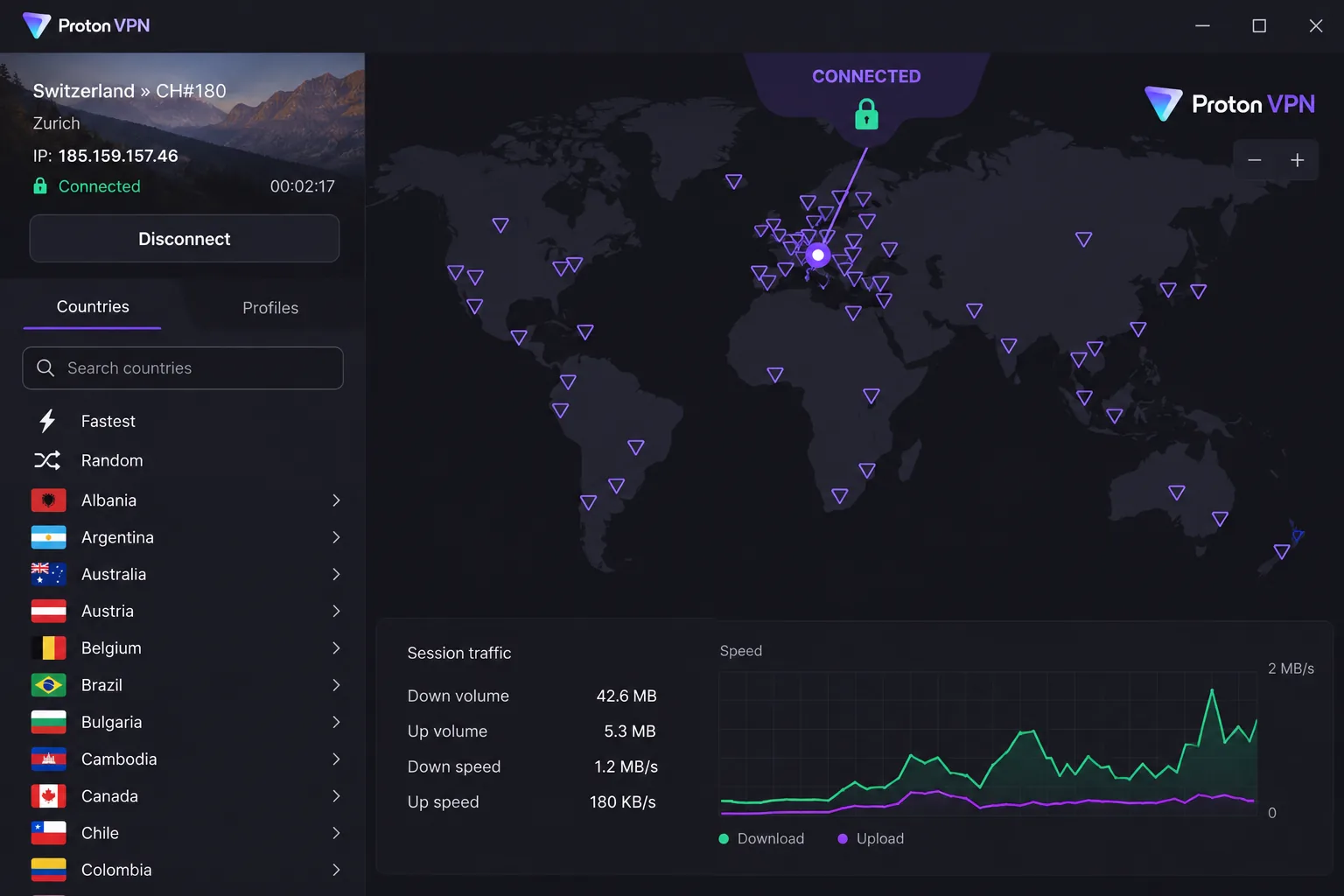
Proton VPN ties NordVPN on score and pulls ahead on privacy. Proton AG runs it from Switzerland, the apps are open source, and Securitum has audited the no-logs policy every year from 2022 through 2026. Proton launched the VPN in 2017 and now has servers in 140+ countries on paid plans.
Its Bolivia location is a Smart Routing entry hosted in Miami, available on paid plans only. Because that Bolivian IP routes through Miami, we skipped it when we wanted raw speed and connected to Proton's physical servers in Chile, Peru, Argentina or Brazil. Download speed held up well on those nearby servers, while upload fell off sharply on distant ones. When the Smart protocol struggled to connect, we manually selected WireGuard or OpenVPN, then Stealth, and that got the connection through.
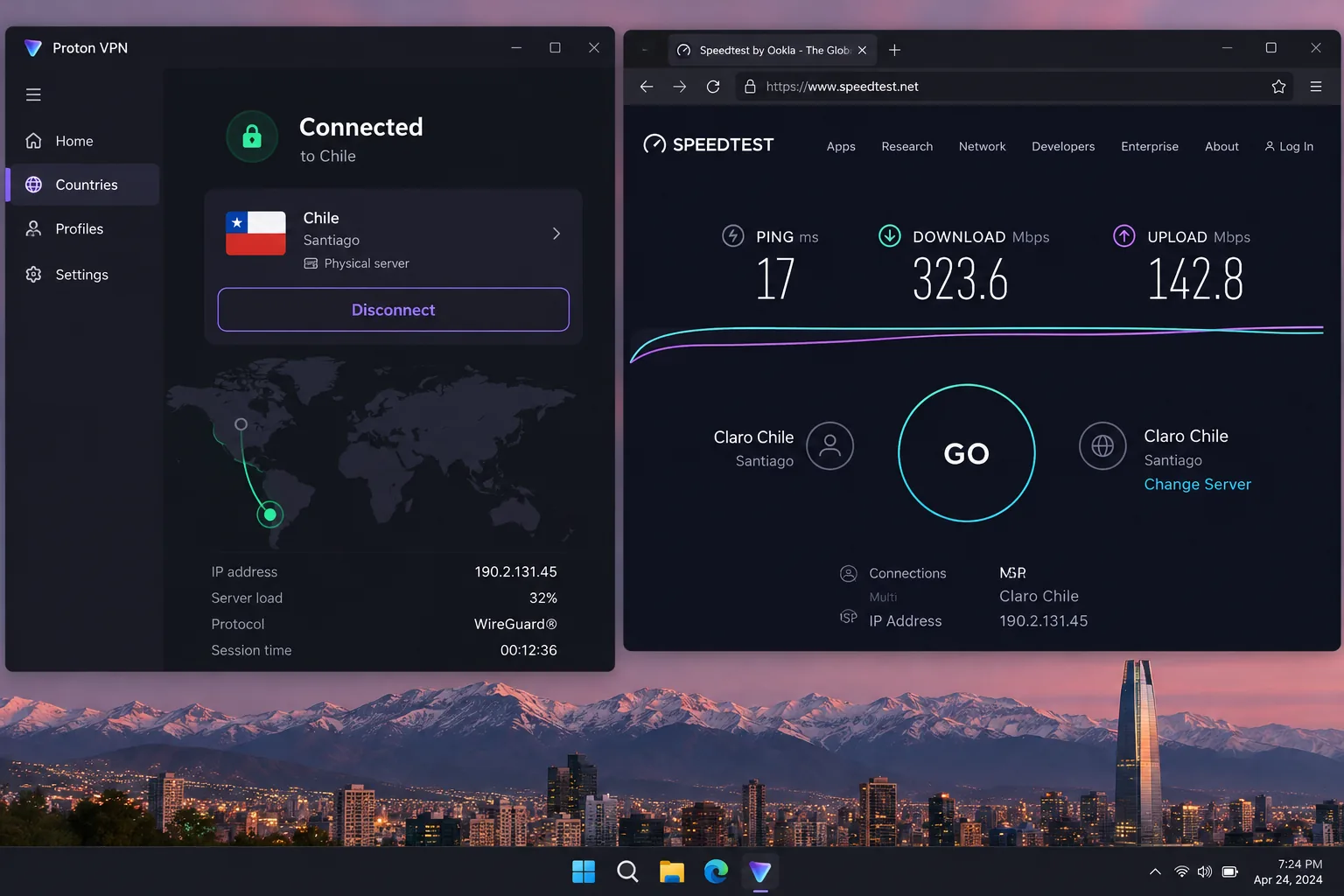
The free plan is the best no-cost option for Bolivia. It has no data limits and no ads and covers 1 device. However, it auto-connects to one of 10 countries, with Mexico and the US the closest. Those free servers also get crowded at peak hours. VPN Plus costs $3.49 a month on the 2-year plan ($83.76 for the first 24 months) or $9.99 month to month. It adds NetShield ad blocking, Secure Core multi-hop, streaming and P2P support, and 10 devices. See our Proton VPN review for the full breakdown.
Pros
- A free plan with no data limits and no ads
- Physical servers in five South American countries
- Stealth protocol on every plan, including Free
Cons
- The Bolivian IP exits in Miami, not South America
- Live chat is paid-only and can take several minutes, and email replies take about two days
- The interface packs in enough options to overwhelm casual users
3. ExpressVPN - Best for Travellers in Bolivia
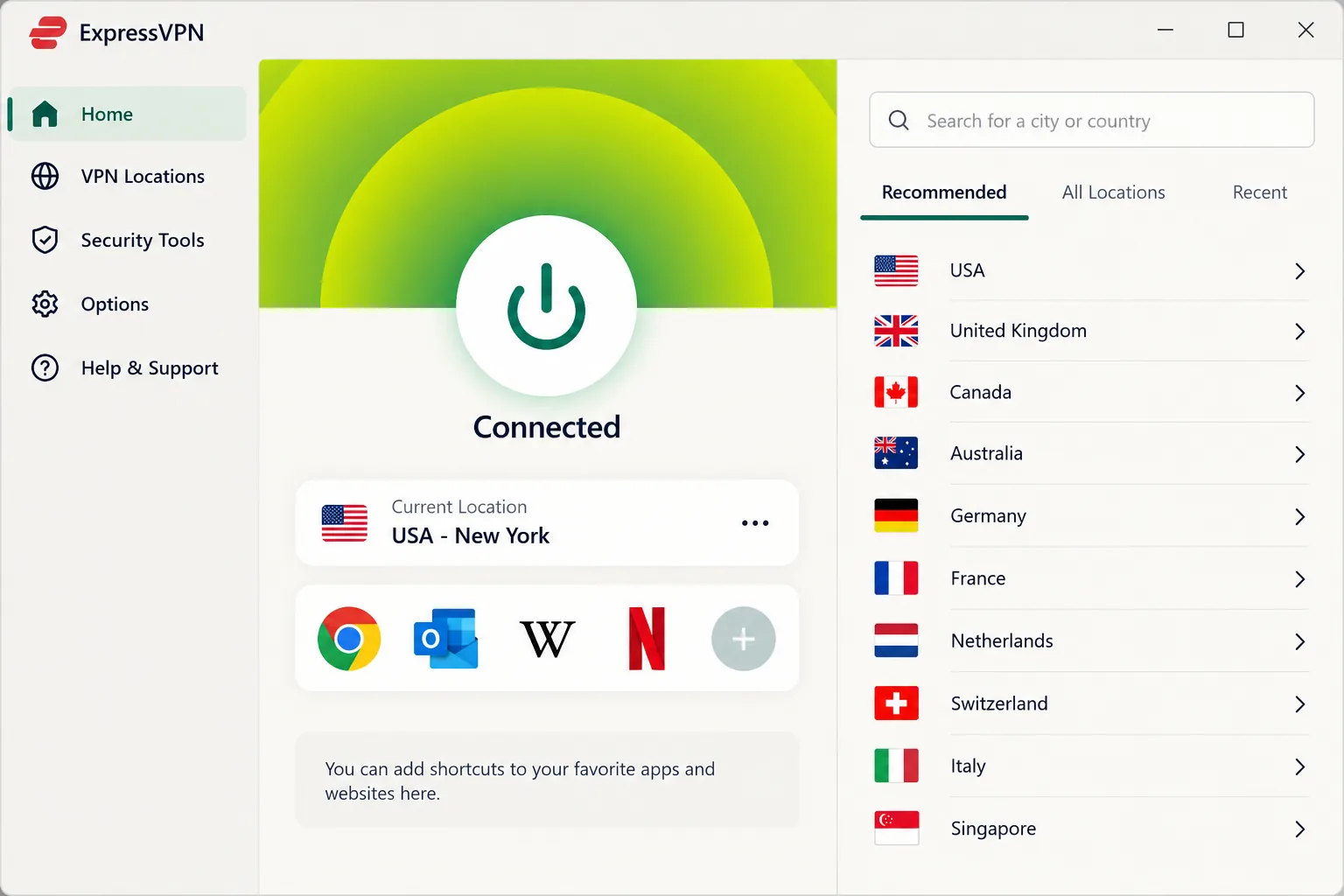
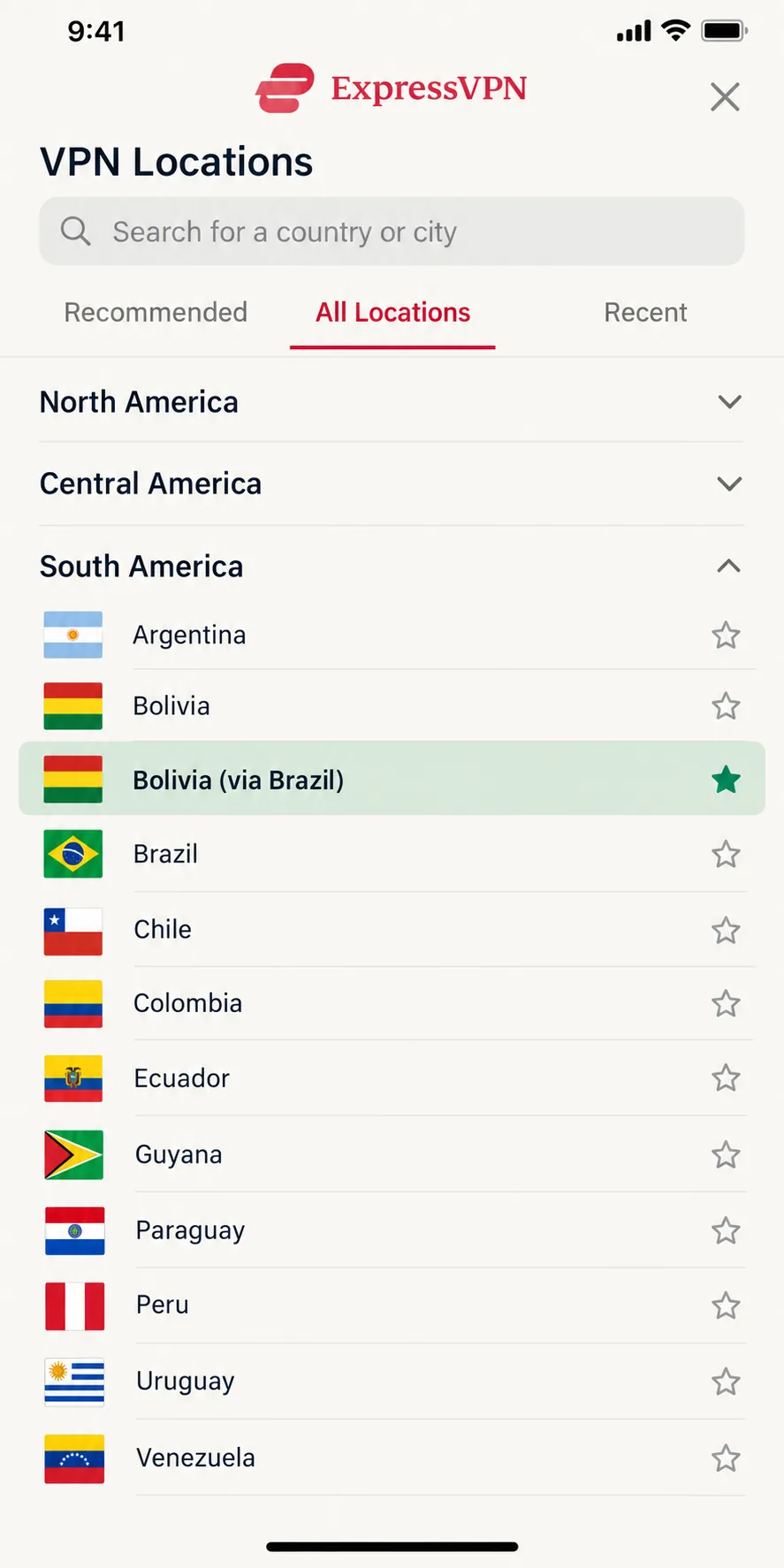
Where Proton is built around privacy, ExpressVPN is built around consistency, which is what you want when you're moving between cities and networks. Its Bolivia location is virtual and appears as "Bolivia (via Brazil)". ExpressVPN describes the servers behind it as 10Gbps. Its Chile, Colombia, Argentina and Paraguay locations are physical, which gives you good nearby choices.
In our daily testing, ExpressVPN held roughly 90 to 95 percent of our base download speed, and it stayed steady during 4K streaming. When our phone switched between Wi-Fi and mobile data while connected, Lightway handled each handover smoothly, and battery use stayed low. That combination matters on a trip where your connection changes every few hours.
Setup takes one extra step, since you copy an activation code from checkout into the app. Lightway comes with post-quantum protection, and the Network Lock kill switch, RAM-only TrustedServer servers and 24/7 live chat round it out. ExpressVPN was founded in 2009, is based in the British Virgin Islands and has been owned by Kape Technologies since 2021. KPMG's 2025 assessment of its privacy policy is one of 23 third-party audits to date.
Basic starts at $2.99 a month on the 2-year plan, with Advanced at $4.49 and Pro at $7.49. The first term covers 28 months. After that, Basic renews at $99.95 a year. Servers span 113 countries, and a 7-day free trial is available through the mobile app stores. Read our ExpressVPN review for more.
Pros
- RAM-only TrustedServer servers and 24/7 live chat
- Physical servers in four neighbouring countries
- Up to 14 devices on the Pro tier
Cons
- Costs more than rivals for a similar core feature set, especially after renewal
- Setup needs an activation code
- Split tunneling isn't available on iOS
4. Surfshark - Best Budget VPN for Bolivia
Surfshark keeps the price low without capping devices. It costs $2.49 a month on the 2-year Starter or One plan ($67.23 for the first 27 months). Every plan allows unlimited devices, so one subscription covers a whole travelling group.
On a large torrent download, Surfshark finished only about 5% slower than without the VPN, though uploads lagged behind downloads. Setup took under five minutes from download to a connected server. Latency was the weak spot. It jumped even on nearby servers, which we noticed in calls and gaming but never in ordinary browsing.
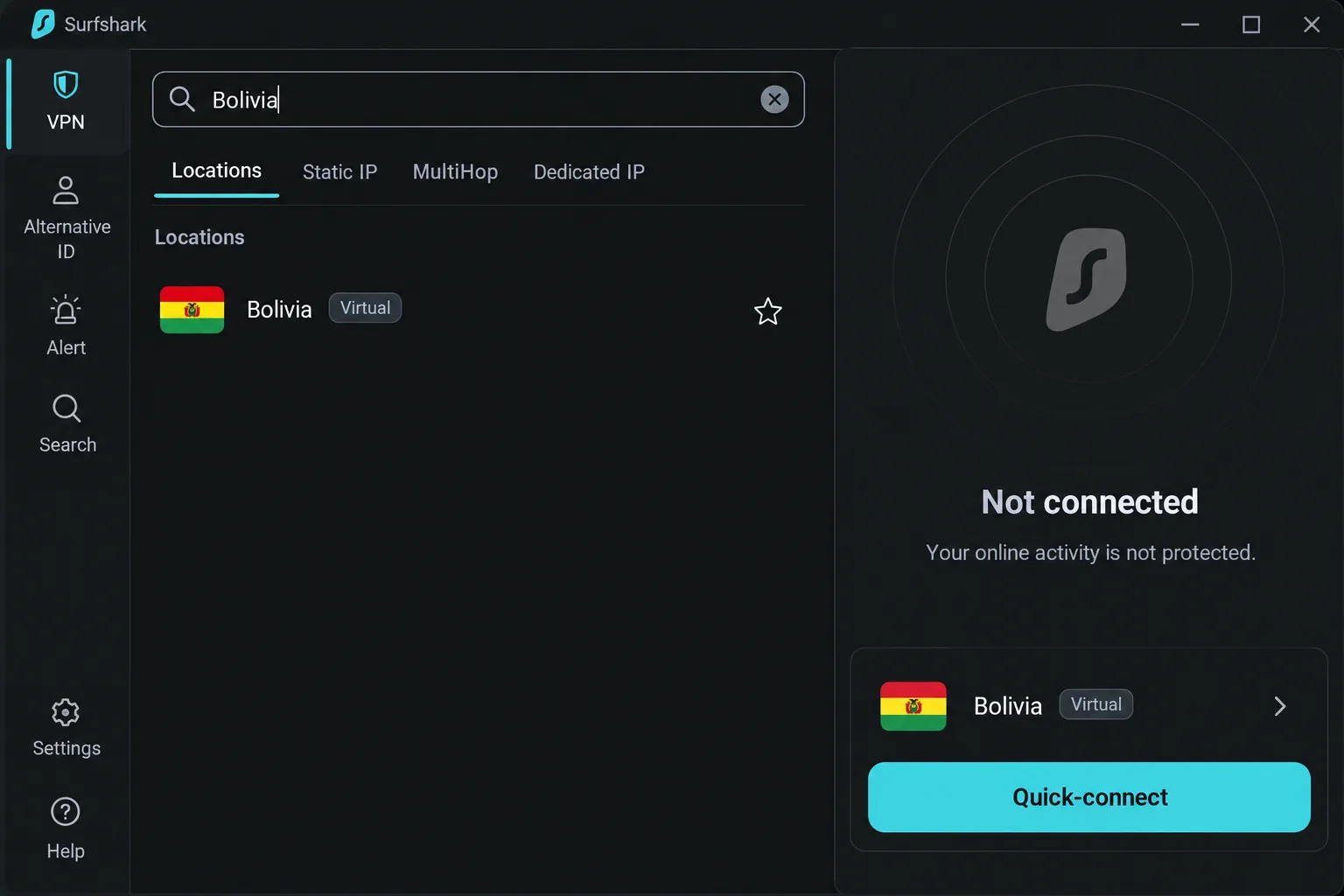
Surfshark lists 4 virtual Bolivian servers in 1 location, and it names neither a city nor the host country. The app labels virtual locations, so check that label to see whether any server is physically in-country. The wider network covers 4,500+ servers in 100 countries, all running in RAM, with WireGuard, OpenVPN, IKEv2, Camouflage mode obfuscation and CleanWeb. Surfshark was founded in 2018, is based in the Netherlands, and merged with Nord Security in 2022 while keeping separate infrastructure. Deloitte verified its no-logs policy in 2023 and again in 2025. There's more in our Surfshark review.
Pros
- Camouflage mode obfuscation and CleanWeb on every plan
- Torrents finish nearly as fast as without the VPN
- Quick, simple setup
Cons
- Latency spikes even on nearby servers
- Streams can buffer, and finding the best server takes some trial and error
- Starter renews at about $79 a year, though the amount varies by term and currency
5. IPVanish - Best for Public and Shared Wi-Fi
IPVanish scores lowest of the five at 8.0, but it solves one problem well: protecting a lot of devices on networks you don't control. Unlimited simultaneous connections make it a strong fit for a household or shared flat running one subscription across every phone, laptop and TV. LAN blocking stops other people on the same network from seeing your devices. That is exactly the risk in a hostel dorm.
We couldn't confirm a Bolivia location for IPVanish, so plan on its nearby South American servers. Its December 2024 expansion gave it a presence in 11 South American countries.
We started by connecting to one of those nearby South American servers, and download speed came in only a little below our baseline. Whenever speeds disappointed, switching the protocol to WireGuard was the first fix we reached for. Then we worked through the streaming apps one by one. Mainstream US Netflix, Disney+, Hulu and HBO Max libraries loaded dependably, other regions were hit-and-miss, and BBC iPlayer was unreliable.
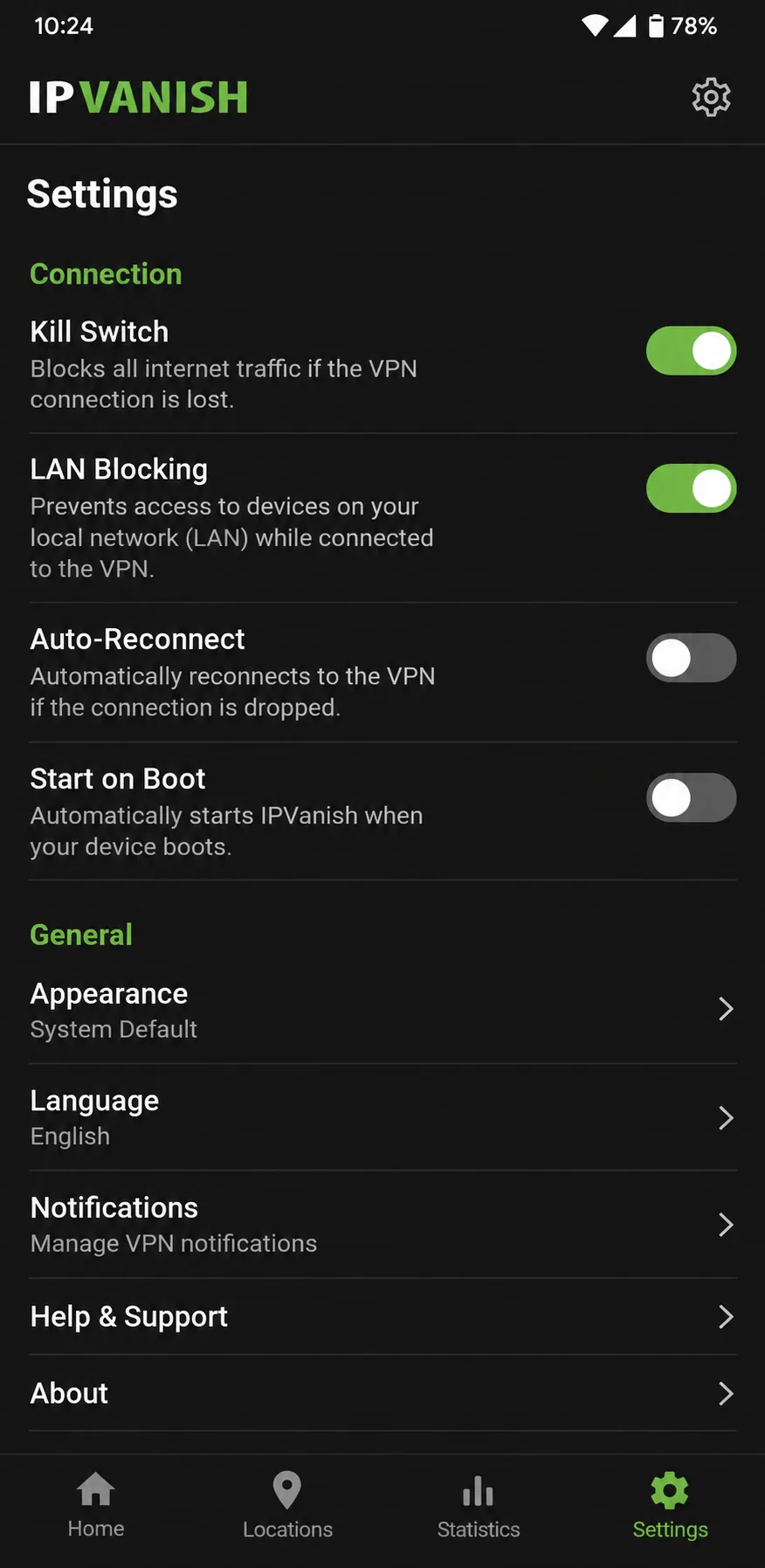
You also get a kill switch, split tunneling, Threat Protection, Scramble obfuscation, Double-Hop and P2P on every server. IPVanish is US-based. In 2016, under prior ownership, it handed connection logs to US authorities despite a no-logs claim. Leviathan Security Group (2022) and Schellman (2025) have since audited its no-logs policy. Plans cost about $2.19 a month on the 2-year Essential plan, though the promo rate moves with its sales, and Essential renews at $89.99 a year. Our IPVanish review has the full picture.
Pros
- Scramble obfuscation and Double-Hop included
- Small speed drop on nearby servers
- Dependable with mainstream US streaming libraries
Cons
- The refund only covers annual and 2-year plans, and getting it can take persistent follow-up
- A 2016 logging incident under prior ownership
- No cryptocurrency payment and no permanent free plan
How We Picked the Best VPNs for Bolivia
Our ranking follows the scores from our full reviews of each provider. On top of those scores, we checked what matters specifically in Bolivia.
We started with where a "Bolivia" server really sits. A virtual location gives you a Bolivian IP, but traffic exits in Chile (NordVPN), Brazil (ExpressVPN) or Miami (Proton). That means the Bolivia entry is no faster than choosing that host country directly. That's why each review names a physical alternative. For raw speed, Lima and Santiago are the lowest-latency exits from Bolivia's cities, with São Paulo and Buenos Aires as the other nearby options.
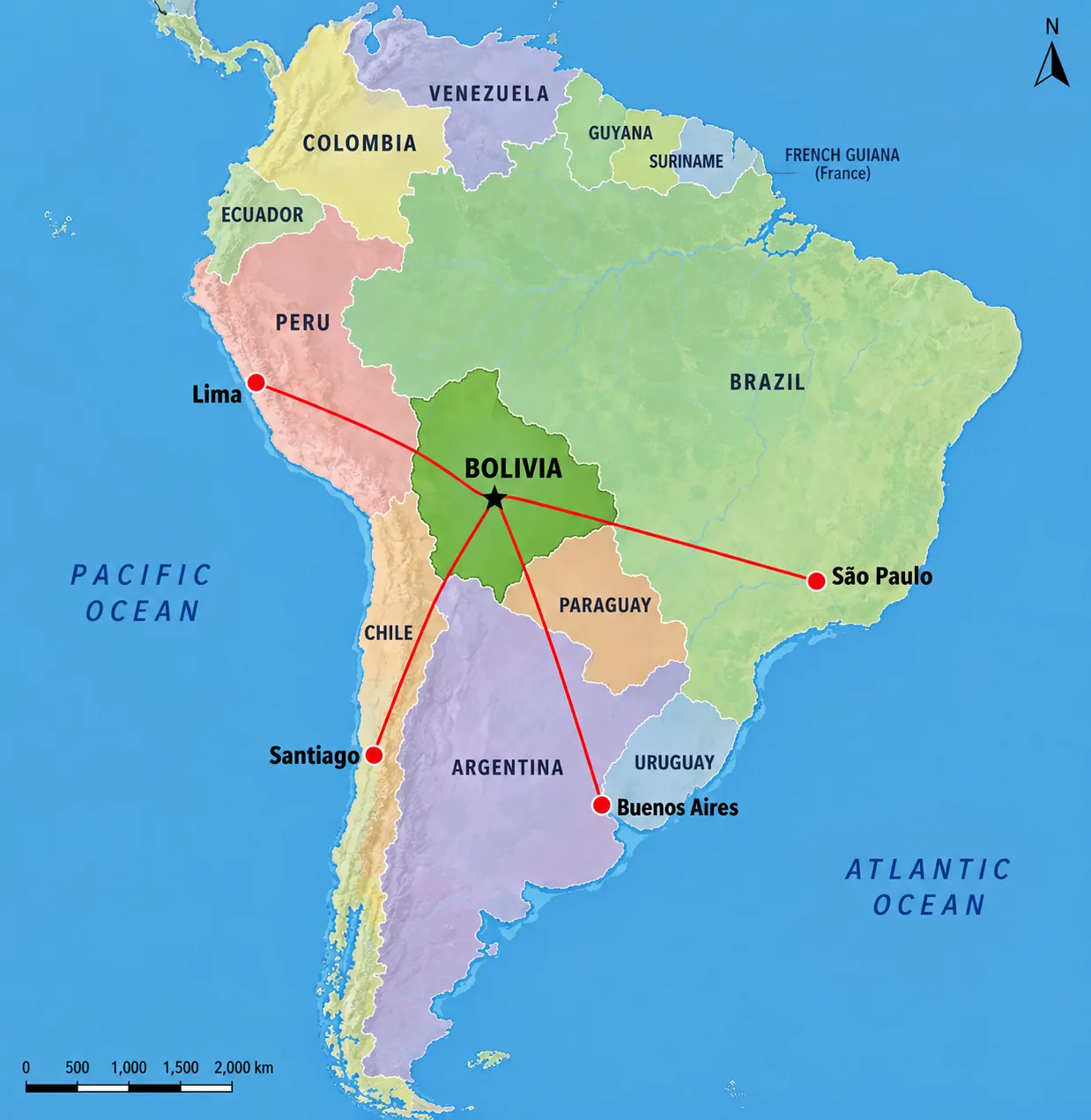
We also confirmed that VPN apps download and connect normally from Bolivia, and that standard protocols get through without obfuscation. Speed on nearby servers counted heavily, and so did WireGuard support. Beyond that, we weighed independent no-logs audits, device limits, refund terms, and the gap between the first-term price and the renewal price.
Does Bolivia Block Websites? Internet Freedom and Privacy in Bolivia
That smooth connection test reflects the wider picture: Bolivia blocks very little. Day to day, the open web loads normally, and social media and news sites are available. Blocks are rare, though some public or institutional networks, such as a school or office, block certain apps.
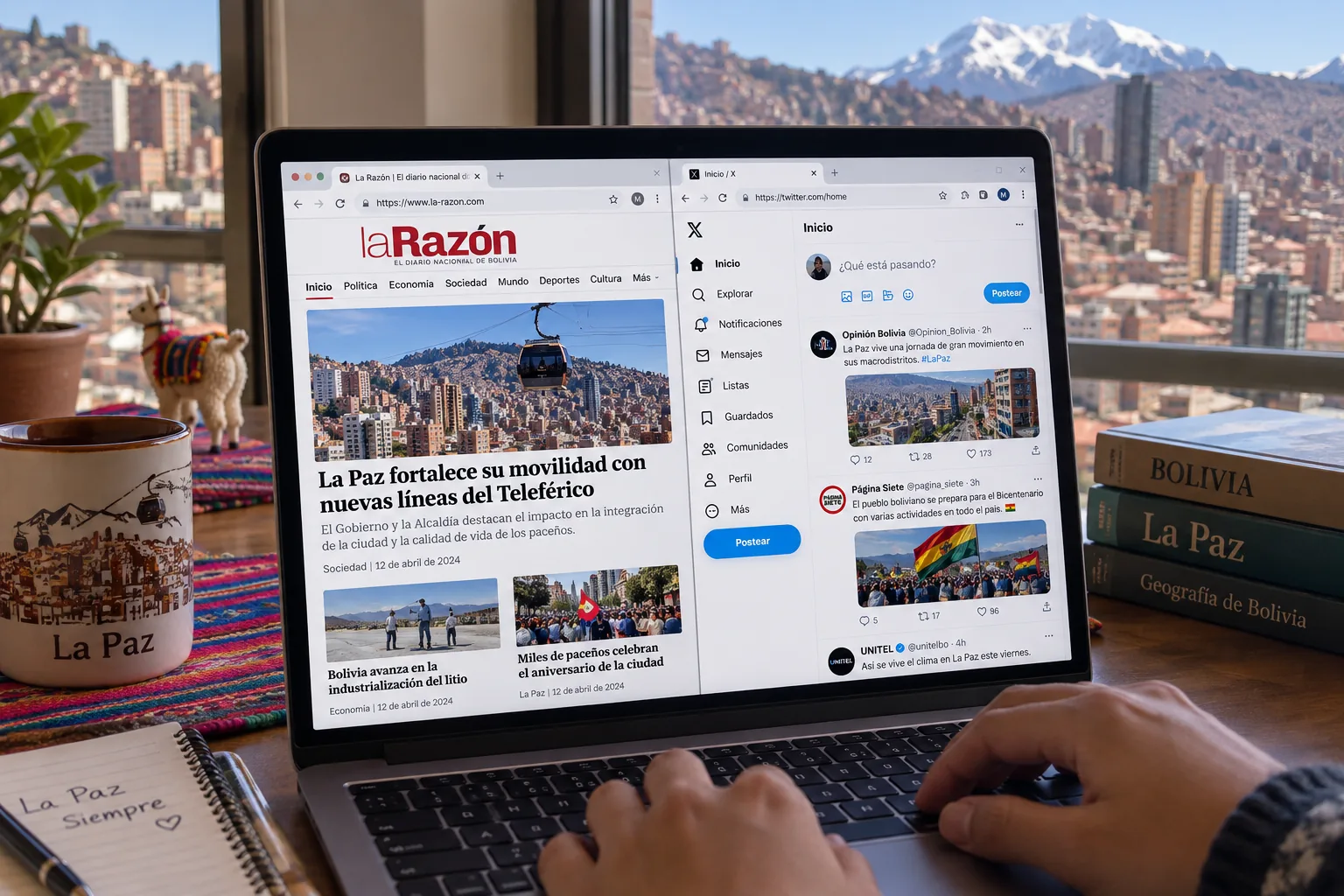
The wider picture has improved. According to Freedom House's 2026 report, Bolivia scores 69/100 and is rated Free. That is up from 65 and Partly Free the year before, following successful general elections. The same report notes that independent and investigative journalists face harassment, while freedom of personal expression without surveillance scores the maximum 4 out of 4.
The one notable scare came in 2020. During the COVID-19 lockdown, interim president Jeanine Áñez signed Supreme Decree 4231 on May 7, 2020. The decree criminalised spreading information that "generates uncertainty among the population," punishable by one to 10 years in prison. The Committee to Protect Journalists reported on the decree and its reversal, and Freedom House and the IACHR also asked for repeal. The government repealed it on May 14, 2020, a week after signing.
Privacy law is the weaker area. The Constitution (article 21.6) protects private communications, which may be intercepted only by judicial order. Beyond that, personal-data rights rest on a constitutional privacy action, because the data protection bill has been pending for years without passing.
Why Use a VPN in Bolivia?
Since routine unblocking isn't the issue, the case for a VPN in Bolivia comes down to privacy on shared networks and reaching your accounts back home.
Public and Shared Wi-Fi Safety
Hotel, hostel and café Wi-Fi is where most visitors get online, and you rarely know who else is on it or who runs it. A VPN wraps your traffic in encryption before it leaves your device, so other people on the network can't read it. We cover the limits in our guide to what a VPN can and can't stop on public Wi-Fi.
Leave the VPN on as your phone moves between mobile data and Wi-Fi. That avoids unprotected gaps during the handover, when apps reconnect before you've noticed.
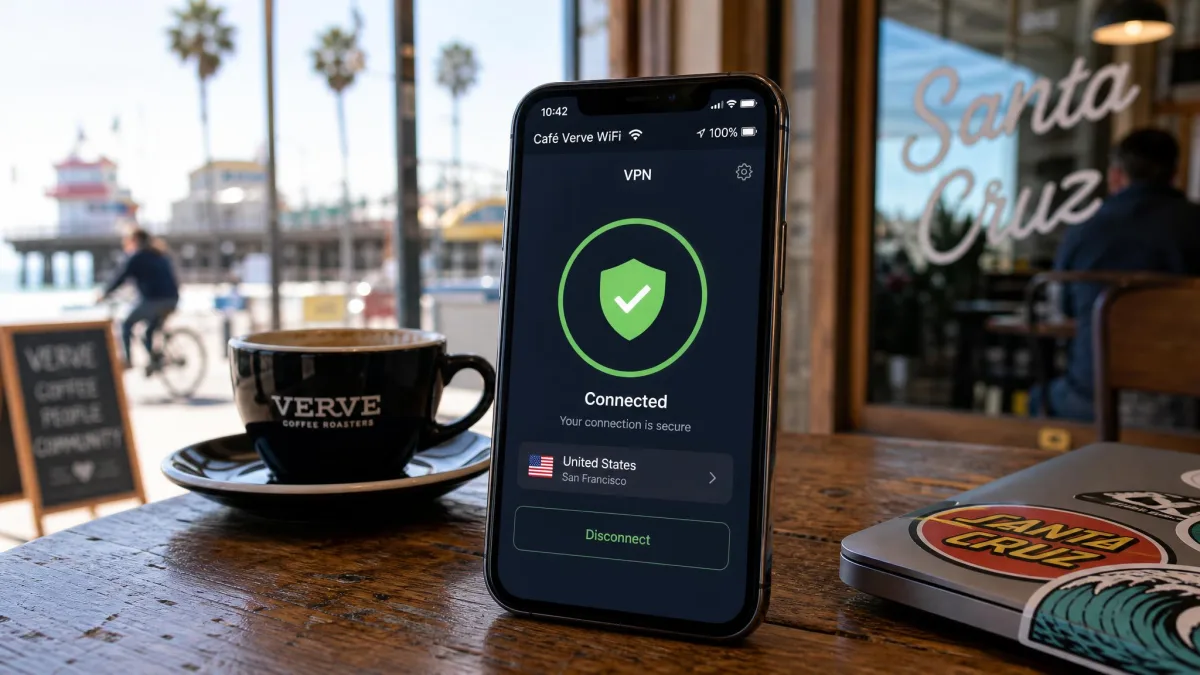
Don't log in to banking or email on open hotel or café Wi-Fi without the VPN connected. Check that the app shows "Connected" first, then open the account.
Privacy From Your ISP
Three mobile operators serve the country: state-owned Entel had 54% of mobile customers at the end of 2023, with Viva at 25% and Tigo at 21%. Whichever one you use can see the sites you visit. A VPN hides that list from your provider, which only sees an encrypted connection to a VPN server. With privacy law as thin as it is, that's an extra layer of protection you control yourself.
Travel and Remote Work From Bolivia
For banking and work logins, a server in your home country is the most reliable choice. Banks can flag logins from unfamiliar VPN IPs as suspicious, so pick the same home city each time. Split tunneling helps here too, because it lets work traffic bypass the VPN while your personal browsing stays protected. If you're crossing into Argentina later, our guide to the best VPN for Argentina covers that leg.
Install and test the VPN at home before you fly. Check Google, WhatsApp and your streaming apps through it, so you aren't troubleshooting setup on arrival.
Is Using a VPN Legal in Bolivia?
Yes, for personal use. No Bolivian law prohibits personal VPN use, the telecom regulator (the ATT) has no rule restricting VPNs, and VPN downloads aren't blocked. Bolivia simply has no VPN-specific law, so legality rests on the absence of a ban.
The caveat is the usual one. A VPN changes your IP address, not the law, so anything illegal without a VPN, such as downloading pirated content, is still illegal with one.
Streaming, Torrenting and Gaming in Bolivia With a VPN
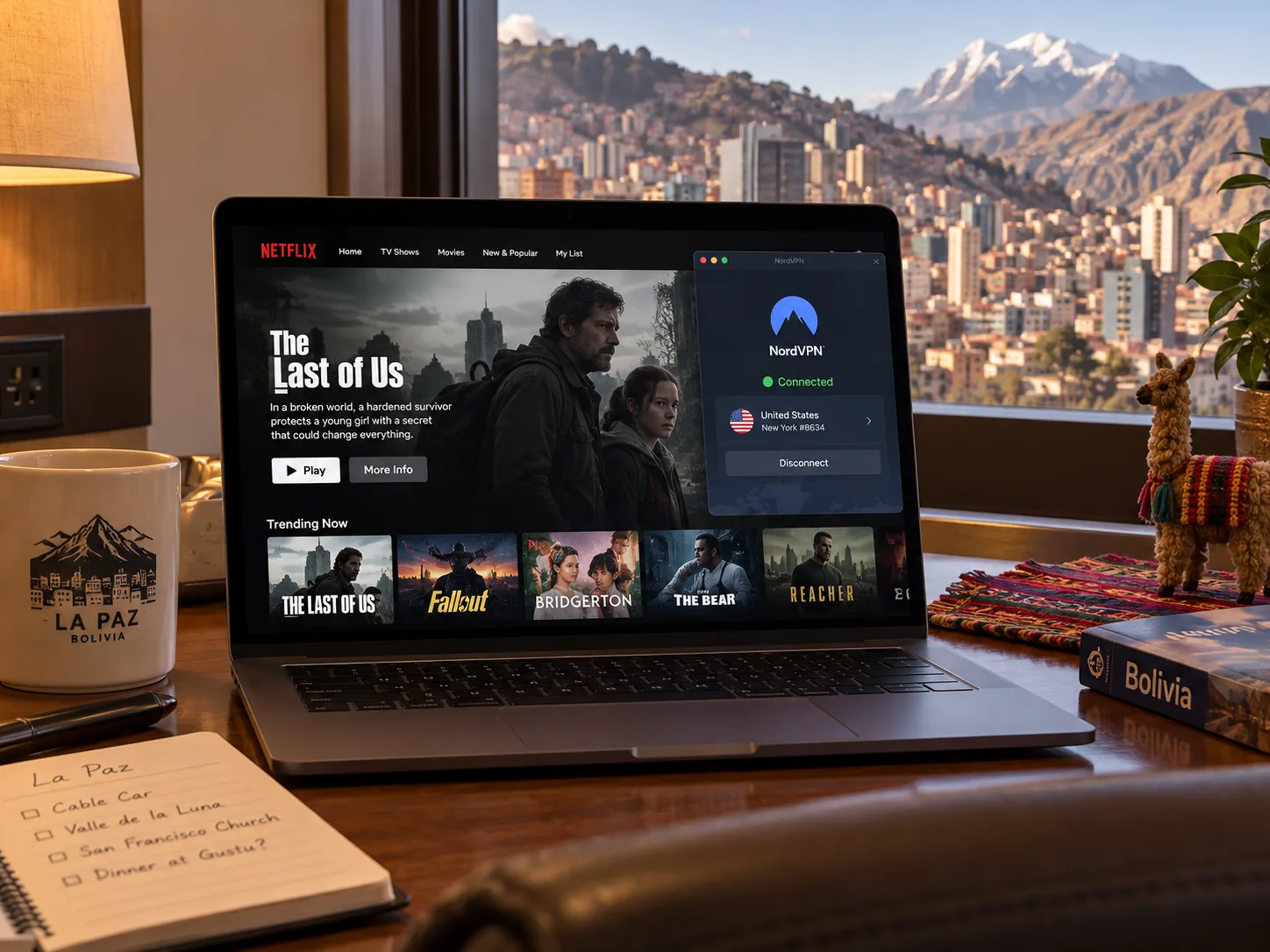
With legality settled, the practical question is what you'll use the connection for. Streaming works in two directions from Bolivia. To access your home libraries, connect to a server in your home country on the provider's streaming-optimised list. The reverse applies too: local Bolivian channels such as Bolivia TV are geo-restricted when you're abroad, so Bolivians travelling overseas need a Bolivian IP from NordVPN, ExpressVPN, Surfshark or a paid Proton plan.
Torrenting copyrighted material is illegal under Bolivia's 1992 Copyright Law, Law No. 1322, even though enforcement is weak. A VPN hides your torrent traffic from your provider, but it doesn't make an unlicensed download legal. Stick to legal torrents such as Linux images, open-source software or public-domain films.
Gaming is about latency rather than bandwidth. Connect to the closest physical exit and use WireGuard, and expect a VPN to add a little delay rather than remove it.
How to Set Up a VPN in Bolivia (and Get a Bolivian IP)
Setting up takes a few minutes on any of these services, and the steps are the same whether you want privacy or a Bolivian IP.
- Pick a provider from the list above and install its app on each device, ideally before you travel.
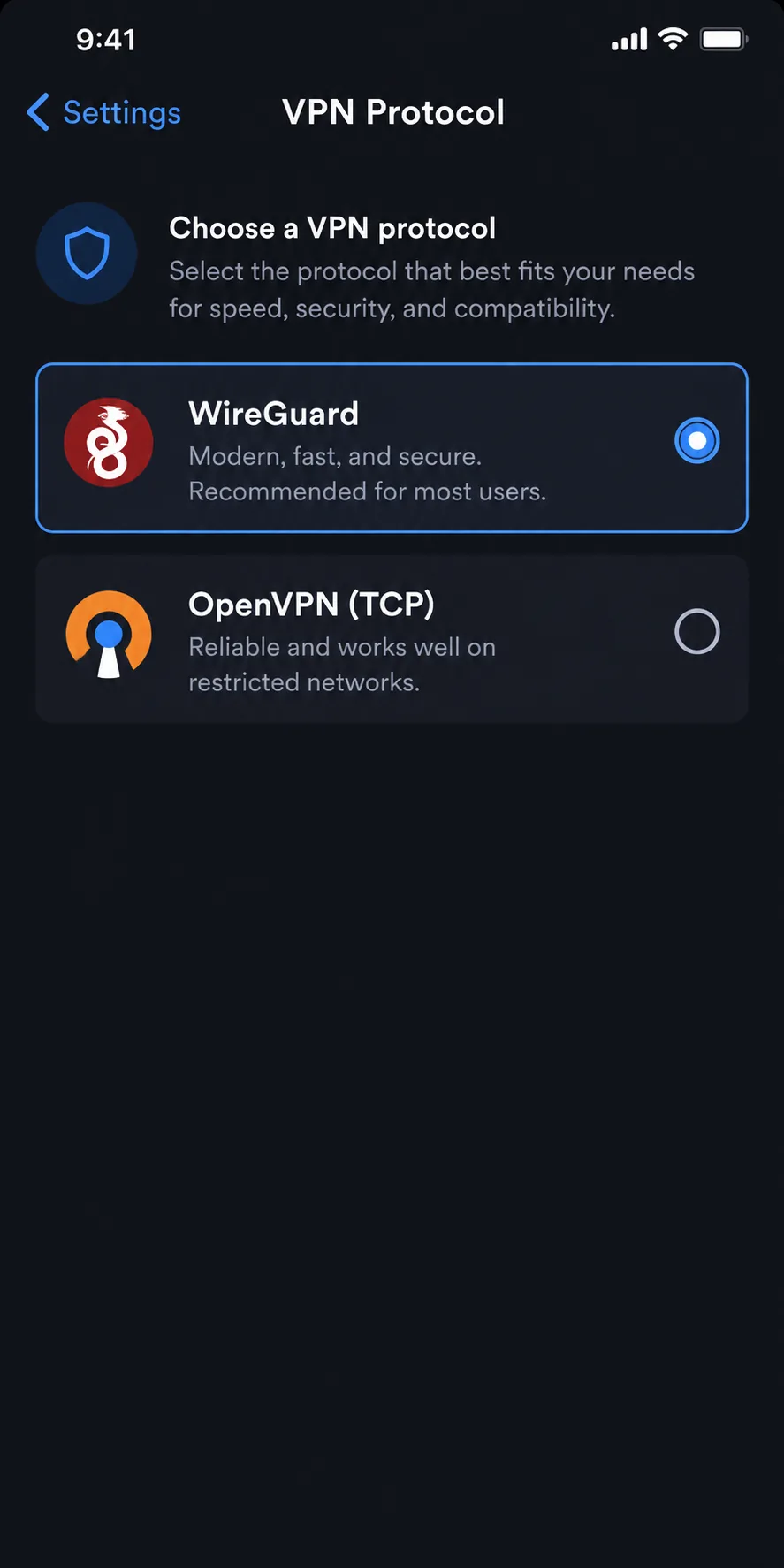
- Open the app's protocol setting and choose WireGuard (NordLynx at NordVPN). At ExpressVPN, choose Lightway.
- Turn on the kill switch, so your traffic stops if the tunnel drops.
- For a Bolivian IP, connect to the Bolivia location. For speed, connect to a physical server in a neighbouring country instead.
- Visit an IP-check site and confirm the country shown matches your choice.
If the VPN stops connecting, switch the protocol to WireGuard or IKEv2, or change the server location. That usually restores it.
Use WireGuard on a local SIM or travel eSIM, since it's the fastest and most battery-efficient protocol. Keep OpenVPN TCP as the fallback.
Are Free VPNs Safe to Use in Bolivia?
Every pick above is a paid service. That's deliberate, because most free VPN providers aren't worth the risk. An app that doesn't encrypt your traffic gives you no protection on the public Wi-Fi you installed it for.
The free services that do work have their own limits. They run crowded servers, offer limited data and skip features like split tunneling. Some also fund themselves by monetising their users' data. On Bolivia's slower mobile connections, a crowded free server makes a weak signal feel worse.
Avoid free VPN apps from unknown developers. If you need a no-cost option, Proton VPN's free plan is the one we trust, and the review above covers its location limits.
Bolivia VPN FAQ
Is using a VPN legal in Bolivia?
Will a VPN slow down my internet in Bolivia?
Can I torrent with a VPN in Bolivia?
Do I need a VPN with physical servers in Bolivia?
Which server location works best for US streaming from Bolivia?
Do I need a VPN on public Wi-Fi in Bolivia?
Why does my VPN work better late at night in Bolivia?
Can a VPN help stabilize video calls from Bolivia?
Final Thoughts: Which VPN Should You Use in Bolivia?
The alternatives each suit a specific person. Pick Proton VPN if privacy and Swiss jurisdiction come first, or if you want to start on a free plan. Choose ExpressVPN if you'll be on the move and want the steadiest connection as your phone hops between networks. Surfshark is the budget call for a group sharing one subscription, and IPVanish suits a shared flat or a long hostel stay where many devices sit on someone else's network. Whichever you choose, the 30-day money-back guarantee lets you test it risk-free on your own Bolivian connection, though Proton's refund is prorated and IPVanish's covers only annual or 2-year plans.