A one-time payment that buys you a VPN forever sounds like the best value for money in privacy software, so it is no surprise that "lifetime VPN" is one of the most searched terms we see. The problem is that the phrase rarely means what buyers think it means. In our testing, the deals that promise the longest life are usually the ones most likely to leave you stranded when the provider goes out of business.
We put the leading long-term VPNs through the same real-world checks we use for every VPN review: speed tests on a home connection, leak and kill-switch checks, no-logs and audit verification, and streaming access across the big services. We also dug into the lifetime deals themselves to see which ones are safe and which are traps. This guide ranks the providers we would actually trust for the long run, explains why true lifetime plans are so risky, and shows what a multi-year subscription really costs by comparison.
We do not accept free "lifetime" licenses from vendors in exchange for coverage. Every plan discussed here was checked against current vendor pricing and independent audit records, and every provider we recommend is one we would keep on our own devices.
The Best Lifetime VPNs at a Glance (Quick List)
If you only want the short answer, here are the picks. Each one is a long-term subscription we trust more than any true lifetime deal, and the reasons follow in the full reviews below.
How We Selected the Best Lifetime VPNs (Methodology)
We treat a VPN the way a network administrator would: it either holds up under real use or it does not. Before any service earns a spot on this list, we install the apps on Windows, macOS, Android, and iOS, connect to a spread of nearby and distant servers, and run our checks more than once so a single good result does not skew the score.
For this roundup we ran each VPN across a Windows 11 laptop and a Samsung Galaxy S26 Ultra Android phone, with iOS and macOS spot-checks, over roughly three weeks of daily use on a home fiber line advertised around 500 Mbps. Speed testing covered nearby, mid-distance, and far-away servers, and we repeated the checks at peak evening hours so a quiet afternoon result could not flatter a provider.
Money changes hands on our side, not the vendor's: we pay for or license the plans ourselves so nothing about the review is owed to a provider. That independence matters most in a category where the flashiest offers are also the least trustworthy. We also weigh each provider's track record, since a long-term plan is only as good as the company still standing behind it a few years from now.
What We Tested For (speed, security, logging, unblocking, value)
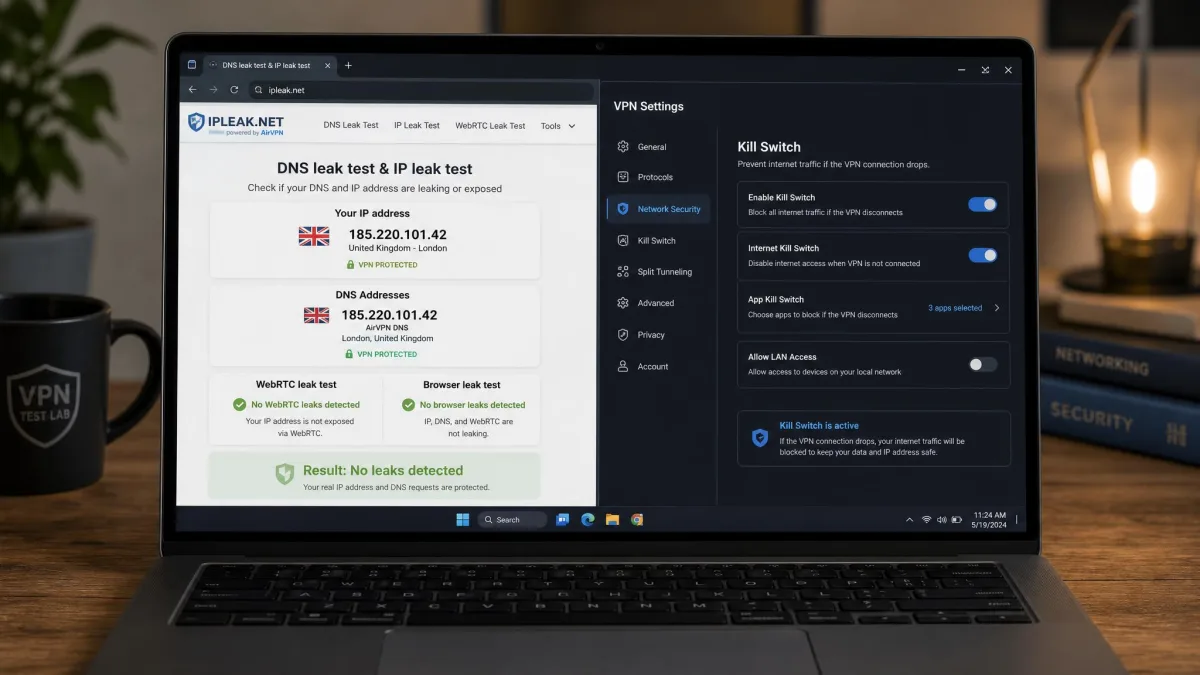
Five things decide where a VPN lands. Speed comes first, because a VPN you resent using is a VPN you turn off. We measure how much of the base download speed survives once the connection is encrypted, and we test both nearby and distant servers. Security covers the encryption standard, the kill switch, and whether DNS or IP leaks show up in our checks. A kill switch matters most here: if the tunnel drops, it should cut your traffic rather than let it slip out unprotected. Logging is about trust: we only recommend providers with an independently audited no-logs policy, ideally verified more than once. Unblocking measures streaming access across Netflix, Hulu, Amazon Prime, and other services. Value ties it together, weighing the real long-term price against what you get, including whether the renewal rate stays sane.
A 30-day money-back guarantee is the closest thing to a safe "try before you commit" on a multi-year plan. Sign up, run your own speed and streaming tests in the first week, and request a refund by email if it falls short.
Best Lifetime VPN Comparison Table
Here is how the six providers compare on the numbers that matter for a long-term commitment. Server and country counts move as networks grow, so treat them as a snapshot rather than a fixed spec.
| VPN | Buy | Intro price / plan | Servers | Countries | Simultaneous connections | No-logs / audit | Money-back | Streaming |
|---|---|---|---|---|---|---|---|---|
 |
Check price → | ~$3.49/mo (2-yr) | 9,300+ | 137 | 10 | Audited, RAM-only | 30-day | Excellent |
 |
Check price | ~$2.49/mo (2-yr) | 3,200+ | 100 | Unlimited | Audited | 30-day | Netflix, Hulu, Prime |
 |
Check price | Free / ~$2.99/mo (2-yr) | 13,000+ | 129 | 10 (Plus) | Audited, open-source | 30-day | Paid tier only |
 |
Check price | ~$1.98/mo (3-yr) | 34,000+ | 91 | Unlimited | Court-verified twice | 30-day | Good |
 |
Check price | ~$2.49/mo (2-yr) | 3,000 | 105 | 10 (Basic) | Audited, RAM-only | 30-day | Excellent |
 |
Check price | ~$2.99/mo (2-yr) | 3,200+ | 113 | Unlimited | Audited (2022, 2025) | 30-day | Good |
The Best Lifetime VPNs (and Long-Term Alternatives) Reviewed
None of the providers below sells a true lifetime plan, and that is exactly why they made the list. Each one gives you most of the value of a lifetime deal through a low multi-year price, backed by a company stable enough to still be here when your term renews.
1. NordVPN, Best Overall
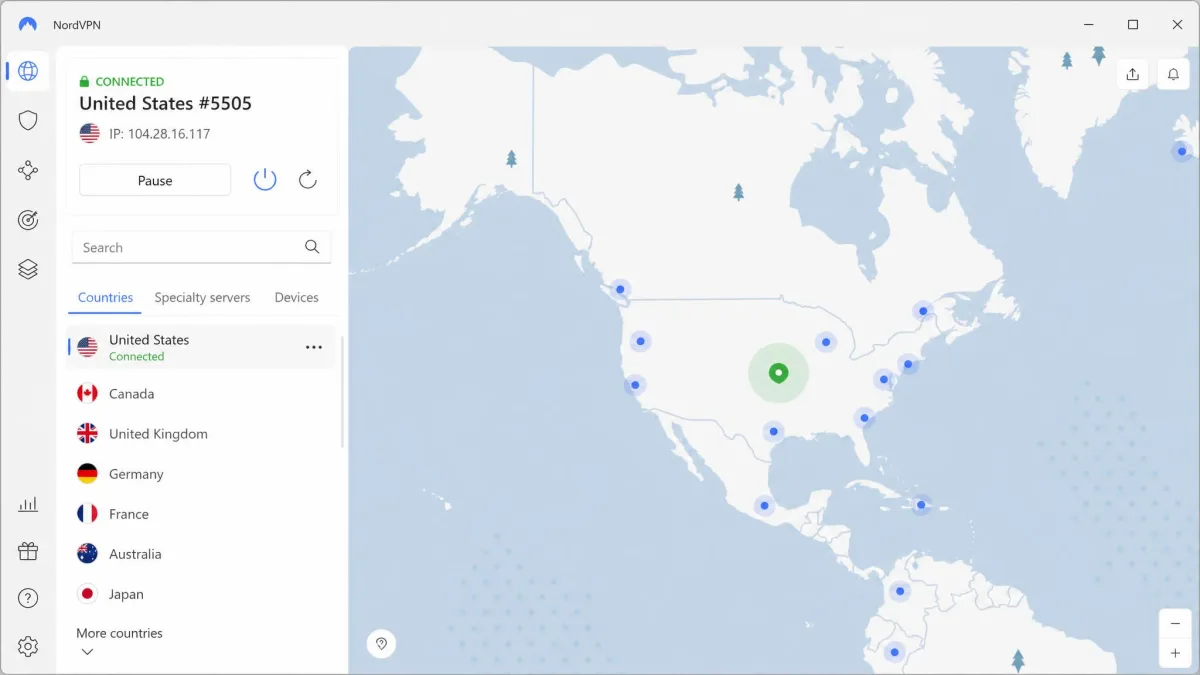
NordVPN is the service we reach for first, and it is the top pick for anyone who wants speed, security, and streaming without having to think about trade-offs. It runs on the NordLynx protocol, a WireGuard build that keeps connections fast even to distant servers.
NordVPN
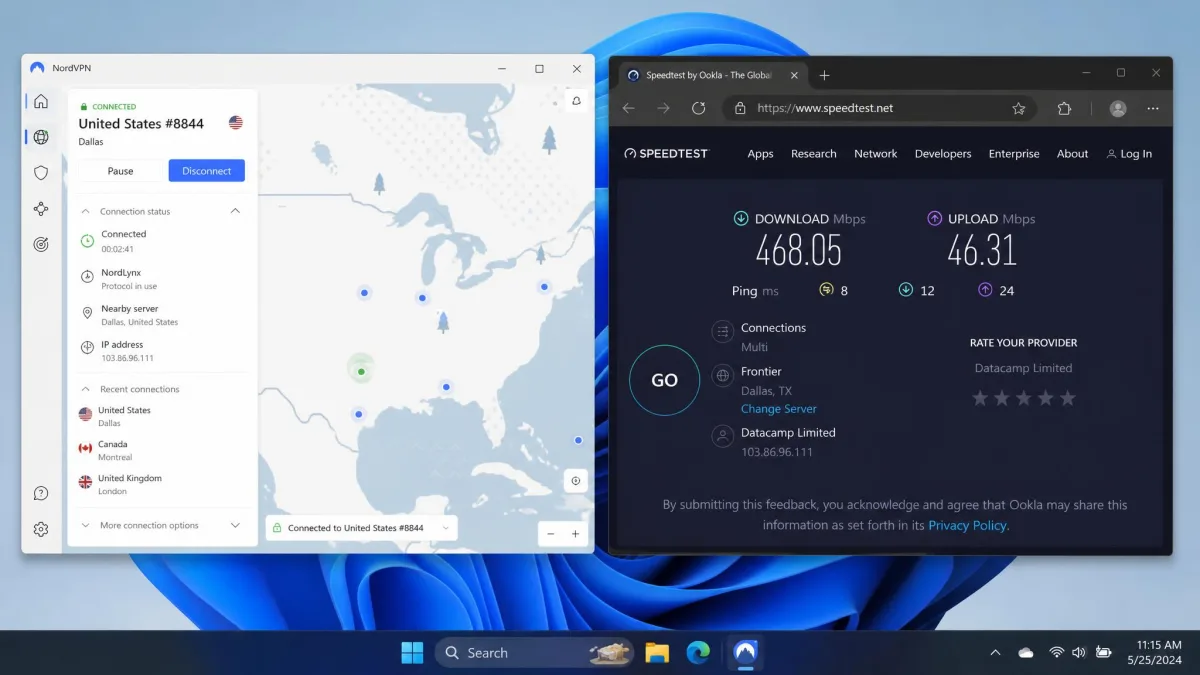
Speed is where NordVPN earned its rank on our bench. Connecting over NordLynx, it held around 96% of our base download speed, roughly 468 Mbps on a 500 Mbps line, and that headroom meant HD and 4K streams started without the stutter that gives a VPN away. Threat Protection Pro is more than a marketing checkbox too: its anti-phishing filter blocked 96% of 275 malicious URLs in independent testing with zero false positives. The one place NordVPN frustrated us was the desktop map interface, which feels cramped on smaller laptop screens, and access can turn patchy inside heavily censored countries.
Pros
- Near top-of-class speeds on the NordLynx protocol
- Audited no-logs policy, RAM-only servers, and post-quantum encryption
- Excellent streaming access and a genuinely useful Threat Protection Pro filter
- Works on 10 devices at once with a kill switch, Double VPN, and Meshnet
Cons
- The renewal price jumps sharply after the first term
- The desktop map view feels cramped on small screens
- Access can be patchy in heavily censored regions
Best for: Anyone who wants the fastest all-round VPN with the strongest feature set. Skip if: You need unlimited simultaneous connections for a large household.
NordVPN is based in Panama, keeps an audited no-logs record, and runs its network on RAM-only servers that wipe with every reboot. It is worth knowing that NordVPN discontinued its lifetime subscription offers, so any site still selling one is not legitimate. The 2-year plan is the honest way to lock in a low rate, and the 30-day money-back guarantee gives you room to test it yourself.
2. Surfshark, Best Value / Unlimited Devices
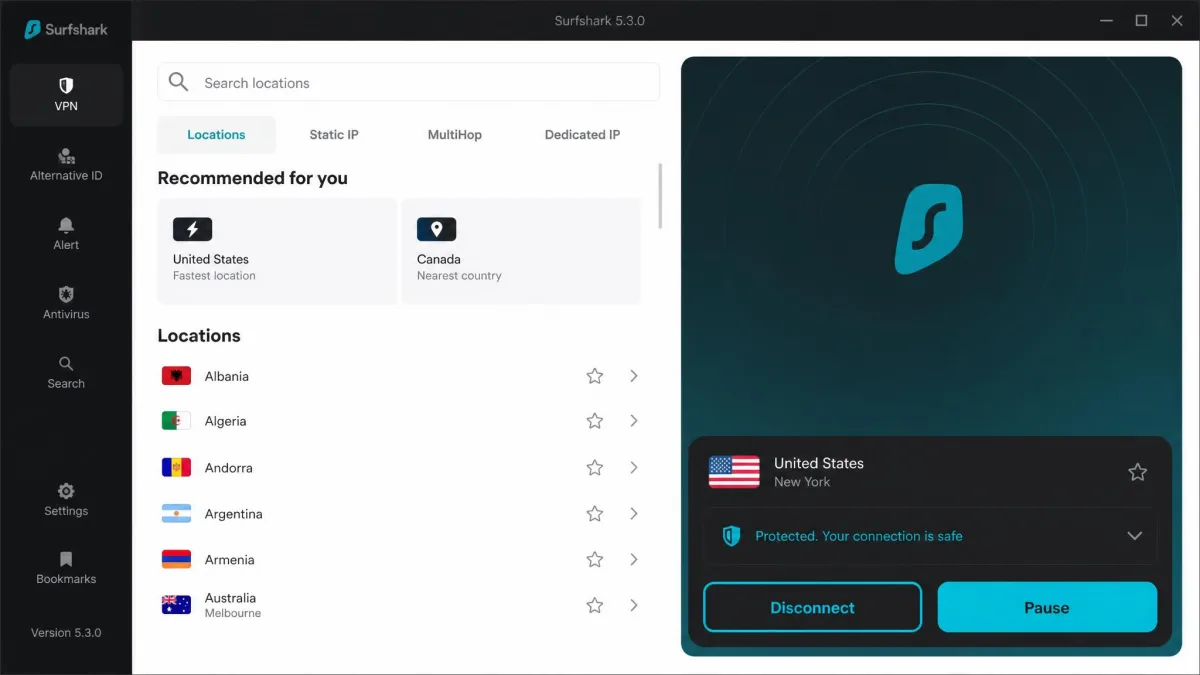
Where NordVPN optimizes for raw speed, Surfshark optimizes for households. It is the best value pick because a single subscription covers unlimited simultaneous connections, so every phone, laptop, tablet, and smart TV under your roof can connect at once.
Surfshark
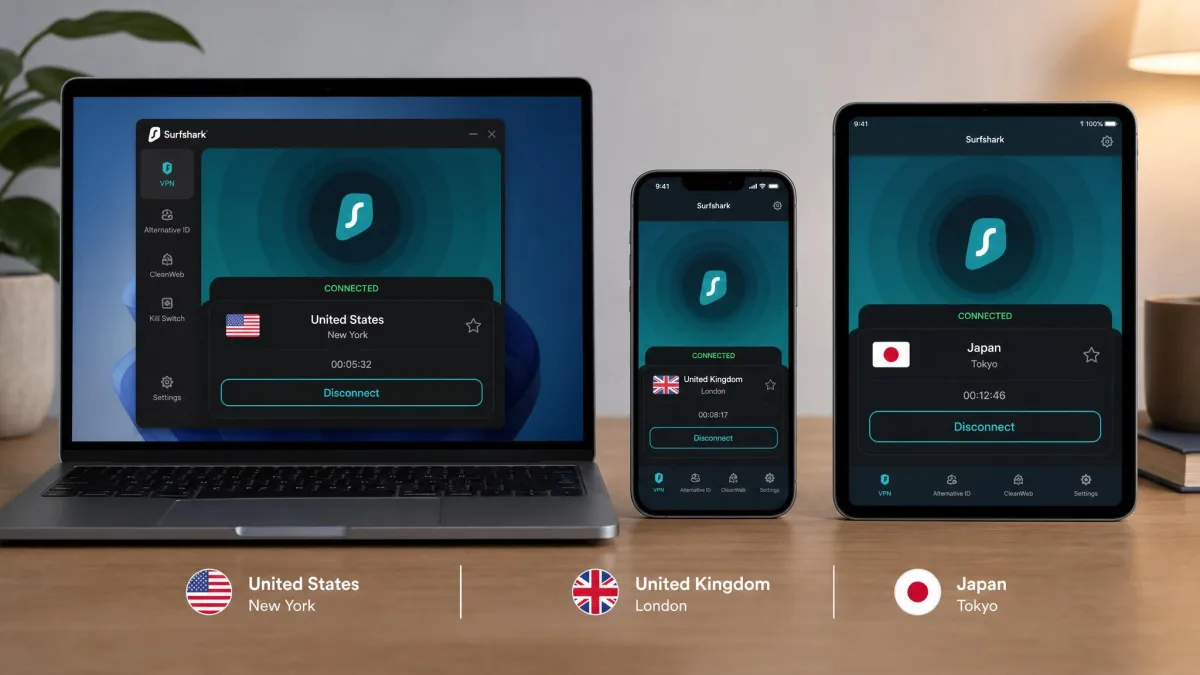
We connected a laptop, tablet, phone, and desktop all at the same time, and the unlimited-device policy held up with no slowdown we could measure on the extra connections. Speed to a single device was less consistent: some of our tests showed only minimal loss, while broader measurement recorded around 21% average loss across 200-plus tests, so your mileage varies by server and time of day. A small touch we kept using is the iOS native widget, which flips the VPN on without opening the app. The friction point is billing. Renewal charges are a common complaint, and unexpected auto-renewals dominate the one-star reviews.
Pros
- Unlimited simultaneous connections on one plan
- CleanWeb ad and tracker blocking, MultiHop, and split tunneling built in
- Audited no-logs policy with RAM-only servers
- Reliable Netflix, Hulu, and Amazon Prime access
Cons
- Single-device speeds can be inconsistent
- Renewal billing is a frequent source of complaints
- The lowest price needs a long up-front commitment
Best for: Large households and anyone who wants to protect every device with one subscription. Skip if: You want the most predictable renewal billing.
Surfshark's no-logs policy is independently audited, and it deletes connection data within about 15 minutes on RAM-only servers. To avoid the billing surprise, set a calendar reminder before the term ends and decide on your own schedule rather than the auto-renewal's.
3. Proton VPN, Best Free / Privacy-Focused
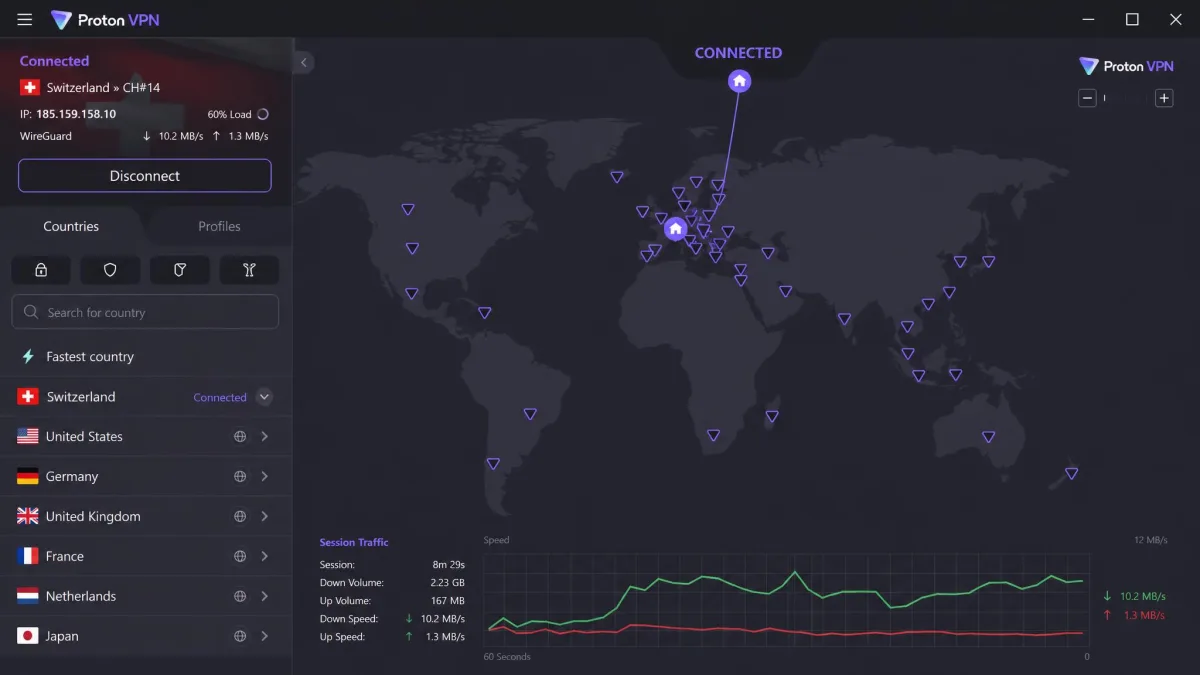
If Surfshark is the value pick, Proton VPN is the pick for people who refuse to pay with their data. It runs the only free plan we recommend without reservation, and its paid tier is built for privacy first.
Proton VPN
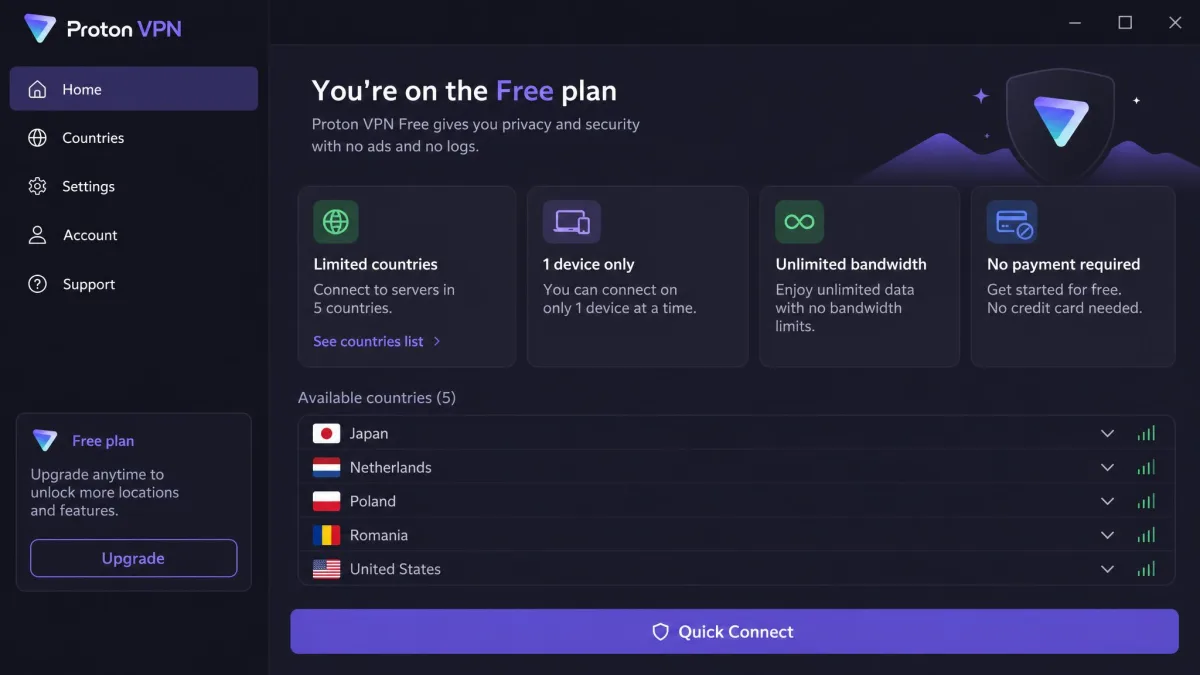
The free plan is the story here. We ran it with no bandwidth cap, no time limit, and no credit card on file, and it stayed genuinely fast in daily use. The catch is deliberate: the free tier covers only a handful of countries, allows one device, and blocks streaming and P2P, which keeps it honest rather than a bait-and-switch. Proton's privacy record is the strongest on this list, with five straight years of published independent audits and fully open-source apps, all under Swiss jurisdiction. Step up to the Plus plan and you unlock 129 countries, 10 devices, Secure Core multi-hop, and the NetShield ad blocker.
Pros
- A truly free plan with unlimited bandwidth and no credit card
- Open-source apps audited five years running
- Secure Core multi-hop and Tor over VPN for high-risk users
- Swiss jurisdiction with a strong privacy track record
Cons
- The free tier blocks streaming and P2P and limits you to one device
- Fewer countries on the free plan than paid rivals
- Streaming needs the paid tier
Best for: Privacy-focused users, and anyone who wants a safe free VPN with no time limit. Skip if: You want free streaming access, which the paid tier requires.
Proton VPN answers the "can you get a lifetime VPN for free?" question better than any lifetime deal can: the free plan simply never expires. For the full feature set, the Plus plan carries the same 30-day money-back guarantee as the others.
4. Private Internet Access, Best Long-Term Plan
Proton wins on principle; Private Internet Access wins on price and proof. Its 3-year plan is the cheapest long-term commitment we recommend, and its no-logs claim is the only one on this list that has been tested in an actual courtroom.
Private Internet Access
PIA's no-logs policy has been verified in court twice, which is stronger evidence than any audit, because it shows there was nothing to hand over when authorities asked. In streaming tests it loaded HD video quickly on both local and distant servers with no buffering, losing about 12.7% of a 190 Mbps connection. The interface feels dated next to Nord and Surfshark, but it does everything you expect and, importantly, its multi-year price does not jump at renewal the way most rivals' do. The weak spot is support: live chat can be slow to reach, and the replies were sometimes unhelpful when we pushed on specifics.
Pros
- No-logs policy verified in court twice
- Unlimited simultaneous connections
- Multi-year price that does not spike at renewal
- Massive server network with open-source apps and port forwarding
Cons
- Dated-feeling interface
- Live chat support can be slow and inconsistent
- Streaming access trails NordVPN and ExpressVPN
Best for: Bargain hunters who want the lowest honest long-term price and proven privacy. Skip if: You want the most polished app or the widest streaming coverage.
For a long-term commitment, a price that stays flat at renewal is worth more than a flashy interface, and PIA is one of the few that delivers it.
5. ExpressVPN, Fastest for Streaming
ExpressVPN takes the streaming idea further than anyone. Its Lightway protocol and wide server spread make it the service we hand to someone who cares mostly about unblocking libraries cleanly from anywhere.
ExpressVPN
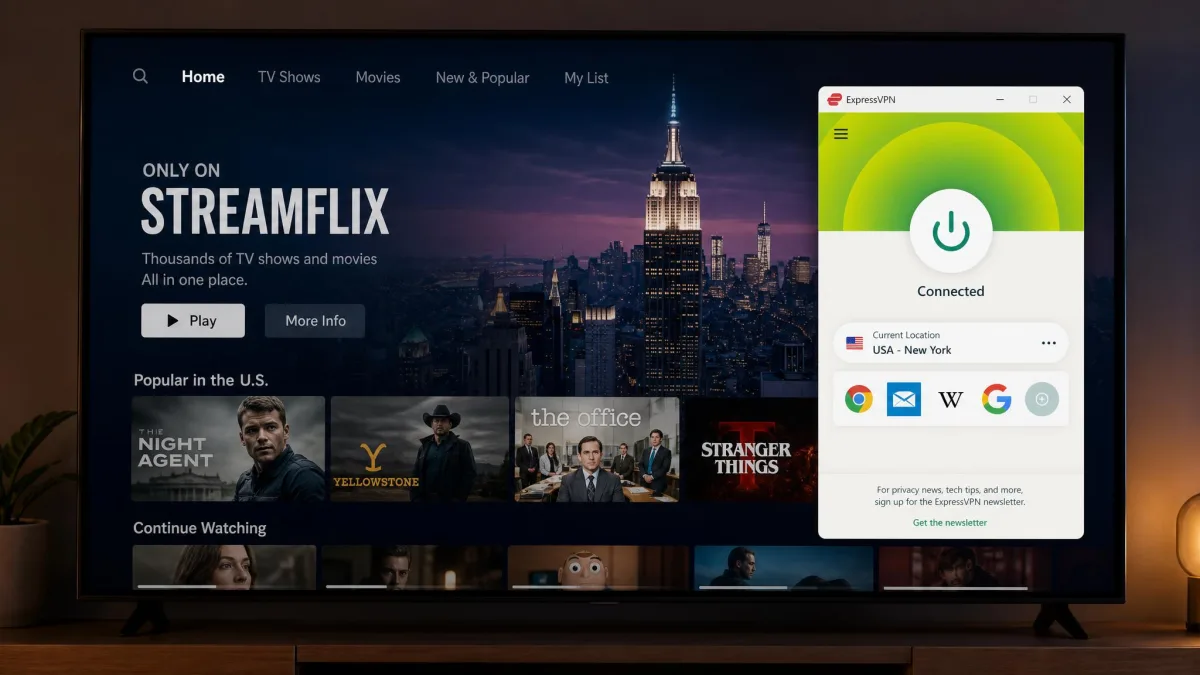
Streaming is where ExpressVPN pulled ahead in our testing. Connecting to a UK server, we unblocked BBC iPlayer with smooth, buffer-free playback, and the US, UK, Canada, Australia, France, and Japan Netflix libraries all loaded reliably. On that nearby UK server over the Lightway protocol it held about 83% of a 940 Mbps line, roughly 781 Mbps, enough to start a 4K stream almost immediately with no buffering. Even on long-distance servers it kept roughly 85 to 90% of base speed, and its apps passed our IP, DNS, and WebRTC leak tests with no leaks.
Pros
- Consistently strong streaming unblocking across regions
- Lightway protocol with TrustedServer RAM-only architecture
- Audited no-logs policy under British Virgin Islands jurisdiction
- Simple, reliable apps on every platform
Cons
- More expensive than most rivals at the same term length
- Device allowance depends on the plan tier
- Fewer advanced extras than NordVPN
Best for: Streaming-first users who want reliable access to region-locked libraries. Skip if: You are shopping purely on price.
ExpressVPN sells three tiers (Basic, Advanced, and Pro), and the device allowance rises with each, so check which tier matches your household before you commit. All tiers include the 30-day money-back guarantee.
6. IPVanish, Best for Simultaneous Connections
Like Surfshark, IPVanish puts no cap on how many devices connect at once, but it leans harder into user control with a SOCKS5 proxy and granular settings that appeal to more technical users.
IPVanish
IPVanish let us connect an unlimited number of devices at once, and speeds held up well: its recommended nearby server dropped download speed by only about 10% with latency barely rising. It passed our IP, DNS, IPv6, and WebRTC leak tests on both Windows and Android, with the real IP staying hidden, and the kill switch reliably blocked all traffic on disconnect under both WireGuard and OpenVPN.
Pros
- Unlimited simultaneous connections
- Independently audited no-logs policy (2022 and 2025)
- SOCKS5 proxy and split tunneling for advanced users
- WireGuard and OpenVPN with a reliable kill switch
Cons
- The money-back guarantee applies to yearly and longer plans only
- Server and country counts are reported inconsistently
- Fewer streaming and privacy extras than the top picks
Best for: Users with many devices who want manual control over their connection. Skip if: You want the guarantee on a monthly plan or the widest streaming access.
IPVanish backs its privacy claims with two independent audits, in 2022 and again in 2025. Note that the 30-day money-back guarantee covers annual and longer plans, not the monthly option, so start on a yearly term if you want the safety net.
Do True Lifetime VPNs Actually Exist?
Yes, but rarely in a form worth buying. A handful of small providers still sell one-time "lifetime" licenses, usually through discount marketplaces, and the price can look irresistible next to a monthly bill. FastestVPN, for example, has offered a lifetime plan for around $40 through StackSocial-style promotions.
The trouble is what "lifetime" actually covers. It means the life of the company, not your life, and small VPN companies do not live long. When the provider closes or sells, your lifetime access closes with it. That is why every major provider we trust sells subscriptions instead. NordVPN, the biggest name in the category, discontinued its lifetime offers entirely.
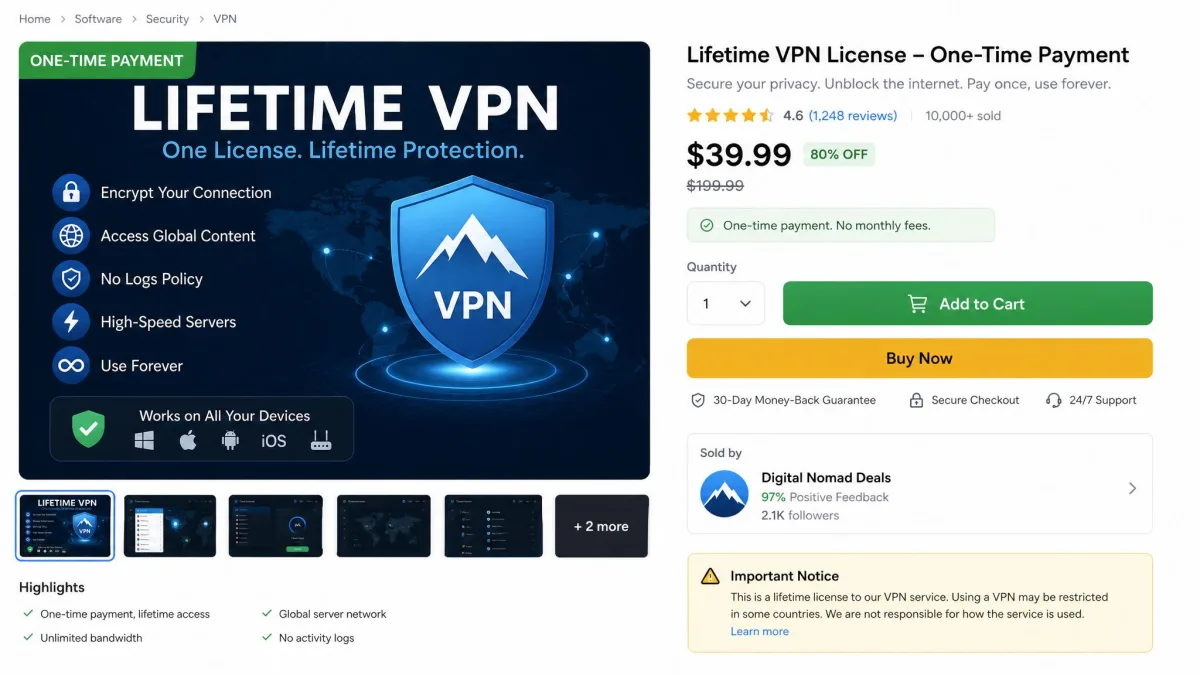
If a website is selling a "NordVPN lifetime subscription," it is not real. NordVPN no longer offers one, so any such listing is either a scam or a reseller of stolen or shared credentials that will stop working.
Risks of Lifetime VPNs (Why Experts Advise Caution)
A VPN is only as trustworthy as the company running the servers, and a one-time payment removes the company's reason to keep serving you well. Once the money is spent, there is no recurring revenue to fund fast servers, security audits, or support. The economics push in exactly the wrong direction.
We have watched this play out repeatedly. Lifetime plans are often tied to small providers that run servers cheaply for six to twelve months, then disappear, leaving no refund recourse. In the meantime, your traffic is passing through infrastructure with no ongoing investment behind it, which is the opposite of what you are paying a VPN to protect.
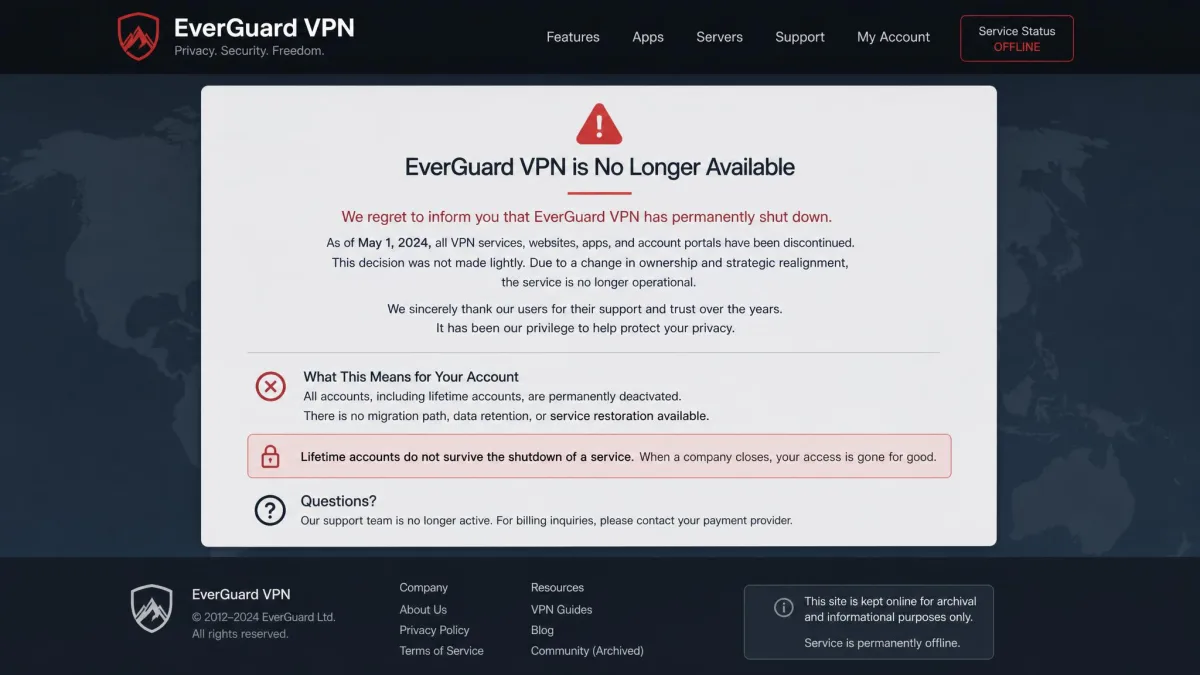
A "lifetime" VPN promises the life of the company, not yours, and small VPN companies do not live long.
— From our hands-on review of lifetime VPN deals
The other risk is the slow bait-and-switch. Some lifetime accounts get quietly converted into recurring paid subscriptions after a year or two. That is what happened with VPNLand, where buyers who believed they had paid once later found a recurring charge on the card. The "lifetime" label bought a delay, not a permanent deal.
Lifetime VPNs That Often Fail or Are Scams (What to Avoid)
The pattern is consistent enough to name. VPNSecure is the clearest recent example. The service changed hands in April 2025, and the new owners cancelled existing lifetime accounts outright, so people who paid years earlier were simply locked out. CactusVPN tells the same story from the other direction: it shut down in 2024 and took its lifetime access down with it, since there is no service to log into once the company is gone. Neither group of buyers had a refund to fall back on.
Even a lifetime service that is still running shows the strain of the model. FastestVPN is the working example most people cite, and it makes the case against itself. It runs only about 500 servers, so that small network can get overloaded at peak times, and its apps range from lackluster to buggy, with Android users hitting outright functionality failures. A 31-day money-back window covers the first month, but it does nothing for the years you are meant to be covered.
Be especially wary of lifetime VPN deals sold through third-party discount sites. When the provider vanishes, the marketplace that sold you the code will not refund a "lifetime" purchase made years earlier, and you have no direct relationship with the VPN to fall back on.
Are Lifetime VPN Subscriptions Worth It?
For almost everyone, no. The appeal is obvious, but the math only works if the provider survives long enough to justify the up-front cost, and the providers offering lifetime deals are the least likely to do so. You are trading a small, predictable monthly cost for a single payment to a company with every incentive to under-invest once it has your money.
A subscription from an audited, no-logs provider is the safer bet, and it is not much more expensive in the long run. You keep the leverage: if speeds slip or the service changes, you stop paying and switch. With a lifetime plan, your only leverage is gone the moment you pay.
Can You Get a Lifetime VPN for Free?
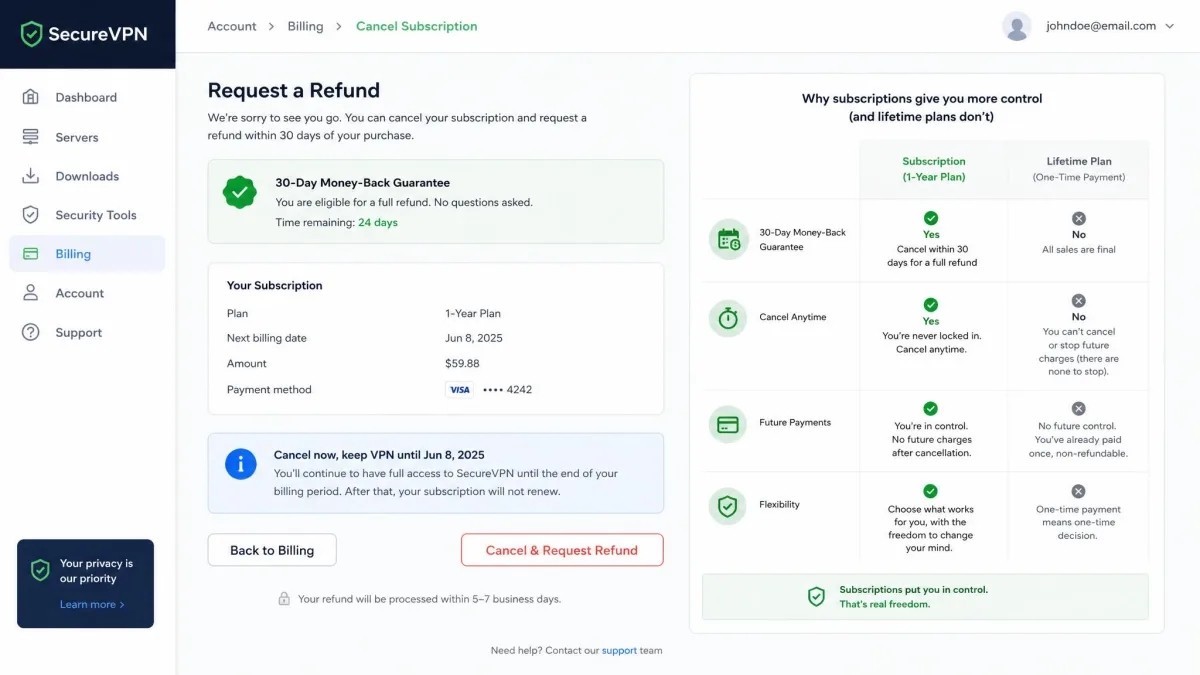
Not in any meaningful sense, but you can get an unlimited free VPN, which is often what people actually want. Proton VPN's free plan has no bandwidth cap, no time limit, and no credit card requirement, so it never expires and it never bills you. That is closer to a real "free forever" VPN than any lifetime license.
The trade-offs are honest and clear: the free plan limits you to one device and a small set of countries, and it blocks streaming and P2P. Free tiers from unknown providers are a different matter. A VPN that costs nothing and asks nothing usually earns its money by logging and selling the very data you installed it to protect. If a free VPN has no audited no-logs policy and no clear business model, assume you are the product.
Lifetime VPN vs. Long-Term Subscription: Cost Comparison
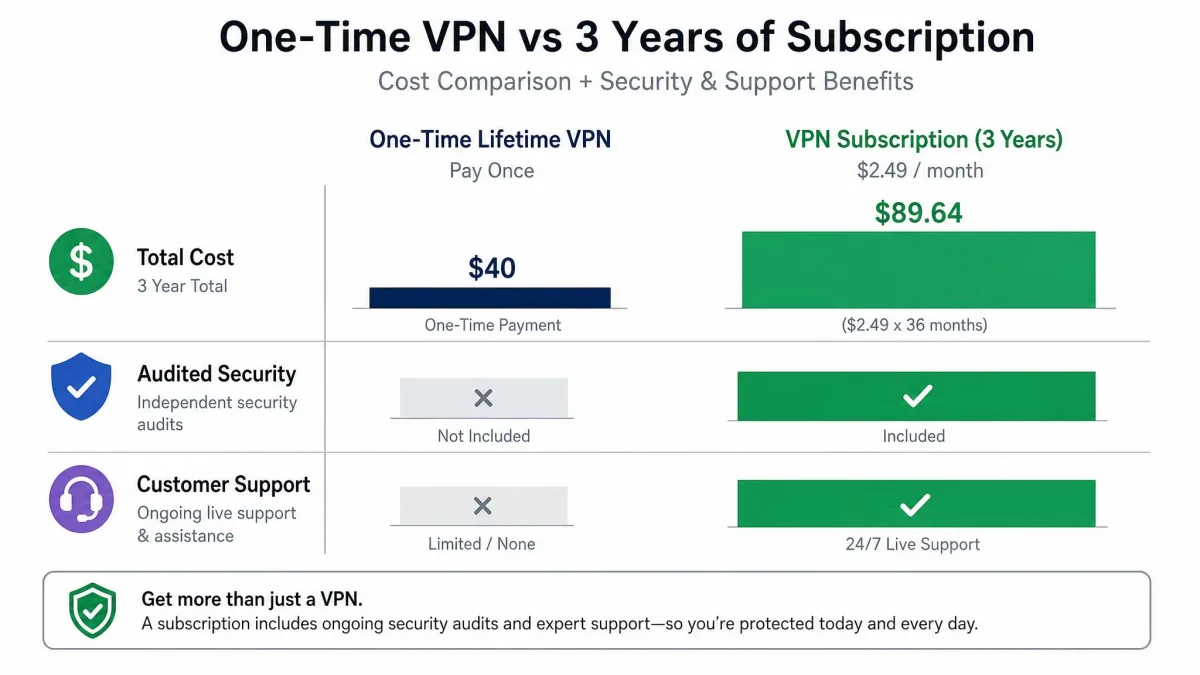
Run the numbers and the lifetime premium stops looking like a bargain. A true lifetime deal such as FastestVPN's runs around $40 one time. A 2-year plan from a trusted provider like Surfshark works out to roughly $2.49 a month, and PIA's 3-year plan lands near $1.98 a month. Over three years, a top-tier subscription costs only modestly more than a one-time budget license, and every dollar buys audited security and support that the lifetime provider has no reason to fund.
The math tightens further when you factor in survival. A lifetime plan that dies in eighteen months cost you far more per usable month than a subscription you can cancel any time. Predictable value from a company that stays in business beats a one-time gamble on a company that might not.
How to Choose (and Set Up) a Lifetime VPN
Start by ruling out true lifetime deals unless you fully accept the risk. From there, the checklist is short. Confirm the provider has an independently audited no-logs policy, ideally verified more than once. Check that it includes a kill switch and modern encryption, and that it runs enough servers and countries for the content and regions you care about. Match the device allowance to your household. Then use the money-back guarantee as your real trial.
It also helps to read the renewal terms before you buy, not after. Several providers advertise a low intro rate and then renew much higher, so know what the second-term price will be. If you want the flattest long-run cost, PIA's multi-year price does not jump the way most rivals' do. If you want the widest device coverage, Surfshark and IPVanish let you connect an unlimited number at once.
Setup is the easy part. Buy the plan directly from the provider's own website rather than a third-party marketplace, download the app for each device, and sign in. Turn on the kill switch first, then run your own checks in week one: a speed test on a nearby server, a leak test, and a streaming test on the services you use. If anything disappoints, request a refund by email before the 30-day window closes.
Buy from the vendor's official website, never from a marketplace listing or an emailed "lifetime" offer. Direct purchases keep your account, your refund rights, and your renewal control in one place.
You can learn more about what a VPN is if you are new to the technology.
Final Verdict: Our Top Pick
After running every provider through the same speed, security, logging, and streaming checks, NordVPN is the one we recommend to most people. It was the fastest all-rounder on our bench, its audited no-logs policy and RAM-only servers hold up to scrutiny, and its streaming access and Threat Protection Pro filter add real day-to-day value. It is not a lifetime plan, and that is the point: a stable, audited provider on a 2-year term is a safer long-run bet than any one-time deal.
If your priority is covering a houseful of devices, Surfshark is the better value, and if you want privacy above all with a genuinely free option, Proton VPN is the pick.