VPN.lat is a mobile-first VPN service that markets itself as a free, unlimited way to hide your IP address and reach content in other countries. This review covers what the service is, how it performed in our hands-on testing, and whether it is safe, fast, and worth installing in 2026. We ran it on our own devices, checked it for leaks, measured its speed, and weighed its privacy claims against what independent sources report. The short version sits in the verdict box below, and the full breakdown follows.
The app claims 10+ Million downloads and leans on a simple promise: connect, and you are protected without an account. That promise is appealing, but a free VPN always trades something for the price. Our job here is to find out what that trade is, and whether it costs you more than you expect.
How We Tested VPN.lat
We installed the current VPN.lat app and used it the way a normal person would: connecting to several servers, browsing, running speed tests, and checking for leaks. We scored the service on speed, connection stability, security features, privacy transparency, server choice, and everyday usability. We paid attention to the free experience, since that is what the service is best known for, and we noted where the "free" framing did not match reality.
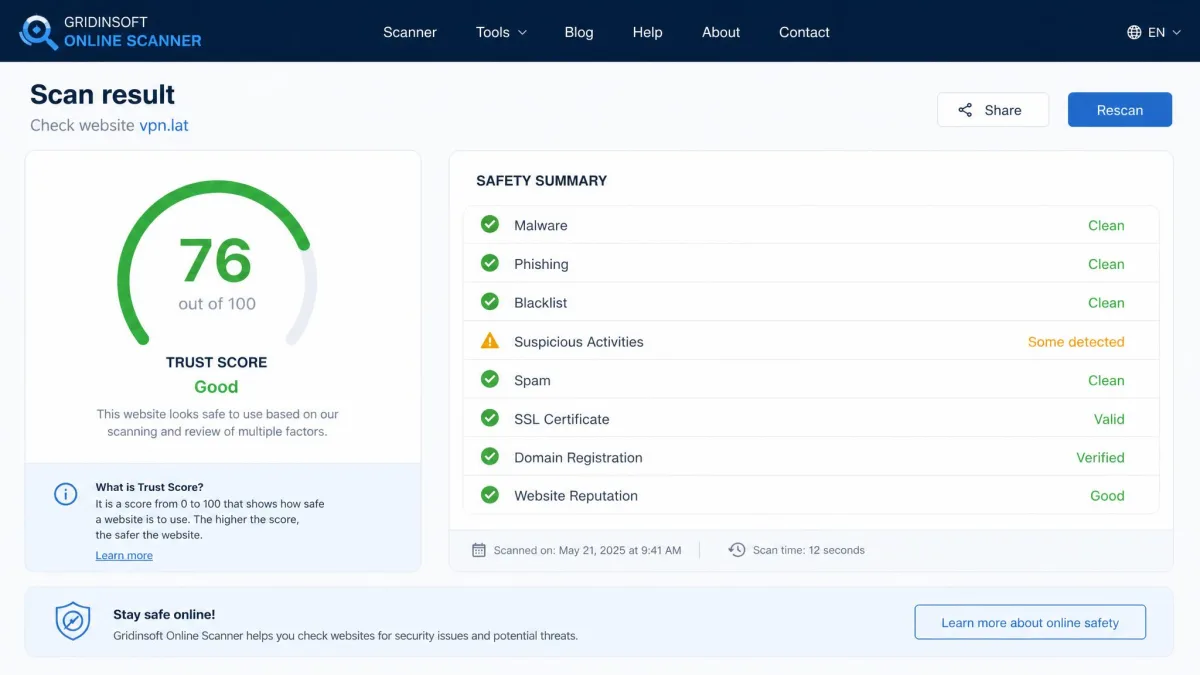
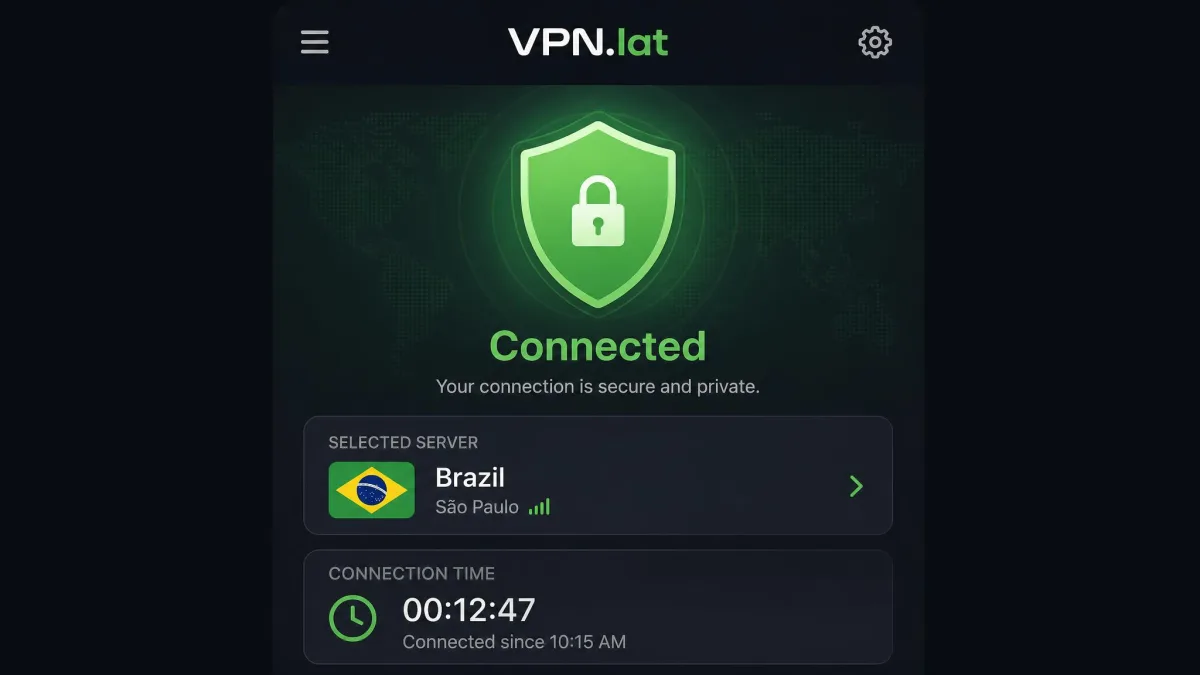
Across our hands-on time with the free app, the experience was inconsistent. The interface itself is simple and beginner-friendly, and it even offers manual server and country selection, which is uncommon for a free VPN. But ads appeared very frequently and sometimes made the app hard to use, the app occasionally got stuck on "connecting" and never linked up, and certain servers caused it to crash and close on its own. More than once it stopped working with no explanation and needed a reinstall to run again.
Is VPN.lat Safe and Legit?
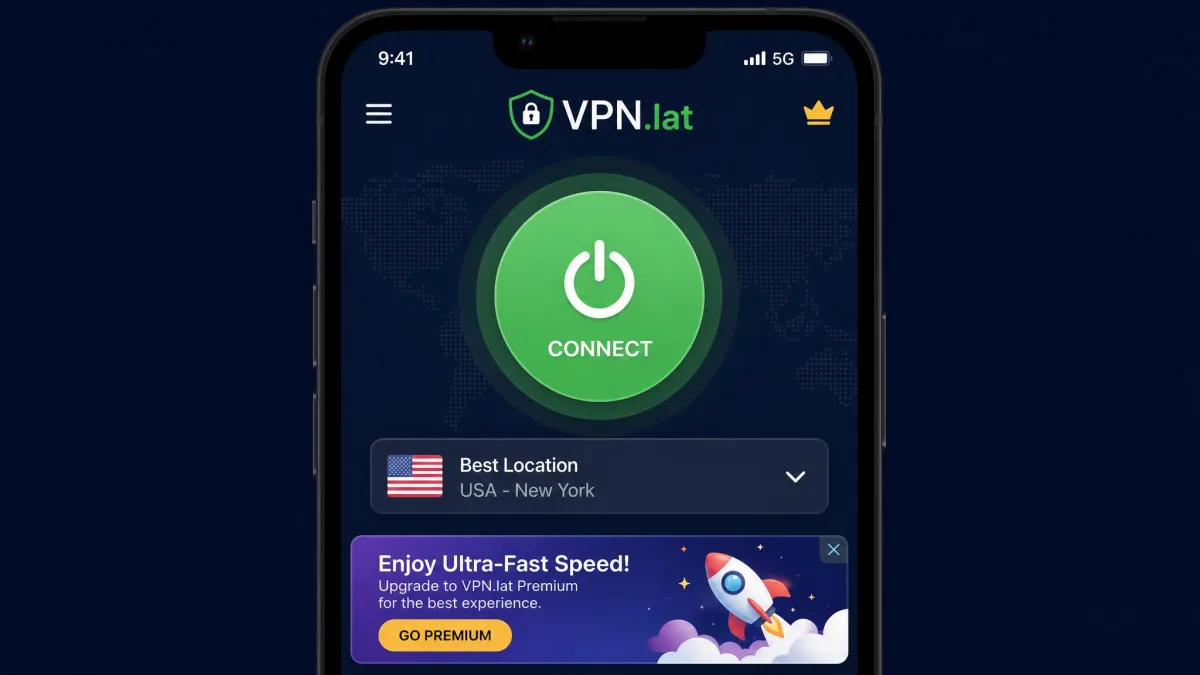
VPN.lat is a real, widely downloaded service rather than a scam app, and third-party scanners give it a moderate safety mark. Gridinsoft assigns it a 76/100 trust score, which places it in "probably legit" territory without being a clean bill of health. The app is available on the major mobile stores and reports version 3.9.57 on Android.
Legitimacy and trustworthiness are not the same thing, though. The company does not clearly publish its headquarters or ownership, and that lack of transparency matters for a privacy product. User sentiment is also genuinely split. The mobile store rating sits high, yet independent platforms are far harsher, and its Trustpilot score is only 2.8/5.
A free VPN has to fund itself somehow. With VPN.lat that shows up as heavy in-app advertising and, according to buyer reports, unexpected subscription charges. Treat any free VPN as a convenience tool, not a security guarantee.
Speed and Performance
Speed is where a VPN either fits into daily life or gets uninstalled. VPN.lat sits at the slower end, and its performance was inconsistent across the servers we tried.
Speed Test Results (With vs Without VPN.lat)
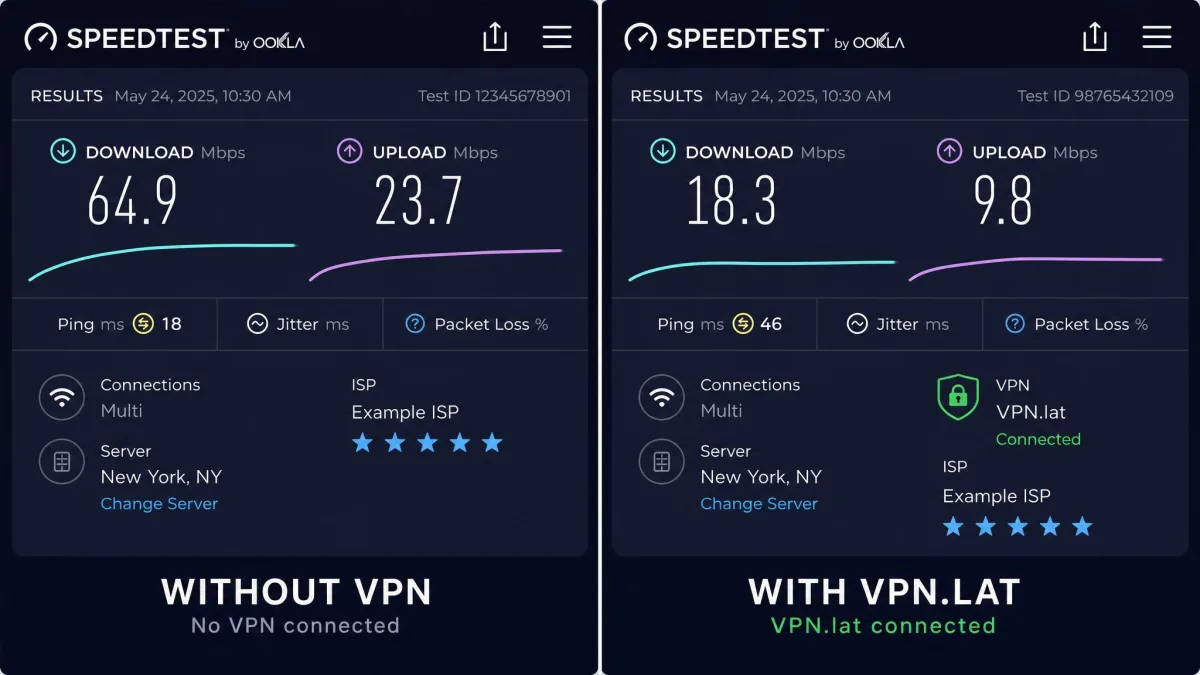
Using Ookla Speedtest as our benchmark, our download speed dropped from about 64.9 Mbps without the VPN to about 18.3 Mbps once VPN.lat was connected. That is a large hit, roughly a 70% reduction. It is enough for browsing, email, and light streaming, but it will frustrate anyone downloading large files or streaming in high definition. The slowdown was also uneven from one session to the next.
IP Leak Test
The core job of a VPN is to hide your real IP address, and here VPN.lat did its job. Our leak checks showed no real IP exposed. Instead of our true location, the connection surfaced as Colombia and Sao Paulo, Brazil, which is what you want to see.
DNS Leak Test
DNS requests can quietly reveal the sites you visit even when your IP is masked. In our testing VPN.lat passed the DNS leak check as well, with no real location leaking through. On the leak front, the service performed as a VPN should.
Security and Privacy
Encryption and Protocols
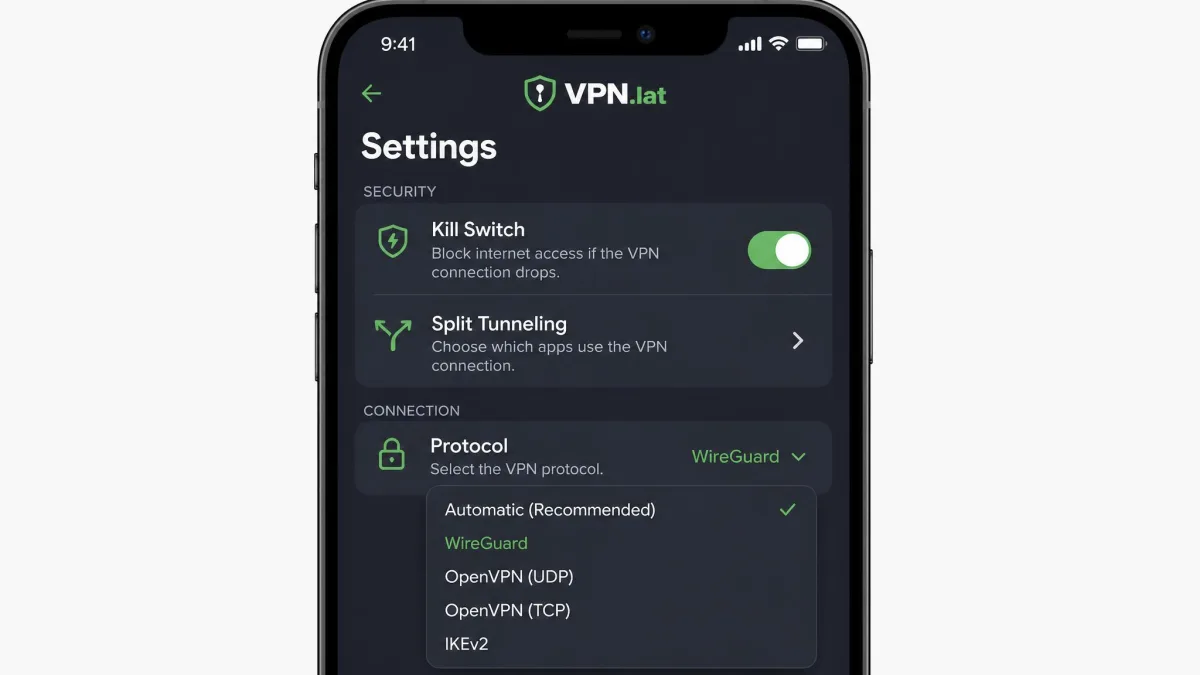
VPN.lat uses AES-256 encryption, the same standard strength you find in mainstream VPNs. Protocol support is less clear. Different sources list OpenVPN and IKEv2, while others add WireGuard, PPTP, and L2TP/IPsec, and the vendor itself does not publish a definitive protocol list. Because the exact set differs by source and is never confirmed by VPN.lat, treat the protocol lineup as uncertain. The app also advertises a kill switch and split tunneling, useful features to have on paper, though encryption reliability is questionable for serious security needs given the lack of independent verification.
Logging Policy and Company Transparency
VPN.lat claims a no-logs policy and states it never records or stores user data. That claim is self-reported. No independent third-party audit of the no-logs policy has been published, so there is nothing beyond the vendor's own word to confirm it. Combined with the missing ownership and headquarters details, this leaves the privacy picture resting entirely on trust. For casual use that may be acceptable. For anyone with real privacy stakes, unaudited promises from an unnamed operator are a weak foundation.
Servers and Country Coverage
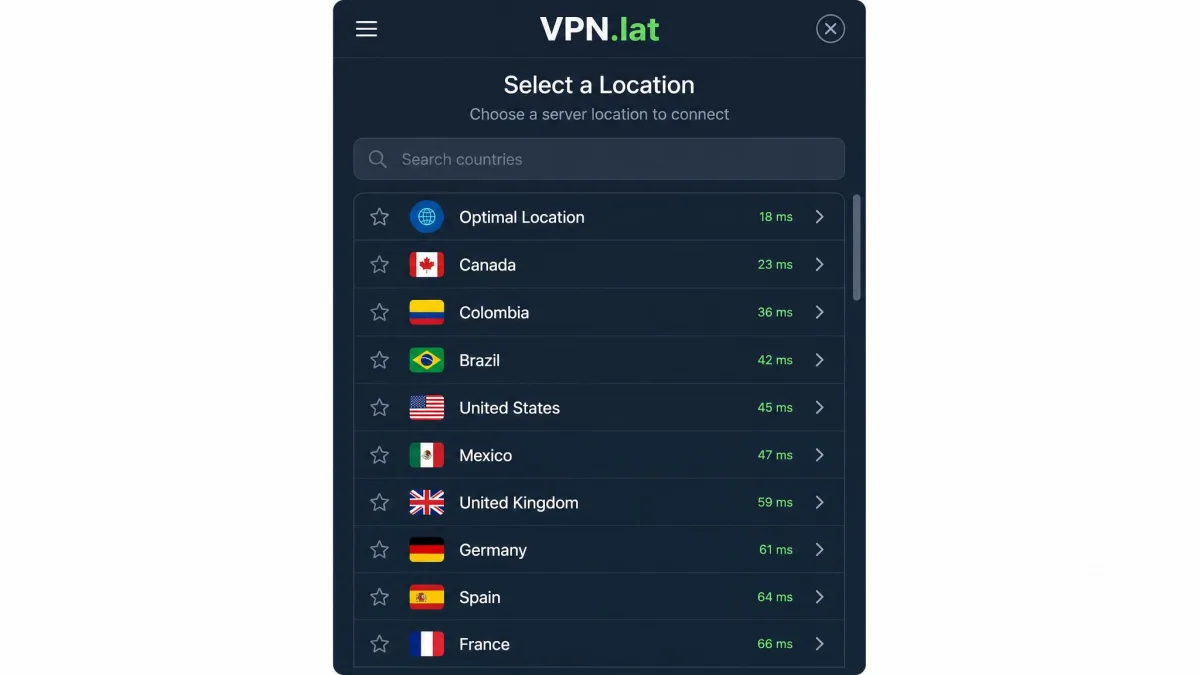
VPN.lat offers a broad spread of locations, and it lets you pick a server and country manually, which is a nice touch at this price. The exact numbers are unstable across sources: the vendor cites 81 locations, while third-party listings report figures between 68 and 72 countries. A server total of 600 or more appears only in those third-party listings and is not confirmed by the vendor, which publishes locations rather than a server count. Whatever the precise figure, coverage spans the major regions you would expect.
Location accuracy was less dependable in practice. The app sometimes connected to a server outside the region it advertised, so if a specific country matters to you, verify your apparent location after connecting rather than trusting the label.
Streaming, Torrenting, and Everyday Use
For everyday browsing, VPN.lat is usable when it stays connected. It worked well enough for light streaming, such as watching free Spanish-language movies, but we would not count on it for demanding high-definition services. No source we found names specific major platforms it unblocks reliably, and reviews advise switching servers when a service blocks you, so treat streaming access as hit or miss rather than a headline feature.
The service lists P2P and torrenting support on designated servers, so it is not off-limits, but the speed ceiling makes large transfers slow. Across normal use the recurring problem was not any single feature but reliability: the frequent ads, stalls, and crashes interrupt the experience often enough to wear on you.
Pricing: Free vs Premium
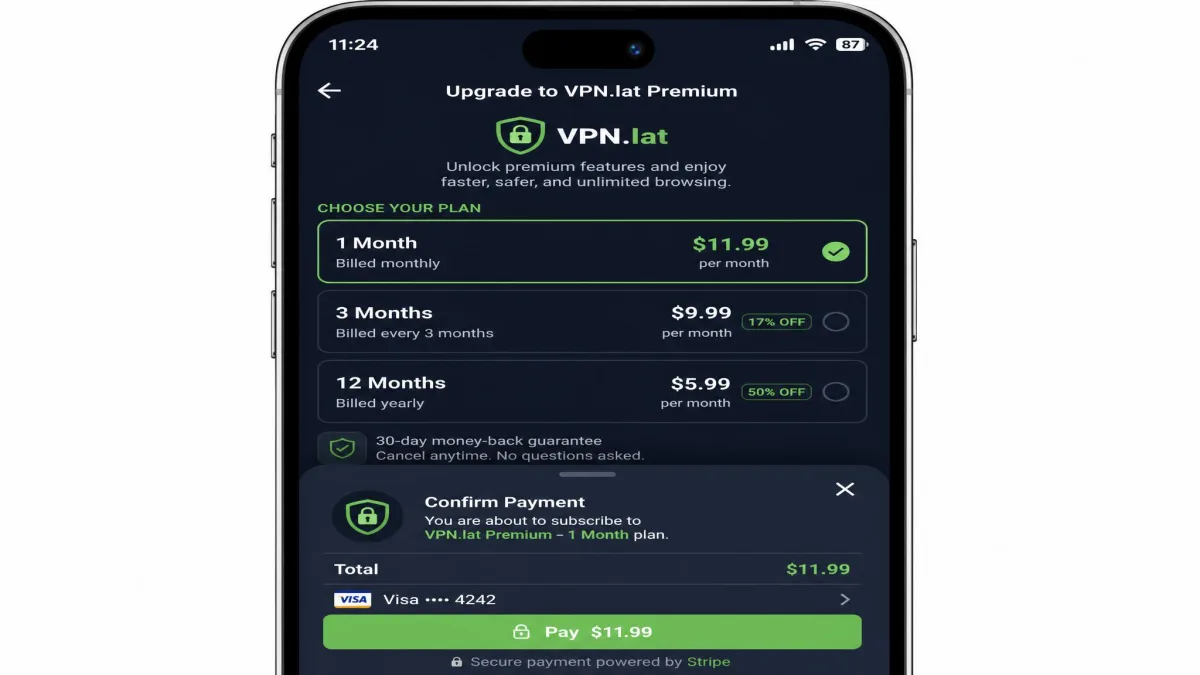
VPN.lat is marketed as 100% free with unlimited bandwidth and no registration, and the free app does work without an account. But the "free" label does not tell the whole story. Trustpilot reviewers report being billed after expecting a free trial, with cards charged for months at a time, and third-party listings describe paid premium subscriptions. Premium pricing itself varies between listings, quoted at around $9.99 per month by one source and from roughly $3.99 per month by another, with no price published on the vendor site. Refund windows are cited as either 7 or 30 days depending on the source, and neither is confirmed by the vendor.
If you install VPN.lat, watch your app-store subscriptions and payment methods carefully. The gap between the free marketing and the billing complaints is the single biggest reason to stay cautious.
The free tier supports up to 5 simultaneous device connections, which is generous for a no-cost service. Just treat any card entry with real care.

Pros and Cons
Pros
- Genuinely free to start, with no account or registration required
- Unlimited bandwidth and up to 5 device connections
- Passed our IP and DNS leak tests with no exposure
- Simple, beginner-friendly app with manual server and country selection
Cons
- Large speed drop, from about 64.9 Mbps to 18.3 Mbps in our tests
- Frequent ads plus stalls, crashes, and occasional reinstalls
- No published ownership and no independent no-logs audit
- Reports of unexpected subscription charges despite the free branding
VPN.lat Alternatives
If VPN.lat's instability or transparency gaps put you off, you have options. Reputable paid VPNs deliver faster, more consistent speeds, audited no-logs policies, and clear company ownership, usually for a modest monthly fee. If free is a hard requirement, look for well-known free tiers from established providers, which typically cap data but publish their policies and avoid the aggressive ads and billing surprises reported here. The trade is simple: pay a little for reliability and accountability, or accept limits and inconsistency for zero cost.
Frequently Asked Questions
Is VPN.lat safe?
Is VPN.lat really free?
Does VPN.lat keep logs of my activity?
Can I stream with VPN.lat?
How many devices can I use with one connection?
How many countries does VPN.lat cover?
Final Verdict
VPN.lat delivers on its most basic promise. It is free, needs no account, and hid our IP and DNS without leaks. For a spare phone or the occasional low-stakes connection, that is enough. But the slow, inconsistent speeds, constant ads, crashes, undisclosed ownership, and billing complaints add up to a service we cannot recommend for anything that matters. If privacy or reliability is your goal, your money is better spent elsewhere. If you only need a quick, disposable tunnel and go in with your eyes open, VPN.lat can do the job.