Betternet is a free, ad-supported VPN owned by Aura, the same parent company behind Hotspot Shield. It runs on the same Catapult Hydra technology as its better-known sibling. The pitch is private, unlimited browsing at no cost, and that pitch has pulled in a large audience. The app is also genuinely easy to use. After putting it through our usual round of speed, leak, streaming, and privacy checks, though, we came away skeptical. The free tier feels more like a funnel toward premium than a full service. The streaming results were poor, and the privacy history gives us real pause.
This review breaks down what Betternet is, what it costs, and how fast it ran on our test machines. It also weighs whether the logging and jurisdiction hold up for anyone who takes privacy seriously. We tested the Windows and Android apps over a period of days. We connected to servers near and far, and ran the same benchmarks we use on every VPN before it earns a recommendation. The short answer sits at the end. The details in between are what matter when it comes to trusting a provider with your traffic.
What Is Betternet VPN? (Aura-Owned, Free vs Premium)
Betternet is a VPN app for Windows, macOS, iOS, and Android, plus a Chrome browser extension. It is owned by Aura, formerly known as Pango, which also owns Hotspot Shield. Both products share the proprietary Catapult Hydra protocol. In technical terms, Betternet is a lighter, free-first face on the same underlying network. The service reports roughly 38 million users, which tells you the free pitch has landed with a broad audience.
The product splits into two tiers. The free version is ad-supported and does not require an account or an email address to get started. That is one of its few standout conveniences. The premium version, marketed as Betternet Premium, drops the ads, lifts the data cap, and opens up the full server list. In practice, the free tier behaves less like a complete VPN and more like a preview designed to push you toward paying. It is a point we return to throughout this review.
For anyone weighing the free route, it helps to see how it stacks up against dedicated no-cost options. We cover the wider field in our guide to the best free VPN services, and Betternet does not lead that pack. What it does offer is a very low barrier to entry: download, tap once, and you are connected.
Quick Verdict: Betternet at a Glance
Betternet is simple, and that simplicity is genuine value for a casual user. If you want a quick, no-signup way to mask an IP address on public Wi-Fi, it does the job. Beyond that narrow use, our testing kept running into walls. Speeds were inconsistent, streaming failed, and the privacy story is the weakest part of the package. It is not a service we would trust with anything sensitive. It is also not one we would pay for when the alternatives cost about the same and do far more.
If you only skim one section, make it this one and the final verdict. Betternet is usable, but usable is a low bar. The gap between this app and a genuinely good VPN is wide.
We ran Betternet on both Windows and Android, testing it against a 70 Mbps home baseline. We checked for IP and DNS leaks, and tried to stream Netflix and other services through several server locations. The pattern was consistent enough that we felt confident in the verdict below.
Betternet Ratings (Speed, Security, Privacy, Value)
Here is how we scored Betternet across the four categories that decide whether a VPN earns a place on our list. Speed suffered on distant servers and cratered on the free tier. Security is middling, and its encryption depends on which protocol you connect with. Privacy is where it loses the most ground, thanks to its logging and its tracking history. Value is weak too. The free plan is heavily limited, and the premium plan is not competitive.
Pros and Cons
The balance sheet is lopsided. The pros are about ease of use. The cons are about the things a VPN actually needs to get right.
Pros
- Very easy to install, with a one-tap connect interface anyone can use
- Free tier needs no account or email address to start
- Free version available for casual, low-stakes browsing
- Torrenting is allowed on premium servers
Cons
- Speeds collapsed on distant and free-tier servers in our tests
- Netflix and other major streaming services stayed blocked
- Logging policy collects connection and device data
- Poor privacy history, including a 2016 tracking-library finding
- Free tier is capped at 500 MB per day and heavy on ads
- Support is email-only with no live chat
Betternet Pricing and Plans
Pricing is one of the more confusing parts of Betternet. The numbers shift depending on where and when you look. Betternet's own site advertises a first-year promotional rate, while third-party reviewers quote a range of monthly and annual figures. We will lay out what we can confirm and flag what we cannot.
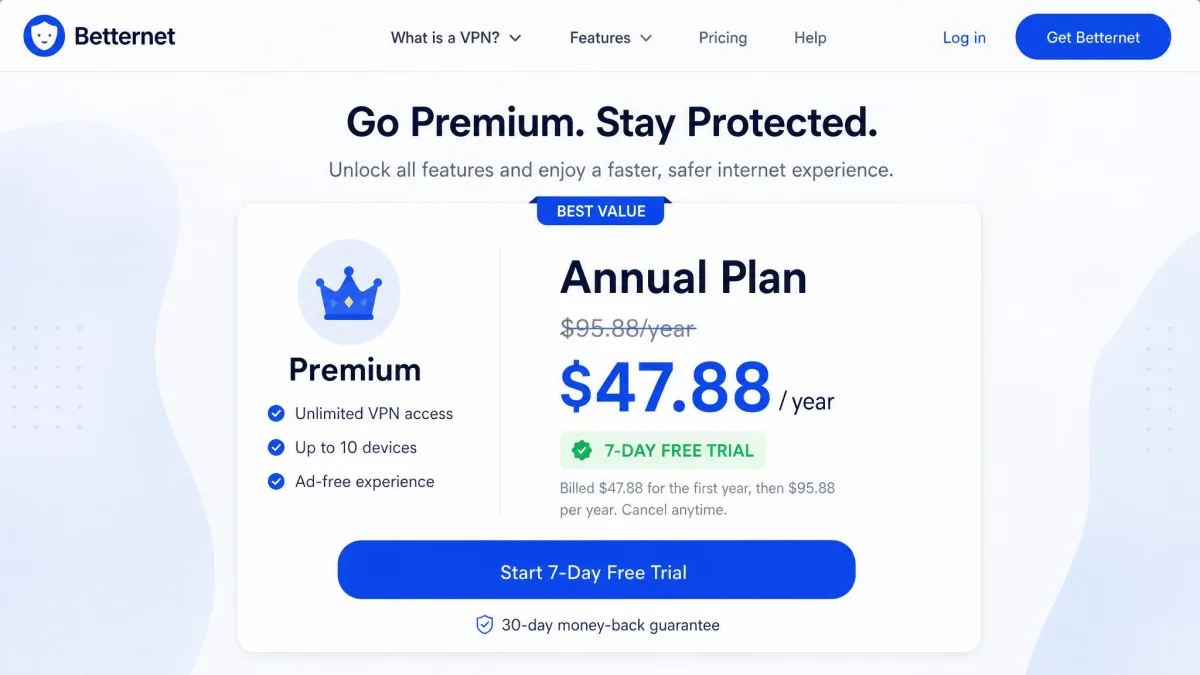
According to Betternet, the premium plan runs at a promotional first-year rate of $71.99. That is advertised as 54 percent off a regular price of $155.88 per year, and it auto-renews at $95.99 per year after that first term. Monthly pricing is harder to pin down. Most 2026 reviews put it in the $12.99 to $13.71 range, though Comparitech lists $17.99. The advertised monthly price varies by promotion, region, and billing cycle, so it shifts frequently.
Watch the auto-renewal. The advertised first-year discount is steep, but the price climbs sharply on renewal. Set a reminder before the term ends if you sign up.
Free Version vs Premium
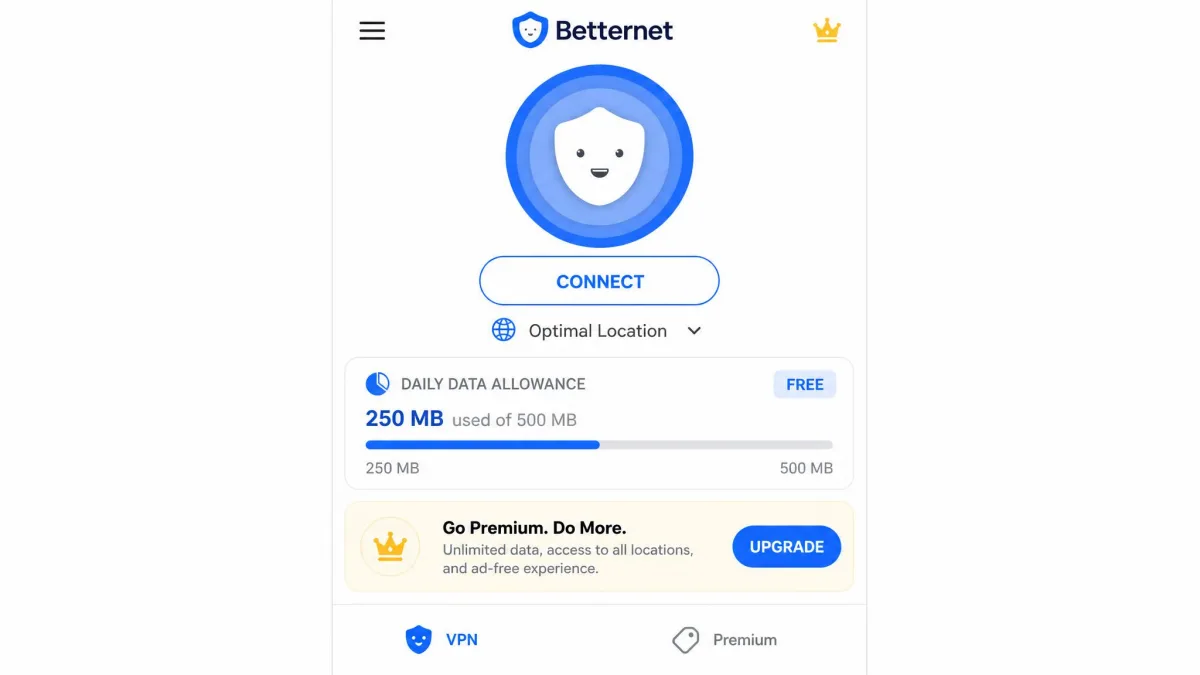
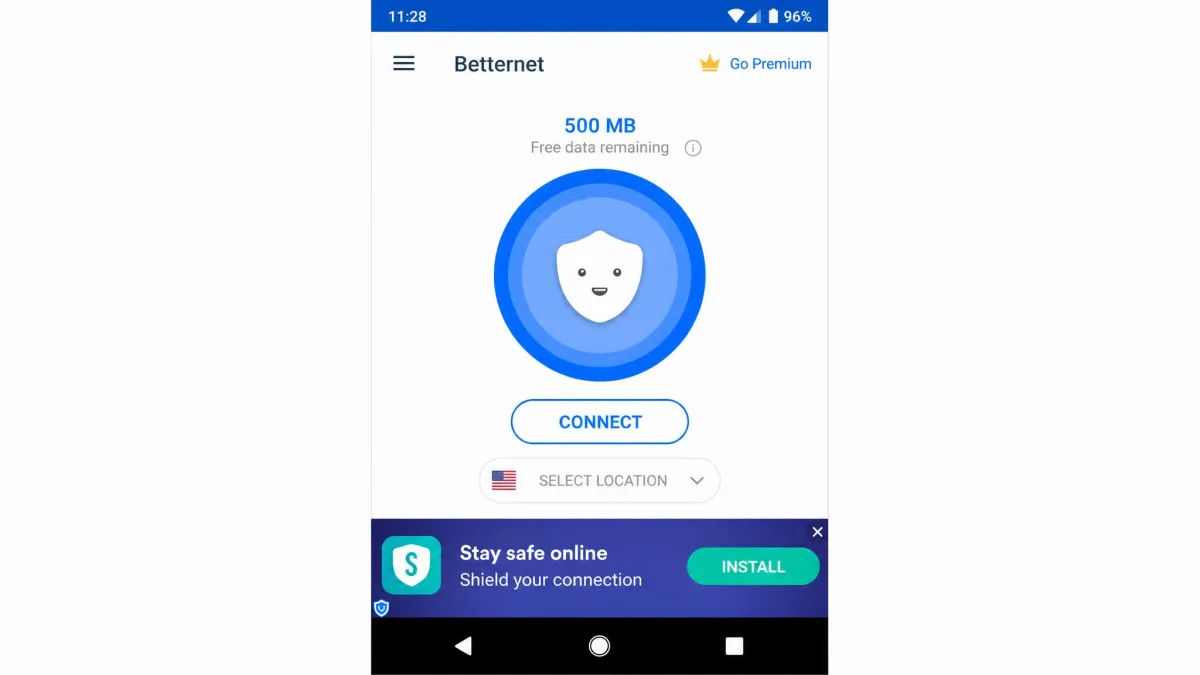
The free version is the reason most people try Betternet, so it deserves a close look. It is capped at 500 MB of data per day. That is enough for light browsing or a quick email check, but nowhere near enough for streaming or a full day of work. The free tier is also heavily ad-supported. In our testing, the ads were frequent enough to become a genuine annoyance. On top of that, the free plan restricts you to a handful of server locations.
Premium removes the daily data cap, strips out the ads, and unlocks the full server list along with torrenting support. The trouble is that the free experience is so limited that it reads as a trial funnel rather than a real free product. That frustrates users who expect a complete free VPN. If you need a no-cost option you can actually live on, our roundup of free VPN alternatives points to better-suited picks.
Refund Policy and Free Trial
Betternet offers a 7-day free trial on its premium plan, which is a fair way to test the paid features before committing. The refund policy is murkier. A 45-day money-back guarantee is cited by most 2026 reviews, though Comparitech reports no guarantee at all. The terms appear to differ by platform and store of purchase, and the refund process asks for order or access-code details. Because coverage is inconsistent, we would not count on a refund. We would lean on the free trial instead.
Speed and Performance
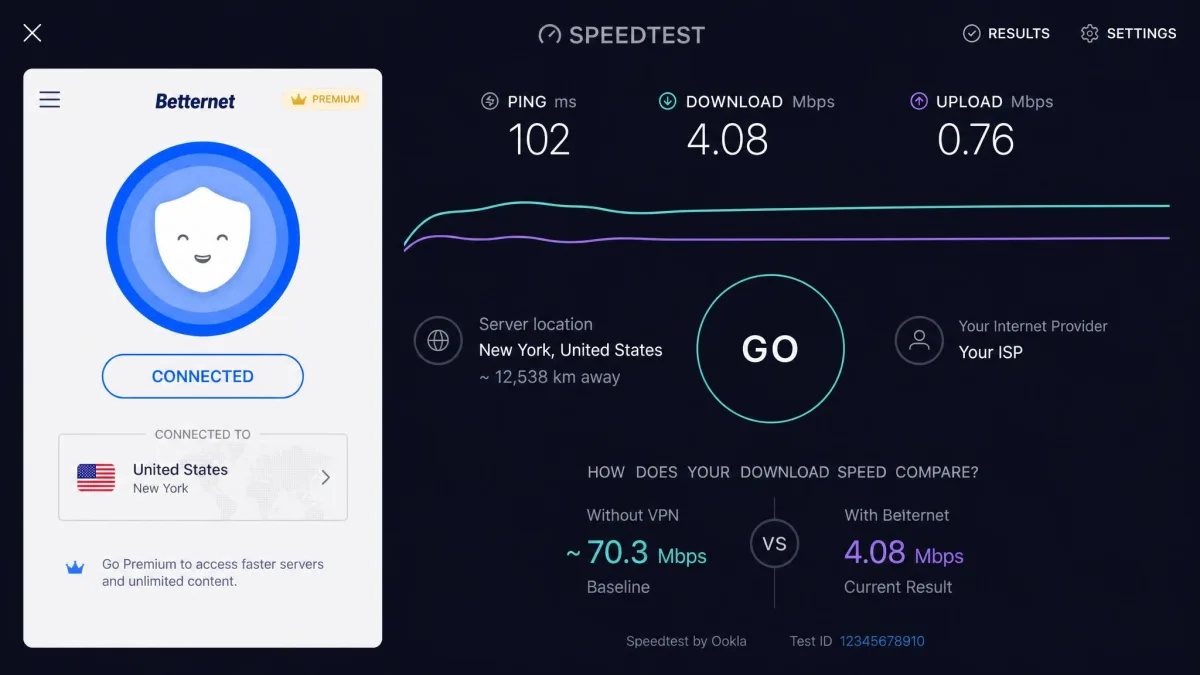
Speed is where a VPN either earns its keep or gives itself away, so this is the test we lean on hardest. We started from a 70 Mbps baseline on our home connection. Then we measured the drop across nearby and distant servers.
Nearby servers held up reasonably well. For everyday browsing on a close connection, Betternet felt fine. Web pages loaded without much lag, and a nearby server kept enough of the baseline that we would not complain during casual use. The picture changed fast the moment we reached for distance. Download speed collapsed from the 70 Mbps baseline to around 4 Mbps once we connected to a far server. That works out to a loss of roughly 95 percent of our starting throughput, and it lands well behind what we see from the top providers. A second distant location told the same story. The drop was not a one-server fluke but a pattern that repeated whenever the physical distance grew. The free tier was worse still, losing well over half of its speed even on a nearby connection. For anyone browsing without paying, the two limitations stack on top of each other.
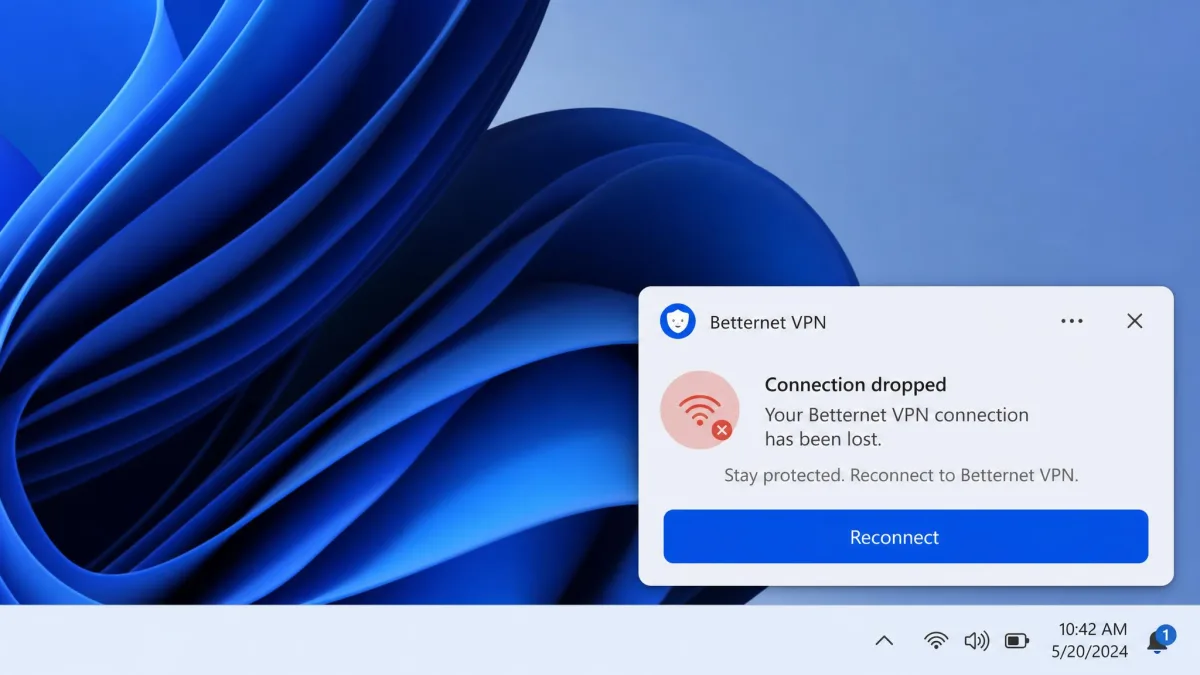
We also ran into stability problems. The connection dropped more than once during testing. Getting it back sometimes meant restarting the app rather than waiting for it to recover on its own. For a tool whose entire job is to stay connected quietly in the background, that is a real mark against it. Put the two findings together, the steep distant-server drop and the repeated disconnects, and the free tier in particular starts to feel like hard work for a modest payoff. If speed and reliability are what you need, Betternet is not the provider we would point you to.
Download speed collapsed from a 70 Mbps baseline to around 4 Mbps on a distant server, and the free tier lost well over half of its speed even nearby.
— From our hands-on speed tests
Server Network and Locations
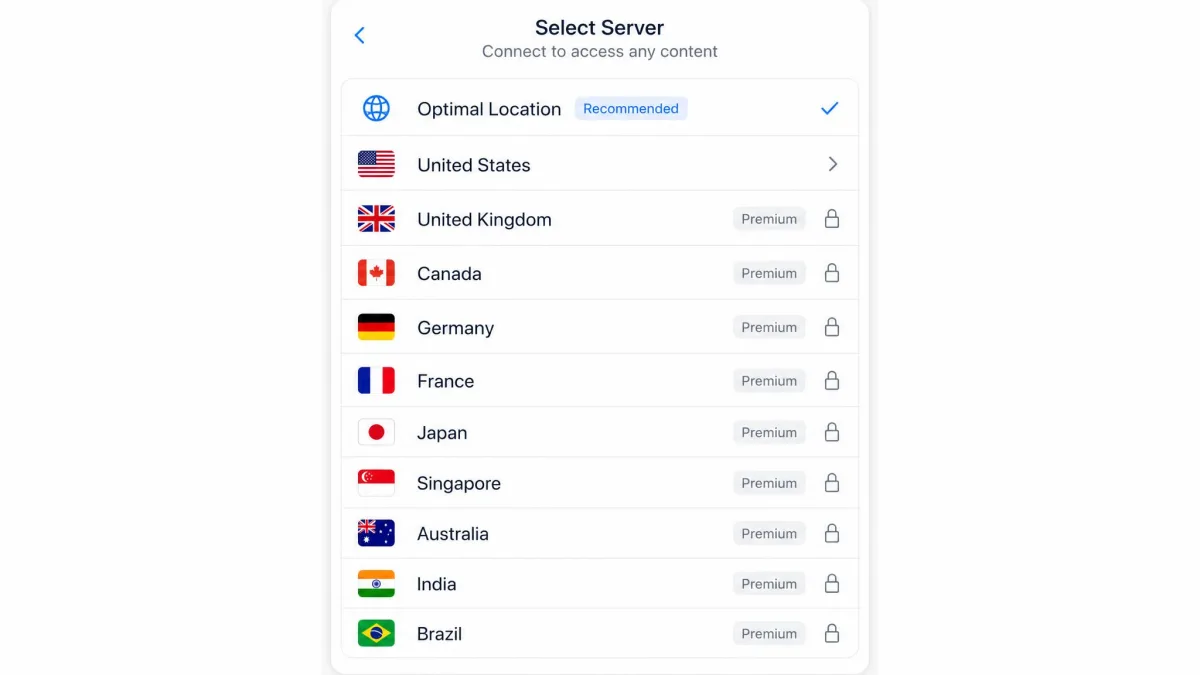
Betternet's server network is genuinely hard to describe. The reported numbers vary wildly between sources. Estimates for country coverage run anywhere from 10 to 115, and server counts range from a handful to well over a thousand. The spread is easy to show. Comparitech counts 81 countries across 109 cities. Vpnmentor reports more than 1,000 servers in 115 countries. Other reviews describe roughly 80 countries on premium against only about 10 on the free tier. Those are not small discrepancies you can round away. They point to totals that appear to mix virtual locations with physical ones, and no independently verified physical-server count exists to settle the matter.
What we can say from testing is that the free tier gives you only a small set of locations to choose from, and premium opens up the rest. The free-server count itself is disputed. Some reviews report as few as two US and UK options, so even the entry-level footprint is not something we can state with confidence. For a service that markets global access, the lack of a clear, consistent server count is not reassuring. A location you connect to should be a location that actually exists where it claims to. The muddled reporting here makes that harder to verify than it should be.
Security and Technical Features
Security is where Betternet gets genuinely difficult to assess. Several of its core specifications are reported inconsistently across independent tests. We will walk through encryption, the kill switch, and the extras, flagging where the picture is unclear.
Encryption and Protocols
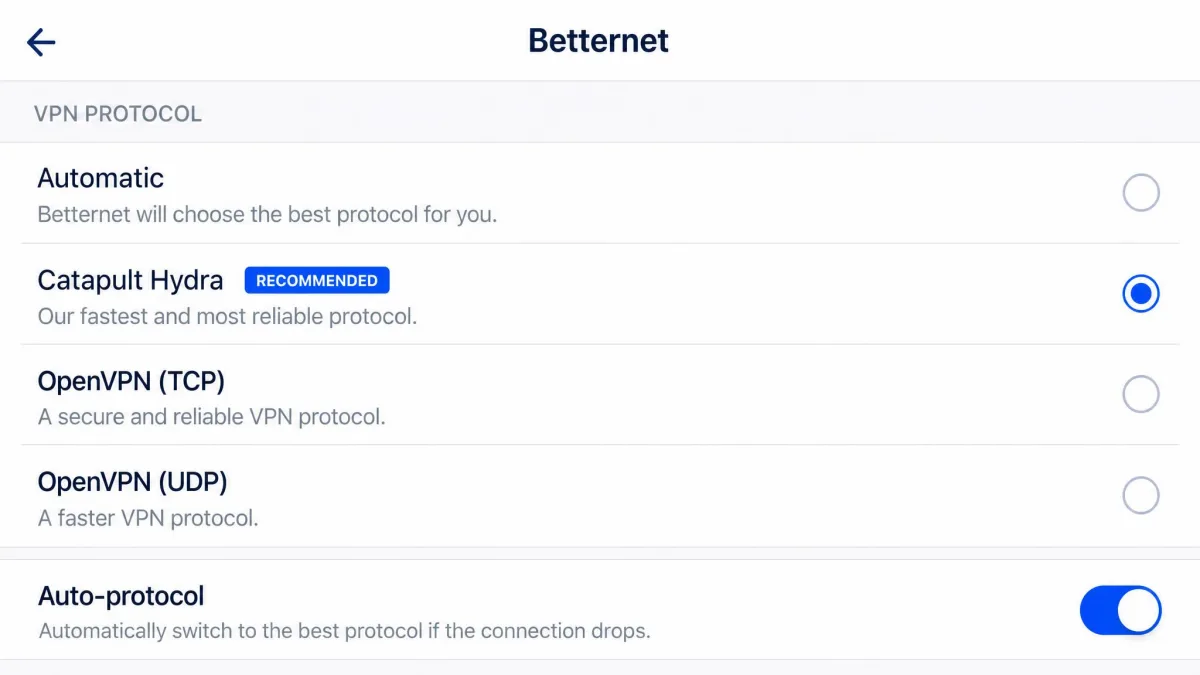
Betternet's primary protocol is Catapult Hydra, a proprietary, OpenVPN-derived protocol developed by its parent company Aura, and it also supports IKEv2. Catapult Hydra is built for speed. But because it is proprietary, it has not had the years of open scrutiny that a standard protocol enjoys. That trade-off is worth understanding before you rely on it.
The encryption you get depends on the protocol. Catapult Hydra uses AES-128 with 2048-bit DHE-RSA keys, while the WireGuard and IKEv2 connections use AES-256. AES-256 is the modern standard we would want to see everywhere. So the AES-128 on Betternet's default Hydra protocol is not something we can wave away.
Kill Switch and Leak Protection
A kill switch cuts your internet if the VPN connection drops, so your real IP address does not leak in the gap. Betternet's kill switch is disputed. Comparitech found it desktop-only, while vpnmentor reports it across all platforms, so availability varies by platform and app version. Given how often the connection dropped in our testing, a reliable kill switch matters here more than usual.
Leak protection results are also mixed, and the sources genuinely disagree. In vpnmentor's tests across more than ten servers, no IP, DNS, or WebRTC leaks turned up. Comparitech, by contrast, detected IPv6 leaks, though no DNS leaks. With no per-platform consensus, we would not make a blanket claim either way. If you use Betternet, run your own leak test right after connecting rather than assuming you are covered.
Split Tunneling and Extras
Split tunneling lets you route some apps through the VPN while others use your normal connection. It is handy for tasks like keeping a banking app off the VPN. Betternet's support for it shows up on Windows, Android, and iOS, but not on macOS, so it varies by platform. Beyond that, the feature set is thin compared with premium rivals, which bundle far more into the same price.
Privacy, Logging and Jurisdiction
This is the section that matters most, and it is where Betternet struggles the hardest. A VPN is a privacy tool first. Its logging, its ownership, and its history all carry weight.
Does Betternet Keep Logs?
Despite privacy-forward marketing, Betternet's logging policy collects a notable amount of connection and device data. That is a meaningful gap between what the branding implies and what the policy actually allows. It is the kind of data collection a privacy-focused user should not accept lightly. Unlike the top providers, Betternet has not published an independent no-logs audit to back up its claims, so you are asked to take its word for it. We do not, and neither should you.
Jurisdiction compounds the concern. Most sources place Betternet under US jurisdiction, in California and now under Boston-based Point Wild. That puts it inside the Five Eyes intelligence-sharing alliance. US is the dominant finding, though vpnmentor lists Switzerland instead. A US base combined with real data collection is not the profile we look for in a privacy VPN.
The Betternet Tracking Controversy (2016 CSIRO Study)
The privacy history is the part we cannot get past. In a 2016 CSIRO study of Android VPN apps, researchers found 14 tracking libraries embedded in Betternet. That was more than any other free VPN they tested. It is a striking figure for a tool sold on privacy. The study is several years old, but it set a tone that the current logging policy does nothing to reverse.
A VPN that embedded more trackers than any rival in an independent study, and that still collects connection and device data today, is not a tool we would trust with sensitive browsing. Treat Betternet as an IP mask, not a privacy shield.
Streaming and Netflix Unblocking
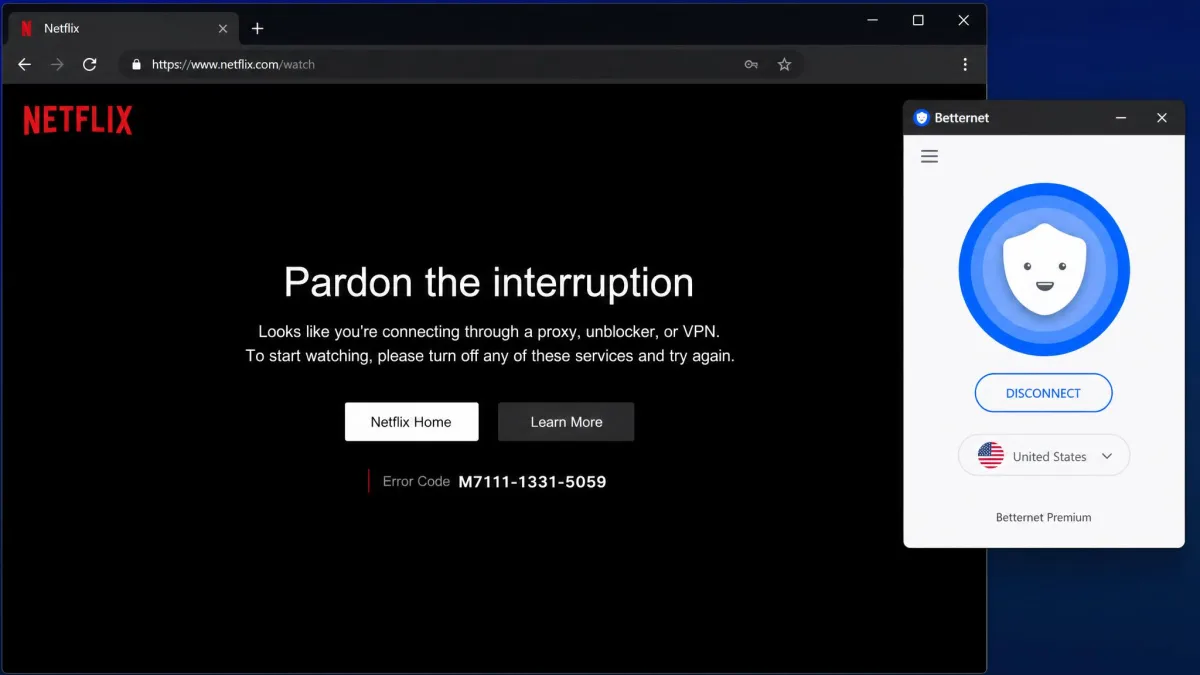
Streaming is a common reason people reach for a VPN, so we tested it directly. The result was clear and consistent. Netflix stayed blocked across the servers we tried, with the tested IP addresses failing to unblock the catalog. It was not a one-off, either. Hulu, Disney+, Prime Video, and BBC iPlayer also failed to unblock in testing.
Premium is occasionally reported to unblock Netflix and a few other services. But the dominant finding across tests, including ours, is that Betternet does not reliably work with Netflix. If streaming is your goal, this is not the VPN to buy. The comparison lower down shows how far it trails providers built for the job.
Torrenting and P2P Support
Betternet allows torrenting on its premium servers, so on paper P2P is supported. In practice, the same speed problems that hurt everything else undercut it. Torrenting worked when we tried it, and the client connected to peers without any deliberate blocking from Betternet's side. But download speeds were too slow to be practical on the servers we tested. A large download that a faster provider would finish in minutes crawled instead. That turns a supported feature into one you will not enjoy using. There are also no dedicated P2P-optimized servers to fall back on. So you are relying on the same locations that already showed a steep distant-server drop. For serious P2P, you want a fast provider with dedicated P2P servers, and Betternet is not it.
Apps and Device Compatibility
Betternet covers the platforms most people need, and the apps are easy to get running even if they are not always stable.
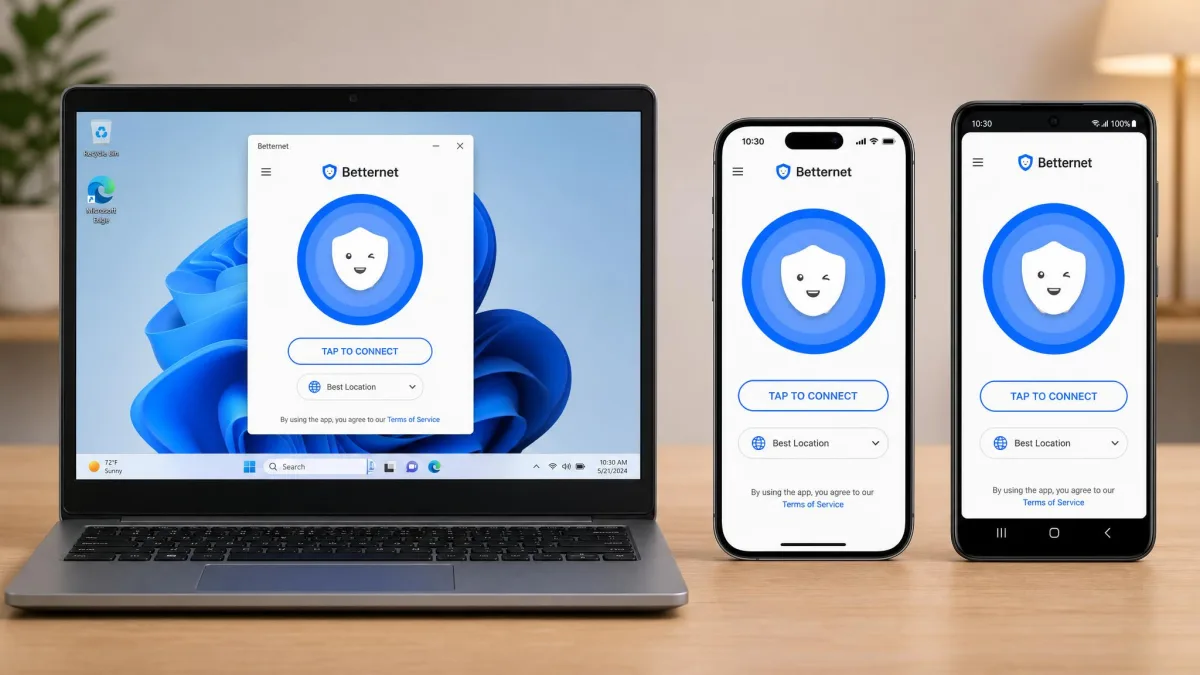
Windows, macOS, iOS, Android
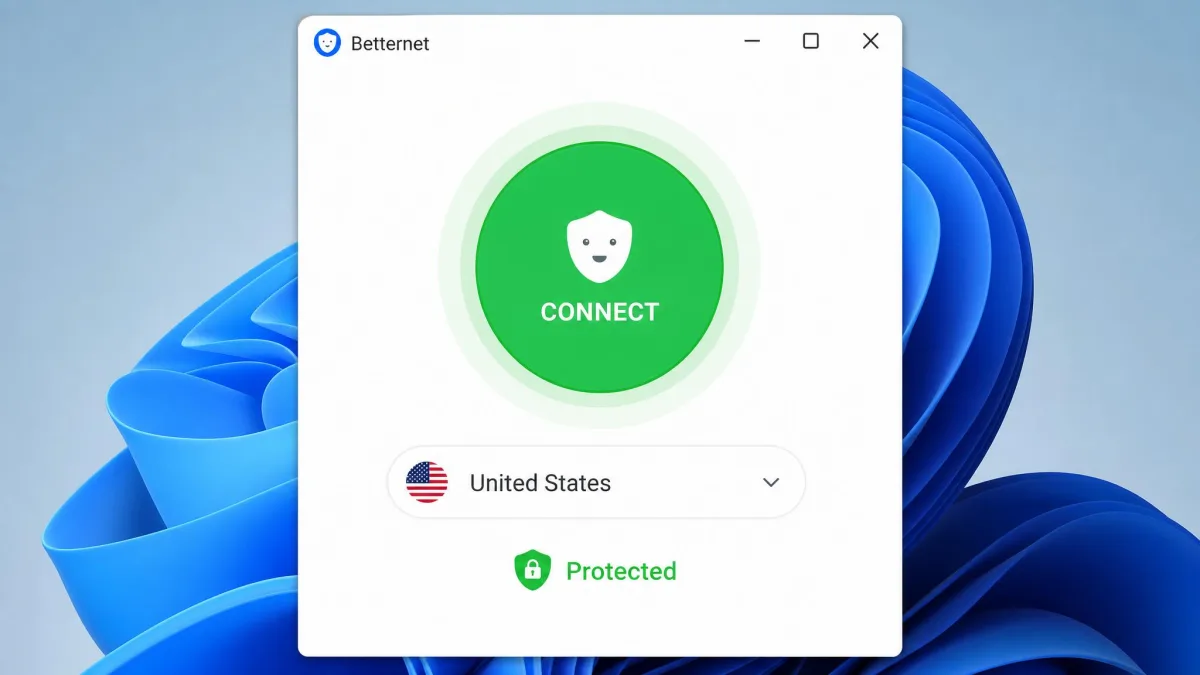
There are native apps for Windows, macOS, iOS, and Android, plus a Chrome browser extension, so most setups are covered. The standout quality across all of them is simplicity. Setup is user-friendly, and the one-tap connect interface is genuinely easy for anyone to use. That ease is the most consistent positive we found.
The apps are not without problems, though. Across Windows, the Chrome extension, and mobile, we and other testers ran into bugs. They ranged from the connection drops noted earlier to occasional interface glitches. The device allowance is also reported inconsistently. Vpnmentor lists 10 connections on premium and 1 on the free tier, while Comparitech and PrivacySavvy put it at five or six. So it depends on the tier and the review date.
Customer Support
Support is thin. Betternet is email-only, with no live chat, and responses can be slow. A question that a chat agent would clear up in minutes can instead sit in your inbox for a stretch. For a paid product, the lack of live chat is disappointing. It becomes a real problem when you are trying to solve something time-sensitive, such as a connection that will not come back or a charge you did not expect. We also saw a recurring complaint that cancelling a subscription is difficult. Users are pushed through multiple verification steps before the cancellation goes through, so getting out is more effort than getting in. That kind of friction on the way out, paired with the auto-renewal price jump covered earlier, is a red flag. It is worth knowing about before you hand over payment details. If prompt, hands-on help matters to you, this is another area where the premium rivals further down pull well ahead.
How Betternet Compares to Top VPNs
To put Betternet in context, here is how it lines up against three providers we rate highly across price, servers, logging, streaming, and speed. The gap is not subtle.
| Product | Price | Servers / countries | Logging | Streaming (Netflix) | Speed |
|---|---|---|---|---|---|
 |
~$71.99/yr promo (renews higher) | Disputed (10 to 115 countries) | Collects connection and device data, no audit | Blocked in most tests | Sharp drop on distant and free servers |
 |
Mid-tier, audited | 7,000+ servers / 110+ countries | No-logs, independently audited | Unblocks | Fast (NordLynx) |
 |
Budget, unlimited devices | 100+ countries | No-logs, audited | Unblocks | Fast (WireGuard) |
 |
Premium-priced | 105 countries | No-logs, audited | Unblocks | Fast (Lightway) |
Every one of these rivals carries an independently audited no-logs policy, unblocks Netflix, and holds its speed far better than Betternet did in our tests. NordVPN pairs a huge network with the fast NordLynx protocol. Surfshark adds unlimited simultaneous devices, and ExpressVPN runs RAM-only servers on its Lightway protocol. Against that company, Betternet's main advantage is a free tier, and even that comes with heavy limits.
Betternet Alternatives
If Betternet's shortcomings are dealbreakers, and for most people they should be, there are better options at every price point. For a genuinely usable free experience, our best free VPN guide ranks providers that do not choke you the way Betternet's daily cap does. If you are willing to pay, the three providers in the comparison above all deliver audited no-logs policies, reliable streaming, and speeds that hold up where Betternet faltered.
It is also worth remembering that Betternet shares its Catapult Hydra technology and its Aura ownership with Hotspot Shield. If you liked the underlying network but want a more full-featured product, that sibling is the closer relative. Just apply the same scrutiny to its logging and pricing that we applied here.
Common Mistakes
The biggest mistake we see with Betternet is treating the free tier as a full privacy solution. It is not. The daily cap, the ad load, and the logging policy covered above mean the free version is best understood as a light IP mask for casual browsing. It is not a shield for anything sensitive. Assuming a free VPN keeps no logs is a costly assumption, and here it does not hold.
The second mistake is buying premium for streaming. As the streaming section showed, the major platforms stayed blocked in our tests. If unblocking is the goal, you will likely be asking for a refund, and the refund policy itself is inconsistent. The third mistake is ignoring auto-renewal. The steep first-year discount lulls people into forgetting that the renewal price climbs. A plan that looked cheap becomes expensive without warning. Read the terms, set a reminder, and test everything you need during the free trial before you commit.
Is Betternet Safe and Worth It? Final Verdict
Betternet is safe enough for the narrow job of masking your IP on public Wi-Fi, and it is one of the easiest VPNs to pick up and use. That is the honest case in its favor, and for a truly casual user it may be enough. But safety in the fuller sense, the sense that actually matters for a VPN, is where it falls short. The logging policy collects connection and device data. Its default Catapult Hydra protocol drops to AES-128 while the kill switch is reported inconsistently. And the 2016 tracking finding still hangs over the brand.
Add the collapsed speeds on distant servers, the blocked streaming, and the thin, email-only support. The picture is of a service that does the bare minimum and asks a premium price to do a little more. Its user reputation reflects that split. Betternet's Trustpilot score sits at 3.1 out of 5 across 47 reviews, with a polarized mix of roughly 43 percent five-star and 40 percent one-star ratings. We land on the skeptical side of that divide. Betternet is usable, but when it comes to trusting a VPN with your privacy, usable is not enough. There are providers that do far more for a similar price.