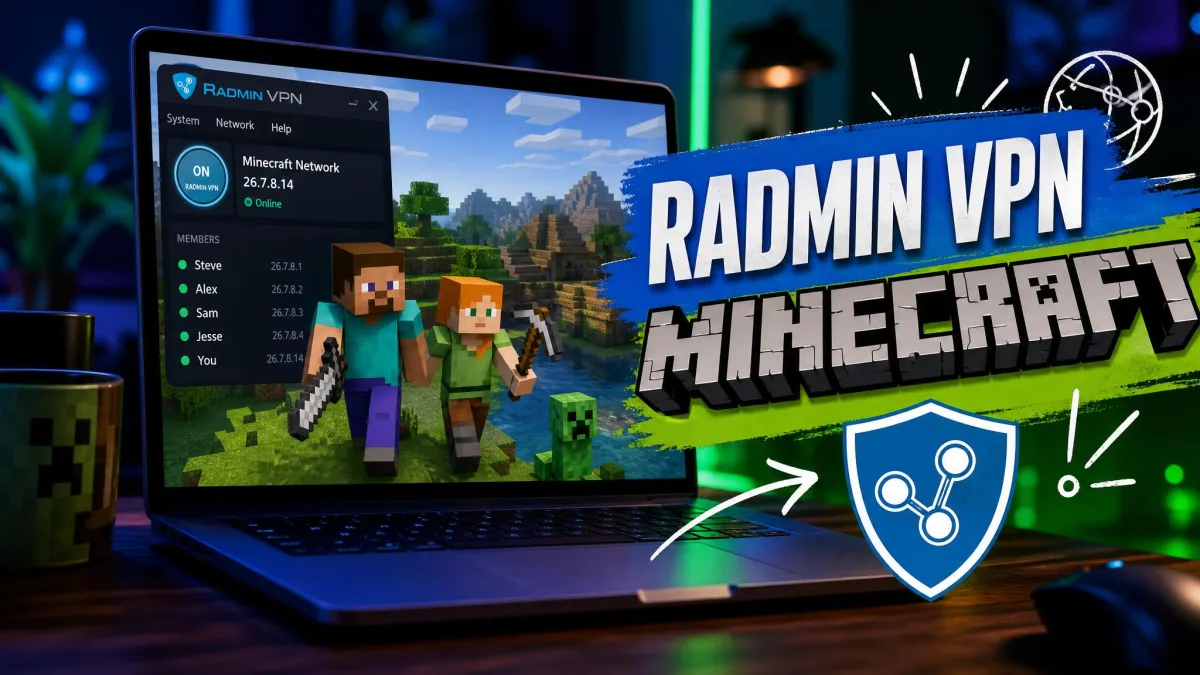
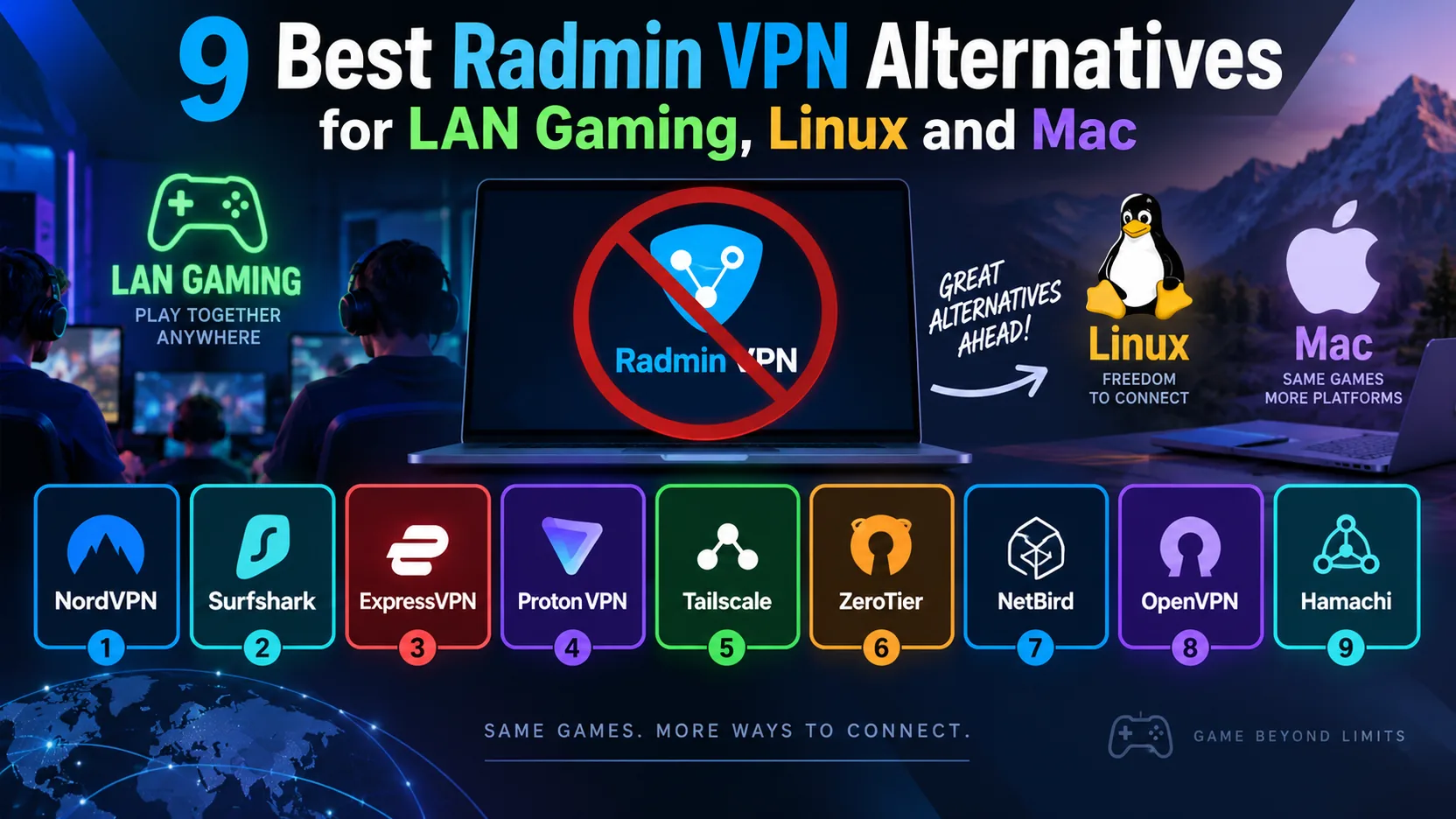
Radmin VPN is a free virtual LAN tool for LAN gaming and remote access, but it only runs on Windows. To find replacements that work for everyone in a group, we compared each tool on five things. Does it build a real virtual LAN or mesh network? Do games find each other through LAN discovery? How far does the free tier stretch, and does it cover Linux, macOS and mobile? Can you set it up without port forwarding?
We set up networks in ZeroTier, Tailscale, Hamachi, SoftEther and NetBird. In ZeroTier, Tailscale and Hamachi, we also watched what happened when a direct connection failed and traffic fell back to a relay, because that is where ping climbs and game nights fall apart. GameRanger, playit.gg and Parsec don't build a network at all, so we judged them on how well they get a group playing instead. Consumer privacy VPNs are left off the list because they don't create a virtual LAN. We explain why further down.
Which Radmin VPN Alternative Should You Use?
Most groups can match their situation to one line below and jump straight to that entry:
- Mixed Windows, Mac and Linux group playing older LAN games: ZeroTier.
- You want the quickest sign-in and don't mind typing an IP address: Tailscale.
- Five or fewer players who want a familiar Radmin-style client: LogMeIn Hamachi.
- You want to self-host the whole network: NetBird or SoftEther VPN.
- Classic PC titles whose official servers shut down: GameRanger.
- Friends should join your Minecraft server with nothing installed: playit.gg.
- Only the host owns the game: Parsec.
What Is Radmin VPN and Why Look for an Alternative?
Famatech's Radmin VPN is a free virtual LAN tool with no ads and no paid features. Famatech makes its money from its paid Radmin remote-control product, and the vendor says 60 million users trust the VPN. It uses end-to-end 256-bit AES encryption and needs only 100 MB of free disk space. The current download is build 2.1.4951.1. Famatech publishes no per-network member cap, so the 150-member figure you may see quoted elsewhere is not a vendor-confirmed limit.
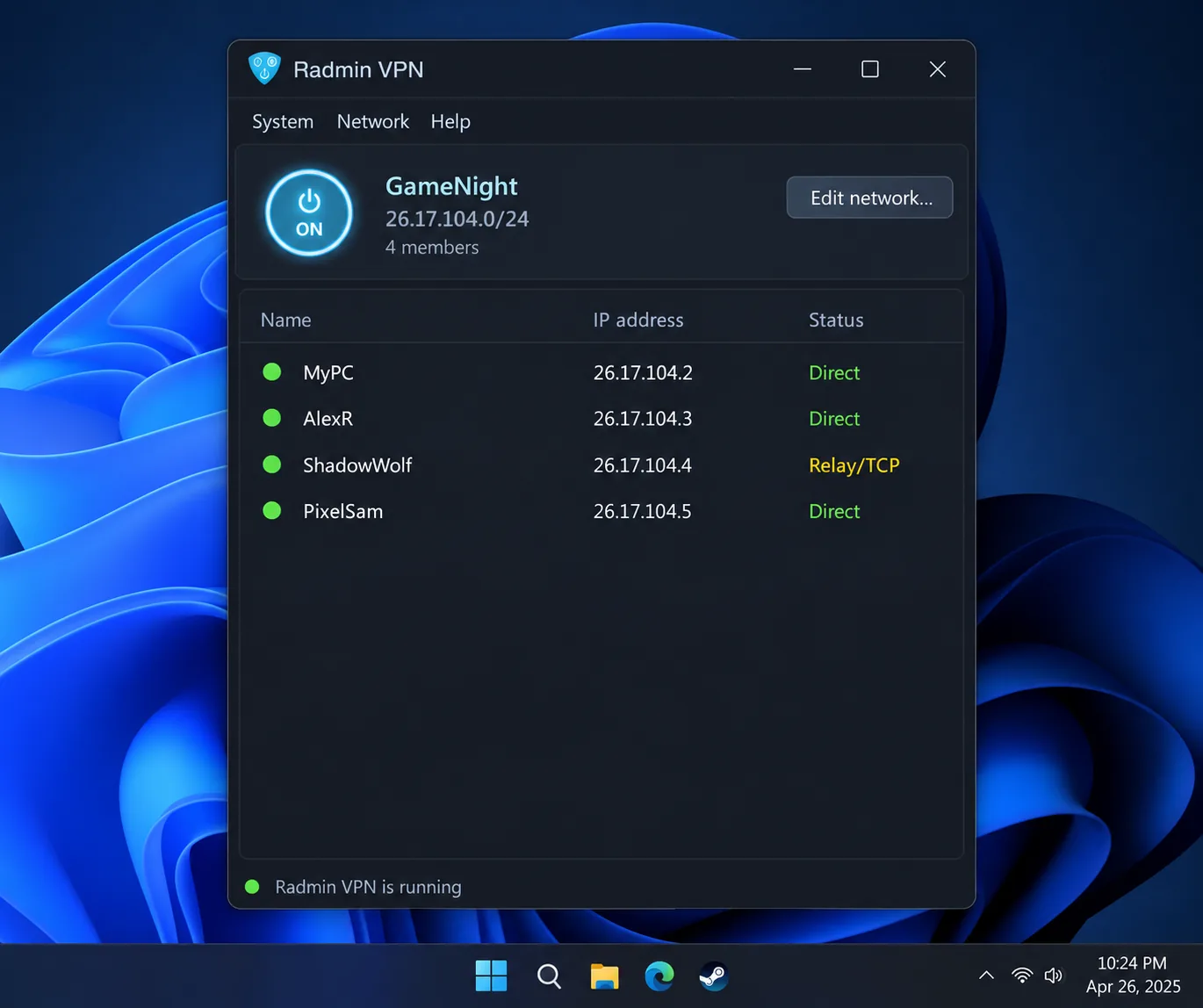
Setup is the reason people like it. The host creates a network with a name and a password, friends join with the same pair, and nobody needs an account. When two peers can't connect directly, the link drops to a Relay/TCP connection. If most of your peers show Relay/TCP, the usual cause is your ISP, often through carrier-grade NAT (CGNAT). Only a public IP or a different provider fixes it.
The problems start outside that happy path. Radmin VPN is compatible with Windows 11, 10, 8, 7 and nothing else, so Linux gamers are shut out entirely. Even on Windows, the host usually has to add the game to Windows Firewall exceptions, and everyone must run the same game version. Antivirus suites such as Avast and Kaspersky can block the Famatech Radmin VPN Ethernet Adapter until you set the adapter's network to private or trusted. Our Radmin VPN review covers those fixes in more depth.
Best Radmin VPN Alternatives
1. ZeroTier
ZeroTier is the closest cross-platform match for how Radmin VPN behaves, and it suits groups that mix Windows, Mac and Linux. It builds a Layer 2 virtual Ethernet network, so broadcast and multicast traffic pass through and LAN game lists tend to work without extra configuration. Clients cover Windows, macOS, Linux (including ARM), iOS, Android and FreeBSD.
ZeroTier's free plan covers 10 devices, 1 network and 1 admin for non-commercial use. The Essential plan costs $18 a month with 10 devices included, and Scale costs $179 a month for 100 devices. ZeroTier was founded in 2013 and now ships under the Business Source License, which is free for personal use. The current client line is ZeroTier One 1.16.
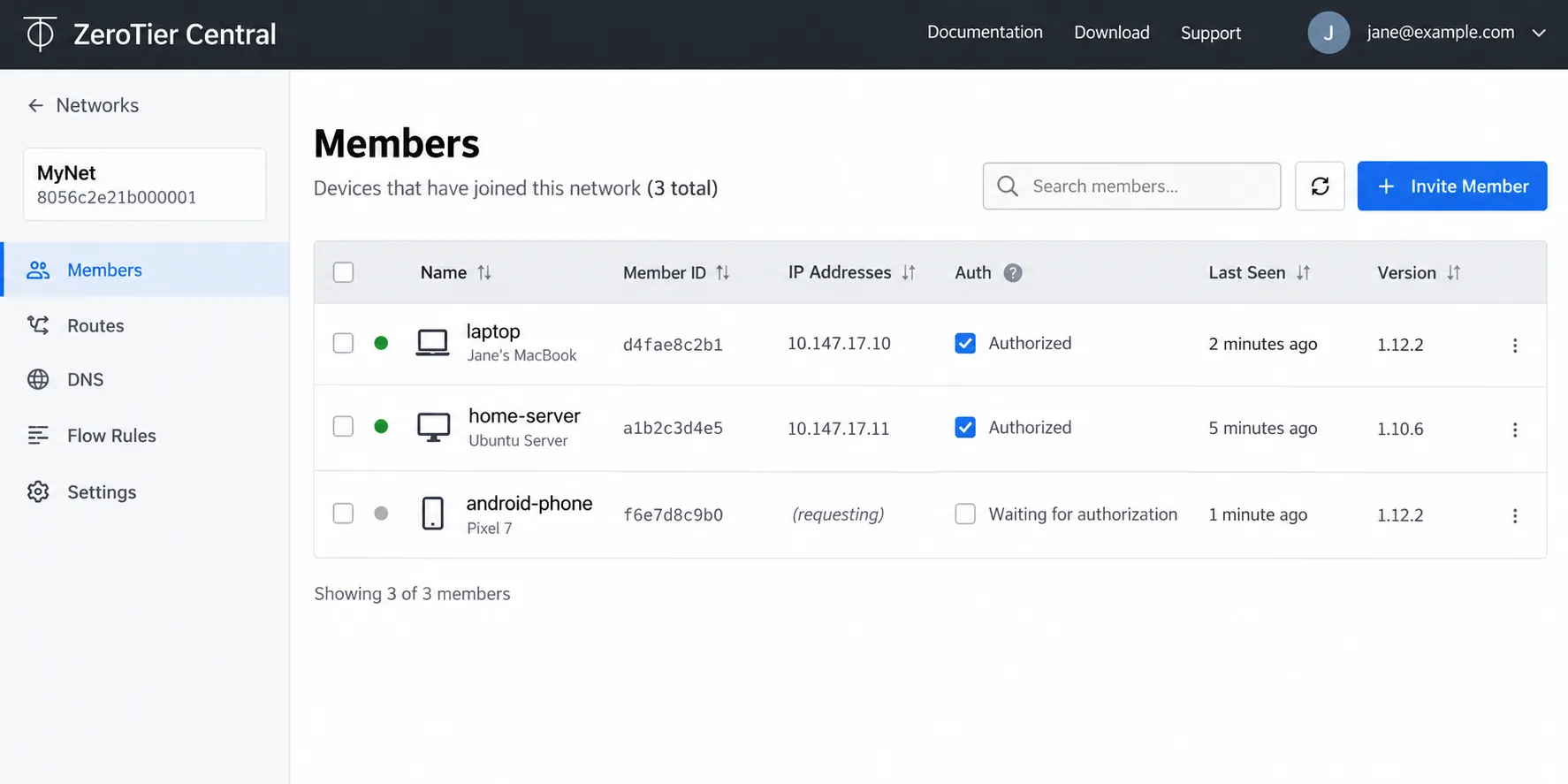
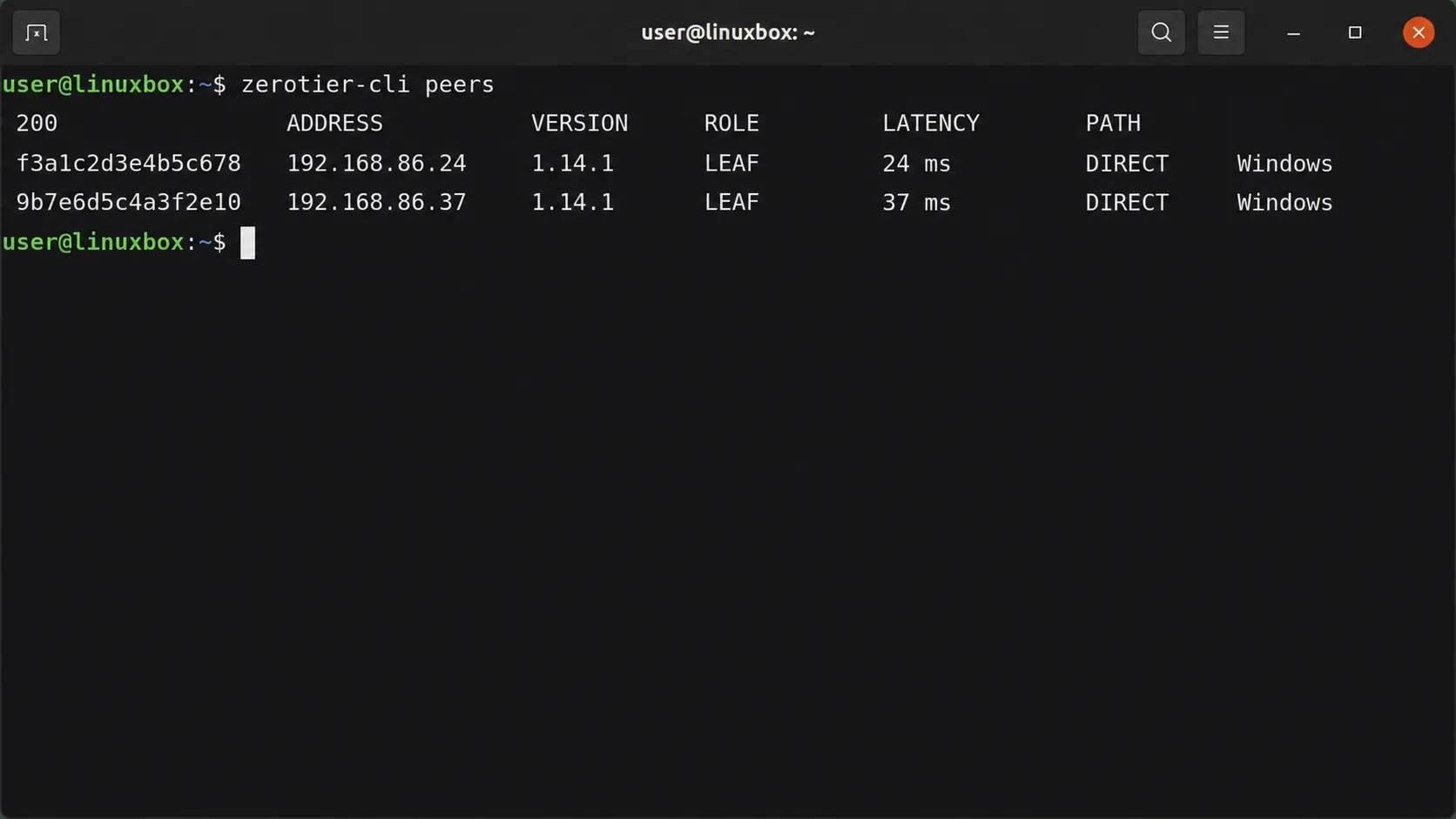
ZeroTier asks you to make more decisions than Radmin VPN does. When we set up a network, we created it in the ZeroTier Central web console, then had to authorize each device before it could talk to anyone. A Linux host in our network sat on RELAY instead of a direct path, and ping climbed sharply until we opened UDP 9993 in its firewall. That fix can undo itself after a restart, so check zerotier-cli peers before a long session.
2. Tailscale
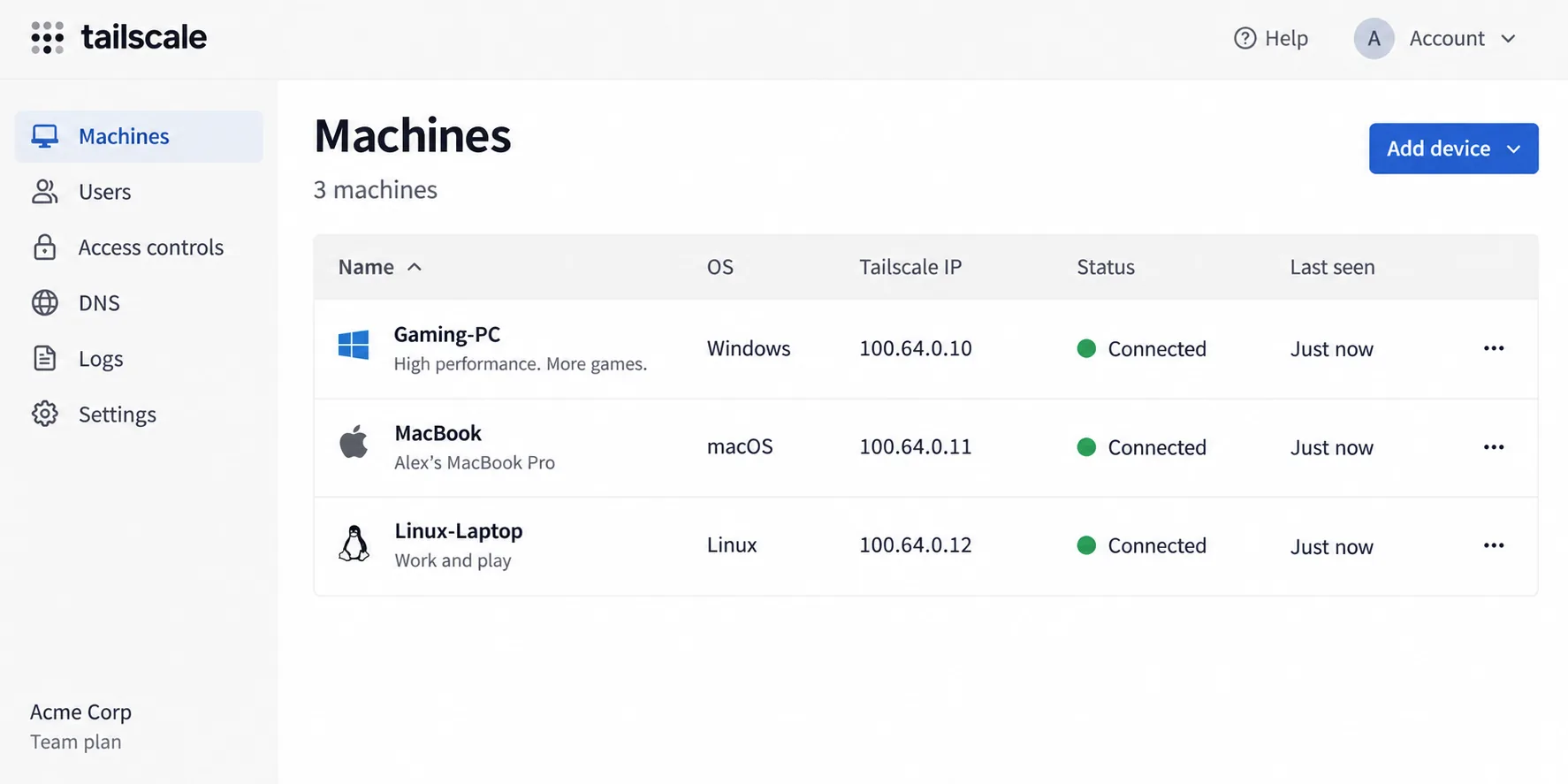
Tailscale is the easiest tool here to get running, and it suits groups that care more about quick setup than automatic game discovery. It is a WireGuard-based Layer 3 mesh with clients for Windows, macOS, Linux, iOS and Android. Our Tailscale vs WireGuard comparison explains how the two relate.
Tailscale's free Personal plan covers up to 6 users with unlimited user devices for non-commercial use. Standard costs $8 per user per month, Premium costs $18, and business tailnets get a 14-day free trial.
We installed the client, signed in with an existing Google account, and our devices showed up on the private network within minutes. The catch is that every player needs their own account. Tailscale also does not carry broadcast or multicast, so a game's LAN server list stays empty and friends join by typing the host's 100.x Tailscale IP into direct connect. Older strategy games that find peers only by LAN broadcast don't work over Tailscale at all. When hole punching fails, traffic falls back to DERP relays and ping rises. Run tailscale status to see whether a peer is direct or relayed.
3. LogMeIn Hamachi
LogMeIn Hamachi is the older virtual LAN tool most people compare Radmin VPN against, and it suits small groups that want the same click-to-join feel on more platforms. Unlike Radmin, it runs on Windows, Mac and Linux. It supports mesh, hub-and-spoke and gateway network types, plus web-based management.
LogMeIn Hamachi is free for up to 5 computers per network. Standard costs $49 a year for 6 to 32 computers, Premium costs $199 a year for 33 to 256, and Multi-Network costs $299 a year. That 5-computer cap is the most common reason groups outgrow Hamachi, since a sixth player forces a paid plan.
Lag is the other complaint, and we ran into it ourselves. When one of our peers showed a blue dot, the tunnel was relayed because the two machines couldn't hole-punch a direct UDP path. The lag was noticeable. We ran Hamachi's built-in diagnostic tool, which reported everything OK while the tunnel stayed relayed. What finally forced a direct link was forwarding Hamachi's ports on each router. A yellow triangle is a different problem: it signals a broken direct connection, and restarting the Hamachi Tunneling Engine service or reinstalling the virtual adapter usually clears it. Our Hamachi VPN review and our list of Hamachi alternatives for LAN gaming go further.
4. SoftEther VPN
Where Hamachi hides the server from you, SoftEther makes you build one. The SoftEther VPN project started at the University of Tsukuba and is free and open source under the Apache License 2.0, which allows both personal and commercial use. The latest release is 4.44. The server runs on Windows, Linux, FreeBSD, Solaris and macOS, and clients connect from Windows, Linux, Mac, Android, iPhone and iPad.
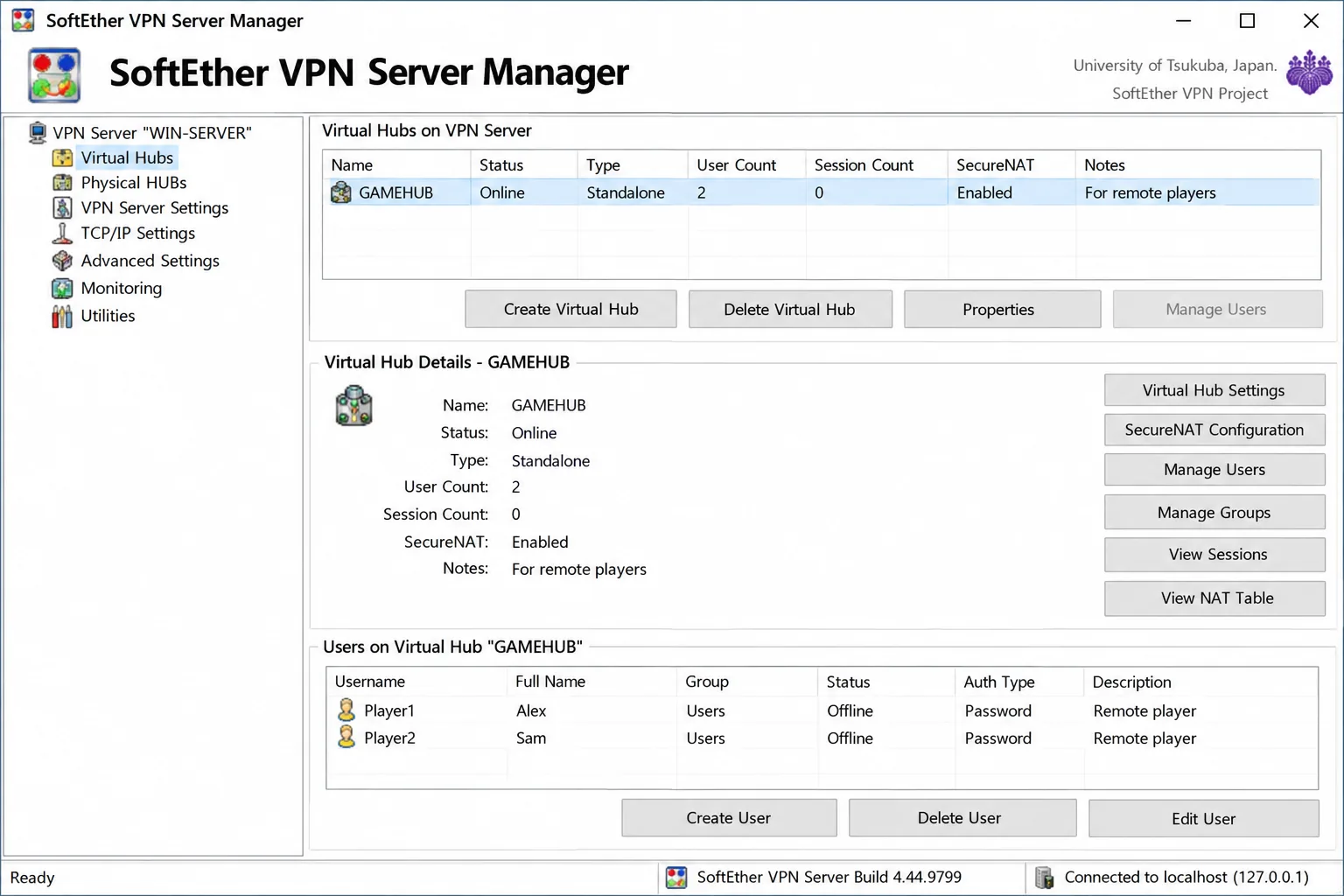
SoftEther suits someone who already runs a home server. When we built our server, nobody could connect until we had set up a Virtual Hub, created user accounts and switched on SecureNAT. SecureNAT is the easier path. Moving to a Local Bridge for Layer 2 LAN discovery asked for more. The bridge needed its own DHCP server and works best on a dedicated network adapter, and a single-port machine simply doesn't have a spare one. Once configured, a bridged setup can run stable for months, though plenty of home users move to ZeroTier for less upkeep. If you want simpler options, see our SoftEther VPN alternatives.
5. NetBird
NetBird sits between SoftEther and Tailscale: a WireGuard-based peer-to-peer mesh like Tailscale, but with a control plane you can host yourself. That open, self-hostable control plane is its main appeal over Tailscale, whose coordination server stays closed. The client is BSD-3-Clause and the management, signal and relay servers are AGPLv3.
NetBird's free cloud tier covers up to 5 users and 100 machines. Team costs EUR 6 per user per month and Business costs EUR 12. Clients cover Linux, macOS, Windows, Android, iOS, FreeBSD and routers such as OpenWRT and MikroTik.
On the cloud tier, we added a new user through the web UI and onboarding went smoothly. Standing up our own control plane was a heavier job than anything ZeroTier or Tailscale asks of you, because self-hosting means running management, signal and TURN relay servers plus an OIDC login provider. The feature set is business-oriented, with SSO, posture checks and access controls, so expect a learning curve. Like Tailscale, it works at Layer 3, so friends join games by direct IP.
6. GameRanger
GameRanger is not a VPN at all. It is a free matchmaking and lobby service that supports over 700 games, mostly older PC titles. It suits players who want classic games online without managing a network. Australian developer Scott Kevill released it for Mac in 1999 and added Windows support in 2008. It runs on Windows and Mac, with no Linux or mobile client.
Compared with Radmin VPN, GameRanger gives you a server browser, chat rooms, voice chat and invitations instead of a virtual adapter. It keeps games such as Age of Empires, Warcraft III and Halo: Combat Evolved playable online long after their official servers shut down. A title that isn't on its supported list won't connect through it, so check before you commit. An optional paid membership exists, but we could not confirm its current price.
7. playit.gg
playit.gg solves a narrower problem than Radmin VPN: hosting a game server from your own PC without port forwarding. It is a global tunnel and proxy service that also hides your home IP. The agent runs on Windows, Linux, macOS and Docker, and only the host installs it. Players connect to a public address like any normal server.
playit.gg's free tier lets you allocate 4 ports and covers Minecraft Java and Bedrock, Terraria, Valheim, Factorio and more. Premium costs $3 a month and raises the limit to 16 ports. Free tunnels use global anycast routing, which can send players through a distant datacenter. Picking a region requires Premium, and you can't change it after the tunnel is created. The free tier has also narrowed over time, with some TCP tunnel types moved behind Premium.
8. Parsec
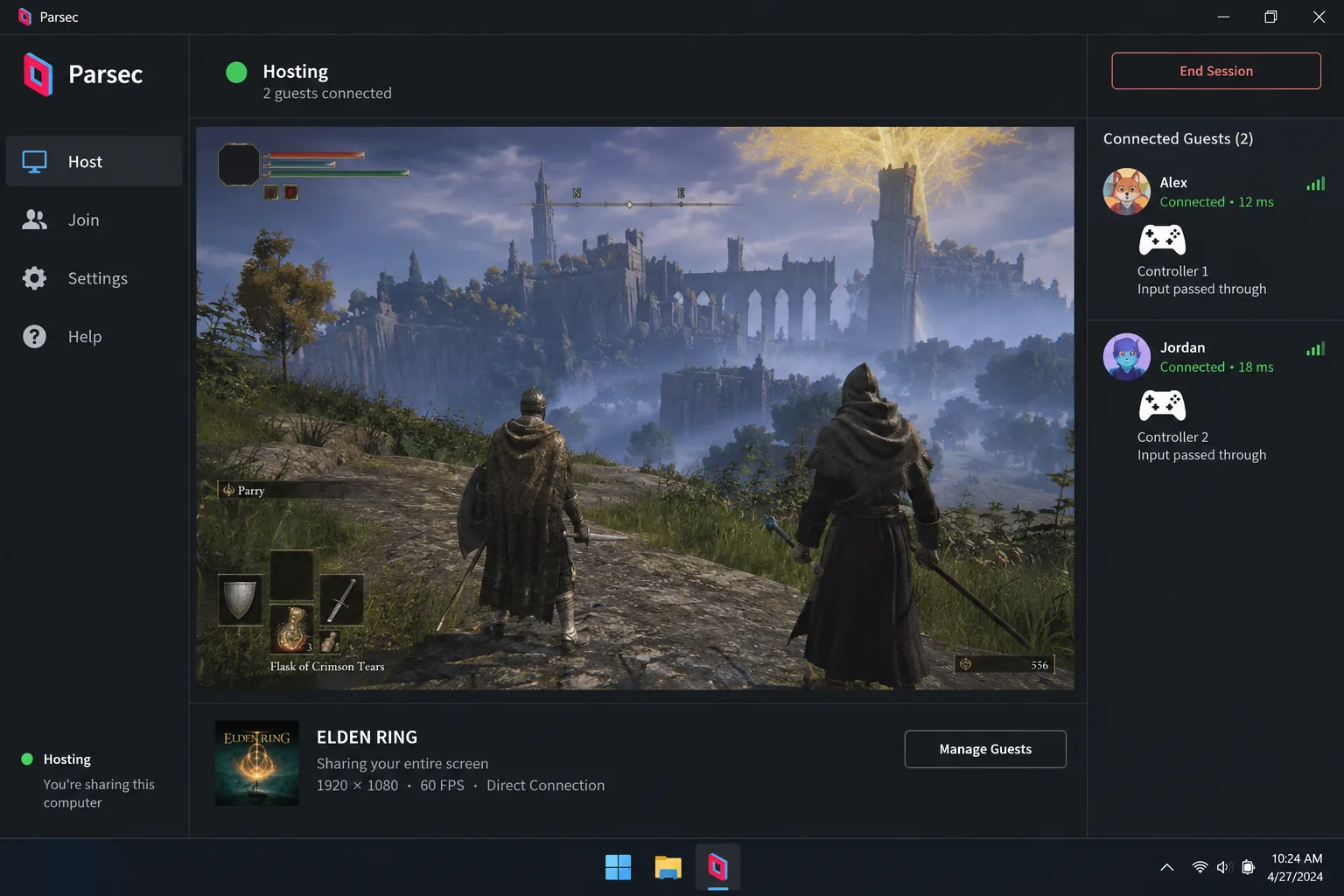
Parsec skips networking for the guests entirely. It streams the host's screen and sends guests' controller input back, so only the host needs to own and install the game. That makes it a fit for local co-op games rather than LAN multiplayer. Unity Technologies bought Parsec for $320 million in 2021.
The free Personal plan includes 60 FPS desktop capture and encrypted peer-to-peer connections for non-commercial use, and Warp costs $8.33 a month billed annually. Hosting works on Windows 10 and later or macOS 10.15 and later, and guests can join from Windows, macOS, Linux and Android. When we hosted a co-op session, our guests streamed the host's screen and sent their controller input back with about 3 frames of input lag. That delay was noticeable, but the game stayed playable even between cities 300+ miles apart. When the picture turned choppy, the problem was on the host's side: its upload speed, or a laptop running on integrated graphics. Every player needs a Parsec account and must be friends with the host.
9. NeoRouter
NeoRouter is a self-hosted remote access tool for people who want to run their own server and reach home machines from anywhere. You install the server yourself and create user accounts on it. Clients then connect in a star layout and link to each other peer-to-peer where possible. The server needs TCP port 32976 open, so unlike Radmin VPN it is not port-forwarding free.
Platform reach is wide. Servers run on Windows, Mac, Linux, FreeBSD, OpenWrt, Tomato and Raspberry Pi, and clients add Android, iOS and an HTML5 web app. The free edition supported up to 256 devices, but that limit comes from the 2.3 release (2017). We could not confirm NeoRouter's current terms. We found no release after the 2.3.x line. Newer builds may exist, but development may also have stalled. We would only choose it for remote file and desktop access, not for game nights.
Radmin VPN Alternatives Compared
| Product | Buy | Platforms | Free tier / limits | Open source | Network type | LAN game discovery | Best for |
|---|---|---|---|---|---|---|---|
 |
Windows, macOS, Linux, iOS, Android, FreeBSD | 10 devices, 1 network (non-commercial) | Source-available (BSL) | Layer 2 P2P mesh, relay fallback | Yes (broadcast passes) | Cross-platform LAN gaming | |
 |
Windows, macOS, Linux, iOS, Android | 6 users, unlimited devices (non-commercial) | Client only | Layer 3 WireGuard mesh, DERP relays | No (direct IP) | Fast setup, IP-based game joins | |
 |
Windows, Mac, Linux | 5 computers per network | No | Mesh / hub-and-spoke / gateway, relay fallback | Yes | Groups of 5 or fewer | |
 |
Server: Windows, Linux, FreeBSD, Solaris, macOS; clients incl. Android, iOS | Free (Apache 2.0) | Yes | Hub (self-hosted Virtual Hub) | Yes, with Layer 2 bridging | Self-hosters wanting a full VPN server | |
 |
Windows, macOS, Linux, Android, iOS, FreeBSD, routers | 5 users, 100 machines | Yes (BSD-3 / AGPLv3) | WireGuard P2P mesh, TURN relay | No (direct IP) | Self-hosted open-source mesh | |
 |
Windows, Mac | Free, optional paid membership | No | Matchmaking lobby (not a VPN) | Built-in lobbies, 700+ games | Classic games with dead servers | |
 |
Windows, Linux, macOS, Docker | 4 ports; Premium $3/month for 16 | No | Relay tunnel to your server | No (public address) | Hosting Minecraft without port forwarding | |
 |
Host: Windows 10+, macOS 10.15+; guests incl. Linux, Android | Free Personal plan (non-commercial) | No | Remote desktop streaming (not a VPN) | Not needed | Local co-op games online | |
 |
Windows, Mac, Linux, FreeBSD, Android, iOS | Free edition; current terms unconfirmed | No | Client-server star, P2P where possible | Not documented | Self-hosted remote access |
Radmin VPN Alternatives for Linux, Mac and Mobile
The table shows platform coverage at a glance, but the details matter once your group includes more than Windows PCs.
Linux. ZeroTier, Tailscale and NetBird all ship native Linux clients, and Tailscale's Linux build is also how Steam Deck owners get onto a tailnet. Hamachi has a Linux client too, though its reputation for lag there is a common reason Linux players look elsewhere.
Mac. Among the picks that are not virtual LANs, GameRanger is the one lobby service with a Mac build.
Mobile. ZeroTier, Tailscale and NetBird all have iOS and Android apps, which is handy for reaching a home PC from anywhere. SoftEther clients connect from iPhone and Android through the phones' built-in VPN protocols. Parsec has an Android client for streaming a host's game to a phone.
Radmin VPN Alternatives for Minecraft and LAN Games
Getting every platform onto the network is only half the job, because the game still has to find the host. Minecraft is the game most people move off Radmin VPN for, and each tool handles it differently. Our guide to playing Minecraft with friends using Radmin VPN covers the Windows-only route.
On ZeroTier, joining a friend's world often works while hosting your own fails with timeouts. The usual cause is that Minecraft binds to the physical LAN IP instead of the ZeroTier-assigned one. A world can also pass a ping test and still not appear in the Minecraft LAN list.
If an Open to LAN world doesn't show up, have friends add it by hand. In Minecraft, open Multiplayer, choose Direct Connection, and type the host's ZeroTier or Tailscale IP followed by the port number the game printed in chat.
For a server that runs around the clock, playit.gg is simpler because friends connect to a normal address with nothing installed.
Can a Regular VPN Like NordVPN Replace Radmin VPN?
Unlike every pick above, a consumer VPN service sends your internet traffic through the provider's server. It is built to protect your privacy, encrypt your browsing and reach blocked content, not to put your PC on the same network as a friend's. If you want the basics, our explainer on what a VPN is and how it works covers that distinction.
A regular VPN app does not create a virtual LAN. Two friends connected to the same NordVPN or IPVanish server still cannot see each other's games, so a regular VPN cannot stand in for Radmin VPN on its own.
NordVPN is the partial exception through its Meshnet feature, which links your devices into a private network. Its future has been shaky, though. In 2025 NordVPN announced Meshnet would be discontinued on December 1, 2025, then reversed that decision in September 2025 after user backlash. NordVPN has already reversed course on Meshnet once, so the feature's long-term availability is not guaranteed. If lower ping is your real goal, that's a separate question, which we answer in can a VPN help with ping.
How to Choose a Radmin VPN Alternative
Meshnet aside, picking a real virtual LAN comes down to a short checklist. Check these points in order:
- Platforms. List every OS in your group, including Steam Decks and phones, and rule out anything that skips one.
- LAN discovery. If your games rely on a LAN server list, you need a Layer 2 tool such as ZeroTier, Hamachi or bridged SoftEther.
- Free-tier limits. Count every player and device against the free tiers in the table above.
- Setup effort. Radmin, Hamachi and Tailscale take minutes. ZeroTier needs device approval, and SoftEther, NetBird self-hosting and NeoRouter need a server.
- Relay behavior. If your ISP uses CGNAT, every mesh tool will relay more often, so test a match before a long session.
A few names that we did not rank come up in forum threads. Tinc, Freelan and Nebula are open-source mesh projects that take more manual configuration than our picks. Headscale is a self-hosted replacement for Tailscale's closed coordination server. Haguichi is a graphical front end for Hamachi on Linux, and Wippien is an older tool that still surfaces in those threads.
Radmin VPN Alternatives FAQ
Is there a Radmin VPN for Mac or Linux?
What is the closest alternative to Radmin VPN?
Is Radmin VPN safe?
Is ZeroTier or Tailscale better for gaming?
tailscale ping gives a reliable answer. Direct Tailscale connections typically run within 5 to 15% of raw line throughput.Can NordVPN replace Radmin VPN?
What is the best free open-source alternative to Radmin VPN?
Bottom Line
Radmin VPN still works well for an all-Windows group, so keep it if nobody is on another platform. The moment one friend runs Linux or a Mac, ZeroTier is the replacement we would set up first, because older LAN games still find each other over its network. Tailscale is the fallback when ZeroTier's device approvals and relay quirks get in the way. And if only one person in the group owns the game, Parsec or playit.gg will get you playing faster than any virtual LAN.