
Hamachi's free plan caps each network at 5 computers, so a sixth friend simply cannot join. When a direct connection fails, it also relays your traffic through its own servers, and ping climbs. The right replacement depends on what your group runs. Radmin VPN is the easiest free pick for Windows-only groups. If even one player is on a Mac or Linux, ZeroTier or Tailscale puts every machine on one private network, as if you were all on one home network. Below, we compare nine tools on free-tier limits, platforms and price, and we flag where each one trips up first-time hosts.
Which Hamachi Alternative Should You Use?
Most groups can match their situation to one line here and jump to that entry:
- Windows-only group, no budget: Radmin VPN.
- Mixed platforms, older LAN games: ZeroTier.
- Mixed platforms, easiest sign-in: Tailscale.
- You want to self-host everything: NetBird or SoftEther VPN.
- Only the host owns the game: Parsec.
- Friends should reach your Minecraft server with nothing installed: playit.gg.
- Classic PC titles with built-in matchmaking: GameRanger.
Why Look for a Hamachi Alternative?
LogMeIn Hamachi launched in 2004, and LogMeIn bought its developer, Applied Networking, in 2006. LogMeIn now operates as GoTo, which maintains Hamachi today. It still works, but its free tier has not kept pace with gaming groups. The free plan is limited to 5 computers per network. The Standard plan costs $49 a year for up to 32 computers, Premium is $199 a year for up to 256, and the Multi-network plan runs $299 a year. That cap is the most common reason groups leave.
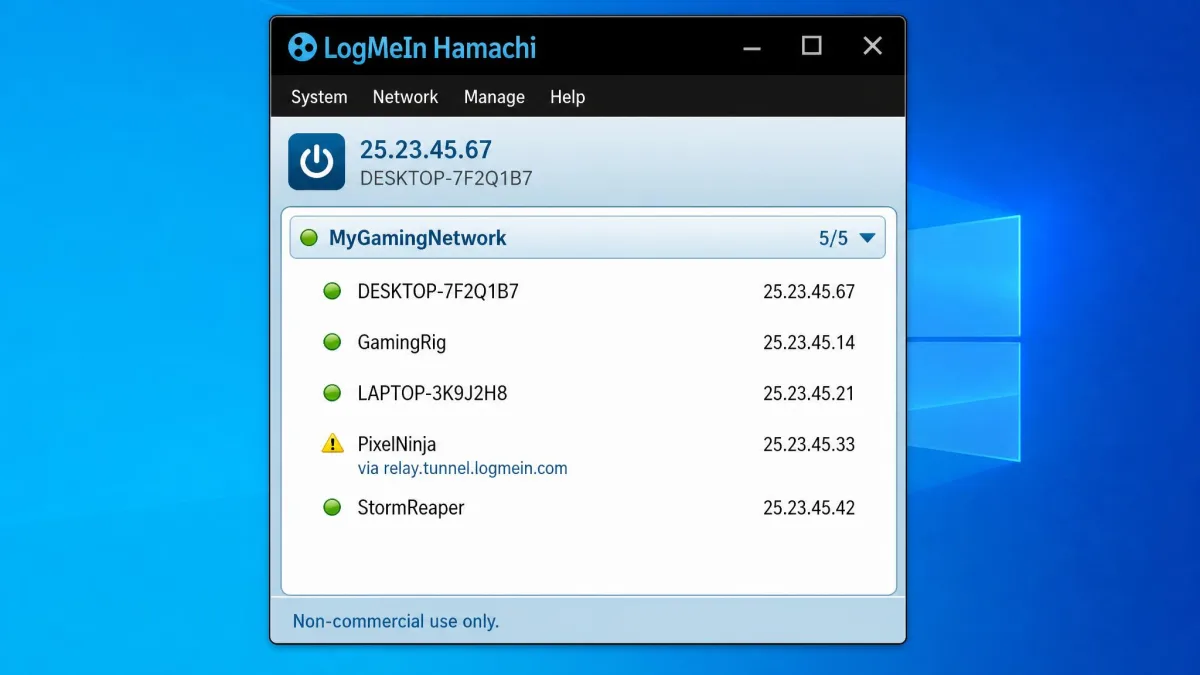
Lag is the second complaint. When Hamachi cannot build a direct peer-to-peer link, it shows a yellow triangle next to the player and falls back to a relayed tunnel through LogMeIn's servers, which raises ping noticeably. We see this most often when a player sits behind symmetric NAT, a strict ISP firewall or carrier-grade NAT. Our Hamachi VPN review covers those tunnel problems in depth.
Platform gaps matter less than they used to. Hamachi offers Windows, macOS and Linux clients. The current macOS build targets macOS 15.4 and later, and older builds still cover Macs back to High Sierra 10.13.
Best Hamachi Alternatives
1. Radmin VPN
Radmin VPN is a free, Windows-only virtual LAN tool with no ads and no paid features. It runs on Windows 7, 8, 10 and 11 and uses 256-bit AES encryption.
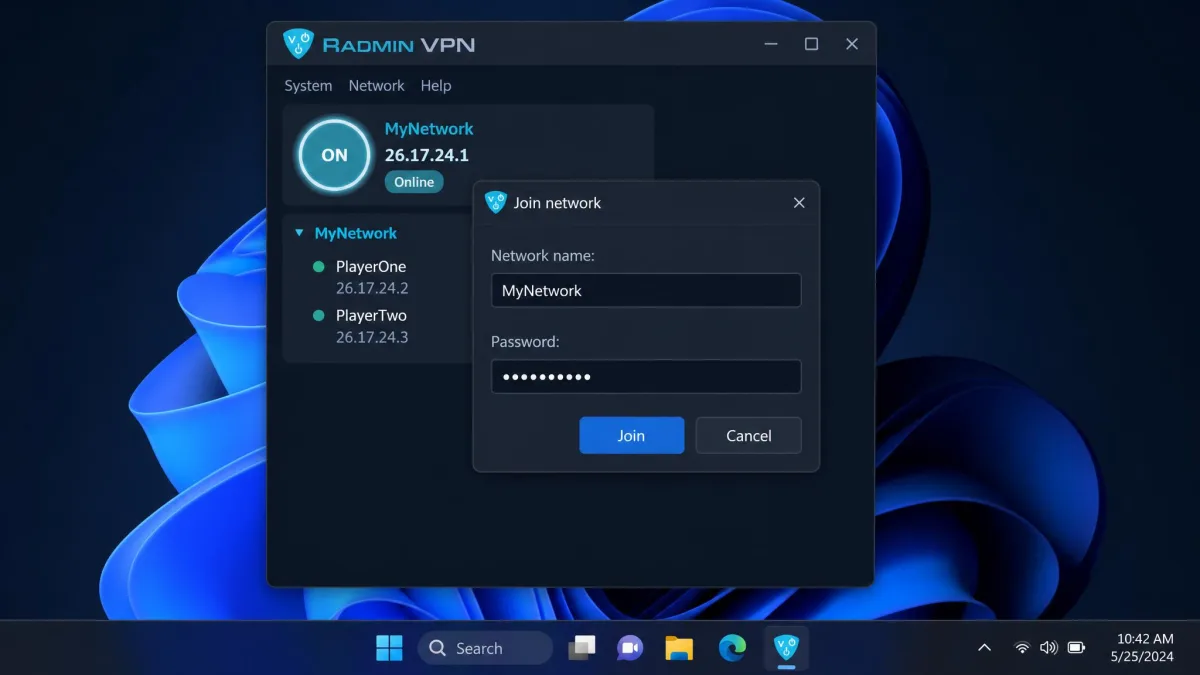
Getting a group online takes a few minutes. We installed the .exe, created a network with just a name and a password, and friends joined from the same simple screen without help. The catch came on first launch: antivirus tools sometimes flag Radmin VPN as riskware, so we often had to add a firewall or antivirus exception before players could see each other. Connections run peer-to-peer where possible, so ping depends on both players' home connections, and a quick test match before a long session shows whether the route is clean.
Radmin publishes no per-network member ceiling, and even the lowest figure we found, 150 per network, is far above Hamachi's free cap.
Radmin is a LAN tool only, with no kill switch, server locations or IP masking, so it does not replace a privacy VPN. Support tickets can also go unanswered. Our Radmin VPN review goes deeper.
2. ZeroTier
ZeroTier is the closest cross-platform match for how Hamachi behaves. It builds a virtual layer 2 Ethernet network, so broadcast traffic passes through and older LAN games find each other's lobbies on their own. Clients cover Windows, macOS, Linux, Android and iOS. The core client is open source under MPL 2.0, though some portions use a source-available licence.
ZeroTier's free plan limits are 10 devices, 1 network and 1 admin, for personal non-commercial use. The Essential plan costs $18 a month with 10 devices included, then $2 per extra device.
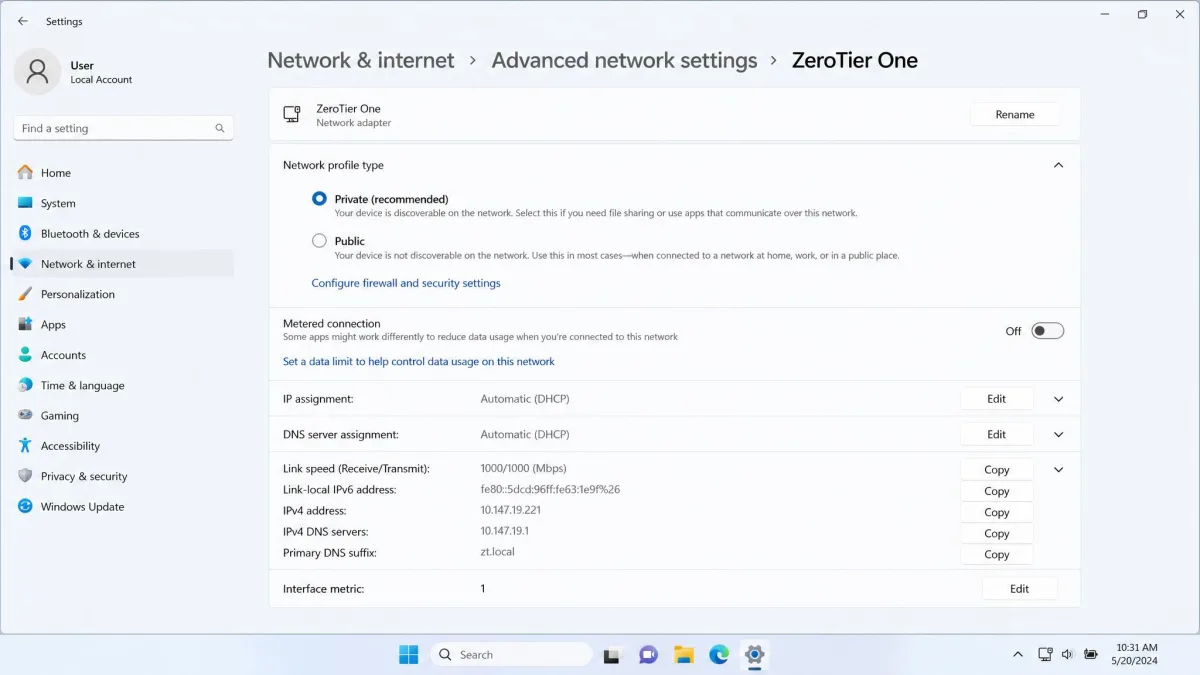
Our first ZeroTier session showed where hosts get stuck. Friends joined our network ID and then saw nothing, because each new member must be authorised in the web console first. After we ticked them in, one Windows player still could not see the lobby until we gave the ZeroTier adapter top interface priority (metric 1) and switched its network from Public to Private. After that, bandwidth during play stayed low, around 12 KB/s per peer. When NAT traversal fails, peers show as RELAY in zerotier-cli peers and traffic bounces through root servers, adding latency and occasional packet loss.
Keep the ZeroTier web console open during game night. New players appear in the Members list and cannot talk to anyone until you tick the Auth box next to their device.
3. Tailscale
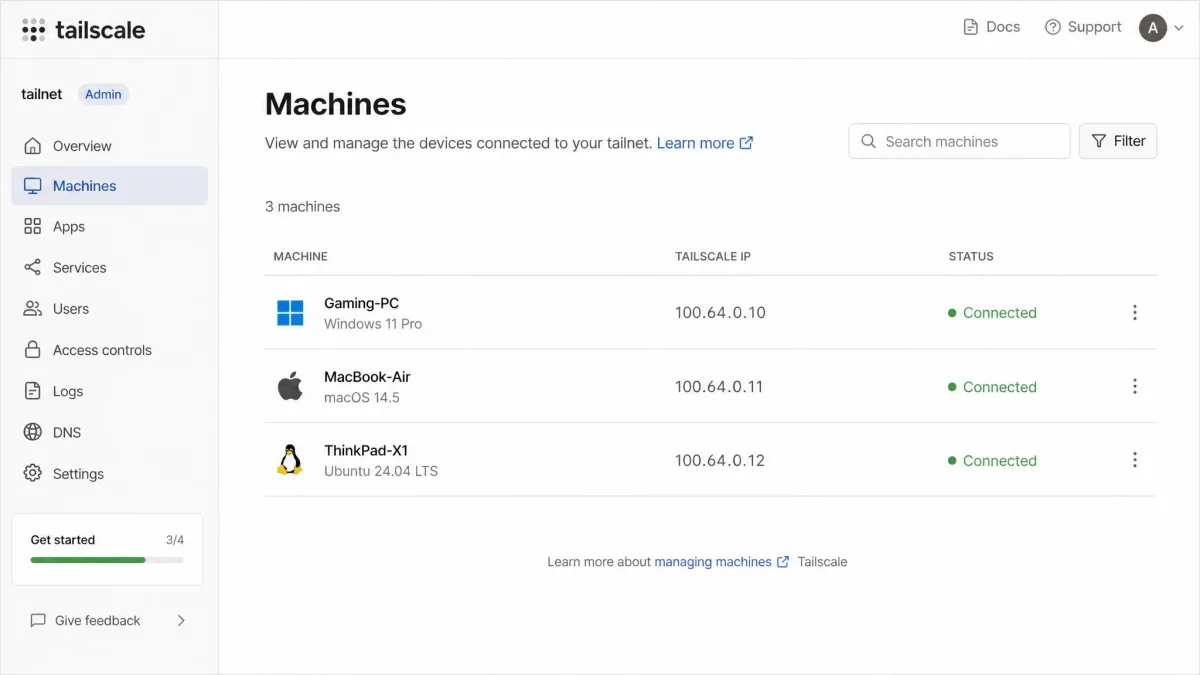
Tailscale is the easiest mesh tool to set up. It is built on WireGuard, and you sign in with an existing Google, Microsoft, GitHub or Apple account. When we tried it, devices appeared in the tailnet within minutes. The client is open source under BSD-3-Clause, while the coordination server is proprietary.
Tailscale's free Personal plan covers up to 6 users with unlimited user devices. Paid plans start at $8 per user per month.
LAN discovery is the trade-off. Tailscale works at layer 3, so games that rely on broadcast discovery often do not show lobbies, and in our testing players connected by typing the host's Tailscale IP instead. If a direct link fails, traffic goes through a DERP relay, and a distant relay can double the latency penalty. Tailscale feels less like a LAN-party tool and more like a private network for your own devices, with room to invite friends in. Our Tailscale vs WireGuard comparison explains the difference.
4. SoftEther VPN
SoftEther VPN is free and open source under the Apache License 2.0. The latest stable release is 4.44 Build 9807 from April 16, 2025. The server runs on Windows, Linux, Mac, FreeBSD and Solaris, and it speaks SSL-VPN plus 6 other protocols, including OpenVPN and L2TP.
SoftEther takes the most work of any option here. Before anyone could connect, we had to host a server, create a Virtual Hub and spend time in the documentation. Our first try used SecureNAT on its default settings, and it failed to carry the game's discovery traffic, so lobbies stayed hidden. Switching the hub to Local Bridge mode was the most reliable fix for LAN games. It suits a friend who already runs a home server rather than a casual group. Our list of SoftEther VPN alternatives has simpler options.
5. NetBird
NetBird is a WireGuard-based mesh with a control plane you can host yourself. NetBird's free plan covers up to 5 users and 100 machines, and the Team plan costs EUR 6 per user per month. The client is BSD-3-Clause and the servers are AGPLv3, with self-hosting officially supported.
Setting it up took more thought than Tailscale did. The sign-up flow and dashboard are built around small teams, and we had to work through groups, roles and access policies up front rather than just inviting friends. That makes it feel more like an IT tool than a gaming-group tool. Because the coordination server is open source and officially supported, it is still the clearest choice when you want to self-host the whole stack.
6. GameRanger
GameRanger is a game lobby client, not a VPN, and it only works with games on its supported list of over 700 titles, which leans toward older PC games. It runs on Windows and Mac.
The basic membership is free, and paid memberships add perks such as voice chat and ad removal. When we went to check current membership prices, the browser stopped us at a security warning page before gameranger.com would load, because the site's HTTPS certificate expired in January 2026. Check the supported list before you commit, since a title that is not on it will not connect through GameRanger at all. Some older titles also hit compatibility problems on Windows 11.
7. Parsec
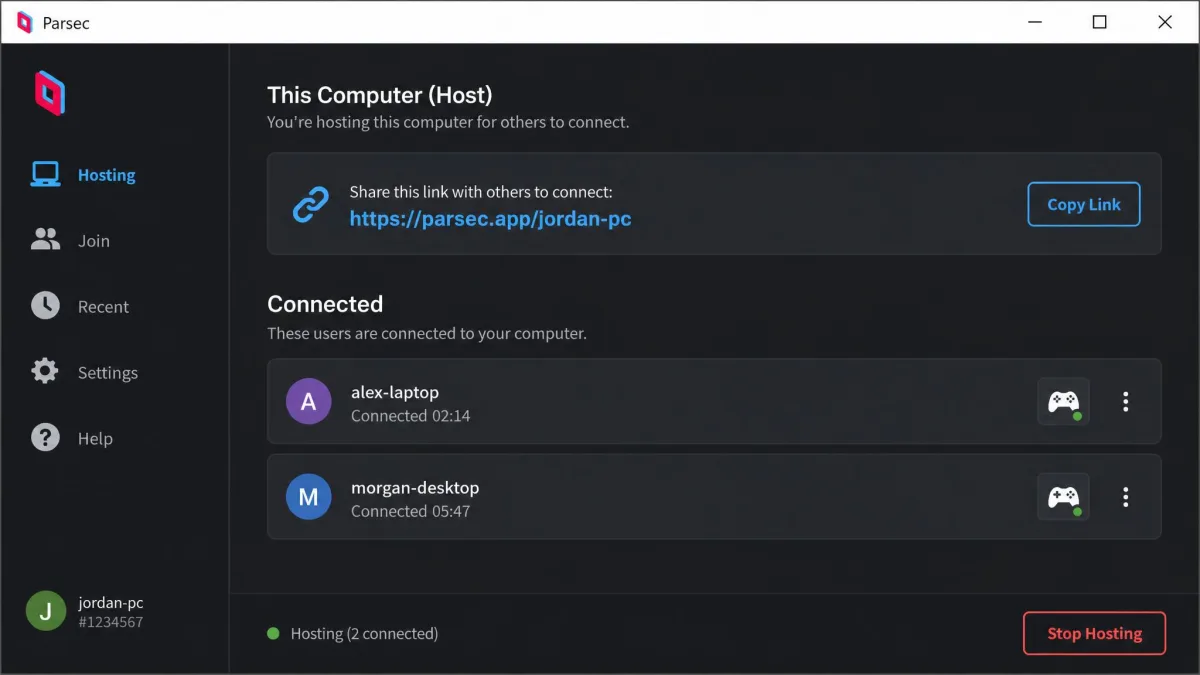
Parsec skips the virtual LAN entirely. It streams the host's screen and passes guests' controllers back, so only the host needs to own and run the game. That suits local co-op titles rather than LAN multiplayer. Parsec's plans include a free Personal tier for non-commercial use, and Warp costs $8.33 a month billed annually.
Stream quality depends on the host's upload, and about 10 Mbps is the practical floor. When we hosted a co-op session, input latency was noticeable but playable, at roughly a few frames, and it held steady over long distances. A wired Ethernet connection on the host and V-Sync turned off gave us the most stable stream.
8. playit.gg
Where Parsec shares the host's screen, playit.gg shares the host's server. It is a tunnel service that makes a home-hosted game server reachable without port forwarding. The agent runs on Windows, Linux, macOS and Docker. Premium costs $3 a month and spans 19 datacenters worldwide.
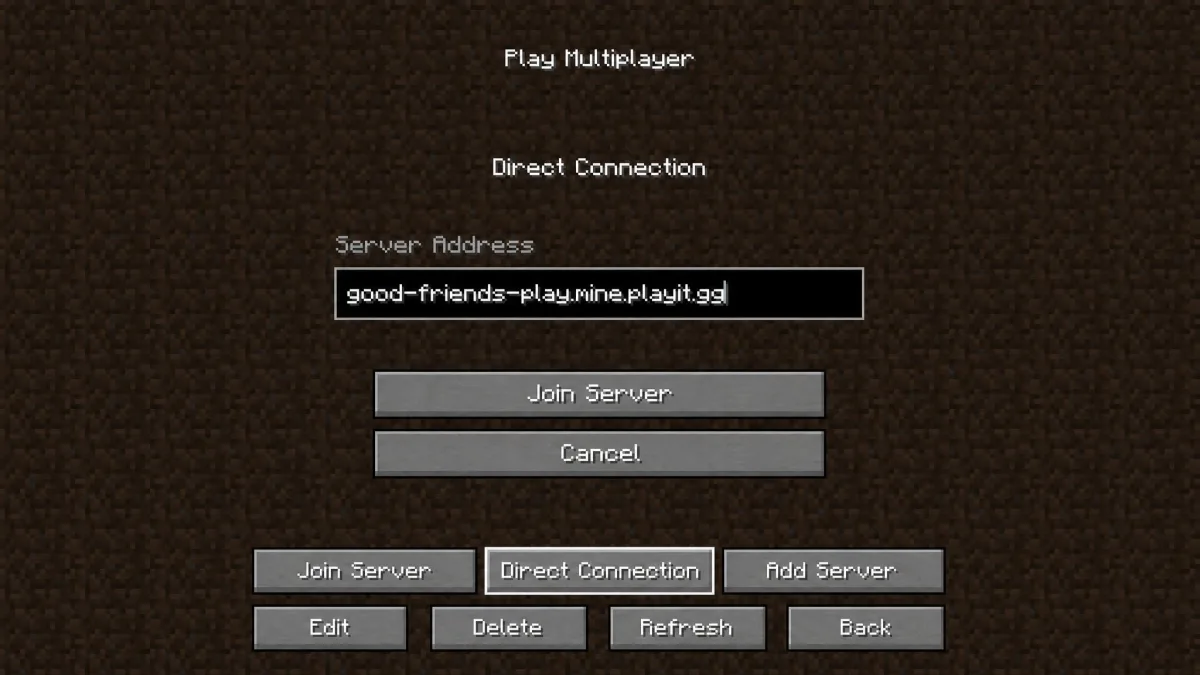
On our Minecraft setup, only the host installed the playit agent. Friends typed a normal server address into their Minecraft client and installed nothing at all. The free tunnel's region was assigned automatically, since picking a specific region requires Premium. The free tier supports Minecraft, Terraria, Valheim and other games, though its port and agent allowances change over time. Traffic takes an extra proxy hop through playit's servers, so it suits "join my server" hosting rather than a full virtual LAN.
9. NeoRouter
NeoRouter is a zero-configuration virtual LAN with an optional self-hosted server. NeoRouter Free is free for commercial and non-commercial use on up to 256 devices, and the hosted Mesh edition offers a 14-day free trial. Clients cover Windows, Mac, Linux, Android and some router firmware.
NeoRouter publishes no release dates for its current 2.4.5 version. It still installs and works, yet ZeroTier and NetBird cover the same ground with far more active development.
Hamachi Alternatives Compared
| Tool | Free tier (players/devices) | Paid from | Platforms | Open source | Best for |
|---|---|---|---|---|---|
 |
5 computers per network | $49/year | Windows, macOS, Linux | No | Groups of up to 5 |
 |
Free; per-network cap unpublished | None | Windows 7-11 only | No | Windows-only groups |
 |
10 devices, 1 network | $18/month | Windows, macOS, Linux, Android, iOS | Core MPL 2.0 | Mixed-platform LAN games |
 |
6 users, unlimited devices | $8/user/month | Windows, macOS, Linux, Android, iOS | Client BSD-3-Clause | Mixed platforms, easy setup |
 |
No cap (self-hosted) | None | Windows, Linux, Mac, FreeBSD, Solaris | Yes, Apache 2.0 | Self-hosters |
 |
5 users, 100 machines | EUR 6/user/month | Windows, macOS, Linux, Android, iOS | Client BSD-3, servers AGPLv3 | Self-hosted mesh |
 |
Free basic membership | Paid memberships | Windows, Mac | No | Older supported PC titles |
 |
Free Personal plan | $8.33/month | Host: Windows 10+, macOS 10.15+ | No | Local co-op games |
 |
Free tier (limits vary) | $3/month | Windows, Linux, macOS, Docker | No | Minecraft and hosted servers |
 |
Free, up to 256 devices | Price not published | Windows, Mac, Linux, Android, routers | No | Legacy setups |
Older lists also name Tinc and plain WireGuard, which build a similar mesh but are configured by hand, and OpenVPN Access Server, a business VPN server rather than a gaming tool. Haguichi is a Linux front end for Hamachi itself, so it keeps the same 5-computer free cap.
Can a Regular VPN Like NordVPN Replace Hamachi?
A consumer VPN such as NordVPN routes your traffic to one of its servers and out to the internet, which hides your IP address. It does not put your friends' PCs on one shared virtual LAN, so a game's LAN browser still will not see them. A Hamachi alternative links specific machines to each other instead.
If you want lower ping to a public game server, our guide to the best VPN for gaming covers that. Some consumer VPNs do have a LAN-style feature, and we show one in our guide to set up a LAN connection with Windscribe.
Discontinued Hamachi Alternatives to Avoid
Several tools still appear in older lists but are no longer a safe choice:
- FreeLAN. Its last release came out in 2019, the last repository commits date from 2020, and freelan.org no longer resolves.
- Evolve. It shut down in December 2018 and merged into Player.me without its LAN tunnelling.
- NetOverNet. The netovernet.com domain now serves an unrelated casino page.
- P2PVPN. Its last release was version 0.8 in 2010.
- Wippien. Its site still lists version 2.5.1 for Windows 2000, XP and Vista.
- Remobo. We could not find an official site for it at all.
Skip unofficial mirror downloads of these clients. An old installer from a download site will not get security fixes, and none of these projects has an active maintainer.
Hamachi Alternatives for Minecraft
If you host a dedicated server on your own PC, playit.gg is the simplest route, and its free tier supports both Java and Bedrock.
"Open to LAN" worlds work differently. The game announces them on the local network, so your group needs a virtual LAN tool that carries that discovery traffic, as covered in the ZeroTier and Tailscale entries above. Radmin groups can follow our guide on how to play Minecraft with friends using Radmin VPN.
How to Choose a Hamachi Alternative
Start with how your game finds players. Older titles that only list lobbies announced on the local network need a tool that passes broadcast traffic. If your game has a direct-connect box where you can type an address, almost any tool on this list will work.
Next, check what the free plan actually counts. Some caps count people and others count machines, and the difference adds up fast. A player with a desktop, a laptop and a phone uses one seat on a per-user plan but three slots on a per-device plan.
Finally, be honest about effort. Some tools take minutes, while a self-hosted server needs someone who enjoys networking.
Hamachi Alternatives FAQ
Is Hamachi still free?
Is Hamachi being discontinued?
Is there a free Hamachi alternative with no player limit?
Can Mac and Windows players share one Hamachi alternative network?
How do I fix Hamachi lag before switching tools?
Which Hamachi alternative is open source?
Bottom Line
Size the free plan by what it counts: ZeroTier's 10 slots are devices, while Tailscale's 6 seats are people with unlimited devices each, so a group of multi-device players fills ZeroTier first. Before the first game night, add the antivirus or firewall exception if you chose Radmin VPN, authorise every new member if you chose ZeroTier, and play a short test match to confirm nobody is stuck on a relay.