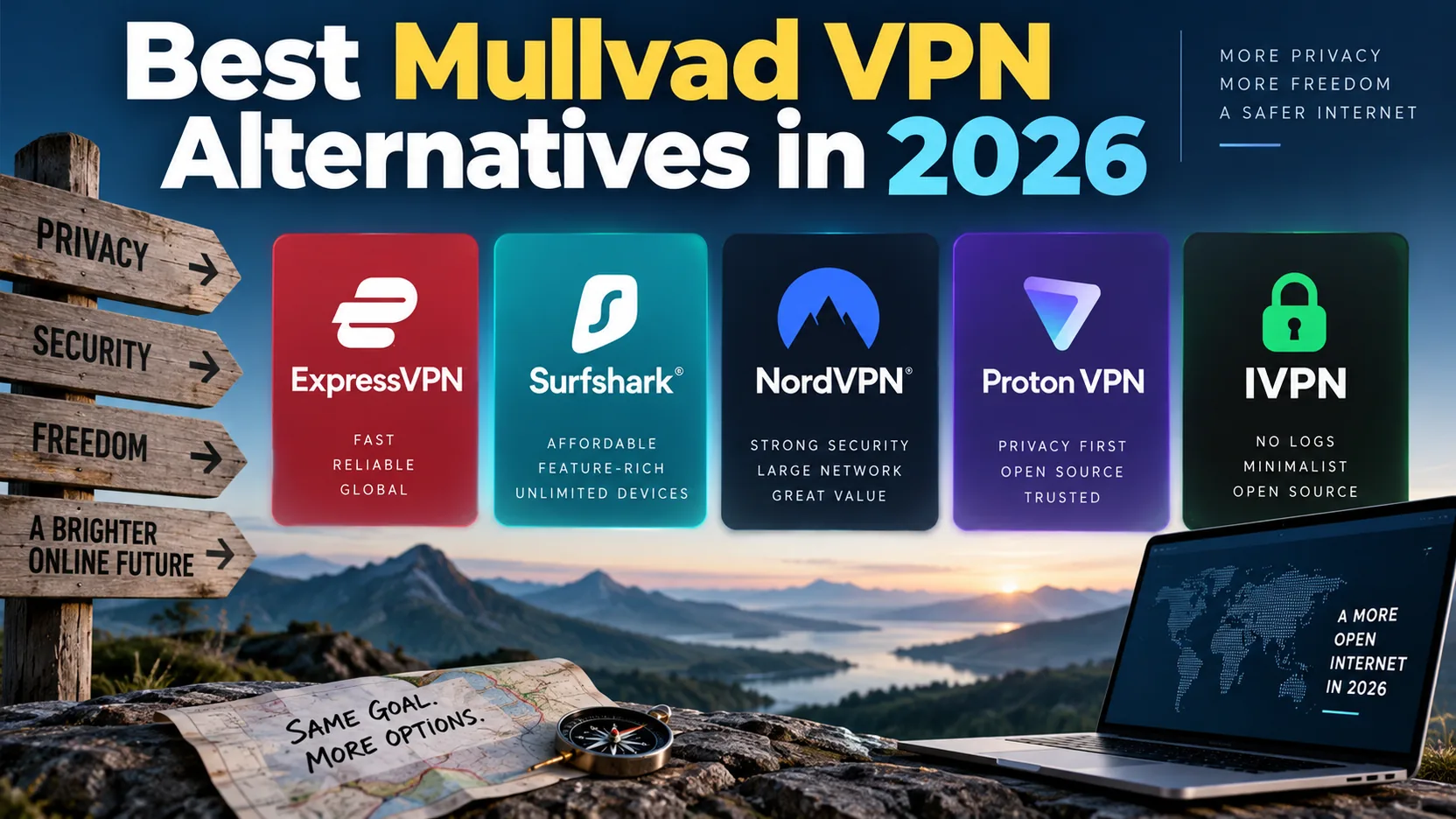
PrivateVPN is a small Swedish service that does more than its size suggests. Nearby servers hold enough speed for 4K streaming, US Netflix unblocks reliably, and the long plan costs just $2.00 a month. Those strengths earn it 8.4/10 in our PrivateVPN review. Still, plenty of users outgrow it. The network covers only about 200 servers, no outside firm has ever audited its no-logs policy, and Prime Video and BBC iPlayer can fail to load. Our top pick, NordVPN, fixes all three of those gaps for roughly $1 to $1.50 more a month on its two-year plan. To build this list, we compared each alternative against PrivateVPN on speed, leak protection and streaming, and we explain exactly how in the methodology section below.
Why Look for a PrivateVPN Alternative?
Credit first, because PrivateVPN earns it. Setup takes a couple of minutes on Windows and Android, and DNS and IPv6 leak tests come back clean. Torrenting barely slows down: a 20GB download finished in 33 minutes with the VPN versus 32 without it.
The weaker spots show up once you lean on it. Distant servers slow sharply, and our runs to Argentina and Nigeria dropped to roughly 15 and 7 Mbps from a 200 Mbps baseline. There's no split tunneling, so every app on your device has to route through the VPN. The desktop and mobile apps also feel dated, with no dark mode and no automatic fastest-server option.
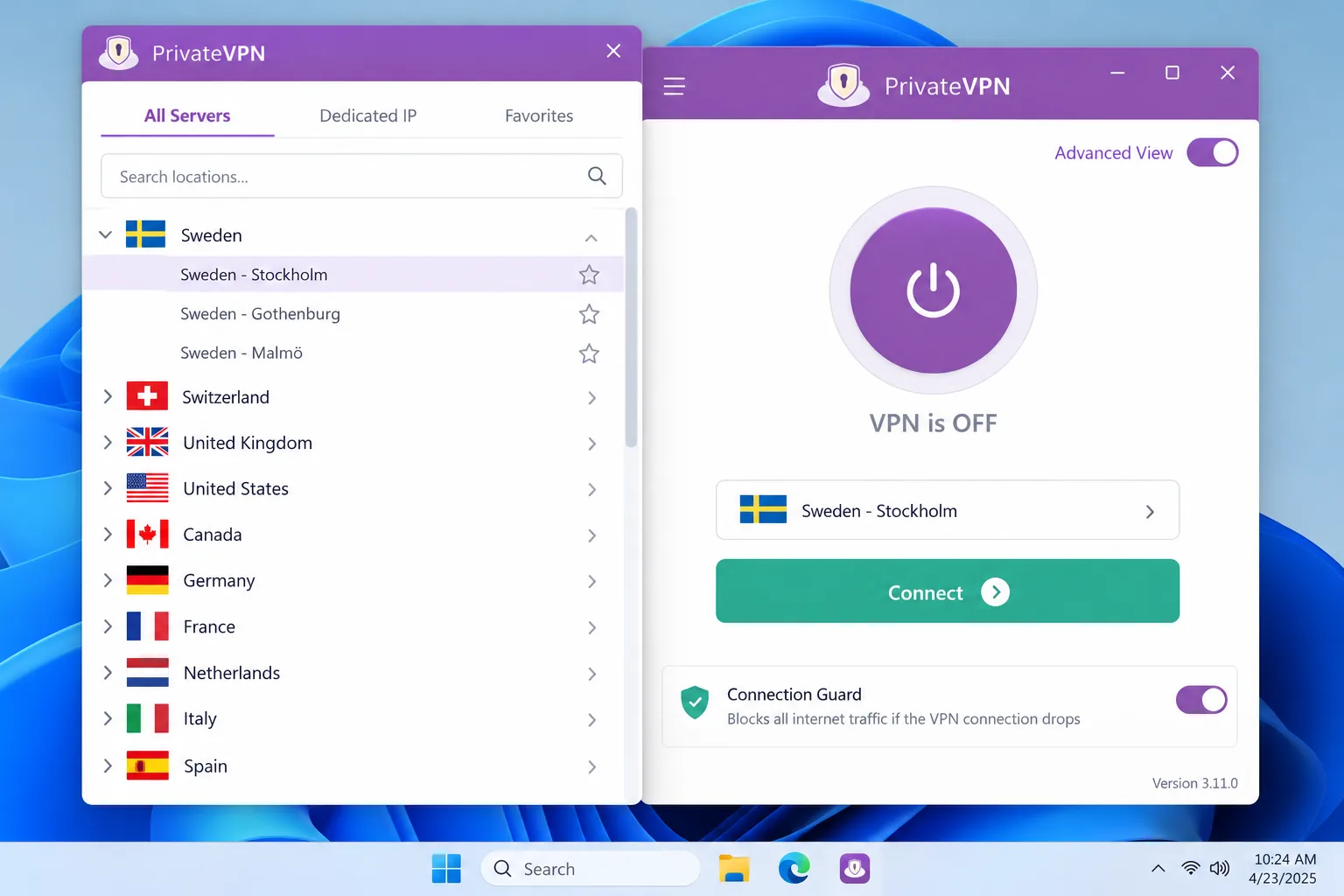
Privacy is the bigger question for many users. PrivateVPN Global AB is based in Sweden, which belongs to the 14 Eyes intelligence-sharing group, a network of countries that swap surveillance data. That alone isn't a problem, but the company has published no independent audit and no transparency report, and its servers run on disks rather than RAM. The hosting group Miss Group bought PrivateVPN in 2022, and the founder has since left. None of this makes PrivateVPN unsafe. It does mean you are trusting a policy rather than checking a track record.
PrivateVPN Alternatives Compared
Every rating below is the headline score from that VPN's full HTS review, with PrivateVPN in the last row as the baseline. Prices are intro rates on the longest plan, and several of them move with promotions.
The list itself isn't sorted by score alone. We ranked each pick by how directly it fixes a PrivateVPN weakness, which is why Mullvad sits third. It scores below ExpressVPN and Surfshark but answers the privacy question more completely than either, and privacy is the main reason people leave PrivateVPN.
| VPN | Buy | Starting price | Free plan | Devices | Server countries | Jurisdiction | Independent no-logs audit | Streaming | Best for |
|---|---|---|---|---|---|---|---|---|---|
 |
Check price → | About $3.09-$3.49/mo (2-yr) | No | 10 | 118-160 (counts vary) | Panama | Yes (Deloitte, 6th, 2025) | Strong | Best overall |
 |
Check price | $2.99/mo (2-yr) | Yes, no data cap | 10 | 140+ | Switzerland | Yes (Securitum, 5th annual) | Strong on paid plans | Free plan |
 |
Check price | $5.60/mo (flat) | No | 5 | About 50 | Sweden | Infrastructure audits (Cure53, 2024) | Hit or miss | Anonymous sign-up |
 |
Check price | About $2.79-$2.99/mo (2-yr) | No | 10 Basic / 14 Pro | 113 | British Virgin Islands | Yes (KPMG, 2025) | Strong | Streaming |
 |
Check price | $2.49/mo (2-yr) | No | Unlimited | 100 | Netherlands | Yes (Deloitte, 2023 and 2025) | Strong | Unlimited devices |
 |
Check price | About $1.89/mo (3-yr) | No | Unlimited | 104 plus all 50 US states | United States | Yes (Deloitte, Dec 2025) | Weak | Customization |
 |
Check price | About $1.99/mo (promo) | No | 7 | 100+ | Romania | Yes (Deloitte, 3rd, Feb 2026) | Strong via streaming servers | Beginners |
 |
$2.00/mo (3-yr) | No | 10 | 62-63 | Sweden | No | Netflix good; Prime and iPlayer patchy | Baseline |
The 7 Best PrivateVPN Alternatives in 2026
1. NordVPN - Best PrivateVPN Alternative Overall
NordVPN is the upgrade we'd point most PrivateVPN users toward, and our NordVPN review covers it in full. It keeps the same 10 simultaneous connections, so every device you protect today can move straight over. Its no-logs policy has been checked by Deloitte six times, most recently in fieldwork that ran from November 10 to December 12, 2025.
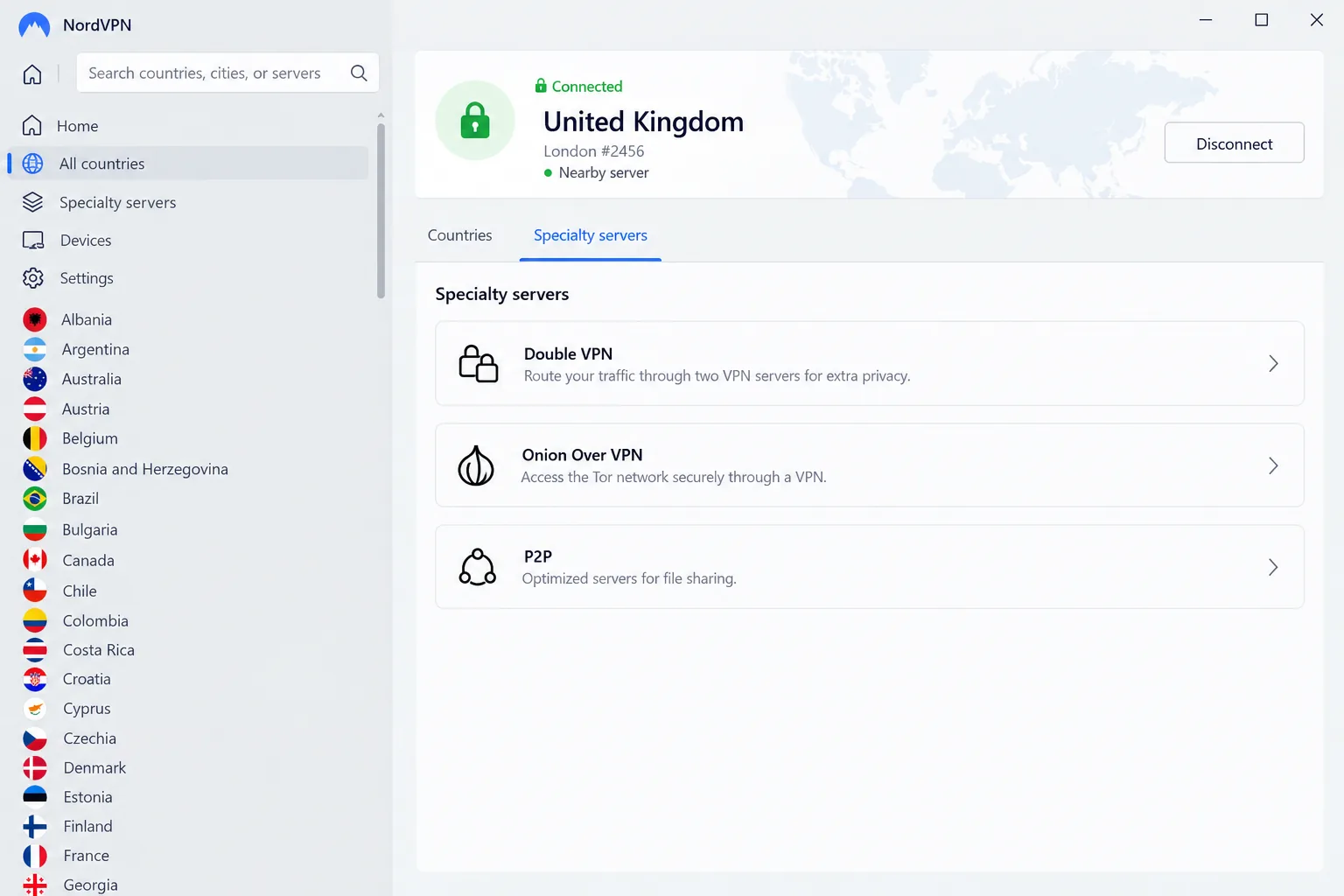
Speed is where the gap with PrivateVPN felt widest. On nearby servers, NordVPN lost only about 4% of download speed and 7% of upload, and our 4K streams never buffered. Where PrivateVPN slowed to a crawl at far-flung locations, NordVPN held above 60 Mbps on its Australia and South Africa servers. Its regular servers also opened Netflix, BBC iPlayer, Prime Video and Disney+ without any special streaming servers. Double VPN is a different story: routing traffic through two servers cut our speed by around 80%, so we save it for sensitive sessions. We also found the list view quicker than the map, which needs zooming before you can pick a server.
The Panama-based company charges $14.99 on monthly billing, or about $3.09 to $3.49 a month on the two-year plan, depending on NordVPN's rolling promotions.
Pros
- RAM-only servers and a full Linux app
- Meshnet and obfuscated servers included
- Split tunneling on Windows and Android, which PrivateVPN lacks
Cons
- No free plan
- Renewal price is much higher than the intro rate
- Live chat opens with a chatbot before a human takes over
2. Proton VPN - Best Free PrivateVPN Alternative
NordVPN asks you to pay from day one, while Proton VPN lets you try a privacy-first service for free. PrivateVPN has no free plan, but Proton's comes with no data cap and no ads. The paid version ties NordVPN for the top score in our Proton VPN review.
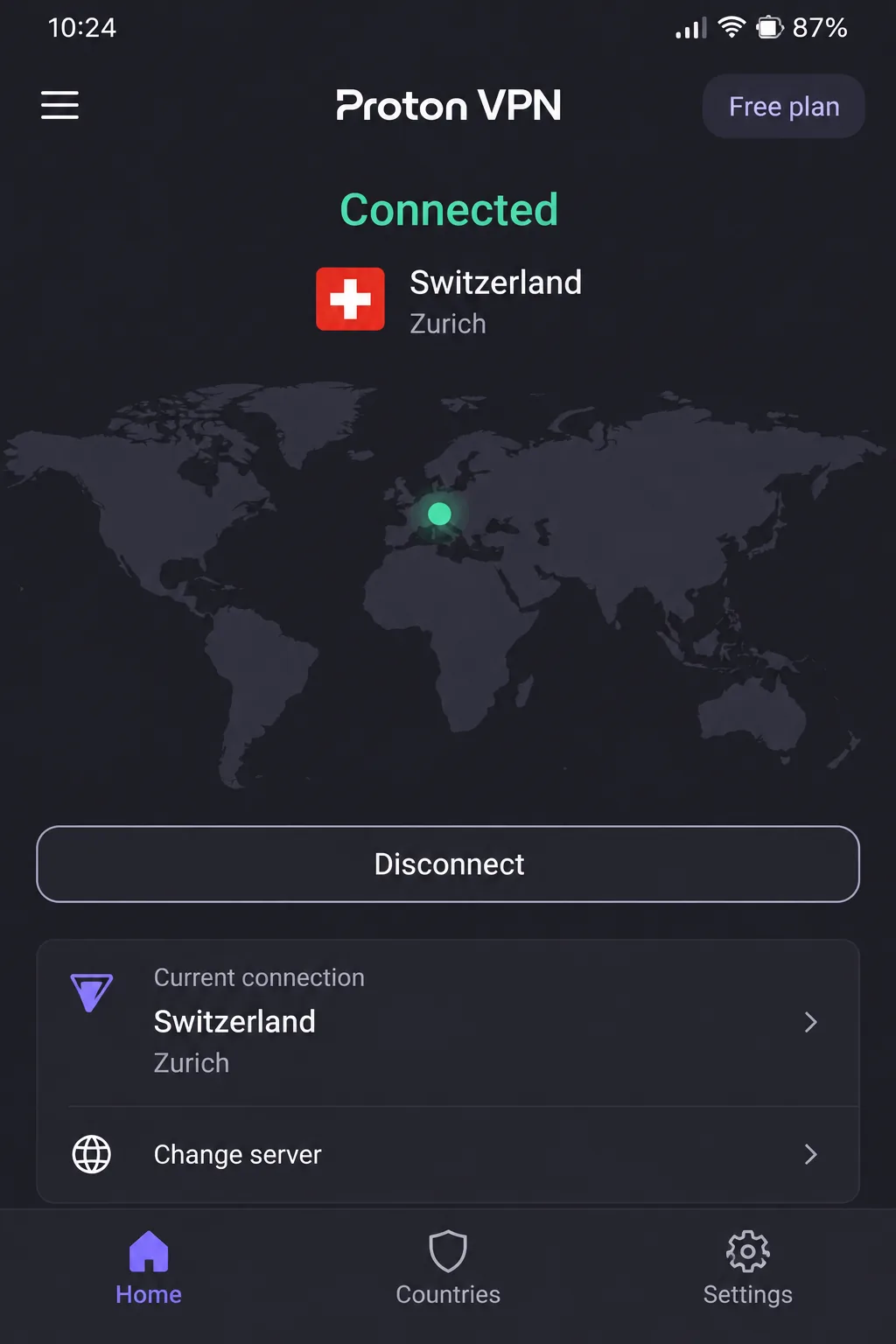
The free tier's limits showed up the moment we pressed connect. Proton assigned a server for us from its 10 free countries, with no way to choose one, and the plan covers 1 device. It also doesn't support streaming or torrenting. On VPN Plus, the picture changed: paid servers cut download speed by no more than about 8-10%, and 4K Netflix started in under four seconds. DNS, IPv6 and WebRTC leak tests stayed clean across dozens of countries.
Proton AG is based in Switzerland, and its no-logs claim has outside backing: the service has passed independent no-logs audits by Securitum five years running. Proton also publishes a transparency report listing the legal requests it receives, which PrivateVPN does not.
Pros
- Installs in under two minutes and explains every setting in plain language
- VPN Accelerator lifts speeds noticeably on distant servers
- Open-source apps, including a full Linux app
Cons
- Secure Core runs about 35% slower than standard connections
- Stealth protocol is slower than WireGuard
- Live chat isn't 24/7 and isn't open to free users
3. Mullvad VPN - Best for Anonymous Sign-Up
Mullvad is the closest relative on this list, because it's also Swedish. That shared jurisdiction makes it a useful test of what really protects your data. In April 2023, Swedish police searched Mullvad's office and found no customer data to take, because none was stored. Our Mullvad VPN review digs into its privacy design in more depth.
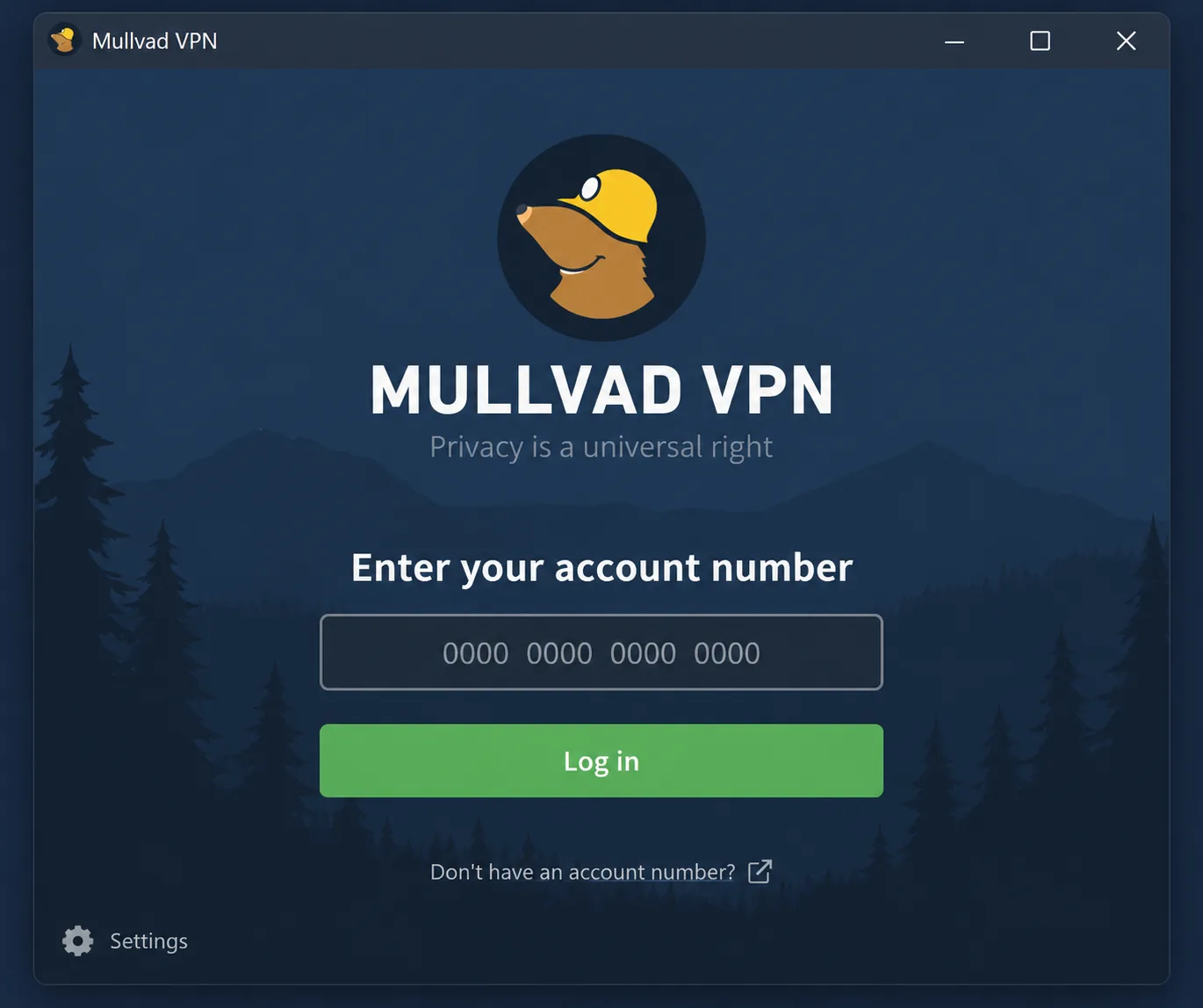
Signing up took us seconds. Mullvad generated a random 16-digit account number, and that number was the only login, with no email, username or password. On nearby servers we lost only around 6% of our speed, though distant servers slowed downloads noticeably. Streaming was hit or miss, with some servers reaching Netflix and others getting detected.
The price is a flat EUR 5 a month (about $5.60) on any term, so there's no renewal jump. Connections run on WireGuard only, since OpenVPN was removed in January 2026. Mullvad publishes infrastructure audits, including a Cure53 review in 2024, but these check server security and don't issue a formal no-logs opinion.
Pros
- Accepts cash and crypto as well as cards and PayPal
- RAM-only servers and open-source apps
- DAITA, multihop and obfuscation built into the app
Cons
- Only 5 devices
- No port forwarding
- Support is email-only, with replies in hours rather than minutes
4. ExpressVPN - Best for Streaming
If Mullvad is the privacy purist's choice, ExpressVPN is the one for people who mainly want streaming to work. Its apps are the most polished of the group, and our ExpressVPN review walks through each of them.
Netflix libraries in several countries, ESPN+ and Hulu all streamed without issues in our runs. That list covers the services where PrivateVPN can stall. Network Lock (ExpressVPN's kill switch) fired correctly when a server timed out and again when we changed networks, blocking traffic until the tunnel came back. The trade-off is raw speed: downloads fell roughly 37-39% on nearby servers, more than NordVPN or Proton VPN lost.
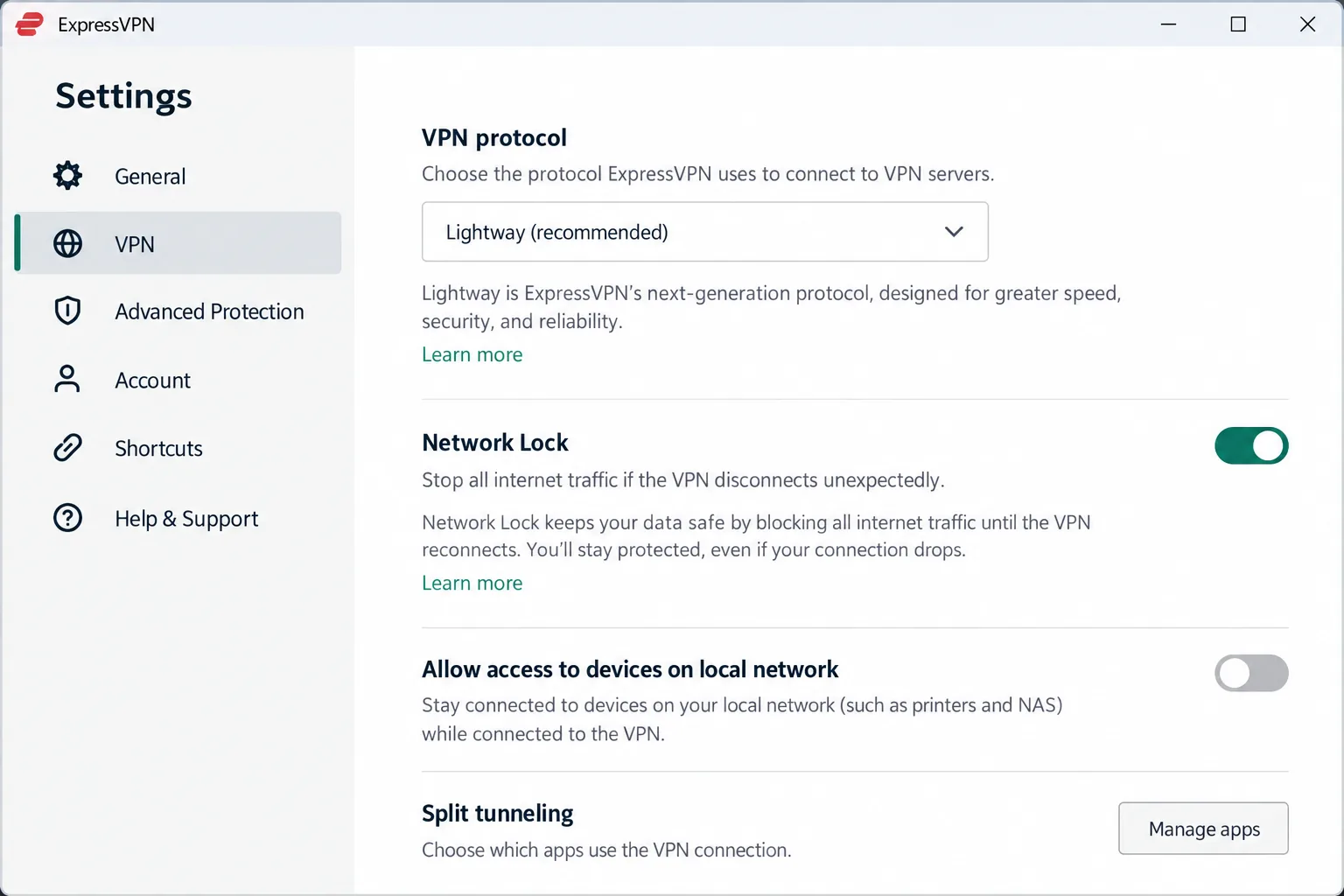
ExpressVPN is based in the British Virgin Islands, and KPMG audited its privacy commitments most recently in June 2025. The two-year Basic plan runs about $2.79 to $2.99 a month, depending on the current promotion, then renews at $99.95 a year.
Pros
- Split tunneling and automatic obfuscation
- Lightway protocol with post-quantum encryption
- Apps for routers, Apple TV and browsers
Cons
- Device allowance depends on the tier you buy
- Costs more than NordVPN and Surfshark on comparable terms
- Email support can take close to two days
5. Surfshark - Best Value With Unlimited Devices
ExpressVPN rations devices by tier, while Surfshark puts no limit on them at all. Every plan allows unlimited simultaneous connections, and the two-year Starter plan costs $2.49 a month. That pairing is hard to beat for a big household, and our Surfshark review has the full test results.
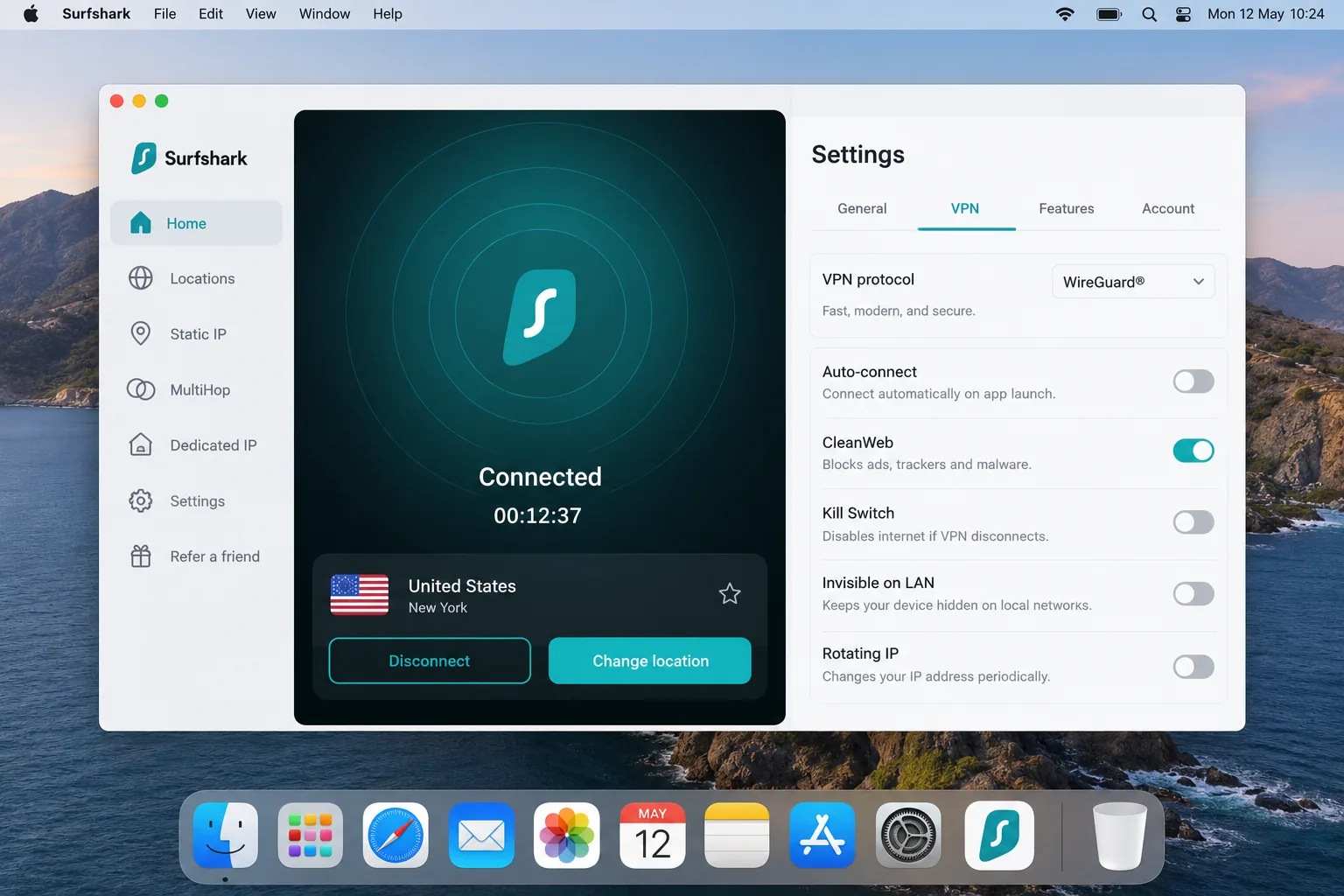
On macOS, a transatlantic server slowed our downloads by only about 10%. The Windows app showed bigger slowdowns and occasional ping spikes, so it's worth comparing a few servers on a PC. Netflix opened in more than 15 regional libraries, and Max, Disney+, Hulu and BBC iPlayer all worked too. The kill switch held, and we saw no IPv4, IPv6, DNS or WebRTC leaks.
Surfshark B.V. is based in the Netherlands, and Deloitte verified its no-logs policy in 2023 and again in 2025. The company also keeps a warrant canary that would signal secret legal demands.
Pros
- Camouflage obfuscation and NoBorders mode for restrictive networks
- RAM-only servers and Nexus IP rotation
- Bypasser split tunneling and CleanWeb blocker
Cons
- Month-to-month plan costs roughly $15 to $16, among the priciest in the category
- Dedicated IP costs extra
- MultiHop slows connections significantly
6. Private Internet Access - Best for Customization
Surfshark keeps its settings simple, but Private Internet Access hands you nearly every dial. You can choose AES-128 or AES-256 encryption, set up port forwarding and tune split tunneling app by app. It ties PrivateVPN on score in our Private Internet Access review, but for very different reasons.
The long settings list felt overwhelming at first, then became easy once we had it tuned. Speed loss was small, about 4% on local servers and 18% internationally. Torrenting with port forwarding cost very little speed on our runs. Streaming is the weak point. US and UK Netflix didn't unblock, and both Disney+ and Hulu detected the VPN.
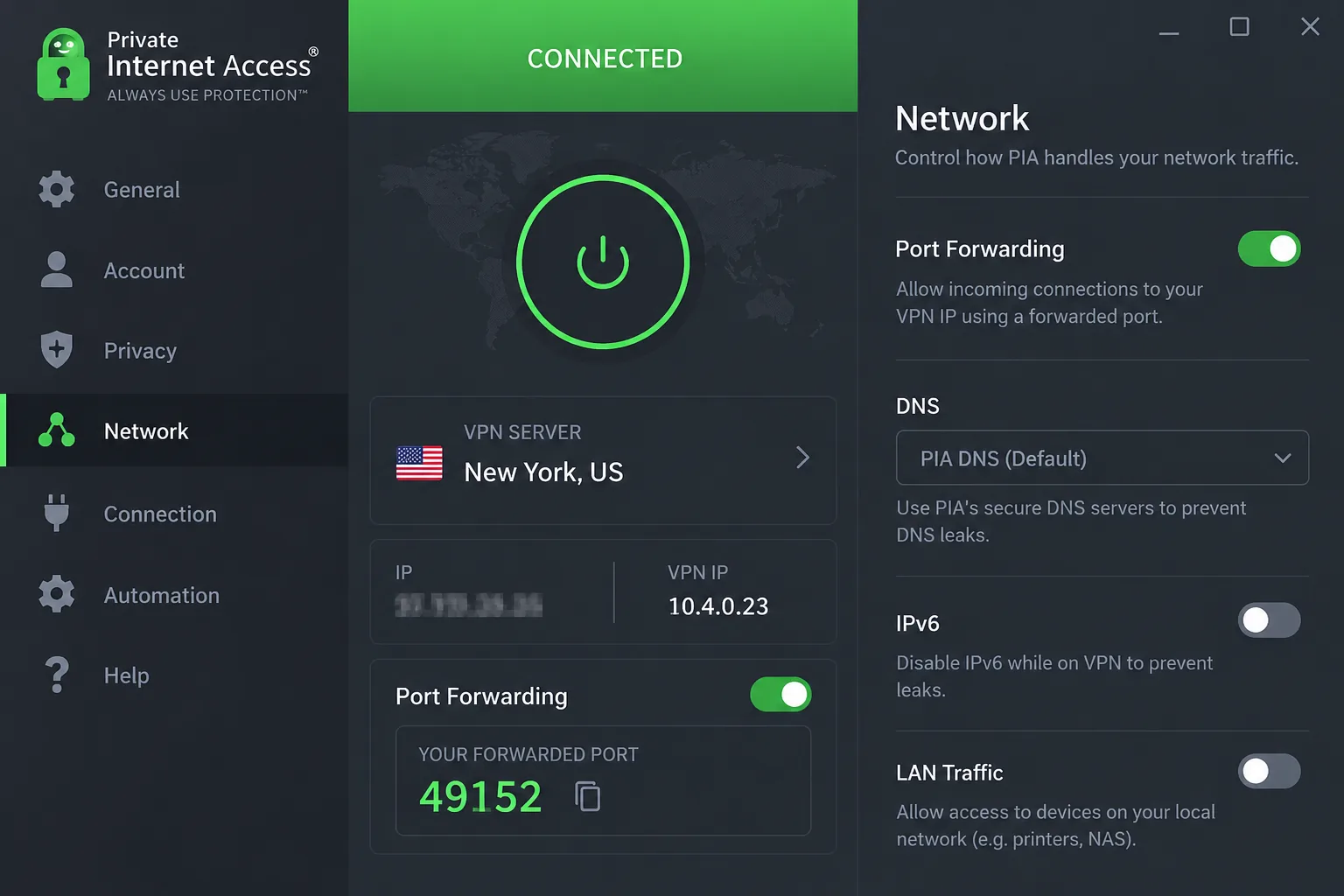
PIA has been audited by Deloitte three times, most recently in December 2025. Plans cost $11.95 month to month or about $1.89 a month on the three-year term. Servers cover all 50 US states.
Pros
- Open-source apps and RAM-only servers
- Unlimited devices and a low long-term price
- MACE blocker and Multi-Hop via proxy
Cons
- Forwarded port changes every time you reconnect
- No port forwarding on US servers
- Auto-renewal is on by default, and refunds need a support request
7. CyberGhost - Best for Beginners
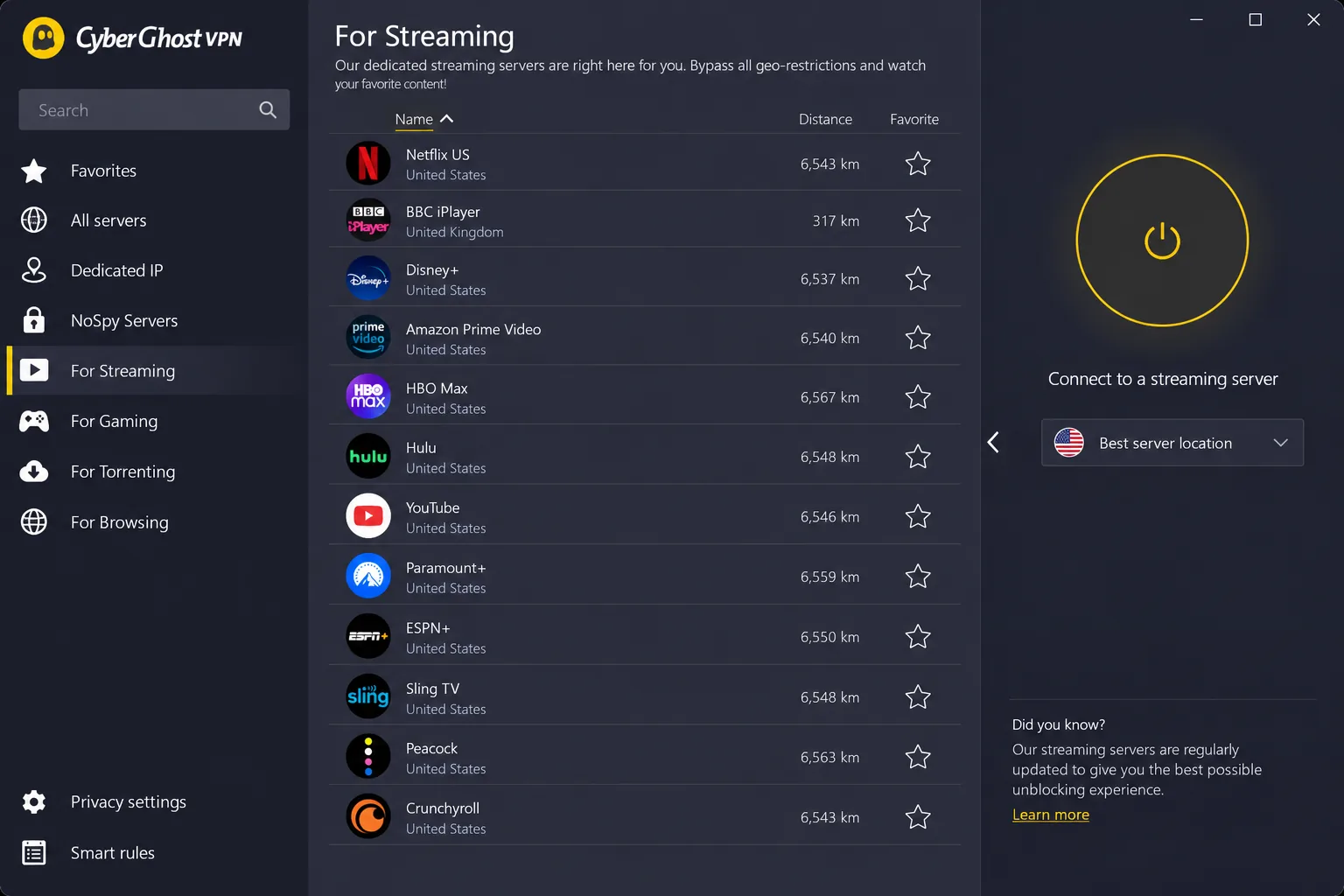
Where PIA rewards tinkering, CyberGhost removes the need for it. Its server list labels streaming servers by platform, so you pick "Netflix US" instead of guessing. Our CyberGhost review covers each of those servers in detail.
The app connected to a nearby server in under ten seconds on first launch. Switching protocols took about four seconds and didn't drop the connection. The dedicated servers for Netflix US, BBC iPlayer, Disney+ and Prime Video each loaded on the first try. On Android, the kill switch tripped within about two seconds and held across repeated disconnects.
CyberGhost S.R.L. runs the service from Romania, and Deloitte has audited its no-logs policy three times. During the current promotion, the long plan costs around $1.99 a month. CyberGhost's 45-day money-back guarantee is also the longest on this list. Watch the first renewal. The long plan rolls into a 12-month term at the same dollar amount, which roughly doubles the effective monthly rate.
Pros
- Dedicated torrenting servers and NoSpy servers
- Smart Rules automate when and how the VPN connects
- 24/7 live chat support
Cons
- 7-device cap fills up quickly in a busy household
- Downloads drop by more than 55% on Australia and South Africa servers
- Streaming servers trigger frequent CAPTCHA checks
How We Chose These PrivateVPN Alternatives
We started with PrivateVPN itself, because a replacement only makes sense if it fixes something specific. We measured its speed on nearby and distant servers, ran DNS and IPv6 leak checks, tested the kill switch during an unexpected disconnect, and tried the streaming services readers ask about most. That gave us a clear baseline: strong local speeds and clean leak results, held back by patchy streaming beyond Netflix.
Each alternative then had to beat that baseline on at least one point without losing ground elsewhere. A no-logs audit, where an outside firm inspects the provider's systems, counted for more than any promise on a website. Jurisdiction mattered because it decides which laws can force a company to hand over user information. We compared speed loss on nearby and distant servers, checked streaming access to Netflix, BBC iPlayer, Prime Video and Disney+, and weighed intro prices against renewal rates. We also looked at device limits and the extra features each service offers, such as split tunneling and RAM-only servers.
PrivateVPN vs Private Internet Access: Not the Same Service
PrivateVPN and Private Internet Access share part of a name, but they are separate companies with different owners. PrivateVPN is run by PrivateVPN Global AB in Sweden and has been owned by Miss Group since 2022. Private Internet Access is a US service that has belonged to Kape Technologies since 2019, and Kape also owns ExpressVPN and CyberGhost.
A third name adds to the mix-up. PrivadoVPN is another unrelated provider, run by Privado Networks in Iceland since May 1, 2026.
The two services differ in practice too. PIA is the bigger operation, with unlimited devices and servers in all 50 US states, while PrivateVPN caps you at 10 devices but streams Netflix more reliably. If you came here looking to leave PIA rather than PrivateVPN, our list of Private Internet Access alternatives covers that switch, and our Private Internet Access review explains its strengths in detail.
Which PrivateVPN Alternative Should You Pick?
Start with the PrivateVPN weakness that bothers you most, since each pick fixes a different one.
- You want the closest like-for-like swap: NordVPN keeps the 10-device limit, so the move feels familiar from the first day.
- You don't want to pay yet: Proton VPN's free plan is the strongest no-cost option on this list, and upgrading later keeps the same app.
- You want the least personal data on file: Mullvad needs no email address and charges the same price every month.
- Streaming is your main use: ExpressVPN for polish, or CyberGhost if you'd rather pick servers by platform name.
- You have a lot of devices: Surfshark and PIA both remove the cap, and Surfshark streams better.
- You torrent heavily or like to tune settings: PIA, as long as you don't need US port forwarding.
How to Switch From PrivateVPN
Switching VPNs is mostly a billing task with a short security check at the end. Follow these steps in order so you're never left without protection or paying twice.
- Check your refund window. PrivateVPN offers a 30-day money-back guarantee, so if you subscribed recently, ask for a refund rather than just cancelling.
- Cancel through support. PrivateVPN handles cancellations through its live chat or contact form, so ask an agent to turn off auto-renewal and to confirm the change in writing.
- Install the new app before you uninstall the old one. Sign up for your new VPN, install it on every device, and then remove PrivateVPN.
- Turn on the kill switch. Open the new app's settings and turn the kill switch on, because some apps leave it off after install.
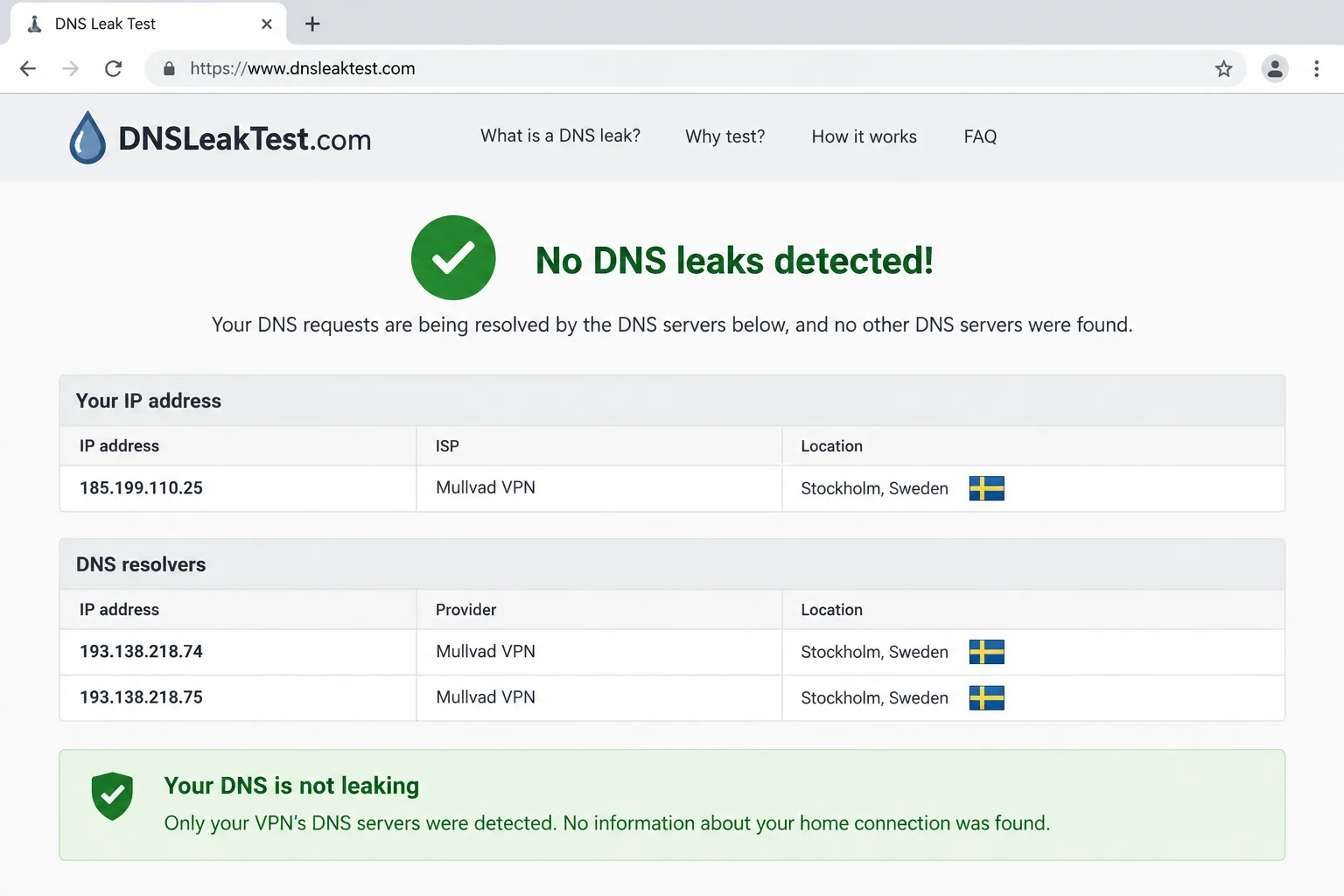
- Check for leaks. Connect to a server and run a leak check to confirm your traffic, DNS requests and IP address all go through the new tunnel. Our guide on how to test for DNS leaks walks through it.
Auto-renewal is the most common PrivateVPN billing complaint. Cancel a few days before your renewal date, not on it, so the charge can't go through while you wait for a reply.
Is PrivateVPN Still Worth Using?
For some people, yes. If you mostly stream US Netflix, Max or Hulu from a nearby server, PrivateVPN does that well, and it torrents at close to full speed. The 36-month plan costs $72 for the first billing cycle and covers 10 devices, with dedicated-IP servers included at no extra cost. Support also stands out, since real agents answer live chat quickly once you get past the AI assistant.
The deciding question is how you use a VPN day to day. If you want outside proof behind your provider's privacy promises, travel often, or need certain apps to bypass the tunnel, one of the picks above will serve you better. If your VPN mostly runs at home for Netflix and torrents, staying put is a reasonable choice, and switching would cost you more for gains you may never notice. Our full PrivateVPN review breaks down every result.