If you're living in Vietnam or heading there soon, you've probably heard that the internet behaves a little differently once you land. Most everyday apps work normally, but the government filters political and news content, and some services get throttled with little warning. The new Law on Cybersecurity has been in force since July 1, 2026, so plenty of expats are asking what has changed. Then there's the cafe and hotel Wi-Fi you'll rely on, much of it open or poorly secured.
A good VPN deals with the filtering and the Wi-Fi directly. It gets you past the blocks often called the Bamboo Firewall, and it encrypts your traffic on shared networks. It also keeps your streaming and banking accounts working as if you were home. What it can't do is change the law, so we explain where the legal lines sit further down. Our top pick is NordVPN. On Viettel, Mobifone and Vietnamobile, it connected first time in the large majority of our tries, and it stayed the fastest of the group on routes to Singapore.
Below, we compare five VPNs on Vietnamese networks, explain what the law actually says, and show you how to set everything up before you fly.
The best VPNs for Vietnam: quick picks
Short on time? These are our top three picks for Vietnam, with the full ranking of all five in the reviews below.
How we tested VPNs for Vietnam
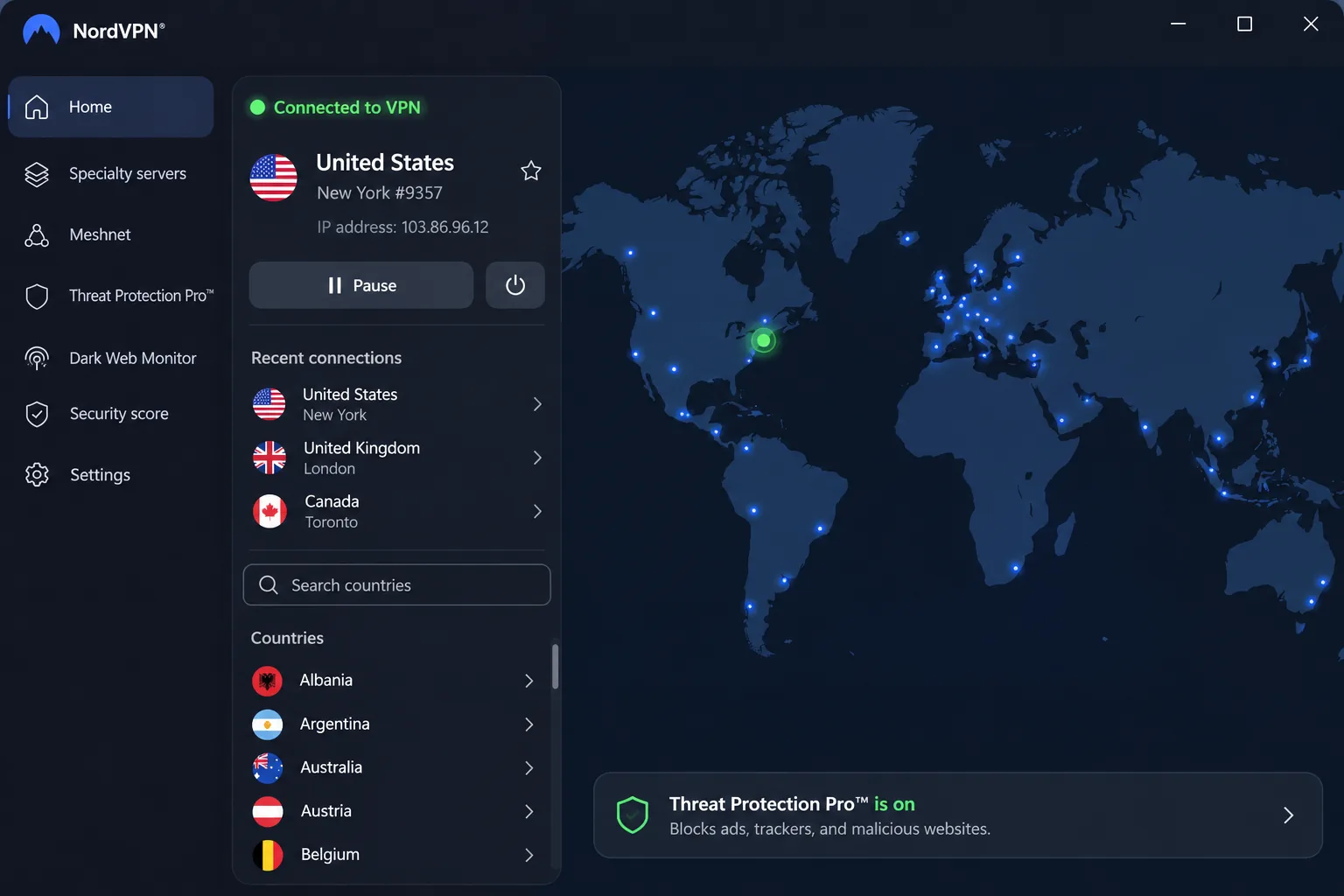
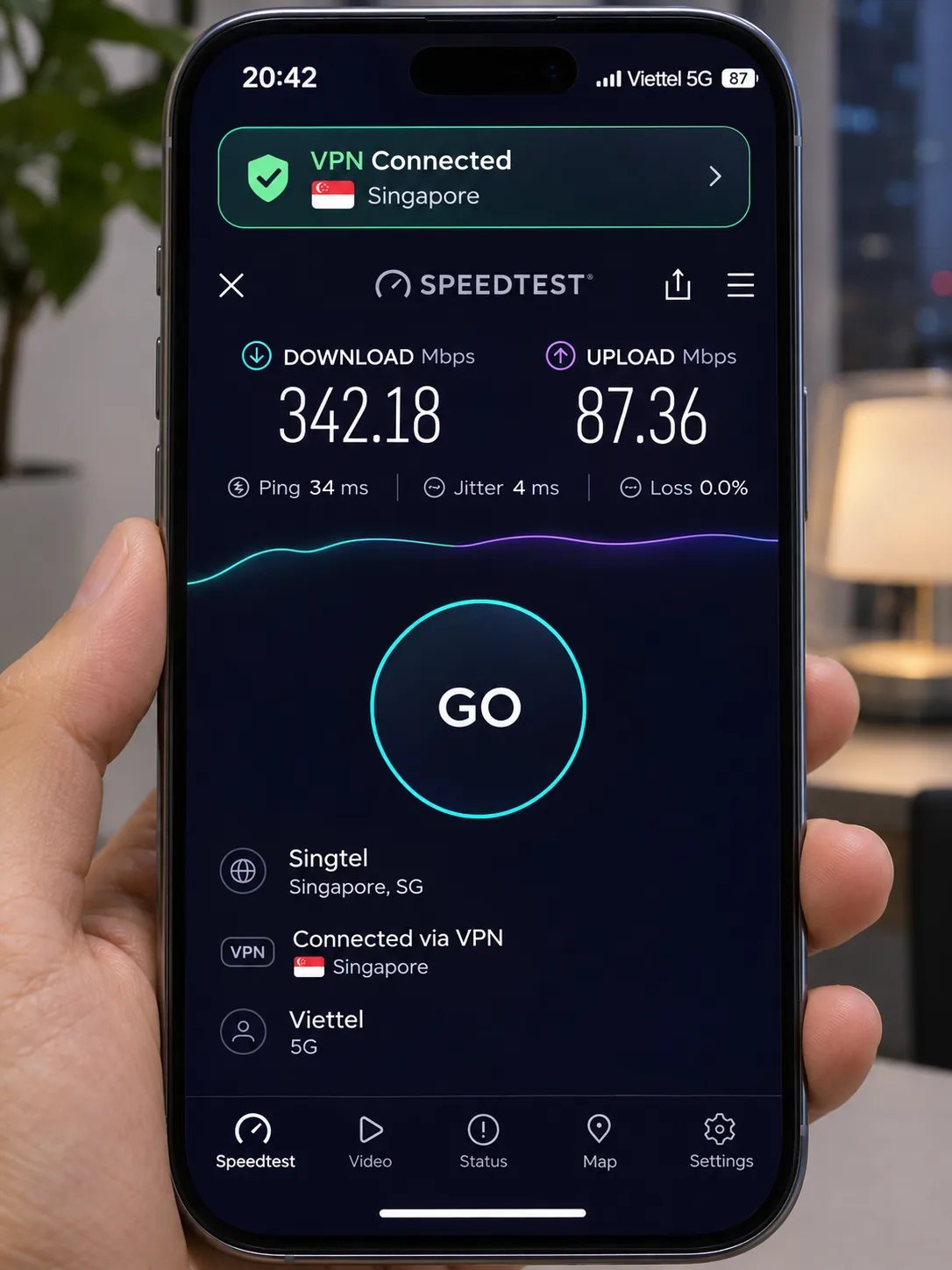
Before the rankings, here's how we judged them. We scored every VPN on the problems you'll actually hit in Vietnam. The first is connection success: how often an app connects on the first try on Vietnamese carriers, and what it takes to recover when it doesn't. We tracked that most closely for NordVPN across Viettel, Mobifone and Vietnamobile. We also ran NordVPN, Surfshark and Proton VPN on days when Facebook was throttled, to see whether their obfuscation brought speeds back. Those three became our main test group for speed on the Singapore, Hong Kong and Japan routes you'll use most.
Beyond speed, we watched how often the apps dropped and reconnected, ran DNS and WebRTC leak tests on PIA and ExpressVPN, and checked which Netflix libraries each one loaded. Split tunneling needed to keep local apps like Grab and ShopeeFood off the tunnel, and we confirmed it did on NordVPN. Price, renewal cost, device limits and the refund window decided the close calls.
The best VPNs for Vietnam in 2026, reviewed
Every VPN below has servers in Singapore, Hong Kong and Japan, and every one offers a 30-day money-back guarantee. What separates them is how they cope when Vietnamese networks start throttling traffic, how fast they stay on regional routes, and how much friction the apps add to a normal day.
1. NordVPN: best overall VPN for Vietnam
NordVPN was the most dependable VPN we used in Vietnam. It connected first time in the large majority of our attempts across Viettel, Mobifone and Vietnamobile. The occasional failure cleared as soon as we switched to another server. Once connected, sessions stayed up for hours without dropping.
The moment that sold us came on a day when Facebook was heavily throttled. On the default NordLynx protocol, the feed crawled, so we opened the server list and switched to the Obfuscated Servers category. The feed loaded again at full speed. On ordinary days, NordLynx handled everything on its own, and we never needed obfuscation at all.
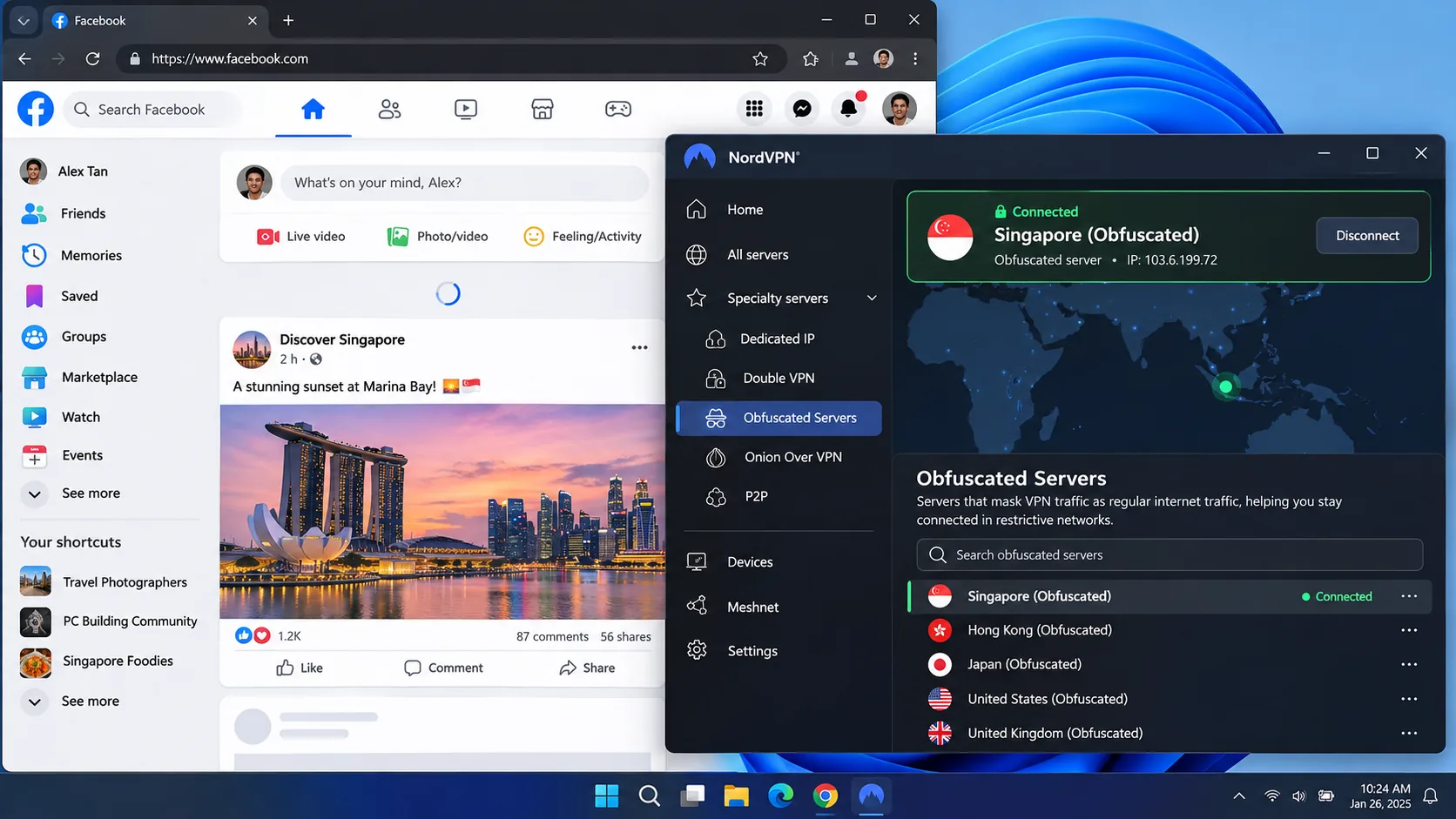
Speed was where NordVPN pulled ahead. It was the fastest of our three main test apps (NordVPN, Surfshark and Proton VPN) from Vietnam, especially to Singapore over Viettel 5G. It also lost very little speed overall. Split tunneling also earned its keep. We kept Grab and ShopeeFood on the local Vietnamese connection while everything else ran through the VPN, so ride bookings and food orders never complained about a foreign IP. Netflix US, BBC iPlayer, Disney+ and Hulu all loaded over NordVPN from Vietnam.
The obfuscated servers now run on NordVPN's NordWhisper protocol instead of OpenVPN, which means you can't use them through manual OpenVPN configs anymore. You'll also find a kill switch, Double VPN and Meshnet, plus Threat Protection Pro, which caught phishing pages that turned up while we browsed. NordVPN's no-logs policy was audited by Deloitte in late 2025. NordVPN's device limit is 10 devices at once, though a router running NordVPN covers every device on your network with one slot.
Pros
- Fastest speeds we saw from Vietnam, especially to Singapore
- Obfuscated servers restore speed during throttling
- Physical Vietnam servers in Hanoi and Ho Chi Minh City
- Sessions stay connected for hours
Cons
- Renewal price is steep
- No phone support
Pricing starts from about $3.49 a month on the 2-year Basic plan. NordVPN's checkout price moves with seasonal promotions, including its November Black Friday sales, so you may see it lower. Basic renews at $139.08 per year, which is the highest renewal here. The current tiers are Basic, Complete and Prime, and the upper tiers add more security extras.
2. Surfshark: best budget VPN for Vietnam with unlimited devices
Surfshark costs less than NordVPN and covers far more devices, though you give up a bit of speed in return. It ran roughly 15 to 25% slower than NordVPN on the same routes out of Vietnam.
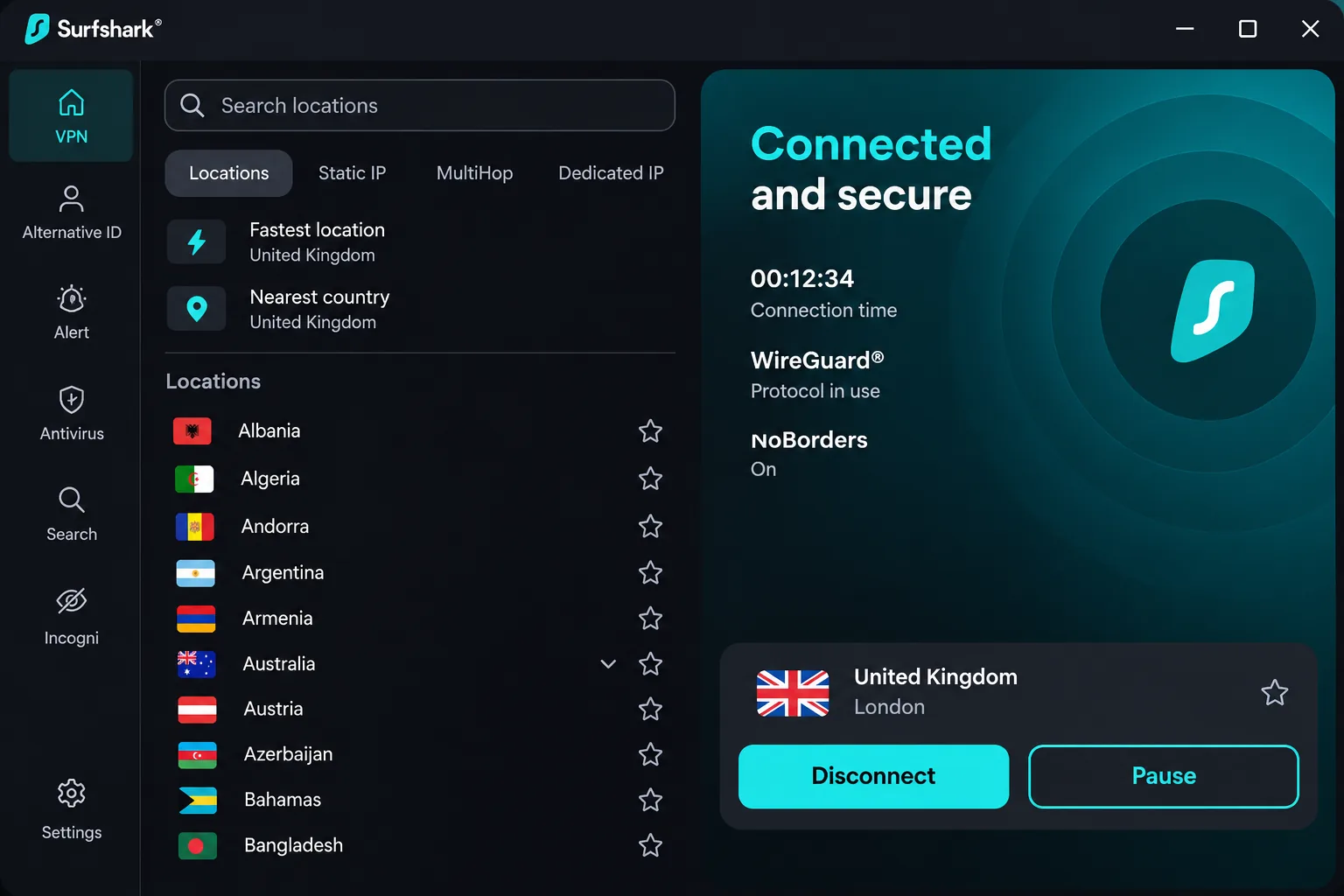
Its anti-censorship tools are the most automatic we used, and a throttled Facebook day showed why. Once throttling was under way, NoBorders mode switched itself on without us touching a setting, and the app suggested servers that worked under the restrictions. We picked from that list, and when a connection didn't come up, switching to the next suggested server got us through almost every time. Camouflage mode is Surfshark's obfuscation. Leaving it switched on raised our connection success rate slightly. Overall, Surfshark connected first time on most attempts, a little less often than NordVPN.
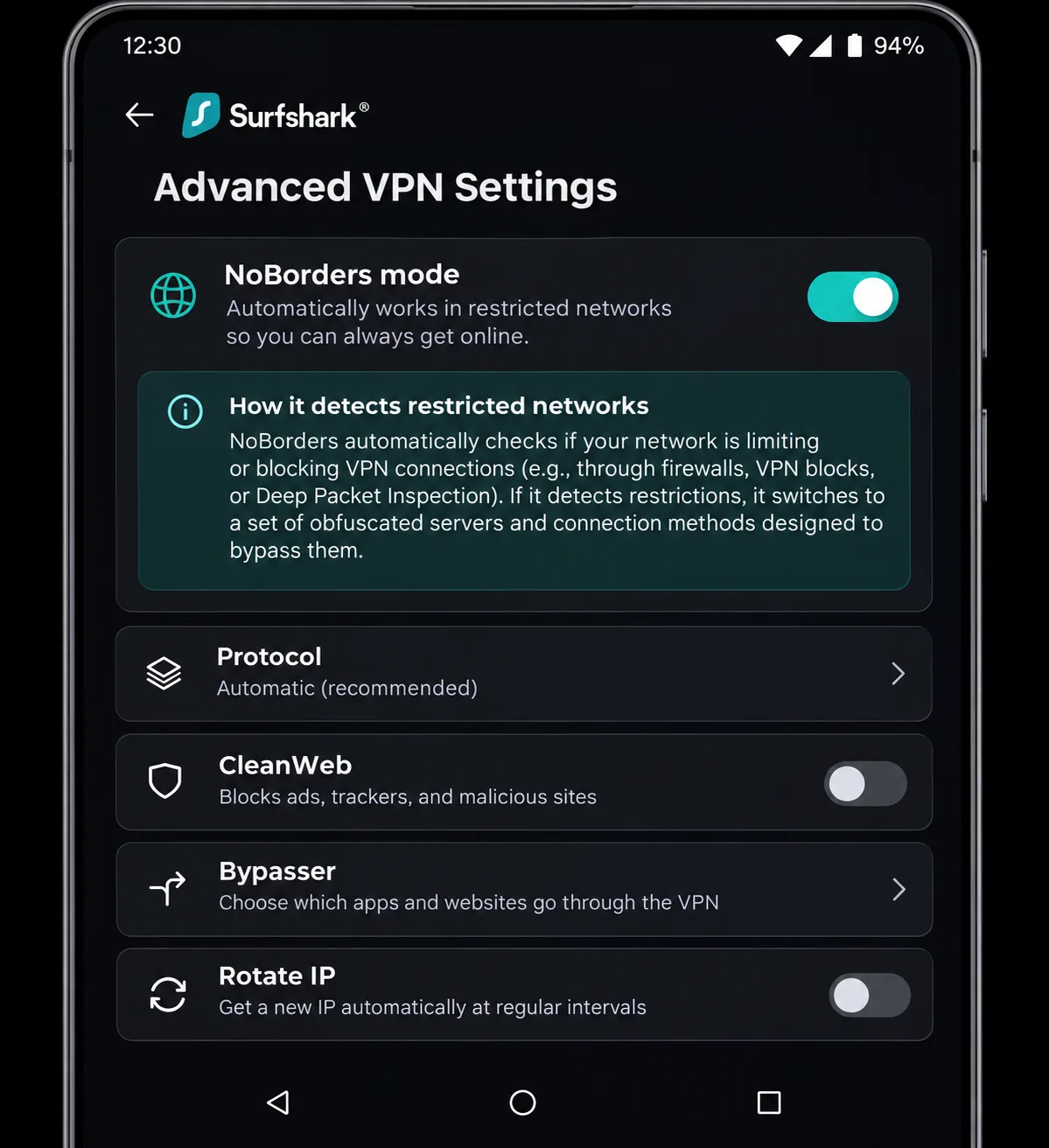
Unlimited devices is where Surfshark stands out. One account ran on many devices at once without connection conflicts, even with several people sharing it in a coworking space. CleanWeb also stripped dozens of trackers from Vietnamese-language sites. If NoBorders doesn't trigger on its own, open Settings → VPN Settings → Advanced and turn it on manually.
The weak spot is stability. Surfshark dropped and reconnected several times a day on Vietnamese networks, and heavy users will notice the interruptions.
Pros
- Unlimited simultaneous connections on every plan
- NoBorders mode switches on automatically when throttling starts
- Unblocked all four major Netflix libraries we tried
- Lowest-priced 2-year plan among the big names
Cons
- Drops and reconnects several times a day in Vietnam
- Thin privacy policy
- Lowest price needs a long commitment
The Starter plan costs $2.49 a month on the 2-year plan, billed $67.23 for the first 27 months. One+ costs $3.99 a month on the same term. Starter skips antivirus and threat monitoring, and Surfshark doesn't publish its renewal price upfront. Surfshark lists four Vietnam servers in Ho Chi Minh City. That count shifts, because it adds and removes servers in smaller locations.
3. Proton VPN: best free VPN for Vietnam
Where Surfshark automates its way around throttling, Proton VPN trades some speed for the strongest privacy credentials in this list, plus a free plan that is actually usable. It was the slowest of our three main test apps from Vietnam. Even so, it stayed fast enough for browsing and streaming on Singapore routes.
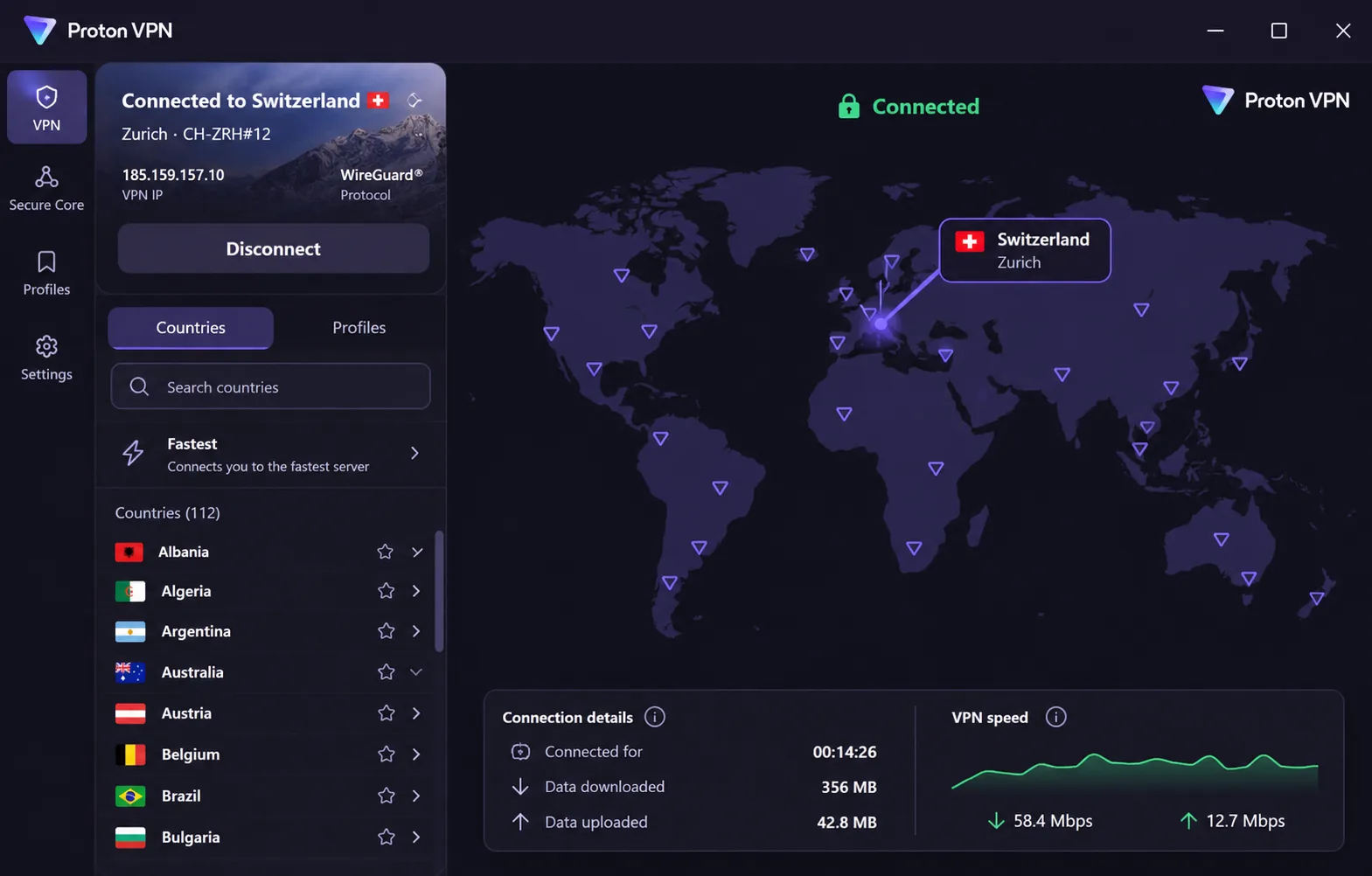
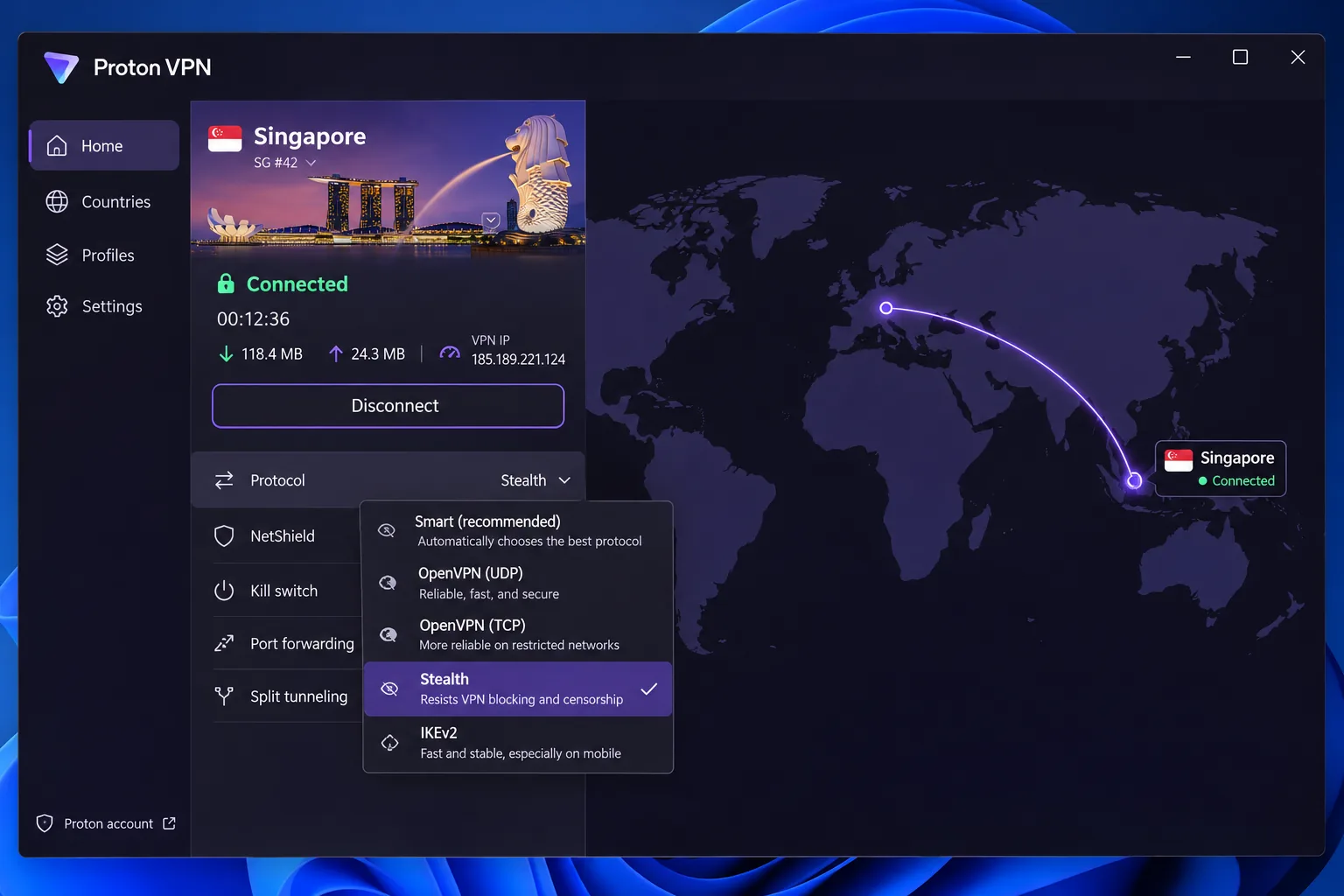
The Stealth protocol is the reason Proton VPN works here. During one throttling window, our WireGuard connection kept failing, and the app sat on the connecting screen. We switched the protocol to Stealth, which wraps VPN traffic so it looks like ordinary HTTPS, and the tunnel came up straight away. Proton says Stealth is available on every plan, including Free.
Proton VPN reconnected more often than NordVPN or Surfshark. Its kill switch stopped any unprotected browsing during those drops, and that protection mattered more to us than the interruptions. It connected first time on most attempts, slightly less often than Surfshark. On paid plans, NetShield cut the heavy tracker load on Vietnamese sites.
The free plan is a genuine option with tight limits, which we cover in the free-VPN section below. VPN Plus unlocks 10 devices, more than 20,000 servers in 140+ countries, Secure Core multi-hop and a Vietnam location through Smart Routing. That location's physical server sits in Singapore.
Pros
- Usable free plan that includes the Stealth protocol
- Stealth protocol keeps connecting when WireGuard fails
- Swiss jurisdiction and open-source apps
- Kill switch held through every reconnect
Cons
- Slower than NordVPN and Surfshark from Vietnam
- Reconnects more often than NordVPN or Surfshark
- Free plan is tightly limited
VPN Plus costs $2.99 a month on the 1-year plan ($35.88 for the first 12 months), then renews at $83.88 per year. The monthly list price is $9.99.
4. Private Internet Access: best for advanced users
If Proton VPN is the privacy pick, Private Internet Access is the tinkerer's choice. It's the most configurable VPN in this list, and the least predictable. Speeds and latency swung widely between servers and tests.
The clearest example came when we tapped the server that PIA's app labeled fastest and got a nearly unusable connection. We worked down the server list by hand until we found one that actually felt quick. On that server, Netflix loaded without a block, while the slower servers we had tried on the way gave us long loads and stuttering. Library switching stayed hit-and-miss by country, so expect to try a few locations.
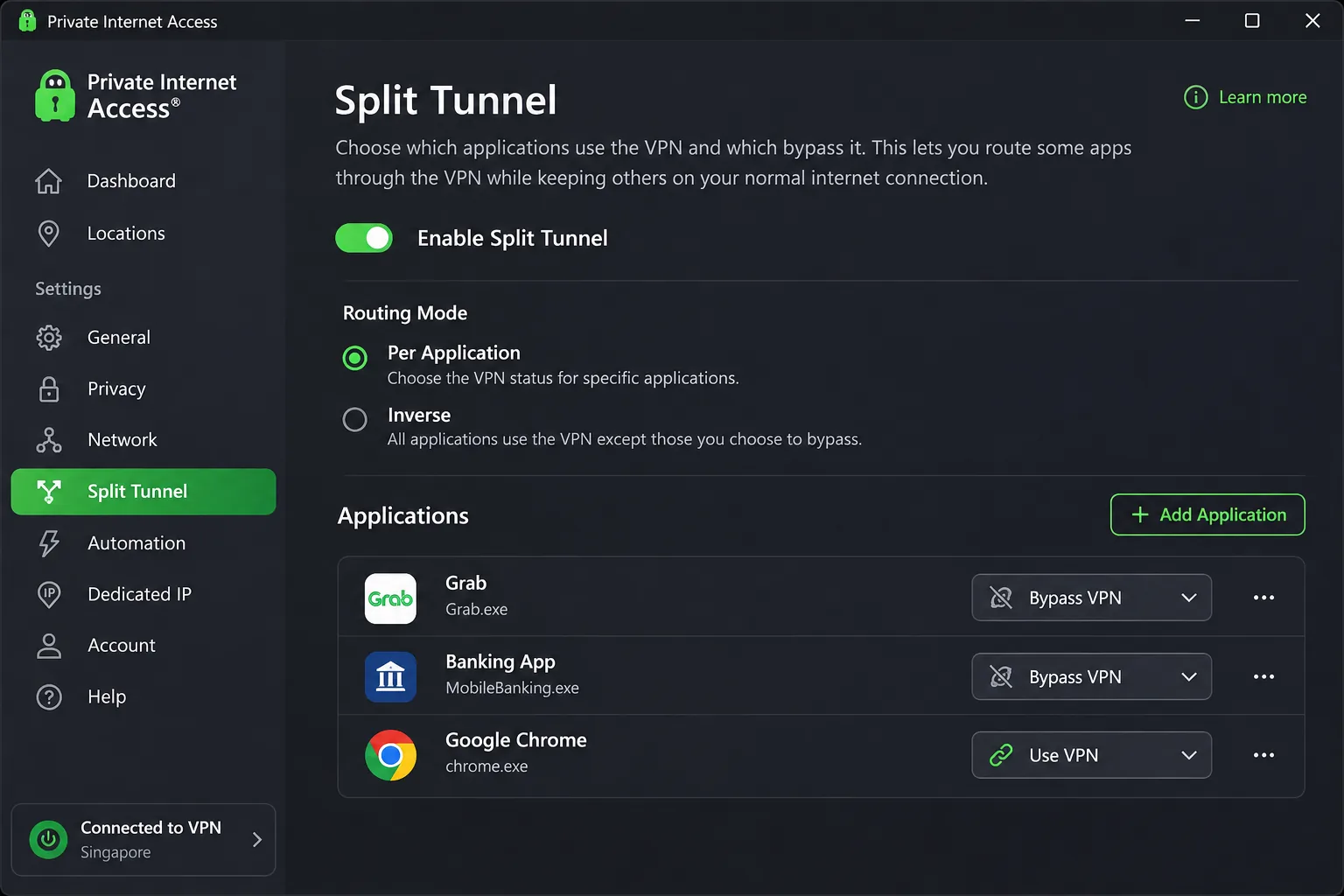
Split tunneling is PIA's strongest feature. You can route traffic by app or by IP address, in normal or inverse mode, which suits anyone who wants local banking and delivery apps outside the tunnel. For obfuscation, PIA uses a Multi-Hop setup with a Shadowsocks or SOCKS5 second hop. The Shadowsocks exits sit in the US, UK, Netherlands, Switzerland, Japan and Canada. You can't combine obfuscation with double VPN.
PIA passed our DNS and WebRTC leak tests, including while switching servers. The apps add friction, though. The desktop app docks to the taskbar like a phone app and can't be resized. The Android app can get stuck on system-permission prompts, and auto-connect rules often failed to trigger on Mac and iOS. MACE blocked most banner ads and some trackers, though not YouTube video ads.
Pros
- Split tunneling by app or IP, in normal or inverse mode
- Unlimited simultaneous devices
- Passed DNS and WebRTC leak tests
- Cheapest long-term plan here
Cons
- Speeds swing widely between servers
- Desktop app can't be resized
- Auto-connect rules often fail on Mac and iOS
PIA costs $2.03 a month on the 3-year plan with 4 extra months, billed $81.20, or $11.95 on the monthly plan. It offers a shared-IP Vietnam server, but PIA doesn't say whether that location is physical or virtual. Dedicated IPs aren't available in Vietnam. Live chat answered within a minute but was slow to resolve problems.
5. ExpressVPN: easiest to use in Vietnam
After PIA's dials and toggles, ExpressVPN asks the least of you. You never set up obfuscation by hand, because it handles restricted networks automatically.
The mobile app is simple and well suited to public Wi-Fi. On desktop, the newer dashboard tucks the kill switch and split tunneling under the Profile button, and the Windows app doesn't show the server list up front. We let Smart Location choose a server first, and it gave us a quick connection, though not always the fastest one available. When we went after a specific Netflix library, the first city server we tried wouldn't load it. Switching to a different city server fixed that, and the library came up.
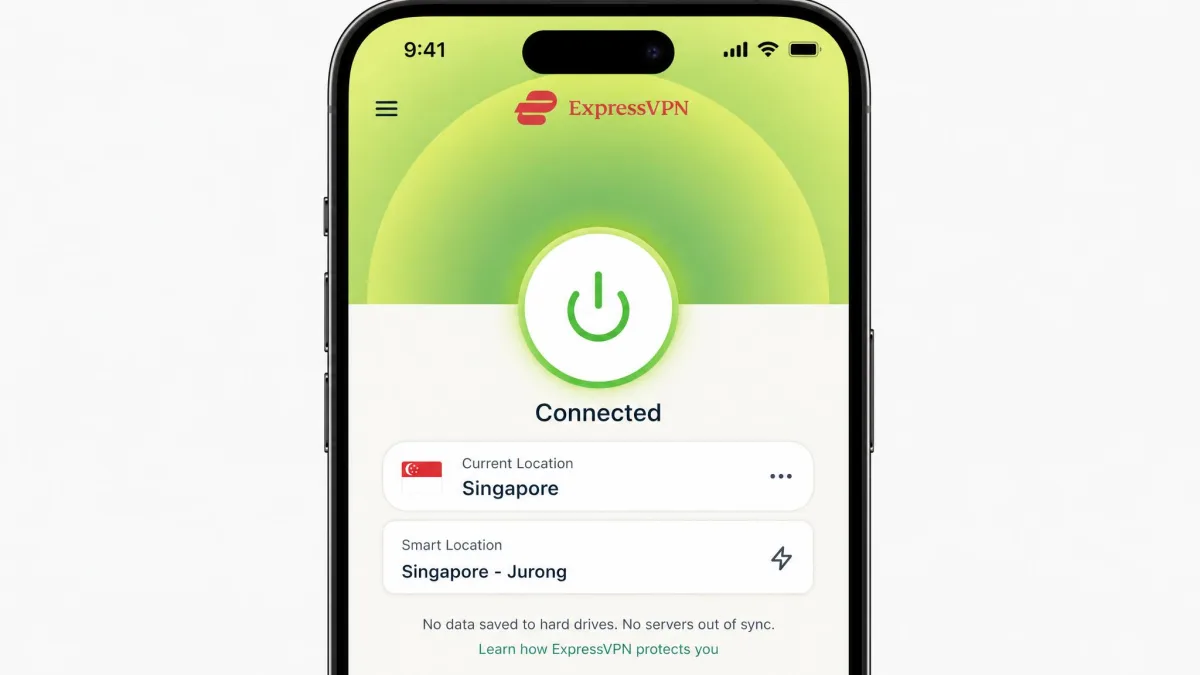
ExpressVPN kept speeds consistent on nearby servers but lost roughly a third of its download speed on long-distance routes. It also dropped the connection occasionally. Its Vietnam location is virtual and hosted in Singapore, and the app lists it as "Vietnam (via Singapore)". The network spans 214 server locations across 113 countries, and RAM-only servers back a no-logs policy audited by KPMG in June 2025.
Pros
- Obfuscation switches on automatically, with nothing to configure
- Simple mobile app that suits public Wi-Fi
- Live chat connects in about a minute with clear setup steps
Cons
- Only partially passes the WebRTC leak test
- Renews at $99.95 a year after the 28-month term
- Vietnam location is virtual, hosted in Singapore
The Basic plan costs $2.99 a month for 28 months, billed $83.72, then renews at $99.95 per year. Basic allows 10 devices at once, while the Pro tier raises that to 14. The entry tier lacks a tracker blocker and password manager, and there's no multi-hop.
Best VPNs for Vietnam compared
The table below lines up the details that matter most for Vietnam. Prices are the lowest long-term rate each provider offers.
| VPN | Buy | Obfuscation / anti-censorship | Nearest servers | Simultaneous devices | Starting monthly price | Money-back guarantee | Free plan |
|---|---|---|---|---|---|---|---|
|
Check price → | Obfuscated Servers (NordWhisper) | Vietnam (Hanoi, Ho Chi Minh City), Singapore, Hong Kong, Japan | 10 | About $3.49(2-year, promo varies) | 30-day | No |
 |
Check price | NoBorders + Camouflage | Vietnam (Ho Chi Minh City), Singapore, Hong Kong, Japan | Unlimited | $2.49(2-year) | 30-day | No |
 |
Check price | Stealth protocol (all plans) | Vietnam via Singapore (Plus), Singapore, Hong Kong, Japan | 10 (Free: 1) | $2.99(1-year) | 30-day | Yes |
 |
Shadowsocks multi-hop | Vietnam (type not stated), Singapore, Hong Kong, Japan | Unlimited | $2.03(3-year) | 30-day | No | |
 |
Automatic obfuscation | Vietnam via Singapore, Singapore, Hong Kong, Japan | 10 (Basic) | $2.99(28-month) | 30-day | No |
How to choose a VPN for Vietnam
The table shows how the five line up, but the right choice depends on which features your trip actually leans on. It comes down to four things, and obfuscation matters most. On ordinary days, a standard WireGuard-based protocol works fine. When throttling hits, though, you need an obfuscated option that disguises VPN traffic, whether that's NordVPN's obfuscated servers, Surfshark's NoBorders mode or Proton's Stealth protocol. Throttling gets heavier around politically sensitive events, and for short windows every VPN becomes less reliable at once.
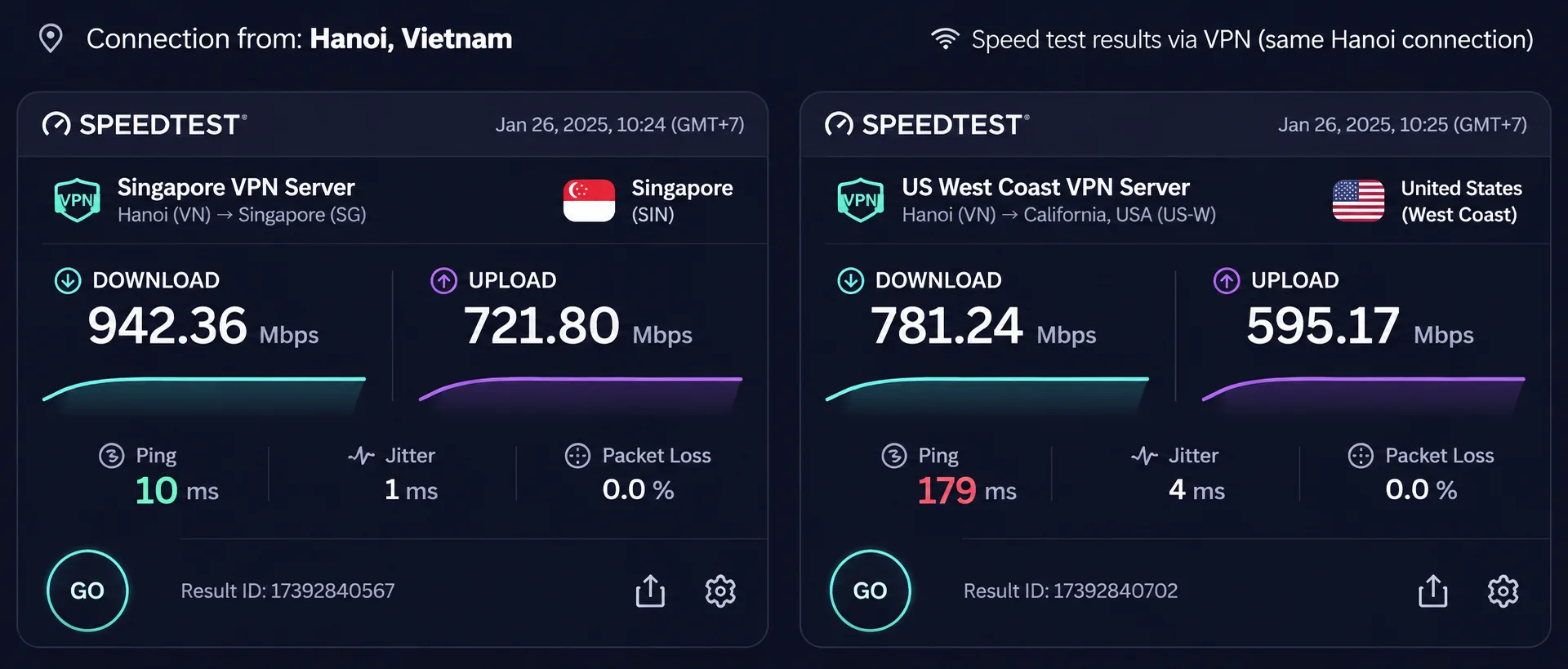
Server location comes next. Singapore servers gave us the lowest latency from Vietnam, roughly 8 to 15 ms. Hong Kong and Japan followed at about 20 to 40 ms, while US West Coast servers added 150 to 200 ms. If you mainly want privacy and open access, connect to Singapore. Only pick a distant server when you need a specific country's content.
Speed matters less than you might expect, because undersea cables set the ceiling. Three of Vietnam's five active submarine internet cables had technical problems for much of Freedom House's 2025 coverage period, which slowed connections to foreign servers. Those faults get repaired and recur month to month, so international speeds may be better or worse at any given time. When a cable goes down, it hits every VPN route out of the country, not just yours.
Finally, check the refund window. All five picks offer a 30-day money-back guarantee, which makes a first month risk-free if you test properly. Run your VPN through a throttled day, a video call and your banking app before the 30 days run out.
Buy through the provider's own website before you travel, not an app store. App Store and Google Play purchases are refunded under the store's terms, which can be slower than a direct refund.
Can you use a free VPN in Vietnam?
Paid plans aren't the only route, though for most people they're the safer one. You can use a free VPN, but most free services are a poor fit. They tend to get blocked quickly on Vietnamese networks, throttle your speeds, or make money from your browsing data. That last point matters more than the speed loss, because the whole reason to use a VPN is to keep your traffic private.
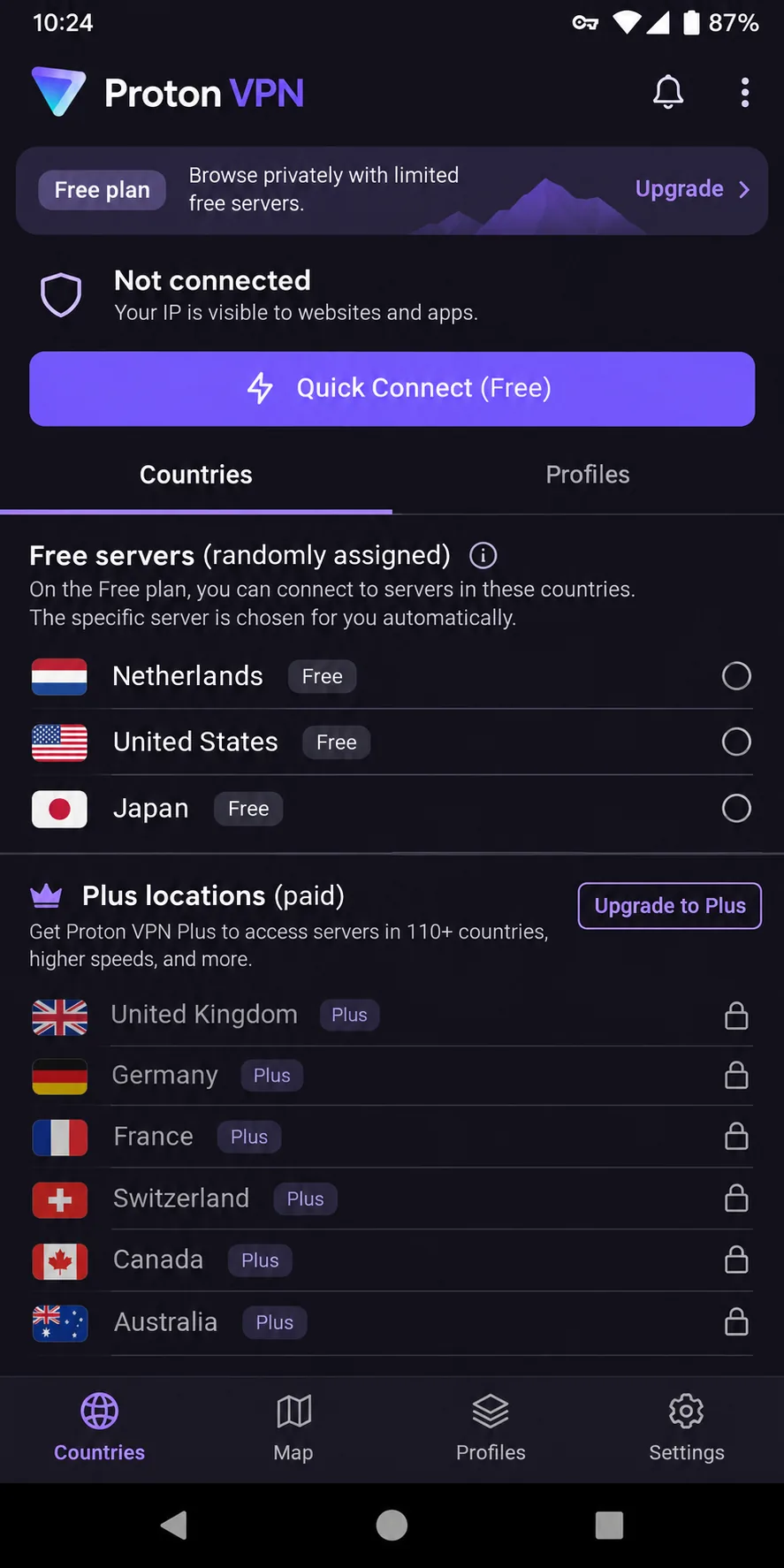
Proton VPN Free is the exception we'd trust. It keeps no logs, shows no ads and works without a credit card, and Proton says its Stealth protocol is available on the free plan. The limits are tight, though. You get 1 device, servers in 10 countries chosen at random, medium speeds, and no streaming or P2P. In our use, it worked best as a free fallback app on a second device, ready in case your main VPN has a bad day.
If you need to stream, share a connection with family, or rely on a VPN every day, a paid plan is the better choice. Surfshark and PIA both cost under $2.50 a month on long plans and cover unlimited devices. For more options, see our roundup of the best free VPNs worth installing.
Why you need a VPN in Vietnam
Free or paid, it helps to know exactly what a VPN is protecting you from here. Vietnam doesn't filter the web the way China does, and most everyday apps work normally. Google services, WhatsApp, Zoom, Google Meet, Teams, Spotify, YouTube, Grab and Shopee all worked on Vietnamese networks without a VPN. The country still enforces real restrictions, though, and those are worth understanding before you assume everything will just work.
What is blocked in Vietnam
Freedom House's Freedom on the Net 2025 report on Vietnam scores the country 22/100 and rates it Not Free. The report covers June 1, 2024 to May 31, 2025, and it marks both social media and websites as blocked. Its sub-scores are 12/25 for obstacles to access, 6/35 for limits on content, and 4/40 for violations of user rights.
In practice, the blocks are selective. Some foreign news outlets, political pages and human-rights sites don't load on local ISPs, while the BBC and CNN home pages generally do. Facebook and Instagram are fully reachable on most days, but occasionally they're throttled or close to blocked. With a VPN connected, they loaded for us every day. Messenger voice and video calls also failed on local networks at times without a VPN.
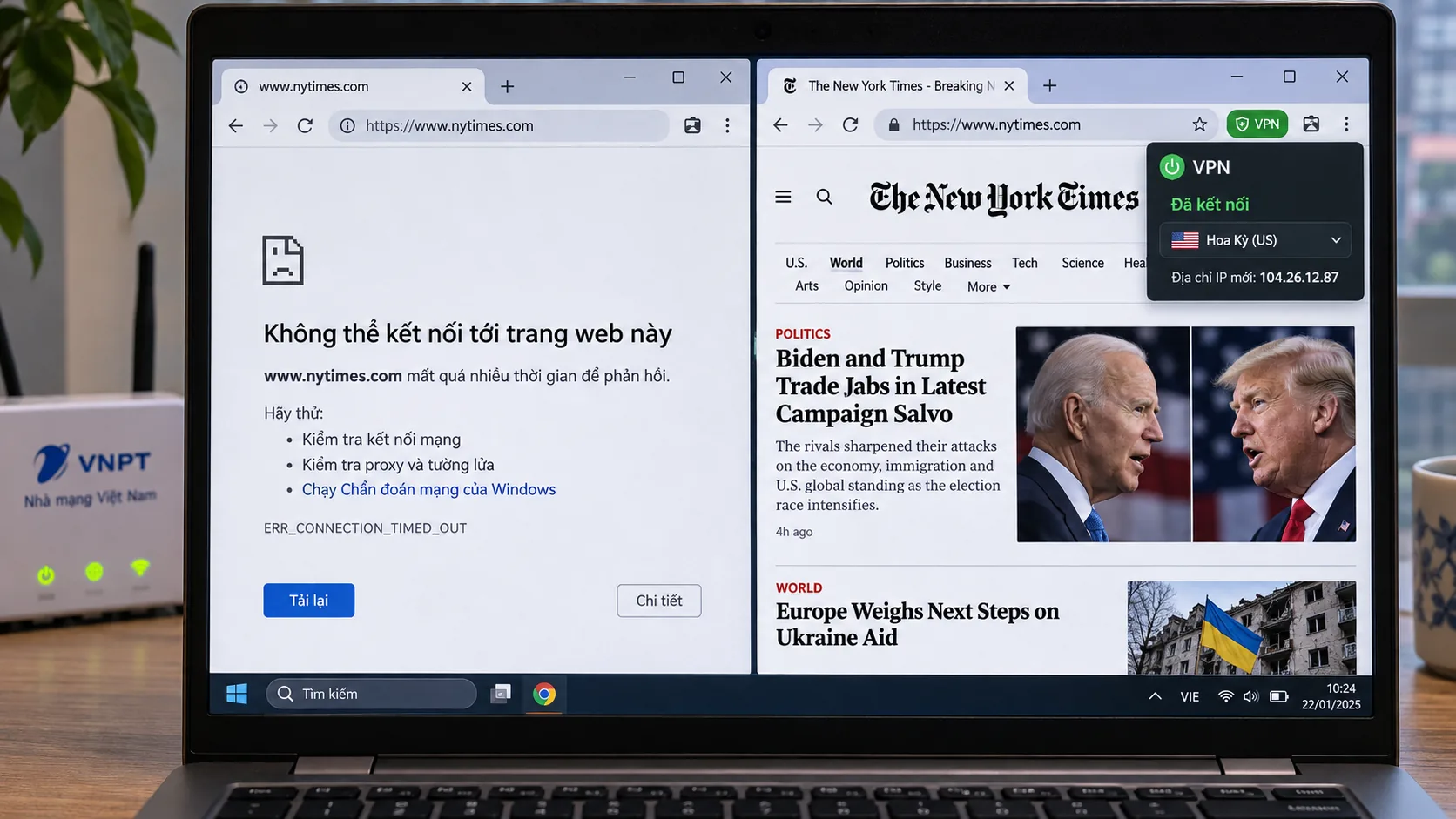
Telegram is the clearest recent case. Vietnamese authorities ordered telecom providers to block it on May 21, 2025 and to report back by June 2, 2025. The Ministry of Public Security said 68% of about 9,600 Telegram channels and groups in Vietnam were "bad and toxic", and officials also cited Telegram's refusal to share user data in criminal investigations. Enforcement has varied by ISP since then, so check it on your own connection. The state's grip on the network also tightened when the Ministry of Public Security took control of the carrier MobiFone in February 2025. If you want to see how a stricter regime compares, our guide to VPNs that still work in China covers a much harder firewall.
Public Wi-Fi security in cafes, hotels and buses
Censorship is the headline issue, but public Wi-Fi is the everyday reason to run a VPN in Vietnam. Cafe Wi-Fi in Hanoi typically runs 20 to 50 Mbps, which is enough for video calls and streaming. Homestay Wi-Fi is less dependable and can become nearly unusable in the evening.
Speed isn't the only issue. In Ho Chi Minh City cafes and coworking spaces, public Wi-Fi often includes open networks with no password, older WPA2 setups and look-alike duplicate network names. A VPN encrypts your traffic before it reaches the network's router, so the person running a fake hotspot can't read what you send. It won't stop you from typing a password into a phishing page, though. We explain the limits in our guide on what a VPN can and can't stop on public Wi-Fi.
Turn on your VPN's kill switch before you join cafe or bus Wi-Fi. If the VPN drops, the kill switch blocks traffic until the tunnel comes back, so nothing slips out unencrypted.
Streaming and banking from home while in Vietnam
Streaming libraries change by country, so your home Netflix, BBC iPlayer or Disney+ catalog won't follow you to Vietnam. Connecting to a server in your home country brings it back. Both NordVPN and Surfshark loaded every major library we tried from Vietnam.
Banking needs more care. Home-country banking apps can flag a login from a Vietnamese IP as suspicious and lock the account. Connecting to a server in your home country before you sign in avoids most of those flags.
Keep your home SIM active if your bank sends SMS codes. Codes can't reach a data-only eSIM, so you'll need your home SIM or a registered local SIM to verify logins.
Is it legal to use a VPN in Vietnam?
No published rule we found names personal VPN use as an offense, and none explicitly permits it either. Vietnam's laws focus on what you post and on the duties of platforms and providers. The law changed recently, though, so the details are worth knowing.
What Vietnam's Cybersecurity Law means for VPN users
Vietnam's new Law on Cybersecurity (No. 116/2025/QH15) was passed by the National Assembly on December 10, 2025, and has been in force since July 1, 2026. Of the 443 deputies present, 434 voted in favor. The law has 8 chapters and 45 articles. It replaces the 2018 Law on Cybersecurity and the 2015 Law on Network Information Security.
Its obligations fall mainly on platforms, telecom and internet companies, and providers of cybersecurity products and services, including foreign ones. Covered providers must verify user account information and block or remove violating content within 24 hours of a request from the Ministry of Public Security. The data-localization rules from the 2018 law stay in place. The text doesn't name VPNs, and it doesn't target individual users.
Seven decrees putting the law into effect, Nos. 327-333/2026/ND-CP, followed on August 19, 2026. One of them, Decree 330/2026/ND-CP, sets administrative penalties in cybersecurity and personal data protection. For the first time, it makes instructing others on how to get around online blocking a violation, with a reported fine of 20 million dong. The published summaries don't state the exact fine range or whether it applies to individuals or organizations, so that figure may not apply in every case.
People actually get prosecuted over speech. Video blogger Thai Van Duong was sentenced to 12 years in October 2024 over posts criticizing the Communist Party. That case was about what he posted, not about using a VPN. A VPN doesn't change what you're allowed to say.
What the account verification rule means for VPN users
Under Decree 147/2024/ND-CP account-verification rules (in Vietnamese), social-media accounts must be verified from December 25, 2024 before users can post, comment or livestream. The decree was issued on November 9, 2024, and platforms had 90 days from December 25, 2024 to verify existing active accounts.
Verification uses a Vietnamese mobile number. Foreign platforms may accept a personal identification number instead, but only if you confirm you have no Vietnamese mobile number. Commercial livestreaming requires a personal ID. A VPN doesn't change the phone number or ID tied to your account, so it doesn't get you around verification.
Legal sources verified November 2026. This section explains what the law says and isn't legal advice. Rules can change with new decrees.
Install and test your VPN before you arrive
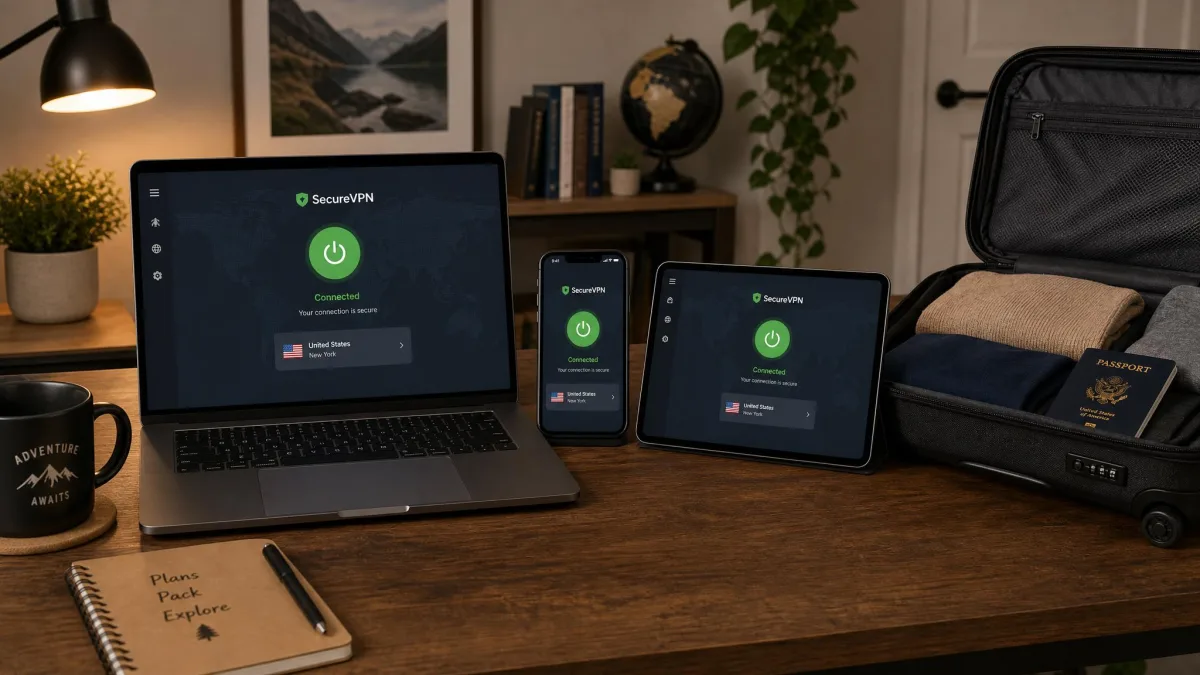
With the legal picture clear, the most practical thing you can do is get the timing right. Set up your VPN at home, before you board the plane. VPN provider websites can be unreachable from inside Vietnam, which makes signing up, downloading installers and reaching support harder after you land. App-store downloads generally still work, but you'll have fewer options.
Before you fly, work through a short checklist:
- Sign up on the provider's website and install the app on every device you're bringing.
- Log in on each device and connect once, so your credentials are saved.
- Find the obfuscation setting (Obfuscated Servers, NoBorders or Stealth) and try connecting with it.
- Turn on the kill switch and set up split tunneling for local apps like Grab.
- Test your banking app over a home-country server.
Your SIM needs planning too. Physical SIMs require passport registration, and street-vendor SIMs can be blocked later. Airport free Wi-Fi also asks for SMS verification. Buy from an official carrier store, and keep your VPN ready for the airport network.
How to get a Vietnamese IP address with a VPN
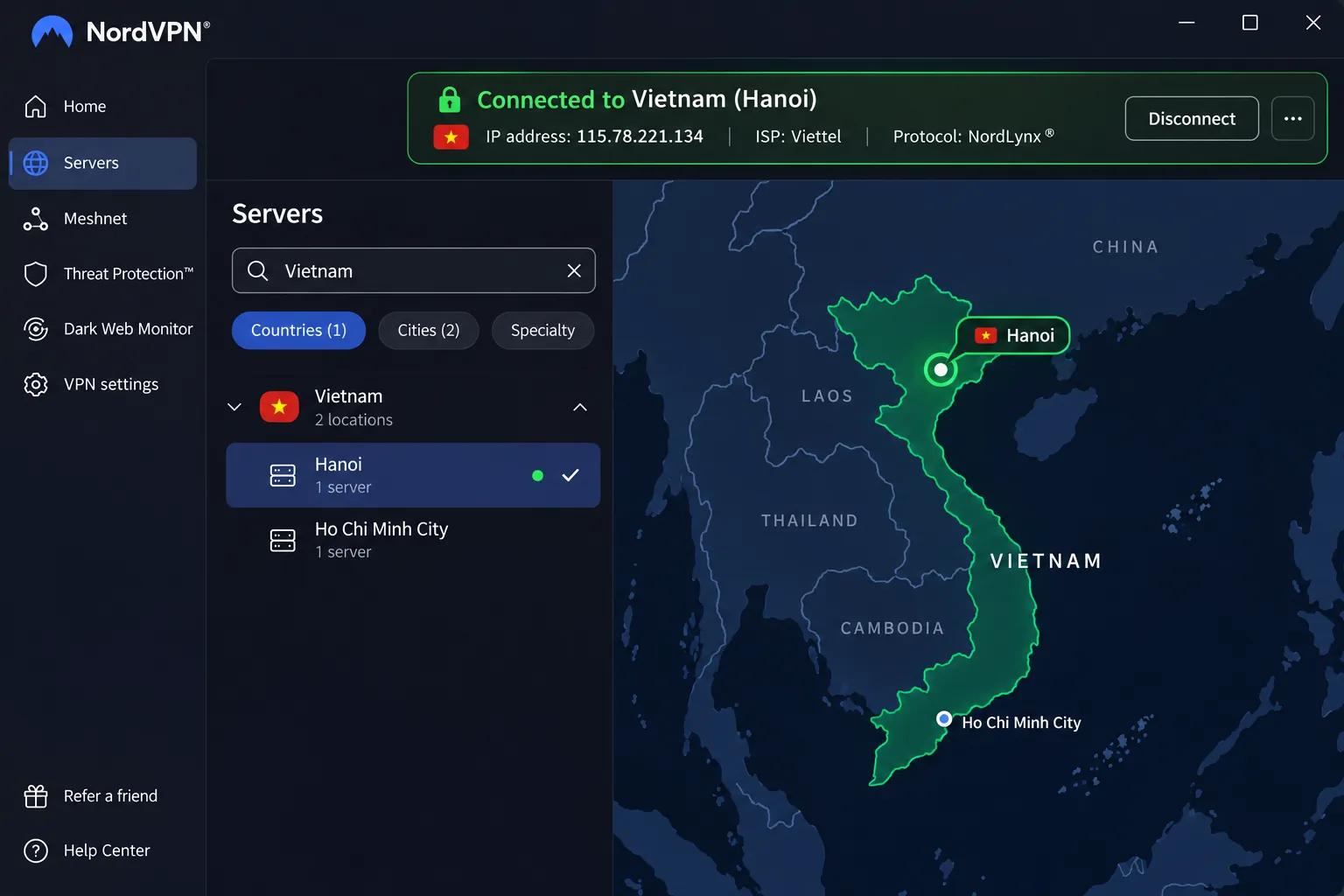
Everything above assumes you're inside Vietnam, but the same apps work in the other direction too. Living abroad doesn't mean giving up Vietnamese TV, banking or local services, because a VPN with a Vietnam server gives you a Vietnamese IP address from anywhere. From outside the country, we connected to NordVPN's Hanoi server and got a Vietnamese IP for Vietnamese TV and services.
- Pick a VPN with a Vietnam location. NordVPN has roughly 10 to 15 or more servers across Hanoi and Ho Chi Minh City, though it adjusts that count often.
- Install the app and log in.
- Search the server list for "Vietnam" and connect.
- Clear your browser cache or restart the streaming app, then sign in.
Surfshark also has Vietnam servers in Ho Chi Minh City. Proton VPN and ExpressVPN offer Vietnam locations too, but the hardware sits in Singapore.
Final thoughts
The right VPN for Vietnam depends on how you'll use it. Remote workers who live on video calls will get the most from NordVPN's speed and session stability. Families and coworking groups can stretch one Surfshark account across every device. If you only need occasional access, keep Proton VPN Free on your phone as a backup. PIA rewards people who like to tune split tunneling by hand. ExpressVPN fits anyone who wants an app that sorts out obfuscation on its own.