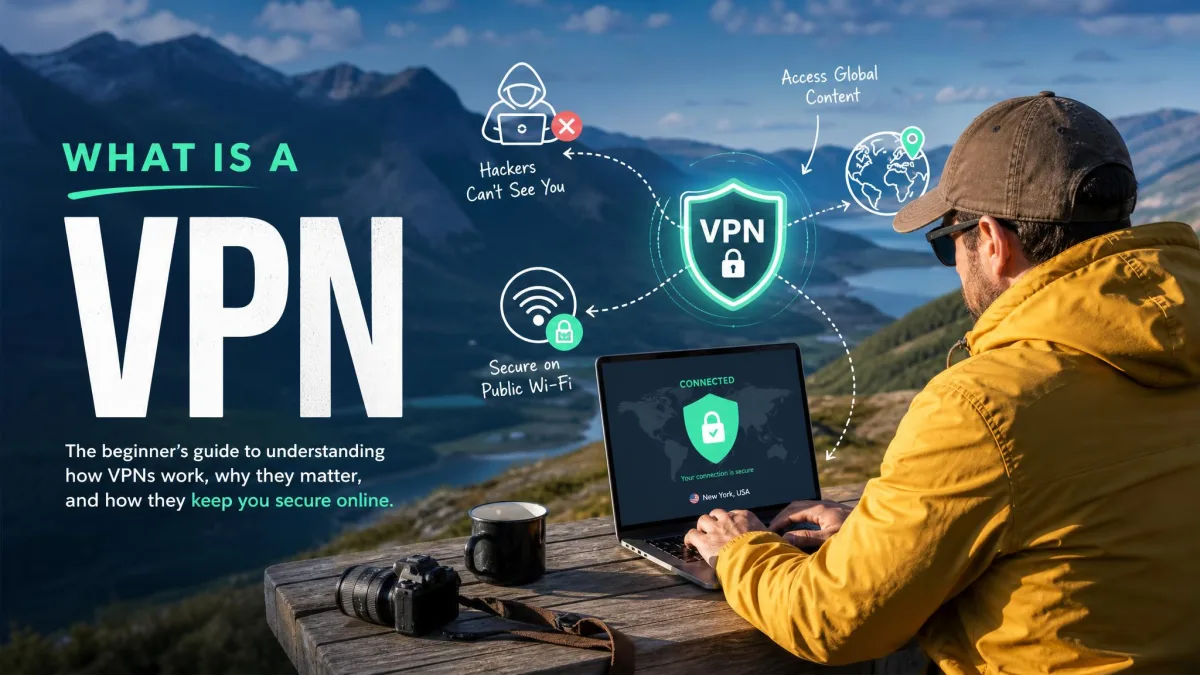
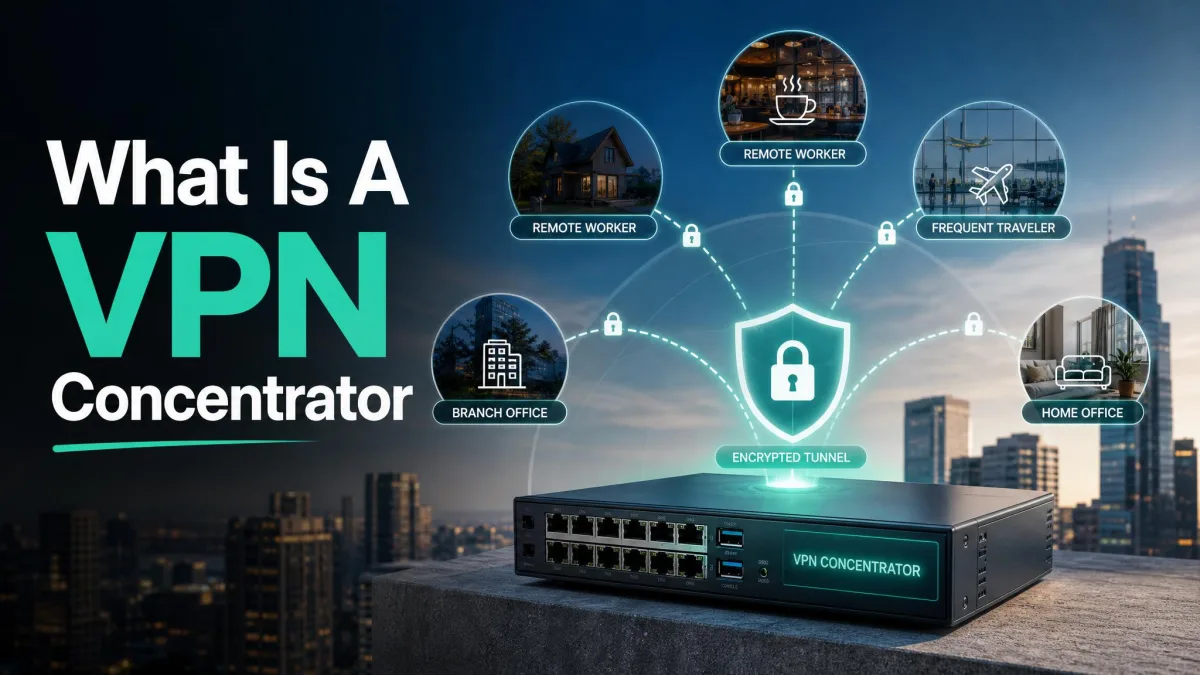
A VPN concentrator is a network device that creates and manages thousands of encrypted tunnels at once, so a large group of remote users can reach one corporate network securely. It is a single hardened door that every remote connection passes through.
Consumer VPN apps solve a personal privacy problem. A concentrator solves an enterprise one: how a business gives thousands of employees, contractors, and branch offices encrypted access to internal systems without losing track of who is connected. We wrote this guide for readers who keep meeting the term and want a plain answer.
Key takeaways: a VPN concentrator terminates large volumes of VPN tunnels, authenticates every user centrally, and enforces one security policy across all remote access. It is expensive, complex, and a single point of failure.
What Is a VPN Concentrator?
A VPN concentrator is a device, or a software service doing the same job, that terminates many simultaneous VPN tunnels on one platform and applies consistent encryption, authentication, and routing rules to all of them.
The term comes from a specific product. Cisco's VPN 3000 Series Concentrator popularized it, and that appliance is retired, with the ASA 5500 Series named as its successor. Cisco even published a migration guide moving VPN 3000 administrators onto ASA 7.2, because the function was folded into firewall platforms rather than kept as a separate product line.
What Does a VPN Concentrator Do?
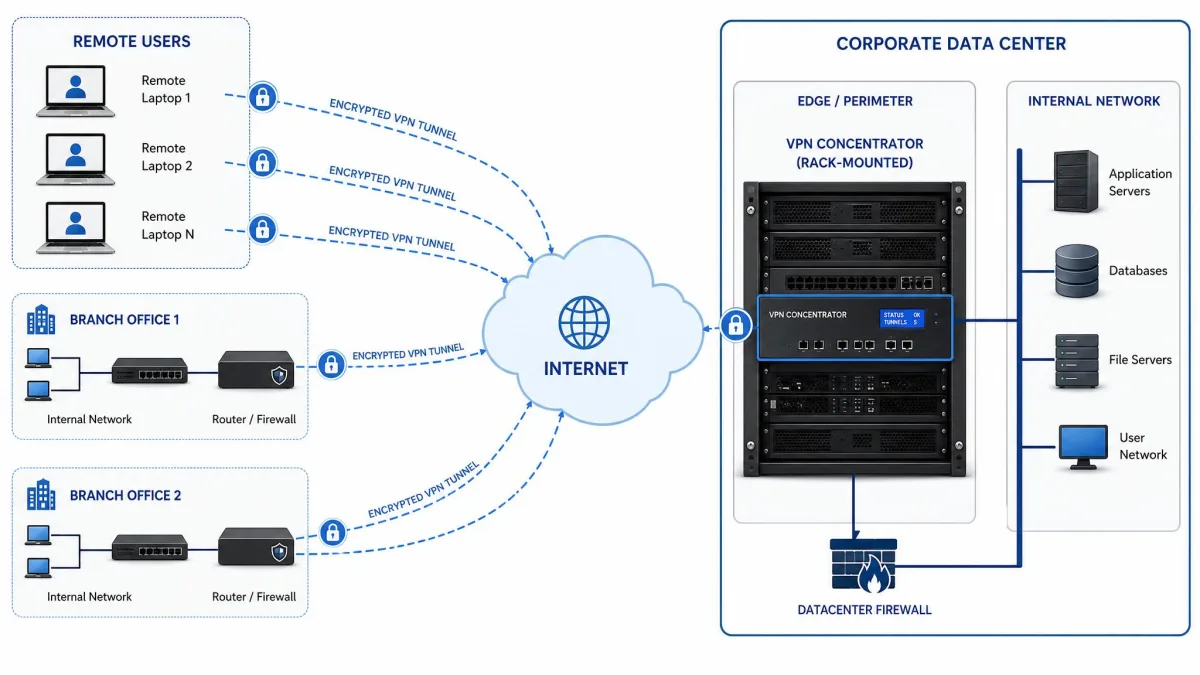
The device does four things a plain router cannot do at scale. It terminates encrypted tunnels, authenticates every user against a central directory, assigns each session an internal address and a routing policy, and logs what happened.
All of it runs through one console, so an administrator sets a rule once and every session inherits it. A concentrator also works in reverse, building permanent site-to-site tunnels so a small office reaches head-office resources.
How Does a VPN Concentrator Work?
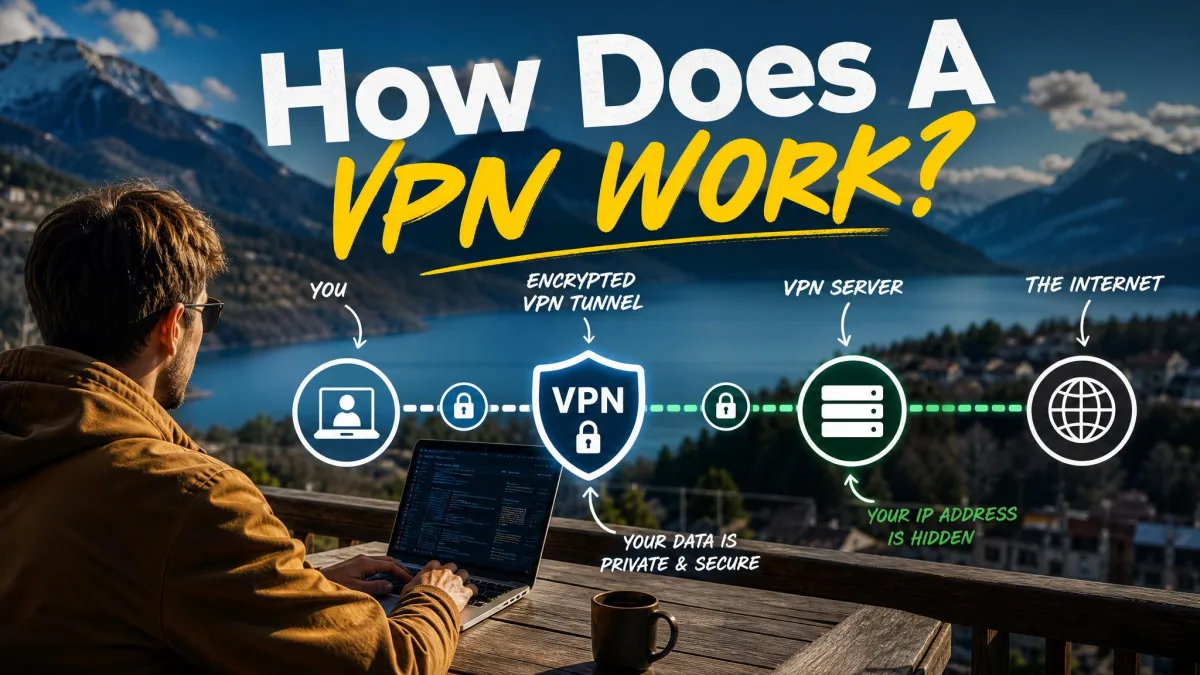
A concentrator works in three stages. It proves who is connecting, builds an encrypted tunnel, then aggregates those tunnels into policy-controlled traffic on the internal network.
Tunnel Establishment and Authentication
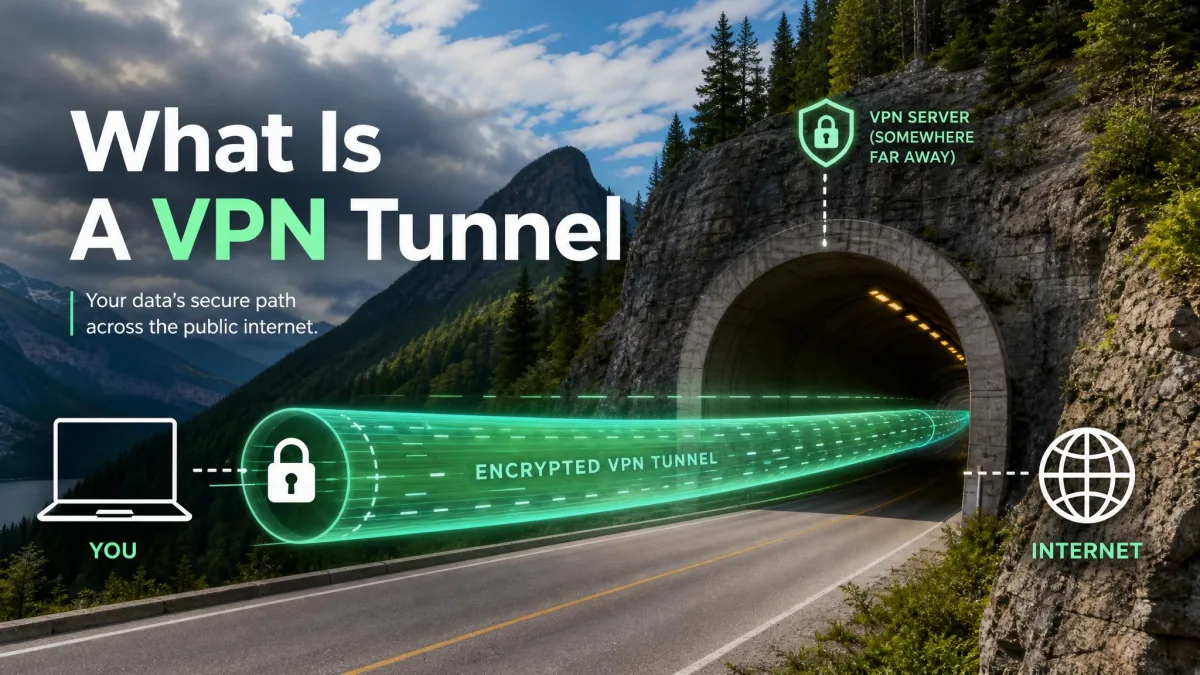
A remote client contacts the concentrator's public address and starts a key exchange. On modern IPsec deployments that exchange is IKEv2, which negotiates ciphers, authenticates the peers, and rekeys the tunnel on a schedule.
Authentication is separate, and usually reaches an existing identity service: RADIUS, LDAP, Active Directory, or an MFA provider. Only when both steps succeed does the client receive an internal IP address.
Encryption and Traffic Aggregation
Every packet inside the tunnel is encrypted and authenticated, typically with AES. Serious appliances carry dedicated crypto hardware for that work.
Decrypted traffic then emerges inside the network with a source address the concentrator controls, so firewall rules and monitoring apply as they would to a device in the office.
Hardware vs. Software Concentrators
A hardware concentrator is a purpose-built appliance with crypto offload silicon, redundant power, and published throughput figures. A software concentrator is the same function on a commodity server or cloud instance. Hardware wins on raw throughput; software wins on cost and elasticity.
Who Uses a VPN Concentrator, and When Do You Need One?
Concentrators belong to organizations with a large remote workforce, multiple offices, or strict rules about who touches internal data. Banks, hospitals, universities, and government agencies are typical buyers.
Demand tracks remote work directly. US workers primarily working from home tripled between 2019 and 2021, rising from 5.7% to 17.9% of the workforce.
You need concentrator-class capability when three things are true at once:
- Several hundred people or more require simultaneous encrypted remote access.
- Those people need internal systems, not just cloud apps.
- One team is accountable for the policy governing all of that access.
You do not need one if your staff live in SaaS tools and your concurrent users fit on a business firewall's built-in VPN.
Benefits of a VPN Concentrator
The advantages are all consequences of centralization: one device, one policy, one log stream.
Pros
- Thousands of simultaneous encrypted tunnels on one platform
- Central authentication tied to existing directory and MFA services
- One security policy applied to every remote user
- Site-to-site and remote access on the same device
Cons
- High purchase price plus a recurring licence
- Published capacity figures are lab numbers, not production numbers
- Configuration demands genuine networking expertise
- A single appliance is a single point of failure
Centralized Management and Control
Access control becomes one configuration exercise rather than a per-device chore. Revoking a departing employee happens once, in the directory, and applies to every tunnel that user could open.
Scalability for Large Remote Workforces
A Cisco Meraki MX250 is rated for 3,000 site-to-site VPN tunnels, 500 client VPN tunnels, 1,000 AnyConnect sessions, and 4 Gbps of site-to-site VPN throughput.
Higher tiers go further. A Fortinet FortiGate 600F publishes 55 Gbps of IPsec throughput at 512-byte packets and 8 million concurrent sessions, and a Juniper SRX4600 is rated at 48 Gbps at IMIX. Read those numbers with the packet size attached, because throughput falls sharply on real traffic mixes.
Consistent Security Policy Enforcement
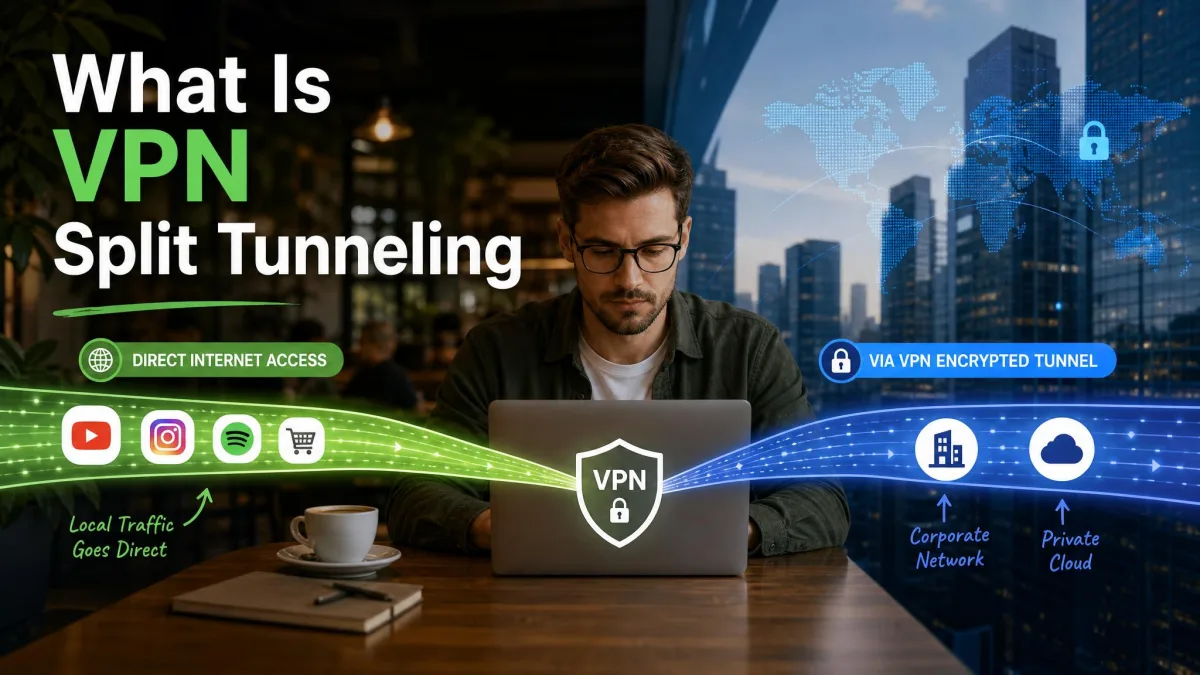
The device dictates cipher suites, authentication method, idle timeout, and whether split tunnelling is allowed.
Advanced Routing and Site-to-Site Connectivity
Concentrators anchor hub-and-spoke topologies. Branch offices build permanent tunnels to the hub, and BGP or OSPF distributes routes across the encrypted mesh.
Drawbacks of a VPN Concentrator
Every benefit of putting all remote access on one device has a matching cost.
High Upfront Cost
The appliance is only the opening payment. Meraki's Advanced Security licence and support for an MX250 lists near $9,800 for one year and about $22,078 for three, and pricing is set per reseller and per term.
Bandwidth and Performance Ceilings
Maximum tunnel counts mislead, because they are lab figures measured with no client traffic. Meraki lists a much lower recommended count for that reason: 3,000 maximum site-to-site tunnels against 1,000 recommended once data is flowing.
Configuration Complexity
Cipher negotiation, certificate lifecycles, split-tunnel policy, and group access rules all have to agree with each other and with the client software. Migration is its own project: retiring the VPN 3000 required a full administrator guide, and the conversion tool required opening a support case.
Single Point of Failure
One device carrying all remote access is a textbook single point of failure. If it reboots or crashes a service, nobody works remotely until it returns.
The failure does not have to be hardware. An SSL-VPN daemon can consume high CPU or crash outright, dropping remote sessions for everyone on the appliance at once. Internet-facing portals also attract constant brute-force login attempts, which alone spike CPU and fill logs with failed logins.
The security version is worse. CVE-2018-13379, a path-traversal flaw in the FortiOS SSL-VPN portal, leaked plaintext credentials from roughly 50,000 devices and still sits in CISA's Known Exploited Vulnerabilities catalog. Patching may not evict an attacker either, since a 2025 Fortinet advisory described planted symbolic links that preserved read-only access to device configs afterwards.
VPN Concentrator Encryption Protocols
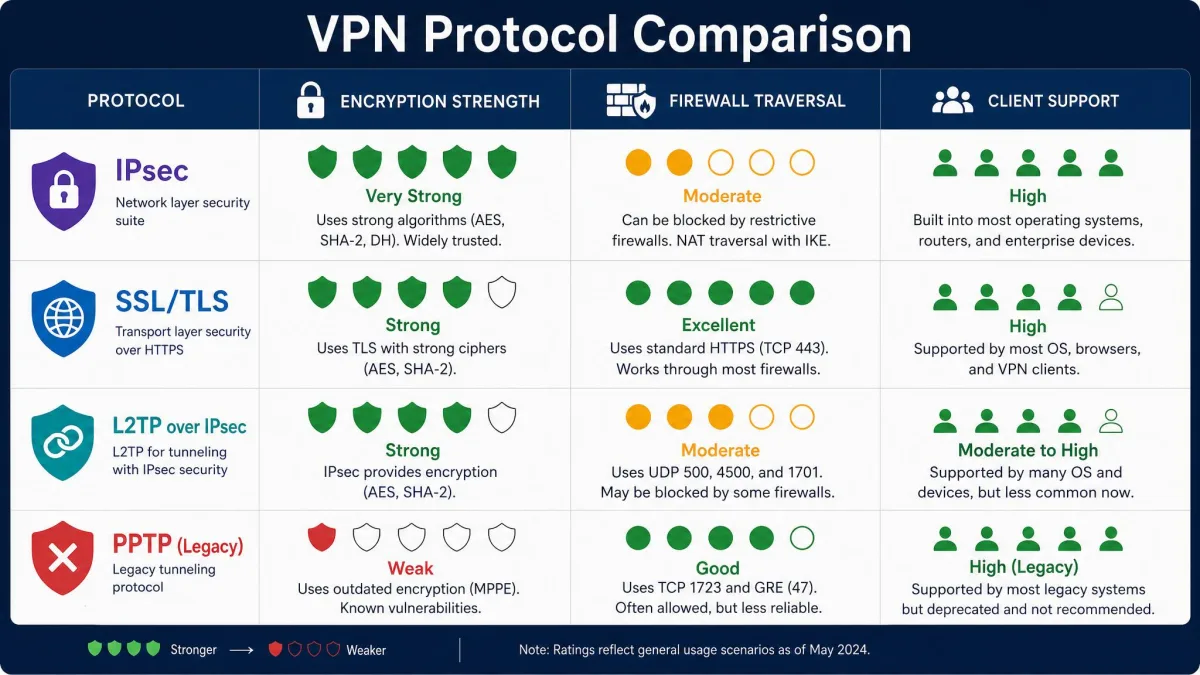
A concentrator supports several tunnelling protocols so it can serve old clients and new ones. Two matter in current deployments.
IPsec
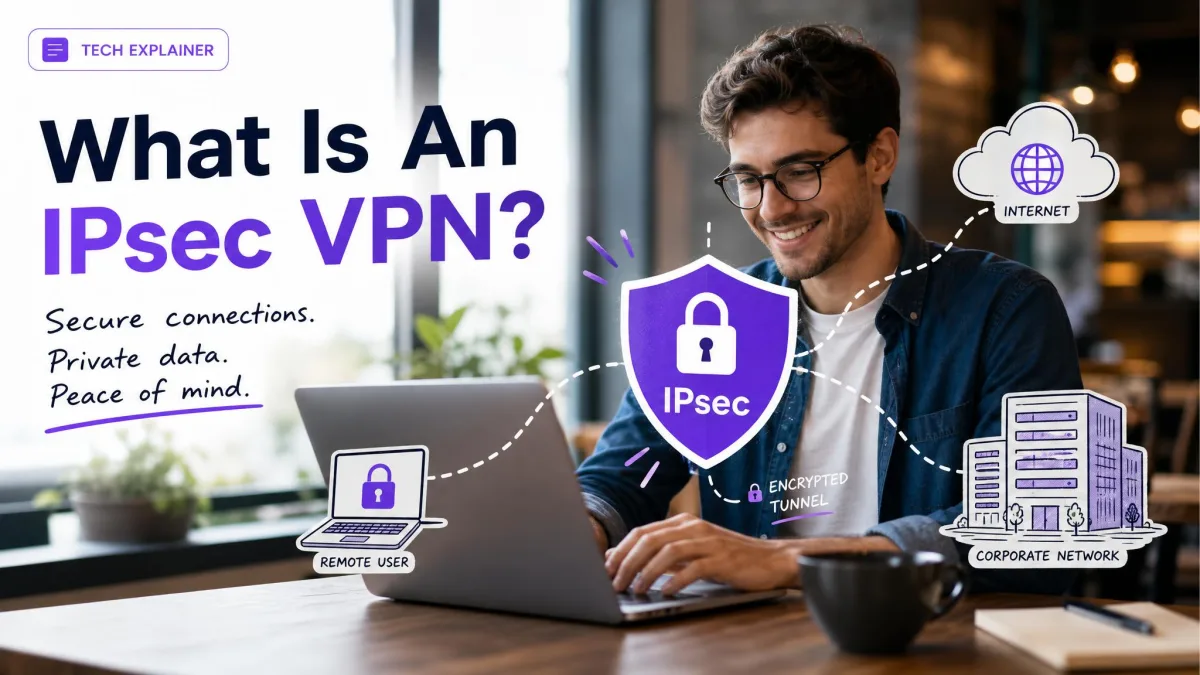
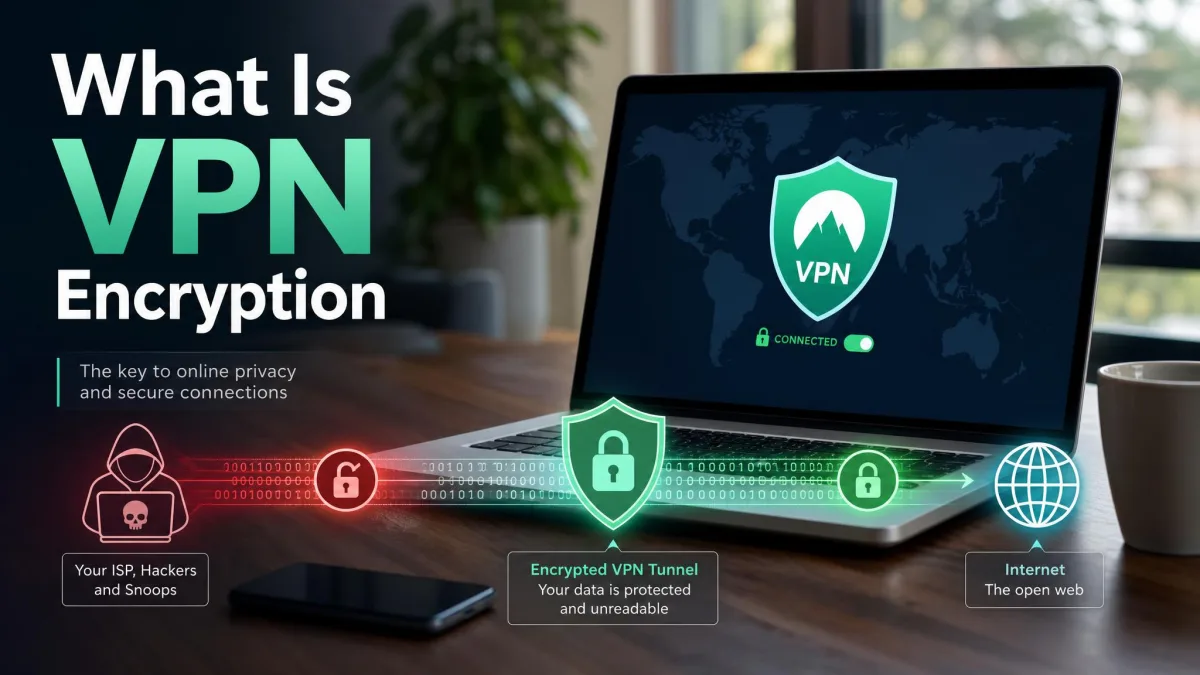
IPsec is the default for site-to-site links and most managed client deployments, encrypting at the network layer so applications need no awareness of it. NIST SP 800-77r1 is the current federal guide to IPsec VPNs and covers IKE-based tunnel negotiation in detail.
SSL/TLS
SSL/TLS VPNs run over the same port as HTTPS, so they work from hotel networks and guest Wi-Fi where IPsec is blocked. That convenience carries a cost, because the portal has the ugliest recent breach history of any component here.
L2TP/IPsec
L2TP provides the tunnel and IPsec provides the encryption, because L2TP alone offers none. Support is broad and well documented, including in the Linux kernel's L2TP documentation, but double encapsulation makes it a compatibility option.
PPTP/MPPE (Legacy)
PPTP with MPPE encryption is obsolete. Its encryption has been broken for years, and it survives only in aging equipment nobody has retired.
VPN Concentrator vs. the Alternatives
Most confusion about concentrators comes from overlapping product names, so it helps to line the options up side by side.
| Solution | Typical scale | Deployment cost | Management model | Best-fit use case |
|---|---|---|---|---|
| Thousands of tunnels | High: appliance plus licence | Centralized, one console | Large remote workforce | |
| Dozens to low hundreds | Low: SMB hardware | Per-device local config | Small office network | |
| Tens of fixed tunnels | Low, uses existing gear | Static per-tunnel config | Linking fixed offices | |
| 1 per device | Per-seat or free | End-user managed | An individual employee | |
| Hundreds to thousands | Mid to high, often bundled | Centralized, cloud-managed | Enterprise edge in an NGFW |
VPN Concentrator vs. VPN Router
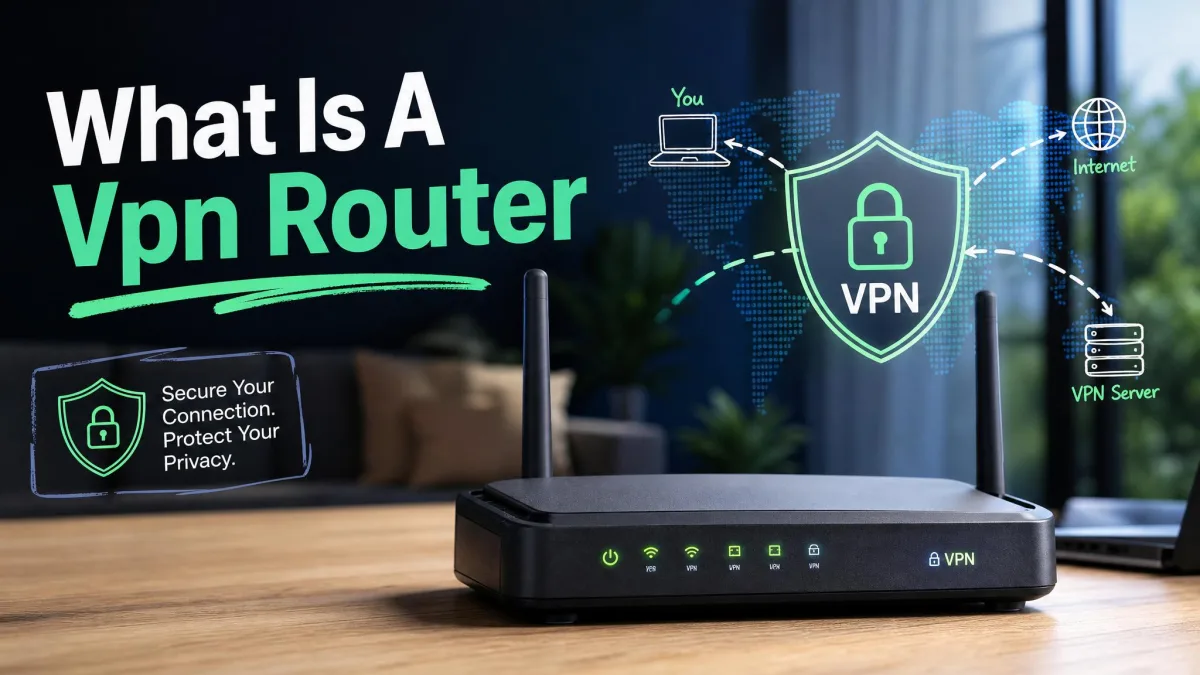
A VPN router is a router that happens to speak VPN. A concentrator exists only to terminate tunnels. A router handles a handful of tunnels configured locally; a concentrator handles thousands, configured centrally.
VPN Concentrator vs. Site-to-Site VPN
This comparison confuses a device with a topology. A site-to-site VPN is a permanent encrypted link between two fixed networks, and routers, firewalls, or a concentrator can all build one.
VPN Concentrator vs. IPsec Encryption
IPsec is not a competing product. It is the protocol suite a concentrator uses to encrypt traffic, so the two sit at different layers.
VPN Concentrator vs. VPN Client
The client is software on the laptop; the concentrator is the device it connects to. Consumer services blur this because one subscription provides both ends.
VPN Concentrator vs. VPN Gateway
A VPN gateway is any device terminating tunnels at a network boundary, so every concentrator is a gateway but not every gateway handles concentrator-scale volume.
Popular VPN Concentrators and Vendors
No major vendor ships a product called a concentrator today. The devices filling the role are security appliances with the capability built in.
- Cisco Meraki MX250. Cloud-managed, with Auto VPN hub-and-spoke, SD-WAN, AnyConnect client VPN, and warm-spare failover. Meraki's MX sizing guidance publishes maximum and recommended tunnel counts side by side.
- Fortinet FortiGate 600F. IPsec and SSL-VPN termination with NP7 crypto offload, a ZTNA access proxy, SD-WAN, and HA clustering. Gateway-to-gateway and client-to-gateway tunnel limits are listed separately.
- Juniper SRX4600. A data-center-class firewall covering site-to-site, hub-and-spoke, AutoVPN, ADVPN, and Group VPN topologies, with IKEv1 and IKEv2.
Do You Actually Need a VPN Concentrator Today?
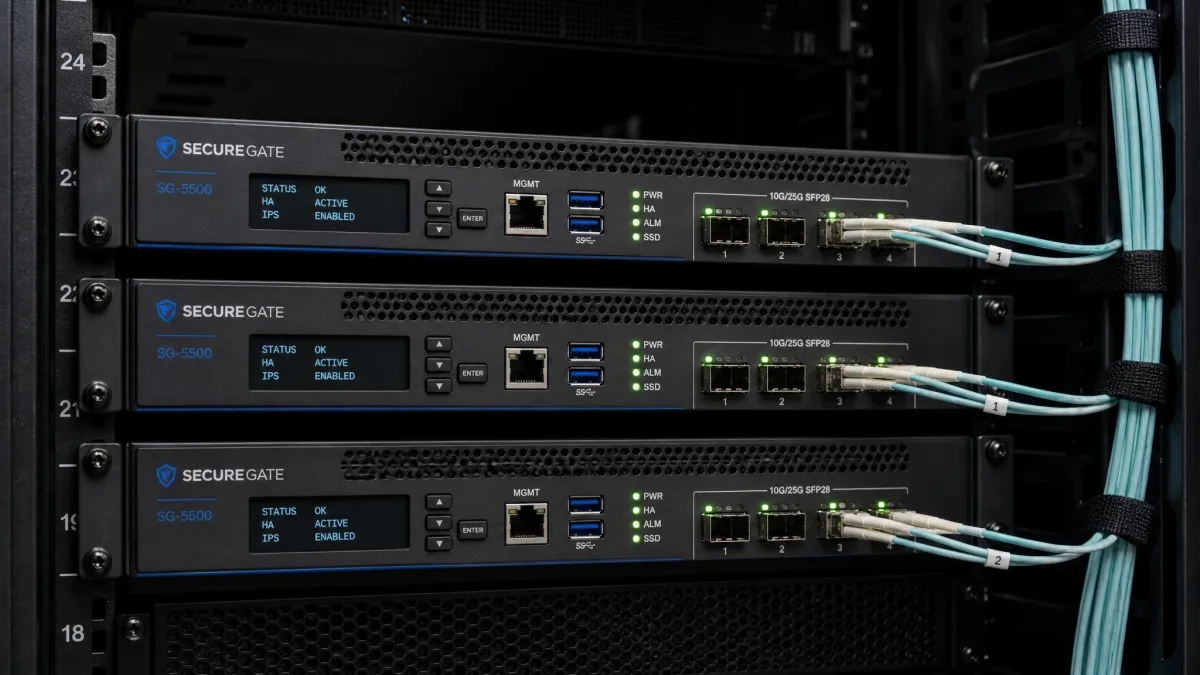
For most organizations our answer is no, because the function moved rather than disappeared. The capability you would have bought a standalone concentrator for now ships inside the firewall you already own.
Cloud VPN and SASE services move termination off your premises entirely, so capacity becomes a subscription line rather than a hardware refresh. Zero trust brokers go further and authorize each application request instead of admitting a device to the network.
That last option is the direction of travel. NIST's zero trust architecture guidance documents builds that grant access per resource rather than per network, addressing the flat-network exposure a concentrator creates once a user is inside the tunnel.
Dedicated hardware still earns its place with very high sustained throughput, data-residency requirements, and regulated on-premises environments.
Three questions get a useful answer out of any vendor conversation: what VPN gateway capacity does the platform carry, how many client tunnels does it terminate at maximum, and what IPsec throughput does it sustain at your expected packet size.
Bottom Line
Size the capability rather than shop for the label. The requirement has outlived the category name, and the buying decision comes down to two numbers you can work out before you talk to anyone: how many concurrent sessions you need to hold at your busiest hour, and what throughput the platform actually sustains at the packet size your traffic runs at rather than at the one on the datasheet.
Get those two figures right and the rest follows, because they decide whether the built-in gateway on a firewall you already own is enough, whether a cloud service is the cheaper path, and what a high-availability pair will add to the bill. We would settle them first and let the product name fall out of the answer.