
Want to keep a conversation off your lock screen, or out of sight when you hand your phone to someone? You do not need a special hack. Both iPhone and Android already include several ways to quiet a thread, hide its previews, or lock the whole app behind your face or a PIN.
We have spent years testing privacy and monitoring tools at The High Tech Society, and we walked through every method below on current hardware so we could tell you which ones actually protect content and which only tidy your notifications. That distinction matters more than most guides admit.
Here is the honest short answer. Muting alerts and turning off previews keep a message out of casual view, but the text still sits in your Messages app for anyone who unlocks the phone. To truly hide the content, you need an app lock, a locked separate space, or an encrypted messaging app. We will cover all three.
Why You Might Want to Hide Text Messages
Privacy is the usual reason, and it is a fair one. You might share a passcode with a partner, hand your phone to a child to watch a video, or leave it face up on a desk at work. In each case a preview banner can reveal more than you intended.
There are calmer reasons too. Muting a noisy group chat keeps your screen quiet without leaving the conversation. Filtering unknown senders clears spam out of your main list. Hiding read receipts simply buys you time to reply.
Before you start, decide what you are actually protecting against. Keeping a text away from a glance across the table is a low bar. Keeping it away from someone who can unlock your phone is a much higher one, and it needs a different tool.
Most native options hide only notifications, not the messages themselves. A muted or preview-free thread is still readable to anyone who opens the Messages app on an unlocked phone. Vault and separate-space methods protect content, but clearing their cache or data can wipe everything inside with no separate recovery, so keep a backup.
How to Hide Messages on iPhone
Apple gives you a stack of options, from a quick per-thread mute to a full Face ID lock on the whole app. We tested these on iOS 26, and most also work on recent earlier versions. Here is how each one behaves in practice.

Hide Alerts for a Specific Conversation
This is the fastest way to silence one chat. Open Messages, swipe left on the conversation, then tap Hide Alerts. A crescent-moon icon appears next to the thread, and it stops sending banners and sounds.
In our testing, Hide Alerts did exactly one thing: it silenced notifications. The conversation still sat in plain view in the Messages list, so anyone opening the app could read it. Treat this as a mute switch, not a privacy lock.
Turn Off Message Previews on the Lock Screen
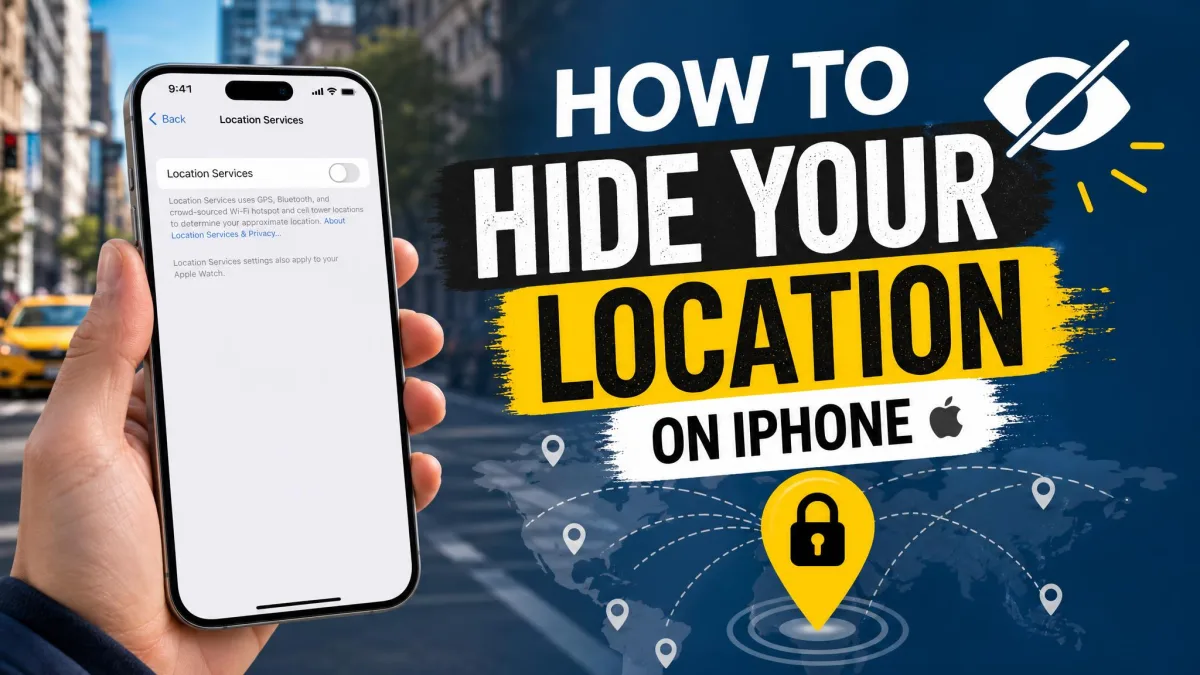
To hide what a text says before you unlock the phone, open Settings, tap Notifications, tap Messages, then choose Show Previews and set it to When Unlocked or Never. Apple documents the full range in its guide to change notification settings on iPhone.
One thing to know: turning previews off does not stop the notification itself. A "new message" alert still appears, and only the sender name and content are hidden. Anyone watching your screen will still see that a text arrived.

Set Show Previews to When Unlocked rather than Never. You still get full previews once your face or passcode has unlocked the phone, but nothing shows while it is sitting locked on a table.
Filter Unknown Senders
To push texts from people who are not in your contacts into a separate list, open Settings, tap Apps, tap Messages, then enable Filter Unknown Senders under Message Filtering. Unknown-sender texts move to their own Filters tab and stop cluttering your main inbox.
This is more of a spam and organization tool than a privacy one. The Unknown Senders tab has no lock of its own, so anyone with the unlocked phone can open it and read what is there.

Send Private Texts with Invisible Ink
Invisible Ink is a fun, lightweight option for iMessage. Type your message, press and hold the Send arrow, then choose Invisible Ink. The text stays blurred on the recipient's screen until they swipe or tap to reveal it.
It hides content from a shoulder-surfer during that first glance, nothing more. Once revealed, the message behaves like any other, so do not lean on it for anything sensitive.
Hide or Lock the Messages App with Screen Time (Face ID)
This is the first iPhone method that actually protects the content. On iOS 18 and later, touch and hold the Messages icon and choose Require Face ID, or Hide and Require Face ID. Hidden apps move to the Hidden folder in the App Library, and opening Messages then demands your face, Touch ID, or passcode. Apple's guide covers how to lock or hide the Messages app.
If you are on an older iPhone, the native app lock is not available. Before iOS 18, iMessage could not be password-locked directly, and the usual workaround leaned on Screen Time. You can restrict Messages through Settings, then Screen Time, using App Limits or Content and Privacy Restrictions gated behind a Screen Time passcode. It works, but it only limits access after a time cap and can feel clumsy compared with the newer Face ID lock.

Use a Secret or Third-Party Messaging App on iPhone
If you want conversations that never touch the standard Messages app at all, install a dedicated private messenger. We cover the strongest options in the cross-platform section below, since the same apps run on both iPhone and Android. For a broader shortlist, PCMag maintains a useful roundup of the best secure messaging apps.
How to Hide Messages on Android
Android gives you more structural options than iPhone, including fully separate locked spaces. Exact menu names shift a little between stock Android and skins like Samsung One UI, so we describe the paths in general terms and flag where they differ.

Archive Conversations in Google Messages
Archiving pulls a thread out of your main list without deleting it. Touch and hold the conversation, then tap Archive. The chat leaves the home list but stays readable under the three-dot menu, then Archived. Google explains the steps in its help article on how to archive in Google Messages.
There is a catch worth remembering. An archived conversation pops back onto your home screen the moment new activity lands in that thread. Archiving hides a quiet chat well, but it will not stay hidden if that person keeps texting you.
Turn Off Notification Previews and Sensitive Notifications
To keep message content off your lock screen, open Settings, tap Notifications, then look for the lock-screen or sensitive-content option. On most devices you can hide sensitive notifications so banners show that a text arrived without showing who sent it or what it says.
The exact wording varies by phone, so browse the Notifications menu rather than hunting for one fixed path. As with iPhone previews, this hides the content on the lock screen but does not stop the alert from appearing.
Hide Message Alerts for a Single Contact
To quiet one person without touching everyone else, open the conversation in Google Messages, tap the three-dot menu, and turn off notifications for that thread. The chat stays in your list but stops buzzing.
This is the Android equivalent of Hide Alerts on iPhone, and it carries the same limit. It silences the notification only. The conversation remains visible and readable in the app.
Move Messages to Secure Folder / Private Space
This is where Android pulls ahead. Samsung phones include Secure Folder, a separate encrypted space protected by the Samsung Knox platform. Open Settings, tap Security and privacy, tap More security settings, then Secure Folder, sign in with a Samsung account, and set a PIN, pattern, password, or biometric lock. You can even hide the Secure Folder icon from the home and apps screens. Samsung documents the setup for Samsung Secure Folder.
Stock Android has its own version. Android Private Space arrived in Android 15 and creates a separate lockable area that hides its apps from the launcher when locked. Open Settings, tap Security and privacy, tap Private space, authenticate, tap Set up, then configure a lock. Turn on the option to hide the private space when it is locked to keep it out of the launcher and search. Google's guide walks through Android Private Space.
Both keep content genuinely out of sight. In our testing they held up well, but clearing Secure Folder's cache or data can delete everything stored inside with no separate recovery, so back up anything important first.

Lock Your Messaging App (App Lock / PIN / Fingerprint)
Many Android phones include an App Lock feature in Settings, often under Security or a Secure Folder-adjacent menu, that requires a PIN or fingerprint to open chosen apps. Samsung, Xiaomi, and several other makers build this in. Where your phone lacks it, a reputable third-party app lock can add the same gate.
Locking the Messages app blocks casual access even on an unlocked phone. It is the simplest way to stop someone from tapping straight into your texts.
Use a Vault or Third-Party App to Hide SMS
Vault apps store messages in a PIN or biometric-locked encrypted area, separate from your normal inbox. They work, and some let you disguise the app icon. Treat marketing terms like "military-grade" with a healthy dose of skepticism, and read the permissions before you trust one with private data.
A vault is a reasonable middle ground if your phone has neither Secure Folder nor Private Space. For most people, though, the built-in locked spaces are the safer choice because they do not hand your messages to a third party.
Cross-Platform Privacy Tips
Some habits protect your messages no matter which phone you carry. These three matter most.
Set a Strong Screen Lock and Auto-Lock
Every method above rests on one thing: your phone being locked when it leaves your hand. Use a strong passcode or biometric lock, and set a short auto-lock timer so the screen secures itself quickly. Without that, hiding a thread only slows down a determined snoop for a few seconds.
Hide Read Receipts
If your goal is simply not tipping people off that you have read their text, turn off read receipts. On iPhone iMessage, open Settings, tap Messages, and toggle Send Read Receipts off, or set it per conversation by opening a thread, tapping the contact icon at the top, and toggling Send Read Receipts there. That per-thread control overrides the global setting for just that chat. Most Android messengers keep the same option in their own settings.

Read receipts are separate from hiding content. They control what the other person sees, not what shows on your device, so use this alongside the methods above rather than instead of them.
Switch to an Encrypted Messaging App (Signal, WhatsApp, Telegram)
For real content protection, an encrypted app beats every hide-and-mute trick. Signal encrypts every message, call, group, and reaction end to end by default and collects almost no metadata, which makes it our first recommendation. It also offers disappearing-message timers from 30 seconds up to four weeks, settable as a default for new chats.
WhatsApp also encrypts messages end to end by default, but its parent company Meta collects a wide net of surrounding metadata, so the content is private while your patterns are not. Telegram is often called secure, yet its default cloud chats are not end-to-end encrypted. You have to start a Secret Chat manually to get that protection, so do not assume Telegram matches Signal out of the box. All three are free for normal personal messaging.

Muting a thread hides the notification. Only a locked app, a locked space, or an encrypted messenger hides the message itself.
— From our hands-on testing
Which Method Should You Use?
Match the method to what you are guarding against. If you only want a quiet screen, mute alerts and turn off previews. If someone can unlock your phone, you need an app lock, a locked space, or an encrypted app. The table below sums up how far each option actually goes.
| Method | Platform | Security level | Effort | Hides content or just alerts |
|---|---|---|---|---|
| Hide Alerts / mute | iPhone and Android | Low | Very low | Alerts only |
| Turn off previews | iPhone and Android | Low | Very low | Alerts only |
| Screen Time / App Lock | iPhone (iOS 18+) and Android | Medium | Low | Hides content behind a lock |
| Vault / Secure Folder / Private Space | Android (Signal-locked space) and iPhone (vault app) | High | Medium | Hides content |
| Encrypted app (Signal) | iPhone and Android | High | Medium | Protects content end to end |
Combine two layers for everyday privacy: turn off lock-screen previews so nothing shows at a glance, and add a Face ID or fingerprint lock on the Messages app so nothing opens without you. That covers both the casual peek and the unlocked-phone case.
A Note for Parents Worried About Hidden Messages
If you are reading this from the other side, wondering whether a child is hiding texts, the same features explain what you might see. A missing conversation may simply be archived, muted, or moved into a locked space rather than deleted. That is worth knowing before you assume the worst.

The healthiest approach is an open conversation about phone use, backed by age-appropriate tools where they help. Built-in family features and dedicated monitoring apps exist for this, and they work far better than trying to guess at hidden threads. Privacy and trust are easier to build together than to police.
Frequently Asked Questions
Can you hide messages without deleting them?
Can someone recover hidden or archived messages?
Does hiding the app break notifications or group texts?
Does turning off read receipts hide my messages from anyone on my phone?
If I turn off lock-screen previews, will I still know a text arrived?
Final Thoughts
Hiding text messages comes down to one honest question: are you tidying your screen or protecting your content? Muting alerts and turning off previews handle the first, and they take seconds to set up. Locking the Messages app, using Secure Folder or Private Space, or moving to Signal handle the second.
Start with a strong screen lock, add preview controls for everyday peace of mind, and reach for an app lock or an encrypted app when the content genuinely needs to stay private. That layered approach keeps your messages out of sight without leaving you locked out of your own phone.