A phone that suddenly feels slower, hotter, or hungrier for battery can set off a quiet worry. Do you think someone is tracking your phone, and you want to know for sure before you panic? That instinct is worth taking seriously, but it is also worth checking calmly, because most of the warning signs below have innocent explanations too.
The goal of this guide is to help you tell the difference. We will walk through the warning signs that matter, the exact settings to check on Android and iPhone, and the steps that stop tracking once you find it. The settings paths here follow the current iOS and Android menus, so they should match what you see on screen. Tracking comes in a few shapes: hidden spyware, commercial stalkerware, an active location-sharing link, or a small Bluetooth tracker slipped into a bag. Each leaves different clues and has a different fix, so keep an eye on the patterns rather than any single symptom.
The single most reliable sign is not technical. If someone repeatedly knows places you went or things you searched for without you telling them, treat that as a red flag and work through the checks below. Battery drain and heat are worth noting, but on their own they rarely prove anything.
Warning signs someone is tracking your phone
Read these as a group. Any one of them can be normal, but several together, or one paired with someone knowing too much about your day, is what turns a hunch into something worth investigating.
1. Battery drains faster than usual
Software that quietly records your location has to run in the background, and that work shows up at the battery. In our experience, battery drain paired with a phone that runs warm even during light use is the most commonly reported tip-off. It is not proof on its own, though, since normal apps and an aging battery cause the same thing. The change worth noticing is a sharp one, like a phone that used to last all day suddenly barely surviving a work shift.
2. Unexplained spikes in data usage
Hidden monitoring apps often send what they collect over the internet, which can quietly inflate your data use. Review your per-app data on Android by going to Settings → Network & Internet, and on iPhone by opening Settings → Cellular. If an unfamiliar app, or one you rarely open, is using far more data than it should, look closer.
3. Phone runs hot or shows activity when idle
A device that is warm when you have not touched it in a while, or a screen that lights up on its own, can mean something is working in the background. As with battery drain, this is a supporting sign rather than a verdict.
4. Apps you don't remember installing
Scanning your installed-apps list for names you do not recognize is the most practical first manual check you can do. Look especially for anything that literally contains the word "tracker," along with apps that request far more permissions than their purpose would justify. Monitoring tools sometimes hide under bland, system-sounding names, so open anything unfamiliar and see what it claims to be.
5. Location icon stays on constantly
This is one of the most reliable and checkable signs. Built-in location, camera, and microphone indicators only light up when a related app is actually using that hardware. On iPhone you will see a small arrow for location, a green dot when the camera is in use, and an orange dot when the microphone is in use. If your location arrow or the camera or mic indicator lights up when no relevant app is open, something is quietly reaching for that data.
6. Strange sounds or echoes during calls
Faint clicking, static, or background voices during calls is the classic tapping sign people remember from films. But modern digital networks make this unreliable on its own, and most odd call noise is just a poor connection. Note it, but do not lean on it.
7. Random pop-ups, reboots, or sluggish performance
Frequent pop-ups, unexpected restarts, or a phone that has become sluggish can point to malware, some of which tracks you. These symptoms overlap heavily with an aging phone or a buggy app, so treat them as a prompt to run the checks, not a conclusion.
8. Someone knows your movements or an unknown device is on your account
This is the sign we weigh most heavily. If a person repeatedly knows where you have been or what you searched for without you sharing it, the tracking may be real even when every technical symptom looks fine. It also points most often not to spyware but to a simpler cause: an old phone still signed into your account, or a location-sharing link left switched on.
What phone tracking actually means
"Tracking" covers a few different things, and knowing which one you face tells you where to look. Spyware is hidden software that reports your activity, from location to messages. Stalkerware is a commercial version of the same idea, often sold as parental or employee monitoring but installed on someone without their knowledge. Location sharing is the everyday feature built into Google Maps and Apple's Find My that can simply be left on longer than you meant. Bluetooth trackers, like AirTags, are coin-sized devices that report their own location and can be slipped into a bag or car.
In practice, the biggest cause we run into is not sophisticated spyware. It is usually an old device still logged into your Google or Apple account, or a location-sharing link left active in Google Maps or Find My, which are the easiest problems to fix.
How to check if your phone is being tracked
Work through the checks for your platform below. None of them require special tools, and each takes only a few minutes.
How to check on Android (Privacy Dashboard, permissions, installed apps)
Start with the Privacy Dashboard, which logs recent camera, microphone, and location access by app. Open Settings → Privacy → Privacy Dashboard and look for any app that accessed your location or mic when you were not using it. Next, review app permissions and revoke anything that does not need what it has by going to Settings → Apps. Then scroll your full app list for unfamiliar names, as covered in sign 4.
To check whether an unknown device is signed into your account, open your Google Account, go to Security → Your Devices, and sign out anything you do not recognize.
If you find a suspicious app but cannot uninstall it normally, restart the phone into safe mode first. Safe mode disables third-party apps temporarily, which often lets you remove something that resists deletion while running.
How to check on iPhone (privacy indicators, Find My, permissions)
On iPhone, start by watching the privacy indicators during normal use. The green dot means the camera is active and the orange dot means the microphone is active, so either one appearing when no app should need it is a signal. Next, review which apps hold location and microphone access by opening Settings → Privacy & Security, and tighten anything that looks excessive.
Check the devices tied to your Apple ID by opening Settings → Apple ID → Devices, and sign out any you do not recognize. Then open Find My → People to confirm you are not sharing your location with anyone you did not intend to.
Check for call forwarding and hidden Bluetooth trackers (AirTags)
Call forwarding can quietly route your calls elsewhere. On iPhone you can review and turn it off by opening Settings → Phone → Call Forwarding. On some GSM carriers, dialing *#21# shows call-forwarding status and *#62# shows redirection when your phone is unreachable, but these MMI codes behave differently by carrier and network, so treat them as a rough check rather than a definitive one.
For Bluetooth trackers, both platforms now help. On iPhone, an unwanted-tracking notification appears when an unknown AirTag or Find My accessory is detected moving with you; this AirTag detection requires iOS 14.5 or later, and detecting non-Apple trackers that meet the cross-industry standard requires iOS 17.5 or later. From an alert you can tap Continue then Play Sound, and detected items show under Find My → Items Detected With You. Apple's own Apple Support guide walks through the full detection steps.
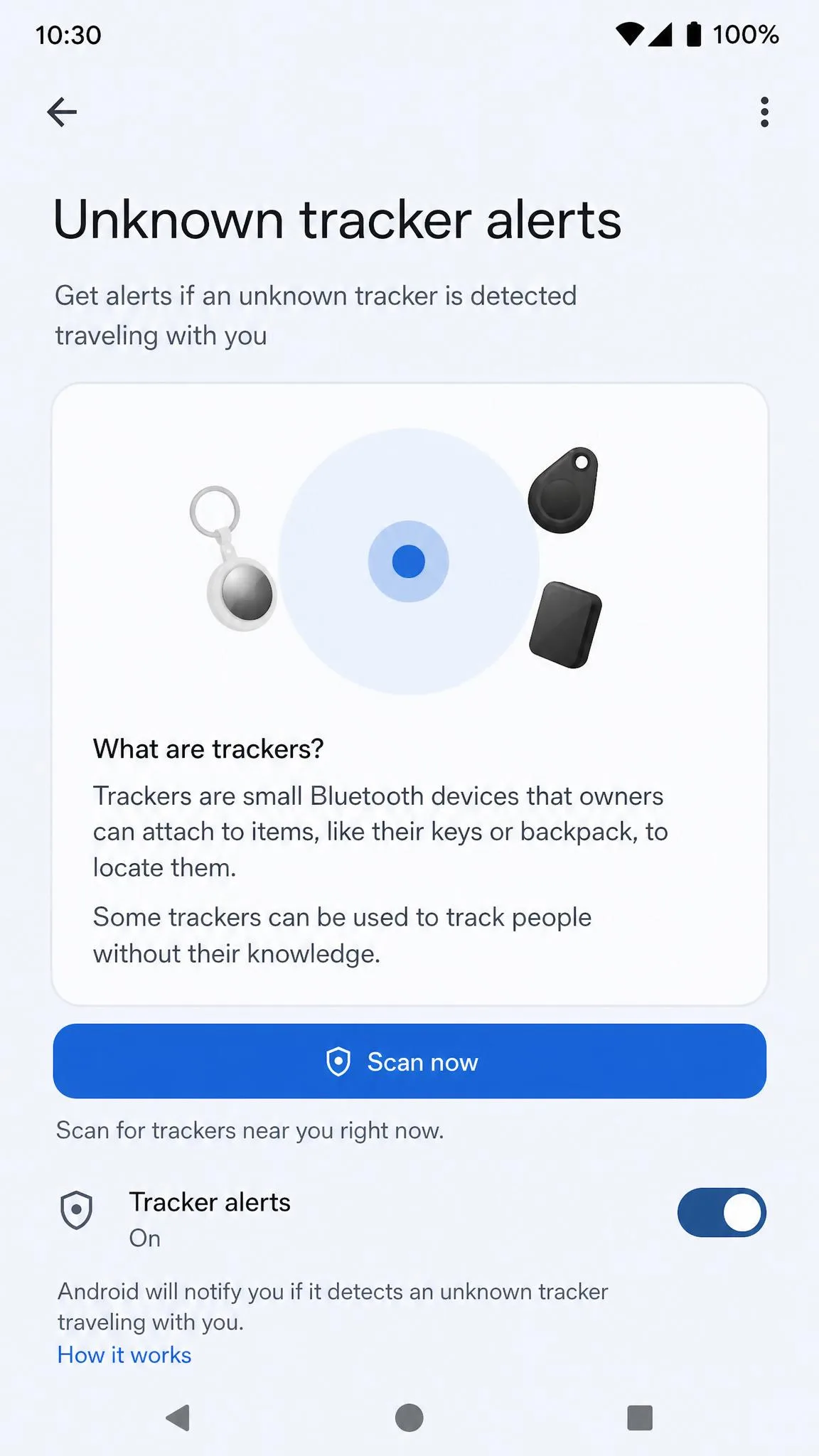
On Android, built-in unknown-tracker alerts require Android 6 and up. Open Settings → Safety & Emergency → Unknown tracker alerts, where a manual "Scan now" sweep for nearby trackers takes about 10 seconds. Note that on Android 11 and older, the menu instead sits under Google → Personal & device safety, and that these alerts are deleted after 48 hours, so act on one when you see it. Google's built-in detection covers Android 6.0 and later; on older phones you can install Apple's Tracker Detect app from Google Play. Google Help documents the current path.
How to stop someone from tracking your phone
Once you have found something, or want to be safe regardless, work through these fixes in order. Each one closes a common tracking route.
Remove suspicious apps and revoke permissions
Delete any app you flagged as unfamiliar or over-permissioned, and pull back permissions on anything you keep. On both platforms, removing the app that was collecting data usually stops the leak at its source. If an app refuses to uninstall, use safe mode as described above.
Turn off location sharing and sign out unknown devices
Because a forgotten sharing link or an old signed-in device is the most common cause we see, this step fixes a surprising number of cases on its own. Turn off any active sharing in Google Maps or Find My, then return to your account's device list, Google Account Security → Your Devices on Android or Settings → Apple ID → Devices on iPhone, and sign out everything you do not recognize.
Change passwords and run a security scan
If someone reached your account, changing the password locks them out and ends every signed-in session. Update your Google or Apple ID password, turn on two-factor authentication, and run a reputable mobile security app to scan for known spyware. To cut data flow while you investigate, switch on airplane mode, though GPS can keep working, so it is not a complete fix.
Factory reset as a last resort
If you have worked through everything above and still suspect monitoring, a factory reset wipes the device back to clean. One important caution: do not restore from an old backup afterward, because that can quietly reinstall the very software you removed. Set the phone up fresh and reinstall apps by hand.
How to prevent phone tracking in the future
A few habits keep most tracking off your phone. Lock your device with a strong passcode and biometrics so no one can install anything during a few unattended minutes. Keep your operating system and apps updated, since many tracking tools rely on old vulnerabilities. Only install apps from official stores, and review permissions periodically rather than tapping "allow" out of habit. Finally, check your account's device list now and then and sign out anything you no longer use.
What to do if you think you're in danger
If the tracking is tied to an abusive relationship, your safety comes before the phone. Removing stalkerware can tip off the person monitoring you and escalate the situation, so plan before you act.
When it is safe to act, a full factory reset may remove stalkerware, but do not restore from an old backup, and a new phone and account may ultimately be the safest path. The Federal Trade Commission offers plain-language guidance on stalkerware and safe removal.
Frequently asked questions
Can my phone be tracked without me knowing?
Can someone track my phone in airplane mode or when it's off?
What should I do if I run every check and find nothing?
Can someone read my texts or WhatsApp remotely?
How long does a Bluetooth tracker scan take, and how often should I run one?
Is there an app to tell if my phone is tapped?
Final thoughts
Most tracking scares turn out to have a manageable cause, often an old device left signed in or a sharing link you forgot about, and both are fixed in minutes. Work through the signs calmly, run the checks for your platform, and close the common routes. If someone may react badly to losing access, put your safety first and reach out to the resources above before you change anything.