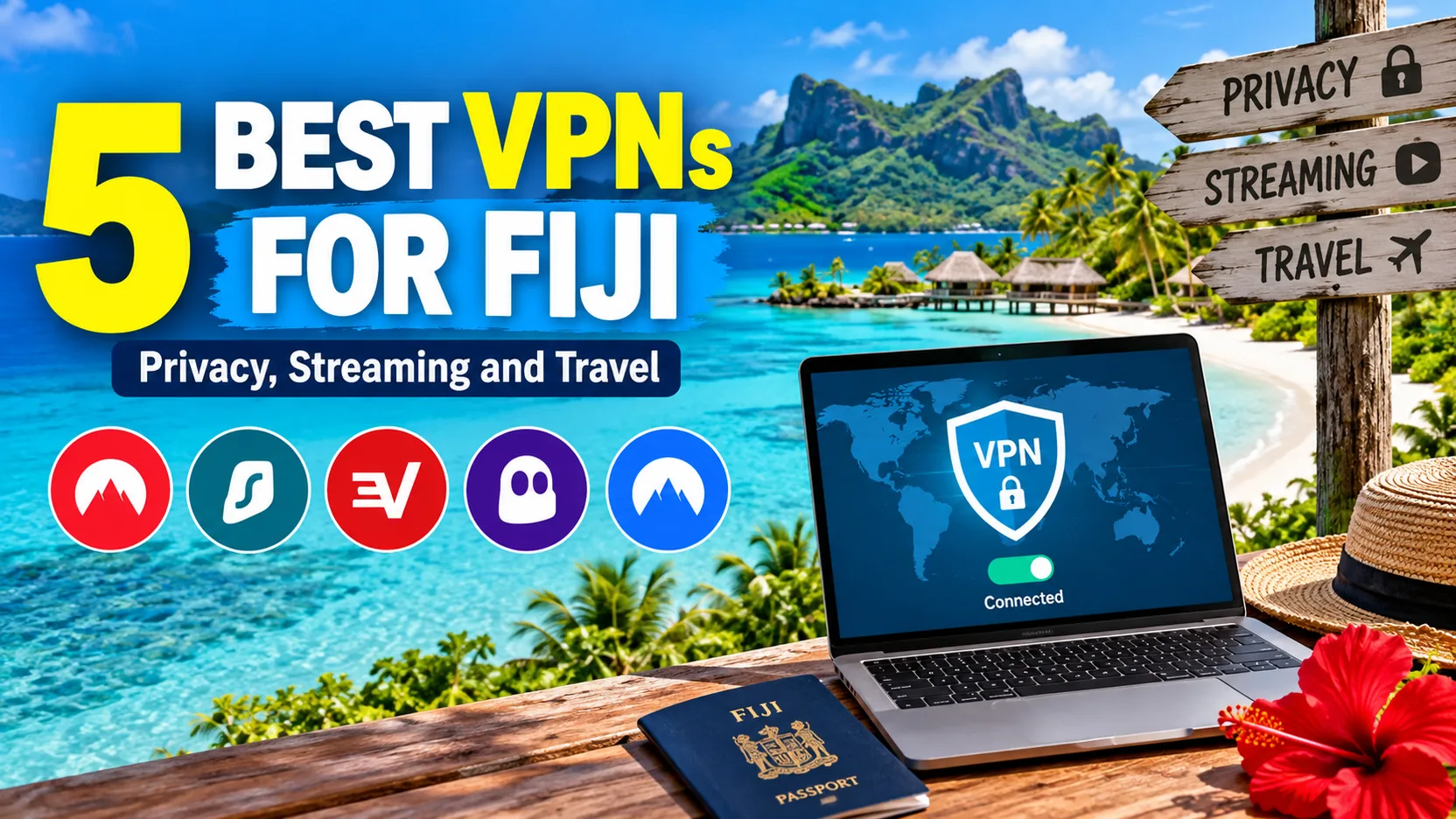
Which VPN should you pack for a trip to Fiji? For most travelers we would pick NordVPN, because it is fast, runs on every common device, and is the only one of our five whose official server list includes a Fiji location. That question covers three different goals, though: staying private on resort and hotel Wi-Fi, streaming your home-country shows while abroad, and getting a Fiji IP address from outside the islands. A VPN that does the first well may not do the third at all.
We compared NordVPN, Surfshark, ExpressVPN, CyberGhost and Private Internet Access on server coverage, speed, privacy evidence, device support and value. Our review team works through each service on our own test machines and phones, so the notes below reflect how these apps behaved in our hands. We did not run speed tests from inside Fiji, and we will not pretend otherwise.
Best VPNs for Fiji at a glance
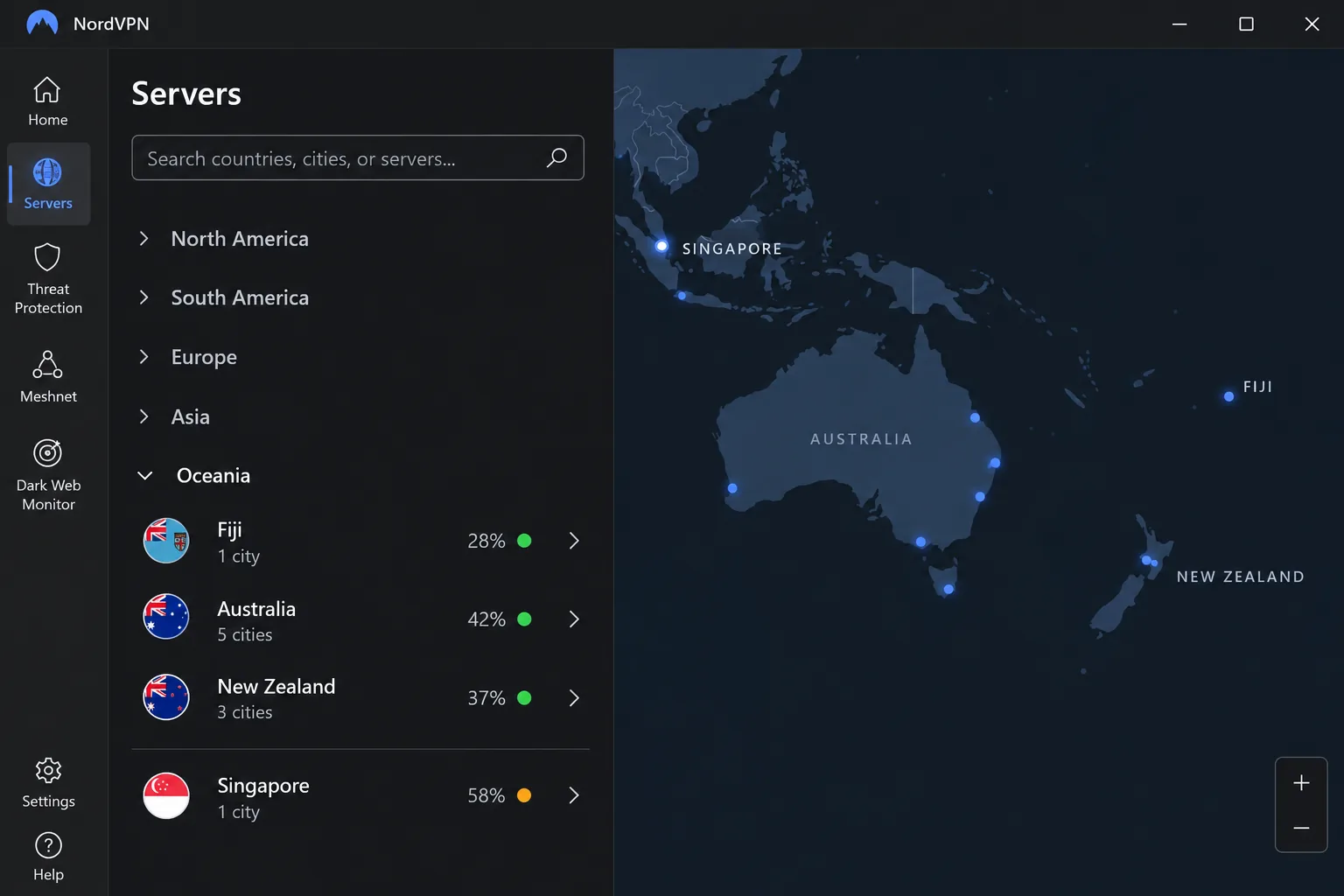
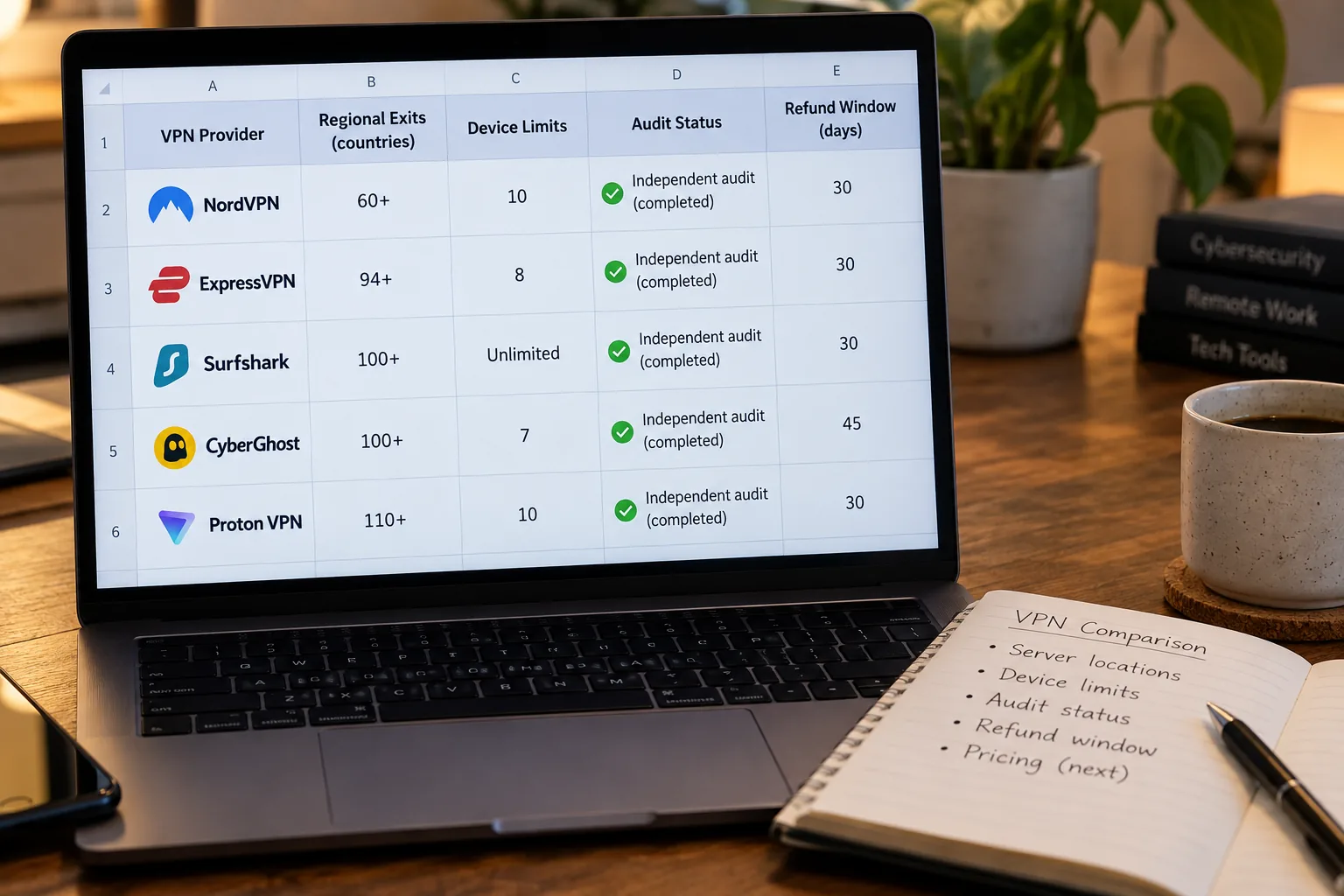
All five providers offer nearby exits in Australia, New Zealand and Singapore, the locations most travelers in the South Pacific actually use. Only NordVPN lists Fiji itself. The table below keeps the details side by side, and the sections that follow explain what each service is like to use.
| Product | Buy | Regional exits | Fiji exit evidence | Devices | Privacy evidence | Refund |
|---|---|---|---|---|---|---|
 | Check price → | Australia, New Zealand, Singapore | Listed in the official server list (1 city) | 10 | Deloitte no-logs assurance | 30-day |
 | Australia, New Zealand, Singapore | Not found in the official list | Unlimited | Deloitte no-logs assessments | 30-day | |
 | Australia, New Zealand, Singapore | Not found in the official list | 10 on Basic | KPMG privacy and TrustedServer assessment | 30-day | |
 | Australia, New Zealand, Singapore | Not found in the official list | 7 | Deloitte audit and transparency report | 45-day on long plans | |
 | Australia, New Zealand, Singapore | Not found in the app support list | Unlimited | Deloitte audit and RAM-only servers | 30-day |
A VPN you can use in Fiji is not automatically a VPN with Fiji servers. To use a VPN while you travel, you only need a working app and a sensible nearby exit. Getting a Fiji IP address from abroad needs a provider that actually lists Fiji, and even then the server may be virtual rather than hosted on the islands.
1. NordVPN
NordVPN is our top pick for Fiji. Its official server list includes Fiji as one city, and it also offers Australia, New Zealand and Singapore, so you can compare a Fiji exit against a regional one. The list does not tell us whether the Fiji server is physical or virtual, so treat it as a convenience for getting a local IP rather than proof that your traffic stays on the islands. We cannot call it the fastest route from Fiji either, since we did not measure speeds there. You can see the current locations on NordVPN's official server list.
On the performance side, NordLynx delivered fast downloads in our testing, and it worked well with major services such as US Netflix and Disney+. The desktop apps felt responsive without loading down a laptop. On mobile, the map view is more cumbersome than searching the server list, so we search. The connection stayed stable when we switched between Wi-Fi and cellular data, which matters when you hop from hotel Wi-Fi to a mobile hotspot.
On privacy, NordVPN published a Deloitte assurance report on its no-logs claims, covering IT configuration and infrastructure at the end of 2024. That is evidence of an assessed policy, not a guarantee against every future problem. One account covers 10 devices, with apps for Windows, macOS, Linux, Android and iOS, plus Double VPN and obfuscated servers if you need them.
Pros
- Fiji is listed as an exit location
- Fast downloads with NordLynx
- 10 simultaneous devices and a 30-day refund window
Cons
- Busy apps need more navigation than simpler rivals
- Some advanced tools sit behind higher tiers
2. Surfshark
Surfshark is the household pick. One subscription covers an unlimited number of devices, which suits a family traveling with phones, tablets and a couple of laptops. Its official country list had Australia, New Zealand and Singapore but no Fiji entry, so it works for nearby routing and not for a local IP.
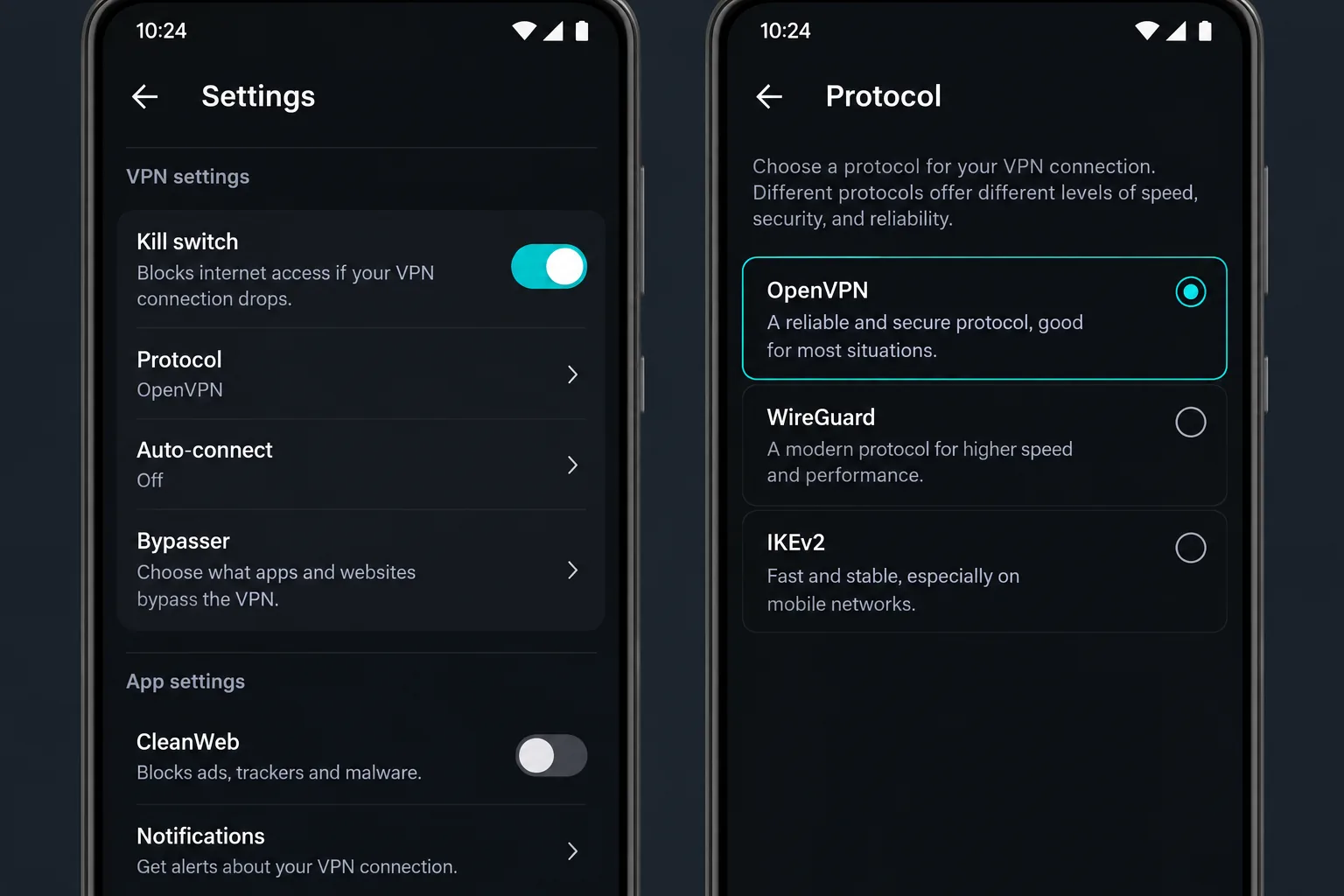
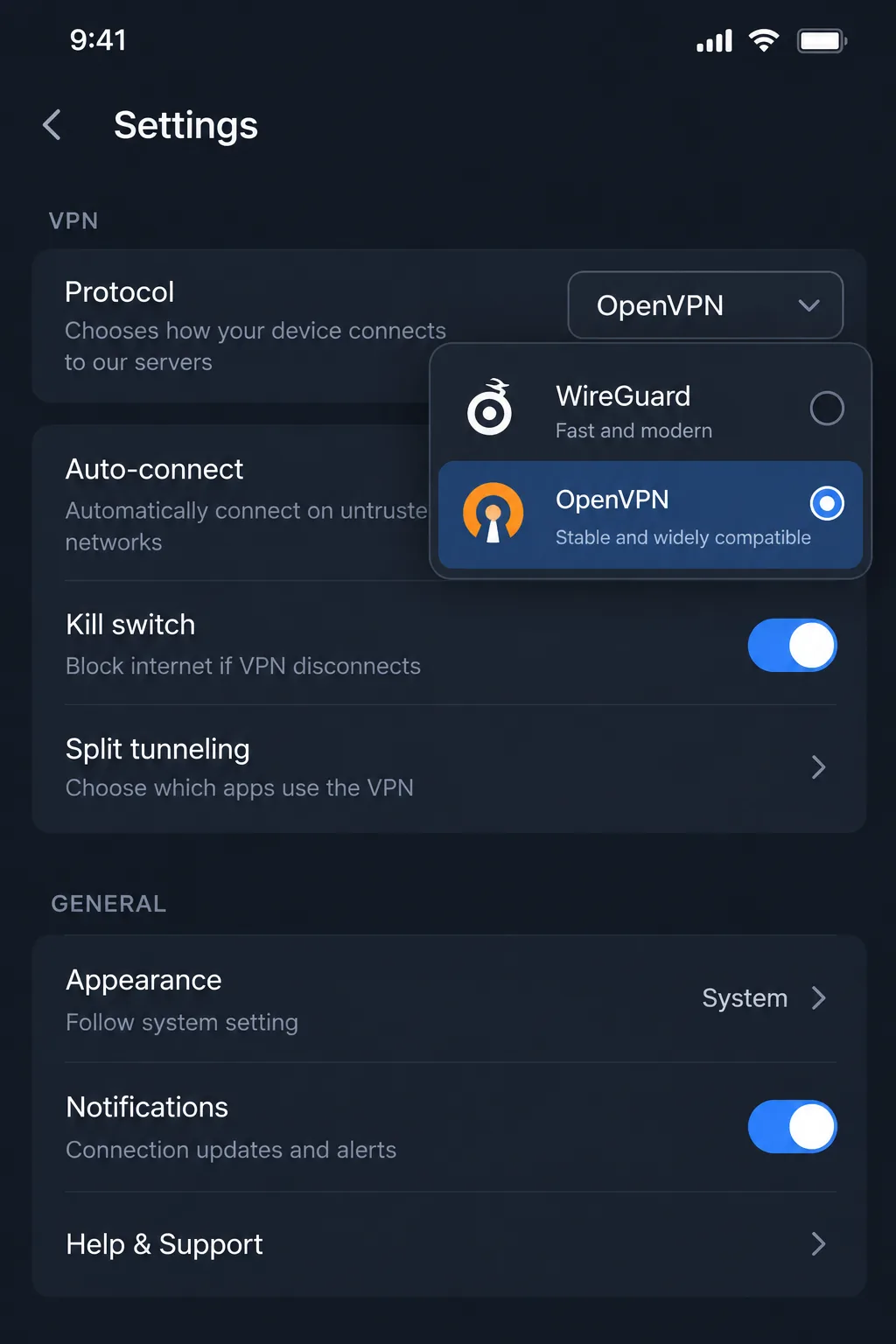
In use, Surfshark handled long-distance video calls, live sports and ordinary browsing comfortably. Its OpenVPN mode connected on a restrictive network where WireGuard failed, which is a useful fallback for locked-down hotel Wi-Fi. The mobile interface is still awkward to use, and the basic settings offer less precise control than PIA.
Two behaviors are worth knowing before you rely on it. The kill switch is not enabled by default, so switch it on during setup. The rotating IP option can also log you out of websites that tie a session to an IP address. Surfshark publishes Deloitte no-logs audits and separate security assessments in its trust center. Alongside its Windows, macOS, Linux, Android and iOS apps, Surfshark offers apps for Fire TV, Android TV and Apple TV. The Android app needs Android 7.0 or newer.
Pros
- Unlimited simultaneous devices
- OpenVPN fallback for restrictive networks
- Flexible split tunneling and a 30-day refund
Cons
- Kill switch is off by default
- Mobile interface friction
- No Fiji exit found in the official list
3. ExpressVPN
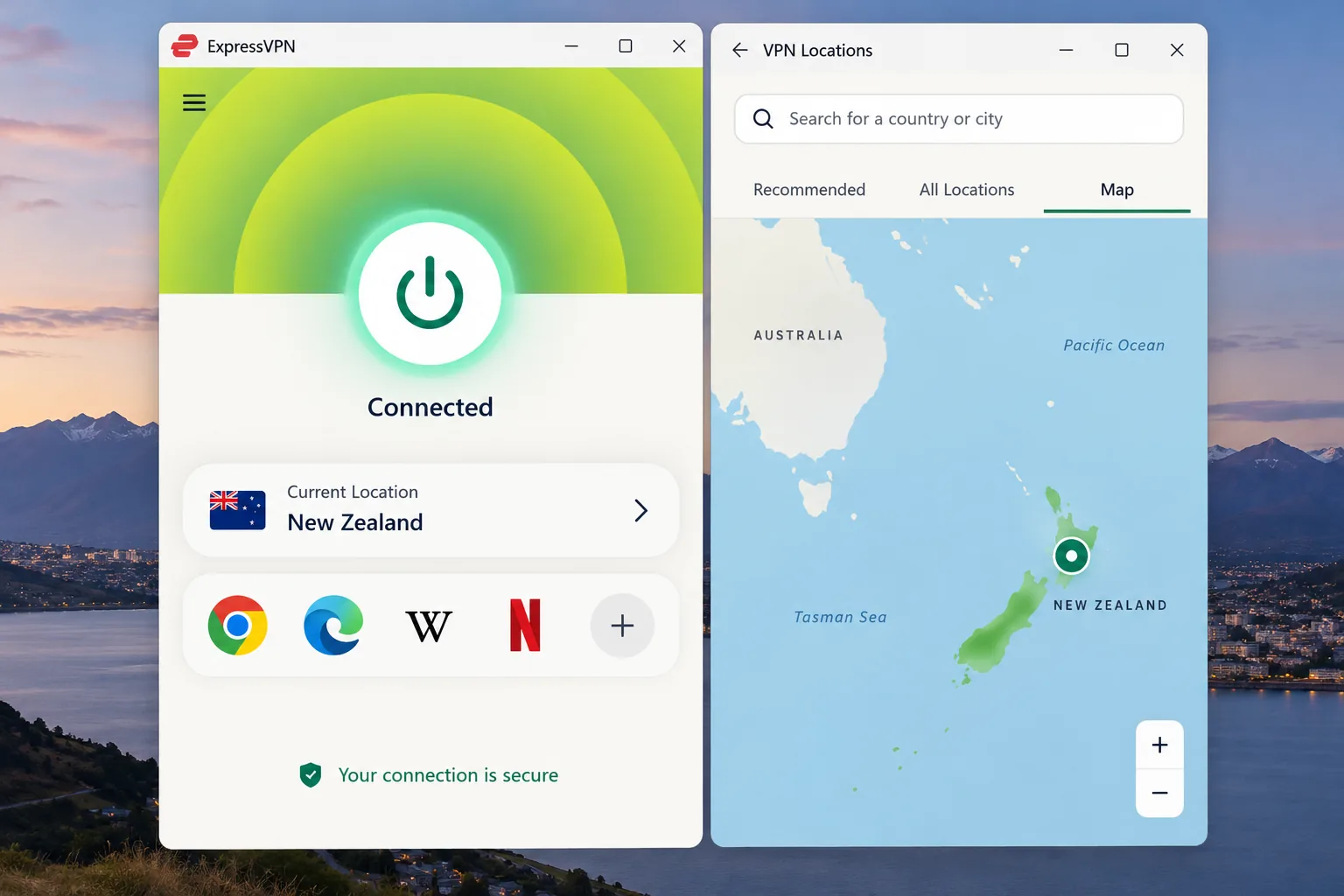
ExpressVPN is the easiest to live with. Connecting day to day is simple, and we got strong streaming access and fast downloads across distant locations. That is what you want when streaming a home-country service from the other side of the Pacific. Setup is straightforward on desktop and mobile, and the detailed support tutorials make an unfamiliar device less of a chore.
The tradeoffs are a thinner toolbox and a few interface quirks. It has fewer advanced tuning tools than rivals, with no multi-hop or port-forwarding controls in the service we used. The newer desktop interface adds unused map space and splits settings between Profile and Add Ons, so some controls take a moment to find.
Its official list shows New Zealand, Australia and Singapore, with no Fiji entry. For privacy, KPMG assessed its privacy-policy controls and its RAM-only TrustedServer infrastructure. The Basic plan covers 10 devices, and the Android app needs Android 7.0 or later. Pricing is the highest of the group on most offers, so check your local checkout.
Pros
- Simple setup and everyday use
- Strong streaming access and fast distant downloads
- RAM-only TrustedServer infrastructure assessed by KPMG
Cons
- Fewer advanced controls
- Settings are split across Profile and Add Ons
- No Fiji exit found in the official list
4. CyberGhost
CyberGhost is the beginner's option. The apps are uncluttered and approachable, though they look dated. It connected briskly and maintained stable sessions in our use, though its ad blocker is less impressive than its core VPN tools. Distant download speeds can be inconsistent, so do not expect the same results to the US that you get to Australia.
Setup is easier if you create the account and pick a plan first, then download the app from your account dashboard. If a Windows installation fails to initialize, a second attempt can succeed, so retry before you troubleshoot further. The Windows app supports Windows 10 and later.
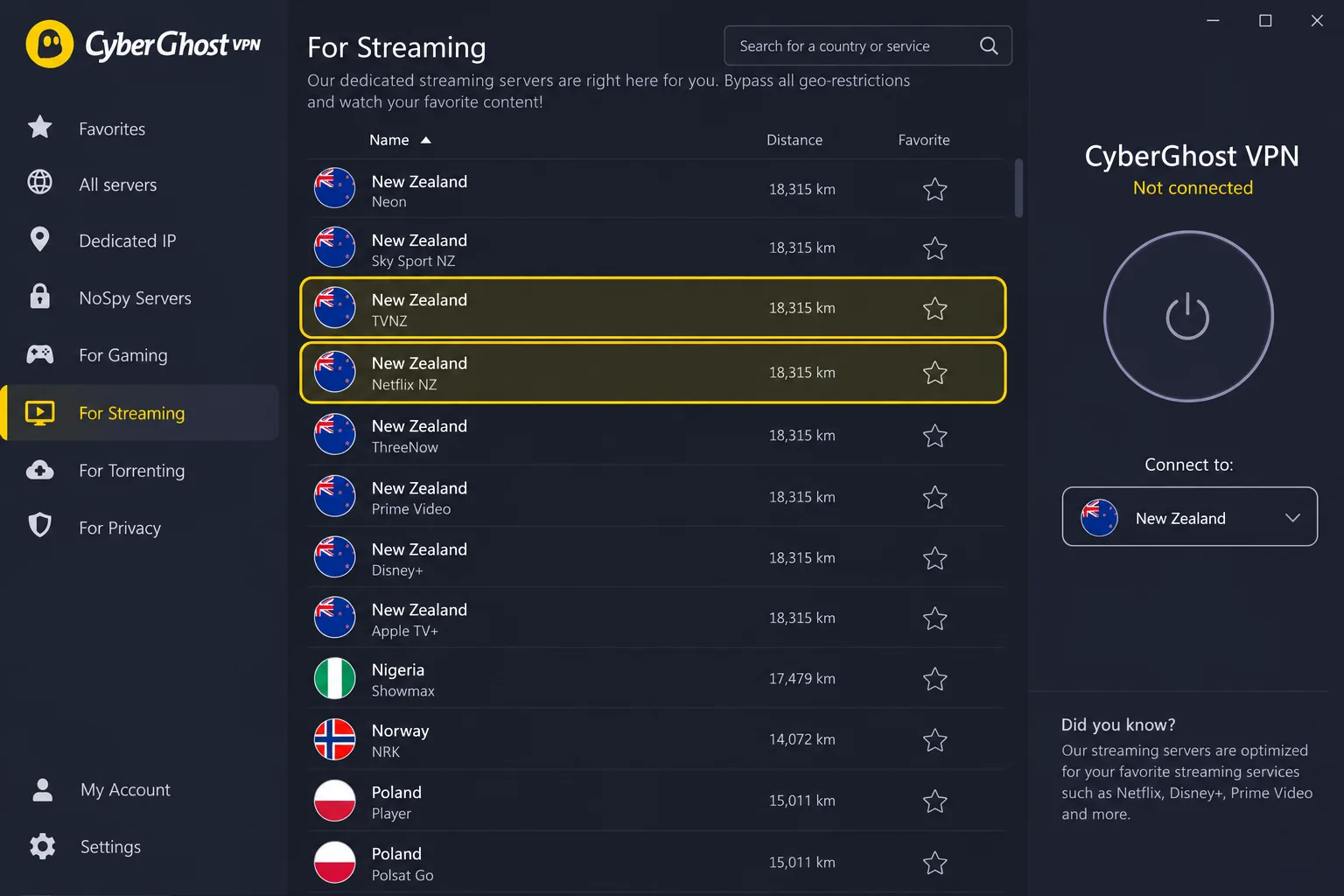
For the region, CyberGhost lists Auckland, Australia and Singapore, and its streaming-labeled servers include TVNZ and Netflix NZ, a handy detail for New Zealand content. No Fiji entry appeared in the retrieved country list. It allows 7 devices per account and has the longest refund window here: 45 days on subscriptions of six months or longer, but only 14 days on monthly plans. Its quarterly transparency report describes a further Deloitte audit.
Pros
- Uncluttered, beginner-friendly apps
- 45-day refund on long plans
- Servers labeled for streaming, including New Zealand services
Cons
- Distant download speeds can be inconsistent
- Only 7 devices per account
- No Fiji exit found in the official list
5. Private Internet Access
Private Internet Access, or PIA, is for people who like to tweak things. Its extensive settings can overwhelm a beginner at first, but they become useful once the interface is familiar. Connections stayed stable over extended use, although peak throughput can trail faster competitors. It is effective for private browsing and torrenting, and it supports unlimited simultaneous connections.
Streaming is where results vary. PIA reached regional services including BBC iPlayer and 10Play, as well as Netflix libraries across several countries. Streaming-optimized servers often helped. It can still struggle with platforms in Europe and Asia despite solid US access. Its MACE blocker interfered with ITV playback, and turning that blocker off restored streaming. PIA itself says it does not guarantee access to particular streaming applications.
The app support list includes Australia, New Zealand and Singapore, with no Fiji entry. PIA's public network page warns that some locations may be missing during updates, so a location's absence from a list is not proof it will never appear. The Android app needs Android 7.0 or newer, and the iOS app needs iOS 15.0 or newer. A Deloitte audit and documented RAM-only servers back up its privacy claims.
Pros
- Deep configuration, split tunneling and port forwarding on supported locations
- Unlimited simultaneous connections
- Stable sessions over long use
Cons
- Learning curve for beginners
- Inconsistent international streaming results
- Peak speeds can trail rivals
Which VPN should you choose for Fiji?
Match the provider to the job. NordVPN is the one to start with, particularly if you want the option of a Fiji exit. Pick Surfshark if you are covering a whole family, or ExpressVPN if you want the least fuss and the best streaming from far away. Choose CyberGhost if you are new to VPNs and want a long refund window, or PIA if you enjoy adjusting settings.
Pricing varies too much by region and promotion for a single table. The offers we saw used different currencies and had different promotional terms, so they are not directly comparable. Renewal prices are usually higher than the first-term price. Check the checkout total in your own currency before you commit.
How we selected VPNs for Fiji
We began with the services travelers ask about most, then narrowed them using the providers' own published server lists, pricing pages, audit announcements and support documents. We then checked how each app behaved in our own use and compared that behavior with the details published by the vendors. No score here comes from a Fiji speed test, because we did not run one.
Nearby servers, connection speed and streaming access
Server coverage came first. We looked for a listed Fiji exit and for exits in Australia, New Zealand and Singapore, since those are the realistic nearby choices. A nearby exit can reduce routing distance, and automatic server selection takes network conditions into account. Speed notes come from how each app performed in our use, not from a measured Fiji link. We judge streaming by what each service could access, though that access can change even when the VPN connection works.
Privacy, security, device support and value
On privacy, we favored providers with independent assessments of their no-logs claims and RAM-only infrastructure. We also checked encryption options, kill switches, leak protection, the number of devices a plan covers, which platforms get a native app, and the refund window. Value reflects the pricing we saw and the renewal terms, not a headline monthly figure.
How to use a VPN in Fiji
Set up your apps before travelling
Install and sign in on every device before you leave home. Make sure the app works on your phone's operating system, as the Android apps from NordVPN, Surfshark, ExpressVPN and PIA need Android 7.0 or newer in several cases and NordVPN lists Android 9 or newer. Turn on the kill switch, pick your protocol and save a few favorite servers in Australia and New Zealand.
Plan for hotel and airport portals. Complete the captive-portal login first, then connect the VPN, and reconnect afterward if it drops. NordVPN explains how to log in to a captive portal while using its app, and the same steps apply to the other services.
Before you fly, connect once to a nearby exit on mobile data at home. If the app asks for a permission or a protocol change, you will want to deal with it now and not in an arrivals hall.
Choose a server for your destination and troubleshoot slow connections
For general privacy and browsing, start with automatic selection or the closest listed exit, then try Australia or New Zealand if the connection feels sluggish. If you want a Fiji IP, NordVPN is the only one here that lists it. If a connection is slow, switch protocol, try another server in the same country, or move from Wi-Fi to mobile data. If an app will not connect on hotel Wi-Fi, try an alternative protocol such as OpenVPN, which connected for us on a restrictive network where WireGuard failed.
Why use a VPN in Fiji?
Public Wi-Fi, mobile data and privacy limits
Hotels, resorts and airports run shared networks. A VPN encrypts the path between your device and the VPN server, reducing what a hotspot operator can see. It does not hide everything. The operator can still see that you are connected to a VPN endpoint, plus connection metadata, as ExpressVPN's hotel Wi-Fi explainer lays out. HTTPS already encrypts page contents, and a VPN does not stop you from typing a password into a phishing page or remove malware risk. Think of it as one layer, not a shield.
Streaming abroad versus getting a Fiji IP address
These are two different problems. Streaming abroad means reaching your home library, such as US Netflix, from the islands. For that you choose an exit in the home country, and the services that did best for us at long range were ExpressVPN and NordVPN. Getting a Fiji IP means choosing a Fiji exit while you are elsewhere. Only NordVPN lists such an exit. A virtual location can also have its hardware in another country, so the label is not proof of where the server sits. Whichever you choose, access depends on the streaming service, not only on your VPN.
Can you use a free VPN in Fiji?
You can, but none of the five services here has a permanent free plan. They offer refund guarantees lasting 30 days for NordVPN, Surfshark, ExpressVPN and PIA, and 45 days on CyberGhost's long plans. A refund requires a purchase and a request, so it is a risk-reduced trial, not a free tier. That makes it a sensible way to test an app on your own devices before you travel. Free apps are a different category with fewer servers and tighter limits, and we do not recommend relying on one for hotel Wi-Fi.