Zimbabwe has switched off parts of its internet before. During the January 2019 fuel-price protests, the country's operators blocked WhatsApp, Facebook and Twitter and twice cut the connection entirely. Freedom House's Freedom on the Net 2025 report for Zimbabwe rates the country 50/100, Partly Free. The law also requires telecom licensees to hand information to officials on request. Most sites and apps open normally today, but a VPN is what keeps you connected and private if that changes.
Our top pick is NordVPN. It pairs obfuscated servers for restricted networks with 16 physical servers in Johannesburg and a no-logs policy that Deloitte has audited. We ranked five services on Zimbabwe-specific needs. None of them has a physical server inside Zimbabwe, so every pick below connects you through nearby South Africa servers. That is also the fastest route out of the country.
Best VPNs for Zimbabwe: quick list
- NordVPN: the best VPN for Zimbabwe overall, with NordWhisper obfuscation and 16 Johannesburg servers.
- IPVanish: the best choice for unlimited devices on one shared connection.
- Surfshark: the best for automatic block detection, with NoBorders mode and unlimited devices.
- Proton VPN: the best for privacy, with a usable free plan and the only Zimbabwean IP option.
- ExpressVPN: the easiest to run on restricted networks, because its obfuscation switches on by itself.
Best VPNs for Zimbabwe compared
Here is a quick rundown of how the five services line up on the features that matter most from Zimbabwe.
| Product | Buy | Price per month | Nearest servers | Server countries | Connections | Obfuscation | Kill switch | Streaming | Money-back |
|---|---|---|---|---|---|---|---|---|---|
 |
Check price → | $3.49(27-month plan) | Johannesburg (16 servers) | 150 | 10 | Obfuscated Servers (NordWhisper) | Yes | Strong | 30-day |
 |
Check price | $2.19(24-month plan) | Johannesburg | 150+ locations | Unlimited | Scramble (OpenVPN only) | Yes, off by default on Windows | Less consistent | 30-day (1- and 2-year plans) |
 |
Check price | $2.49(27-month plan) | Johannesburg | 100 | Unlimited | NoBorders and Camouflage Mode | Yes, off by default | Strong, plus Smart DNS | 30-day |
 |
Check price | $2.99(12-month plan), free plan | South Africa | 140+ | 10 (Free: 1) | Stealth (all plans) | Yes | Paid plans only | 30-day |
 |
Check price | $2.99(28-month Basic plan) | South Africa | 113 | 10 to 14 | Automatic on every server | Yes (Network Lock) | Strong | 30-day |
The prices above are introductory monthly rates on multi-year plans. Providers rotate promotions, and NordVPN's 27-month rate moves between about $2.91 and $3.49 a month. Tax is added at checkout and renewals cost more, so treat that column as a starting point rather than a fixed bill.
No VPN on this list has a physical server in Zimbabwe. The nearest physical locations for all five are in South Africa, and that is where you should connect for speed. Proton VPN is the one option for a Zimbabwean IP address: it offers a virtual Zimbabwe location, served from hardware in Paris, on its paid plans.
How we chose the best VPNs for Zimbabwe
Before we look at each pick, here is how we ranked them. We scored every service on four Zimbabwe-specific criteria and then on overall value:
- Obfuscation for blocks. For partial blocks of social media, a VPN with obfuscation or a stealth protocol is the most dependable option, so every pick needed one.
- Nearby servers. Picking the geographically closest server noticeably reduces latency, so we favoured providers with physical Johannesburg servers.
- An audited no-logs policy. Each pick has had its no-logs claim checked by an outside firm, and we weighted recent audits more heavily.
- Price and devices. Mobile data is expensive for many Zimbabweans, so we looked at the real monthly cost, renewal rates and how many devices one plan covers.
We also confirmed that the provider websites open from Zimbabwean networks. OONI tests run inside Zimbabwe in 2026 found nordvpn.com loading in 53 of 66 tests, and protonvpn.com and surfshark.com showed no confirmed blocks either. You can sign up and download the apps without leaving the country.
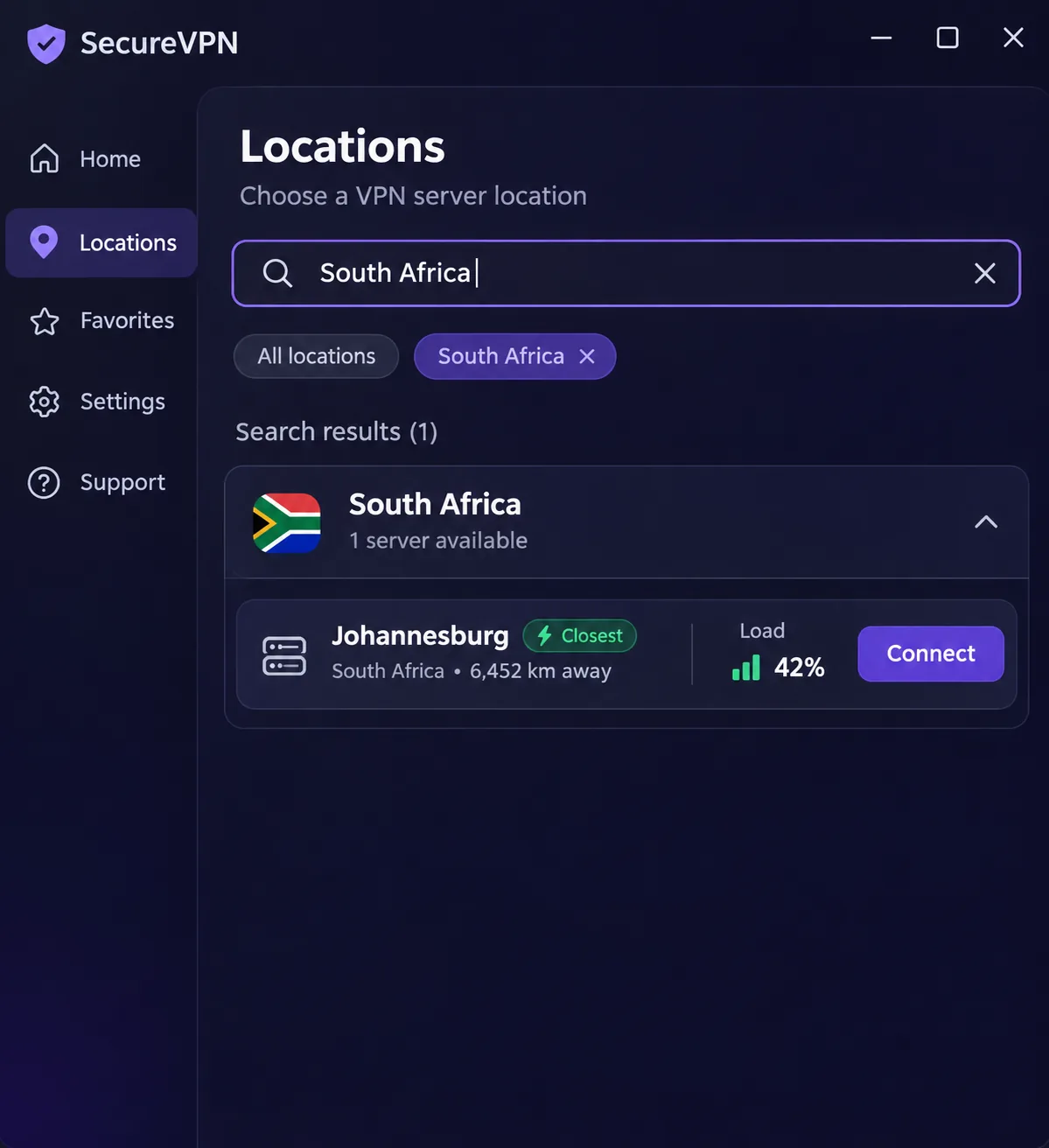
1. NordVPN: best VPN for Zimbabwe overall
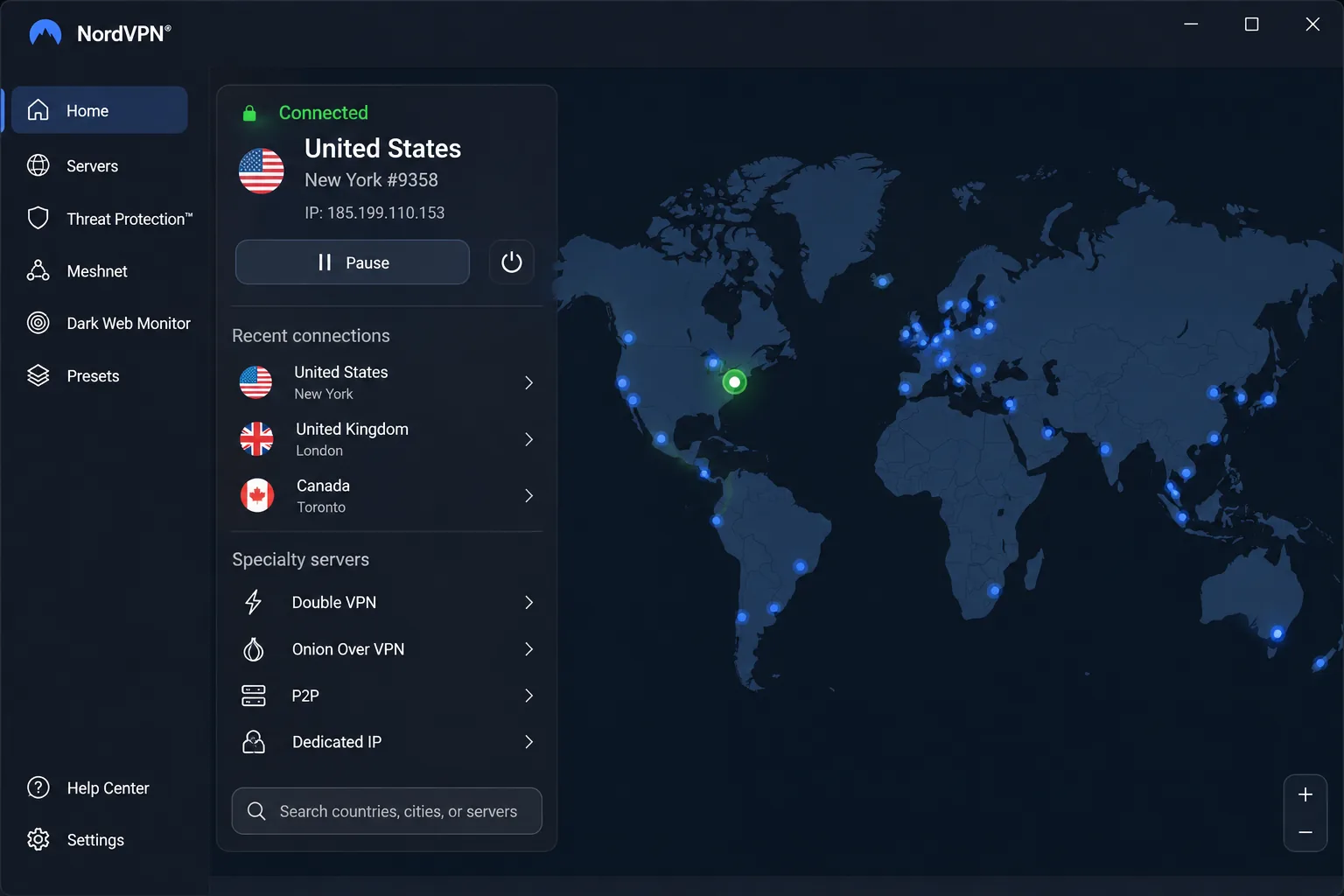
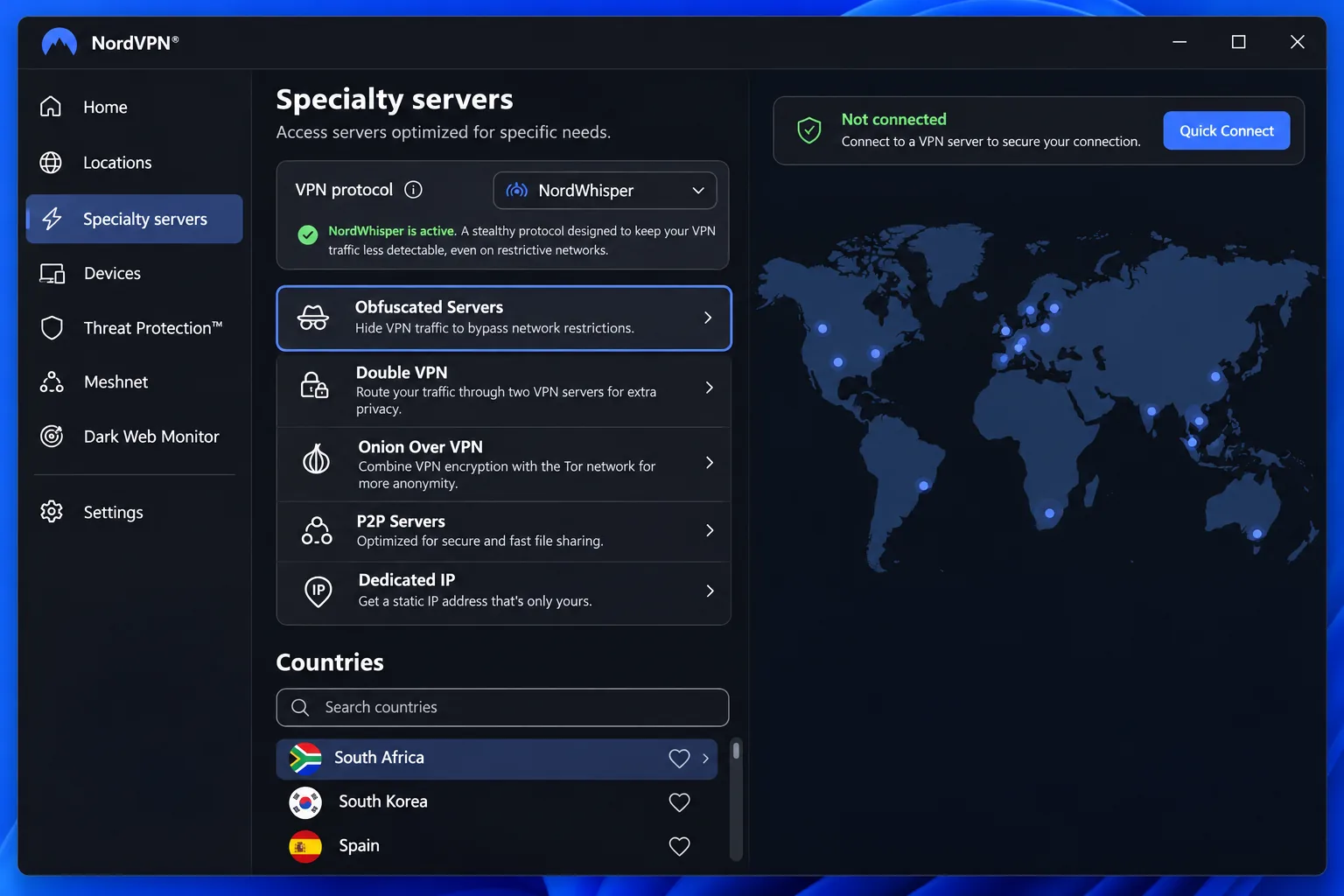
NordVPN wins because it covers each part of the Zimbabwe problem without forcing a trade-off. When we went looking for its obfuscated servers, they were missing from the Specialty servers list at first. They only appear once the protocol is set to Auto or NordWhisper, NordVPN's protocol for restricted networks. If you have switched to NordLynx for speed, you need to switch back before a block hits. On NordLynx, the WireGuard-based protocol, speeds stay close to the unprotected connection: on a 100 Mbps line NordVPN held 83.82 Mbps down and 44.64 Mbps up.
Double VPN, which routes your traffic through two servers, slows the connection dramatically, so we only reach for it when privacy matters more than speed. Your traffic is wrapped in AES-256 encryption either way. The no-logs policy has now passed its sixth independent assessment. Carried out by Deloitte and dated December 12, 2025, it covered the obfuscated servers as well as the standard ones. NordVPN is based in Panama and its server network spans 150 countries.
Pros
- 16 physical Johannesburg servers, the most of any pick here
- Threat Protection, Meshnet and P2P servers included
- Apps for Windows, macOS, Linux, Android, iOS and Android TV
- Up to 10 devices on one subscription
Cons
- The feature set can feel overwhelming at first
- The cheapest price needs a multi-year commitment that renews higher
- Double VPN costs a lot of speed
2. IPVanish: best for unlimited devices
Where NordVPN caps you at 10 devices, IPVanish sets no limit at all. That matters in a household where one paid connection is shared across phones, laptops and a TV, and IPVanish handles many devices at once without a noticeable slowdown. Its nearest location to Zimbabwe is Johannesburg, and its other African servers sit in Nairobi, Lagos, Accra, Cairo, Algiers and Casablanca.
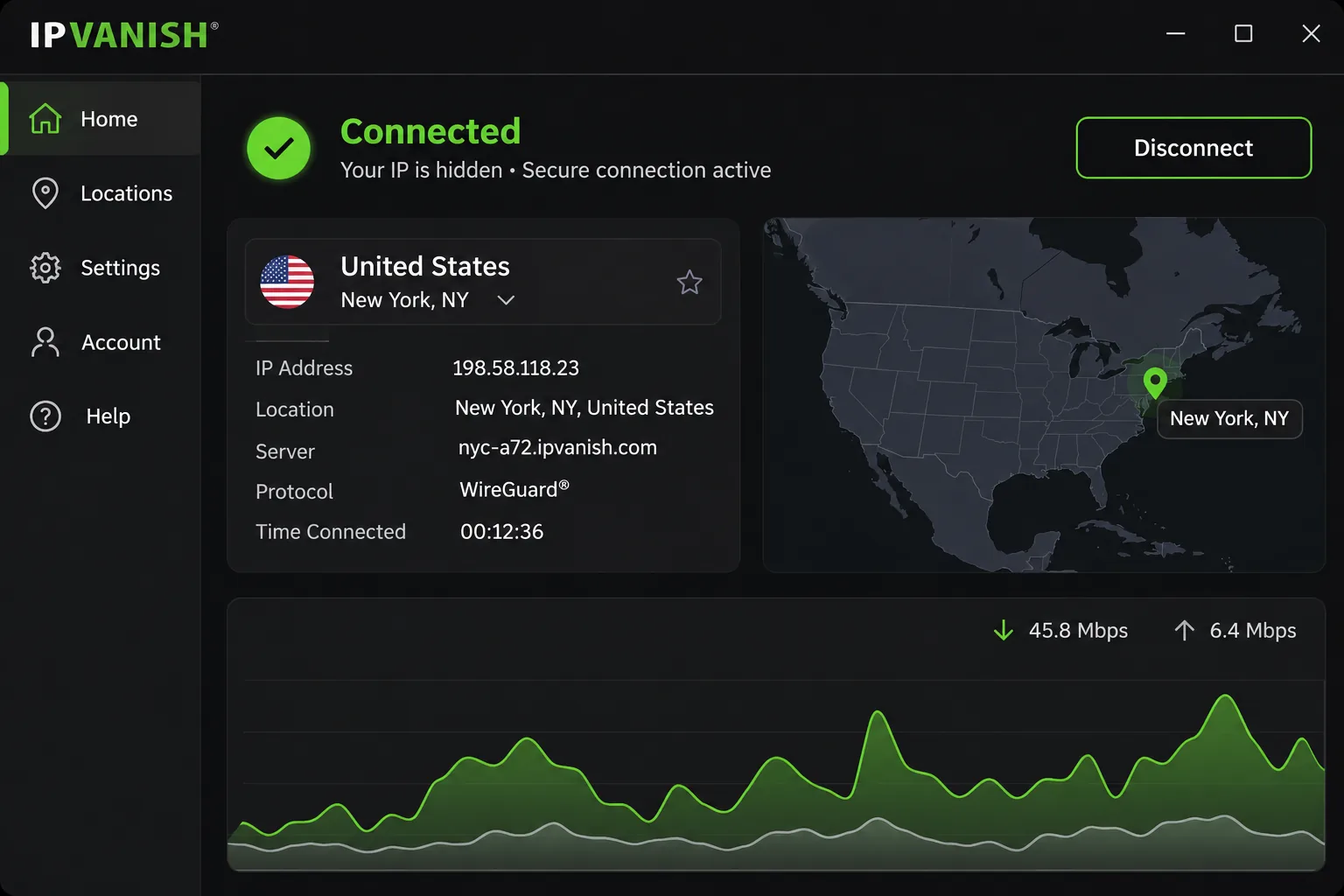
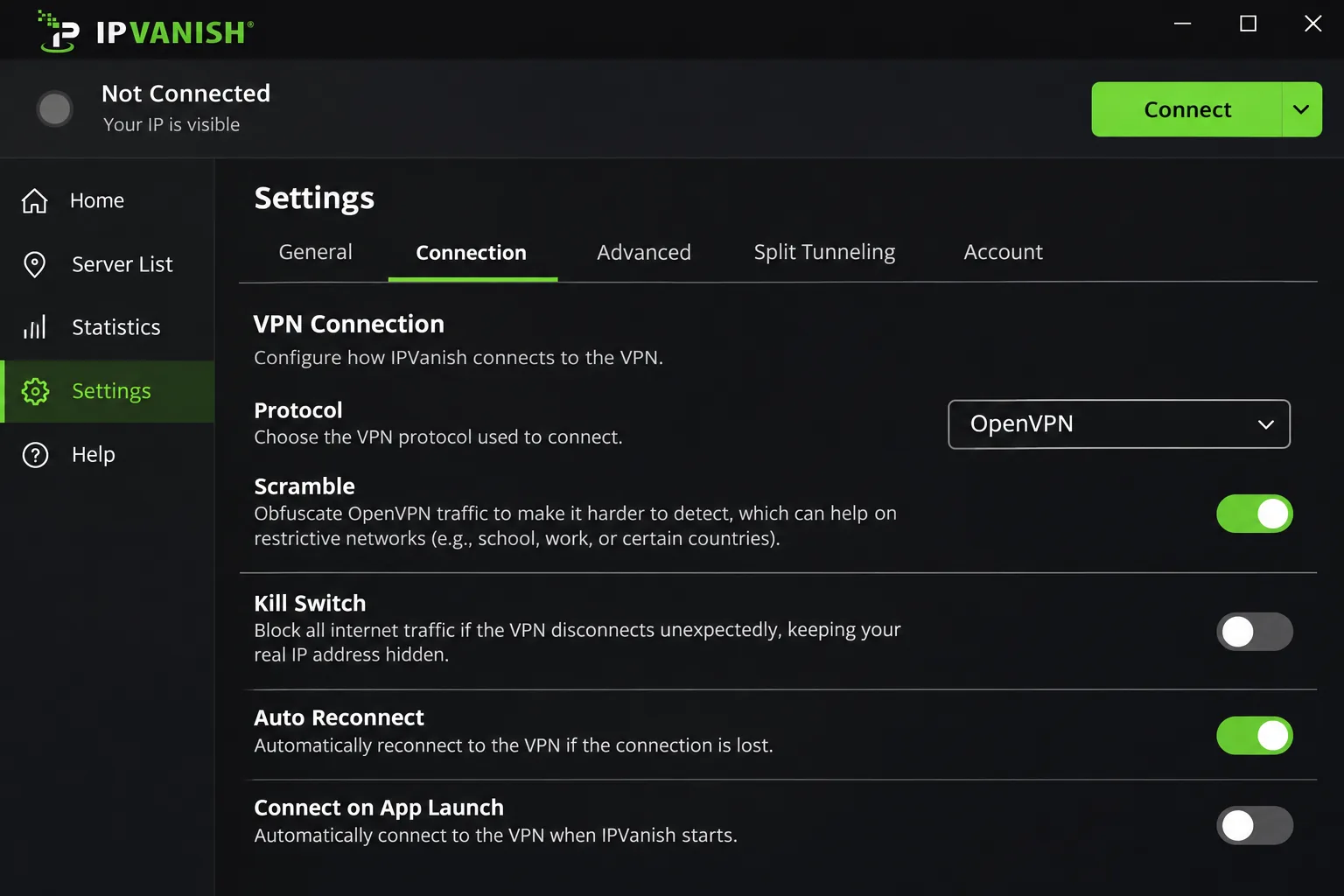
Check the kill switch before you rely on it. On forced disconnects it cut the connection within a second. It ships switched off on Windows, though, and does not exist on iOS, so turn it on yourself wherever it is available. Obfuscation comes from a single Scramble toggle in the OpenVPN settings. Turning it on gives up WireGuard's speed, and on Windows it cannot run alongside High-Speed Mode. IPVanish's speed varies with server and test date: long-distance tests held 90.78 Mbps against a 94.6 Mbps baseline, while an older Johannesburg reading was far lower.
On privacy, IPVanish runs RAM-only servers. Its latest no-logs audit, completed by Schellman in November 2026, followed an earlier one by Leviathan Security Group in 2022. The company is based in the United States and owned by Ziff Davis.
Pros
- Unlimited simultaneous connections
- Split tunneling, Double Hop and a SOCKS5 proxy
- Apps for Fire TV and Apple TV, plus router support
Cons
- No kill switch at all on iOS
- Streaming access is less consistent than NordVPN's or ExpressVPN's
- The refund only covers 1-year and 2-year plans, so the monthly plan is not risk-free
3. Surfshark: best for automatic block detection
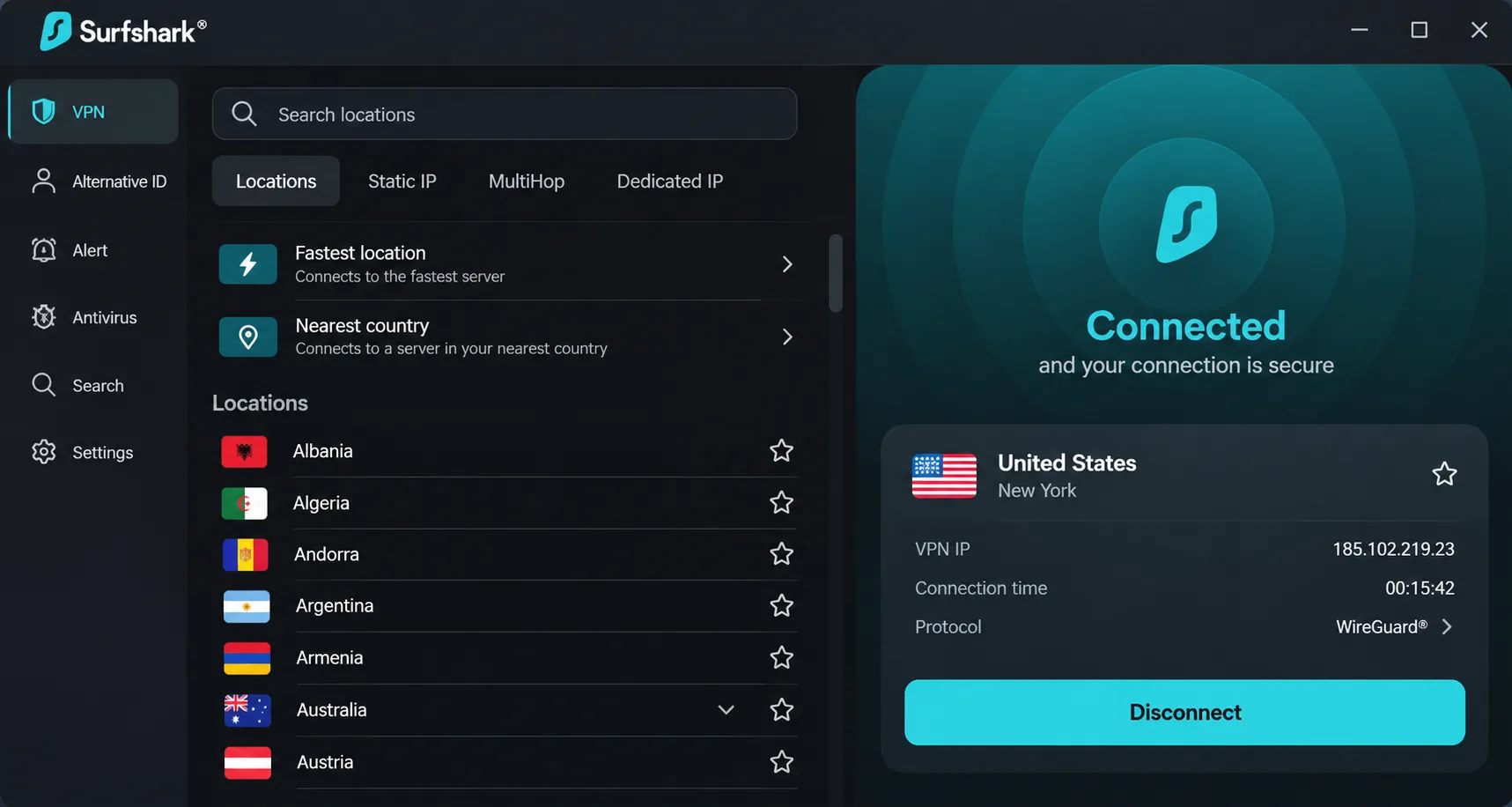
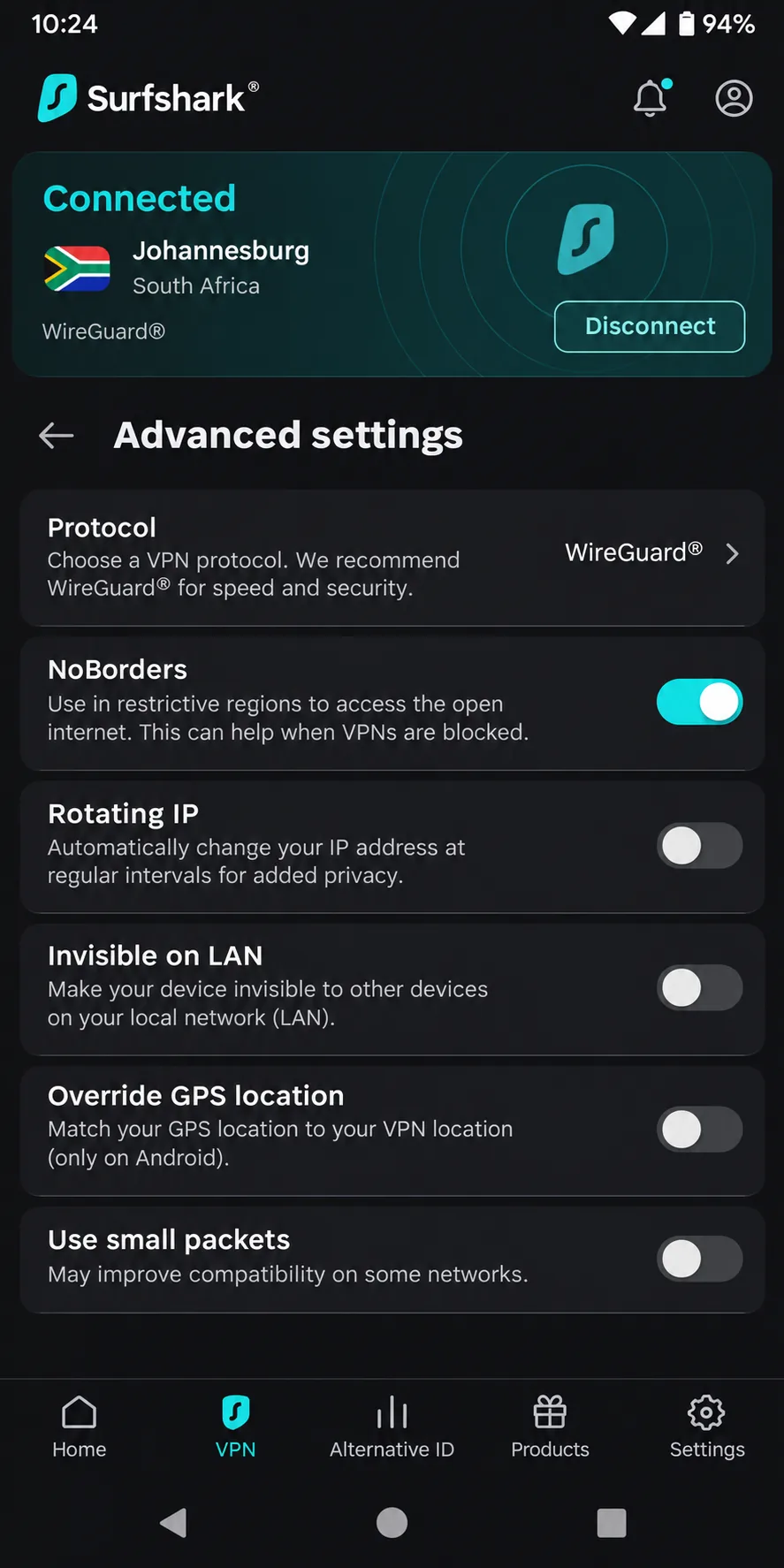
Surfshark also removes the device cap, but what stands out for Zimbabwe is NoBorders. You do not have to know in advance which setting to change. When the app detects a restricted network, NoBorders switches itself on and offers a list of servers that work under the restriction, so you pick one and connect as normal. If you would rather have it ready ahead of time, open the app and go to Settings → VPN settings → Advanced settings → NoBorders to turn it on by hand. Camouflage Mode adds a second layer by disguising VPN traffic as ordinary traffic over OpenVPN. Whether it activates on its own depends on your protocol choice and app version.
Once connected, server choice decides how fast it feels. Surfshark's nearest location is a physical Johannesburg server, and on a 100 Mbps connection it held 81.32 Mbps down and 76.12 Mbps up. It is fast overall, but some servers are slower than others, so if one feels sluggish, switching to another server in the same location is the quickest fix. Deloitte audited its no-logs policy in 2025, as it had in 2022, and the company is based in the Netherlands. Its network covers 100 countries.
Pros
- Unlimited devices on one subscription
- Smart DNS for TVs that cannot run a VPN app
- CleanWeb ad blocking, Bypasser split tunneling and RAM-only servers
Cons
- Some advanced settings are buried in sub-menus
- The kill switch is not on by default
- Introductory prices renew at a higher rate
4. Proton VPN: best for privacy and a free plan
Where Surfshark leads on convenience, Proton VPN leads on privacy, giving up a little streaming speed for the strongest credentials in this lineup. Its apps are open source, it is based in Switzerland, and Securitum completed its fourth consecutive no-logs audit on-site at Proton's Zurich office in August 2025. The apps installed in about two minutes on our machines. Each setting is explained in plain language, which helps if you have never used a VPN before.
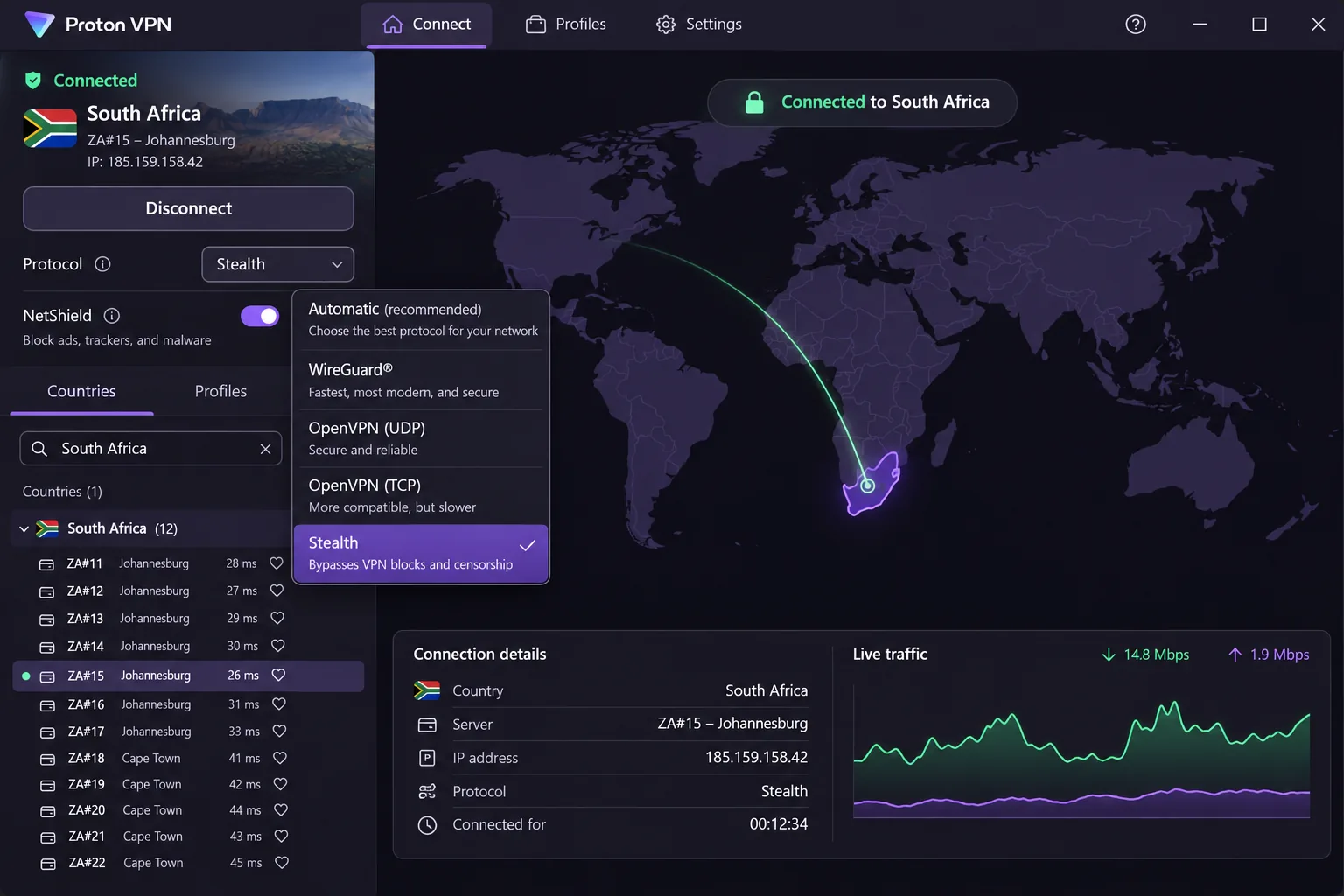
Stealth is Proton's obfuscated protocol. It tunnels traffic over TLS so it looks like ordinary HTTPS. That disguise costs speed: Stealth runs about 10% slower than OpenVPN and up to 35% slower than WireGuard. On a regular connection Proton's download speed dropped from 93.7 Mbps to 86.1 Mbps, while Secure Core, its multi-hop mode, runs about a third slower.
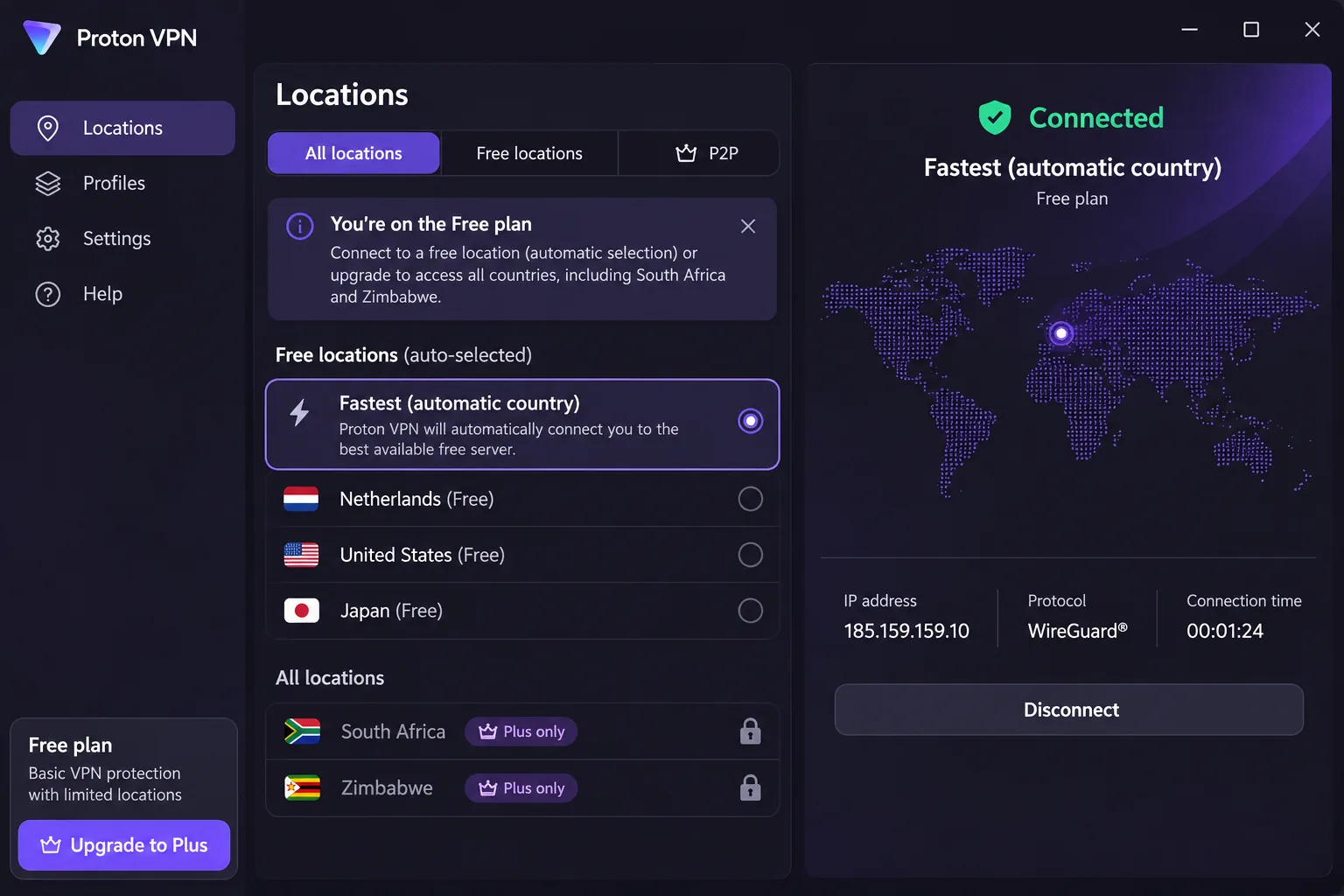
Proton is also the only pick with a Zimbabwe location. It is a Smart Routing location, meaning the Zimbabwean IP address is served from hardware in Paris. That makes it suited to reaching Zimbabwe-only sites such as home banking or local news from abroad, not to speeding up your connection at home. For that, use its physical South Africa servers. Proton also runs extra South Africa Smart Routing servers in Marseille, and both Zimbabwe and South Africa are paid-only locations.
Pros
- Stealth protocol available on every plan, including Free
- Servers in 140+ countries and up to 10 devices on VPN Plus
- Port forwarding, split tunneling and NetShield on paid plans
Cons
- Not the fastest for heavy streaming
- Live chat is for paid users only and is not around the clock
- VPN Plus renews at $83.88 every 12 months
5. ExpressVPN: easiest on restricted networks
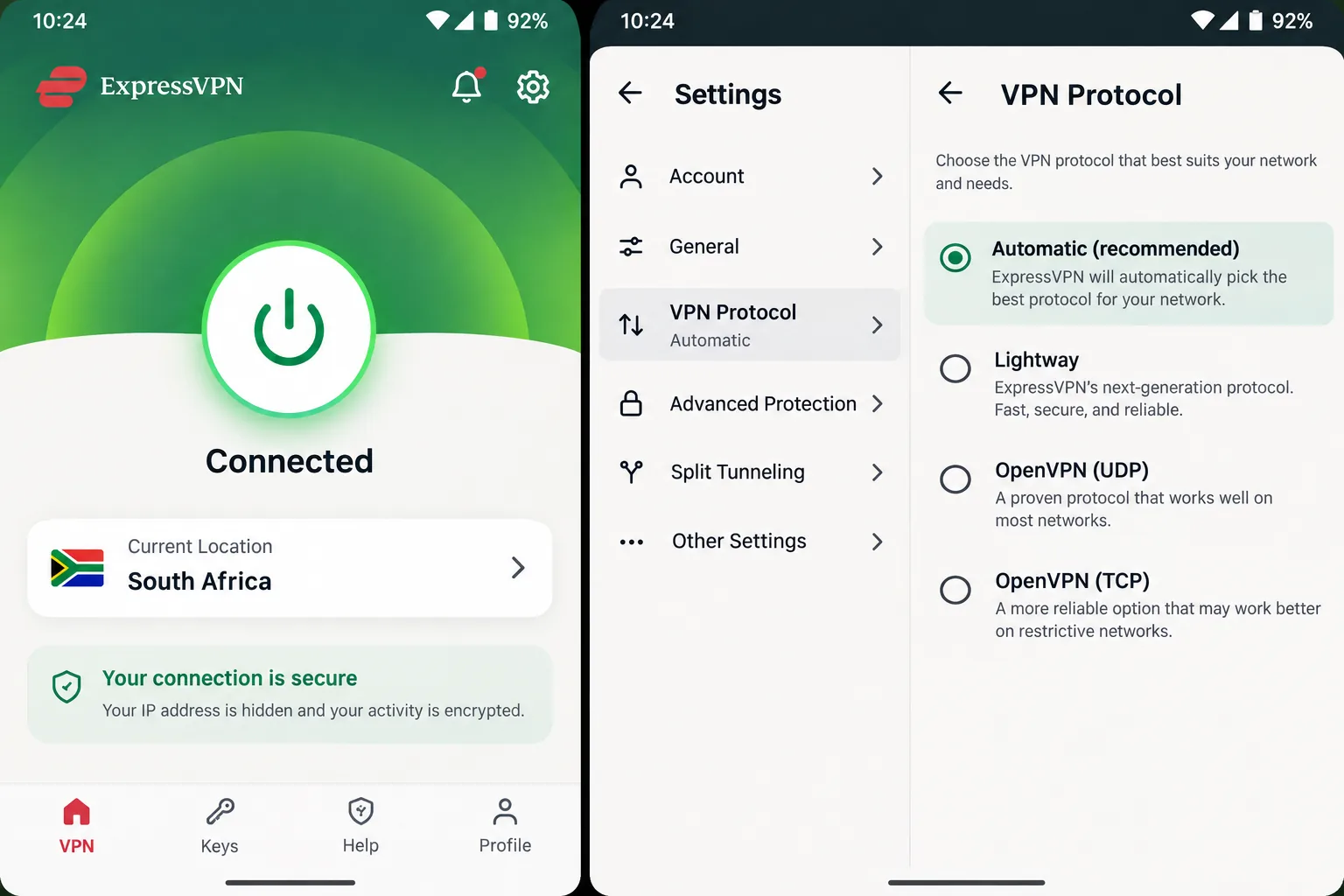
If Proton asks you to learn its settings, ExpressVPN asks less of you than any other pick here. We left the protocol on Automatic, and that is all the setup it needs, because it applies obfuscation on every server by itself. The moment that sold us came when a phone dropped off Wi-Fi and onto mobile data: Lightway, its in-house protocol, reconnected quickly, and it did the same on the way back to Wi-Fi. That makes it a good choice for someone who wants protection that keeps working without learning the settings.
Location choice is the catch. ExpressVPN's Kenya, Egypt, Algeria, Ghana and Morocco locations are virtual and hosted in Germany, and Nigeria is served from Spain. That leaves South Africa as its only genuinely nearby server for Zimbabwe. Speeds are strong: 89.42 Mbps down and 84.64 Mbps up on a 100 Mbps connection. Its network covers 113 countries, KPMG assessed its privacy policy most recently in 2025, and it is based in the British Virgin Islands.
Pros
- Automatic obfuscation with nothing to configure
- 10 devices on Basic, rising to 14 on Pro
- Router app, private DNS and RAM-only TrustedServer technology
Cons
- Renewals and higher tiers cost more than most of this lineup
- Email support can take almost two days to answer
- Only one physical location in Africa
Why you need a VPN in Zimbabwe
With the picks covered, it helps to know what they protect you from. The case for a VPN in Zimbabwe rests on three things: a history of blocks, an ISP market that keeps detailed records on users, and content that changes depending on where you connect from.
Internet censorship and surveillance in Zimbabwe
The clearest example is January 2019. OONI's measurements of the January 2019 social media blocking show WhatsApp blocked on all four tested ISPs (ZOL, TelOne, NetOne and Liquid Telecom) from January 14, with Facebook and Twitter blocked on several networks the next day. There were also two full blackouts between January 15 and 18. Econet said its shutdown order came under the Interception of Communications Act of 2007. Zimbabwe's High Court ruled the shutdown illegal on January 21, and access was fully restored by January 24. Because those blocks targeted specific platforms on each ISP, a VPN restored access, and VPN use surged that week.
A VPN restores access when specific apps are blocked. It cannot restore a network that has been switched off, so install and test yours before trouble starts.
Since then the picture has been calmer. NetBlocks recorded major slowdowns in February 2022, and speeds dropped across NetOne, Econet, TelOne and Liquid on the eve of the August 2023 election. The cause of that 2023 slowdown is disputed, with deliberate throttling and subsea cable damage both put forward. OONI ran 178,836 web tests from Zimbabwe between May and November 2026 and found 0 confirmed blocks. WhatsApp, Telegram, Messenger and Signal all work without a VPN today. Freedom House scores Zimbabwe 50/100, up from 48 the year before, with just 10/25 for obstacles to access.
Surveillance is the bigger long-term concern. Freedom House reports little legal oversight of state interception, a monitoring centre that sits in the president's office, and frequent pretrial detention for online speech. In one case, a detainee spent 595 days in custody over a June 2022 online video before the convictions were overturned in July 2024. A VPN hides which sites you visit from your network, but it does not protect anything you post publicly under your own name.
Privacy on ISPs and public Wi-Fi
Zimbabwe's internet runs through very few hands. Econet carried 83.7% of internet and data traffic at the end of 2023, and its sister company Liquid controls most international bandwidth. Every mobile subscriber must register a SIM card with their identity details, operators must keep that information for five years after a subscription ends, and authorities can demand decryption keys. With a VPN on, your ISP sees only that you are connected to a VPN server and how much data you move, not the sites or apps inside the tunnel.
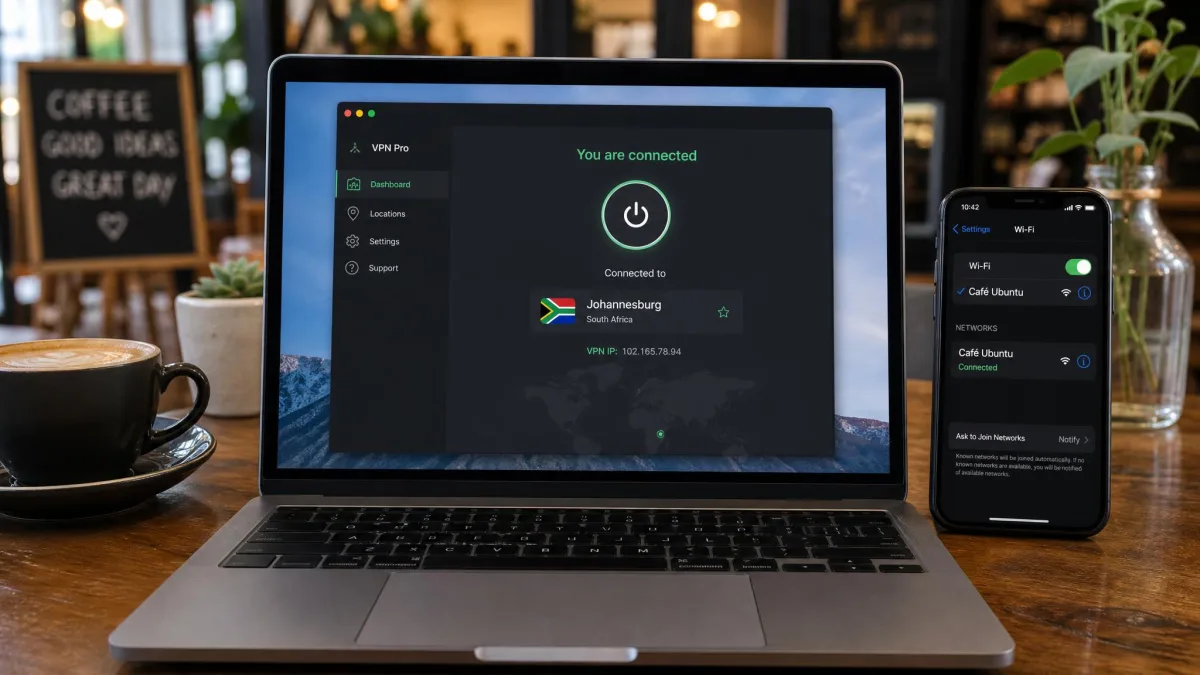
Shared café, office and hotel Wi-Fi is where many people go online beyond mobile data, and a VPN keeps your logins encrypted on those networks. Starlink has also been available since September 2024, and its arrival has pushed other ISPs to cut prices. Whichever provider you use, a VPN is worth running on any connection you do not control.
Streaming and local content
Showmax operates in Zimbabwe with an African catalogue of South African, Kenyan, Hollywood and British titles, and Zollywood carries Zimbabwean films. If you are travelling or living abroad, a VPN lets you reach your home-country streaming libraries by connecting to a server in that country. NordVPN, Surfshark and ExpressVPN were the most dependable for streaming, and Surfshark's Smart DNS covers smart TVs that cannot run a VPN app.
How to use a VPN in Zimbabwe (and why there are no physical Zimbabwe servers)
Knowing why you want a VPN is half the job; getting it running takes a few minutes. Follow these steps:
- Pick a provider and sign up. All five accept sign-ups from inside Zimbabwe, and each offers a 30-day money-back guarantee on its longer plans.
- Install the app on every device you use, including your phone, before you need it.
- Turn on the kill switch. Open the app's settings and enable it, since some apps, including Surfshark's, leave it off by default.
- Connect to South Africa. Johannesburg is the nearest physical location for NordVPN, IPVanish and Surfshark, while Proton VPN and ExpressVPN both have physical South Africa servers.
- Check for leaks. Visit ipleak.net with the VPN on. You should not see an Econet, NetOne, Telecel, TelOne or Liquid address anywhere on the page.
The missing Zimbabwe hardware costs you little. The closest server is what keeps latency low, and South Africa is the closest well-connected hub. Use a Johannesburg connection day to day, and keep Proton's Paris-served Zimbabwe IP for sites that only accept Zimbabwean visitors. If you also travel south of the border, our guide to the best VPN for South Africa covers the same services from the other side.
If a connection fails on a restricted network, switching protocol or picking a different nearby location usually fixes it. NordVPN's own troubleshooting order is NordWhisper first, then Obfuscated Servers, then OpenVPN over TCP. Keep your expectations realistic too: a VPN cannot fix a slow or congested local line, and when electricity rationing knocks out a tower, no VPN can bring it back.
To save mobile data, keep a lightweight protocol such as WireGuard or NordLynx for everyday use, switch to obfuscation only when something is blocked, and leave heavy streaming for Wi-Fi.
Can you use a free VPN in Zimbabwe?
Once you know how to set one up, the obvious question is whether you need to pay at all. You can use a free VPN, but expect overcrowded, slow servers and limits on your data and server choice. Some free VPNs also collect more data or show ads to pay their costs. That is a poor trade in a country where per-gigabyte data prices swing widely by bundle, operator and method, from about US$3 to over US$40.
The one free plan we would use is Proton VPN's. It has no data limit, but it allows only one device and places you on servers in 10 randomly selected countries that you cannot choose. It also excludes the Zimbabwe and South Africa locations and does not unblock streaming. That makes it a privacy fallback rather than an everyday tool. If you want a trial of a full service, every paid pick above offers a 30-day refund window instead.
Are VPNs legal in Zimbabwe?
Paid or free, the next worry is usually the law. VPNs are legal in Zimbabwe because nothing prohibits them, not because a statute explicitly allows them. The interception and false-news powers apply to what you do online, whatever tool you use. No Zimbabwean law bans VPN use, and VPN use surged during the 2019 blocks without reported penalties.
The laws that matter are about data and disclosure. The Postal and Telecommunications Act (Chapter 12:05) requires licensees to supply information to government officials on request, and Section 88 requires companies to report communications with "offensive" or "threatening" content. The Cyber and Data Protection Act (Chapter 12:07), enacted in December 2021, makes publishing false news a criminal offence and names POTRAZ, the telecoms regulator, as the Data Protection Authority. Under Statutory Instrument 155 of 2024, organisations processing personal data of 50 or more people need a POTRAZ data controller licence. In May 2025, amendments extended the Broadcasting Services Act to cover digital media such as podcasts.
Best VPN for Zimbabwe: FAQ
Will my mobile operator know I am using a VPN?
Is it safe to use a VPN in Zimbabwe?
Can I put a VPN on my router so every device is covered?
Is Proton's free plan enough to reach WhatsApp during a block?
Can I connect to game servers with a VPN in Zimbabwe?
Do some services block VPN users?
Final thoughts
Zimbabwe's internet is open today, so the right VPN is the one you install and test now, before a protest or election puts it to work. If you share one connection across a whole household, IPVanish and Surfshark both remove the device limit, and Surfshark's NoBorders does the detective work for you. If privacy is your main concern and your budget is tight, start with Proton VPN's free plan and upgrade when you need its South Africa servers.