
DaisyDisk Review: Is It Worth It for Your Mac in 2026?
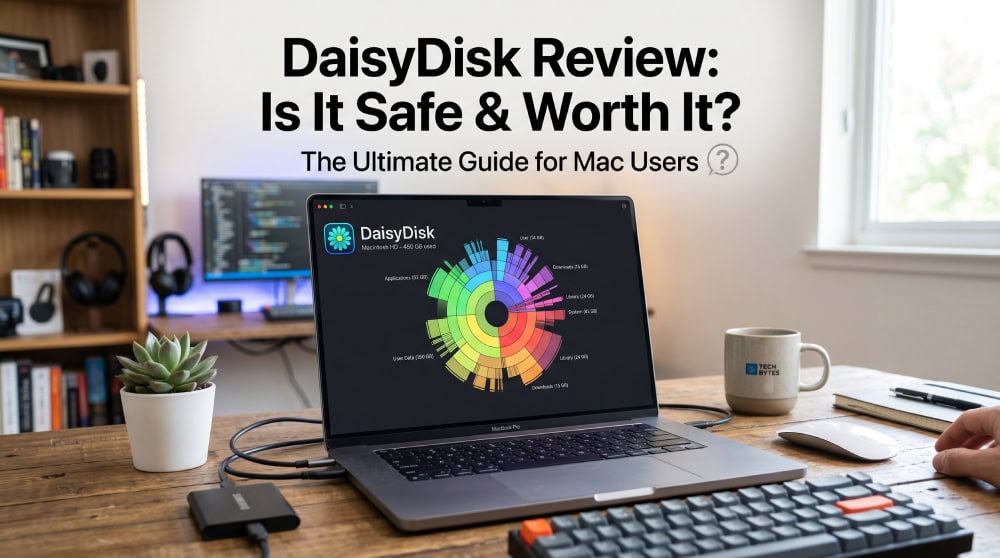
We tested DaisyDisk on a MacBook Pro running macOS Sequoia, scanning a nearly full 512 GB drive over two weeks of normal use. If your Mac keeps warning that the disk is almost full, you have probably gone looking for the files eating your space. This review covers what DaisyDisk actually does, how it felt to use, whether the one-time $9.99 license is worth it, and which free alternatives to weigh first.
What Is DaisyDisk? (and Who It's For)
DaisyDisk is a disk-space analyzer for macOS. You point it at a drive, it scans the contents, and it draws everything as a color-coded sunburst map. The biggest folders become the biggest segments, so the things wasting your space surface immediately instead of hiding inside nested folders.
It is built for people who want to understand their storage, not just blindly clear caches. If you have ever opened the macOS storage screen, seen a giant "Other" category, and had no idea what was in it, DaisyDisk is aimed squarely at you. It suits designers, developers, photographers, and anyone whose drive fills up fast.
DaisyDisk shows you what is taking up space and lets you remove it, but it does not scrub system junk or run background maintenance the way an all-in-one cleaner does. It is a focused tool, and that focus is its strength.
Our Experience: Testing DaisyDisk on a Mac
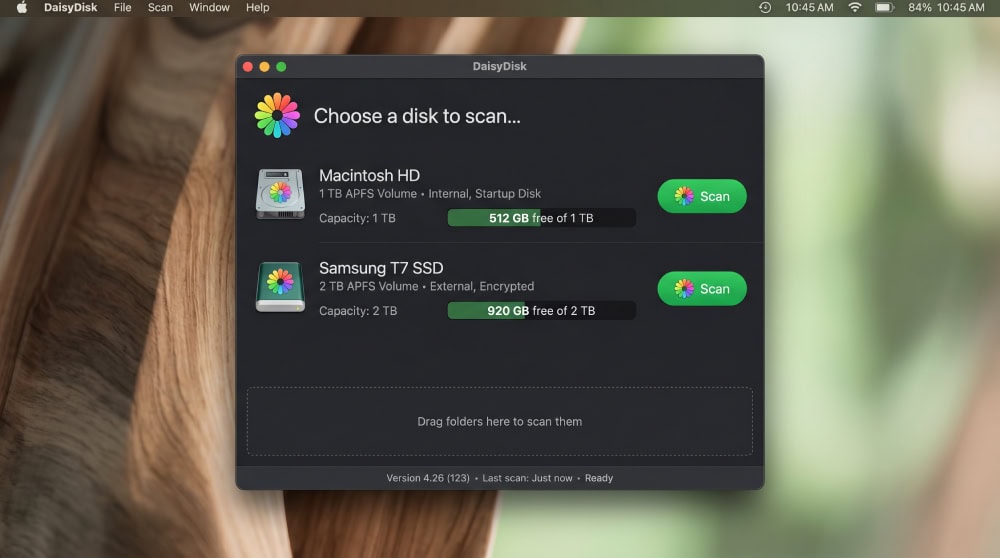
The install is the standard drag-to-Applications routine. On first launch you grant Full Disk Access in System Settings so the app can read protected folders, then you choose a volume and start a scan.
Scanning and the Sunburst Map
A full scan of our test SSD finished in well under a minute, and the sunburst map rendered almost instantly after that. That speed comes from the fact that DaisyDisk reads file sizes rather than contents, so it scales well even on large drives.
The map itself is the heart of the experience. Each ring radiating out from the center is a level deeper into your folder structure, and you hover to see exactly what each segment holds. Within a minute we had traced our largest segment to a forgotten folder of video exports we no longer needed.
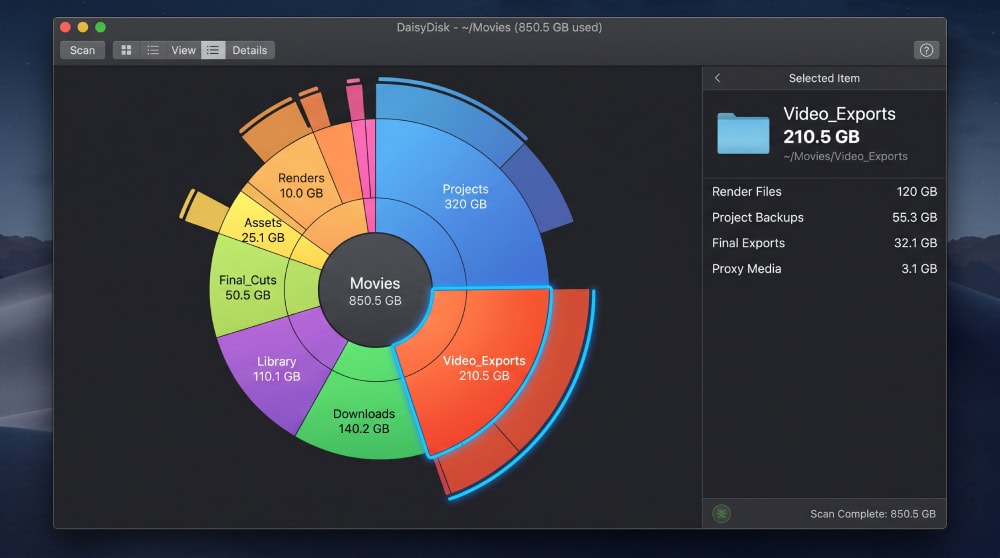
You will see your largest folders without having to guess, and that is genuinely useful. We also ran a cloud scan against an external drive, and the same map appeared without extra setup. It is an almost fun way to explore a drive that usually feels like a black box.
Deleting Files Safely
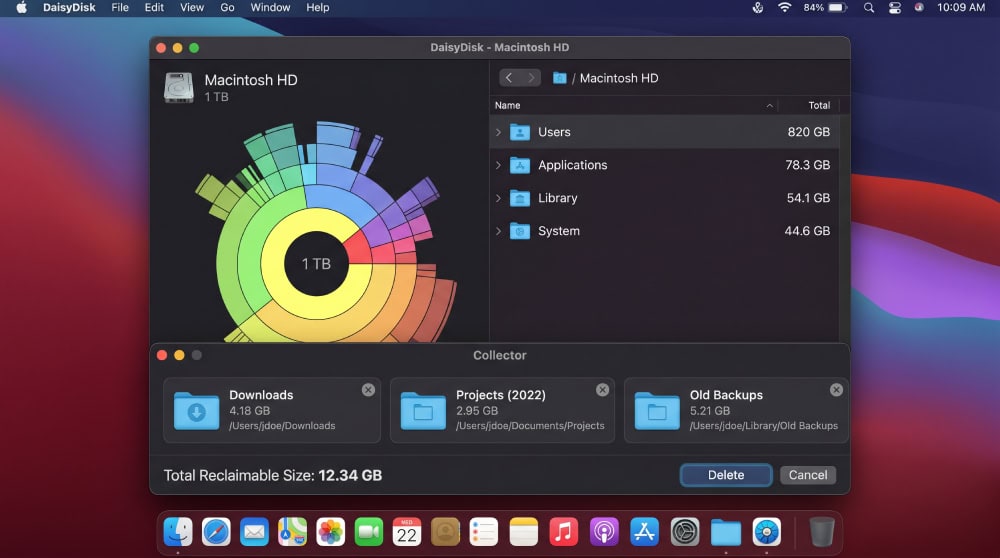
Deletion in DaisyDisk is deliberate rather than instant. You drag the segments you want gone into the Collector, a tray at the bottom of the window, and nothing is actually removed until you click Delete. This staging step is what makes the app feel safe to use.
When you confirm, DaisyDisk gives you a short undo countdown before files move to the Trash, so a misclick is recoverable. Across our testing we cleared tens of gigabytes of forgotten files in the first session alone, mostly old disk images, cached video renders, and a forgotten iOS backup.
DaisyDisk Pros and Cons
After two weeks, the trade-offs were clear. DaisyDisk does one job extremely well and intentionally skips everything else.
Pros
- The sunburst map makes finding large files genuinely fast and intuitive.
- One-time purchase at $9.99, with no subscription to renew.
- Drag and drop into the Collector keeps deletion deliberate and low-risk.
- The undo countdown gives you a safety net before files hit the Trash.
- Fast scans that scale well to large and external drives.
Cons
- Mac-only, so there is no Windows or cross-platform version.
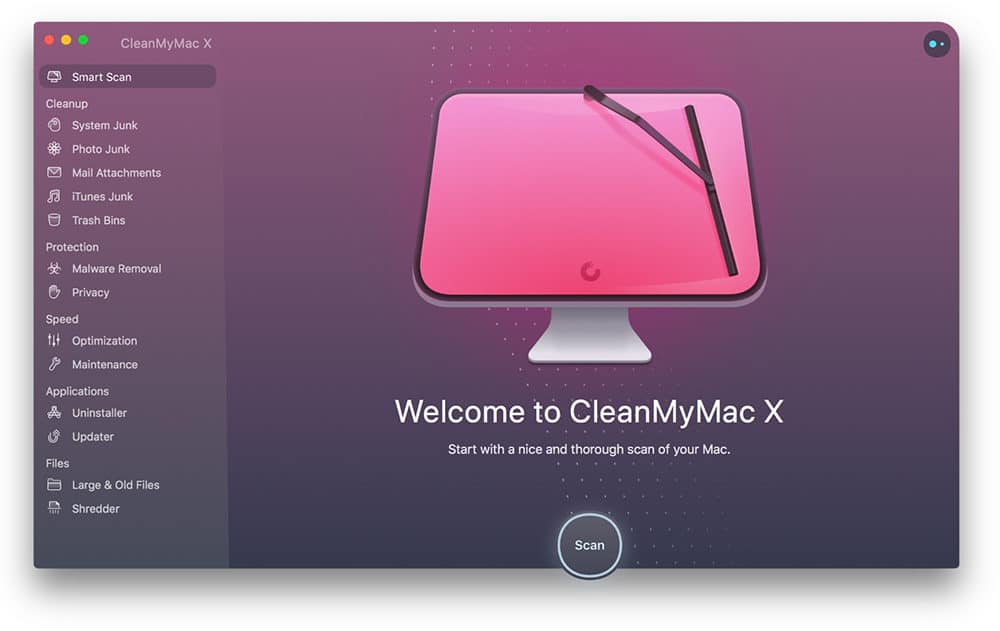
- No deep system-junk cleaning, cache clearing, or maintenance like CleanMyMac offers.
- The full feature set, including cloud and external scans, requires the paid license.
- The Mac App Store version is limited by sandbox permissions and cannot show some hidden files.
Pricing: Is the One-Time $9.99 Worth It?
DaisyDisk uses a model that is increasingly rare: a single one-time purchase rather than a subscription. The license costs $9.99 and covers the full version bought directly from the developer. A single license also covers multiple Macs in the same Family Sharing group, so a household does not pay again for each machine.
You can run a limited free scan to preview the map before paying, but freeing up space requires the license. The standalone version also unlocks hidden and system file visibility that the sandboxed Mac App Store edition cannot offer. For a tool you will open a few times a year and keep for the life of your Mac, ten dollars once is easy to justify against the value for money of a recurring subscription.
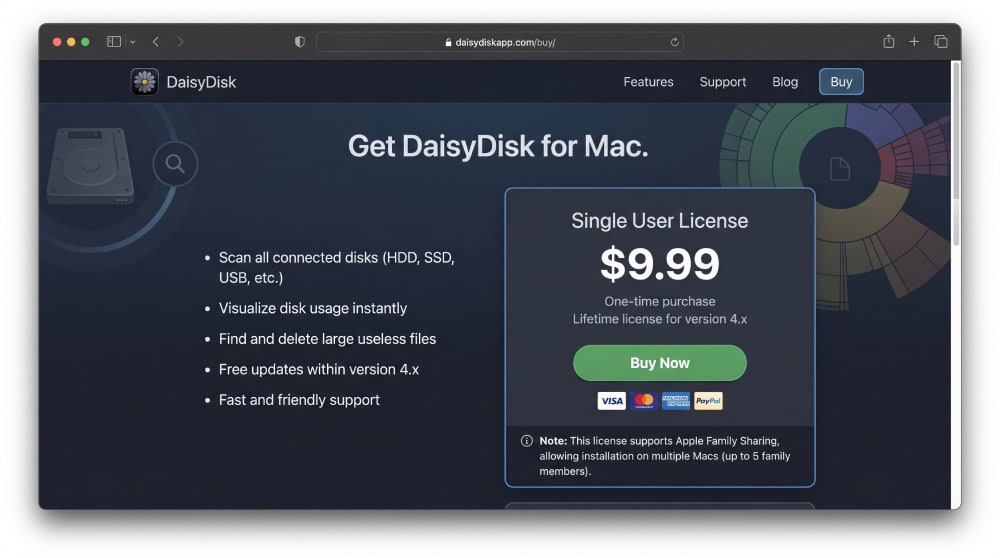
You can buy and download the full version directly from DaisyDisk's official site, or check the current rating on the Mac App Store listing before you decide.
DaisyDisk vs the Alternatives
DaisyDisk is not the only way to map your Mac's storage. CleanMyMac is the heavyweight all-in-one cleaner, GrandPerspective is the free open-source visualizer, and Disk Drill blends analysis with data recovery.
| Feature | DaisyDisk | CleanMyMac | GrandPerspective | Disk Drill |
|---|---|---|---|---|
| Price | $9.99 one-time | Subscription | Free | Free + paid tiers |
| Visual map | Sunburst map | Limited | Treemap | List + visuals |
| Free tier | Limited scan only | Trial | Fully free | Limited free |
| Scan speed | Fast | Moderate | Fast | Moderate |
| macOS support | Current macOS | Current macOS | Current macOS | Current macOS |
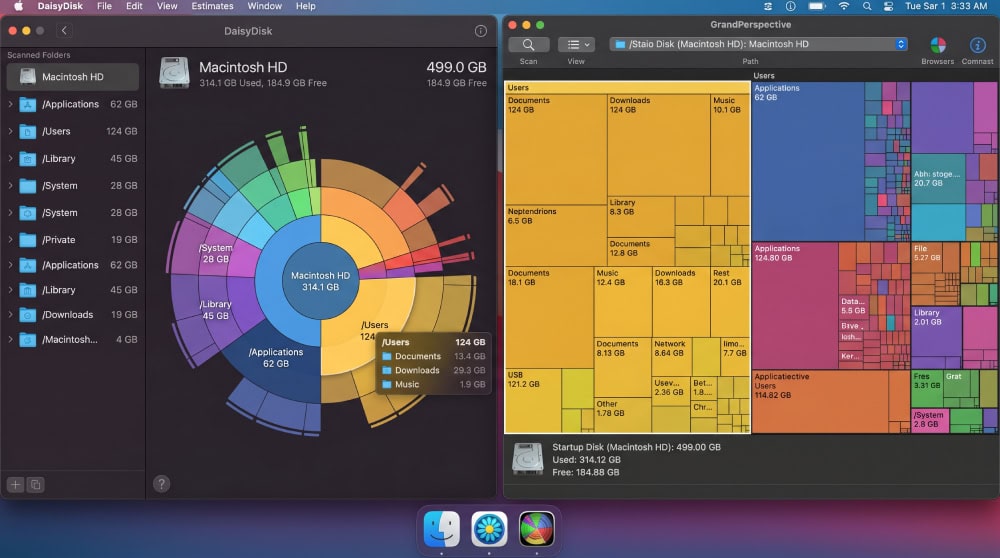
If you want maintenance and automated cleanup, CleanMyMac covers more ground for a recurring fee. If you only want a free visual map and do not mind a dated interface, GrandPerspective does the core job for nothing. DaisyDisk sits in the middle: cheaper than a subscription, far more polished than the free options, and focused on helping you free up space.
Is DaisyDisk Safe?
DaisyDisk is a long-established, reputable Mac app, and in our testing it behaved exactly as expected with no unwanted background activity. It requests Full Disk Access only so it can read your folders accurately, which is standard for any disk analyzer.
The real safety consideration is you, not the app. Because DaisyDisk will delete anything you stage, the risk lies in removing files you should have kept. The Collector tray and undo countdown are there to slow you down, and as long as you read what each segment contains before confirming, the app is safe to use.
Frequently Asked Questions
Is the Mac App Store version of DaisyDisk as safe and capable as the direct download?
Both are safe, but the App Store edition runs in Apple's sandbox, which blocks it from reading some hidden and system files. The version bought directly from the developer can see those locations, so it gives a more complete picture of what is using your space.
Is DaisyDisk free?
DaisyDisk offers a limited free scan that lets you preview the sunburst map, but freeing up space requires the full license. That license is a one-time $9.99 purchase rather than a subscription.
Is DaisyDisk better than CleanMyMac?
It depends on what you need. DaisyDisk is better for quickly visualizing and clearing large files at a one-time price, while CleanMyMac does broader system maintenance for a recurring subscription.
Does DaisyDisk work on the latest macOS?
Yes. DaisyDisk supports the current version of macOS, and we ran it without issues on macOS Sequoia during testing.
The Verdict: Should You Buy DaisyDisk?
If you want one focused tool that shows you what is filling your Mac and lets you clear it safely, DaisyDisk earns the recommendation. It is fast, the sunburst map turns a frustrating task into an almost enjoyable one, and the one-time $9.99 price is refreshing in a world of subscriptions.
It is not the right pick if you wanted automated maintenance or system-junk cleaning, in which case a tool like CleanMyMac fits better. But on its own terms, as a visual disk analyzer that helps you free up space without recurring cost, DaisyDisk is worth it for most Mac users.

 Best Mac Cleaner Software
 CleanMyMac Review
 Drive Genius Review
 MacBooster Review
 Free Up Disk Space on Mac
 How to Clean Up Mac
 What Is Other Mac Storage
 Mac Startup Disk Full