A Windows PC that once felt quick starts taking two minutes to reach the desktop, and the drive fills with junk nobody remembers creating. Most people reach for a tune-up tool at exactly that point, and iolo System Mechanic is one of the oldest names on that shelf. It promises a one-click way to clean up your PC, trim startup programs, repair registry errors and keep your PC running smoothly, all from a single dashboard. The question is whether an annual subscription buys you anything Windows does not already hand you for free. This review works through what the suite actually includes, what a full cleanup pass returns on a cluttered machine, what each tier costs once the introductory year ends, and what paying customers report about billing and support.

iolo System Mechanic Ultimate Defense
Worth it for an older, cluttered Windows PC or a household of them, and hard to justify on a higher-end SSD machine. Ultimate Defense is the tier to buy: it is the only one with antivirus, every plan covers up to 10 PCs, and the 50% coupon iolo attaches to our link makes it cheaper than Standard's list price.
Best for: Several ageing Windows PCs and maintenance you want handled automatically. Skip if: You own a modern machine with an SSD, since the free Windows tools cover the basics.
System Mechanic is a Windows-only subscription, so everything below applies to PCs running Windows 11 back to Windows 7. Where a figure comes from iolo's own benchmark paper rather than independent measurement, we say so plainly, because the gap between the two matters when you are deciding whether to pay.
What Is iolo System Mechanic?
System Mechanic is an all-in-one PC optimization suite for Windows, built by iolo Technologies, a California company founded in 1998. That history matters more than it sounds. This is software from the era when a registry cleaner felt essential, and it has been rebuilt across more than twenty releases since.
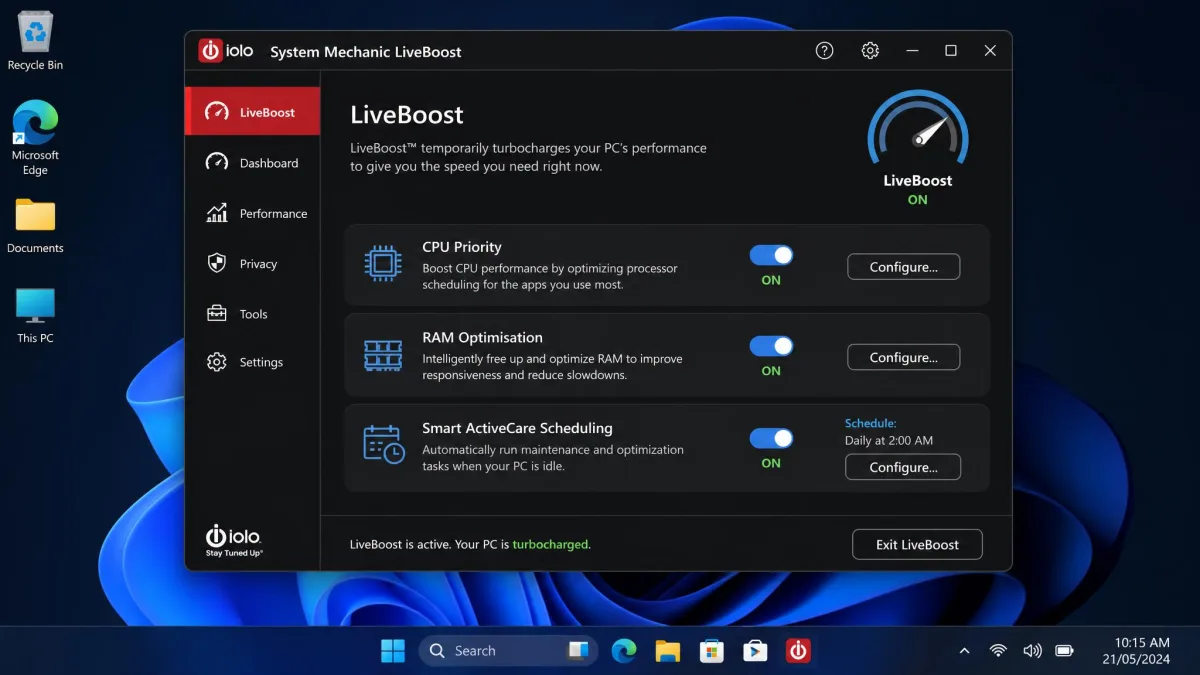
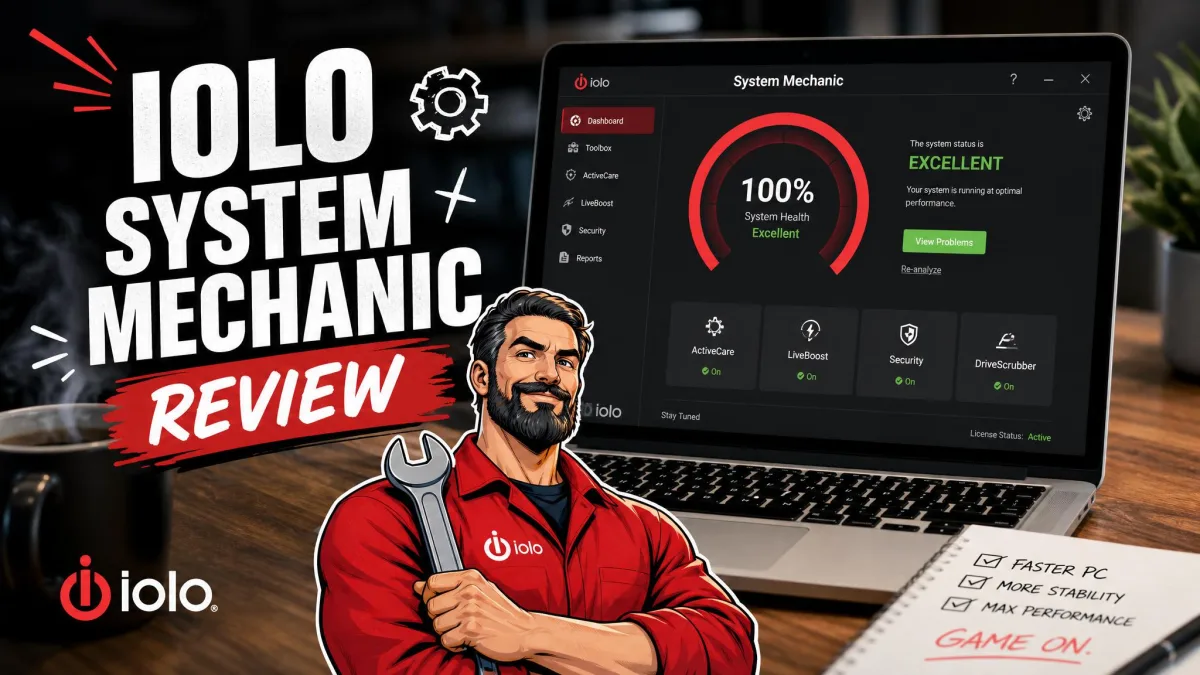
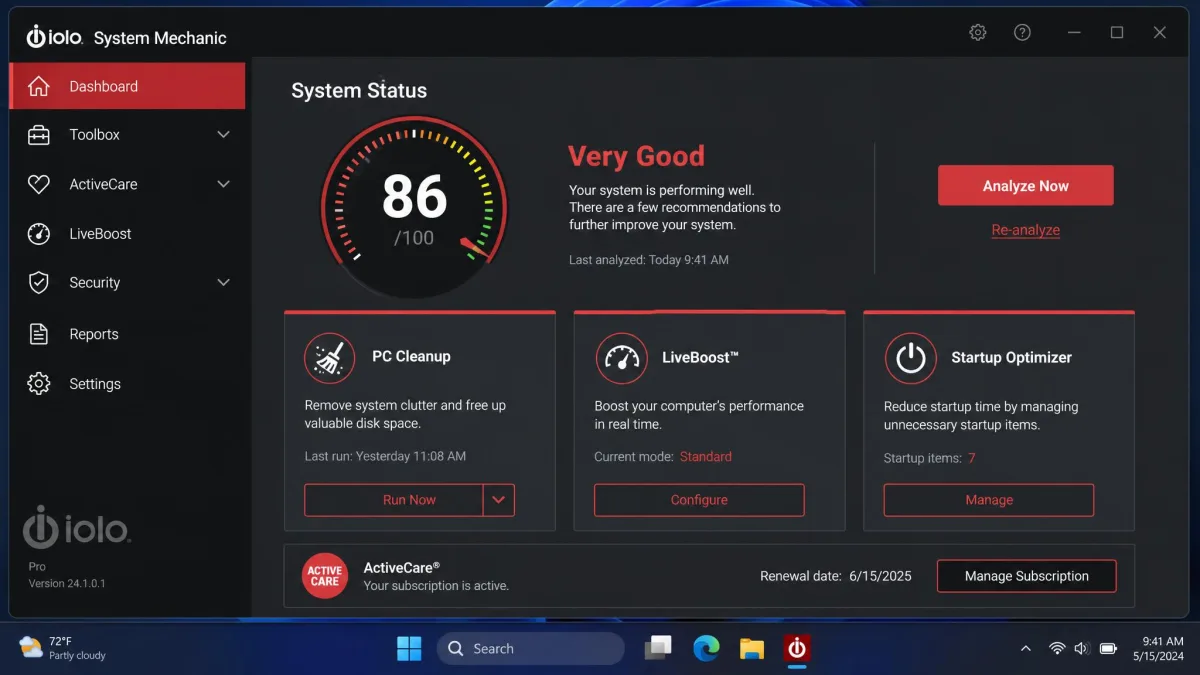
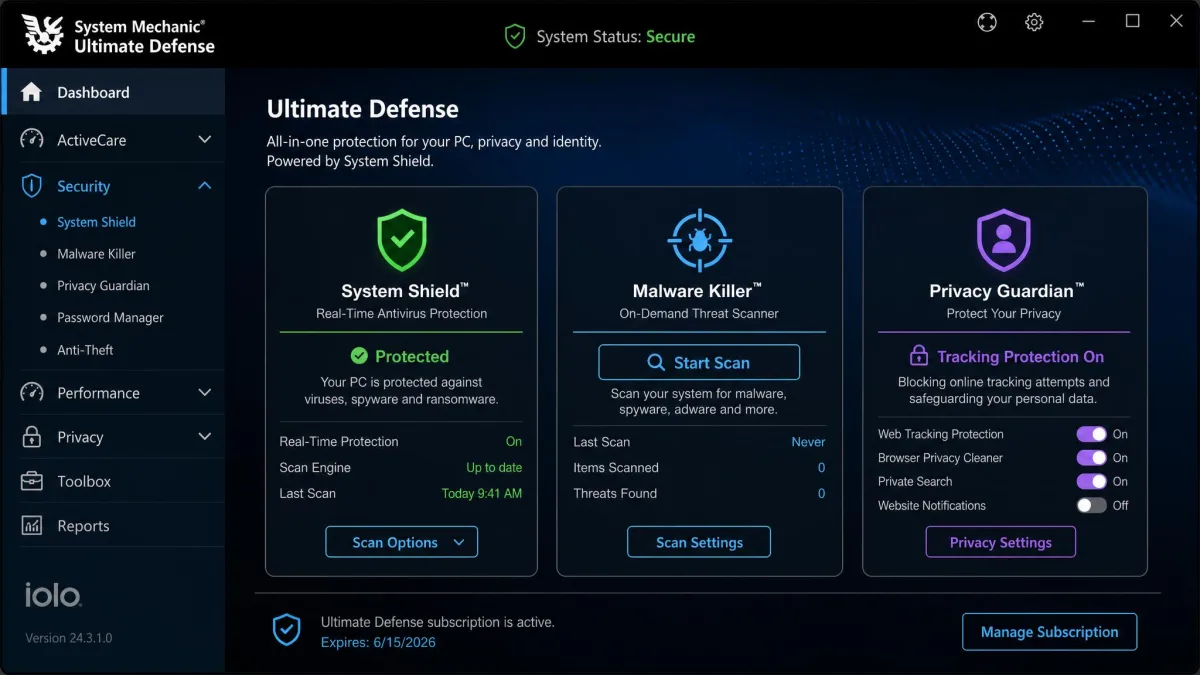
The current version bundles roughly two dozen tools behind one dashboard. PC Cleanup handles junk files, Startup Optimizer manages boot programs, and LiveBoost and Smart ActiveCare tune the system in the background while you work. Higher tiers add System Shield antivirus, Privacy Guardian, the ByePass password manager, DriveScrubber secure wipe and Search and Recover file recovery.
Who iolo System Mechanic Is Built For
The natural buyer is someone with an older Windows computer, no interest in Task Manager, and a household of machines to look after. One subscription covers up to 10 Windows PCs, which is unusually generous and makes the yearly cost easier to justify across a family.
It also suits people who want maintenance to happen without them. After setup the software mostly runs itself, surfacing scan prompts rather than asking you to drive it.
What It Does Not Do
There is no Mac build at all, so a mixed household gets less value from those 10 licences than the number suggests. It also will not rescue failing hardware. A dying drive, a heat-throttled CPU or 4 GB of RAM in 2026 are physical limits, and no optimization software moves them.
iolo System Mechanic Features and Tools
PC Cleanup and Junk File Removal
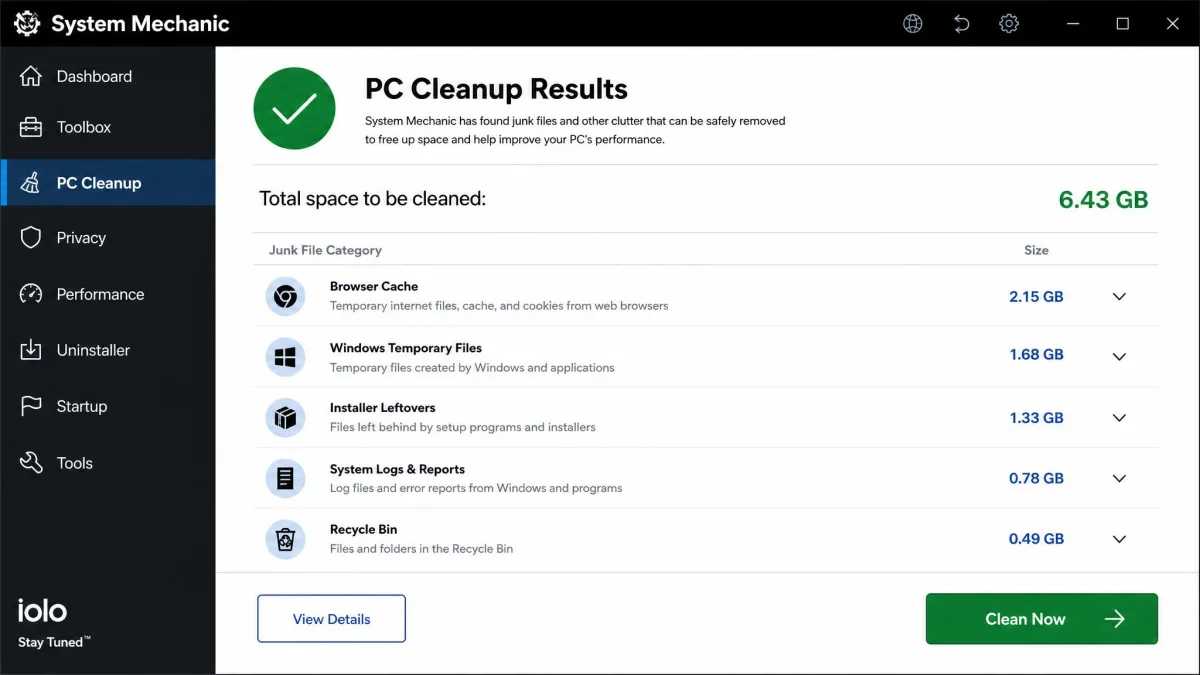
PC Cleanup targets more than 50 junk file types, covering browser caches, Windows update leftovers, temp folders and installer remnants. A first deep clean commonly clears several gigabytes, and on a moderately used machine it pulled back over 3 GB of junk and duplicate files.
Space is the least valuable thing a cleanup pass returns, though. The useful part is fewer files for indexing and backup jobs to walk through.
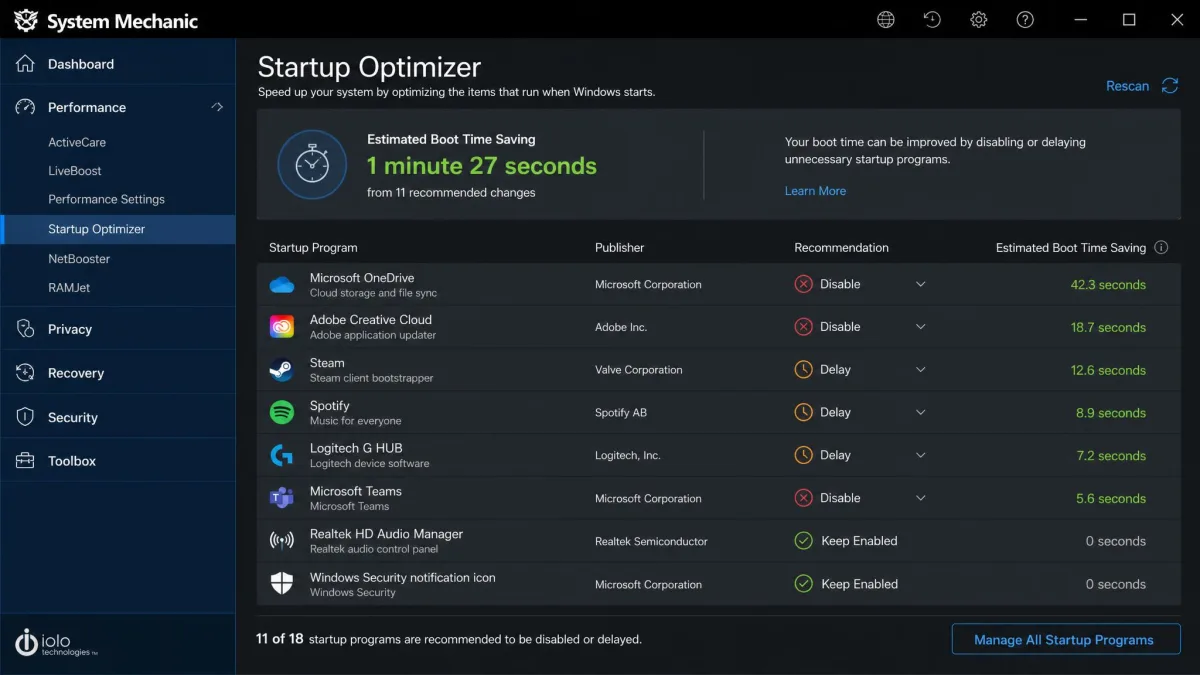
Startup Optimizer and Boot Speed
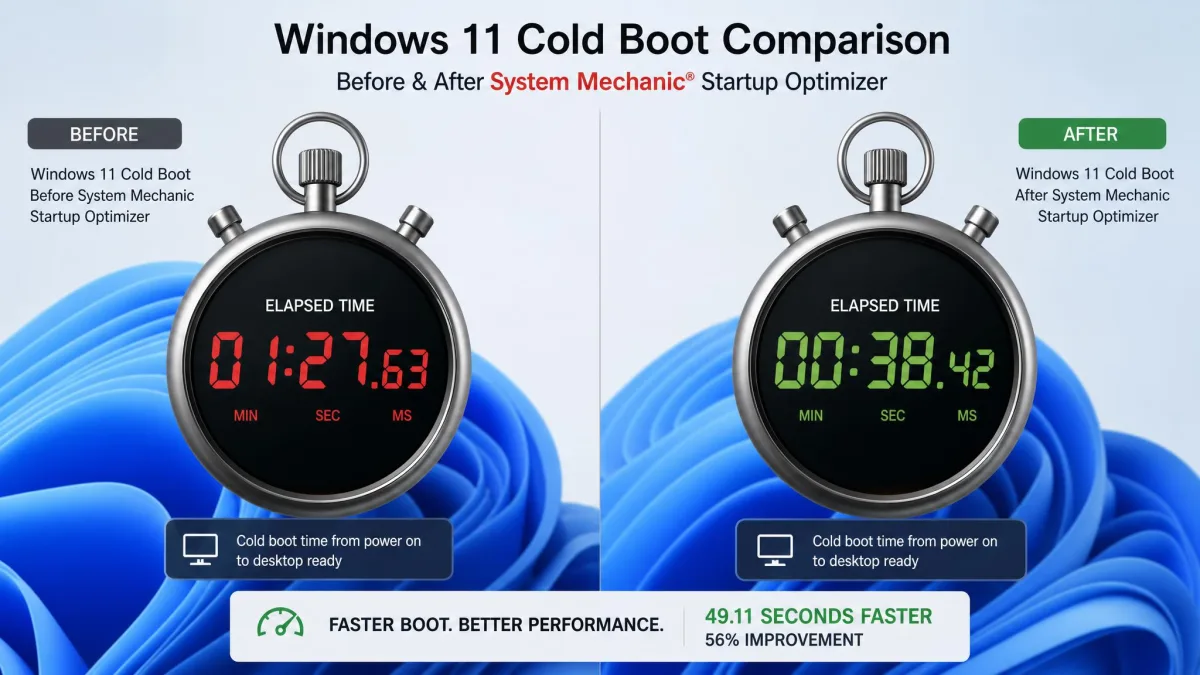
This is where the software earns most of its keep. Startup Optimizer lists everything queued to launch at sign-in, flags what is safe to disable, and delays the rest so they do not all fight for the disk at once. Boot time drops by close to 20 seconds once those queued-up launch items are disabled.
Registry Repair and Windows Error Fixes
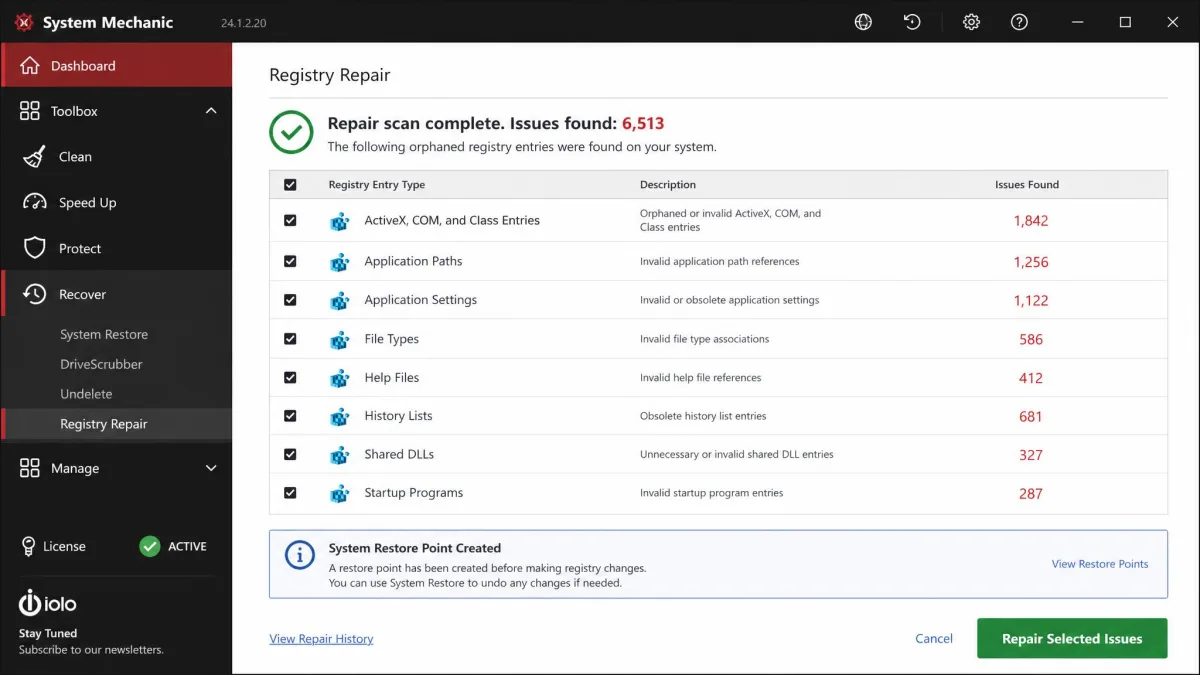
The registry tools scan for orphaned entries, broken file associations and invalid paths, then repair them in a batch. Scans routinely report thousands of issues, which is unnerving to read and largely harmless in practice.
Registry cleaning rarely fixes what buyers think it fixes. Orphaned registry keys are tiny and Windows ignores them, so clearing 4,000 of them does not make a computer faster. Treat any tool that presents a large issue count as a speed problem with scepticism, and always let it create a restore point first.
Internet Speed and Network Optimization
NetBooster adjusts Windows networking settings for your connection type. Gains depend entirely on whether your defaults were poor to begin with, and on a modern fibre or cable line the difference is hard to notice.
Privacy Tools and Secure File Shredding
Privacy Guardian clears browser traces and blocks tracking, while DriveScrubber overwrites free space so deleted files cannot be recovered. If you sell or donate computers, the shredder alone is a fair reason to move up a tier.
LiveBoost and Automated Maintenance
LiveBoost reallocates CPU and RAM priority toward whatever is in front of you, and Smart ActiveCare runs repair tasks while the machine is idle. Real-time protection and background tuning did not noticeably drag down day-to-day performance in our use.
Does It Actually Speed Up a PC? Our Test Results
Boot Time, RAM and Drive Benchmarks
A first full analysis run takes around six minutes, after which you can choose a lighter or heavier scan depth for subsequent passes. On a genuinely neglected machine that first pass will surface upwards of 11 GB of clutter alongside network settings it wants to change and roughly 50 registry problems, while a moderately used PC gives back something closer to 5.5 GB. There is no single typical figure here, because the number depends entirely on how long the drive has gone untended.
Memory is where the marketing and the arithmetic part company. A cleanup pass reclaims only about 1% of RAM on a machine that already has plenty, and a 16 GB system shows roughly a 4.5% improvement at best. Machines with two to four cores and a small memory pool gain the most from LiveBoost, which is the same pattern the drive results follow: older SSDs and mechanical hard drives show clear gains after optimization, while a fast modern drive barely moves.
iolo publishes its own numbers too, and they are much larger than anything we would promise. iolo's published benchmark scores claim 89.77% improved boot time across its test PCs, with one desktop going from 148.4 seconds to 48.2 seconds. The same paper claims 39.25% better internet speed alongside CPU, drive, RAM and GPU gains in the 8% to 18% range. Read those carefully: this is iolo Labs testing its own product in house, not an independent laboratory result.
What Changed and What Did Not
Speed gains land hardest on older, cluttered PCs and are barely perceptible on a recent machine with an SSD. If your computer takes ninety seconds to reach a usable desktop, trimming the startup queue is transformative. If it already boots in twelve, there is nothing left to reclaim.
Who Should Buy It, and Who Should Skip It
Buy it if you run several ageing Windows PCs, want maintenance handled automatically, and would otherwise pay separately for antivirus. The 10-device allowance makes Ultimate Defense competitive against a family security subscription.
Skip it if you own one modern machine with an SSD. The gains will be small, the free Windows tools cover the basics, and you would pay a recurring fee for convenience you do not need.
Ease of Use and the System Mechanic Interface
The dark interface with red accents is easy to read and puts system status on one dashboard, which is the right call for a non-technical audience. Installation is straightforward, and the first full scan finishes in a few minutes, longer on a badly cluttered drive. Quick scans complete in one to two minutes, while deep scans scale with how much data the drive holds.
Two things grate. Settings sit several clicks deep, so anything beyond the one-click flow takes hunting. More annoying, alerts and prompts fire often and push scans that are not needed, which reads as upselling rather than maintenance.
The free download is also less free than it looks. Almost every meaningful fix is gated behind a paid plan, so the download works as a scanner that reports problems rather than a usable free tool.
iolo System Mechanic Pricing and Plans
iolo attaches a 50% coupon to our link, so the checkout price is lower than the first-year rate advertised on its own site. The table shows the list price and what you pay through our link, checked against iolo's store on September 7, 2026.
Standard vs Pro vs Ultimate Defense
| Plan | List price per year | First year through our link | What you get |
|---|---|---|---|
| System Mechanic Standard | $54.95 | $27.4750% off | Cleanup, startup, registry repair, LiveBoost |
| System Mechanic Pro | $74.95 | $37.4750% off | Adds Search and Recover file recovery and DriveScrubber wiping |
| System Mechanic Ultimate Defense | $79.95 | $39.9750% off | Adds System Shield antivirus, Malware Killer, Privacy Guardian, ByePass |
Every tier covers up to 10 Windows PCs, so the per-machine cost falls quickly in a household. Ultimate Defense is the only tier with antivirus, which matters if you were planning to replace a paid security suite. Through our link it also costs less than Standard's list price, which is why it is the tier we recommend on this page.
Free Trial, Renewal Pricing and Refunds
There is a free download and a 30-day LiveTech support trial, plus a 30-day money-back guarantee on the software itself.
Subscriptions renew automatically at the full list price, not the coupon price, unless you switch auto-renewal off in your iolo account. Standard goes from $27.47 to $54.95 at renewal and Ultimate Defense from $39.97 to $79.95. Refunds are sometimes returned minus a 15% processing fee, a deduction iolo's own product pages do not mention, and the amount refunded varies by purchase channel. Diary the renewal date the day you buy.
iolo System Mechanic Pros and Cons
Pros
- One-click Deep Clean handles cleanup, startup and repair in a single pass
- LiveBoost tunes CPU and RAM in real time without a performance cost
- Broad tool count, roughly two dozen utilities under one dashboard
- User-friendly layout that suits non-technical users
- One subscription covers up to 10 Windows PCs
Cons
- Renewal pricing is well above the introductory rate
- Alerts push scans that are not needed, which reads as upselling
- Antivirus only arrives in the Ultimate Defense tier
- Billing and refund experiences are disputed by paying customers
- Windows only, with no macOS build

Customer Support and Help Options
Support runs through a knowledge base, email tickets and a paid LiveTech service whose technicians can take remote control of the machine. The 30-day LiveTech trial is included. The ongoing rate runs to roughly $19.95 per month, though iolo does not publish it and the charge varies by purchase path.
Experiences split sharply. Trustpilot reviewers who reached iolo by phone describe patient, helpful representatives:
Their support person stayed on the line with me for over an hour and fixed the problem completely.
Complaint records tell the opposite story, describing support that is hard to reach and refund requests refused shortly after purchase.
Is iolo System Mechanic Safe and Legitimate?
Yes. iolo is an established company with a long trading history, the software is not malware, and the tools do what they say. The reasonable concerns are commercial rather than technical.
What Real Users Report About Billing and Support
The reputation gap is stark. Trustpilot's iolo listing rates the company 3.9 out of 5 across roughly 3,947 reviews, with 67% five-star ratings alongside a 16% one-star rate.
The recurring theme in the negative column is money rather than software. Automatic monthly technical-support charges can appear on a card after purchase without an obvious opt-in at checkout:
I bought the program once and then found a monthly charge on my statement that I never agreed to.
How iolo Responds to Complaints
iolo has replied to 96% of its negative Trustpilot reviews, which is a high response rate and suggests the complaints are being read. Installation problems are rare but not unknown, and in isolated cases a bad install has ended in blue screens and a Windows reinstall. Create a restore point before you install.
How iolo System Mechanic Compares to Other PC Optimizers
| Product | Price per year | Devices | Antivirus | Platform | Buy |
|---|---|---|---|---|---|
 |
$39.97then $79.95 | 10 | System Shield | Windows | Get 50% off |
 |
$44.95about | 1 to 5 | No | Windows, macOS | Our review |
 |
$35first year | Up to 10 | No | Windows, macOS, Android | Our review |
|
$29.99about | 1 or 3 | Anti-malware | Windows | Check price |
 |
Free | Unlimited | Microsoft Defender | Windows |
Rival prices move constantly with promotions and licence counts, so treat those figures as a guide and check at checkout.
iolo vs CCleaner
CCleaner Professional is cheaper per year, runs on macOS as well as Windows, and offers a 14-day trial with no card required. System Mechanic has more tools and far better device coverage. If you want a light cleaner you open occasionally, CCleaner wins. If you want automated maintenance across a household, iolo does.
iolo vs AVG TuneUp and Advanced SystemCare
AVG TuneUp's Sleep Mode is the smartest single idea in this category, suspending background apps until you actually use them, and it carries a 30-day free trial. Advanced SystemCare Pro undercuts everything on price for a single PC, and our Advanced SystemCare review explains why it is the alternative we would pick. Our reviews of the neighbouring tools cover this ground too, including Advanced System Optimizer vs CCleaner, AVG TuneUp vs Advanced System Optimizer, Advanced System Optimizer vs Advanced SystemCare and our Advanced System Optimizer review. For a free option, Advanced System Optimizer vs BleachBit covers that ground. Norton Utilities Ultimate is the closest big-brand equivalent to Ultimate Defense.
iolo vs Built-In Windows Tools
Storage Sense, Disk Cleanup, Task Manager and Microsoft Defender cost nothing and cover most of what matters. What Windows does not give you is a registry repair tool, a secure file shredder, or a single button that does everything at once. Whether those three gaps are worth $54.95 a year is the whole decision.
Before you pay for anything, turn on Windows Storage Sense, open Task Manager's Startup tab and disable what you do not need, then time your boot again. If that free half hour fixes the problem, you have your answer.